Novelists, poets, a diarist, a translator, scholars, memoirists and critics: women who lived on or near Wandsworth Common, grew up beside it, or put it into their books.
They are listed roughly in order of birth. Each entry is a short summary, with links to the fuller pages elsewhere on this site. Five of them appeared in the January 2026 Chronicles quizzes, “Literary Wandsworth Common”.
Diarist, letter-writer and memoirist — “Mrs Thrale”
Her home at Streatham Park, by Tooting Bec Common and a few miles south-east of Wandsworth Common, was for many years a second home to Samuel Johnson and a meeting place for his circle.
Her diary, Thraliana, and her Anecdotes of the Late Samuel Johnson (1786) are among the liveliest sources on Johnson.
Her husband Henry Thrale’s Anchor Brewery in Southwark was sold after his death to Barclay and Perkins. The brewer Henry Perkins later owned Springfield Park, just south of Wandsworth Common.
On this site
Henry Perkins — brewer, book-collector and owner of Springfield Park, with notes on the Thrale connection
Mary Elizabeth Braddon (1835–1915)
Novelist — “Miss Braddon” or “Mrs Braddon”
Mary Elizabeth Braddon, painted by William Powell Frith. (Click to enlarge.)
Best known for the sensation novel Lady Audley’s Secret, she published more than eighty novels.
Her Henry Dunbar: The Story of an Outcast (1864) is full of Wandsworth and the Common. Its talk of “scraps of common-land” and the speculating builder’s “hateful foot” places it in the 1860s, when the Common was still owned by Earl Spencer and its defenders were rallying.
Tom Taylor, editor of Punch, who lived in Lavender Sweep, adapted Henry Dunbar for the stage.
From February 1859 to September 1860, Mary Ann Evans lived with George Henry Lewes at Holly Lodge, 31 Wimbledon Park Road, a mile or so from the Common.
She finished The Mill on the Floss there in March 1860. Their relationship scandalised respectable society. The London County Council put up a plaque in 1905.
On this site
Thomas Hardy — with notes on the borough’s literary blue plaques, George Eliot’s among them
Born on 14 May 1845 at St John’s Hill, Battersea, the eldest of eight children.
Her first collections appeared under the pen name “Arbor Leigh”: Key Notes (1876) and a revised Key-Notes (1879). Poems, Lyrics and Sonnets followed in 1882, under her own initials. She later became a committed anarchist writer.
She turns out to be a cousin of the Ivy House Bevingtons of Wandsworth Common, the family of the photographer Geoffrey Bevington.
Her Nora (1882) was the first full English translation of Ibsen’s A Doll’s House, and the standard one until William Archer’s of 1889. She went on to translate Ghosts.
Her father, the barrister and developer James Lord, bought one of the Five Houses on Bolingbroke Grove in 1858. The census finds the family at Bolingbroke Grove House in 1861 and at St John’s Lodge, St John’s Hill, in 1871.
Her sister Emily (Mrs Ward) founded the Norland Institute, which trained the Norland nannies.
A popular Scottish novelist. In The Three Miss Graemes (1908) a courtship progresses by way of the Common: “Not long afterwards he took her for a walk on Wandsworth Common, and actually asked her if she was tired . . .”
She died in 1916, worn out by relief work in the First World War.
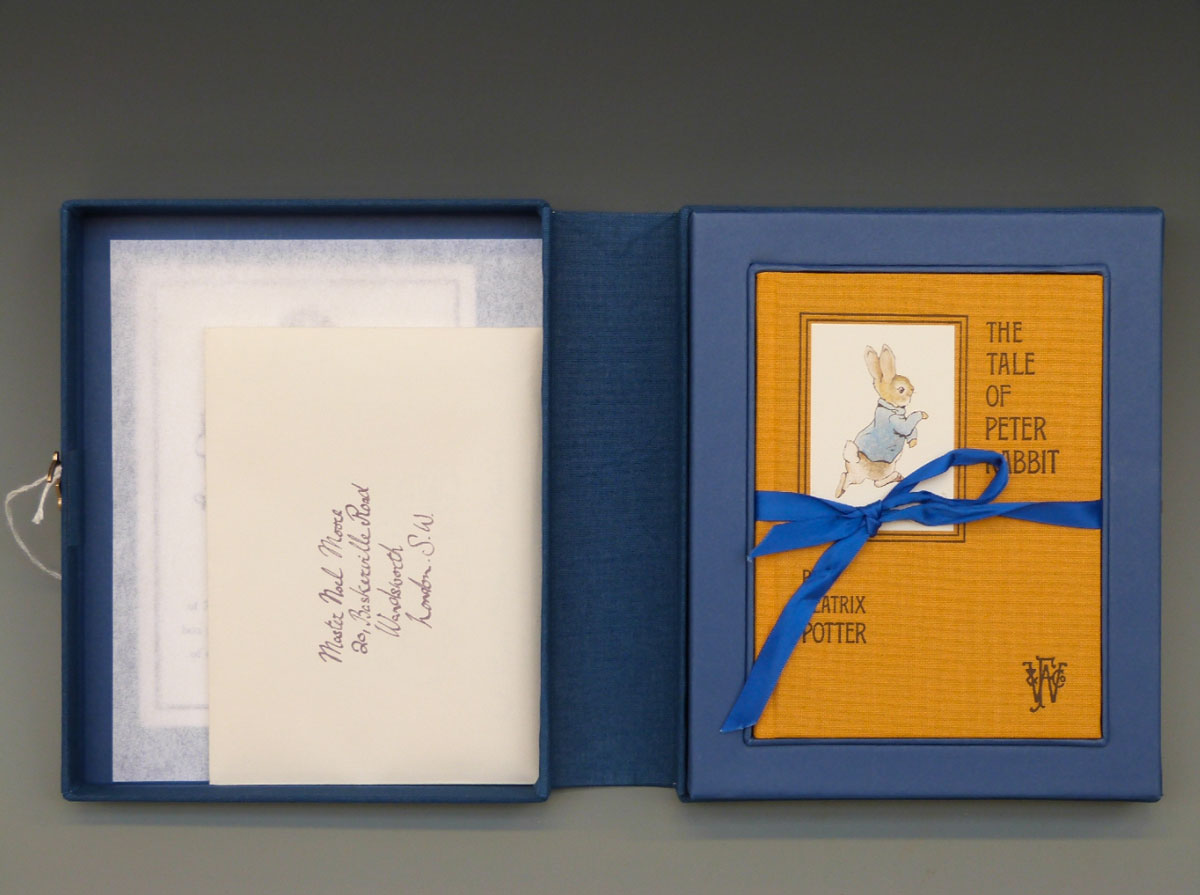
Her former governess, Annie Carter, married Edwin Moore and lived at 20 Baskerville Road; the 1891, 1901 and 1911 censuses all find the family there. Beatrix was a frequent visitor.
An envelope from one of Beatrix Potter’s picture letters to the Moore children. (Click to enlarge.)
Her illustrated “picture letters” to the Moore children include early versions of her animal characters, among them Peter Rabbit. The Moores named their fifth child Beatrix.
Daughter of the journalist and critic James Ashcroft Noble, Helen grew up close to the Common: from 1893 on St Ann’s Hill (then called The Grove), and from December 1895 at 6 Patten Road.
She met the young Edward Thomas in her father’s study. Her memoirs of their life together, As It Was and World Without End, were later collected in Under Storm’s Wing.
Granddaughter of Job Caudwell, the publisher and temperance campaigner, she came to live with him at 44 Spencer Park at the age of nine.
Her memoir, Four Miles from Charing Cross, is the fullest picture we have of “Grandpa” and his household: his concrete house, built “to obviate danger of fire”, his sons, his funeral and his monument in Wandsworth Cemetery. It has never been published, but the whole 352-page typescript can now be read on this site.
She was a writer in her own right. Her first book was an anthology for the sick, In the Morning, and a copy was accepted by Queen Alexandra. She went on to write religious plays, among them Golgotha, Simon Peter and The Iscariot, and books such as Damien of Molokai. She typed her memoir at 25 Earlsfield Road, Wandsworth Common.
Born in Wandsworth on 21 April 1887, she lived in Loxley Road.
She was head of the French department at Westfield College (1916–1934), then Professor of French Language and Literature at Bedford College, University of London (1934–1952).
Her books include The Influence of Baudelaire in France and England (1913), From Pascal to Proust (1926), Paul Valéry (1934) and a volume of Poems (1928). Her autobiography, Apples I Have Picked (1939), tells of life in the Loire valley and Sussex.
[No page of her own yet.]
Ida Cook (1904–1986)
Romantic novelist — “Mary Burchell”
As Mary Burchell she wrote more than a hundred romances for Mills & Boon, including the Warrender Saga set in the opera world.
In the 1930s she and her sister Louise used their trips to the opera in Germany as cover to help Jewish refugees escape, smuggling out valuables so that they could meet Britain’s entry requirements. They saved 29 people, largely with money from Ida’s writing. Ida told the story in We Followed Our Stars (1950), later reissued as Safe Passage.
The sisters lived beside Wandsworth Common. [PB: address to add.]
On this site
August 2023 Chronicles — “Cate Blanchett and Emma Thompson to star in new film about Wandsworth Common’s inspirational Cook sisters?”
She grew up in Magdalen Road during the First World War; her grandparents lived at Sherbrooke Lodge, Nightingale Lane.
After a promising start in the 1930s, with the novel French Polish (Gollancz, 1933) and a string of New Statesman competition prizes, she disappeared from view.
Her remarkable childhood memoir, People Who Say Goodbye (1989), is full of the Common, the cemetery, the prison and the asylum.
On this site
P. Y. Betts — with extracts, reviews and “The Quest for PY Betts” (Stephen Midlane and Sue Delafons)
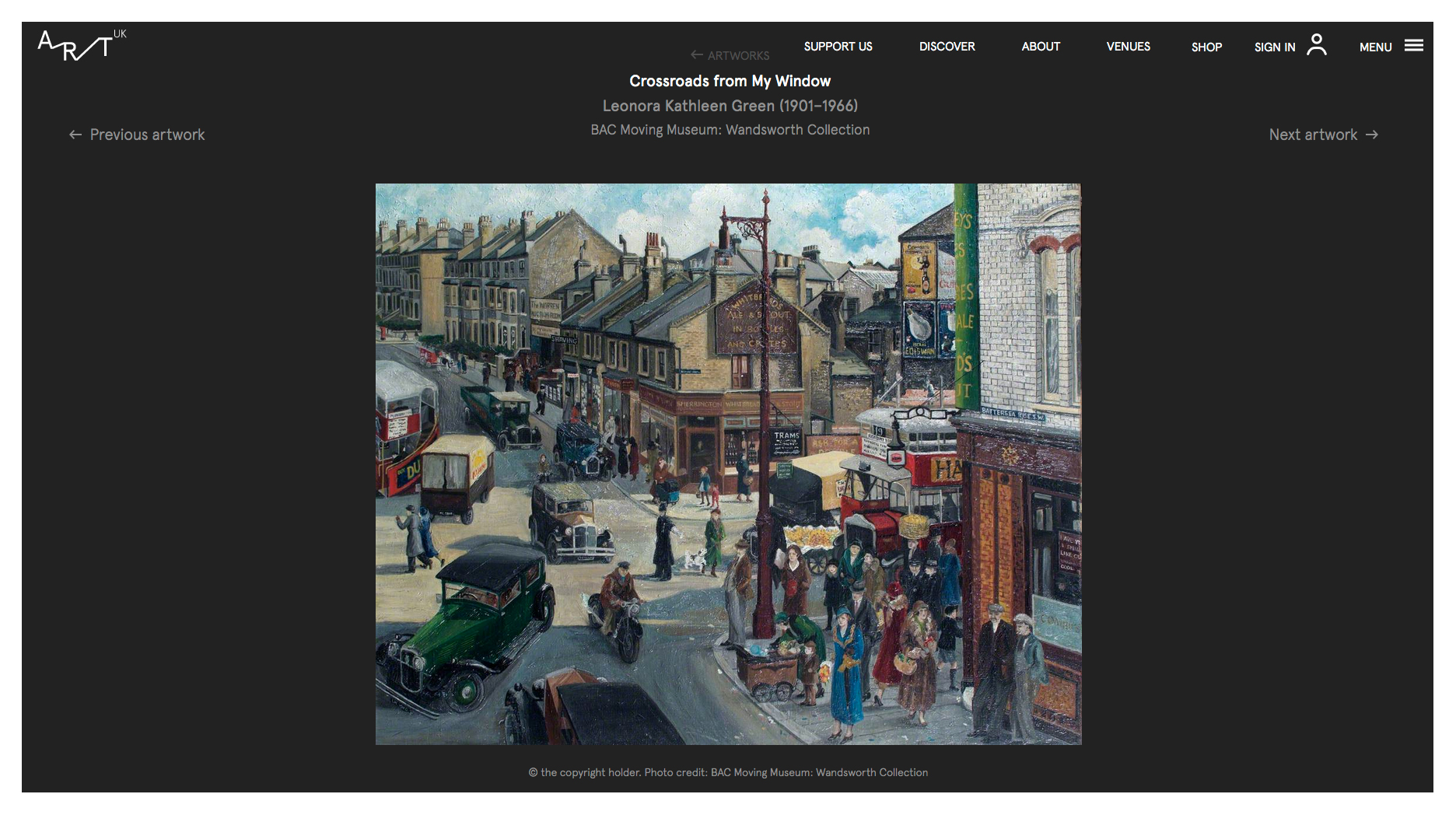
Leonora Green, “Crossroads from My Window”, 1932: Clapham Junction at the foot of Battersea Rise, a scene Pamela Hansford Johnson would have known well. ArtUK / BAC Moving Museum: Wandsworth Collection. (Click to enlarge.)
She grew up on Battersea Rise, a short walk from the Common, and drew on these streets in her early novels. She later married the novelist C. P. Snow.
On this site
Leonora Kathleen Green — whose painting of Clapham Junction, “Crossroads from My Window” (1932), shows a scene she would have known
She grew up in what she called the “safe London suburb” of Wandsworth Common.
She published nine novels. Across the Common (1964), set near the Common, won the Yorkshire Post award for best novel of the year and was reissued by Faber in 2008. She also reviewed fiction for the Daily Telegraph for twenty-five years.
She lived at 4 Earlsfield Road, on the edge of the Common, from 1952 to 1971.
The green plaque at 4 Earlsfield Road, unveiled in June 2019. (Click to enlarge.)
On a Boxing Day walk from there to Wimbledon Common, her daughter called it “Wombledon Common”, and the Wombles were born. The first book came out in 1968 and the television series in 1973.
She was married to the broadcaster Max Robertson. Wandsworth Council put up a green plaque on the house in June 2019.
On this site
January 2024 Chronicles — “The Wombles of Wandsworth Common?”, with a 1975 interview describing her “lovely white house on the edge of Wandsworth Common”
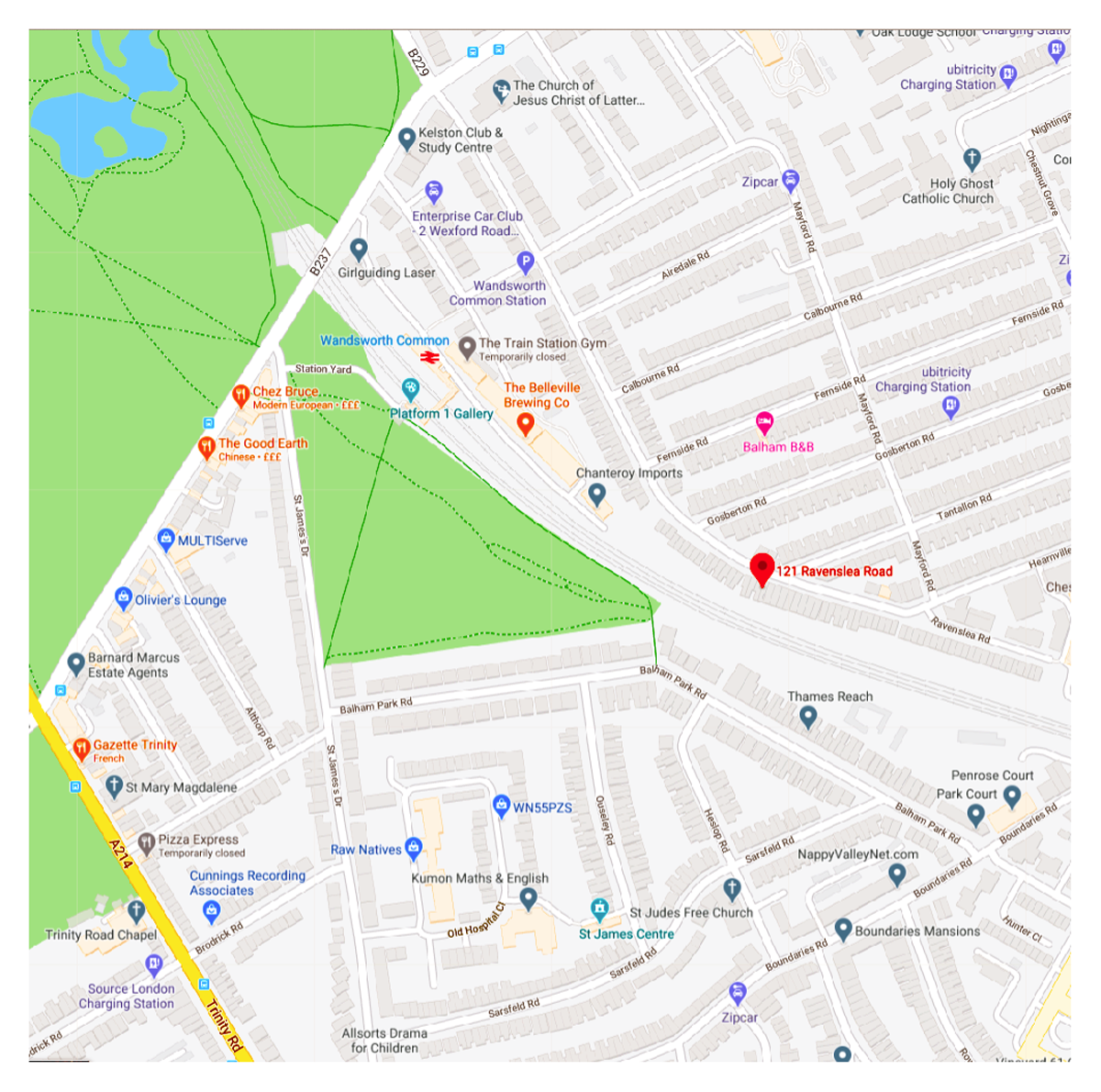
Usually associated with Clapham, where she has a blue plaque, she in fact grew up in Ravenslea Road. She went to Hearnville School and Streatham High School.
Angela Carter’s childhood home in Ravenslea Road. (Click to enlarge.)
Her biographer Edmund Gordon (The Invention of Angela Carter) is an important source on her Balham and Wandsworth Common years.
Her psychological thrillers use the Common and its streets as their setting.
Under Your Skin (2014) opens with a body found on the Common. It was followed by Remember Me This Way (2015) and Finders, Keepers (2020), which is set in the newly gentrified streets south of the Common that estate agents call “Trinity Fields”.
Shirley Passmore — her outline history of Wandsworth Common, circulated for years in typescript
Still to find
The Tinted Venus at Bramblebury, 1889
A play by a woman writer, still to be identified
Bramblebury House, West Side. Wandsworth Heritage Service. (Click to enlarge.)
A stage version of The Tinted Venus was performed at Bramblebury, one of the largest houses on West Side, on 12 October 1889. That autumn the house and its grounds were also hosting the great “Polytechnic Bazaars” that raised money for the new Battersea Polytechnic.
The performance is mentioned on p. 196 of Katherine Newey’s Women’s Theatre Writing in Victorian Britain, which suggests that the adaptation was by a woman. Her name is still to be found. [PB: check Newey p. 196.]
The novel
The Tinted Venus: A Farcical Romance (Bristol: J. W. Arrowsmith, 1885) was by F. Anstey, the pen name of Thomas Anstey Guthrie (1856–1934), already famous for Vice Versa (1882). The illustrations were by Bernard Partridge of Punch.
The story
Leander Tweddle is a hairdresser of about thirty, with a small shop in a passage off Southampton Row, Bloomsbury. He is secretly engaged to Matilda Collum, a florist’s bookkeeper.
One October evening he goes with his friend James Jauncy and the Parkinson sisters to “Rosherwich Gardens”, a riverside pleasure garden (a thin disguise for the real Rosherville Gardens at Gravesend). Ada Parkinson, an old flame, dares him to slip his aunt’s engagement ring, meant for Matilda, onto the finger of a marble statue of Venus. The ring sticks fast.
That night the statue turns up in his rooms, alive. She is Aphrodite herself. Because of the ring she claims Leander as her husband, and she threatens to crush any rival, Matilda included.
The rest of the book is Leander’s increasingly desperate struggle to hide a jealous goddess in a London hairdresser’s. He stands her in his saloon under a wrapper, where she frightens off customers who are rude about her proportions. He smuggles her about the streets in a hooded cloak, curling her hair and painting her face to make her pass. And he consults Mr Freemoult, an elderly scholar from the British Museum Reading Room, about the old legend of a young man who once escaped the same predicament. Meanwhile Inspector Bilbow of Scotland Yard is on the trail, because the statue turns out to have been stolen from Sir Peter Purbecke’s collection at Wricklesmarsh Court, Blackheath.
Thinking she has made off with Leander, Matilda breaks off the engagement. Everything seems lost, until Leander tricks the goddess into a chemist’s shop and asks the chemist to test whether the ring is real gold. The test can only be done with the ring off her finger. The moment she takes it off, her power ends: she turns back to stone, frozen in mid-stride as she lunges at him.
Leander loads the statue into a hansom cab, rubs the paint off its face, and abandons it at Scotland Yard, where Inspector Bilbow takes all the credit for recovering it. Leander gets his ring back, puts it on Matilda’s finger, and with a reward from Sir Peter opens a smart West End saloon. He styles himself “Professor” and invents celebrated hair-washes.
In the last joke of the book, a cast of the statue goes on show at South Kensington. Its catalogue entry notes “traces of colour in the original marble, which are supposed to have been added at a somewhat later period”: Leander’s handiwork.
Why “Tinted”?
The title points both to Leander’s painting of the statue and to the most talked-about statue of the day, John Gibson’s coloured marble Tinted Venus, shown at the International Exhibition of 1862.
The story itself is a comic version of a very old legend of a ring placed on the finger of a statue of Venus, told by the medieval chronicler William of Malmesbury and retold by Prosper Mérimée in La Vénus d’Ille (1837).
It has had a long afterlife: a silent film, The Tinted Venus (1921), and the Broadway musical One Touch of Venus (1943), by Kurt Weill, S. J. Perelman and Ogden Nash.
A good choice for Bramblebury
For a house performance in 1889 it was an obvious choice: a recent bestseller, very funny, needing only a handful of actors, and with a splendid part for whoever could stand still longest as the statue.