Last modified: 10 November 2026 · Build 6
Reorganised 10 November 2026. This page now gathers the facts and stories in date order. The arguments about how the place may have shaped Hardy’s writing (Egdon Heath, Kate Webster and Tess, Graham Swift, Mark Ford) have their own page: Did Wandsworth Common shape Thomas Hardy? Points still to check are marked [?].
On this page: In brief · The house · The 1881 census · Chronology · The stories · Two poems · In the Chronicles · Sources and further reading · Still to do
Other Hardy pages: Did Wandsworth Common shape Thomas Hardy? · Thomas Hardy and an execution at Wandsworth Prison · The thunderstorm scene in A Laodicean · Roz Page’s talk for the Friends of Wandsworth Common (2026)
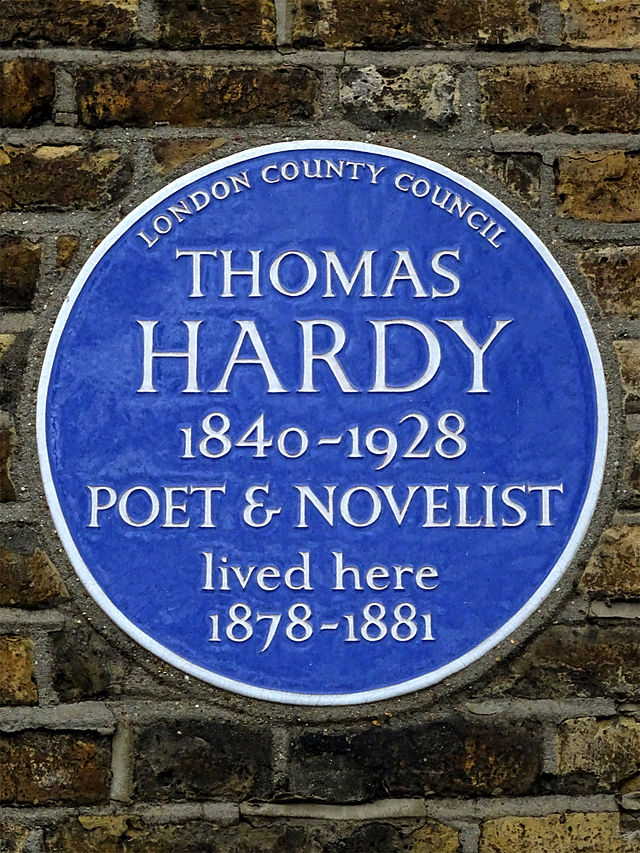
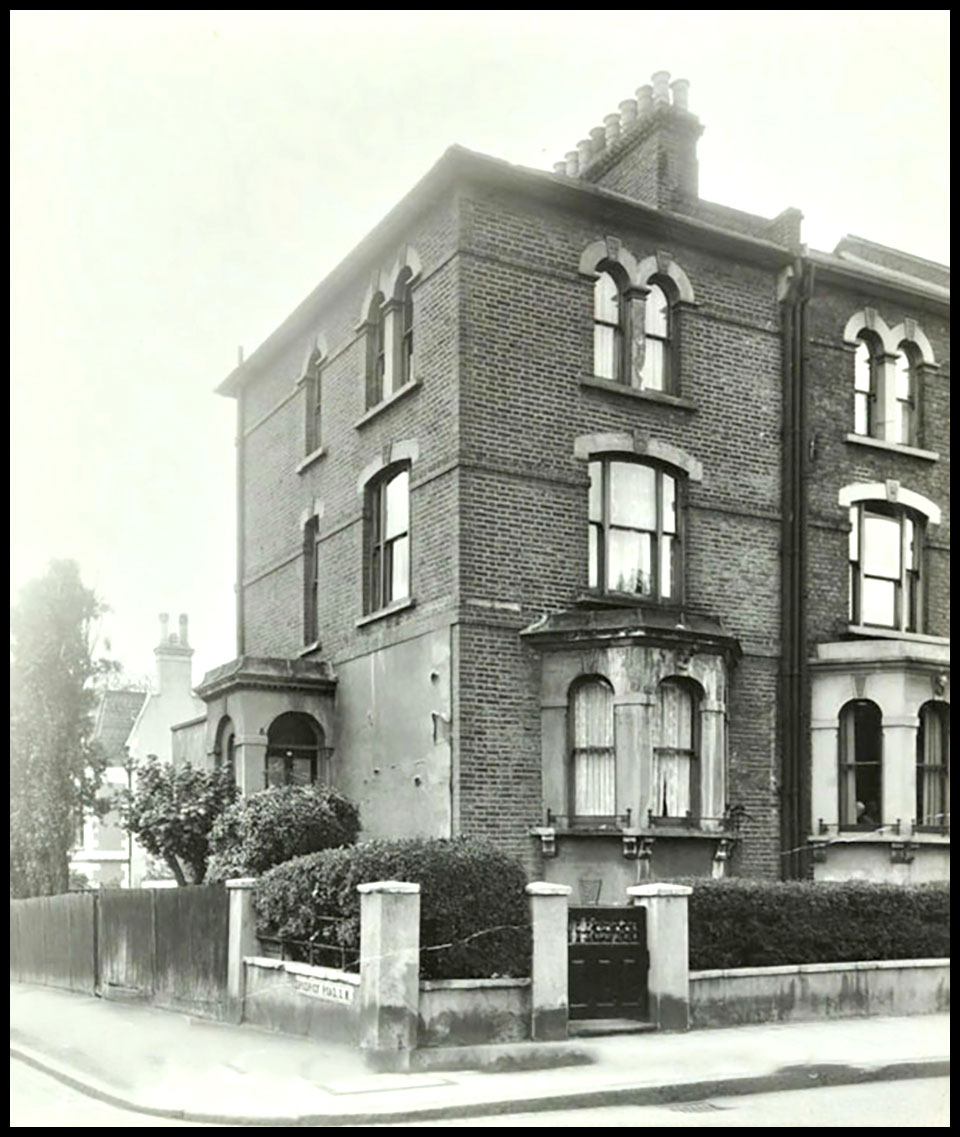
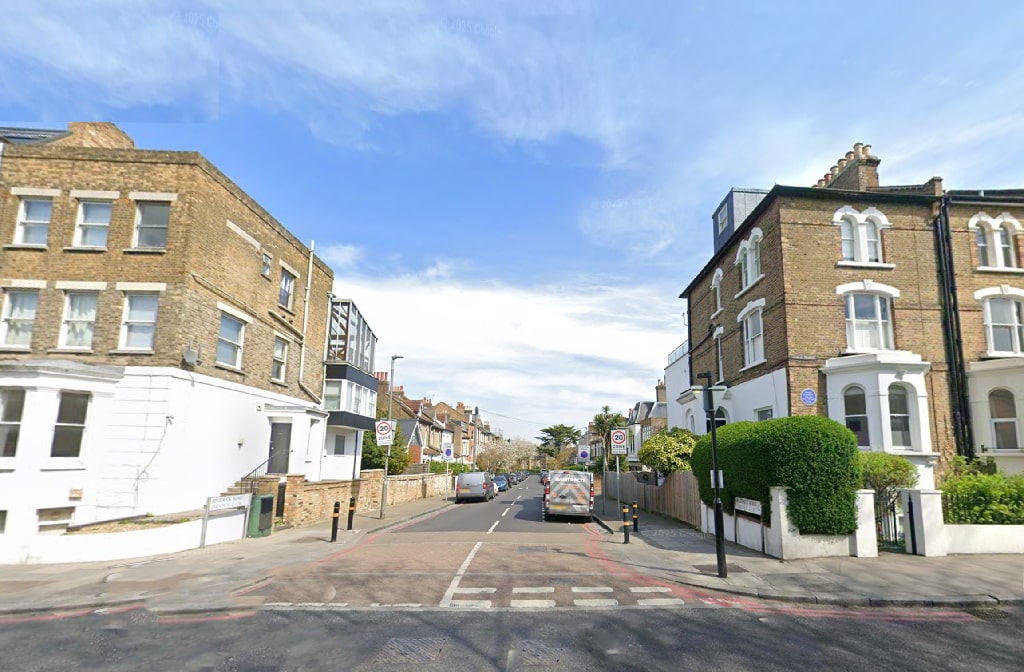
Thomas and Emma Hardy lived at 1 Arundel Terrace, on the corner of Trinity Road and Brodrick Road, from 22 March 1878 until June 1881. The house stood at almost the highest point of Trinity Road, a few hundred yards south of Wandsworth Common.
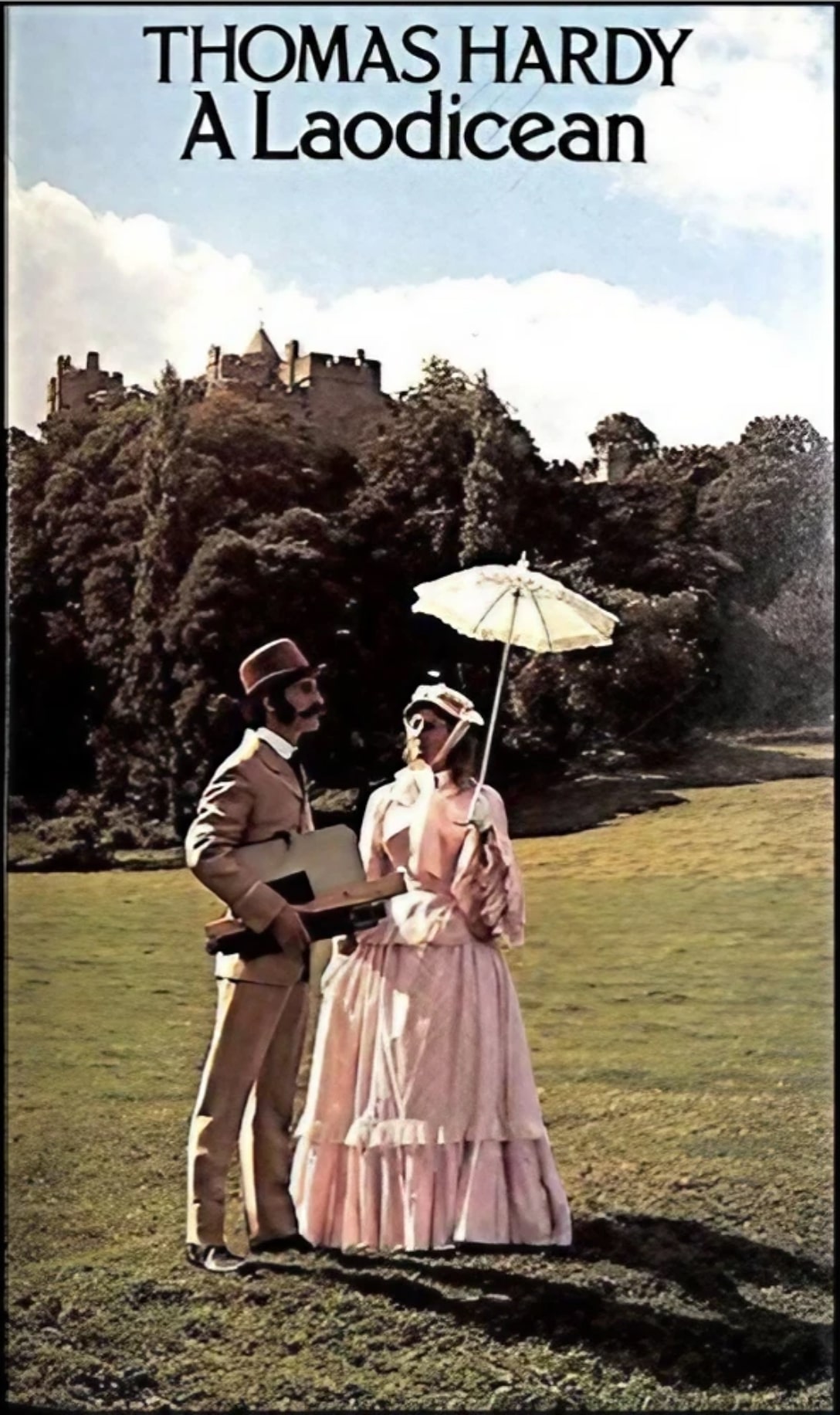
Hardy was 37 when they arrived, and already known for Far from the Madding Crowd. Here he saw The Return of the Native through the press, wrote The Trumpet-Major, and dictated most of A Laodicean to Emma from his sickbed during a near-fatal illness.
Hardy’s own account calls this chapter of his life “Life and Literature in a London Suburb”. It also says that “it was in this house that their troubles began”.
Hardy’s diary for the day they moved in gives the exact position:
“March 22. We came from Bolingbroke Grove to Arundel Terrace and slept here for the first time. Our house is the south-east corner one where Brodrick Road crosses Trinity Road down towards Wandsworth Common Station, the side door being in Brodrick Road.”
The Early Life of Thomas Hardy (1928), p. 157.
Hardy “decided that the practical side of his vocation of novelist demanded that he should have his headquarters in or near London”. In the first week of February 1878 he and Emma came up from Sturminster Newton to look for a house, and in the middle of the month he signed a three-year lease “at Upper Tooting, close to Wandsworth Common” (Early Life, p. 156).
Alexander Macmillan, the publisher, lived ten minutes down the road at Knapdale, and his garden parties drew everyone who mattered in literary London. That may help explain the choice of Trinity Road. So may the trains: from Wandsworth Common station, at the bottom of Brodrick Road, there was a regular service to Victoria for meetings with editors and publishers. In June 1878 Hardy was elected to the Savile Club, “and by degrees fell into line as a London man again” (Early Life, p. 159).
The lease ran out at Lady Day (25 March) 1881, when Hardy was too ill to move. He was granted a three months’ extension. The Hardys slept at their new home, Llanherne in Wimborne, Dorset, for the first time on 25 June 1881 (Early Life, p. 193).
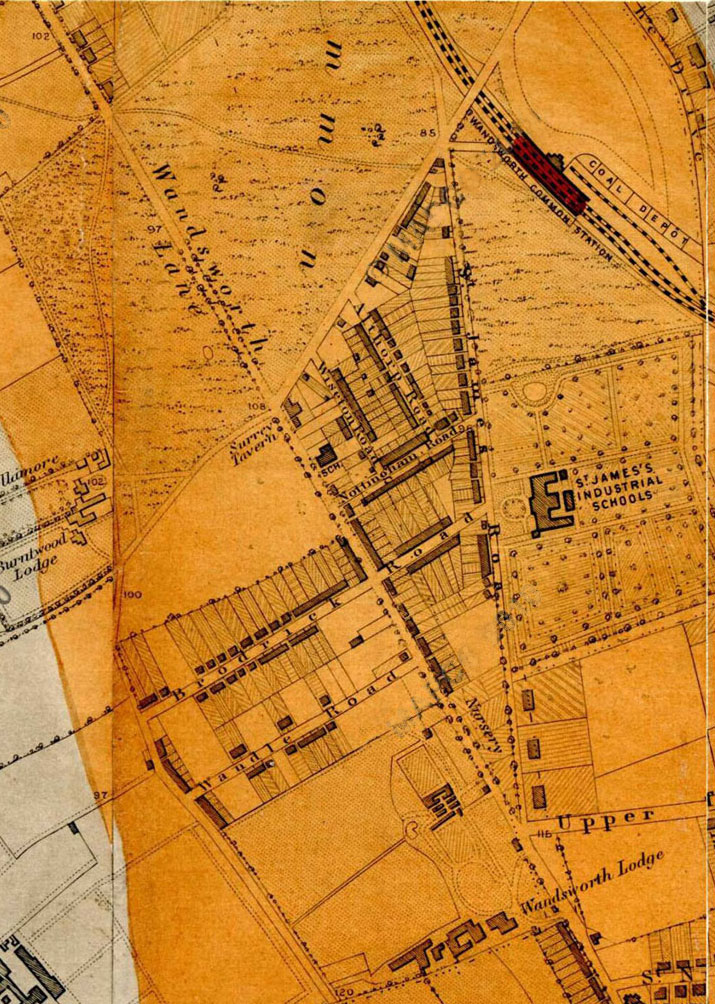
Maps show how quickly the open land round the house was built over:
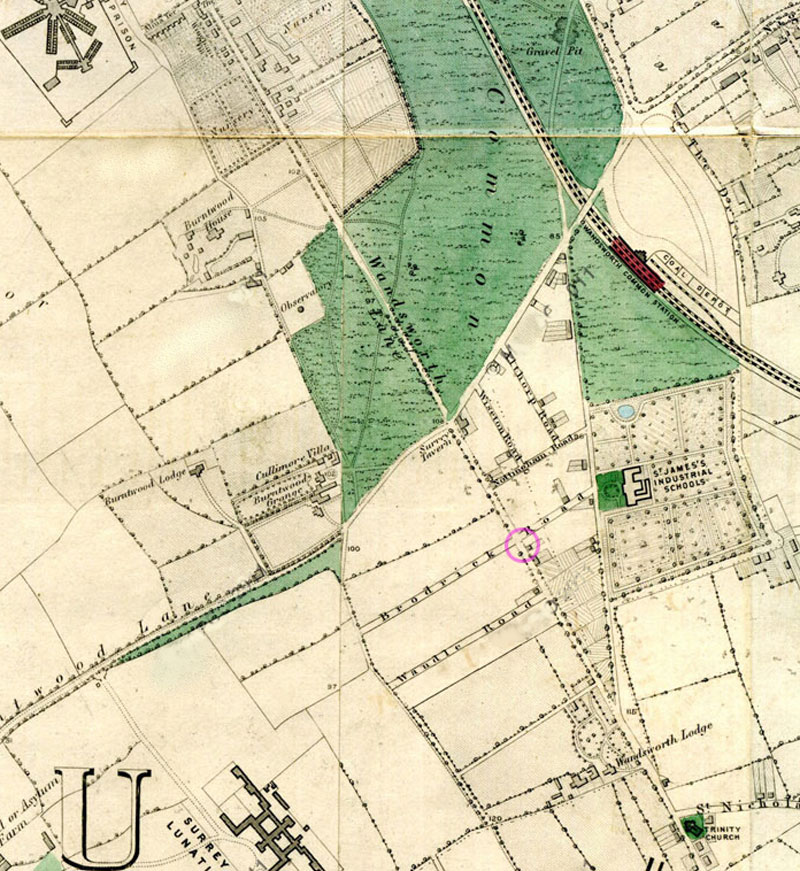
[PB: Many changes to notice: the area at first very open and “rural”; views to south and north closing in; a few very large houses swiftly replaced by small terraces. Show how furze (gorse) is represented on these maps.]
The house itself was built on land filched from the Common only a few years earlier. [Part of McKellar’s triangle? Compare Stanford’s geological map of 1878.]
The house is now flats. In October 2014 the Daily Telegraph (Julia Flynn, “Live in Thomas Hardy’s London home”, 21 October 2014) reported that the upper maisonette was for sale at £760,000. The owners said they could see the Shard, Canary Wharf and the London Eye from the bedroom, where Hardy would have seen sheep grazing on the Common. The article also claims that Trinity Road got its present name while Hardy lived there, when it had been Wandsworth Lane. [Unlikely: Hardy’s own diary already says “Trinity Road” in March 1878, and the name comes from Holy Trinity, consecrated 1855.]
More recently, another flat in the house was offered at £995,000 (Country Life; Time Out). [Date?]
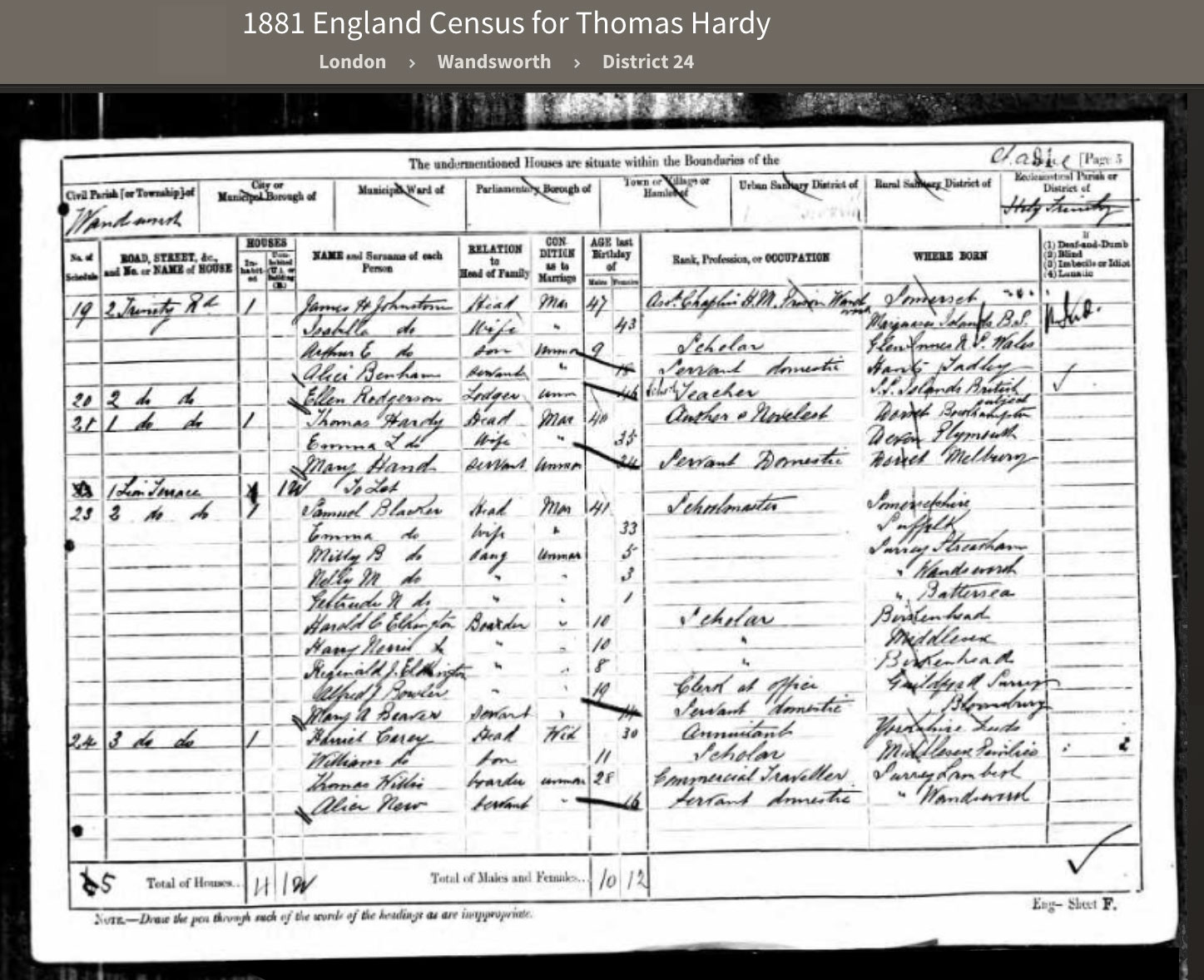
On census night, 3 April 1881, Hardy was in his sixth month in bed. The household:
| Schedule | Address | Name | Relation | Age | Occupation | Born |
|---|---|---|---|---|---|---|
| 21 | 1 [Trinity Road] | Thomas Hardy | Head, married | 40 | Author & Novelist | Dorset, Bockhampton |
| Emma L[avinia] Hardy | Wife | 35 | Devon, Plymouth | |||
| Mary Hand | Servant, unmarried | 24 | Servant, domestic | Dorset, Melbury |
1881 census, Wandsworth, District 24, p. 5. Ecclesiastical parish: Holy Trinity.
Every entry in The Early Life of Thomas Hardy (1928) that touches the house, the Common or the neighbourhood, with the Chronicles that tell each story.
| 8 Feb. 1878 | Hardy writes to his illustrator Arthur Hopkins from lodgings at 1 Bolingbroke Grove (below). |
| mid-Feb. 1878 | Signs a three-year lease on a house “at Upper Tooting, close to Wandsworth Common” (p. 156). |
| 18 Mar. 1878 | Leaves Sturminster Newton: “End of the Sturminster Newton idyll”, to which he later added “Our happiest time” (p. 156). |
| 22 Mar. 1878 | First night at Arundel Terrace (p. 157). Chronicles, March 2022. |
| April 1878 | Notes on plot, and on “the beauty of association” (p. 157). See the influence page. |
| 16 June 1878 | Sunday evening at Alexander Macmillan’s: the story of the red-cloaked witch (p. 158). July 2025, part two. |
| Summer 1878 | Hardy runs hatless down Brodrick Road after an organ-grinder (pp. 161–162). July 2025, part two. |
| Nov. 1878 | The Return of the Native published in book form (p. 162). |
| 28 Nov. 1878 | “Woke before it was light. Felt that I had not enough staying power to hold my own in the world.” (p. 162) November 2021. |
| Jan. 1879 | The incident behind the poem “A January Night (1879)” (p. 163). January 2022. |
| 27 June 1879 | “From Tooting to Town again”: two young women on the train (p. 167). June 2022. |
| 8 or 9 July 1879 | Mrs Macmillan’s garden party at Knapdale, and the thunderstorm used in A Laodicean (pp. 167–168). July 2025, part two. |
| 29 July 1879 | Kate Webster hanged at Wandsworth Prison: not in the Early Life, but see Thomas Hardy and an execution at Wandsworth Prison. |
| 1 Feb. 1880 | The solitary skater on the pond by the Trinity Church Schools (pp. 173–174). February 2022. |
| 19 May 1880 | Dawn view from the upper back bedroom: “the Four Millions” (pp. 177–178). May 2022. |
| 23 Oct. 1880 | Back from Normandy on the day The Trumpet-Major is published; falls seriously ill (p. 187). October 2021. |
| Nov. 1880 to May 1881 | Dictates A Laodicean to Emma, lying on an inclined plane (pp. 187–188). |
| Jan. 1881 | “My third month in bed”: snow drifting into the house (p. 190). |
| 3 April 1881 | Census night (above). |
| early May 1881 | First walk alone, on Wandsworth Common, reciting Gray (p. 192). |
| 25 June 1881 | First night at Llanherne, Wimborne (p. 193). |
The Early Life says only that they “had stayed at Bolingbroke Grove to be near”. I asked the Five Houses Group to keep their eyes open, and Sarah Vey duly obliged (3 November 2023). Through the online edition of The Collected Letters of Thomas Hardy, vol. 1 (ed. Purdy and Millgate), she found a letter of 8 February 1878 from Hardy to his illustrator Arthur Hopkins, written from lodgings at 1 Bolingbroke Grove. An editorial note explains these as temporary lodgings near Wandsworth Common and Upper Tooting. Thanks, Sarah!
Arthur Hopkins was illustrating The Return of the Native for Belgravia. He was the brother of the poet Gerard Manley Hopkins, with whom Hardy is often compared. Hopkins himself was living at 22 St Ann’s Villas, Notting Hill: that is the address on his reply to Hardy of 19 February 1878 (Hardy’s Correspondents). So 1 Bolingbroke Grove was not his house. [PB: I’ve collected some material about AH, which I must add.]
[Who kept 1 Bolingbroke Grove? Look for the lodging-house keeper in the 1871 or 1881 census, or in directories.]
Emma looked out of a back window and saw her husband running without a hat down Brodrick Road and round the corner, probably into St James’s Road (now Drive). From his writing-room he had heard a street barrel-organ, a “harmoniflute”, playing a quadrille he had last heard whistled more than twenty years before and had never been able to name. The frightened organ-grinder, a young foreigner with no English, could only point to the index on his instrument: “Quadrille”. Hardy never heard the tune again.
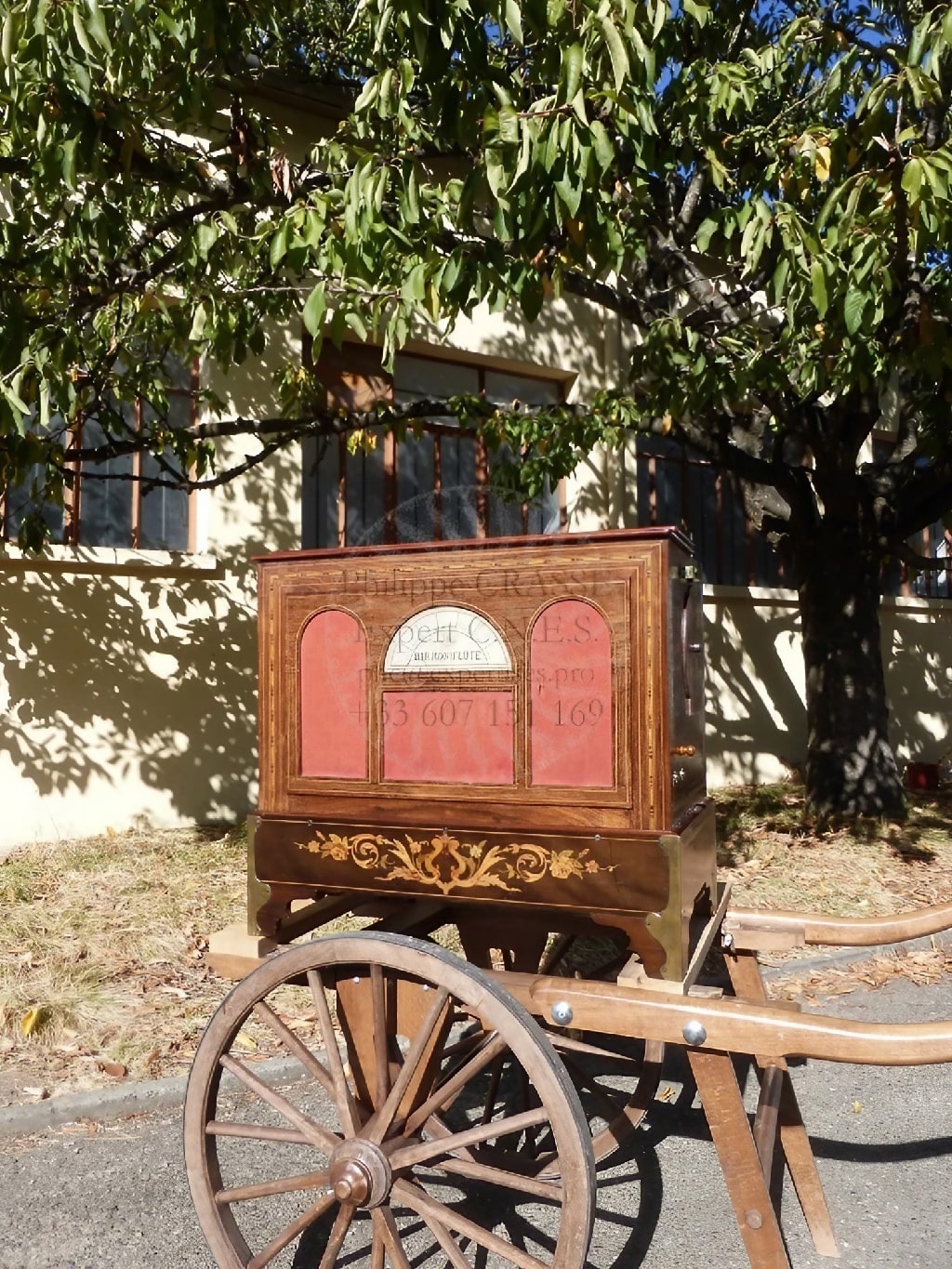
Early Life, pp. 161–162. Told in full, with notes on Jullien, Cremorne and the Argyll Rooms, in Chronicles, July 2025, part two.
Alexander Macmillan had lived at Knapdale, on Tooting Bec Road, since 1863. The Hardys spent a Sunday evening there in June 1878 and went to Mrs Macmillan’s garden party in July 1879, among many visits. At Knapdale Hardy met the scientist Thomas Henry Huxley, “Darwin’s Bulldog”, and came to like him.
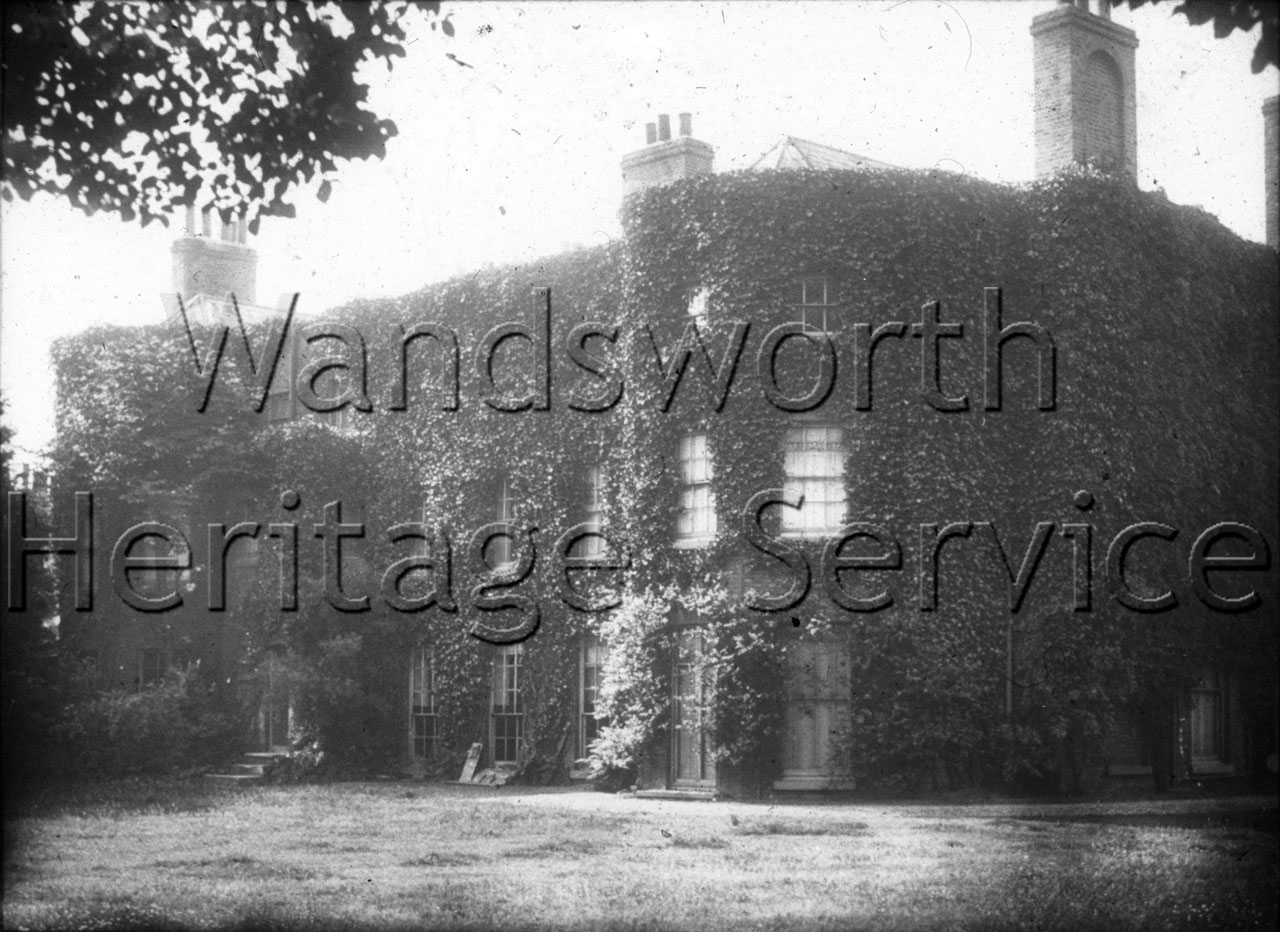
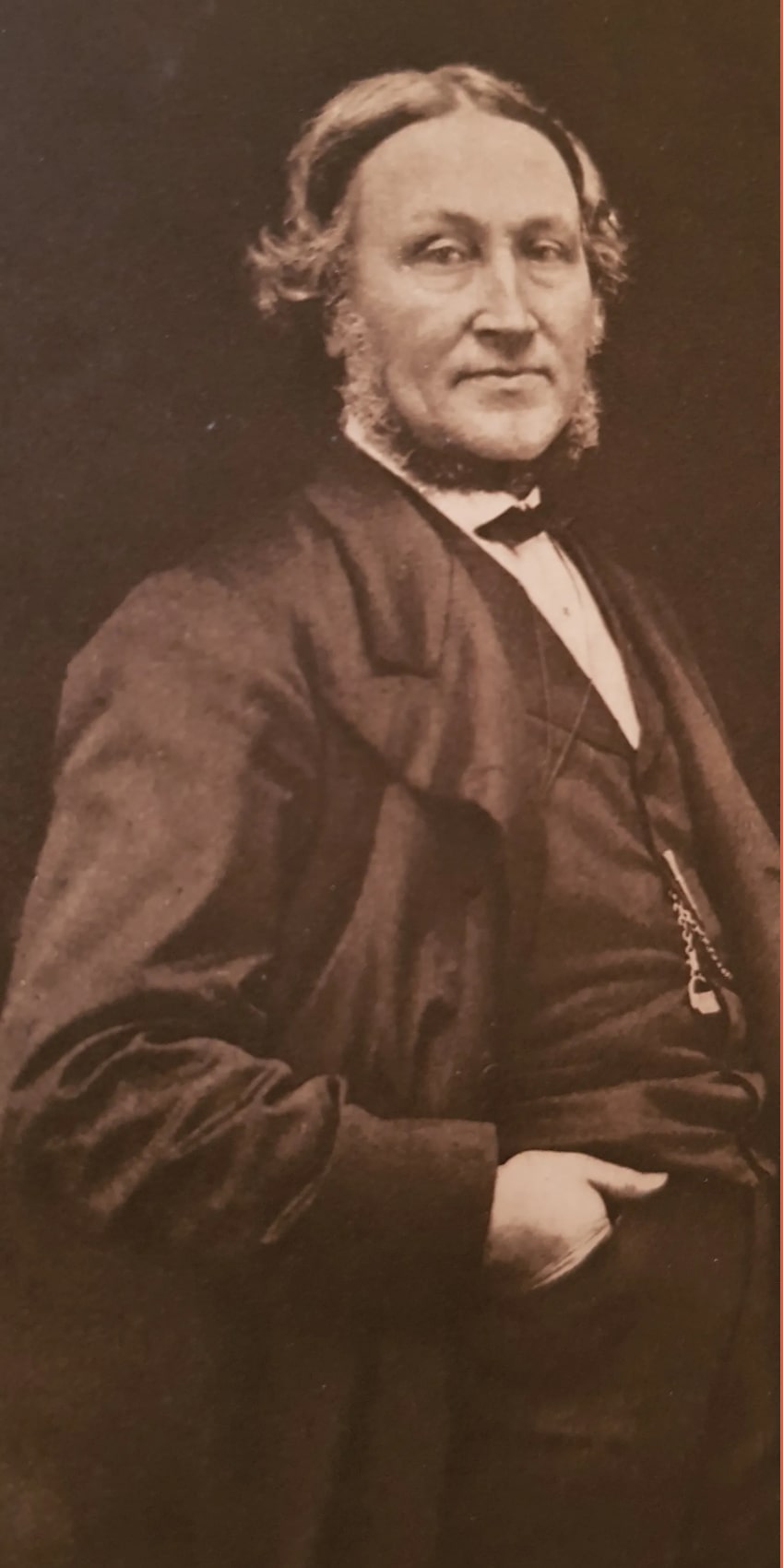
Knapdale, its other names (“The Elms”, “Broadwaters”?) and its survival: July 2025, part two. Huxley’s Physiography: August 2025, part two. [Check that URL.]
“July 8 or 9. With E. to Mrs. [Alexander] Macmillan’s garden-party at Knapdale, near our house. A great many present.”
Hardy talked to Mr White of Harvard, to the New York publisher Henry Holt, and to John Morley, who had read his first manuscript years before. The Early Life adds: “It was at this garden-party at Mrs. Macmillan’s that the thunderstorm came on which Hardy made use of in a similar scene in A Laodicean.”
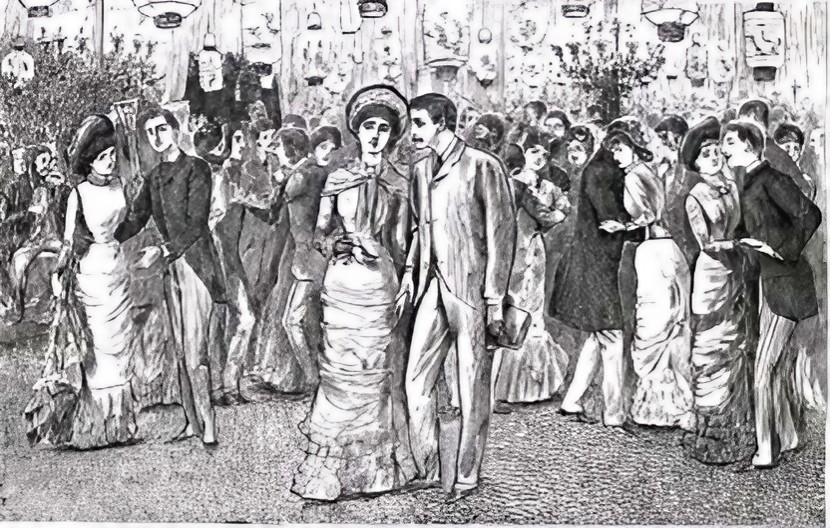
Early Life, pp. 167–168. The scene itself: The thunderstorm scene in A Laodicean.
“From Tooting to Town again. In railway carriage a too statuesque girl; but her features were absolutely perfect. She sat quite still, and her smiles did not extend further than a finger-nail’s breadth from the edge of her mouth. The repose of her face was such that when the train shook her it seemed painful. Her mouth was very small, and her face not unlike that of a nymph. In the train coming home there was a contrasting girl of sly humour — the pupil of her eye being mostly half under the eyelid.”
Early Life, p. 167. Presumably from Wandsworth Common station, at the bottom of Brodrick Road. Chronicles, June 2022.
Hardy “observed a man skating by himself on the pond by the Trinity-Church Schools at Upper Tooting, near his own house, and was moved to note down”:
“It is a warm evening for the date, and there has been a thaw for two or three days, so that the birds sing cheerfully. A buttercup is said to be visible somewhere, and spring has, in short, peeped in upon us. What can the sentiments of that man be, to enjoy ice at such a time? The mental jar must overcome physical enjoyment in any well-regulated mind. He skates round the edge, it being unsafe to go into the middle, and he seems to sigh as he puts up with a limitation resulting from blessed promise.”
Using a large-scale OS map of about 1870, I think the pond was at the corner of Field 20, opposite the National Schools beside Holy Trinity. The site is now the BP garage at 62–64 Trinity Road.
Early Life, pp. 173–174. Chronicles, February 2022.
The house stood high, and on clear days the Hardys could see a long way from the top windows. On a sleepless night Hardy was troubled, as he sometimes was, by “a horror at lying down in close proximity to ‘a monster whose body had four million heads and eight million eyes’”. At daybreak he wrote:
“In upper back bedroom at daybreak: just past three. A golden light behind the horizon; within it are the Four Millions. The roofs are damp gray: the streets are still filled with night as with a dark stagnant flood whose surface brims to the tops of the houses. Above the air is light. A fire or two glares within the mass. Behind are the Highgate Hills. On the Crystal Palace hills in the other direction a lamp is still burning up in the daylight. The lamps are also still flickering in the street, and one policeman walks down it as if it were noon.”
Early Life, pp. 177–178. Chronicles, May 2022, with Sheila Palmer’s photograph of the view today from a couple of doors along.
The Hardys returned from Normandy on 23 October 1880, the day The Trumpet-Major was published, and Hardy fell seriously ill. A surgeon who lived opposite found internal bleeding and thought an operation necessary. Emma consulted the Macmillans, whose doctor asked how long Hardy could lie in bed: if for months, he might avoid the operation.
So Hardy lay on an inclined plane, his feet higher than his head, for six months. The first instalment of A Laodicean had already been printed for the first English number of Harper’s. Determined not to let the publishers down, and anxious to provide for Emma, he dictated the rest to her from November onwards. She was his nurse and amanuensis, and a rough draft was finished by early May.
The cause was probably a bladder inflammation. Hardy blamed too much sea-bathing at Étretat that summer.
“January 1881. My third month in bed. Driving snow: fine, and so fast that individual flakes cannot be seen. In sheltered places they occasionally stop, and balance themselves in the air like hawks. . . . It creeps into the house, the window-plants being covered as if out-of-doors. Our passage (downstairs) is sole-deep, Em says, and feet leave tracks on it.”
“Incidents of lying in bed for months. Skin gets fair: corns take their leave: feet and toes grow shapely as those of a Greek statue. Keys get rusty; watch dim, boots mildewed; hat and clothes old-fashioned; umbrella eaten out with rust; children seen through the window are grown taller.”
John Buckmaster, who had once been a carpenter, often railed against the jerry-built new houses round the Common. Given its exposed position, the Hardys’ house must have been particularly grim that winter.
In early May 1881, more than six months after taking to his bed, “he went forth on foot alone; and it being a warm and sunny morning he walked on Wandsworth Common, where, as he used to tell, standing still he repeated out loud to himself”:
See the wretch that long has tost On the thorny bed of pain, At length repair his vigour lost, And breathe and walk again: The meanest flowret of the vale, The simplest note that swells the gale, The common sun, the air, the skies, To him are opening Paradise.
Thomas Gray, “Ode on the Pleasure Arising from Vicissitude”. Early Life, pp. 187–192. Thomas Hardy falls seriously ill (Chronicles, October 2021).
From Moments of Vision (1917). The Early Life says it “relates to an incident of this new year (1879) which occurred here at Tooting, where they seemed to begin to feel that ‘there had past away a glory from the earth’. And it was in this house that their troubles began.” (p. 163) The troubles were those of the marriage.
The rain smites more and more, The east wind snarls and sneezes; Through the joints of the quivering door The water wheezes. The tip of each ivy-shoot Writhes on its neighbour’s face; There is some hid dread afoot That we cannot trace. Is it the spirit astray Of the man at the house below Whose coffin they took in to-day? We do not know.
First printed in Harper’s Magazine, December 1911, as “Night in a Suburb (Near Tooting Common)”, then collected in Satires of Circumstance (1914). On a wet night, beyond the last street lamp, the poet passes “two linked loiterers, wan, downcast” walking slowly and sadly. Hours later they are still there. “Thirty years of blur and blot” have passed since, which takes us back to about 1880. It ends:
Whither? Who knows, indeed . . . And yet To me, when nights are weird and wet, Without those comrades there at tryst Creeping slowly, creeping sadly, That lone lane does not exist. There they seem brooding on their pain, And will, while such a lane remain.
In her talk for the Friends of Wandsworth Common (2026), Roz Page said that “Snow in the Suburbs” was written at the Tooting house, and an audience member read it aloud. It is a close-watched snowfall that ends with a black cat climbing the snowy front steps to be taken in. The poem was not published until Human Shows (1925), and others place it at Surbiton, where the Hardys lived in 1874–75. [Check: Purdy’s bibliography or J. O. Bailey’s Poetry of Thomas Hardy: A Handbook. The great snow of January 1881, which drifted into the house on Trinity Road, would fit.]
Checked against the full text of the site, 10 November 2026.