Last modified: 28 October 2026
Added
IN PROGRESS — NOT FOR PUBLICATION
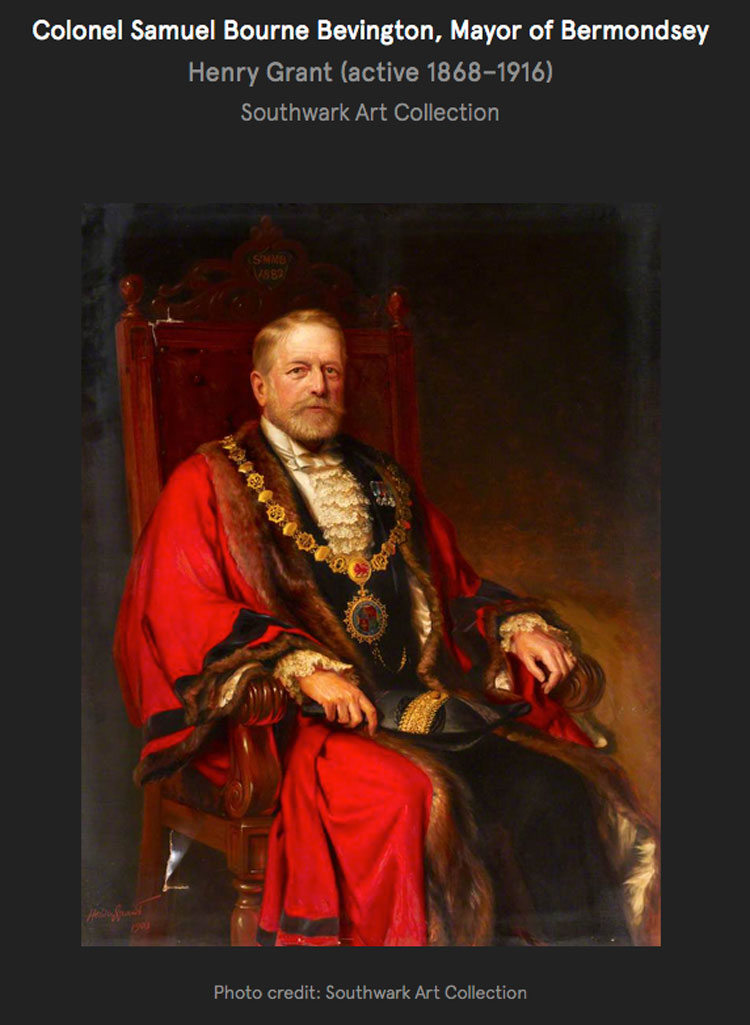
Colonel Samuel Bourne Bevington (1832 - 1907)
The Wandsworth Common boy who became the first Mayor of Bermondsey
Born 20 October 1832.
Married Sarah Ann, daughter of Benjamin Edgington, by Maria Theresa Nattali, 5 May 1859 [his wife had lived at The Elms, Tooting?]
Children:
Robert Knox Bevington, b.1861.
Samuel Nattali Bevington, b.1865, d. 1896.
Mary Elizabeth Bevington, b.1863.
Flora Bevington, b. 1867.
James Bevington, b. 8.9.1870, d.20.9.1870.
Kathleen, b. 1873
Sarah Constance, b. 1875.
See refs to SBB as a defender of Wandsworth Common, 1867.
(Click on image to enlarge)
Tanners of Bermondsey
A moving light . . . of so much . . . in Bermondsey, was Colonel Samuel Bourne Bevington (always 'Sam', 1832 - 1907), a member of one of the oldest and most important local Tanners families.
A great benefactor of the area; he set up the Voluntary Reserve Battalion (Territorials) of the Queen's Royal West Surrey Regiment providing the equipment, uniforms and the Drill Hall opposite his factory, Neckinger Mills, in 1884, hence his Colonelcy. This facility remained until 2012 when the Bevington Trustees did not renew the lease because of the site's value for residential development. Furthermore, the Civil Parish Vestry Hall was instituted by him in 1880 (the later borough Town Hall, Blitzed in 1941). He also paid for the original public library, both on Spa Road, opened 1891, now a community centre.
He was Master of the Leathersellers Company 1897-98 and presented a very fine silver cup, by CR Ashbee, to mark his year but also promoted a more important tie with Bermondsey and the City as discussed below in regard to training. When the new Metropolitan Boroughs of London County were created Col Sam became the new Borough of Bermondsey's first Mayor in 1900, serving two terms.
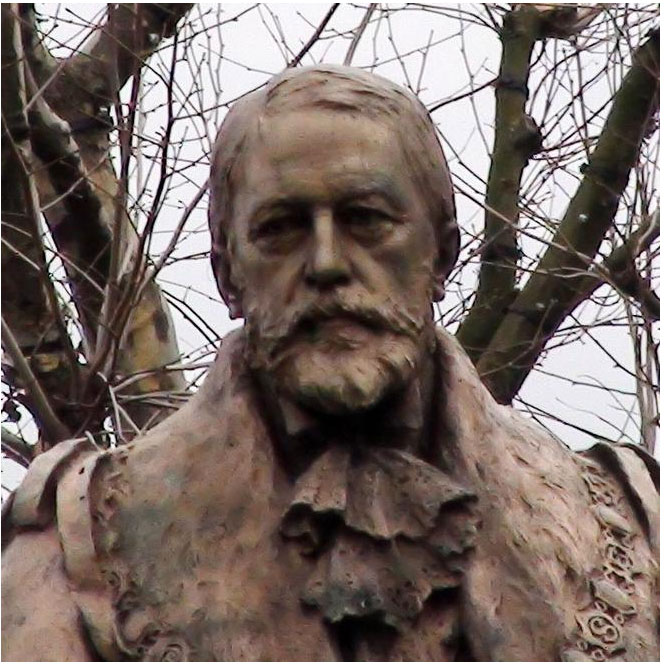
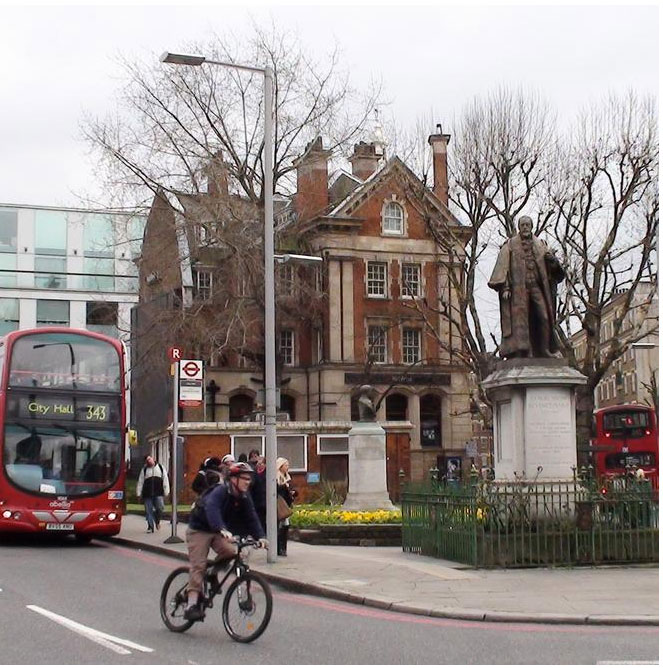
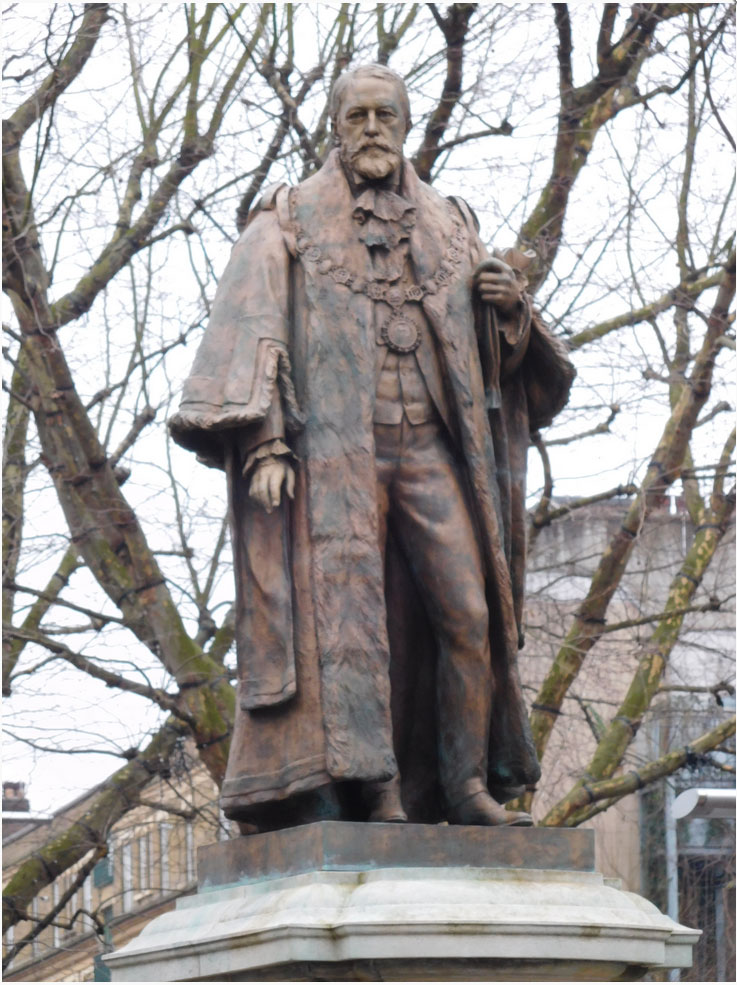
Always generous, in his last year in office entertained 400 of his staff and their families to a day trip, meals and sports day at his estate in Sevenoaks. There is a full size statue of him on Tooley Street, opposite the old Grammar School, wearing his Mayoral robes and the fine chain and badge of office he commissioned and donated which is still worn by the Mayor of Southwark.
The links on the Chain spell out 'B-E-R-M-O-N-D-S-E-Y'.
[http://tannersofbermondsey.org/leathermarket.html
]
Student at King's College, London
The 1861? census describes him as 18 years of age and a student at King's. I have not spent much time on this, but could not find him in online records at University of London Student Records 1836-1930 (18.4.2019), hence I do not know what he studied or whether he graduated.
Samuel Bevington moves from Wandsworth Common
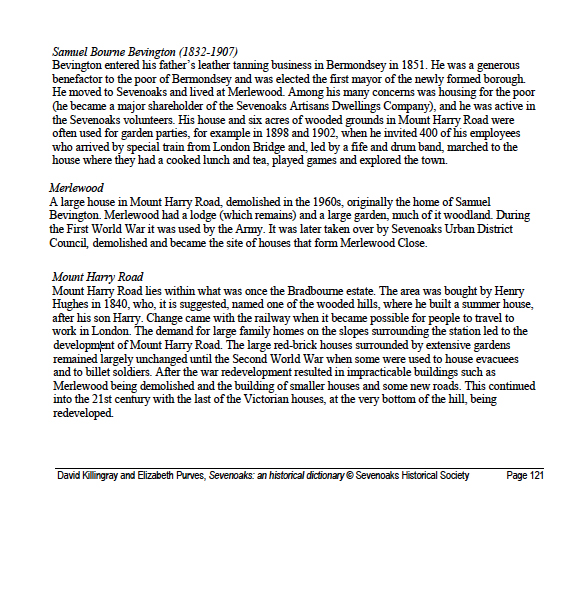
Samuel Bourne Bevington and family moved from Ivy House, Wandsworth Commn, first to The Elms, Bromley, and then to Merle Wood, Sevenoaks, Kent.
(Click on image to enlarge)
1871 Census
The Elms, Bromley.
The Genealogist: Census Transcript Family Kent 1871
James Buckingham Bevington [father] eventually moved from Wandsworth to his son's house at Merlewood, Sevenoaks, where he died in [date?].
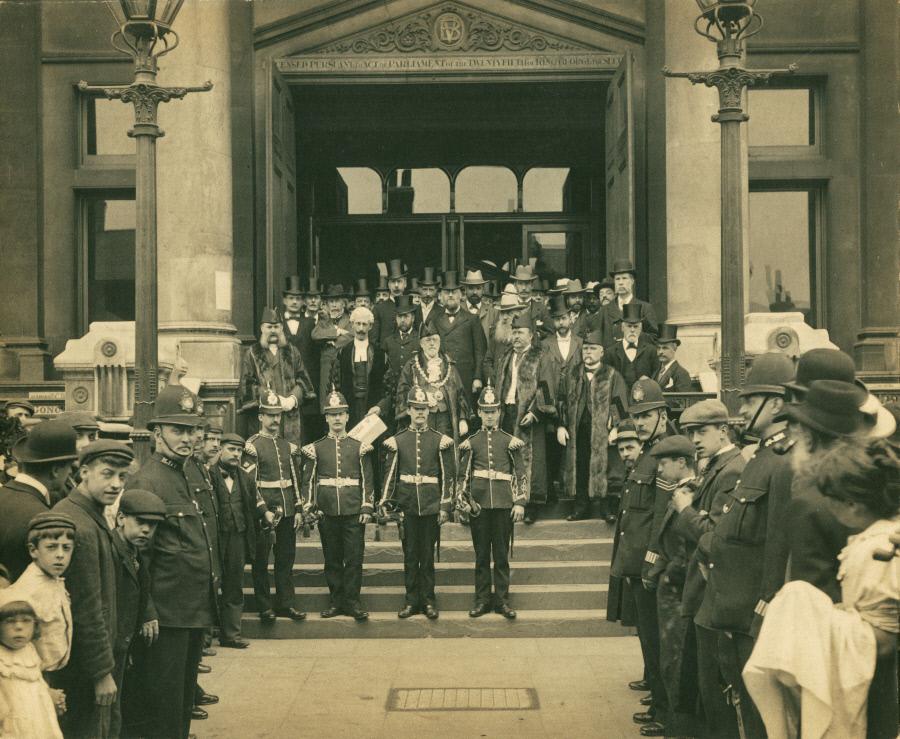
The proclamation of King Edward VII's coronation outside Bermondsey Town Hall, July 15th, 1901.
"The Mayor, Colonel S.B Bevington, stands in the centre, behind four buglars from the local volunteers." [Source: Southwark Heritage: Bermondsey Town Hall, 1901.
(Click on image to enlarge)
Samuel Bevington statue, Bermondsey
(Click on image to enlarge)
Erection date: 18/3/1911
Inscription (carved on the front of the stone plinth):
Samuel Bourne Bevington VD, JP, 1832 - 1907. Colonel commanding 3rd V.B. The Queens Royal West Surrey Regiment 1884 - 1899. First Mayor of Bermondsey 1900 - 1902.
Erected by his fellow citizens.
Incised on the bronze base of the statue:
Sydney March
Site: Bevington and Bevin (2 memorials), SE1, Queen Elizabeth Street
The Bevington statue is protected by some nice original railings which seem still to display their original coat of committee green paint.
[Source: London Remembers: Samuel Bevington Statue (accessed 20.4.2019).]
[Exploring Southwark: Tooley Street]
(Click on image to enlarge)
Infed: Exploring social action: A walk in Bermondsey and Rotherhithe (accessed 21.4.2019). PDF here.
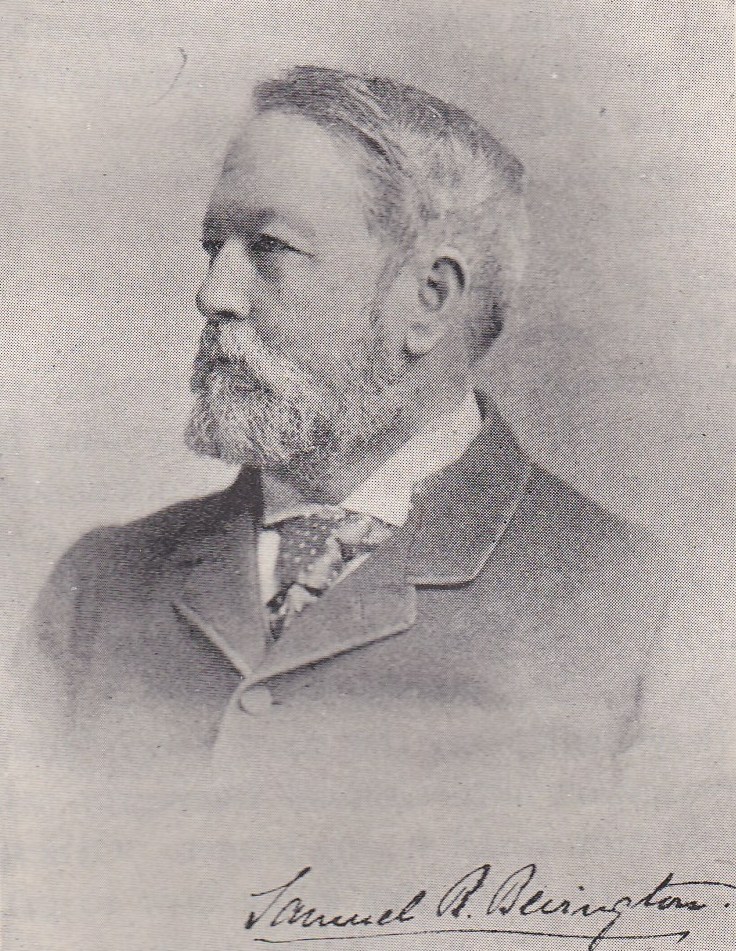
Photograph of Colonel Bevington JP
[https://www.famloc.co.uk/colonelbevingtonjp/]
(Click on image to enlarge)
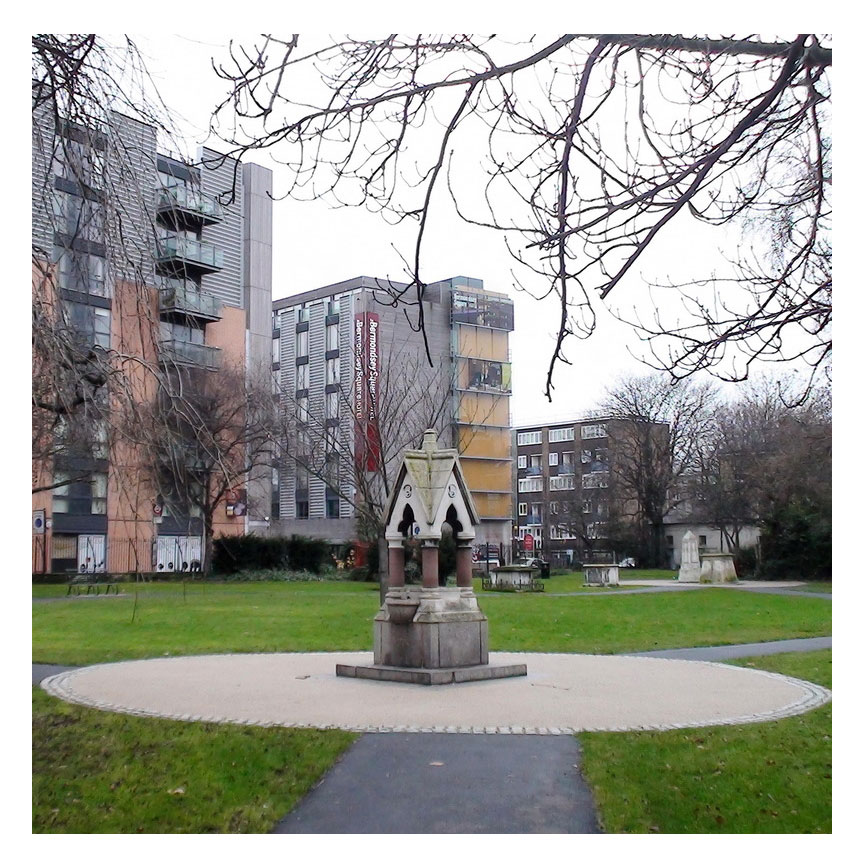
The Bevington Fountain
(Click on image to enlarge)
https://www.londonremembers.com/memorials/bevington-fountain
Location: St. Mary Magdalen Church, Bermondsey. North-west corner of Long Lane and Tower Bridge Road.
ERECTED IN THE YEAR 1882
BY
COL S.B. BEVINGTON
FIRST MAYOR OF BERMONDSEY
IN MEMORY OF HIS FATHER
JAMES BUCKINGHAM BEVINGTON J.P.
OF NECKINGER MILLS, BERMONDSEY
BORN 1804. DIED 1892.
[Source: http://www.mdfcta.co.uk/details-f/f276.html.]
Sevenoaks
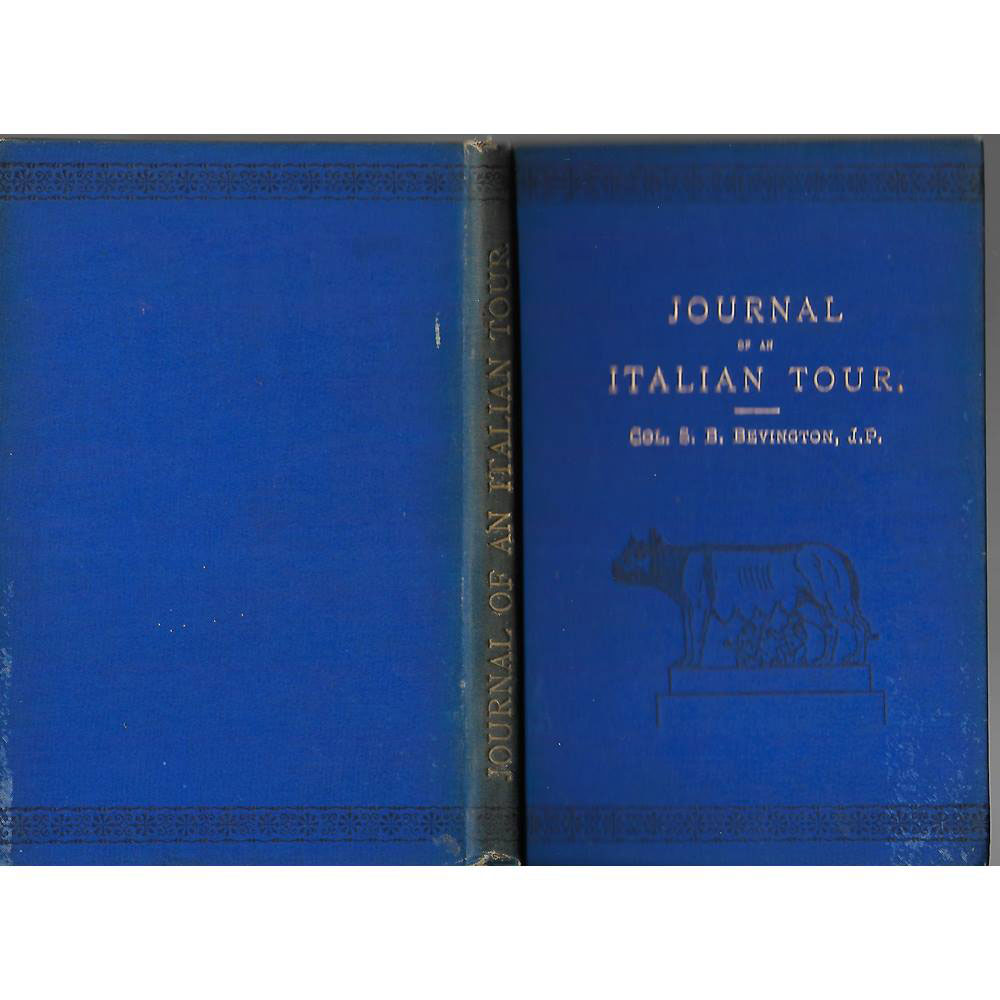
Col S B Bevington JP, JOURNAL OF AN ITALIAN TOUR
(Click on image to enlarge)
Letters from the Author on a tour of Italy in 1896 covering Chambery, Florence, Rome, Genoa, and of the journey home when back in Sevenoaks. The Author quotes various poets, historical facts and includes details of the journeys between places.
HD_101247622_01.jpg
https://www.oxfam.org.uk/shop/product/journal-of-an-italian-tour-hd_101247622
[SBB also published a journal of a trip to Australia.]
SBB and the Swedenborg Society
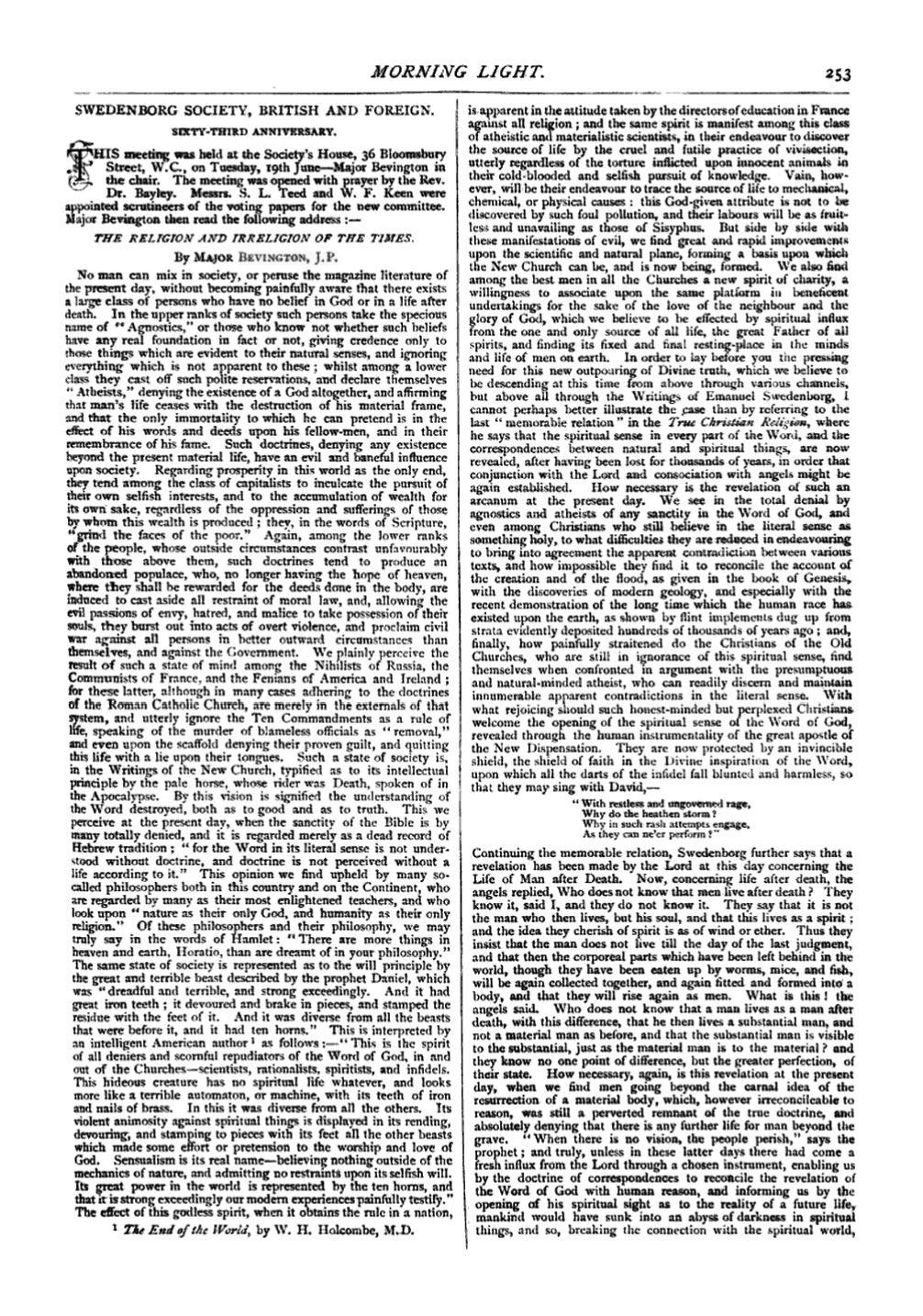
Clearly SBB was passionate Christian of a somewhat spiritual or mystical kind. There are a number of references to the family having Quaker origins, but whether this continued into the C19, I don't know. In 1895, he became the President of the Swedenborg Society:
The Swedenborg Society, or the 'London Society for Printing and Publishing the Works of Emanuel Swedenborg', as it was originally called, has been in continuous existence since 1810, its essential purpose to translate, publish, print and sell the work of Emanuel Swedenborg (1688-1772), the Swedish scientist, philosopher, theologian and mystic.
- http://www.swedenborg.org.uk/home
- http://www.swedenborg.org.uk/home/about_the_society/history
- https://en.wikipedia.org/wiki/Emanuel_Swedenborg
(Click on image to enlarge)
(Click on image to enlarge)
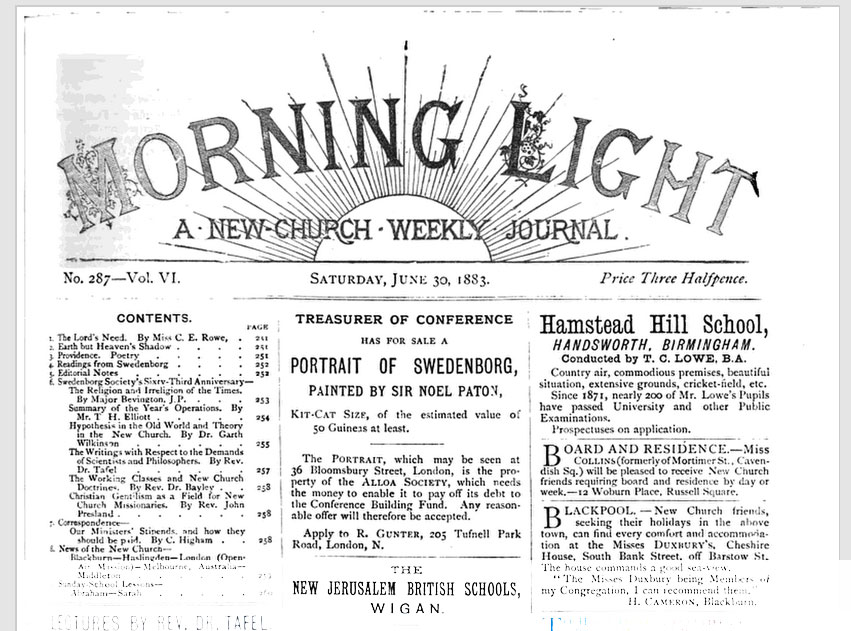
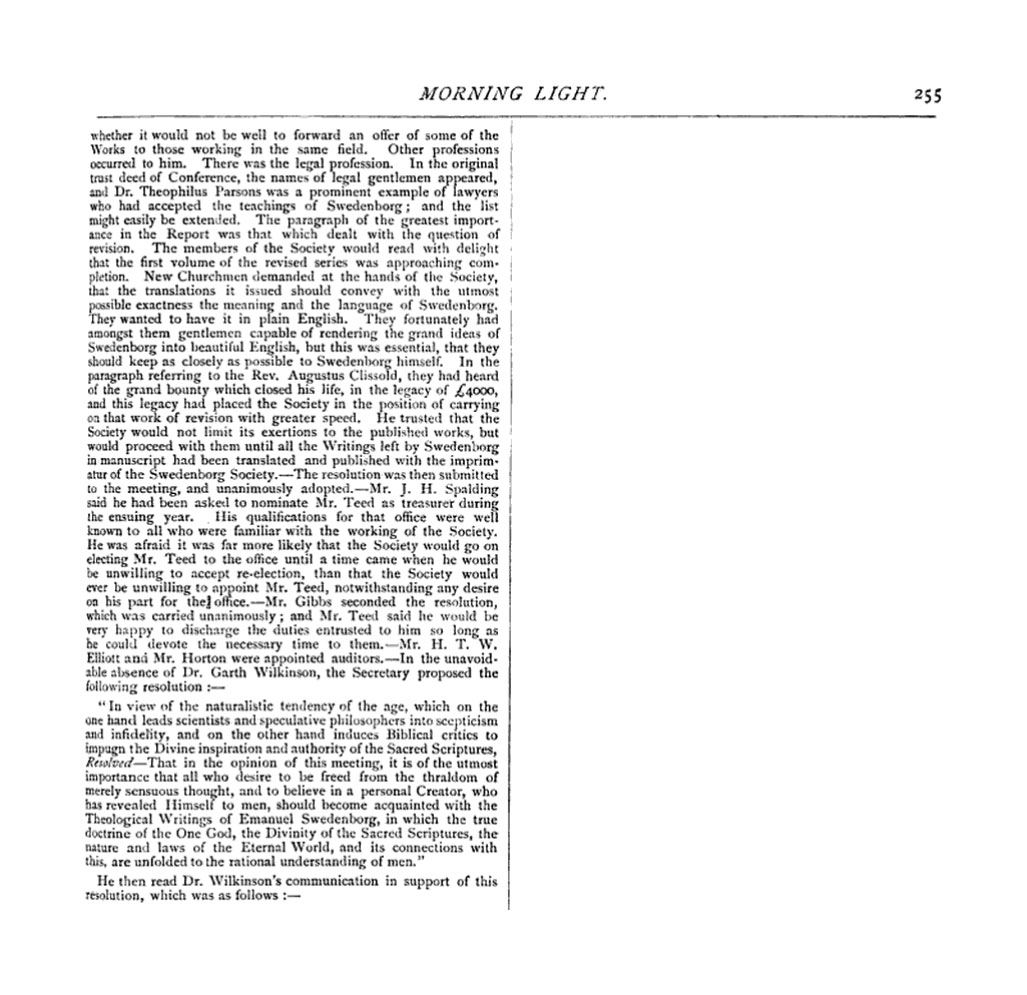
Major Bevington, J.P., "The Religion and Irreligion of the times", Morning Light: The New-Church Weekly, 30 June 1883.
Archives
https://aim25.com/cgi-bin/vcdf/detail?coll_id=13303&inst_id=118
Did James and Samuel Bevington commute from Wandsworth to Bermondsey?
And if so, how (and why)?
Wandsworth Common was doubtless healthier and more attractive than the notoriously foul-smelling Bermondsey. But why did the family move here (in the 1830s?). How would they have got to work? Or did they (James, Samuel) live in or close to the Neckinger Mills during the week, returning to Wandsworth (where Mary and Geoffrey lived) at the weekends? [According to the London Metropolitan Archive, the family had a house at 34 Gracechurch Street, City of London, but it is unclear when. I've also seen another City address for James].
Presumably it was not impossible to have a personal carriage to take a person to Bermondsey. How long would it take? Or did they travel by train? From? To?