Last modified: 24 October 2026 · Build 1
Home›People›Henry and James Groves
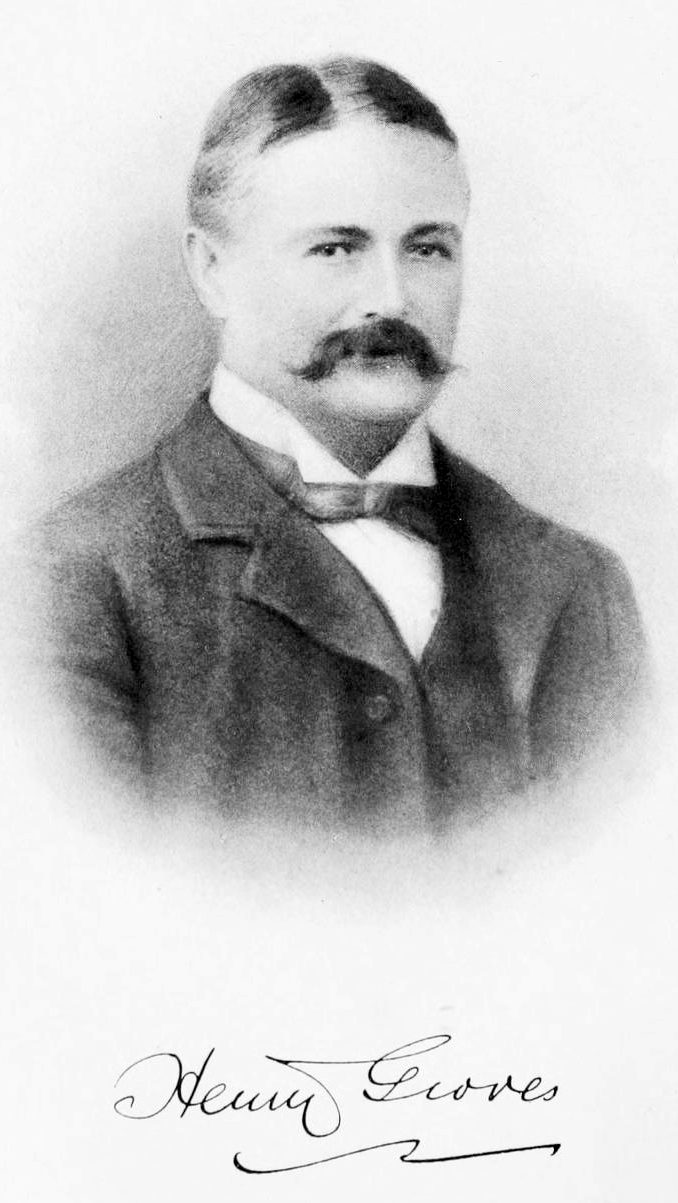
Henry Groves (1855–1912) and his younger brother James (1858–1933) were two of the leading British students of the stoneworts, or Characeae: freshwater green algae that look like small, brittle water plants. They worked together all their lives as their own botanical “firm”, while earning their livings in London offices: Henry at Queen Anne’s Bounty, James at the Army and Navy Stores.
They began as boys in the early 1870s, collecting plants and pond creatures on the London commons. “Wandsworth Common,” James remembered, “was a particularly happy hunting ground for us, in the days before it had been pared down and tidied up so as to conform to municipal ideas of beauty.”
Henry is buried in Streatham Cemetery, Garratt Lane. He was an early trustee of the South London Botanical Institute.
| 1855 | Henry Groves born in London, 15 October. |
| 1858 | His brother James born. |
| 1863 | The family moves to Godalming, Surrey; Henry at Godalming Grammar School under Peter Churton. |
| 1869 | Death of their father; the family returns to London. Henry, at 14, goes into a stockbroker’s office. |
| early 1870s | The brothers collect on the London commons: Wandsworth Common “a particularly happy hunting ground”. |
| 1874 | They join the South London Microscopical and Natural History Club; meet H. C. Watson at Thames Ditton. |
| 1875 | Henry finds Rosa hibernica on Barnes Common. |
| c.1877 | They begin to study the stoneworts. |
| 1878 | Their first note: Chara connivens new to Britain. |
| 1880 | “Review of the British Characeæ” in the Journal of Botany. |
| 1882 | Henry joins the staff of Queen Anne’s Bounty Office. |
| 1884–97 | Henry Secretary of the South London Microscopical and Natural History Club. |
| 1892 | First set of dried British Characeae issued. Henry a Fellow of the Linnean Society. |
| 1896 | Henry marries Miss Bolton; one daughter. |
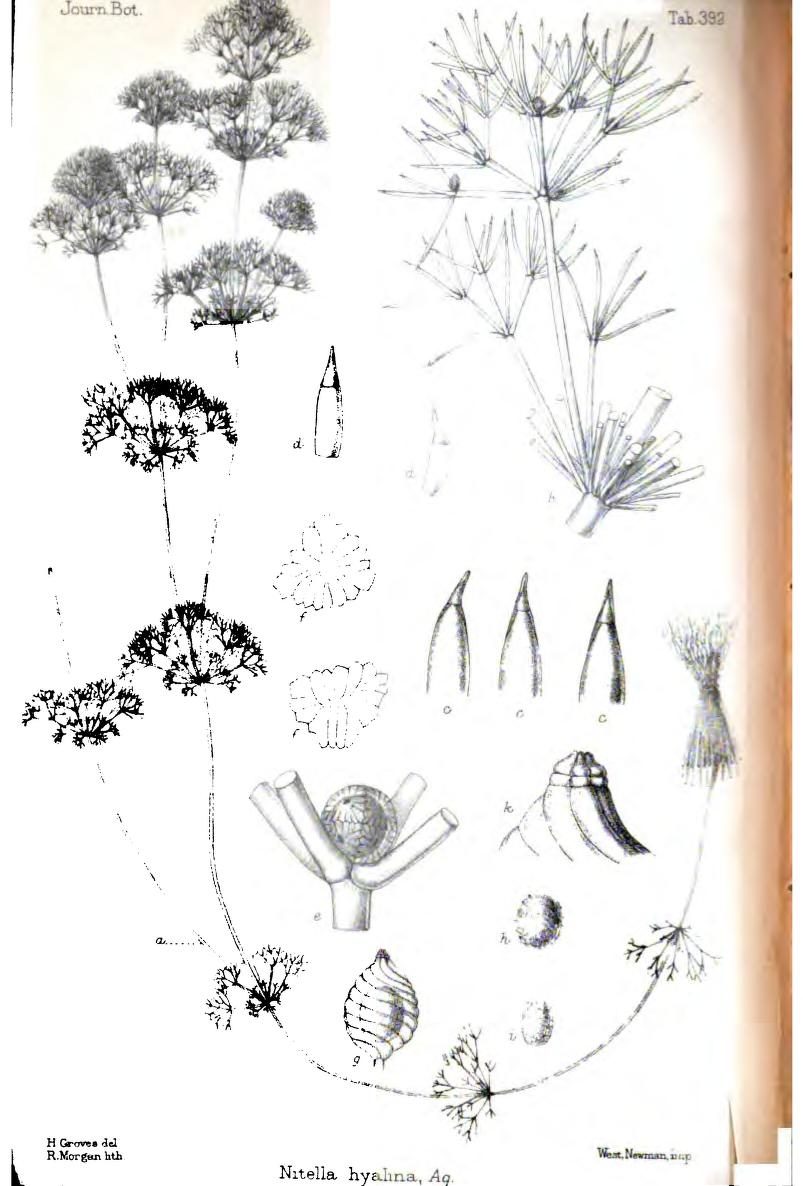
| 1898 | “Notes on British Characeae, 1895–1898”, with Henry’s plate of Nitella hyalina. |
| 1904 | The brothers edit the ninth edition of Babington’s Manual of British Botany. |
| 1907 | Henry a Trustee of the South London Botanical Institute. |
| 1910 | Henry a Linnean Society delegate at the International Botanical Congress, Brussels. |
| 1911 | Their account of the Characeae in Urban’s Symbolae Antillanae. |
| 1912 | Henry dies, 2 November, aged 57; buried in Streatham Cemetery. |
| 1913 | James’s memoir of Henry in the Journal of Botany. |
| 1918 | James retires from the Army and Navy Stores and moves to the Isle of Wight. |
| 1933 | James dies, March. |
Roy Vickery is the compiler of the Plant-Lore archive of folklore and traditions about plants: see The Compiler, on the Plant-Lore website.
Do you know more about Henry or James Groves, or where the family lived in London? Please let me know.