Last modified: 24 October 2026 · Build 2
Home›People›Henry and James Groves›Roy Vickery: Henry Groves, a local botanist
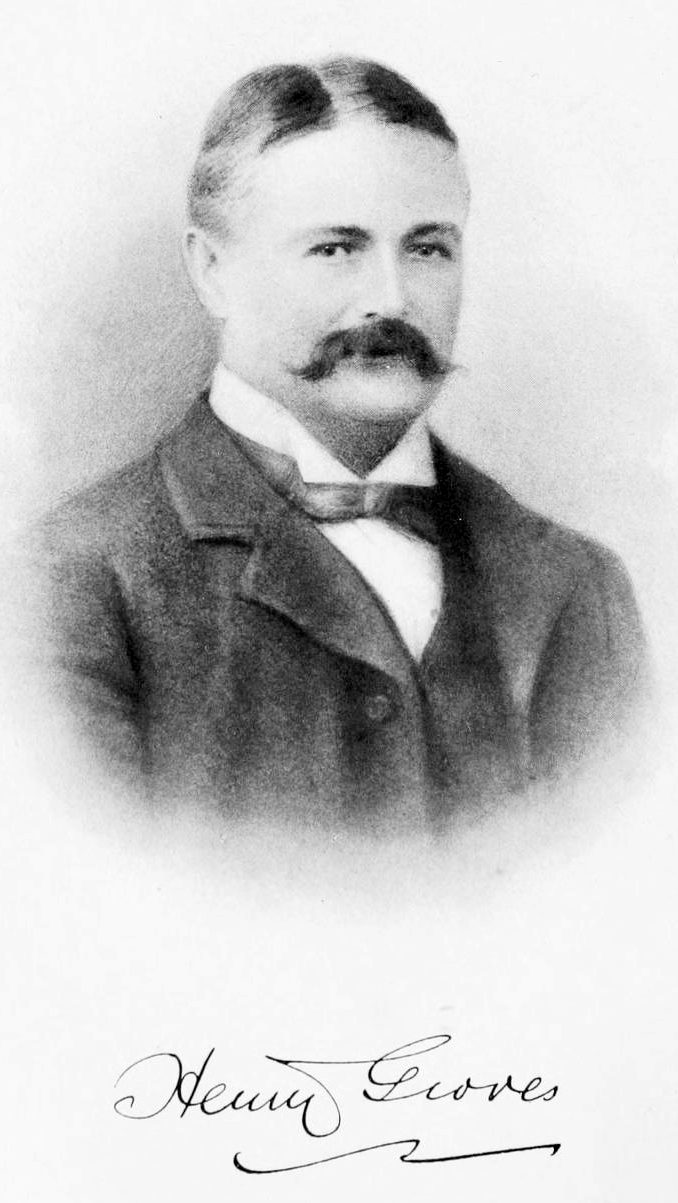
A Celtic cross in Streatham Cemetery (which, I’m sure, readers know is off Garratt Lane in Tooting, not in Streatham) marks the grave of Henry Groves, who with his younger brother James made significant contributions to the study of aquatic plants, particularly stoneworts, Charophyta.
Henry spent most of his life in London, where he was born on 15 October 1855 and died on 2 November 1912. When he was seven his family moved to Godalming and it is here that his natural history interests developed.
Following the death of his father in 1869 the family returned to London and Henry left school at 14 to contribute to his family’s ‘very slender means’ by taking a job in a stockbroker’s office, where he remained for 10 years.
After his employer’s death he worked in the Queen Anne’s Bounty Office, the Bounty having been established in 1704 to augment the incomes of poorer Church of England clergy.
Henry’s botanical activities were intimately linked to those of his younger brother James (1858–1933). Early in the 1870s the brothers started collecting herbarium specimens. They considered Wandsworth Common, ‘in the days before it had been pared down and tidied up so as to conform to municipal ideas of beauty’, to be a ‘particularly happy hunting ground’.
In 1874 they joined the South London Microscopic and Natural History Club and became acquainted with others who shared their interests. About five years later, when both were in their early 20s, they started their stonewort studies.
Stoneworts, also known as charophytes or Charophyta, are a group of freshwater green algae of which almost 40 species have been recorded from Britain and Ireland. Although the Botanical Society of Britain and Ireland otherwise restricts its activities to Vascular Plants (flowering plants and ferns and their allies) it also includes stoneworts in its interests.
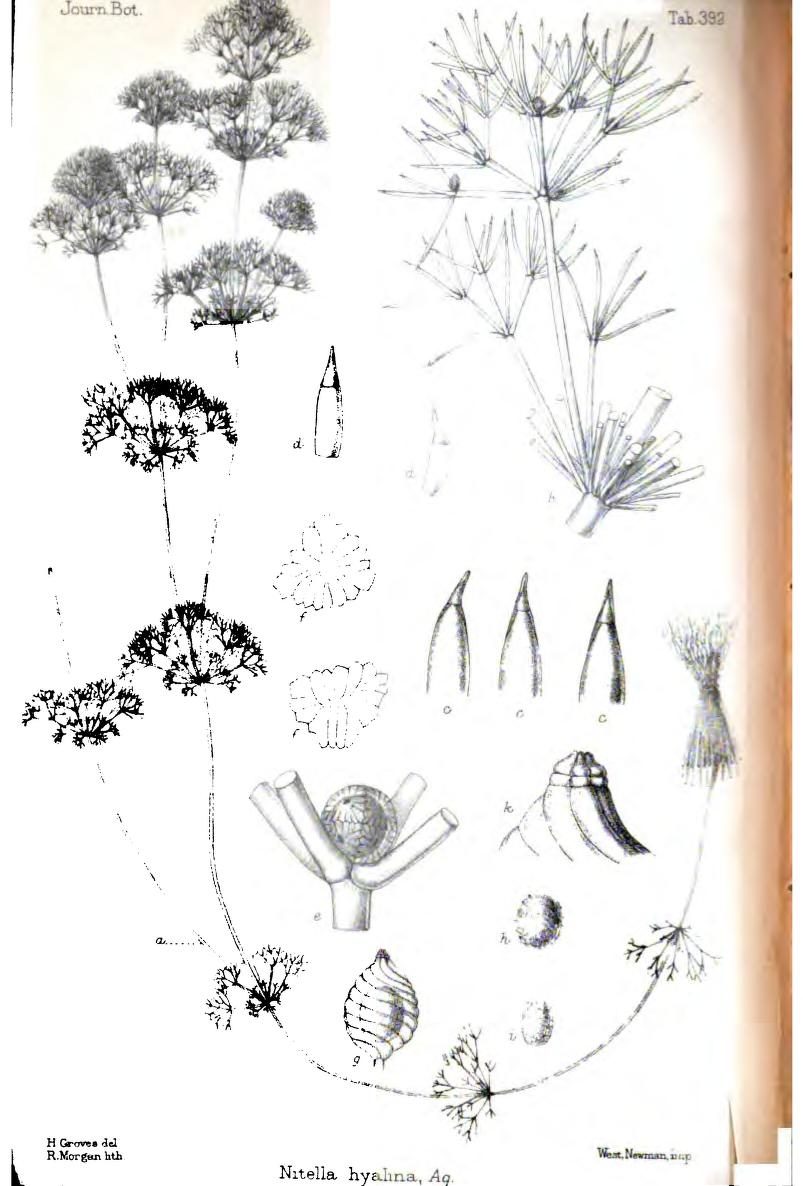
In 1880 the brothers’ Review of British Characeae was published in the Journal of Botany. Henry’s brother recalled that when a big haul of stoneworts had been collected there were ‘hundreds of specimens to be floated out in limited time, pans and other dishes pervaded the house, and all hands [including those of their mother and sister] turned to the work’ of preparing herbarium specimens.
The Groves’ expertise on charophytes extended beyond the British Isles, and in 1911 they contributed an account of the group to the nine-volume Symbolae Antillanae, edited by Ignatius Urban, curator of the Berlin Botanical Garden.
Indeed, later in life, when other interests and activities limited the time available for botanical research, Henry devoted his time to non-European species, while James concentrated on fossil stoneworts.
Henry had a reputation as ‘a man of affairs’ who was asked to serve on committees. He supported the Liberal Party, and was an active member of the Church of England, being particularly fond of Westminster Abbey. He was, for example, an early trustee of the South London Botanical Institute.
The Institute was founded in 1910 by Allan Octavian Hume, who from 1849 served in the Indian Civil Service, however his support for Indian independence (he was a founder of the Indian National Congress) stalled his career, and he retired in 1882.
Hume – the ‘Father’ or ‘Pope’ of Indian Ornithology was an obsessive collector, whose bird collection, which at its peak contained some 82,000 specimens, is now in the Natural History Museum’s Ornithology Department at Tring. Despite being responsible for killing so many birds, later in life Hume became a vegetarian, who rejected the killing of animals.
Following his return to England in 1894 he collected plants and accumulated a large herbarium, which with his library formed the nucleus of the SLBI.
Hume thought the establishment of the Institute and the study of botany would discourage south London people from indulging in undesirable activities, particularly the excessive drinking of alcohol. Henry Groves ‘could not quite share Mr Hume’s optimistic views as to its regenerative mission, [but] he had great hopes for the usefulness of the Institute’.
Henry died at the age of 58 on 2 November 1912, ‘after a long and wearysome illness borne with characteristic courage and patience’.
James, who worked in the office of Army and Navy Stores from 1872 until his retirement in 1918 after which he moved to the Isle of Wight, died in March 1933.
| 1855 | Henry Groves born in London, 15 October. |
| 1858 | His brother James born. |
| c.1862 | The family moves to Godalming. |
| 1869 | Death of their father; the family returns to London. Henry leaves school at 14 for a stockbroker’s office. |
| early 1870s | The brothers start collecting herbarium specimens, Wandsworth Common among their favourite grounds. |
| 1874 | They join the South London Microscopic and Natural History Club. |
| c.1879 | They begin their study of stoneworts. |
| 1880 | Their Review of British Characeae in the Journal of Botany. |
| 1910 | A. O. Hume founds the South London Botanical Institute; Henry an early trustee. |
| 1911 | The brothers’ account of the charophytes in Symbolae Antillanae. |
| 1912 | Henry dies, 2 November; buried in Streatham Cemetery. |
| 1918 | James retires from the Army and Navy Stores and moves to the Isle of Wight. |
| 1933 | James dies, March. |
Roy Vickery is the compiler of the Plant-Lore archive of folklore and traditions about plants: see The Compiler, on the Plant-Lore website.
© Roy Vickery, 2026. Published here with his permission.
Do you know more about Henry or James Groves, or where the family lived in London? Please let me know.