Last modified: 10 November 2026 · Build 5
Home›People›Thomas Hardy›An execution at Wandsworth
Draft. Points still to check are marked [?]. The details of Kate Webster’s crime are deliberately left out.
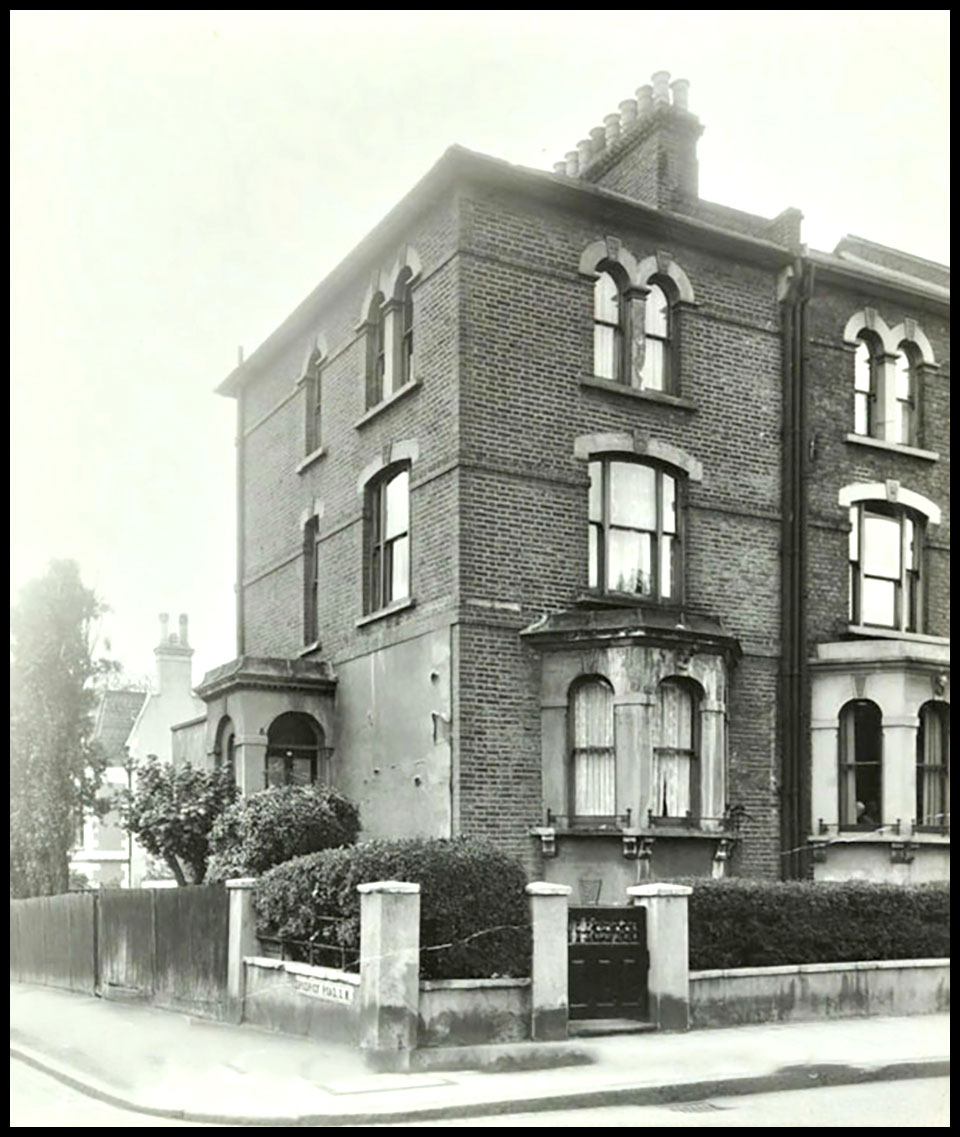
From March 1878 to June 1881 Thomas Hardy and his wife Emma lived at 1 Arundel Terrace, which they called “The Larches” and which is now 172 Trinity Road. Hardy described it as “the south-east corner one where Brodrick Road crosses Trinity Road down towards Wandsworth Common Station”.
Arundel Terrace was then quite new. [When was it built? Compare the OS map of 1868 with Stanford’s maps of 1872 and 1878.] It stood near the highest point of Trinity Road, and the Hardys’ house was the end one: a tall house of three storeys [plus a basement?], on a corner, and high up. The Early Life says that on clear days they could see a long way from the top windows.
The houses and the church on the far side of Brodrick Road had not yet been built [dates?]. So from the top floor Hardy must have had far wider views than anyone has there today: to the west and north, and to the north-west, across the Common.
Hardy wrote about what he saw from the top of the house, and about the terror it sometimes gave him. In May 1880 he recorded the dread he felt at lying down so close to “a monster whose body had four million heads and eight million eyes”. At three in the morning, looking out from the upper back bedroom, he watched London emerge from the dark:
“A golden light behind the horizon; within it are the Four Millions. The roofs are damp gray: the streets are still filled with night as with a dark stagnant flood whose surface brims to the tops of the houses. . . . A fire or two glares within the mass. Behind are the Highgate Hills. On the Crystal Palace hills in the other direction a lamp is still burning up in the daylight.”
The Early Life of Thomas Hardy (1928), pp. 177–178.
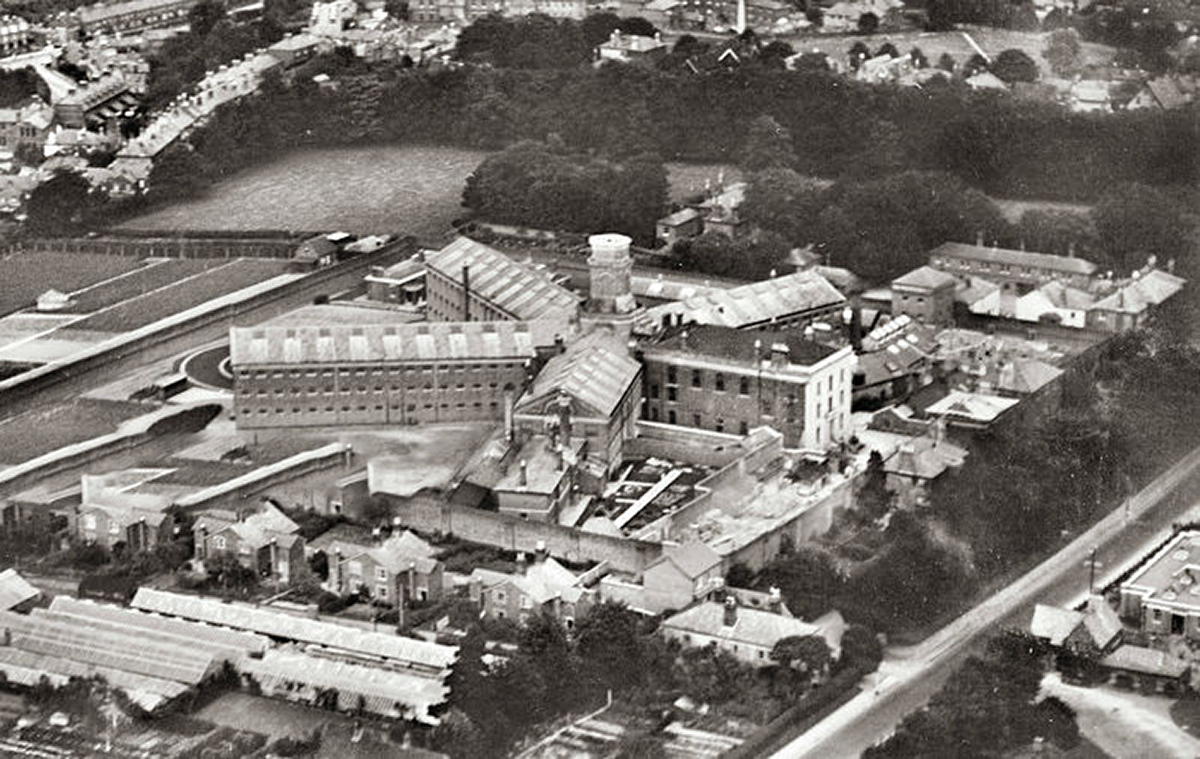
More to our purpose here, there was another building on that horizon. About three-quarters of a mile (1.2 km) away, to the north-west, stood the octagonal central hall of Wandsworth Prison.
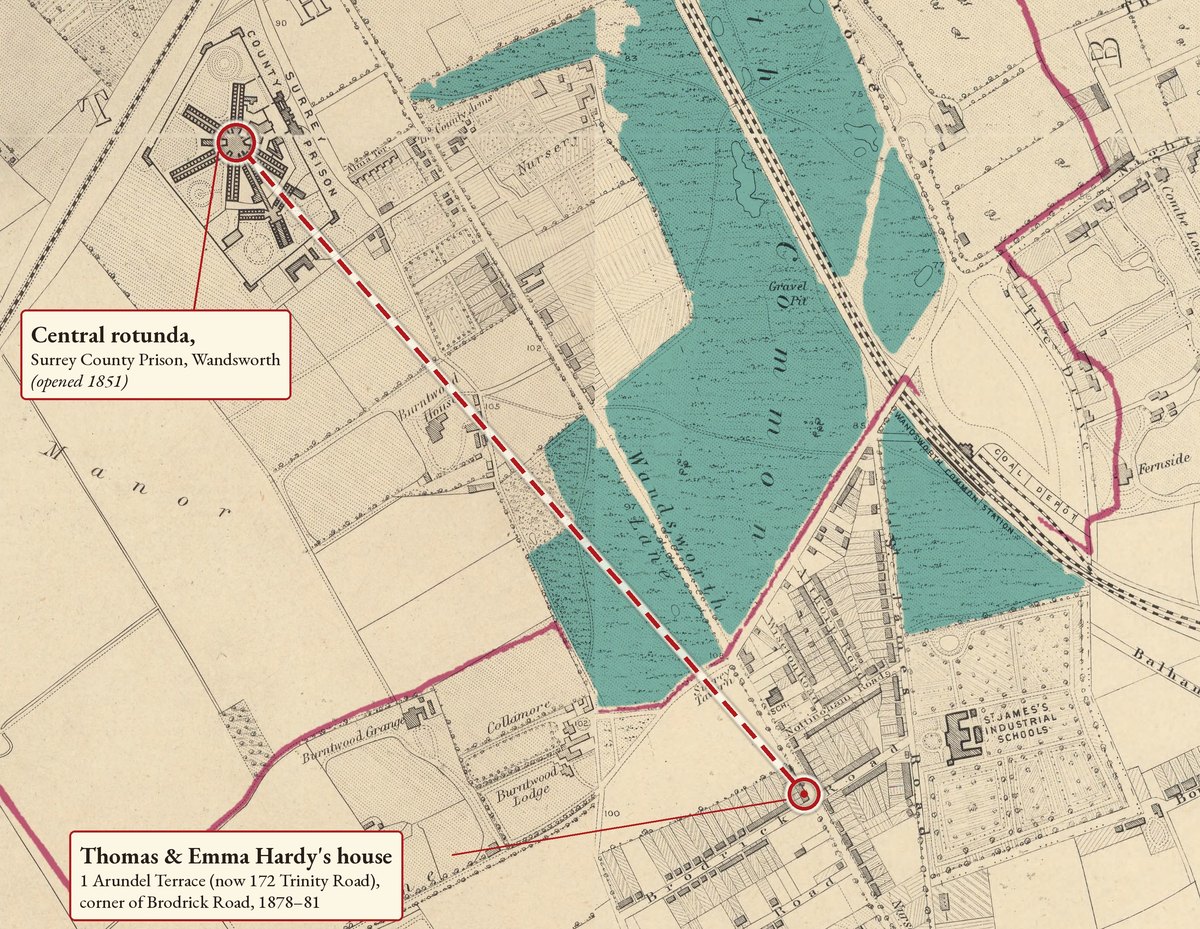
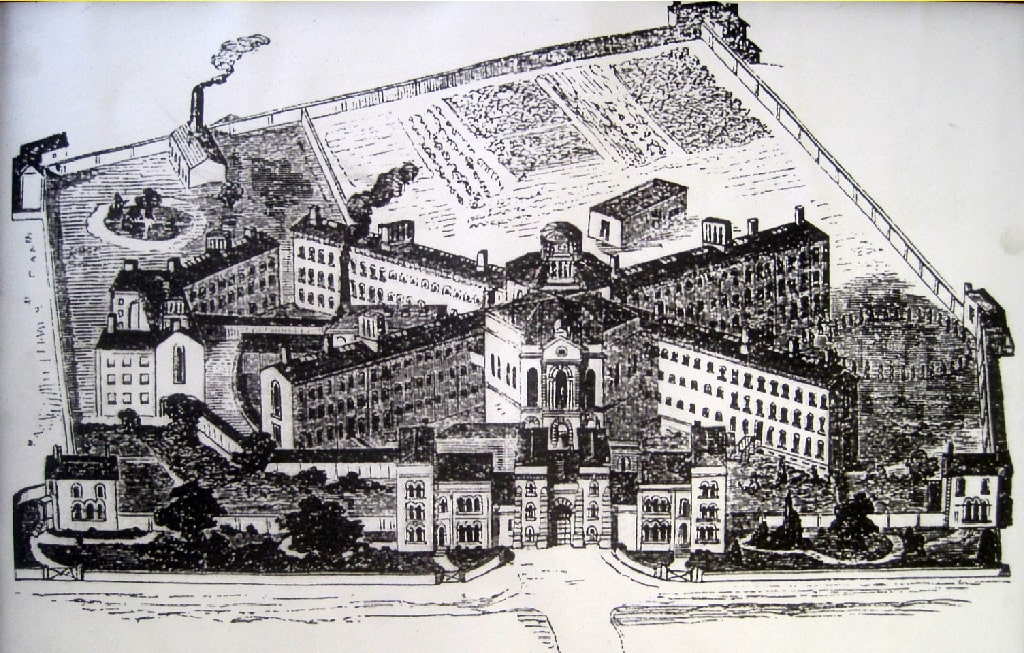
The prison had opened in November 1851 as the Surrey House of Correction, so when the Hardys arrived it was not yet thirty years old. It was built on the radial plan, with five cell wings and an administration wing spreading out from the central hall.
Between the house and the prison there would have been almost nothing in the way, and probably very few trees:
All the rest was open: fields, gardens and market gardens, the cricket pitches on what is now Trinity Fields, and the rough moor-grass, furze and scrub of the Scope.
On Tuesday 29 July 1879, when the Hardys had been living at The Larches for sixteen months, a deeply disturbing execution took place in the prison. Catherine (“Kate”) Webster, an Irish servant aged about thirty, was hanged for the murder of her mistress, Julia Martha Thomas, at Richmond on 2 March. The details of the crime are too awful to describe here, and unnecessary.
Wandsworth had only just become the place of execution for Surrey. The gallows had come from Horsemonger Lane Gaol, which closed in 1878. The first man hanged at Wandsworth was Thomas Smithers, on 8 October 1878. Kate Webster was the second, and the only woman ever hanged there. In all, 135 people were executed at Wandsworth between 1878 and the last hanging in 1961. Capital punishment for murder was abolished in 1965.
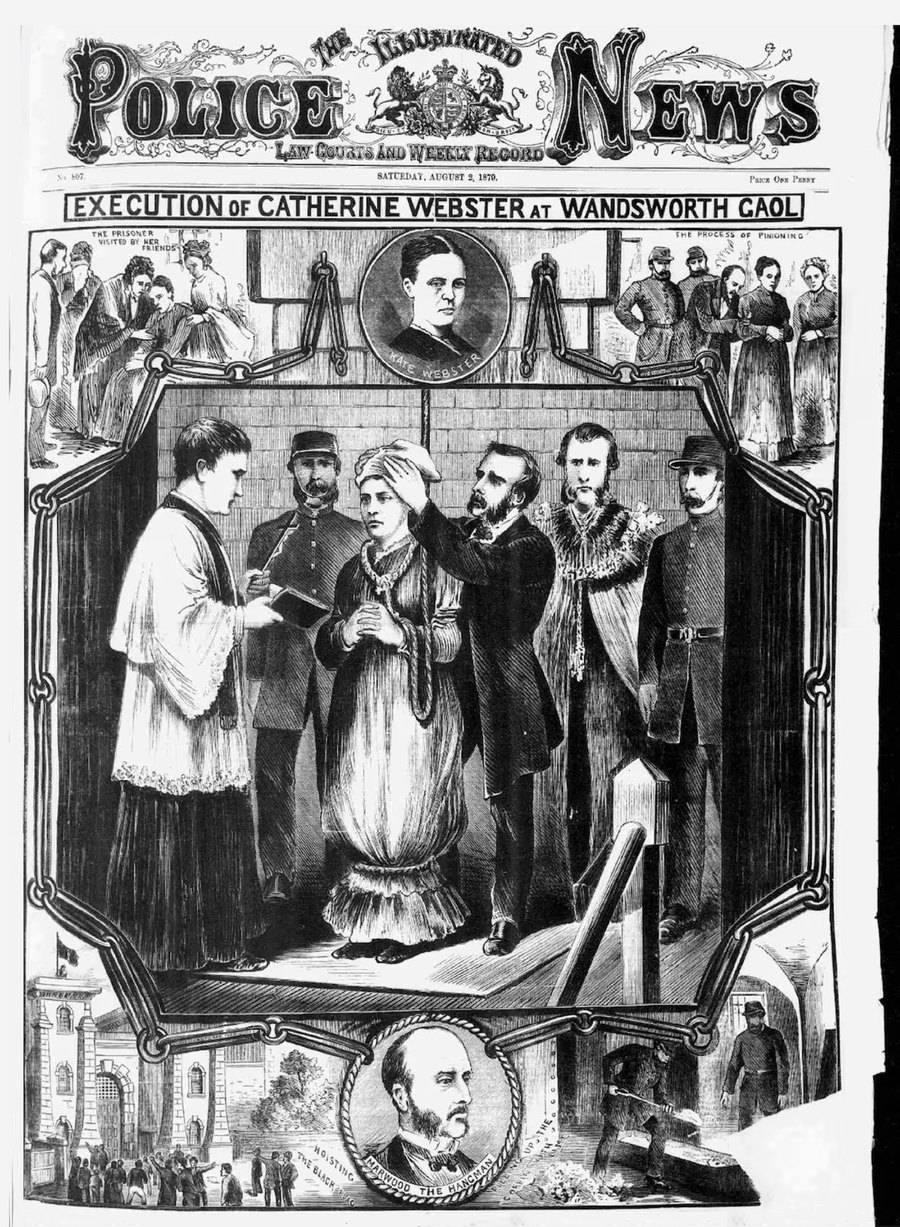
The Globe reported that evening that about 400 people, many of them young girls, had gathered in the avenue leading from the main road to the prison gate, today’s Heathfield Avenue. At ten to nine the prison bell began to toll and a warder appeared on the bell-tower. As the clock struck nine, “about a foot of the black flag appeared above the parapet of the tower”, and a cheer went up from the crowd at the gates.
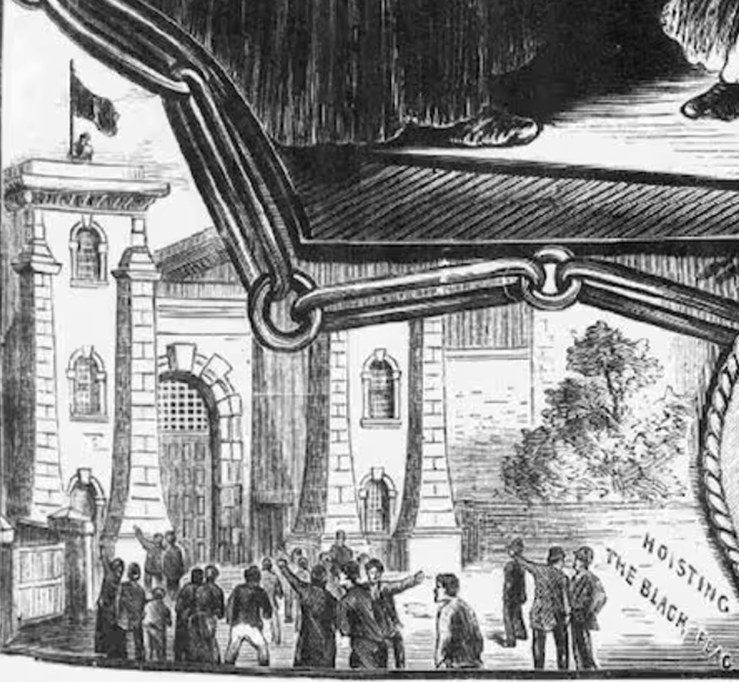
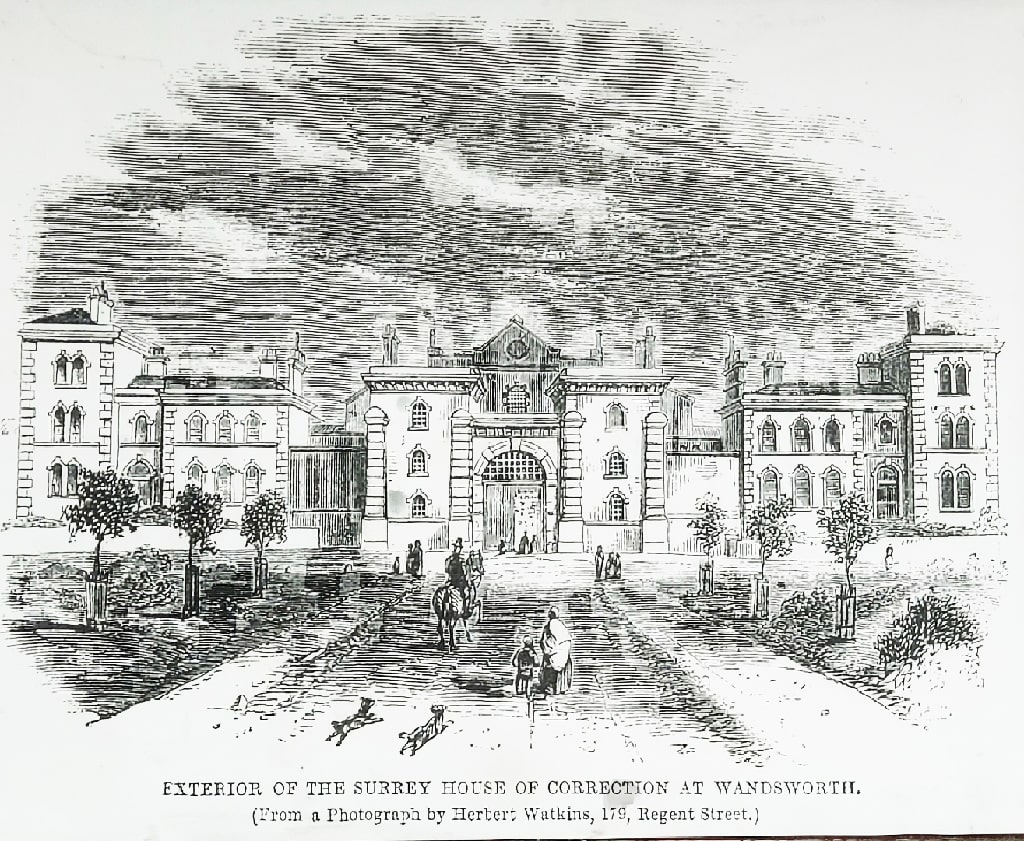
Full transcription: The Globe, 29 July 1879. Webster’s confession: the Governor’s letter, and an outline.
My point is that Hardy must have known about the crime and the execution. The “Richmond Murder” (or “Barnes Mystery”) was one of the sensations of 1879, followed in every paper from the discovery of the remains in March to the trial at the Old Bailey in July. And the hanging took place in the prison he could see from his own top windows.
Indeed, it is possible that he stood outside the prison that morning, one of the 400 in Heathfield Avenue. Or that he saw the black flag raised at nine o’clock from his house, though at that distance, and with a flag only just showing above the parapet, I rather doubt it. In any case, he would have known that a black flag would be flown.
For many years, ever since I first read of these events, it has seemed to me that they may have helped prompt Hardy to write Tess of the d’Urbervilles (1891).
Tess is hanged not at Wandsworth, of course, but at Winchester, Hardy’s Wintoncester, in a gaol built only a couple of years earlier than Wandsworth (1846–49) and on a very similar radial plan. It is not the crime that I want to compare, but the event itself, as it was seen from outside.
At eight o’clock in the morning, Tess’s husband Angel Clare and her sister ’Liza-Lu climb West Hill and turn to look back over the city:
“Against these far stretches of country rose, in front of the other city edifices, a large red-brick building, with level gray roofs, and rows of short barred windows bespeaking captivity, the whole contrasting greatly by its formalism with the quaint irregularities of the Gothic erections.”
“From the middle of the building an ugly flat-topped octagonal tower ascended against the east horizon, and viewed from this spot, on its shady side and against the light, it seemed the one blot on the city’s beauty. Yet it was with this blot, and not with the beauty, that the two gazers were concerned.”
“Upon the cornice of the tower a tall staff was fixed. Their eyes were riveted on it. A few minutes after the hour had struck something moved slowly up the staff, and extended itself upon the breeze. It was a black flag.”
“‘Justice’ was done, and the President of the Immortals, in Æschylean phrase, had ended his sport with Tess.”
Tess of the d’Urbervilles, Phase the Seventh, chapter LIX. “The President of the Immortals” is Hardy’s rendering of Aeschylus’s name for Zeus in Prometheus Bound: makárôn prýtanis, “presiding chief of the blessed ones”.
| Wandsworth, 29 July 1879 | Tess, Wintoncester | |
|---|---|---|
| The prison | Radial plan, opened 1851, with an octagonal central hall | Radial plan, built 1846–49, with an “ugly flat-topped octagonal tower” rising from the middle |
| The watchers | A crowd at the gate; Hardy, perhaps, at a distance, on high ground three-quarters of a mile off | Two figures on a hill, at a distance, looking down on the city |
| The moment | “As the clock struck the hour” | “A few minutes after the hour had struck” |
| The signal | A black flag appearing “above the parapet of the tower” | A black flag rising on a staff fixed to “the cornice of the tower” |
| The hanging itself | Private, inside the walls, unseen | Private, inside the walls, unseen |
| The condemned | A young servant woman | A young countrywoman, once a dairymaid |
Two of these points deserve a word more.
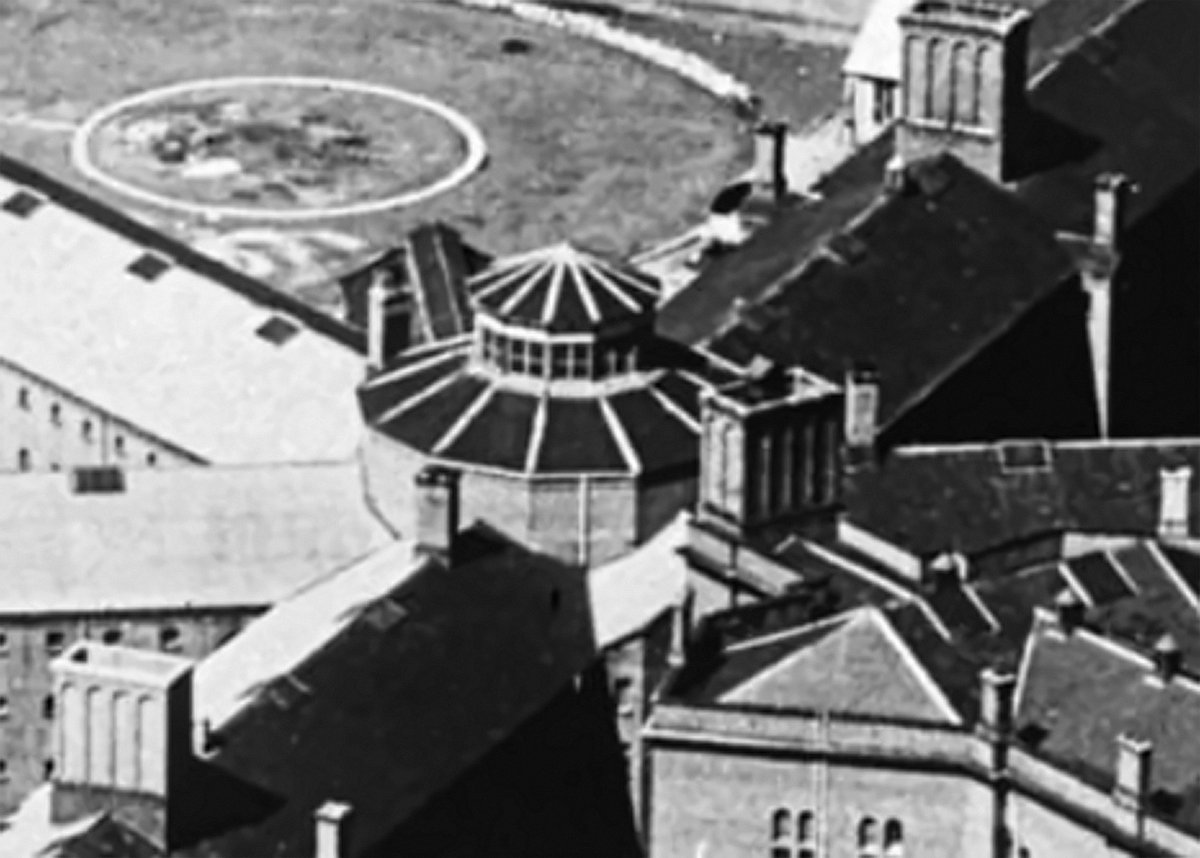
There is one difference in the buildings. Winchester’s centre rises as a tall, flat-topped tower, which is just what Hardy describes; Wandsworth’s central hall has a pointed lantern roof. Hardy took his architecture from Winchester. What I suggest he may have taken from Wandsworth is the experience: the distance, the hour, and the flag.
As far as I know, I am the first person to have pointed out these similarities. [A quick search found no one else making the connection; worth checking the Hardy literature, e.g. Millgate, Tomalin, and the Thomas Hardy Journal.]