Last modified 25 October 2026
The last free intake of boys to Emanuel School
In September 1976, Emanuel School took in its last full year of boys whose places were paid for entirely from the public purse - their parents (or grandparents) paid no fees. Most came from local state primary schools and all had done well in the 11-plus exams the previous January.
In 1960, I was one of those free places.
With reminders from old school friends Alan and Hugh, I can now recall boys from Swaffield, Alderbrook, Riversdale (Southfields), Bonneville (Clapham), Allen Edwards (Stockwell) and my own school, Earlsfield, in Tranmere Road. Others must have gone to Honeywell and Belleville, though I don't remember who. But I expect every primary school within several miles of Emanuel sent one or two boys. (Not my beloved Beatrix Potter, though, which was infants-only in the 1950s. I was made to move to Earlsfield at age 8. This was one of the worst days of my life. When did it become an all-through primary?) But quite a number came on the train from places I'd hardly heard of: Chertsey, Epsom, Cheam and beyond. I’d love to have a full list.
There were a few boys from Prep schools too, including Highfield on Trinity Road. (Highfield had the reputation of enjoying such a close relationship with Emanuel that even the dimmest were guaranteed a place, as long as their parents (or grandparents) had the money to pay the fees. But I couldn’t possibly comment.)
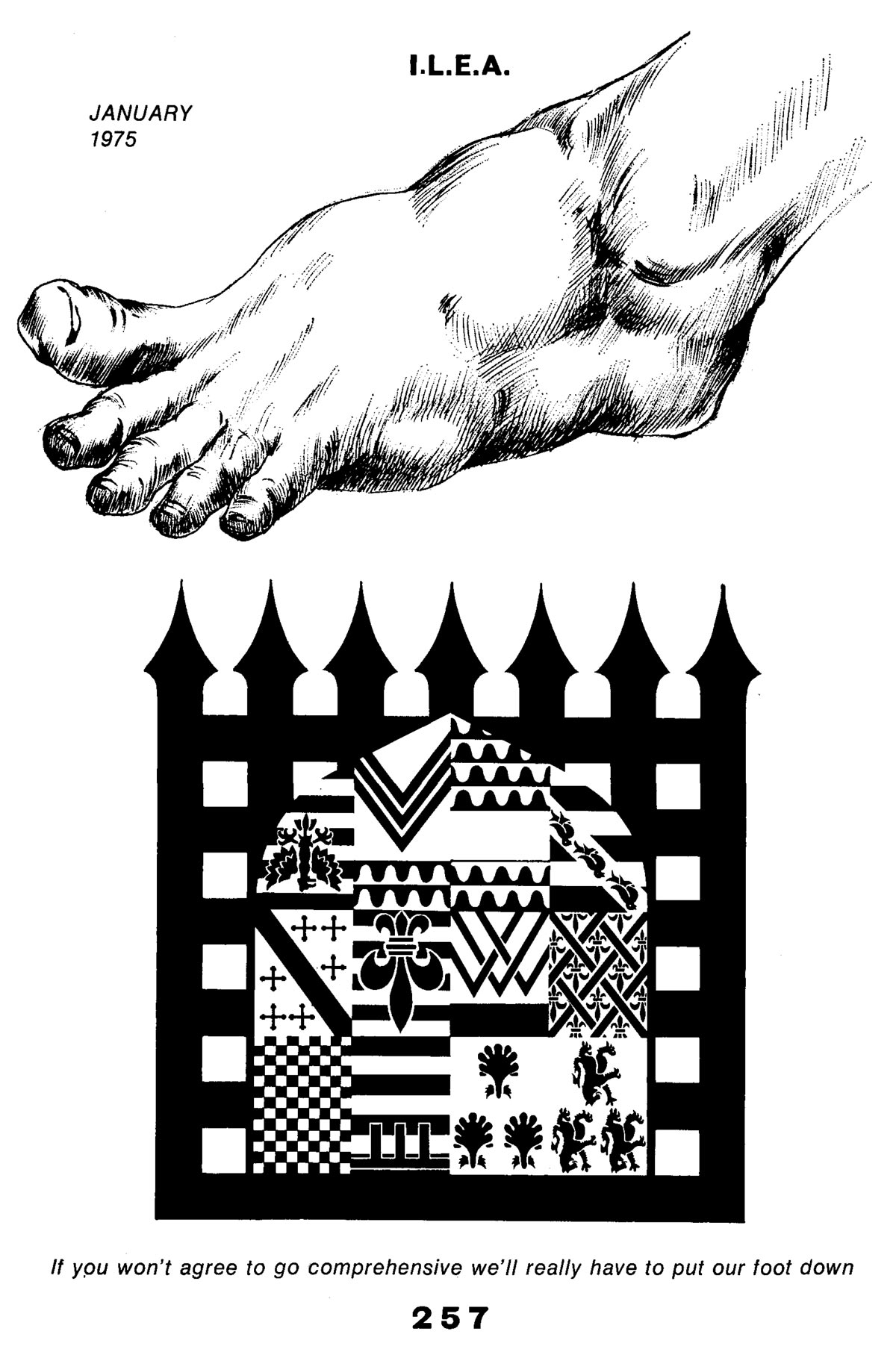
After 1965, increasingly urgent attempts were made by the Inner London Education Authority to end selection/segregation in London's schools and merge Emanuel with others. The first proposal would have seen Emanuel combine with Spencer Park Comprehensive School, recently built next door on part of the Royal Victoria Patriotic Asylum site. The second, of 1972, sought to make the school co-educational by merging it with two girls’ grammar schools on split-sites. (Clapham County, nearly a mile away, and Emanuel's sister school Grey Coat Hospital, 4 miles away).
Emanuel was not inclined to go along with either proposal, and fought hard to maintain the status quo. But it was impossible, and Emanuel went independent in 1976.
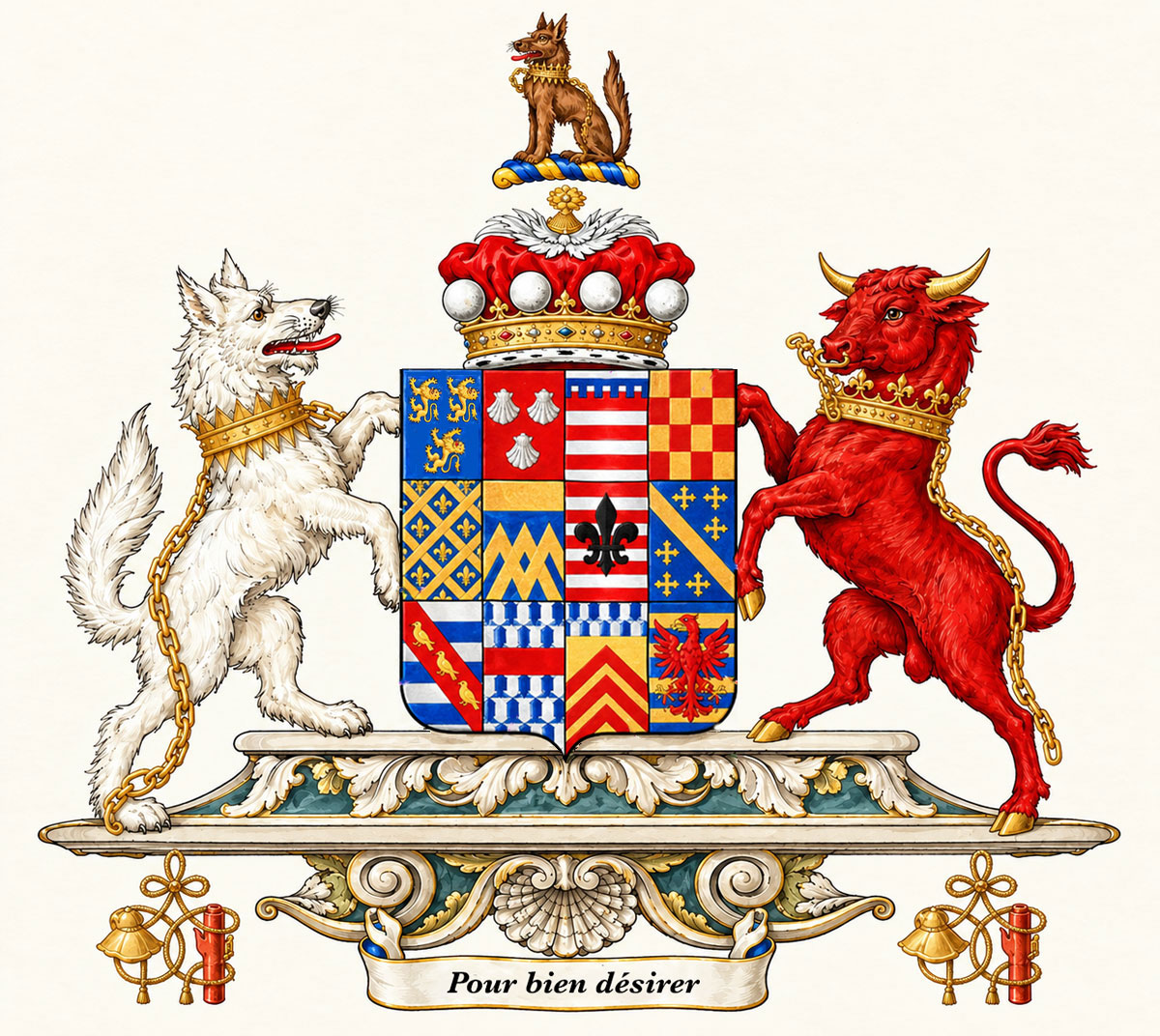
A year later, in September 1977, the first fee-paying boys arrived. The governors had decided in February 1976 to take the school independent rather than see it turned into a comprehensive by the Inner London Education Authority (ILEA). I had left Emanuel nearly ten years before; I was mostly away from south London in the 1970s, so I hardly noticed the row at the time.
But reading the position papers now, I find them completely fascinating. The teachers, for example, wrote a detailed critique of the plan to make Emanuel comprehensive (whether by merging it with Spencer Park School next door or with local girls' grammars). Their main fear was that the school would no longer take able but impecunious boys who had always done so well there: charging large fees would shrink the pool of talent available to them.
But that too is a story for another day, perhaps next September, fifty years after the first fee-payers arrived. Even so, I can’t resist one splendid quotation from the debates of the time. On 26 March 1975, in a House of Lords debate on the Government’s plans to abolish the direct grant schools, the Countess of Loudoun rose to defend one school by name: Emanuel.
I would mention one direct grant school, Emanuel School at Wandsworth Common. … Today Emanuel is purely a day school, assisted in drawing boys from considerable distances by its sometimes uncomfortable proximity to Clapham Junction … Last week Emanuel beat Eton to win the Head of the River boat race.
I love the implicit exultation in the plebs beating the toffs!

And how about this:
A boy at Emanuel, or some such direct grant school – a school with traditions founded on discipline, order and the pursuit of excellence; a boy possibly from a suburban semi-detached or high rise block of flats – may experience for the first time in his life a sense of identification through the school and its corridors of history with the larger community outside.
This boy will emerge like a house built on a rock, above the tumult of our turbulent society with its threatening waves of recurring crisis.
[The Countess of Loudoun, House of Lords, 26 March 1975 (Hansard, vol 358, cols 1227–29).]
Why did the countess single out Emanuel? I don’t know. She was a cross-bencher, a Scottish countess in her own right who lived in Leicestershire, and I know of no family link with the school. (She is said to have sat near Lady Dacre, of the family whose bequest founded the school in the 16th century.) If you know more, please tell me.
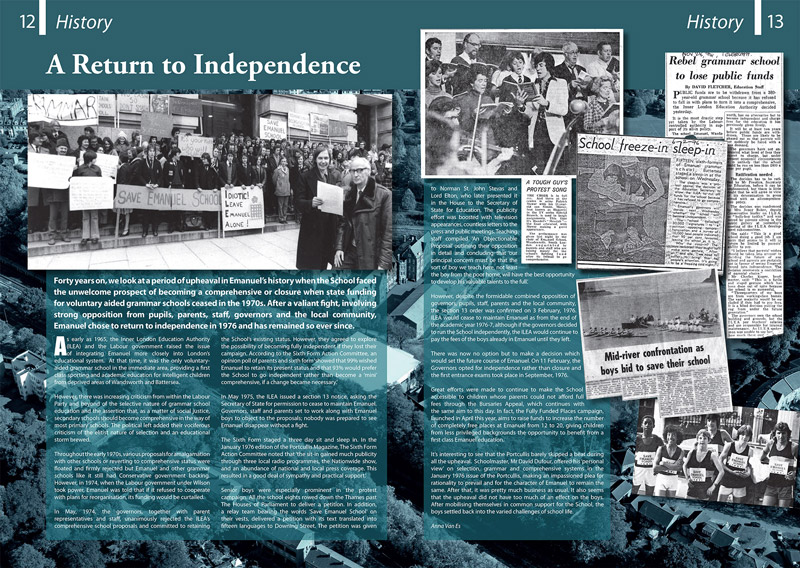
[Remarkably, the same Dacre coat of arms from Elizabethan times explains the curious names of the modernist tower blocks on the Fitzhugh Estate, beside the Royal Victoria Patriotic Building. Morville, St Quentin and Gernigan Houses – and the estate itself – are named after quarters of the arms, and Skipsea and Woodhall Houses after the family’s Yorkshire manors. See my notes on Lady Dacre and Emanuel School and Why “Fitzhugh”, “Morville”, “Gernigan”, “St Quentin”, “Skipsea” and “Woodhall”?
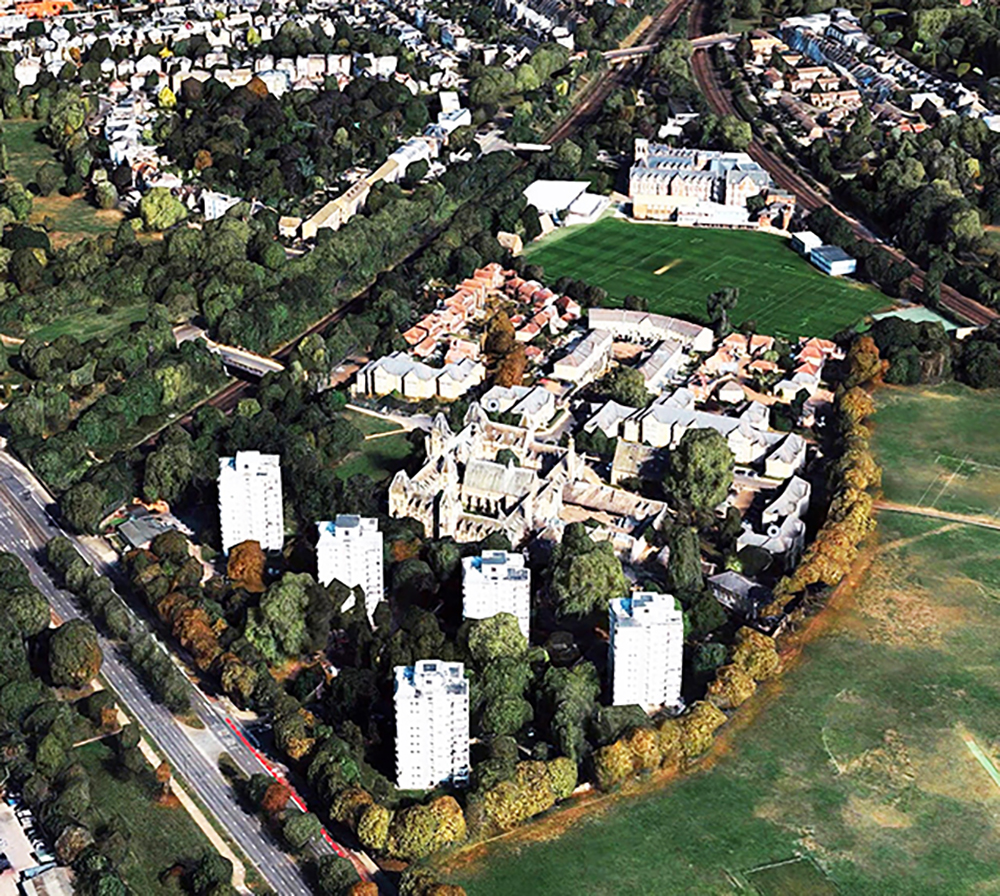
Emanuel was the only ILEA-maintained school round here to escape the changes by going "independent". No other grammar school - Bec, Battersea Grammar, Sir Walter St John's ("Sinjuns") (boys), or Clapham County and Rosa Bassett (girls) - had the resources enjoyed by Emanuel: they didn't own their own buildings and land, or have such substantial financial resources from a foundation or charitable trust. (But see Graham Jackson's letter below.)
Almost every other selective school was closed, or merged with others (selective or non-selective) and reopened as a comprehensive under a new name. The changes of the 1970s transformed local education (at primary as well as secondary levels) and did much to shape the social character of our area.
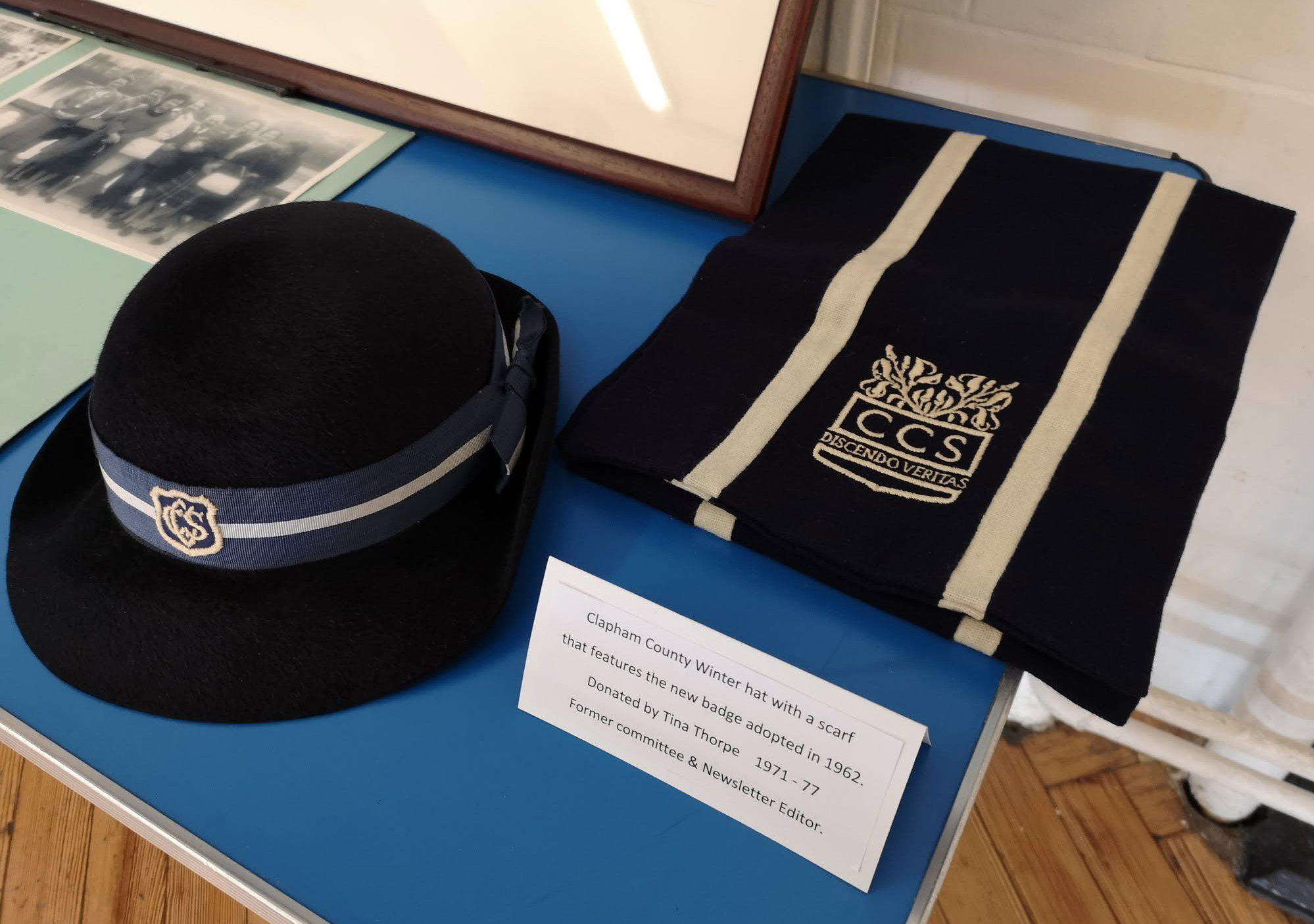
Nearby Clapham County School for Girls, on Broomwood Road, is a good example. Its old girls’ association, Quondam, tells the story:
This was the age of the ‘Comprehensive’ School when larger, more streamlined and characterless Schools were being built for the instruction, conveyor-belt fashion (or so it was perceived), of vast numbers of students, often spread over two sites. Clapham County School had been selected to become one such ‘Comprehensive’ establishment. Miss Viner [the Headmistress], the Governors, Staff, pupils, parents and friends were all motivated to rise up in protective unison against this demonic plan. So began a long and bitter battle.
Early in 1976 the blow came; the School’s fate was sealed. It was to be merged with Marianne Thornton School, at West Side, the two separate buildings forming a split-site Comprehensive. Miss Viner felt she could not compromise her beliefs and immediately tendered her resignation.
[From Quondam, adapted by the association from Annie Ellis’s history of the school, the Memorial Book to Miss Jones (1966), the Jubilee Year Book (1959) and thirty years of Quondam newsletters.]
Following fierce local resistance led by its headmistress, staff, and parents, Clapham County was officially merged in 1976 with Marianne Thornton School (located on West Side, Clapham Common) to form a split-site comprehensive: Walsingham School. (Its charismatic headmistress from 1978 to 1989 was my neighbour on Loxley Road, Alessandra Wilson – about whom much more another time. The school closed in 1993.) Walsingham's site on the edge of Clapham Common is now a housing estate through which "Walsingham Road" now runs.
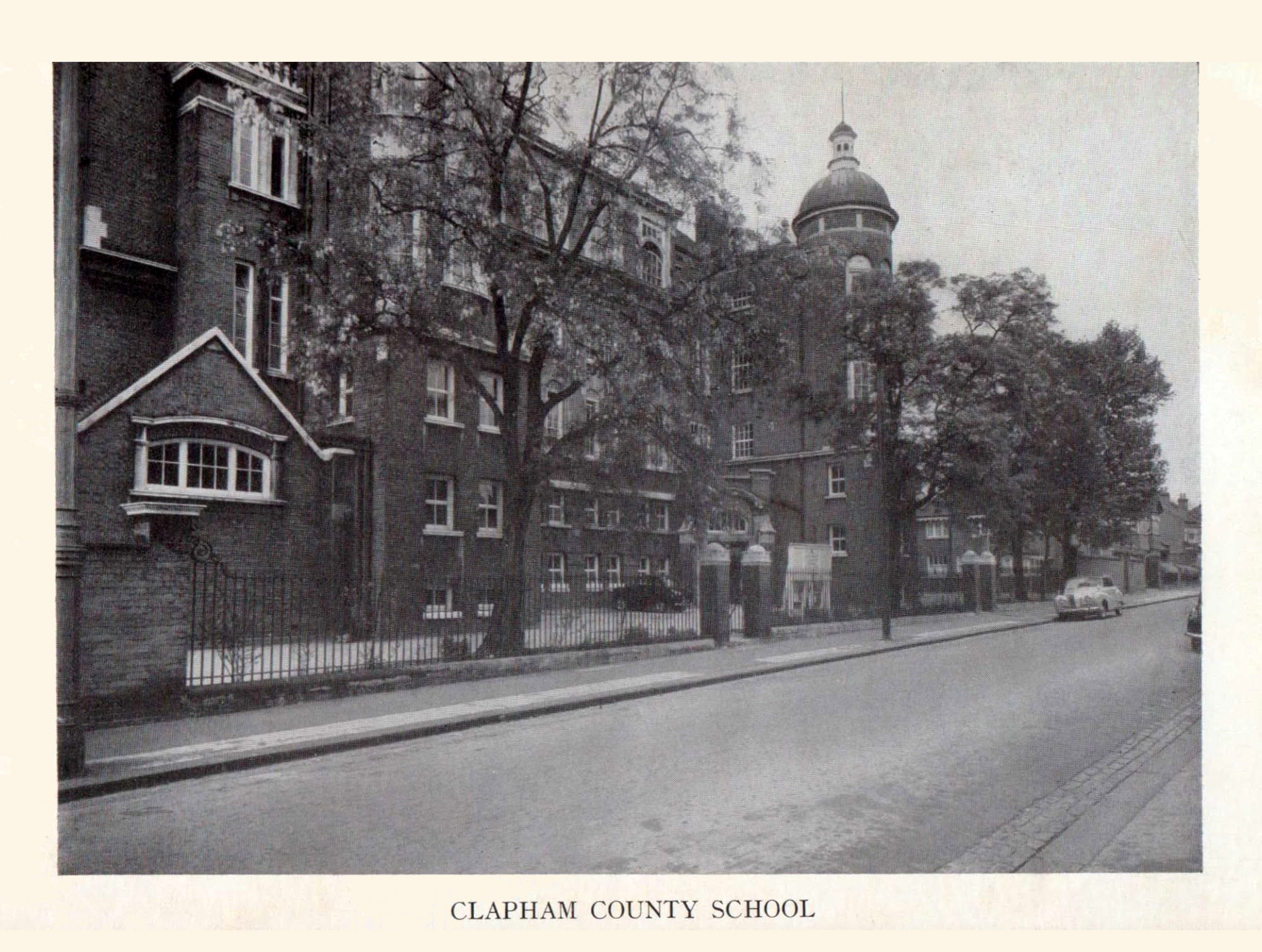
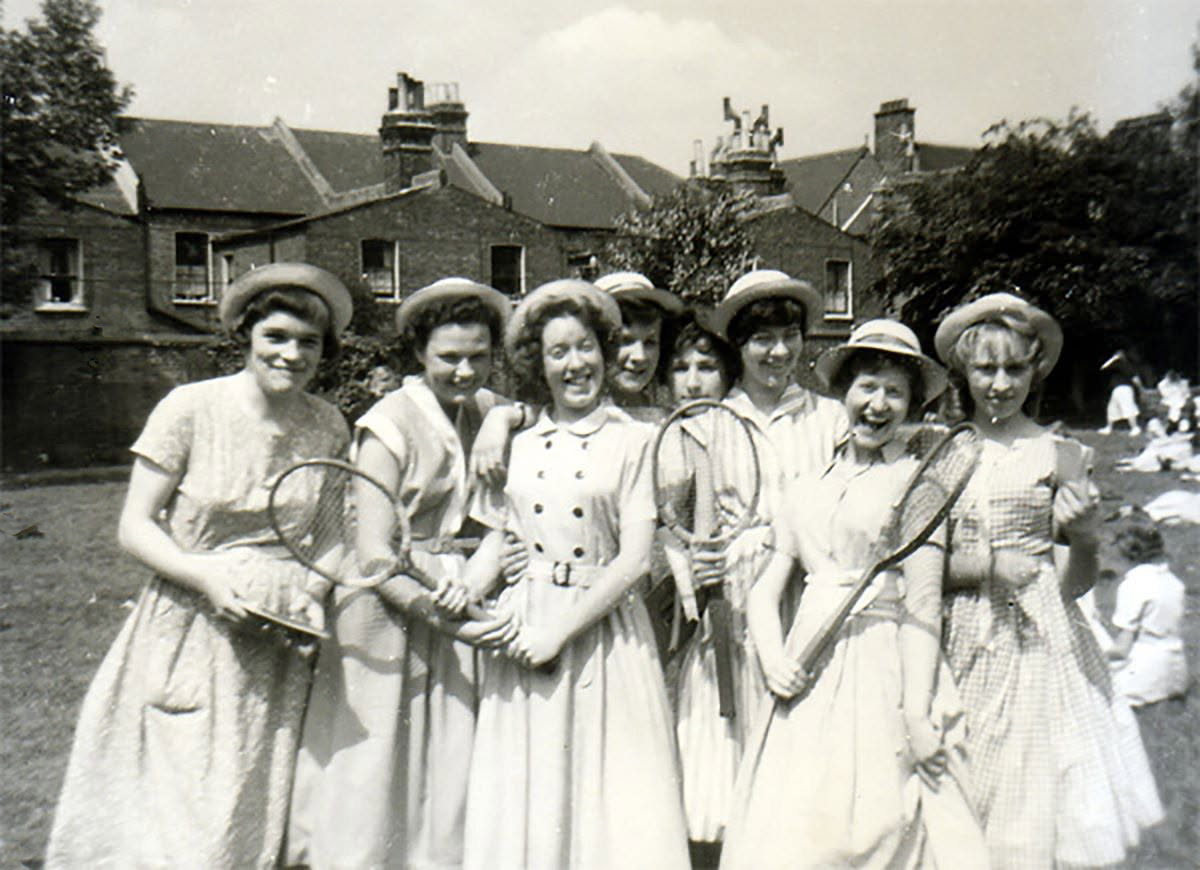
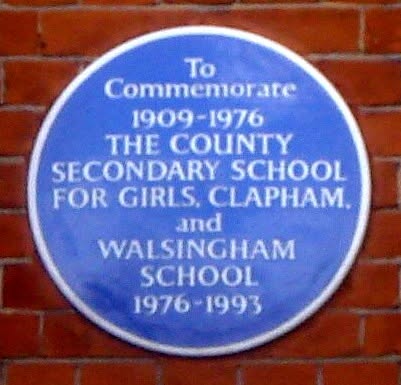
In September 1993, the historic buildings of the former Clapham County School on Broomwood Road were snapped up by a private Prep school, Thomas's Clapham - one of several examples of local state schools acquired by private interests, just as Emanuel bought the Patriotic School more than a century earlier (see below).
Other examples of privatisation include Battersea Grammar School, whose buildings on the edge of Tooting Bec Common have been occupied since 1994 by Streatham and Clapham High School for Girls. Another is the former Hearnville Primary School, which my daughters attended until it was closed in the early 1990s to make way for the (private) Hornsby House. This was a closure and sell-off that still makes my heart ache.
How did Putney High and Streatham and Clapham High escape?
Both girls’ schools belonged to the Girls’ Public Day School Trust (now the GDST) and had been direct-grant schools since 1944: independent schools that took a share of their pupils free, paid for by central government. They were never maintained by the LCC or ILEA. When the direct grant was phased out from 1976, they chose to become fully independent, fee-paying schools, as they still are. The GDST’s other London schools, among them Sydenham and Wimbledon High, made the same choice.
Just over the borough boundary in Dulwich, the three schools of Edward Alleyn’s foundation took different paths. Alleyn’s was a direct-grant school from 1958 and, like the GDST schools, went independent in 1976 rather than join ILEA. It became co-educational at the same time. Dulwich College had never given up its independence, though after the war its “Dulwich Experiment” filled many places with LCC-funded boys. James Allen’s Girls’ School is also independent today. All three were sustained by the endowment of Alleyn’s College of God’s Gift (1619), which gave them a security that most local grammar schools lacked.
I’ve started a list of what became of our local secondary schools. Corrections and additions are very welcome.
Emanuel goes co-ed
In September 1996 the first cohort of girls arrived at Emanuel in Year 7. (Four girls had already joined the sixth form a year earlier, in September 1995.) However desirable this was on enlightened educational grounds, it must also have made good financial sense: going coed doubled the potential pool of fee-paying children.
[Curiously, in 1972, Emanuel had rejected the ILEA's suggestion that it merge with two girls' grammar schools (Clapham County and Emanuel's sister school, Grey Coat Hospital in Westminster).]
It was, in a way, a return to the school's founder’s original intention. In her will of 20 December 1594, Anne Sackville, Baroness Dacre, provided for the bringing up of twenty poor children: a happily egalitarian ten boys and ten girls, with the aim of "bringing up of children in virtue and good and laudable arts so that they might better live in time to come by their honest labour".
Frustratingly, there are no known surviving painted portraits of Anne Sackville, Lady Dacre. Her only visual legacy remains two sculptural effigies. One, on her monument in Chelsea Old Church, recently cleaned, conserved and restored – but I can't even find good photographs of her there. The other is a kneeling figure beside her husband in Westminster Abbey (see Late Night Extra, below).
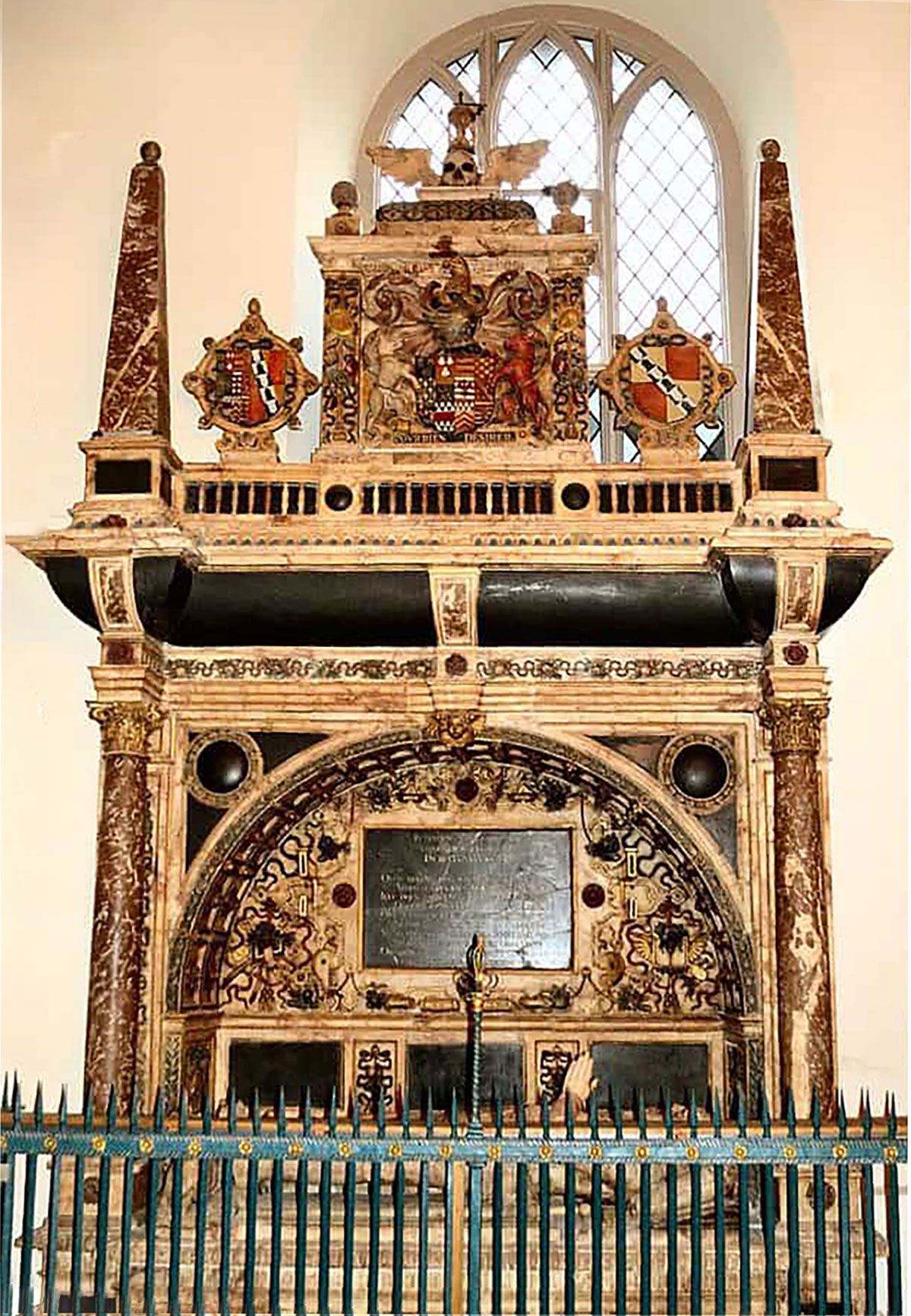
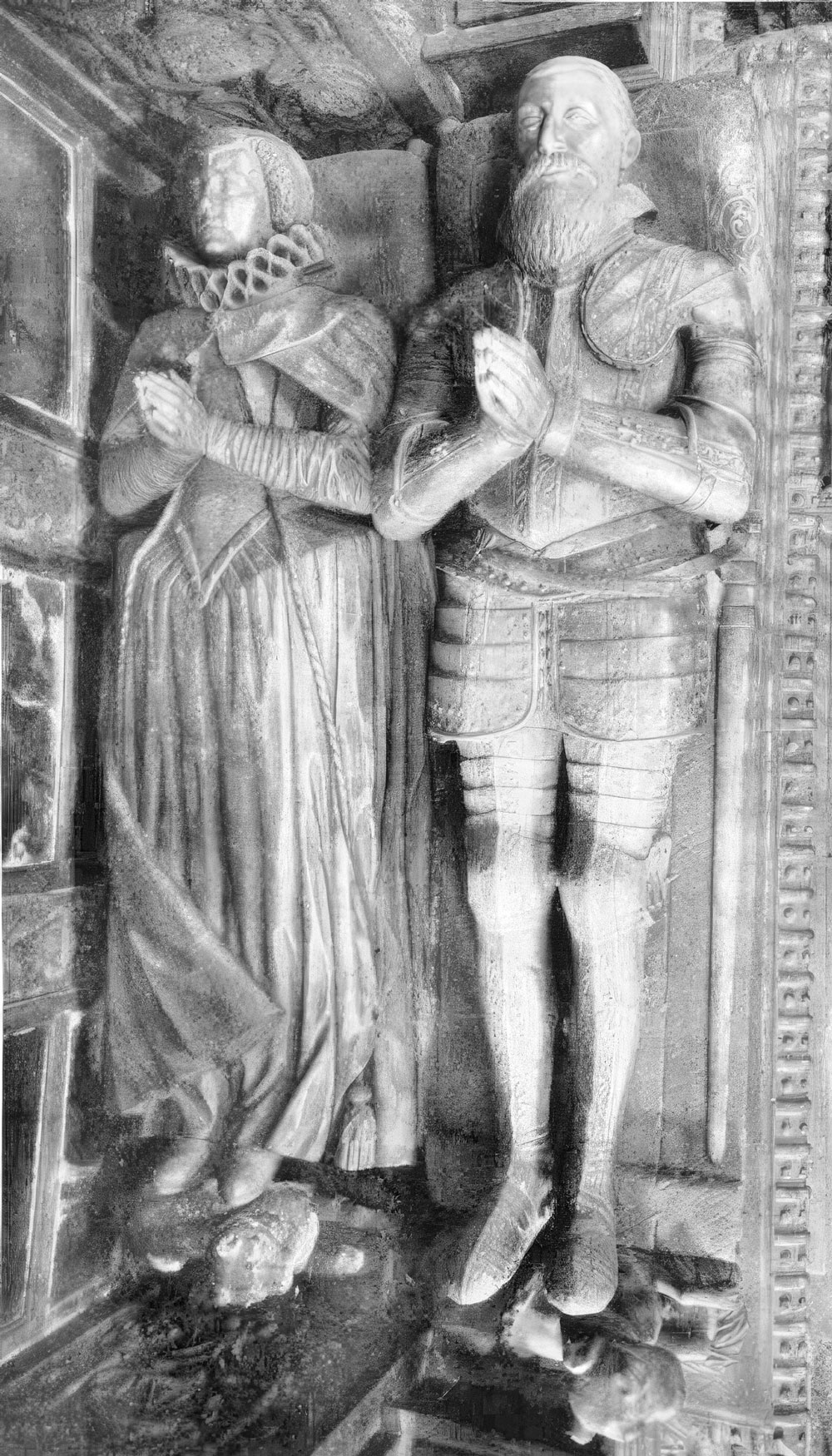
The detail is elaborate and curious. There is the shield of arms upon the architrave, surmounted by scales, a winged skull and an hourglass, symbolising Judgement, Death, and Immortality; there are flaming urns to right and left, symbols of immortality again; there are pyramids, the proper Elizabethan term for the small obelisks before us, the “starry pointing pyramid” of Hilton’s [sic: Milton’s] epitaph on Shakespeare, and the emblem since classical days of eternity.
As an adult Ann was an avid advocate of education for both sexes, as she found many schools for boys and girls in Tothill Fields, Westminster, one of which is still running, this is Emanuel School, begun in 1594 and now in Battersea.
[Chelsea Old Church: Gregory Fiennes, Lord Dacre of the south, and his wife Ann Sackville. See also DNB: Anne Fiennes for some tantalising glimpses of her will, which would be worth following up; and Living London History: Delving into the Treasures of Chelsea Old Church, which has many fine images.]
But in 1873, when the charity was reorganised, the girls were sent to the Grey Coat Hospital in Westminster, still a girls’ school today. Emanuel moved from Westminster to Wandsworth Common in 1883, taking over the building of the Royal Victoria Patriotic School for Boys, and for the next 112 years it was a boys’ school.
[I've written about the Patriotic School for Boys already, including in September 2022, December 2022 and February 2024 Chronicles. See also my transcription of B.V. Slater’s superb History of the Patriotic School.]
I wonder how much Emanuel School has been shaped by the abolition of the 11-plus and the loss of free access to selective education based chiefly on "academic ability". What has been the effect of swapping one bipartite system — grammar and secondary modern — for another split between public and private, based mainly on ability to pay? And with the eventual arrival of girls, how deeply have these shifts transformed the social character of our area?
I'd love to hear from readers about your experiences of local schools, including the experience of selection (and rejection), and school reorganisations and closures.
Just as I was about to send this month's Chronicles out, I heard from Tony Jones, Emanuel School's ever-helpful archivist, that her Chelsea effigy is not the only image of Anne Sackville. He told me that in fact two painted portraits exist. So what did she look like?
One image is a kneeling figure in a monument in Westminster Abbey. Here's a teaser. What will she look like?
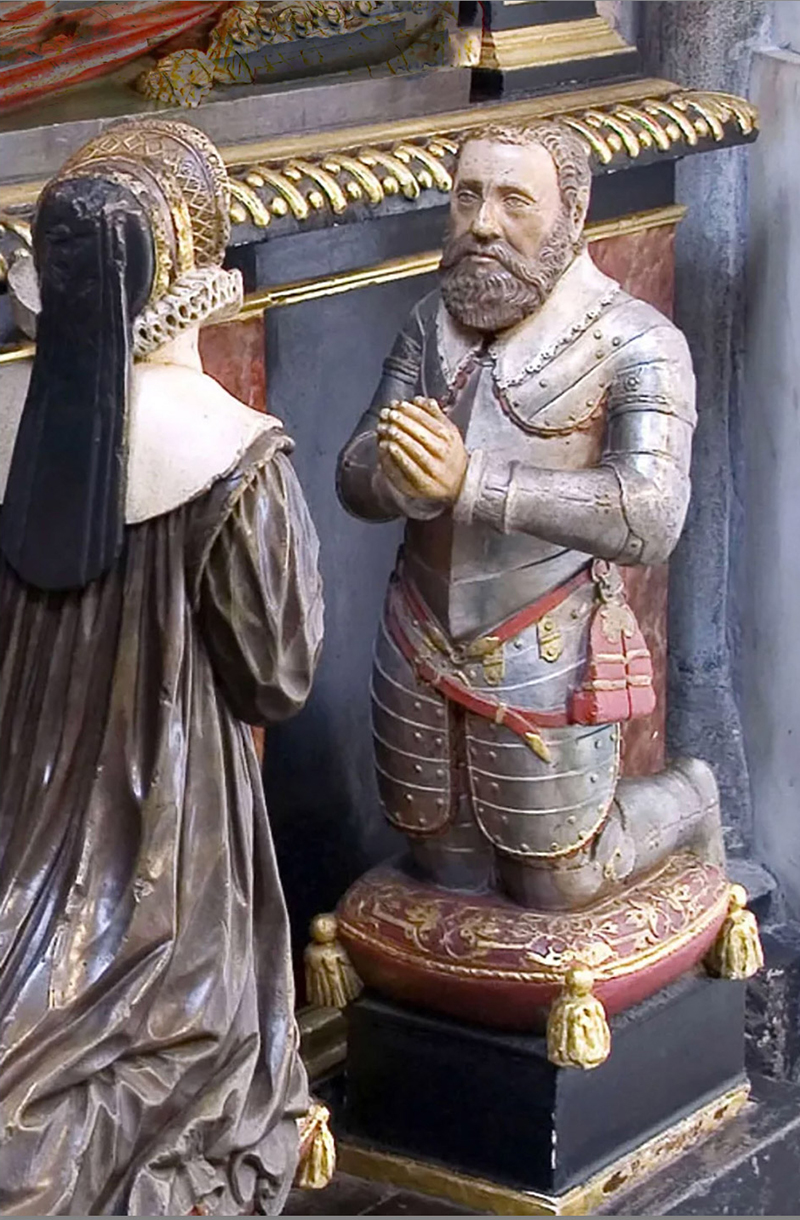
The other image is an easel portrait in the manner of Hans Holbein derived directly from her kneeling figure. It's a really remarkable story which I'll publish as soon as I can.
[Graham Jackson, author of A History of Trinity Fields (2021), kindly wrote in response to my remark above that Sir Walter St John's and the other local grammar schools "didn't own their own buildings and land". Here's his letter is reproduced.]
Philip
Thanks again for your Chronicles. A couple of points if I may.
In your article on Emanuel School, where of course you are an old boy, you mentioned that Sir Walter St John's School "didn't own their own buildings or land".
That is only partly true. When the school's status was changed around 1950, the local authority of the time agreed to share any proceeds from a sale of the site with the Sir Walter St John's Schools Trust, because some of the buildings belonged to the Trust and other buildings on the site did not. (I think the Trust's share was around 30%.)
This proved to be good fortune for the Trust: when the school was sold to Thomas's, it received around £1.8 million as its share. So from never really having any money, the Trust had a welcome windfall – but by then the purpose of the Trust had failed. It was wound up in 1992 and, with the permission of the Charity Commissioners, a new charity, the Sir Walter St John's Educational Charity, was formed. It still exists today, supporting various other charitable organisations within Wandsworth and Lambeth.
The charity is also still the owner of Trinity Fields, although in 1996 it entered into a lease with the Trinity Fields Trust to allow it to administer the playing fields in its stead. This had come to the fore in 1994, when the changing rooms at the Trinity Road end of the ground were destroyed by fire, and the charity was reluctant to spend its newly acquired wealth on replacing a building that was chronically under-insured.
Paradoxically, as owners, the charity is the only organisation supporting the Trinity Fields Trust's plans to install artificial surfaces at the ground, as it sees them as an improvement on what is there now. It will not support the plans financially – after all, why should it, if it adds value to the ground at no cost to itself? The charity also receives £75,000 a year from the Trinity Fields Trust as part of the agreement for managing the ground.
Emanuel goes co-ed in 1996
Regarding Emanuel School, the decision to go co-ed in 1996 did have consequences for Old Emanuel sport. The arrival of girls left the school with the dilemma of how to accommodate sports such as netball, as well as changing facilities, safeguarding and so on.
The school has now developed Blagdons, and I enclose an extract from my unpublished book, The Life and Times of London Cricket, which will give you some insight into what happened. I think Old Emanuel RFC have found a home near Blagdons, where they are winter tenants of Wimbledon Cricket Club.
Regards
Graham
Many thanks, Graham - incredibly informative, as always! I've also picked up two small additions: the Trinity Fields Trust's lease was renewed in 2017 for fifty years; and the Old Emanuel rugby club now plays at Raynes Park Sports Ground, Taunton Avenue, the Wimbledon Club's second ground.
See also the extract from Graham's forthcoming book, The Life and Times of London Cricket, on Old Emanuel cricket: ninety-five years at Blagdon's, reproduced here with his permission.
Unusually, I'm publishing two months-worth of Chronicles at the same time. Here's a link to October's Chronicles >>.
Send me an email if you enjoyed this post / want to comment on something you’ve seen on the site / would like to know more — or just want to be kept in touch.
If you would like to receive notifications of new Chronicles, let me know . . .
Philip Boys (“History Boys”)
September/October 2026
And sign up to Clapham Junction Insider ("Community News for Clapham Junction, Battersea, Wandsworth and beyond"). Newsletters are very informative, sharply written and with lots of good illustrations; they're chock full of important local stories, mostly about local democracy and "development".