Last modified: 24 October 2026 · Build 1
Home›People›Anne Sackville, Lady Dacre
See also: Emanuel School · The Fitzhugh Estate
Work in progress. Everything on this site about Anne Sackville, also known as Anne Fiennes, Lady Dacre or Baroness Dacre, is gathered here. More to come, including the story of her portraits.
Anne Sackville was the daughter of Sir Richard Sackville, Treasurer of the Exchequer to Elizabeth I, and sister of Thomas Sackville, Lord Buckhurst, later Earl of Dorset. Through her grandmother, a Boleyn, she was a cousin of the Queen.
She married Gregory Fiennes, 10th Baron Dacre, whose father had been executed in 1541. The title was restored to Gregory and his sister in 1558. The couple had no surviving children. Gregory died at Chelsea on 25 September 1594.
Three months later, on 20 December 1594, Anne made her will. In it she directed her executors to build “a meet and convenient house to be called Emanuel Hospital in Westminster for the relief of twenty aged people and for the bringing up of twenty children in virtue and good and laudable arts so that they might better live in time to come by their honest labour”.
The children were to be a happily egalitarian ten boys and ten girls. She died on 14 May 1595, and the hospital, at Tothill Fields in Westminster, received its charter in 1601.
In 1873, when the charity was reorganised, the girls were sent to the Grey Coat Hospital in Westminster, still a girls’ school today. Emanuel moved from Westminster to Wandsworth Common in 1883, taking over the building of the Royal Victoria Patriotic School for Boys, and for the next 112 years it was a boys’ school. When girls returned in the 1990s, it was, in a way, a return to its founder’s original intention.
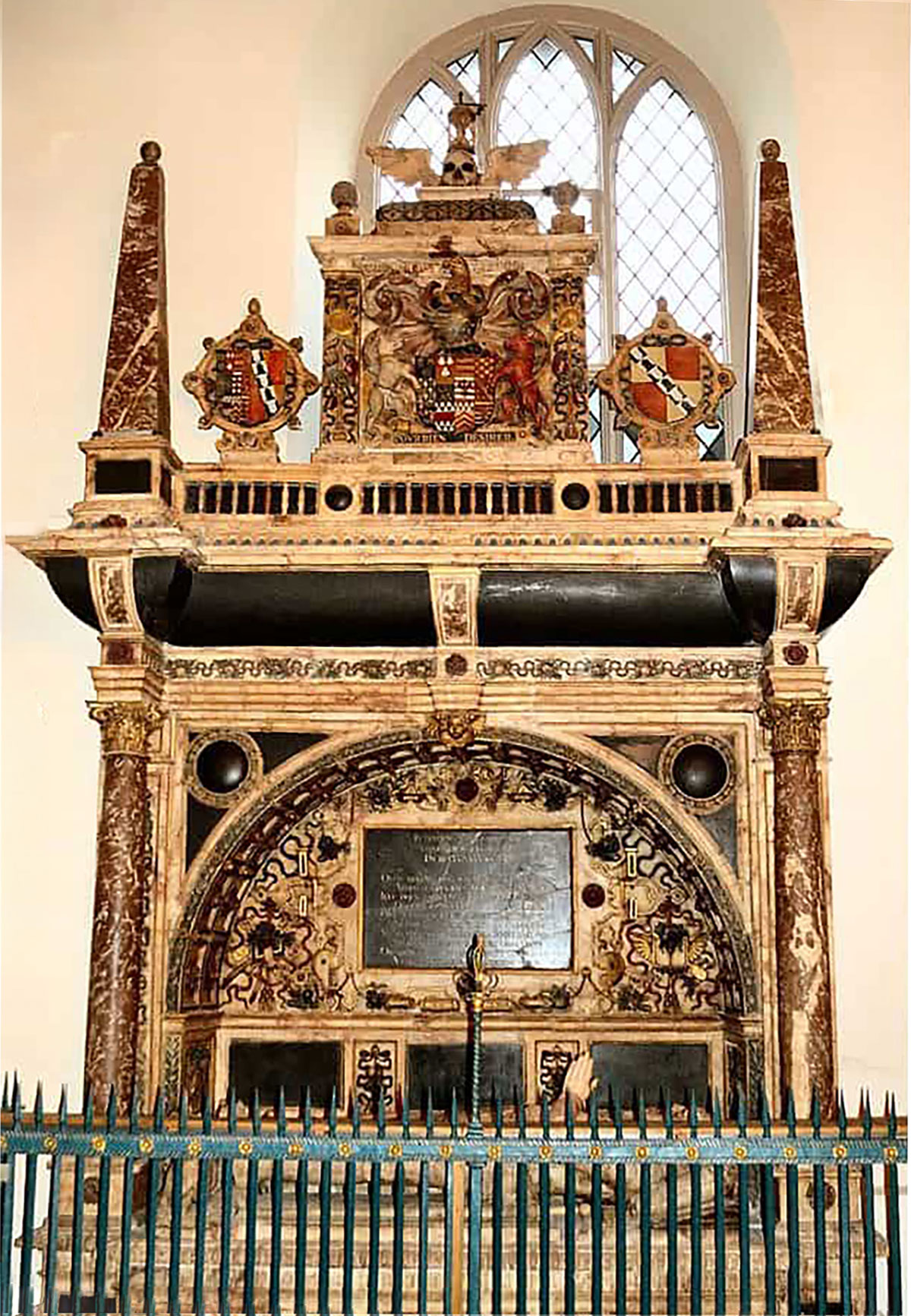
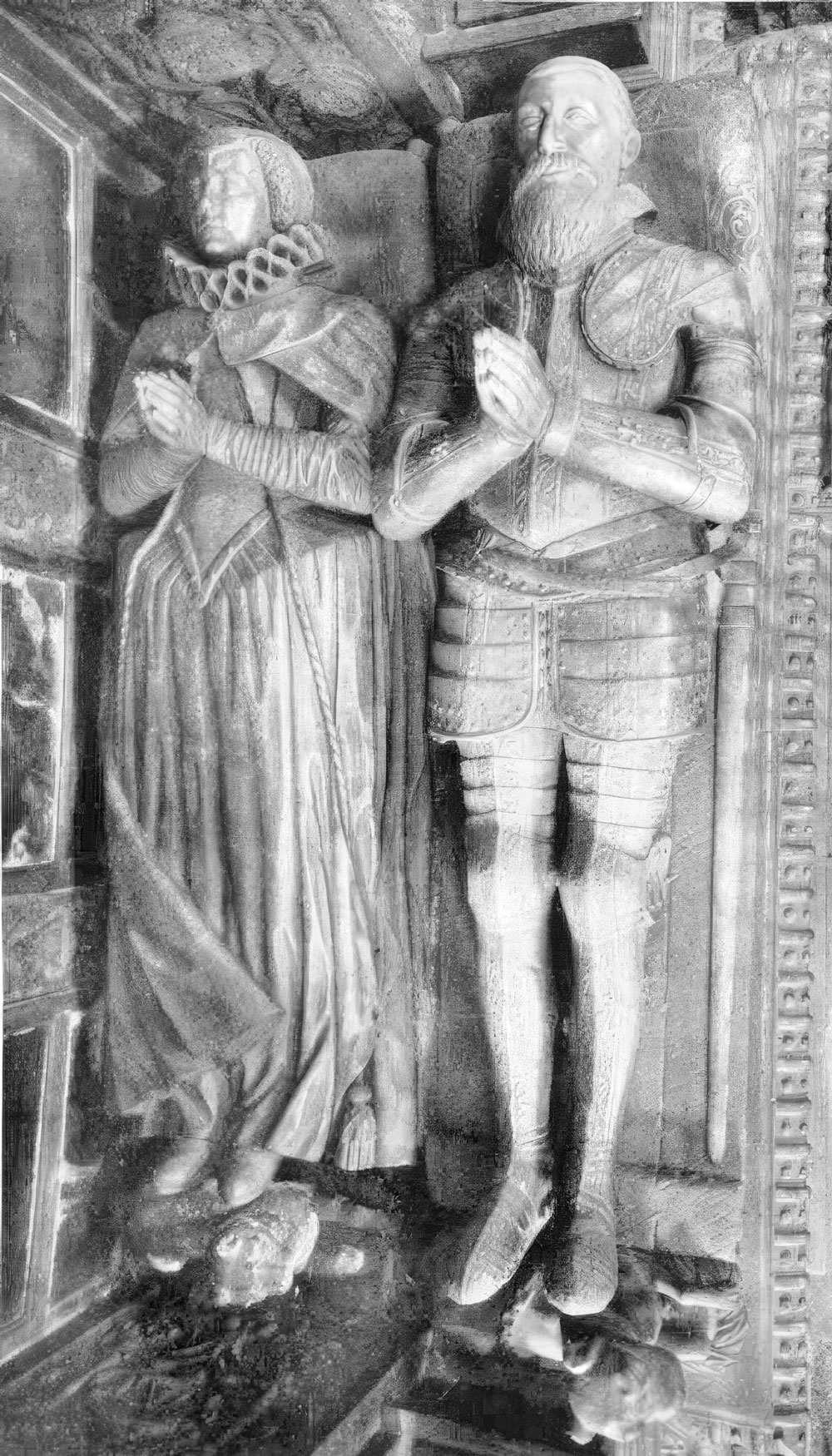
Lord and Lady Dacre are buried in Chelsea Old Church, beneath a fine monument with their effigies and the Dacre arms. It has recently been cleaned, conserved and restored.
The detail is elaborate and curious. There is the shield of arms upon the architrave, surmounted by scales, a winged skull and an hourglass, symbolising Judgement, Death, and Immortality; there are flaming urns to right and left, symbols of immortality again; there are pyramids, the proper Elizabethan term for the small obelisks before us, the “starry pointing pyramid” of Hilton’s [sic: Milton’s] epitaph on Shakespeare, and the emblem since classical days of eternity.
[Chelsea Old Church: Gregory Fiennes, Lord Dacre of the south, and his wife Ann Sackville.]
The second image of Anne is a painted kneeling figure, beside her husband, in front of the tomb of Winifred Paulet, Marchioness of Winchester, in Westminster Abbey.
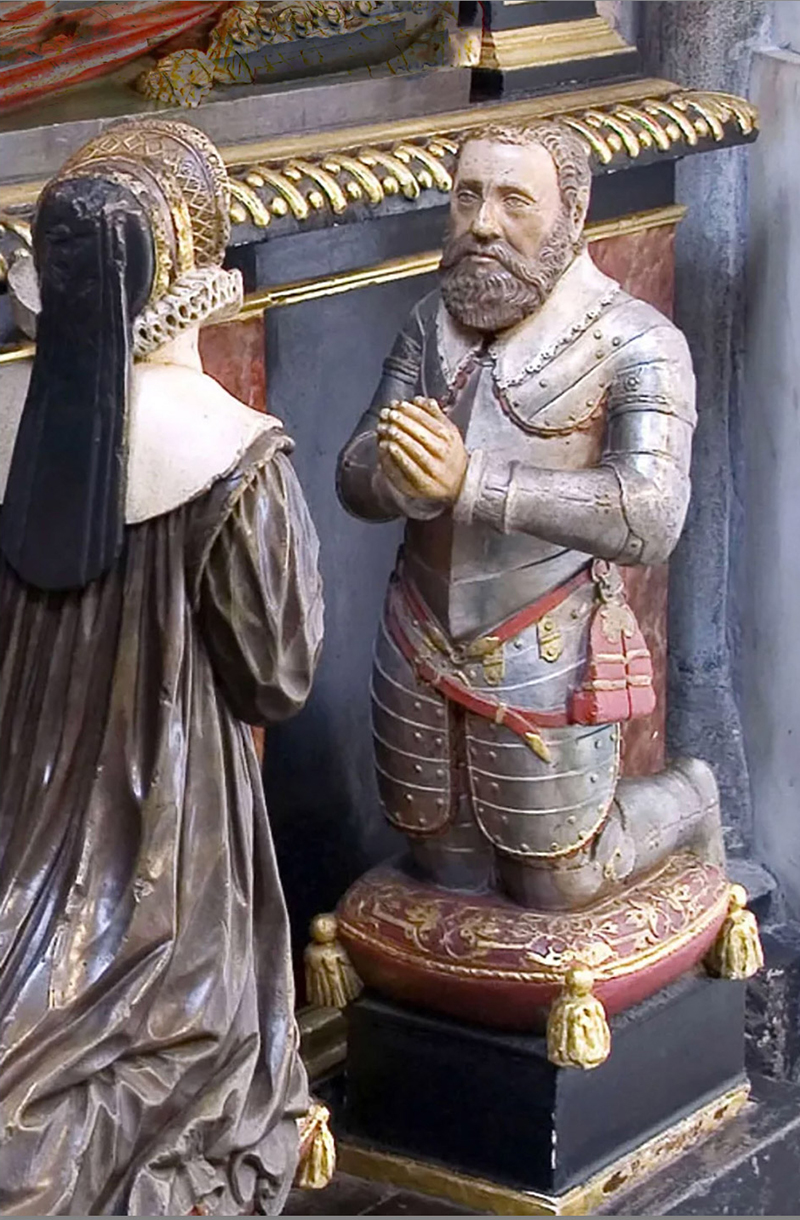
For a long time I thought no painted portrait of Anne survived. Then Tony Jones, Emanuel School’s ever-helpful archivist, told me that two exist. One is the painted kneeling figure in Westminster Abbey. The other is an easel portrait in the manner of Hans Holbein, derived directly from that kneeling figure. It’s a really remarkable story, which I’ll publish here as soon as I can.
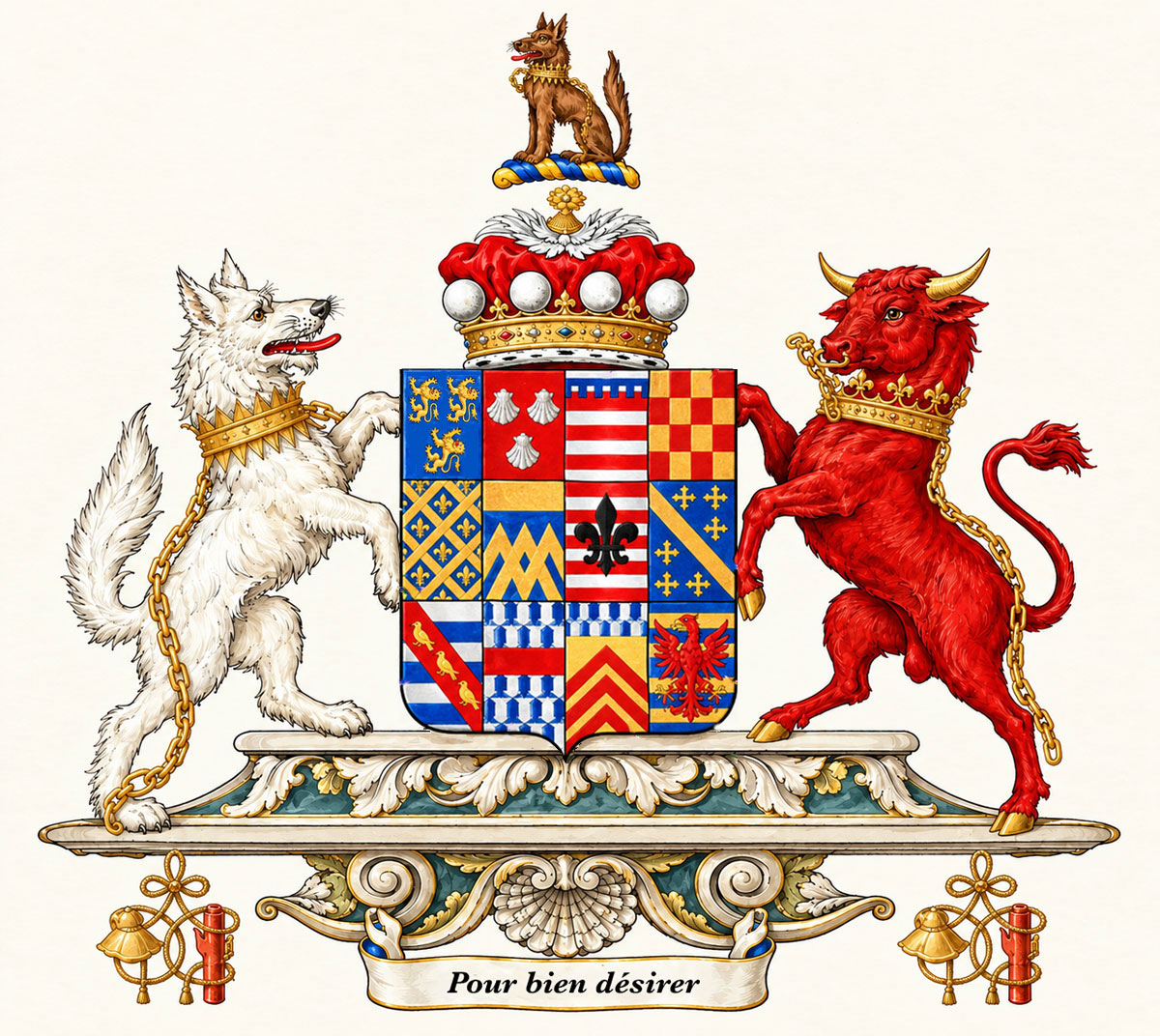
The arms on her monument are her husband’s: the Fiennes-Dacre arms of twelve quarters. They are also the arms of Emanuel School, and four of the quarters gave their names to the Fitzhugh Estate beside the school. The whole story is on Lady Dacre and Emanuel School.
| 1541 | Execution of Gregory Fiennes’s father; the Dacre title forfeited. |
| 1558 | The title restored to Gregory and his sister. |
| 1594 | Gregory Fiennes, Lord Dacre, dies at Chelsea, 25 September. Anne makes her will, 20 December. |
| 1595 | Anne dies, 14 May; buried with her husband in Chelsea Old Church. |
| 1601 | Emanuel Hospital, Westminster, receives its charter. |
| 1873 | The charity reorganised; the girls go to the Grey Coat Hospital. |
| 1883 | Emanuel School moves to Wandsworth Common. |
Do you know more about Anne Sackville, or her portraits? Please let me know.