Build 5 — 30 July 2026
House No. 5 of the Five Houses of Wandsworth Common
Name: Dent’s House — House No. 5
Date Built: 1777–78
Date Demolished: 1881
Builder / Developer: Robert Dent
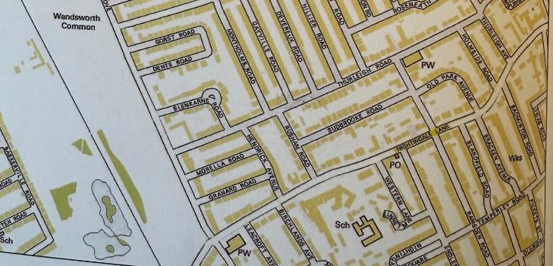
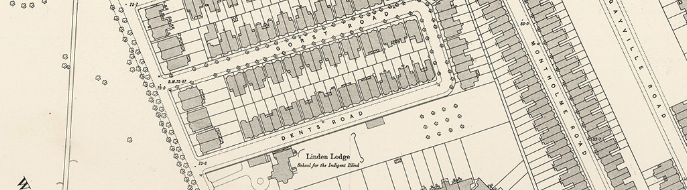
Location: Dent’s House is the fifth house on Five Houses Lane and was located between what is now Gorst Road and Dent’s Road. The estate included 36 acres, including a large field on the east side of the Falcon Brook.
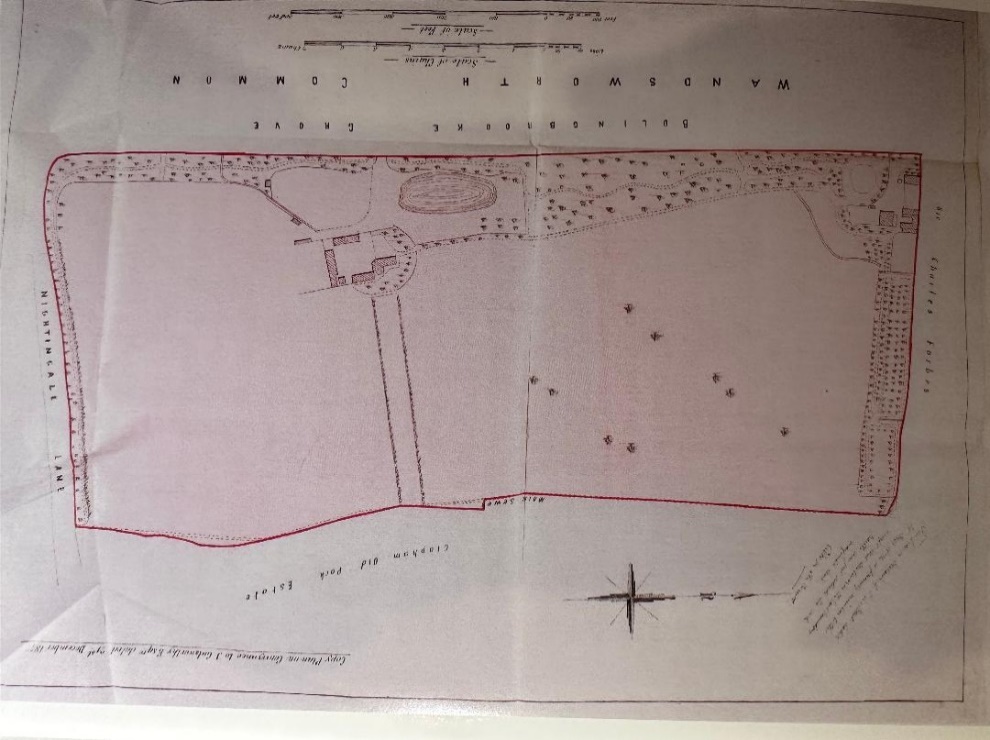
The house had eleven bedrooms, and dressing rooms on its upper floors, approached by a wide staircase above a ground-floor suite of dining, drawing, and breakfast rooms. It included 36 acres of garden, parkland and arable fields. According to the sale particulars from 1868 it had offices, a coach house and stabling for six horses, numerous outbuildings, plus a south-facing walled kitchen garden, lawns, and a shrubbery.
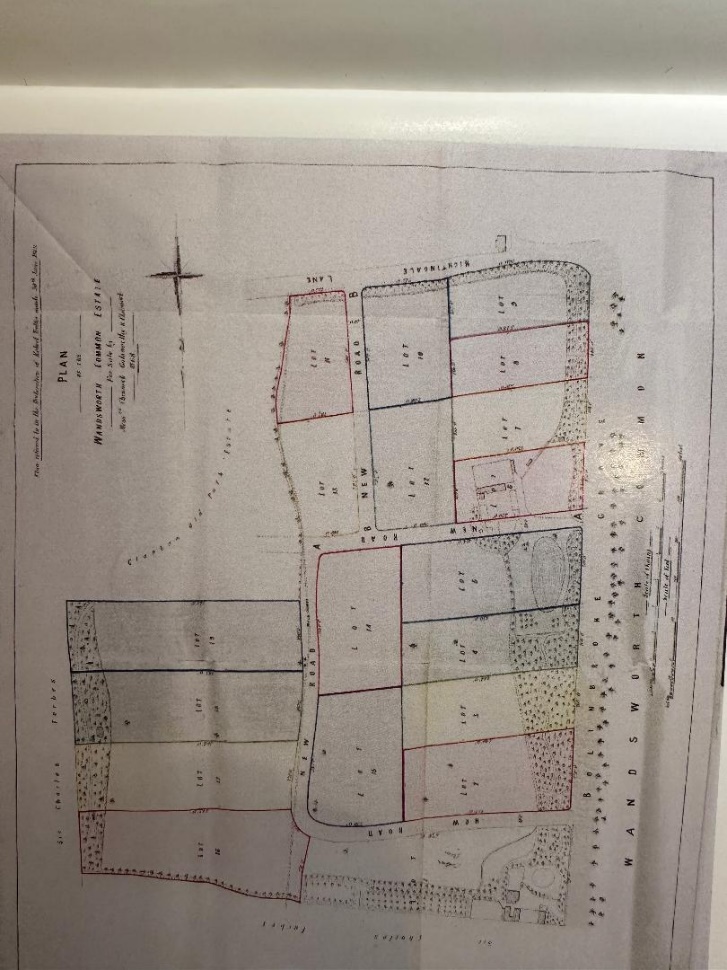
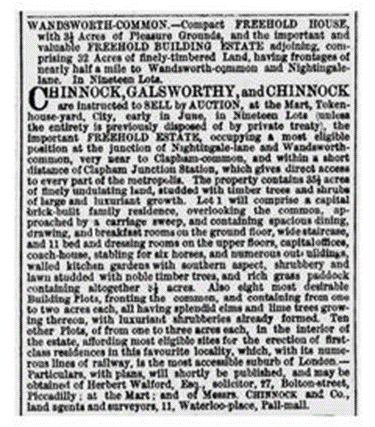
In 1868, following the death of Mary Dent, the estate was put up for sale in nineteen lots, but most of it failed to sell. The advertisement described the estate as follows:
“36 acres of finely undulating land, studded with timber trees and shrubs … Lot 1 will comprise a capital, brick-built family residence overlooking the Common, approached by a carriage sweep and containing spacious dining, drawing and breakfast rooms on the ground floor, wide staircase, and 11 bed and dressing rooms on the upper floors … Offices, coach house, stabling for six horses and numerous outbuildings, walled kitchen gardens, shrubbery … and rich grass paddock of 2½ acres.”
“It also includes eight building plots fronting the Common of one to two acres each and ten other plots of one to three acres each.”
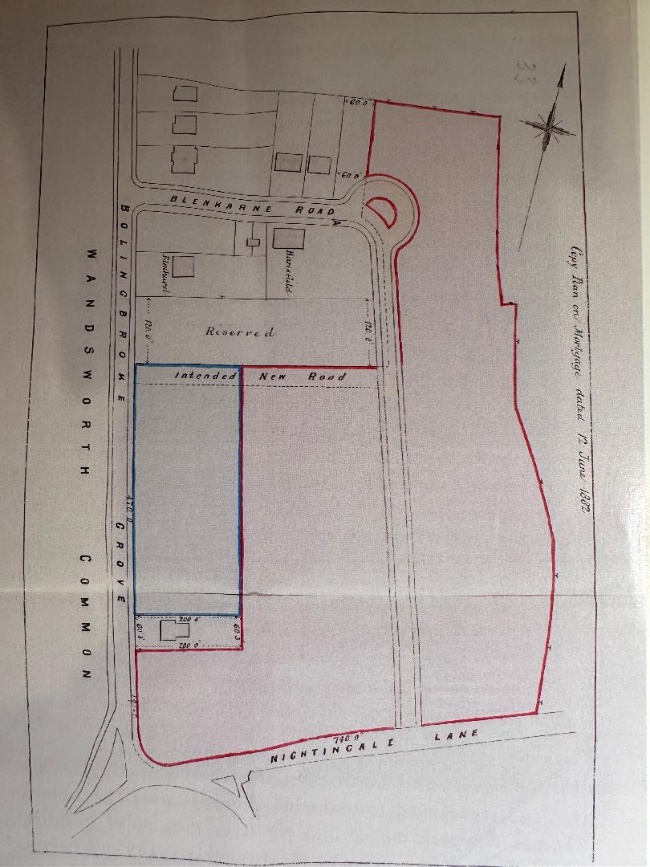
In 1874 it was finally sold in two lots: the house and five-acre garden to John Eldon Gorst, QC, MP, as his residence; and 21 acres to Charles E. Appleby for development, who subsequently built Blenkarne, Morella, and Granard Roads, Hendrick Avenue, and the western end of Thurleigh Road on this land.
[Sarah: Appleby or Everidge? — the next paragraph credits Everidge with laying out Gorst Road and Dent’s Road on the house and garden, while this paragraph credits Appleby with the roads built on the 21 acres sold separately. Worth double-checking this isn’t confusing two different developers of two different parcels.]
Dent’s House was situated between what is now Gorst Road and Dent’s Road. In the early 1880s, more land with frontages overlooking Wandsworth Common, once part of the Dent family’s holdings, was covered with housing.
Dent’s House and its five-acre garden, south of Broomwood Road, was acquired in 1881 by James Walker Everidge, a Kennington builder, who with the architect Charles Bentley laid out on its site a single, U-shaped side-road, doubling back on itself to re-emerge further down Bolingbroke Grove. All was to have been called Dent’s Road, but in 1883 the MBW insisted that the northern stretch and eastern curve be separately named Gorst Road (after the house’s last resident, John Eldon Gorst). Construction took place in 1882–84; Everidge built several houses himself, including 1–10 Dent’s Road and nine more facing the common at 27–35 Bolingbroke Grove. The biggest builders were John Smith of Stockwell and James King of Plough Lane.
The characteristic house-type here was the good-sized two-storey semi-detached ‘villa’, usually with a third storey in a gable above double canted bays, with carved-leaf decoration to door and window surrounds, ornamental Gothic bargeboards, and other touches. The Nightingale Park estate was the name given to the fourteen acres left vacant from C. E. Appleby’s unfinished development in and around Bolingbroke Grove, acquired in 1882 by Thomas Ingram and Henry Bragg.
The street names record a fragment of history: Morella Road commemorates Marianne Richards, a descendant of an owner of one of the Five Houses, who in 1850 married a controversial Carlist general, Field-Marshal Don Ramón Cabrera, Count de Morella.
The characteristic houses built in Gorst Road and Dent’s Road have spirited Domestic Revival detailing. At 9 Bolingbroke Grove (Elstree), a large terracotta date-plaque marks a double-fronted house designed for solicitor Reuben Winder and built in 1882–83, when, as Winder later recalled, no other houses were in ‘close proximity’.
[Sarah: the whole section above is a little bit incoherent and needs some work.]
| Years | Occupants | Details |
|---|---|---|
| 1778–1823 | William Dent | Brother of Robert Dent |
| 1823–1867 | Mary Dent | Daughter of William Dent |
| 1867 | HOUSE PUT UP FOR SALE | |
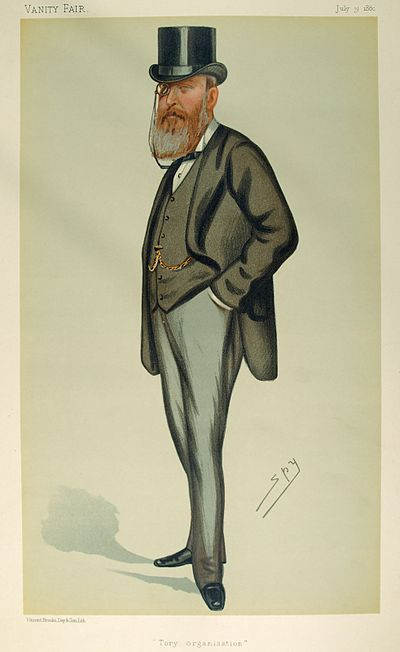
| 1874–1881 | John Gorst | QC and Tory Party Agent |
| 1881 | HOUSE SOLD AND DEMOLISHED |
Although not as grand as Bolingbroke House, Dent’s House was more substantial than the other three houses built on Bolingbroke Grove in 1777–78, with a carriage drive, stable block, extensive gardens and grounds, and a working farm. It was occupied by William Dent, brother of Robert, who had originally purchased the land from Earl Spencer and speculatively built the five houses in 1777–78.
The house stood in the north-west corner of the plot, with the farm towards the south-west corner. William Dent left the house to his adopted (possibly natural) daughter, Mary Dent, upon his death. He died in 1823 and was buried at St Mary’s, Battersea on 14 January 1823, aged 83.
Mary Dent died on 27 December 1867. Her Will describes her as being late of Battersea Rise, spinster. She left an estate valued at under £35,000. The GRO reference states that her death was registered in Quarter 4 of 1867 in Wandsworth and that she was aged 92, giving a birth year of about 1775. Her birth record has not been found.
In 1868, following the death of Mary Dent, the estate was put up for sale in nineteen lots, but most of it failed to sell. In 1874 it was sold in two lots: the house and five-acre garden to John Eldon Gorst, QC, MP, and 21 acres for development by Charles E. Appleby.
Gorst was a successful QC and had been the Tory party’s central agent, helping to mobilise the enlarged urban electorate to secure the Tory 1874 election victory. He lived in the house until about 1881 when it was sold, demolished, and Dent’s and Gorst Road were built over the site, leaving just the stable block and a piece of old boundary wall standing (between the garden of 35 Bolingbroke Grove and houses Nos 36–38), which remain to this day. The stable block is now 1b Gorst Road and according to its current owners still has wall rings to tie up the horses inside the house and a large opening, now glazed, which allowed carriages into the building.
[Sarah: would it be cheeky to include a Google Earth image of this house?]
Mary Dent, aged 60, of independent means, lived alone at Dent’s House with five live-in servants: Mary Clarke, 45; Ann Mallard, 25; Walter Bubb, 30; John Seymour, 25; and Jane Lane, 40.
Mary Dent, 74, single, fund holder, born Kensington, with visitors Elizabeth Brocks, 19, and Agnes Brocks, 17, both born Worcop, Northumberland.
Servants: Mary Ashford, 43, cook; Caroline Stiles, 26, housemaid; Mary Benham, 14, housemaid; Joseph Barrass, 29, footman; Robert Martin, 53, coachman.
Mary Dent, 80, single, fund holder, living alone.
Servants: Mary Benham, 24 (as in 1851); Ann Benham, 22, her sister; both born Wandsworth; Susan Harvey, 40; Cornelius Palmer, 45; all listed as domestic servants.
The house failed to sell in 1868 and was not purchased by Gorst until 1874. In 1871 the census enumerator has written ‘no name person in charge’.
In occupation: Henry Ling, 54, head of household, gardener, born Holloway; his wife Frances, 54, born Leyton, Essex; and their children Robert J., 25, single, servant, born Streatham; Phoebe, 17, servant, born Battersea; and Henry, 9, born Battersea. This family were living at Old Park Lodge, Nightingale Lane, in 1861.
Under the heading ‘no head present’: John E. Gorst, 19, undergraduate at Cambridge, born New Zealand, son of John Gorst; together with his siblings Hilda M., 13, born Surrey; Edith V., 8, born Kent; Eva R., 6, born Surrey; and Alice G., 5, born Surrey. John E. Gorst the elder was with his wife Mary and daughter Constance, visiting in Brighton on the day of the census.
Servants: Emma Rosier, 22, parlourmaid; Maria Swan, 42, cook; Eliza Tucker, 26, nurse; Amelia Holloway, 18, housemaid; Alice Wright, 19, kitchenmaid; Samuel Foden, 17, page.
John E. Gorst (born 24 May 1835, Preston, Lancs) married Mary Elizabeth Moore (born 1835, West Indies) on 18 August 1860 at Geelong, Victoria, Australia. They had eight children, including John Eldon b. 1861 (NZ), Hilda Marion b. 1867 (Upper Tooting), Eva Rachel b. 1874 (Surrey, baptised 12 July 1874 St Mark’s, Battersea Rise, abode Bolingbroke Grove), and Alice Gwendoline b. 26 January 1876 (Battersea, baptised 27 February 1876 St Mark’s Battersea Rise, abode Bolingbroke Grove).
Dent’s House was demolished in about 1881–82. The Ling family, who had been in residence at the house in 1871 (presumably in the stables or coach house), had moved to 2 Cairns Road by 1881. Henry Ling was a widower; his wife Frances Ling was buried 28 December 1874 at St Mary’s, Battersea, abode Chatham Road, and Henry Ling himself was buried 13 June 1885 at Brompton Cemetery, aged 68, abode 17 Cairns Road.
In 1851 Mary Ashford was the cook, aged 43 and from Sutton Scotney in Hampshire. She was not married. She died in 1856 in Wandsworth, aged just 49.
Research has uncovered a servant in-house romance. In 1851 Joseph Barrass, 29, was the footman at Dent’s House. Caroline Stiles was a housemaid there, aged 26. Caroline was baptised in 1825 in Battersea to parents Christopher, a gardener, and Mary Ann. Joseph Barrass was from County Durham, born in 1822. They married on 5 July 1856 at St Mary’s, Battersea. By 1861 Caroline and their daughter Harriet were living in York Road, Battersea, whilst Joseph was working as butler to a General in the British Forces in Paddington. He died in 1893 in Durham, aged 70. Caroline continued to live in Durham, where she let furnished apartments in 1901 and was retired in 1911. She died in Durham aged 87 in 1912.
Cornelius Palmer was a servant at Dent’s House in 1861, aged 45 according to the census and born in Sevenoaks. Research shows that Cornelius was not being truthful about his age. He was born in Ightham, Kent, on 1 January 1803. On 30 May 1848 he married Charlotte Elizabeth Redman in Brighton; he was 24 years her senior, but it is not known whether she was aware of this. On each census Cornelius states that he was born around 1816. Sadly, Charlotte died in Brighton in 1850, aged just 23, quite likely in childbirth, with no surviving children of the marriage. Cornelius died in Ightham on 30 June 1875 and his Will left his estate of under £450 to his brother, Uriah.
In 1881 Emma Amelia Rosier was parlour-maid at Dent’s House, aged 22. She was born on 19 April 1858 in East Harptree, Somerset. Emma married her cousin, John Rosier, on 20 April 1890 in Colchester, Essex. John died between 1911 and 1921, but Emma lived until the age of 95. In 1921 she was living in Ealing with one of her sons and in 1939 she was living in Hartley Wintney, Hampshire. She died in 1953.
Robert Dent (d. 1805) was a senior partner in Child & Co.’s bank. The Georgian mansions that once graced the west and south fringes of this area, fronting what were then known as Five Houses Road or Lane and Balham Lane (now Bolingbroke Grove and Nightingale Lane respectively), were built on land owned by Robert Dent. Like his near neighbour and banking partner Richard Lovelace, Dent benefited hugely from his association with the Child family, being one of the trustees and main beneficiaries under the will of Robert Child of Osterley Park in 1782.
Dent had taken ground here in the 1760s, presumably on lease from Lord Spencer. Then in December 1772 he bought from Spencer the freehold to all the fields skirting the two roads — in all, twenty fields, totalling about 88 acres, at a cost of £5,650. In 1775 he added part of a field called Broomfield, adjoining. Then in 1775–76 Dent built himself a house with spacious grounds, east of the brook, known as Old Park. West of the brook, on the land overlooking Wandsworth Common, he erected five more large gentlemen’s residences as a speculation. Four were finished by November 1777 when they were advertised in the London press as ‘new, substantial-built, brick houses, neatly finished’, for sale or to let; the fifth was completed a year or two later. And so the road acquired the informal name Five Houses Road or Lane, though contemporary accounts of its residents often referred to them as being ‘of Battersea Rise’ or Wandsworth Common.
[Sarah: repetition? Has this already been said?]
Dent died in 1805, leaving the estate to his son John, another partner in Child’s Bank and later an MP for Lancaster. John Dent (21 August 1761 – 14 November 1826) earned the nickname “Dog Dent” by his interest in the Dog Tax Bill of 1796. He was also known as a book collector and a member of the Roxburghe Club.
[Sarah: what is this club? Expand a bit or leave out?]
William Dent was the brother of Robert Dent and was born in 1740 in Crosby Ravensworth, Westmoreland (now Cumbria). He lived in Dent’s House from when it was first built until his death in 1823. He owned property in Westmoreland and had a part share in the manor of Cockerham, near Lancaster. In 1811 he was commemorated for funding a large part of the rebuilding expenses for St Lawrence’s Church in Crosby Ravensworth. William did not marry. His Will leaves to his adopted/natural daughter, Mary, all his household goods, furniture, plate, china, linen, pictures, prints, glasses, wines, liquors and provisions, carriages and horses, and all the live and dead stock in and about his house and farm at Battersea.
Mary Dent remains an enigma. She was born in Kensington, according to the census returns, in about 1775 and was adopted by William Dent. She did not marry.
Sir John Eldon Gorst, PC, KC, FRS (24 May 1835 – 4 April 1916) was a British lawyer and politician. He served as Solicitor General for England and Wales from 1885 to 1886 and as Vice-President of the Committee on Education between 1895 and 1902. He was a successful QC and had been the Tory party’s central agent, helping to mobilise the enlarged urban electorate to secure the Tory 1874 election victory. Gorst lived at Dent’s House until about 1881, when he sold up to a builder and the house was demolished for Gorst and Dent’s Roads.
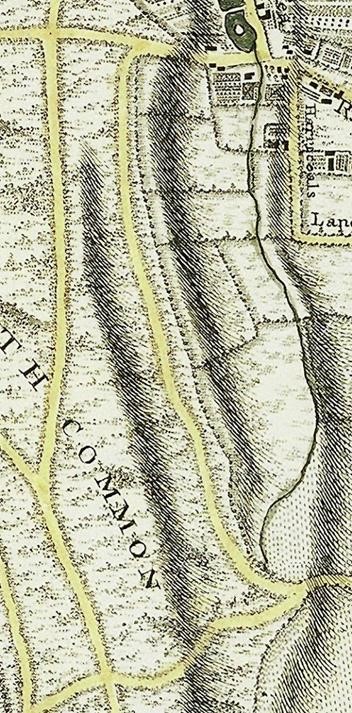
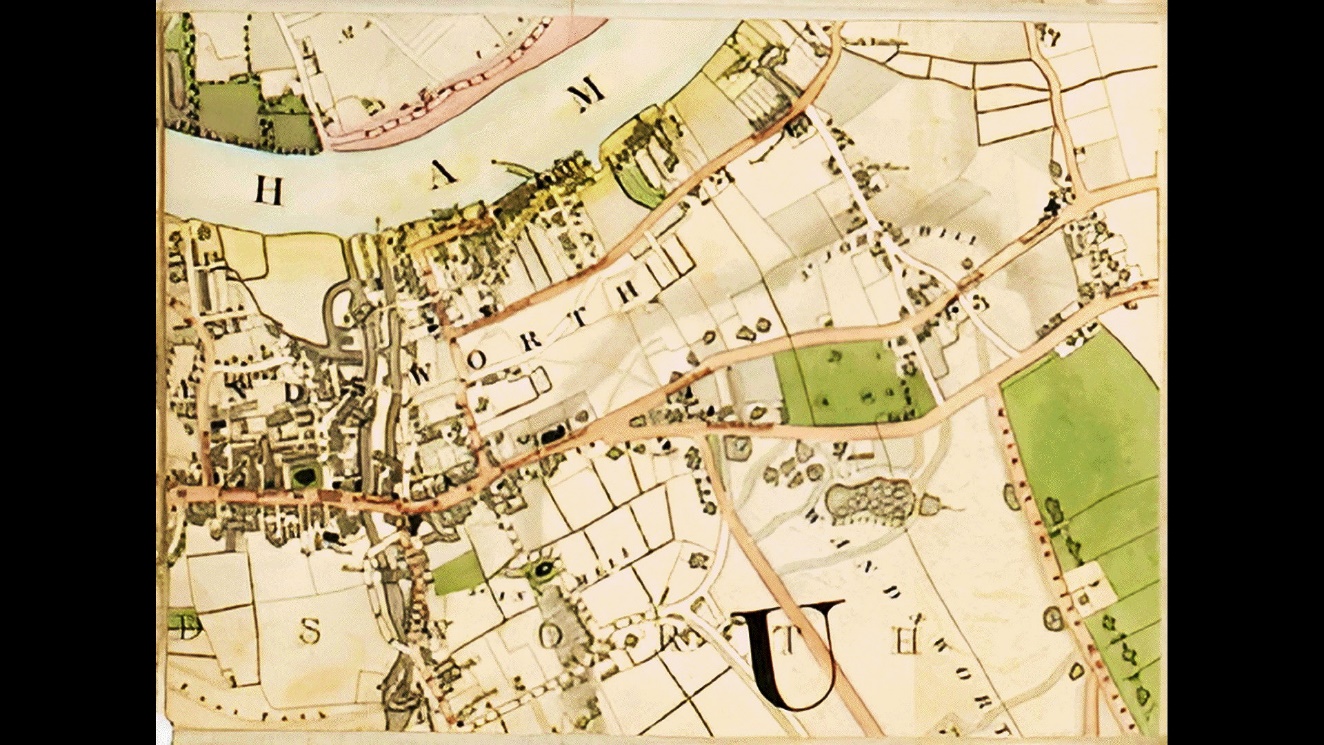
When Dent’s House was built in 1777 the landscape was rural and open, having been agricultural — arable, pasture, and meadow, as shown by the Rocque Map of 1761. Within this verdant environment, the Five Houses were created, foreshadowing Victorian ribbon development in the mid- to late-nineteenth century.
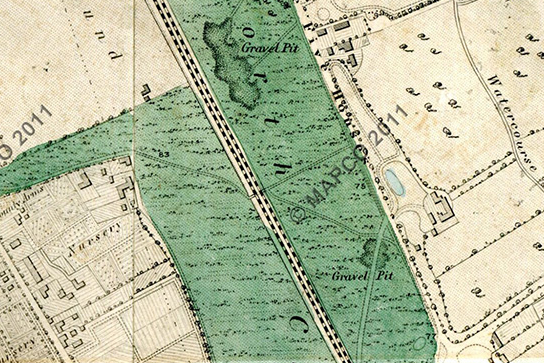
The Corris Map of 1787 shows the house sitting in a rectangular plot fronting Wandsworth Common on its west side. A tree-lined lane divided the house from rough ground characterised by poor, damp land with gravel pits. The house’s grounds lay principally to the east, down to the Falcon Brook. Like the other four houses, two small features — possibly additional buildings — appear to the south of the house bordering the boundary with Five Houses Lane; these were likely the start of farm buildings. We also see a thin black line marking a slim rectangle in front of the house but outside the curtilage, which may represent encroachments or enclosures projecting into the Common — a feature seen also at The Elms but not at the other three houses.
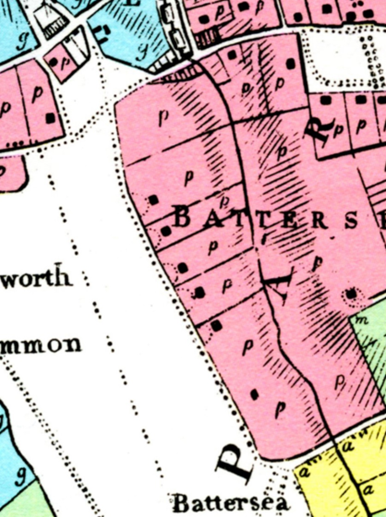
The 1800 Milne map shows the addition of a small building to the south of the house since 1787. Its land is marked as ‘P’ meaning ‘Paddocks and Little Parks’, suggesting a large proportion of rough grass for grazing alongside more formal planting. At this stage the common was known as ‘Battersea Common’.
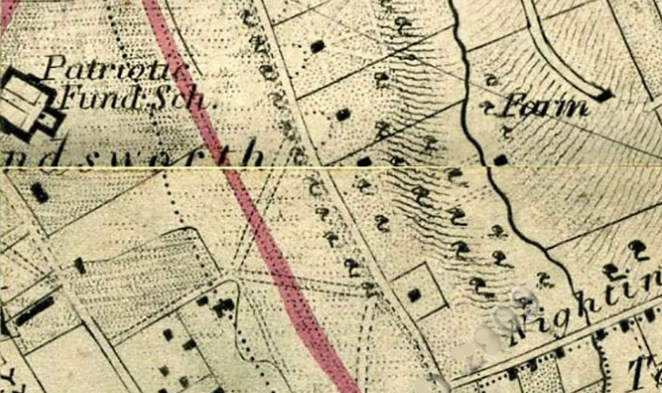
The 1829 Crutchley Map, although less accurate, does show the appearance of a large building (probably agricultural) to the south of the house and more central to the farm. This large building is repeated and described as a farm and stock yard in the Tithe Map eleven years later.
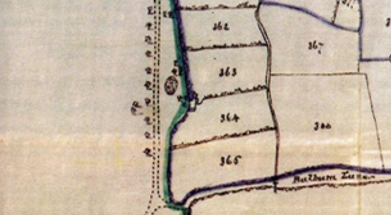
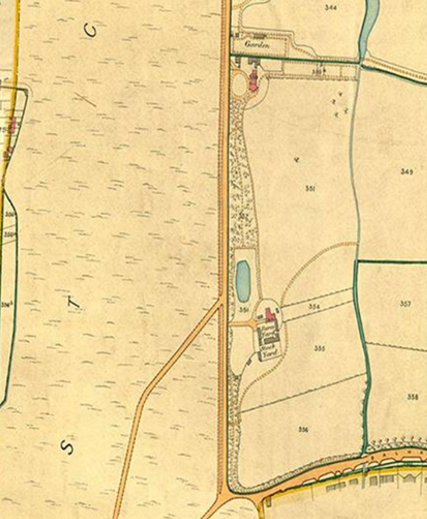
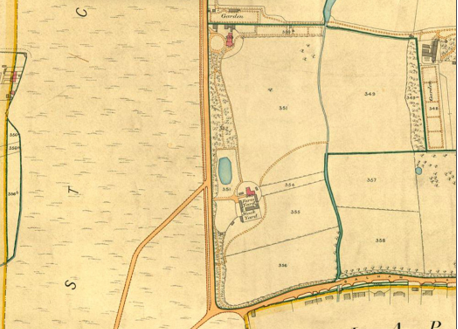
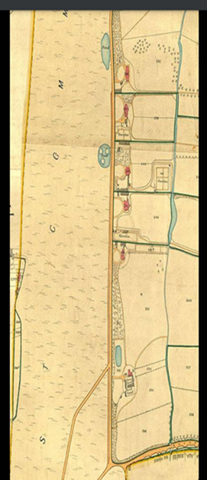
The Tithe Map of 1840 reveals much detail. The property had a circular sweeping drive between the lane and house. Like some of the other houses, it had a broad swath of trees or shrubs alongside Bolingbroke Grove — perhaps for seclusion — with tracks leading down to the farm buildings and along Balham Lane. More wooded sections appear on the far side of the field east of the brook, described as ‘plantation’ in the apportionment book, suggesting timber for commercial use.
The large body of water is some distance from the main house, so perhaps was placed for livestock rather than ornamental landscaping. A farmhouse is shown by the stock and farmyard and is of similar size to the main house to the north. Just north of Dent’s House along the boundary are buildings which could denote stabling, a coach house, offices, and a walled kitchen garden. The apportionment book describes this area as pleasure grounds. The main areas of the estate are shown as meadow, apart from a strip running from the farmyard to the brook which is arable.
The apportionment book supporting the tithe map records Dent’s House as follows (Flood Marsh*):
| Section | Land Use | Acre | Rod | Perch |
|---|---|---|---|---|
| 349 | Meadow | 8 | 1 | 30 |
| 349a | Plantation | 1 | 1 | 30 |
| 350 | Pleasure Grounds | 1 | 3 | 30 |
| 350a | Garden | 1 | 3 | 2 |
| 351 | Meadow | 12 | 3 | 39 |
| 352 | Plantation | 1 | 1 | 31 |
| 354 | Arable | 1 | 1 | 35 |
| 355 | Meadow | 3 | 3 | 23 |
| 356 | Meadow | 5 | 1 | 8 |
| Total | 33 | 17 | 228 |
* Both The Elms and Dent’s House are described as ‘flood marsh’ unlike the other three houses, suggesting the southern end of Bolingbroke Grove was of damper conditions.
From the evidence of maps and sale advertisements, here is a generic list of plants known to have been available at the time and likely planted within the estate:
| Category | Plants |
|---|---|
| Tender plants | Aspidistra, pelargonium, carnation, hyacinths, mimulus, fuschias |
| Perennials and bulbs | Tulip, anemone, lupin, gaillardia, gardenia |
| Shrubs | Magnolia, azalea, daphne, rhododendron, rose, hydrangea, berberis, aucuba, holly, laurel, privet, box, conifer |
| Trees | White or black poplar*, elm*, plane*, ash, chestnut*, lime*, oak*, sycamore, purple beech, cherry, almond, birch, lilac, robinia, laburnum |
* Particularly likely trees; these all flourish on the common today. There was a large plant nursery just across the common at the time.
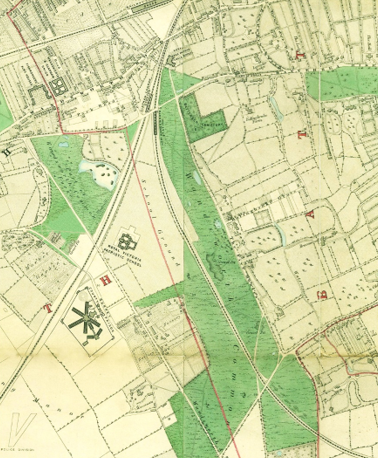
The 1862 Stanford map shows the London Brighton and South Coast Railway running parallel to Bolingbroke Grove, and the Royal Patriotic School (now Building), the Surrey County Prison (now Wandsworth Prison), a large plant nursery (now Capital Gardens / Neals Nurseries), and the County Arms. The area was becoming more developed.
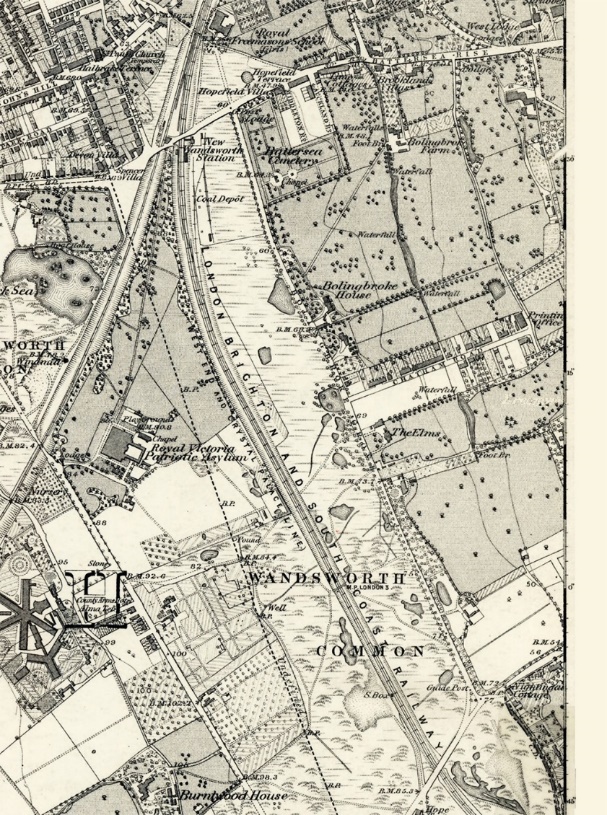
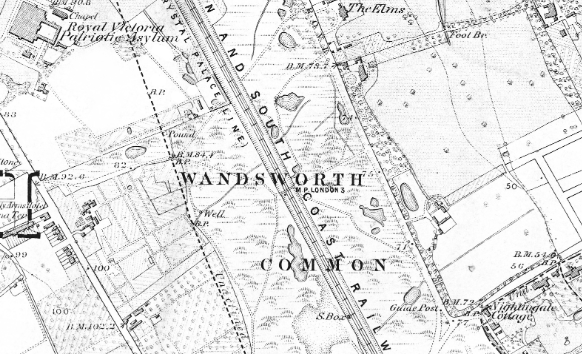
The 1868 OS map shows an unchanged layout but describes the area between the house and farm as ‘park and ornamental garden’. The start of a rectilinear road layout to the east of the farm across the brook is a clear sign of encroaching development.
In summary, Dent’s House and Farm was the largest estate of all five houses. The house may not have been as grand as Bolingbroke House, but it was more substantial than the other three, with a carriage drive, stable block, extensive gardens, grounds, and a working farm. The census shows a smaller household than in the other houses, supporting the evidence that the grounds were less domesticated. The functioning of the entire property seemed more inclined towards a commercial farm and timber production. There are no waterfalls marked to show damming of the Falconbrook, unlike all other four houses.
Dent’s Farm was a real rather than a model farm, the farmhouse, farmyard, and stock yard being situated in the south-west part of the estate on the site of what is now Thurleigh Road, approximately at No. 10 (formerly Roy Road). Maps suggest it was created at the same time as the main house and contained meadow land, arable land, a pond, and two yards — one for stock. Twenty-one acres of the land, mostly fields on which the farm buildings stood, was sold for development in 1874 to Charles Edward Appleby. The building of houses over the site of the farmhouse took place 1883–1887.
1841 — Mrs Dent’s Farmhouse: William Benham, 30, farmer, with his wife Martha, 30, and their children Daniel, 5; Mary, 4; Ann, 2; and Elizabeth, 11 months. Their daughter Mary was born 20 October 1836 and baptised 20 November 1836 at Wandsworth Independent Chapel.
1851 — Dent’s Farm: William Benham, 42, head, bailiff, born Cookham, Berkshire, with his wife Martha, 45, born Wandsworth, and their children (all born Battersea): Daniel, 15, agricultural labourer; Ann, 12; Elizabeth, 10; Ellen, 9; Jane, 7; and Margaret, 3. (In 1851, Mary Benham appears as a servant at the main house; in 1861 both she and her sister Ann were servants there.)
1861 — Dent’s Farm: William Benham, 52, head, farm bailiff, and his wife Martha, 55, plus daughters Jane, 17, and Margaret, 13.
1871 — Dent’s Farm: Jasper Shoebridge, 37, head, farmer’s man, born Hartfield, Sussex, and his wife Ann E., 37, born Stedham, Sussex. William Benham by then was a widower; he died in 1883 at Barnet, aged 74, and Martha died in 1863 at Wandsworth, aged 57.
Jasper Shoebridge (born 1834, Hartfield; died 28 September 1899, Camberwell, buried Camberwell Old Cemetery) is described in the census as a milkman. In 1874 he married Armena Smith at St Saviour, Southwark, describing himself as a bachelor and milkman. In 1881 they were living at 4 Norfolk Street, Camberwell, where he was a gardener.
[Additional images — please place in appropriate sections]