Reader’s version of Build 6 — last modified 31 October 2026
Chapter 1B · House No. 1 of the Five Houses of Wandsworth Common · Bolingbroke Hospital, 1876–2008
The founding, 1876–1880
In 1876 Bolingbroke House was purchased for £4,500, through the auspices of The Vicar of St Mary's Church, Battersea, Canon John Erskine Clarke. Clarke was the main instigator of the project to use the building for the establishment of a voluntary pay hospital in the area, through public subscription and charitable gifts.
A Provident Dispensary, with a resident doctor, was established in the house for out-patients only until enough money could be raised to open wards (the house was large enough to accommodate 50 in-patients).
The Bolingbroke Self-Supporting Hospital and House in Sickness opened in 1880 and became a small general hospital with 30 beds and an Accident and Emergency Department. It was one of the first to cater for both the artisan and middle classes. (While the rich could afford private treatment in their own homes and the poor received medical care in workhouse infirmaries, the middle classes could not afford private nursing care, but might not want to be admitted to an infirmary, such as the one on East Hill Poor Law Institution. In the late 19th century, hospitals for those who could afford to pay a moderate fee were established.) As with other voluntary hospitals, patients with infectious or contagious diseases, the mentally ill, the incurable, epileptics and maternity cases were not eligible for admission.
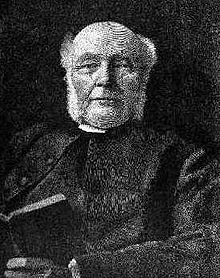
Canon John Erskine Clarke (1827–1920)
Fig. 1. Canon John Erskine Clarke (1827–1920), Vicar of Battersea.
John Erskine Clarke (1827–1920) was a British clergyman who issued the first parish magazine. He established several other religious publications and was responsible for founding churches, schools and hospitals in Battersea.
Clarke inspired the building of several churches in Battersea during the second half of the 19th century. His own endeavours led to the building of St Mark's, Battersea Rise, St Peter's, Plough Road, St Matthew's and St Luke's in 1889.
Clarke was a member of the Board of Governors of the Provident Dispensary (Battersea), and saw an urgent need for an in-patient hospital in Battersea. Through public subscription and charitable gifts, Clarke was able to buy a house in Five Houses Lane, Battersea (now Bolingbroke Grove) where in 1880 a "House of Sickness" became the Bolingbroke Hospital. Clarke's aim was that the hospital should provide for "the artisan or self-respecting middle class people" who preferred to pay something for their care instead of going into a workhouse infirmary, such as the one on East Hill Poor Law Institution.
The hospital grows, 1880–1937
In 1893 a ward specifically for accident cases was opened, with casualties receiving free treatment.
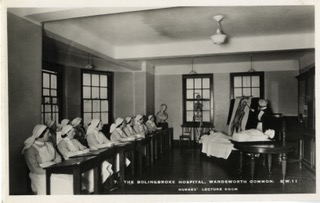
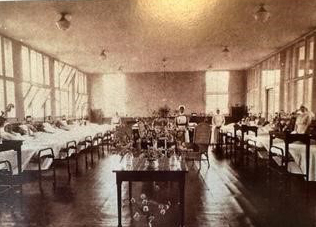
Fig. 2. A ward at Bolingbroke Hospital.
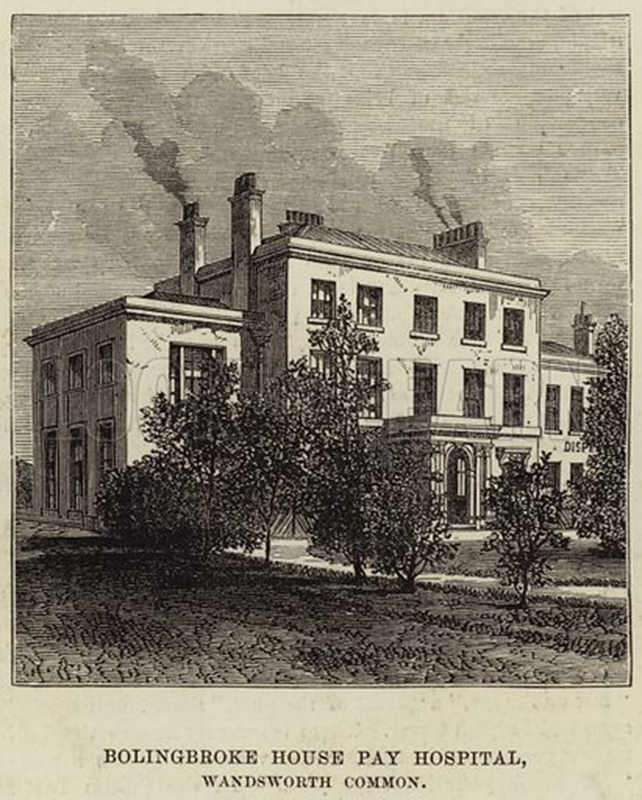
Fig. 3. Bolingbroke House circa 1880, now Bolingbroke House Pay Hospital, with double-storey wing extensions on both sides.
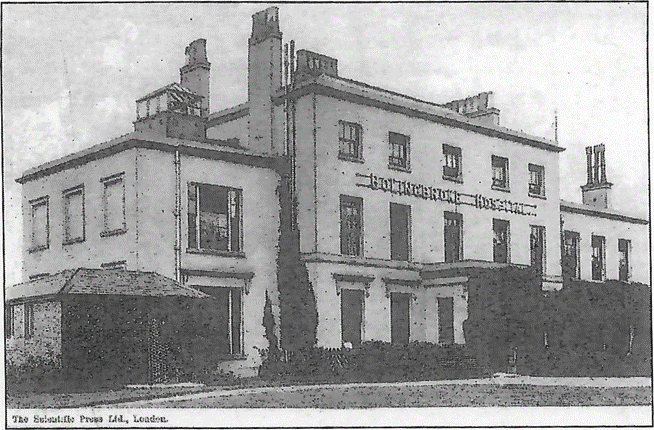
Fig. 4. Bolingbroke House as the Bolingbroke House Pay Hospital with further extensions.
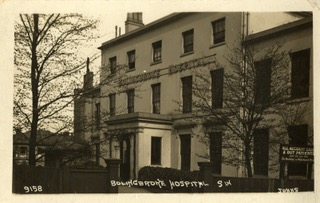
Fig. 5. Bolingbroke Hospital, postcard view.
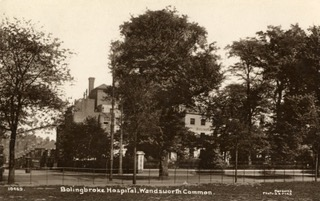
Fig. 6. Bolingbroke Hospital, postcard view.
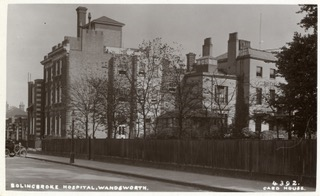
Fig. 7. Bolingbroke Hospital, postcard view.
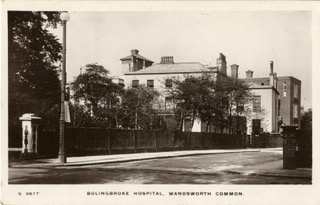
Fig. 8. Bolingbroke Hospital, postcard view.
Fig. 9. Bolingbroke Hospital, postcard view.
At the end of the century plans were drawn up for the complete rebuilding of the Hospital, including demolition of Bolingbroke House.
The first phase was completed in 1901, when the Hospital was extended by a single-storey wing in Wakehurst Road, at the northeastern part of the site. The new building housed the Out-Patients Department and was named the Victoria Memorial Wing after Queen Victoria, who had recently died.
The second phase began in 1906, when Princess Louise laid a foundation stone for another wing to be added to the north of Bolingbroke House. It was named the Canon Erskine Clarke Wing and contained wards, an operating theatre and a mortuary. The 3-storey building also had a basement. Its flat roof was used as an airing ground for patients and staff.
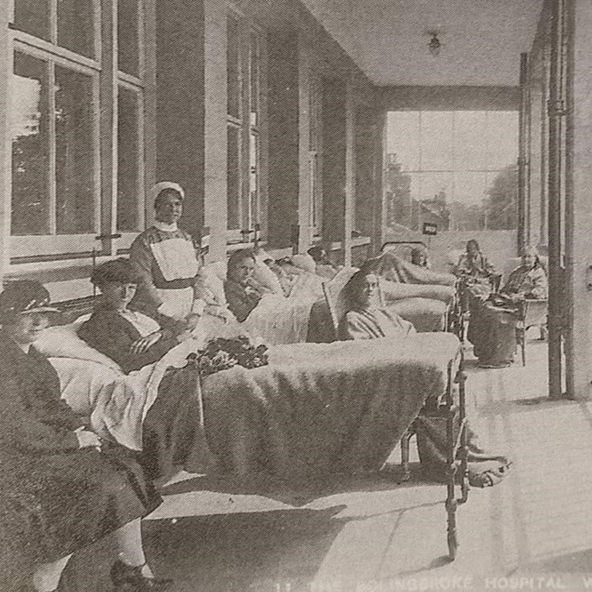
Fig. 10. Patients taking the air on the balcony of Bernard Baron ward of Bolingbroke Hospital, overlooking Wandsworth Common, c.1927. The hospital was enlarged in 1927 and 1937.
Another 3-storey ward block — the Bolingbroke Wing — was added just before the outbreak of WW1 in 1914. During the war, 20 beds were reserved for military cases transferred from the Third London Hospital. By 1917 this number had been increased to 25 beds. A prefabricated X-ray room was built (this was later converted into a chapel).
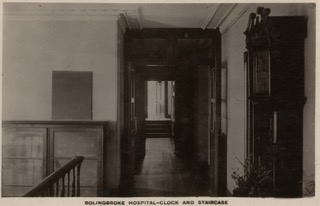
Fig. 11. Inside Bolingbroke Hospital.
In 1925 the foundation stone of a new wing was laid by Princess Mary, Viscountess Lascelles. It opened in 1927 as the William Shepherd Memorial Wing, after William Shepherd, a "philanthropically minded builder". An imposing stair-tower divided the wing into two parts. The ground floor of the southern part contained an 18-bed ward. On the first and second floors were single rooms for private patients and a 4-bedded ward. A corridor connected the building to the Canon Erskine Clarke Wing.
Fig. 12. A ward at Bolingbroke Hospital.
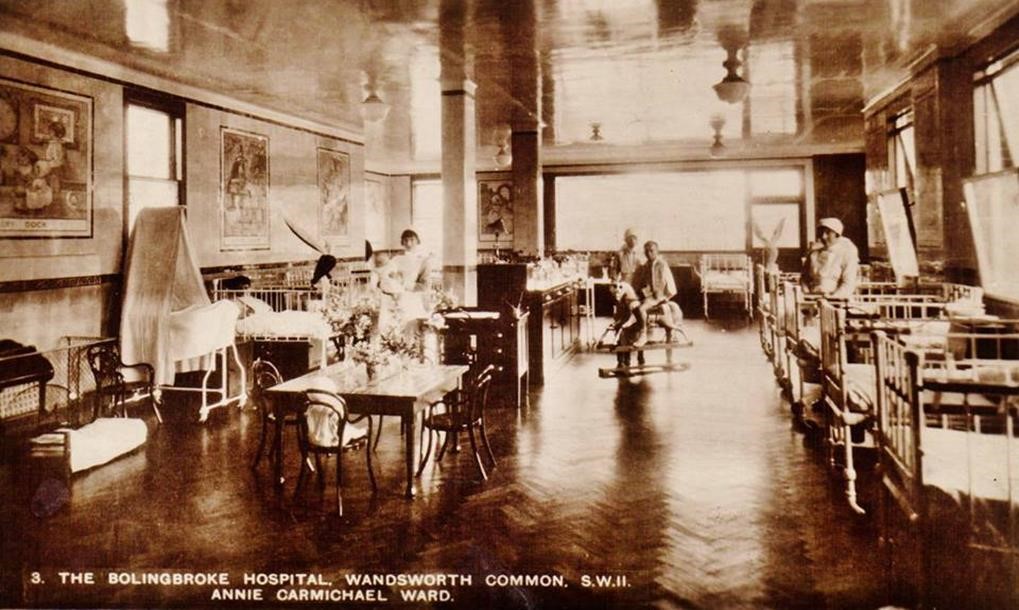
By this time, the Hospital had 120 beds, including 20 cots in a children's ward on the first floor of the Shepherd Wing. The Anne Carmichael Children's Ward was decorated with picture tiles of nursery rhymes and animals.
Fig. 13. The Bolingbroke Hospital ward circa 1900.
James Carmichael, builder
— is "circa 1900" correct here?
Costs and charges
In 1928 the weekly charge for a private room was 6 guineas (£6.30) or 4 guineas (£4.20) for a bed in a five-bedded ward. This fee included provision of care by the Resident Medical Officer and nurses, board and lodging, medicine, certain stimulants, surgical dressings and the use of the operating theatre. The cost of a special nurse, laundry, massage, pathology and X-ray examination was extra. The attending clinician was paid separately.
In 1928 the average weekly cost of an in-patient was £2 13s 2d (£2.66), compared to £3 13s 6d (£3.67) in 1927. The average length of stay was 17 days.
The end of the old house
Following the addition of the new wings, Bolingbroke House itself was hemmed in on three sides, with its front facing the back of the Shepherd Wing.
In 1937 the old mansion was demolished and work began to build a central administration block to unify the frontage on Wakehurst Road and to create a main entrance for the Hospital.
Fundraising and community
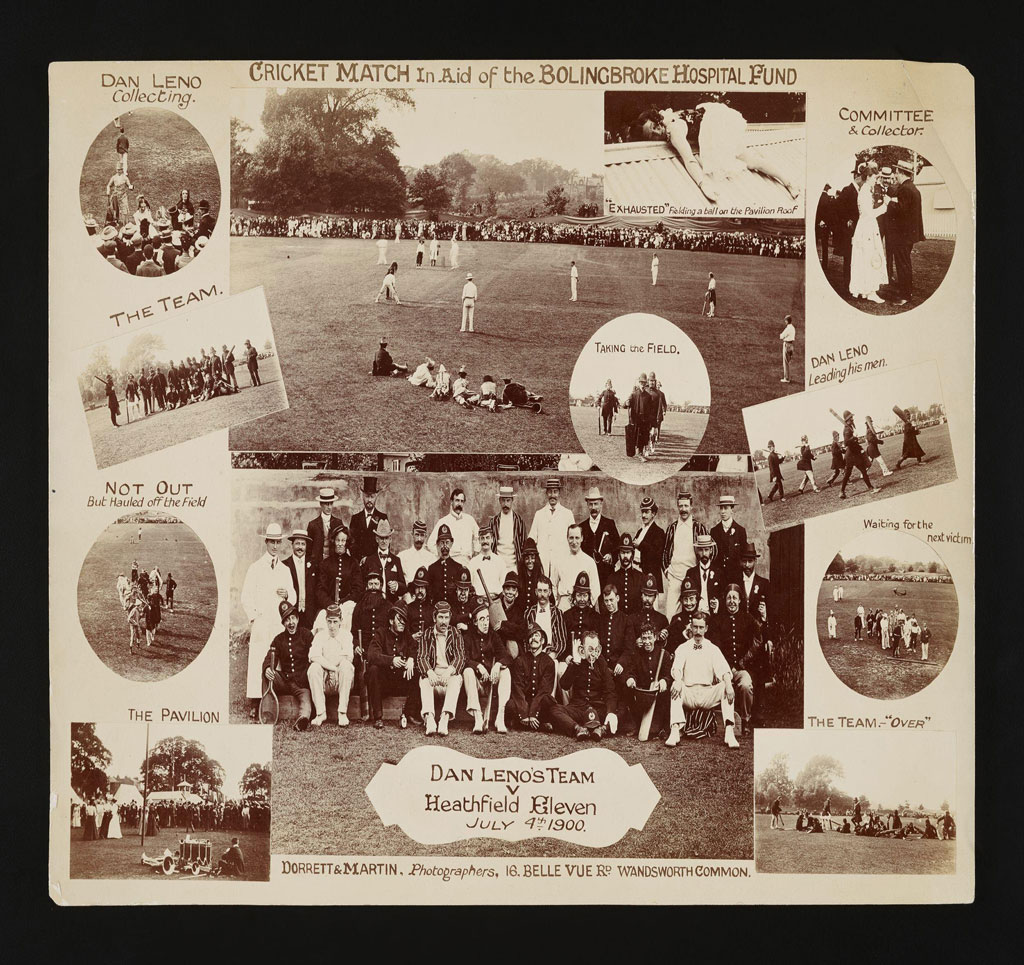
Dan Leno ("The funniest man on earth") was involved in many fundraising stunts on behalf of Bolingbroke Hospital, including benefit shows at The Grand Theatre, Clapham Junction, and hilarious knockabout celebrity cricket matches photographed by Dorrett and Martin.]
Fig. 14. Dan Leno’s celebrity cricket match in aid of Bolingbroke Hospital, photographed by Dorrett and Martin.
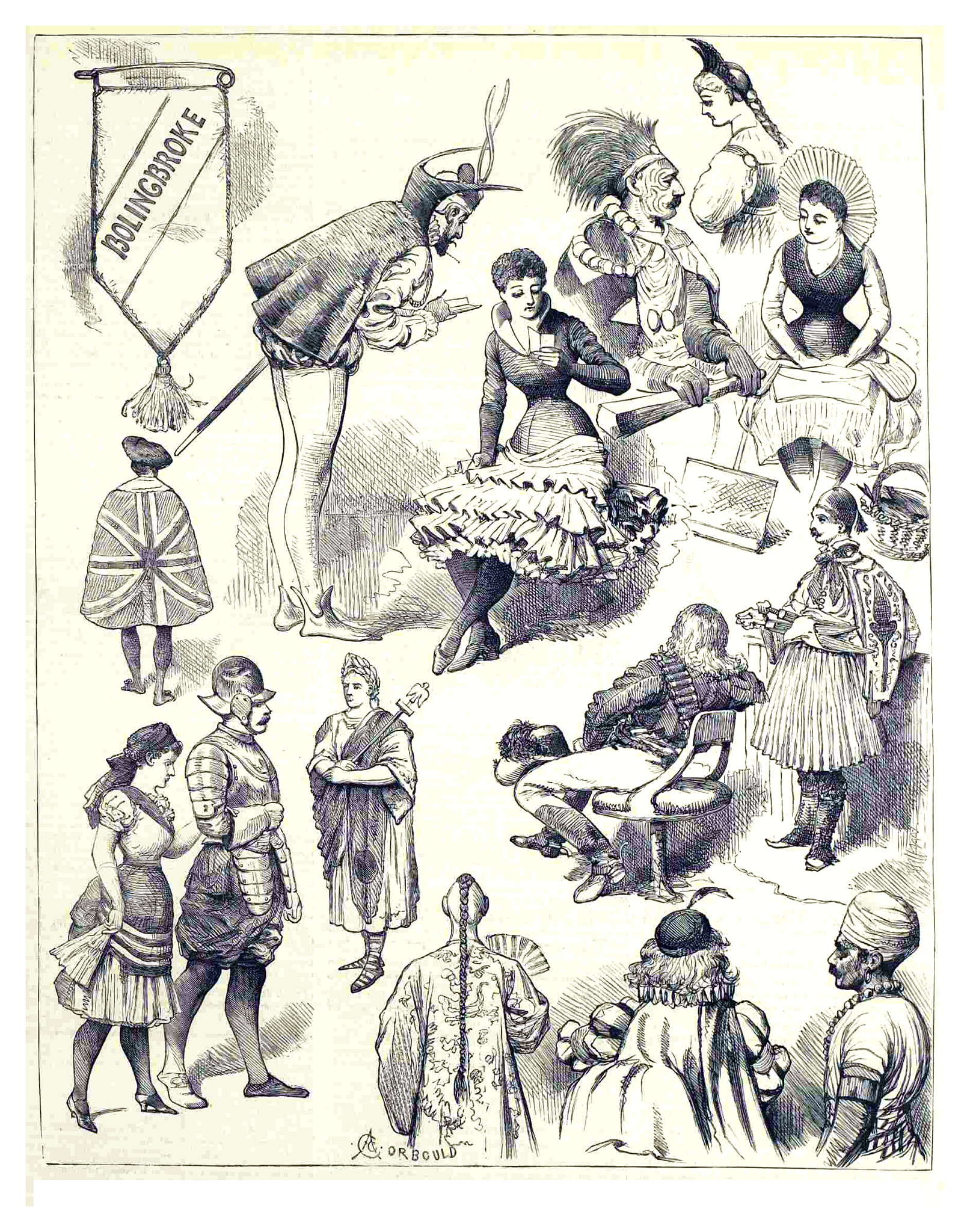
Fig. 15. The fancy-dress ball in aid of Bolingbroke Hospital, Illustrated London News, 17 February 1883.
Bolingbroke House became Bolingbroke Hospital in 1880 and remained so until 2008. Here the pioneering regime of giving patients access to open views and fresh air was truly embraced. Those from the polluted streets of Battersea and Wandsworth really benefited.
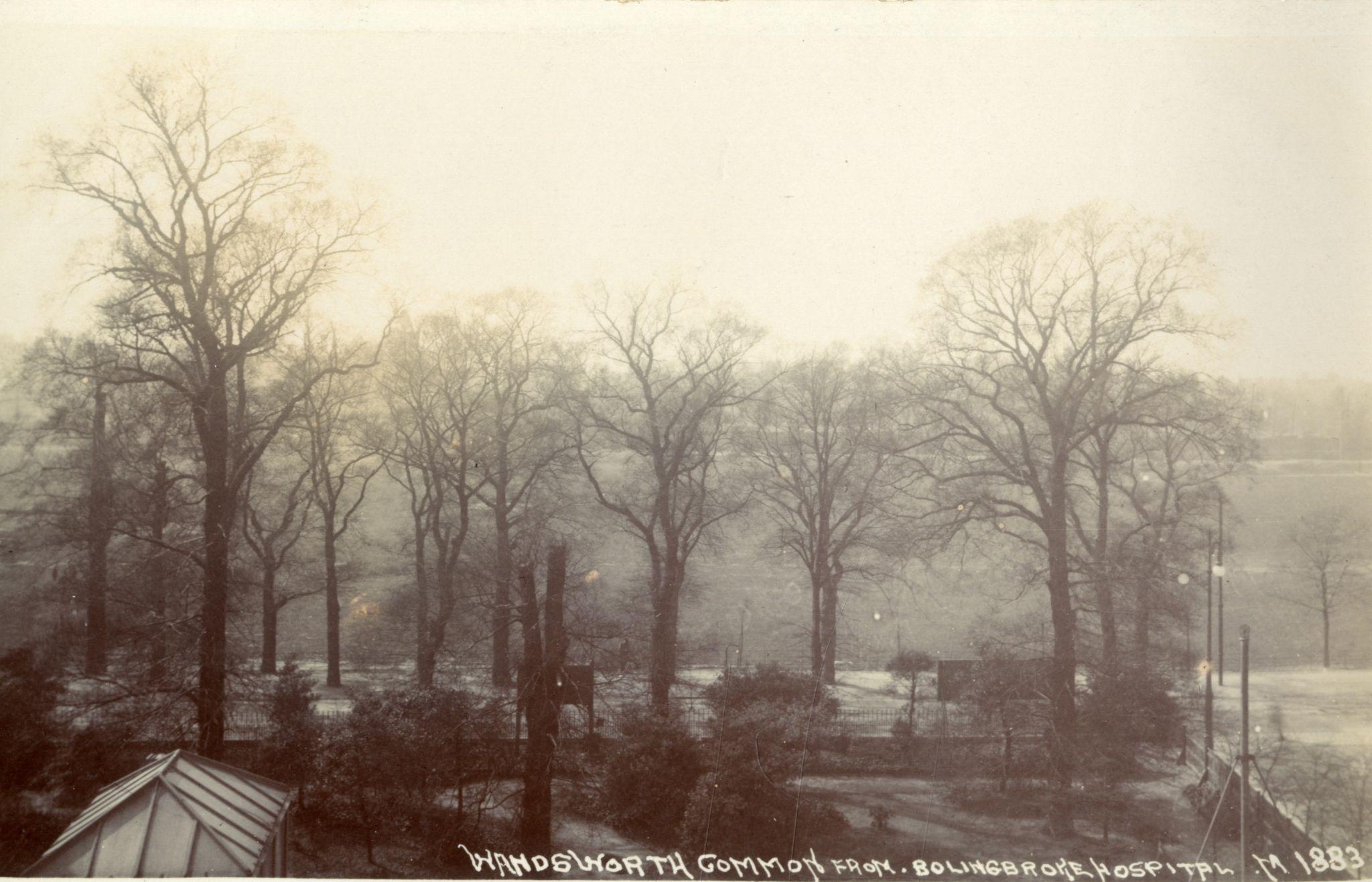
The photo below in 1883 shows the hospital view and its balconies across the Common.
Fig. 16. The view from the hospital across Wandsworth Common.
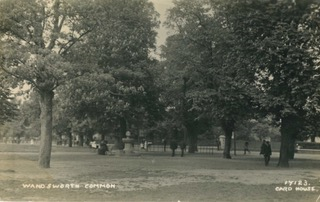
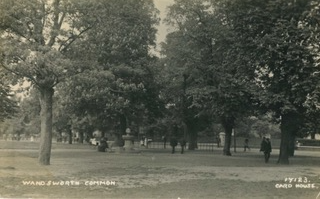
The photo here shows the Common became more densely planted with mature trees mostly of one type and it is this outlook Bolingbroke Hospital would have enjoyed.
Fig. 17. Wandsworth Common, with the mature trees the hospital looked out on.
The hospital in the newspapers
British Newspaper Archive contains many stories covering the whole life of the house and hospital. I have bookmarked quite a number, but haven't read them thoroughly, or cropped/copied/transcribed very many.
The hospital at full stretch — a visitor's impression, November 1930
By 1930 the hospital had grown almost beyond recognition from the house in which it began. Visitors attending the annual meeting of the Linen League (a charity supporting the work of the hospital) found the building a labyrinthine world of its own:
"To find the meeting place was not easy for those who knew the hospital only in its embryo days. Bolingbroke Hospital is a very big building with corridors and ramifications which, unless one knows them, cannot be traversed successfully without the assistance of a guide. The meeting was held in a huge hall somewhere in the depths. On the way thither the visitor caught glimpses of spacious wards bright with flowers and peopled with patients who were obviously well looked after, and who were as obviously pleased and cheerful. Wednesday was visiting day at the hospital. Groups of visitors, all carrying flowers, were met at every turn."
"During the week the following people have been admitted to the Bolingbroke Hospital suffering from injuries as the result of accidents — Albert Phillips (7), 42 Putney Bridge-road, Wandsworth, fractured thigh; William Palmer (12), 21 South-street, Wandsworth, broken leg; Charles Ladd (16), Summerstown, Earlsfield, shot wound in foot; Charles Ladd (19), 128 Cavendish-road, Balham, broken arm; Sidney Simmons (32), 39 Lockington-road, Battersea, severe bruising as a result of fall; George Alfred Hilton (6), 16 Wardley-street, Garratt-lane, Wandsworth, scalp wound and collapse.
All the patients are doing well with the exception of Hilton, who is likely to remain in a weak state for a couple of days. The lad Finchley, from Cabul-road, Battersea, who last week was admitted to the hospital suffering from severe internal injuries as the result of being crushed at Clapham Junction Wharf, and who underwent an operation last Friday, [is] progressing satisfactorily towards convalescence."
.
Two years later, the numbers had grown sharply. In a single week in August 1904 the hospital treated 148 accident cases — an extraordinary figure for what had begun as a thirty-bed house-hospital:
"New accident cases to the number of 148 have been treated at Bolingbroke Hospital during the week. On Saturday John Tidy, a man living at 8 Hazelhurst-road, [was] admitted suffering from carbolic acid poisoning. He took the poison by mistake. He has been cured and discharged. Percy Lawrence, age one year and ten months, of 8 Stainforth-road, Battersea, was taken in the same day. He had swallowed a halfpenny. He is now under treatment as an out-patient. On Monday Annie Berringer, aged 40, of 23 Cairns-road, was admitted suffering from a broken leg."
.
A few random cases — pictures of local life
Falls from ladders and buildings; burns and scalds; injuries from moving vehicles of all kinds; collisions with trams; being crushed by horses, carts, cabs, motorcycles and motor cars; attempted suicide by shooting or poisoning; industrial injuries. Some of the worst cases — often fatal — involved railwaymen, particularly shunters.
Industrial accidents
The hospital served the heavy industrial district around Wandsworth and Battersea, and its accident wards regularly received men injured in the factories and yards nearby. One case from 1894 was grimly severe:
"In our issue of April 7th we recorded a melancholy accident to a manager of Orlando Jones' starch factory in York-road, where he was caught by the coat-tails in the machinery and one arm was torn off at the elbow and the other crushed considerably. He was removed to the Bolingbroke Hospital at Wandsworth Common, where both arms were amputated and the injuries to the ribs and left leg attended to. The latest information received shows that Mr. Govey is now making progress towards recovery, although at first life was despaired of."
A lovers' pact on the Common, 1907
The hospital also received cases from Wandsworth Common itself.
Mishap on the Common
"ELTRINGHAM STREET MAN'S MISHAP
On Wednesday evening, while vaulting the iron railings surrounding Wandsworth Common, West Side, Maurice Pimm of 36 Eltringham Street, Wandsworth, slipped and cut his hand. He was taken by ambulance to Bolingbroke Hospital."
And this extraordinary story, covered in the Chronicles (January 2024):
"POISONED LOVERS
STRANGE STORY OF ATTEMPTED SUICIDE
Alice Allen, a good-looking girl of 16 … has parents who oppose her marriage with a youth named George Bastow. For this reason she and her lover resolved to die together. Providing themselves with a bottle, labelled "Spirits of Salts — Poison," they made their way to Wandsworth Common, where, sitting on a seat, they shared the contents. A policeman found them there on the night of January 1st, ill and half-unconscious.
With assistance, he carried them to the Bolingbroke Hospital, where the young man is still lying in dangerous condition. The girl, who had admitted that they tried to poison themselves, was brought up yesterday at the South-Western Police court."
.
After 1937: the site today
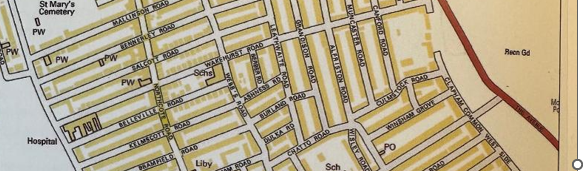
When Bolingbroke House was demolished in 1937 the Hospital continued to operate between Wakehurst Road and Belleville Road until it closed in 2008, when the buildings were repurposed as the Ark Bolingbroke Academy.
Fig. 18. Map of the area today, with the site of Bolingbroke House and Hospital.
Further Notes.
Appendix 1 includes details of the new Bolingbroke Hospital up until 2012, when it became the Ark Bolingbroke Academy.
Notes on the grounds of Bolingbroke House
The census records show during the mid-19th century the following staff descriptions:
Footman, domestic servant, coachman, house servant — both men and women. For the scale of property we can assume maintenance of the extensive grounds were carried out by labour living both in the house or elsewhere. This is surprising as the sales particulars for 1858 quote "all requisite accommodation for a large establishment".
In conclusion, Bolingbroke House was the largest and longest surviving of all of The Five Houses.
Although it was the most prominent, the details of its garden and grounds show less sophistication and development than in some of the other four houses. It is possible that it did have, for example, kitchen gardens, ha-has and melon grounds but we have no evidence.
Positioned at the northern end of the Five Houses it differed from the others. It was closest to the young road layout around current "Battersea Rise" and by the late 18th century to Bolingbroke Farm, while the others seemed to have less "development" around them. By the mid-to-late 19th century the cemetery and rail station had also developed close by.
Sources
Obviously we'll be as accurate and as complete as possible, especially given this book is likely to be regarded as definitive for years to come. It would be good if we checked the content of this chapter against as many sources as we have available. It would also be useful to check for additional material. And let's ask Sue Demont to read this chapter.
Is it worth developing this material on the Hospital? Or is it too remote from the story of the House itself? It certainly could be full of human life, and therefore fascinating. What do people think?