[UNKNOWN PUBLICATION — header not detected. Please review.]
IT'S LOVELY WHEN you're pottering around "researching stuff" and up pops something amazing seemingly out of nowhere. This happened yet again last week when I chanced upon a letter in the Wiltshire Archive that was written nearly two hundred and fifty years ago.
The entry said simply:
"Dear Bruce's first letter, November 22nd 1769" and later letters to parents and family; school with Mr. and Mrs. Davis at Wandsworth; friends Lord Elgin and Master Yates; hare-and-hounds on Wandsworth Common; game and fruit sent from home; some draft replies." (date 1770-1772)
Intriguing, eh?
Naturally I immediately contacted the Wiltshire archivists, who were admirably speedy in their reply:
We can provide digital copies of the letters through our paid research service — the work would take between 2—3 hours and a charge of £68—£102 would apply — I have attached an order form — payment is taken upon completion of the work. We are open Tues-Fri 9.30-5.00 by appointment if you wished to visit see www.wshc.org.uk We permit personal photography of documents upon payment of our day fee of £9. The letters have not been transcribed but are legible.
Oh, wouldn't it be good to have sufficient funds to volley back the response: "Fire up your scanner! Send me everything you have!"
But failing that, for a mere £8 they sent me some very good scans of a couple of letters, both dated 20 July 1772, that relate to the hare and hounds hunt that was my initial interest.
Letter two, a near-copy of the first, is addressed to "Dear Sister Fanny" — his younger sister, Frances. Since this letter ends, "Pray give my Duty to Papa & Love to Sister Carly", we know that letter one was to "Carly" — Caroline. The letters are sent to "The Rt Honble Ld Bruce, at Clifton, near the Hot Wells, Bristol". This is Thomas Brudenell-Bruce, 1st Earl of Ailesbury.
There's much else to say about these letters, and even more to be discovered. But for the moment here are portraits of some of the people mentioned, by fashionable artists of the day.
Here is George himself, aged about six, but perhaps a little older:
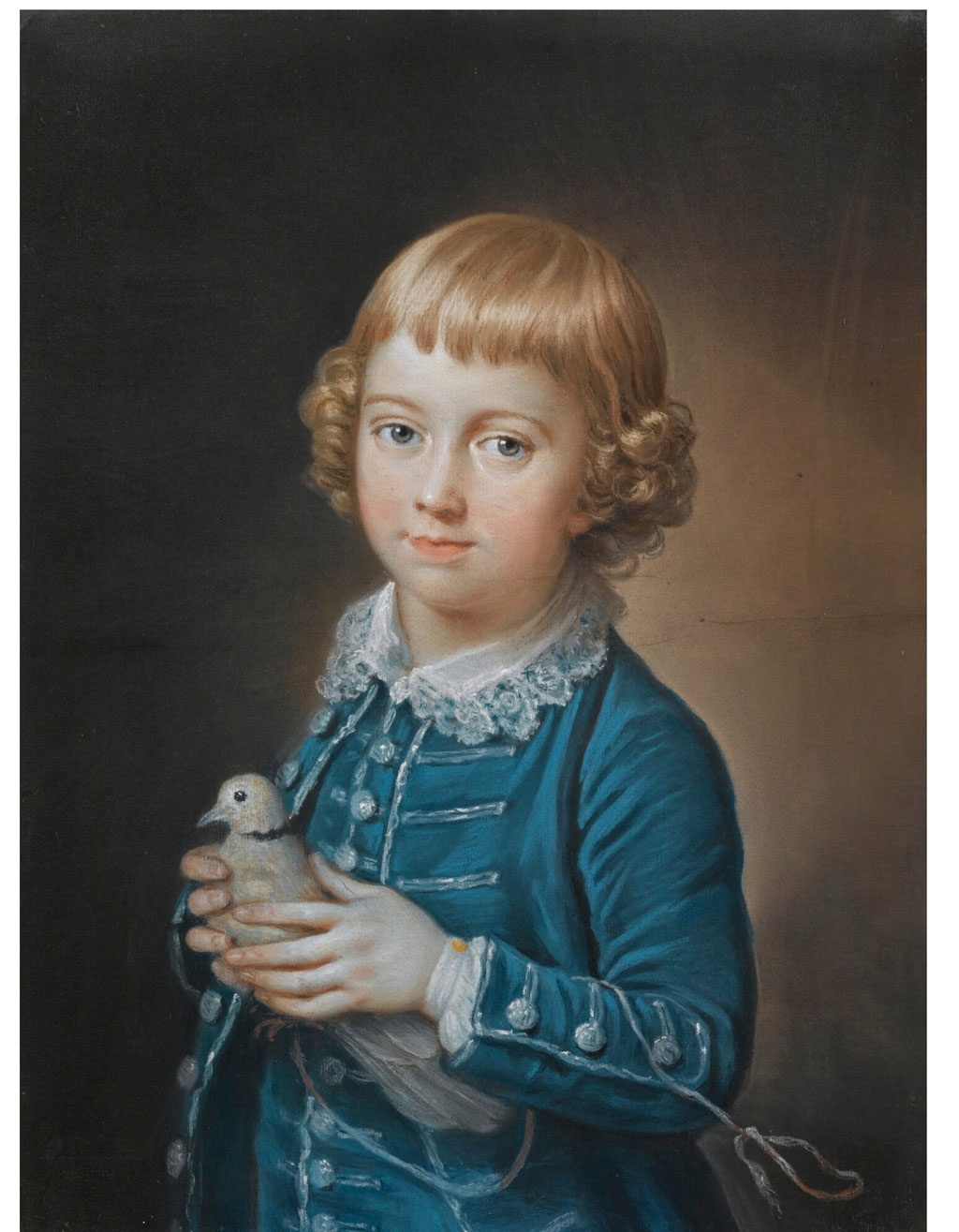
George Brudenell-Bruce (1762-1783) in a pastel portrait attributed to William Hoare.
George is gently but firmly holding what appears to be a Collared Dove or more likely a Barbary Dove — both common cage birds in the mid-eighteenth century.
(Click on image to enlarge)
Here is "Carly" in a slightly late portrait:
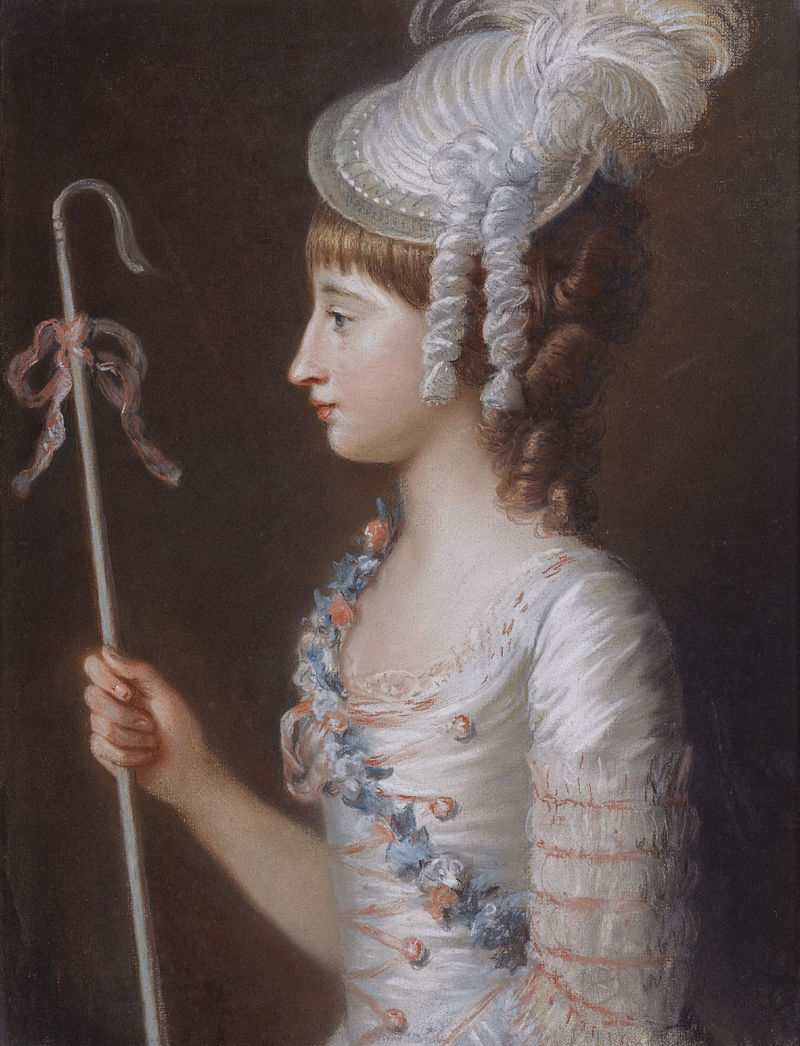
Caroline Brudenell-Bruce (d.1824), dressed as a shepherdess, by Mary Hoare, late 1770s?
"Carly's" birth year is not known, but judging by her parents' date of marriage she is likely to be George's twin, i.e. born 1762.
(Click on image to enlarge)
And here is "Fanny", about 3 years younger than George, so again a later portrait:
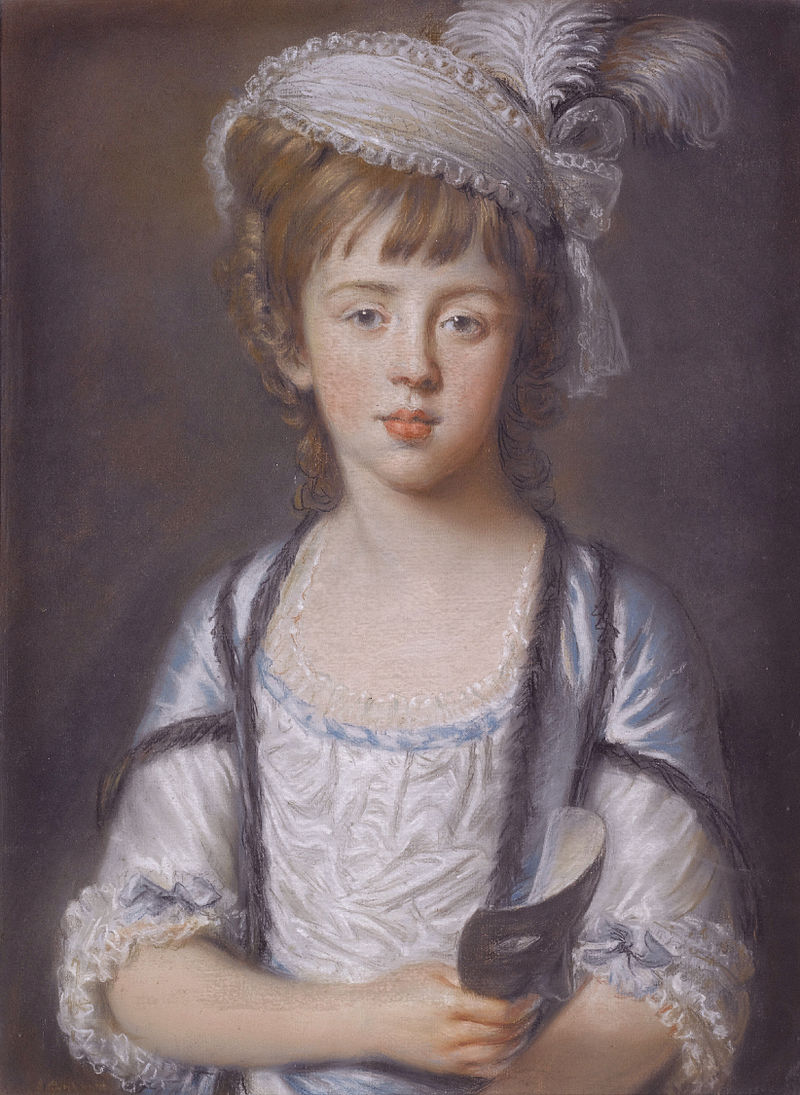
Lady Frances Elizabeth Brudenell-Bruce (1765-1836), by William Hoare of Bath c.1777?
(Click on image to enlarge)
Here is "Mama":
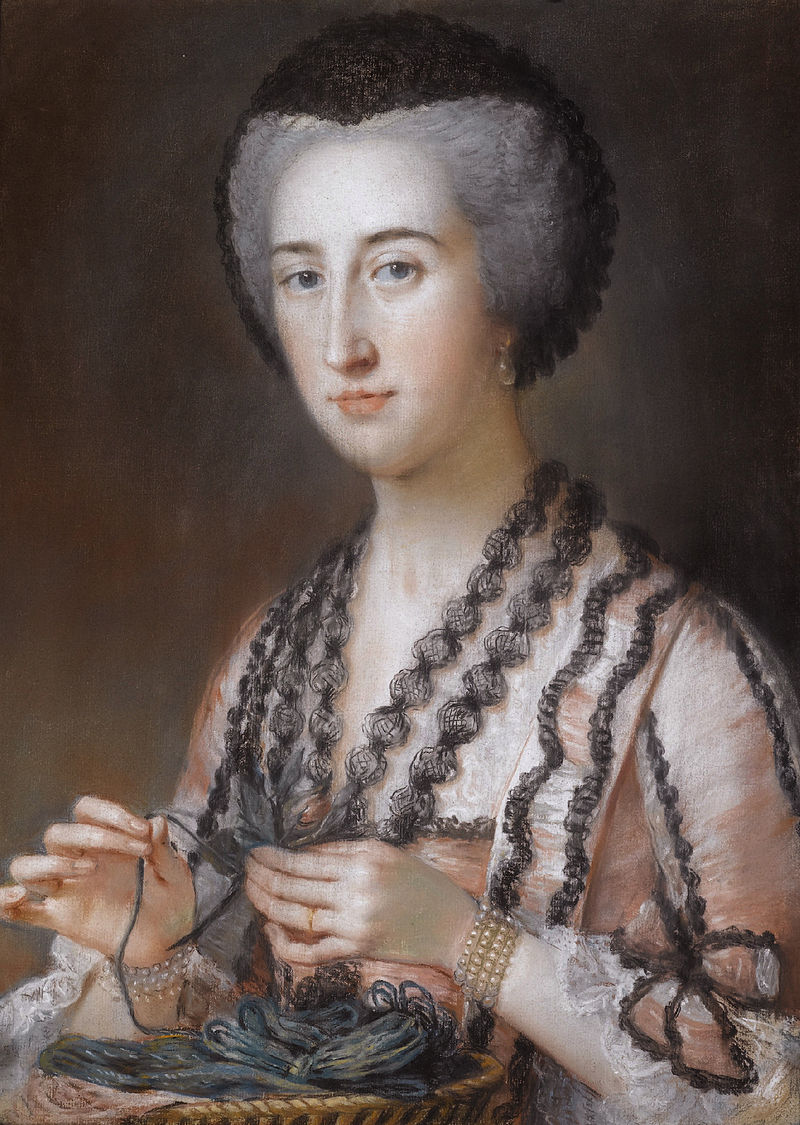
Susanna Brudenell-Bruce, nee Hoare (1732-1783), by the fashionable Bath portraitist William Hoare (perhaps a relative, since they shared the same surname?)
Susanna Hoare (1732-1783) was the daughter of the immensely rich goldsmith-banker Henry Hoare and Susan Colt, who owned Stourhead in Wiltshire — not far from the Brudenell-Bruce estate at Savernake. Her first husband had died in 1759 — notice her widow's cap. She married Thomas, 1st Earl of Ailesbury, in 1761. Horace Walpole described her in 1776 as "living at Bath, mad."
(Click on image to enlarge)
And here is "Papa":
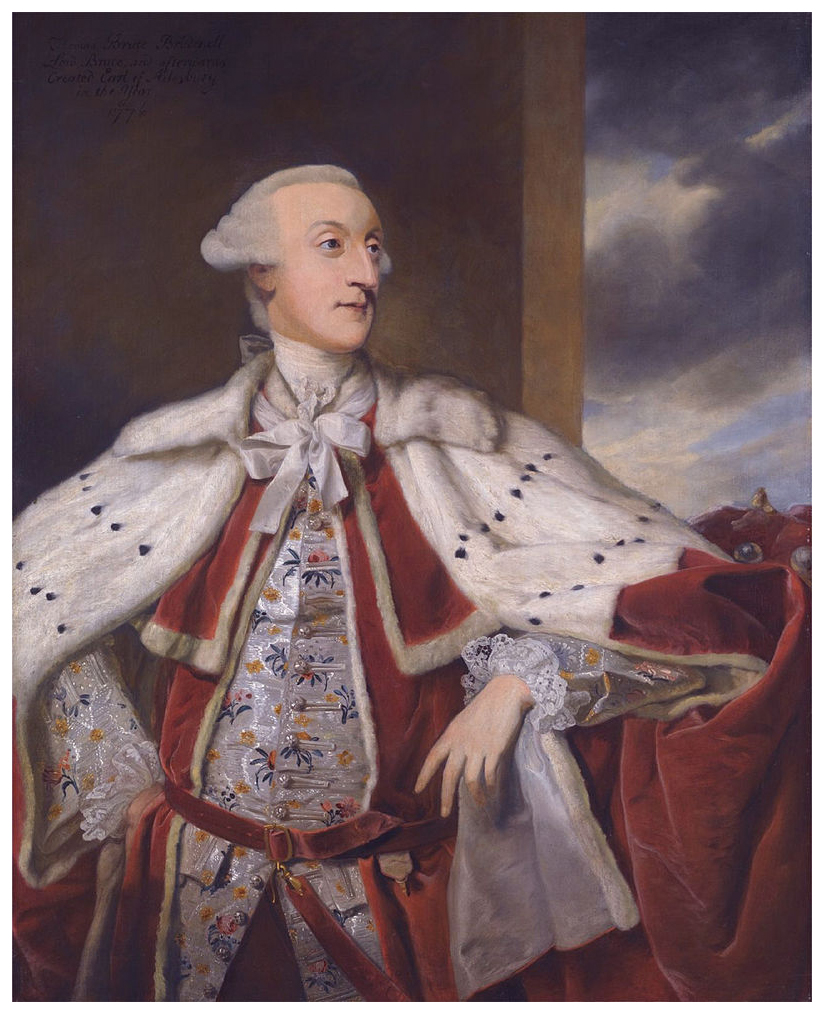
Thomas Brudenell-Bruce, 1st Earl of Ailesbury (1729-1814), in Peers Robes, by Joshua Reynolds, 1776.
Horace Walpole described TBB as, "a formal, dull, man, totally ignorant of and unversed in the world, and a Tory; very unexceptionable in character."
(Click on image to enlarge)
As the eldest son of an Earl, George was styled Lord Bruce. But he was not to succeed to his father's title. George died just a few years later, at the age of 21.
His place in the line was taken by his youngest brother, Charles, born 1773, and therefore not alive when George was at school in Wandsworth and exulting in Hare-and-Hounds on Wandsworth Common.

Charles Brudenell-Bruce (1773-1856) by William Hoare.
George's younger brother was styled the Honourable Charles Brudenell-Bruce from birth until 1776, Lord Bruce (1776 to 1814), the 2nd Earl of Ailesbury (1814 to 1821), and the 1st Marquess of Ailesbury thereafter.
(Click on image to enlarge)
To our eyes this is perhaps a remarkably feminised portrait. But of course this was common among aristocrats at this time — young boys wore dresses until they were "breeched" (i.e. trousered) at some time between 4 and 8. (And not just in early modern times — I have a photograph of my father and uncle, the children of a Sussex farmer, in dresses as late as the First World War.)
By the way, James Thomas Brudenell, 6th Lord Cardigan (who led the Charge of the Brigade in the Crimean War) was George's first cousin (once removed).
I have written a piece elsewhere proposing that Cardigan was the model for the statue of St George on the front of the Royal Victoria Patriotic Asylum. What do you think?
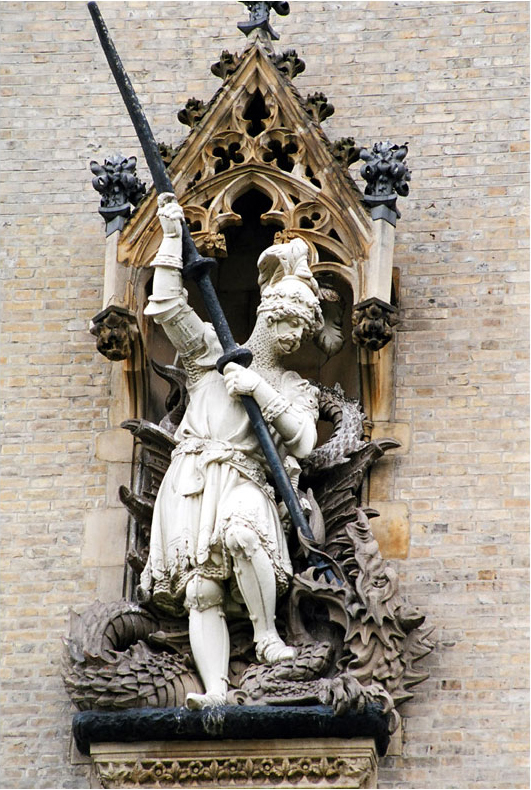
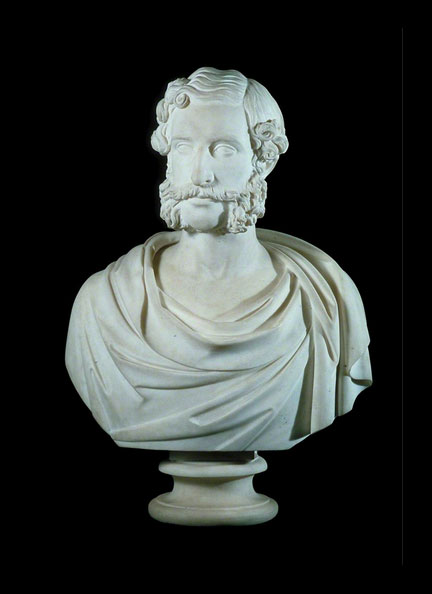
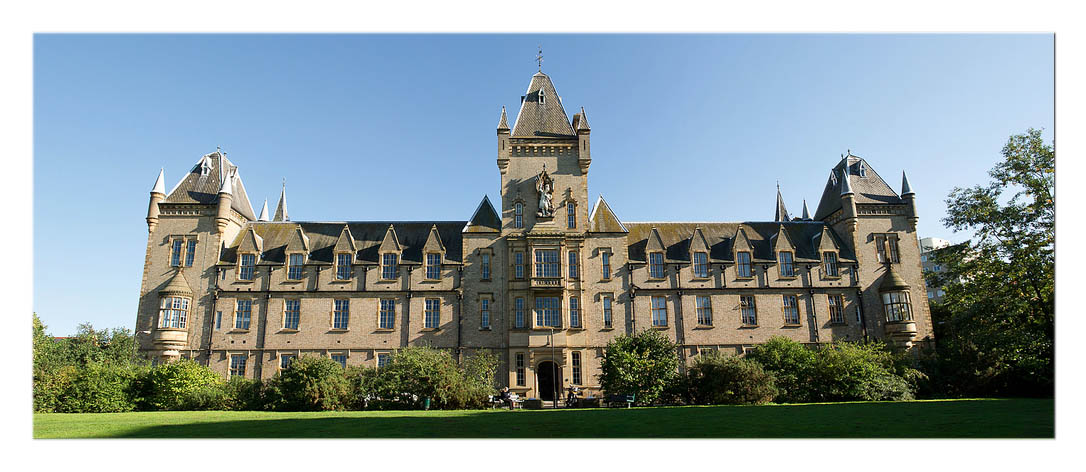
Statue of St George on the front of the Royal Victoria Patriotic Asylum
(Click on image to enlarge)
The Brudenell-Bruce family is also associated with Tooting (though I've yet to find out how). There is a Brudenell Road near Tooting Bec, on which stands All Saints Church (so impressive that the poet John Betjeman and the architectural scholar Nikolaus Pevsner called it "The Cathedral of South London"). It was built with a bequest from Lady Brudenell-Bruce, in memory of her husband, Lord Charles Brudenell-Bruce.

