The Three Island Pond, with bench
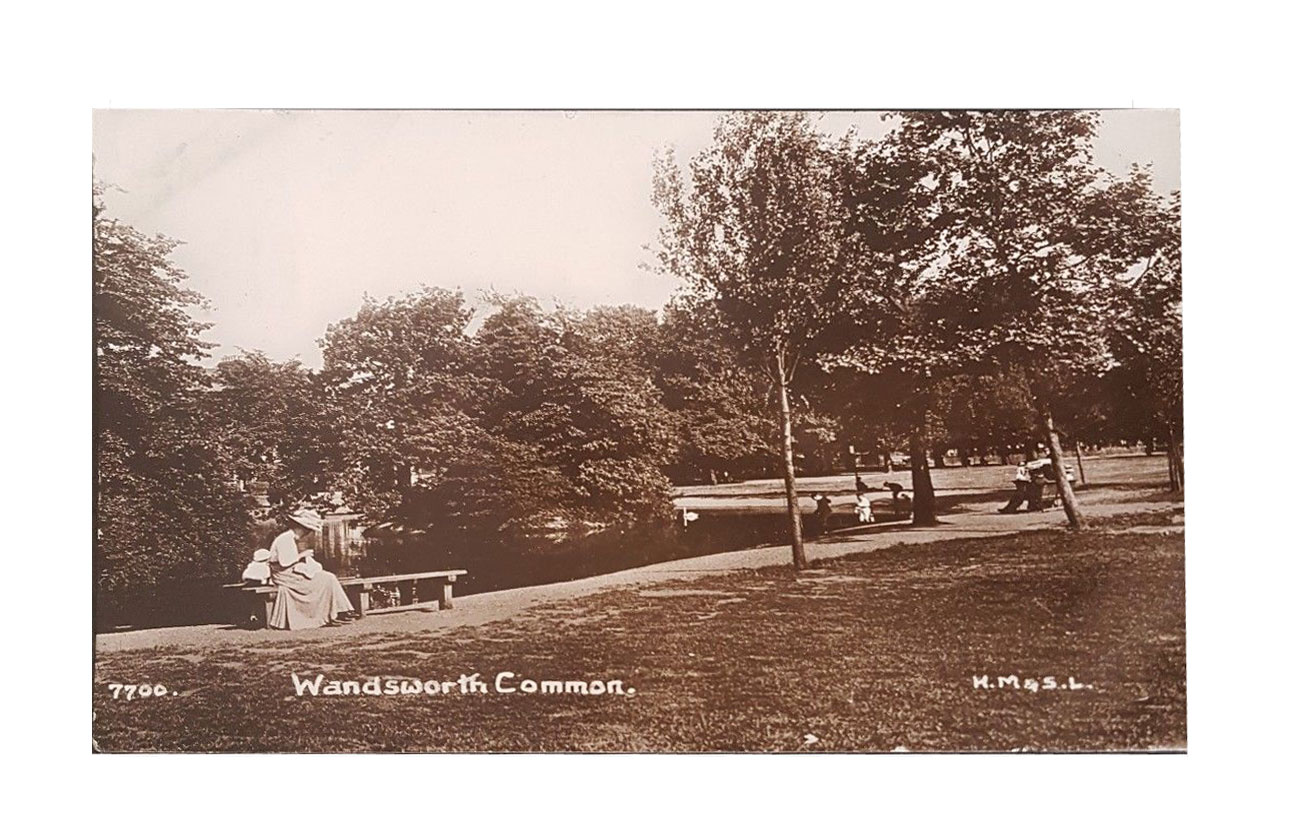
Three Island Pond, postcard, c.1910?
(Click on image to enlarge)
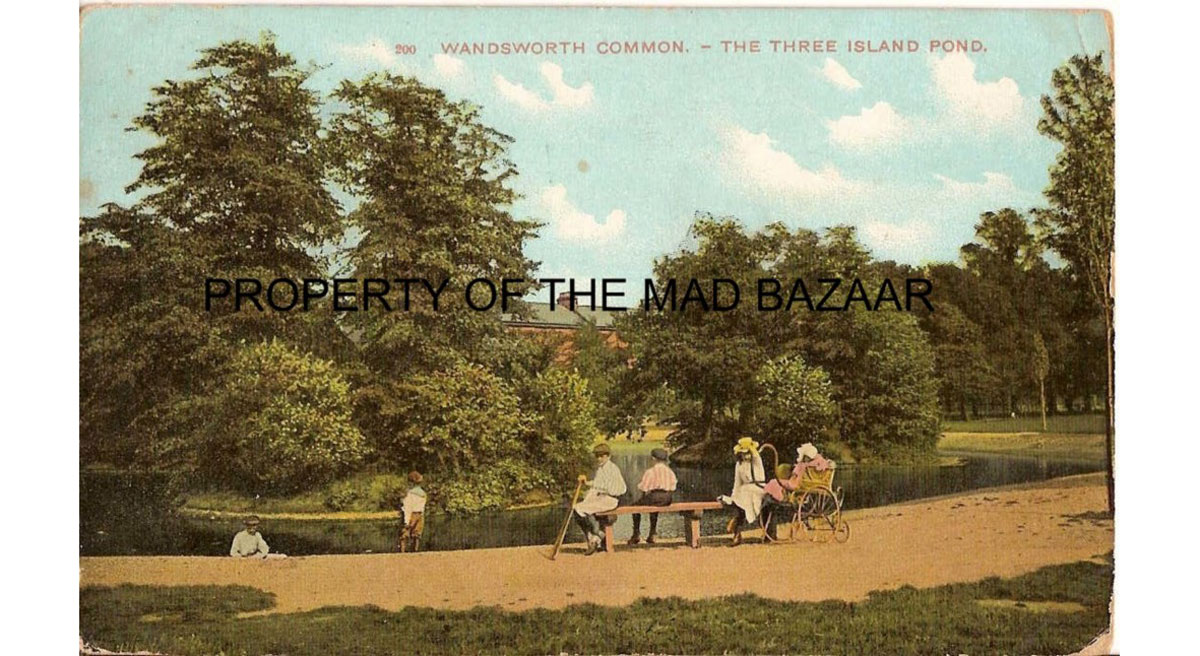
(Click on image to enlarge)
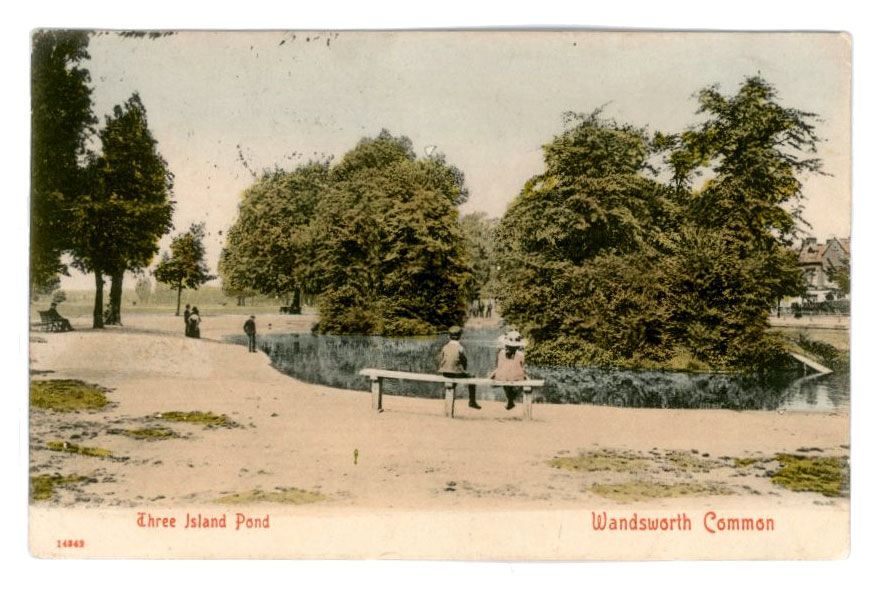
Three Island Pond, postcard, 1905
(Click on image to enlarge)
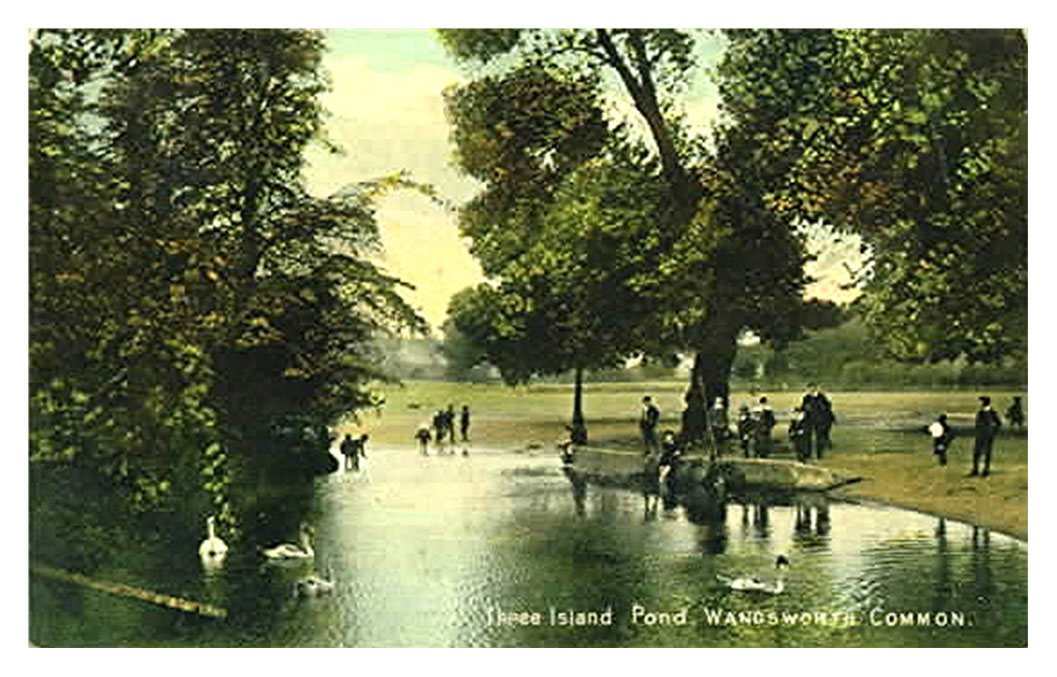
(Click on image to enlarge)
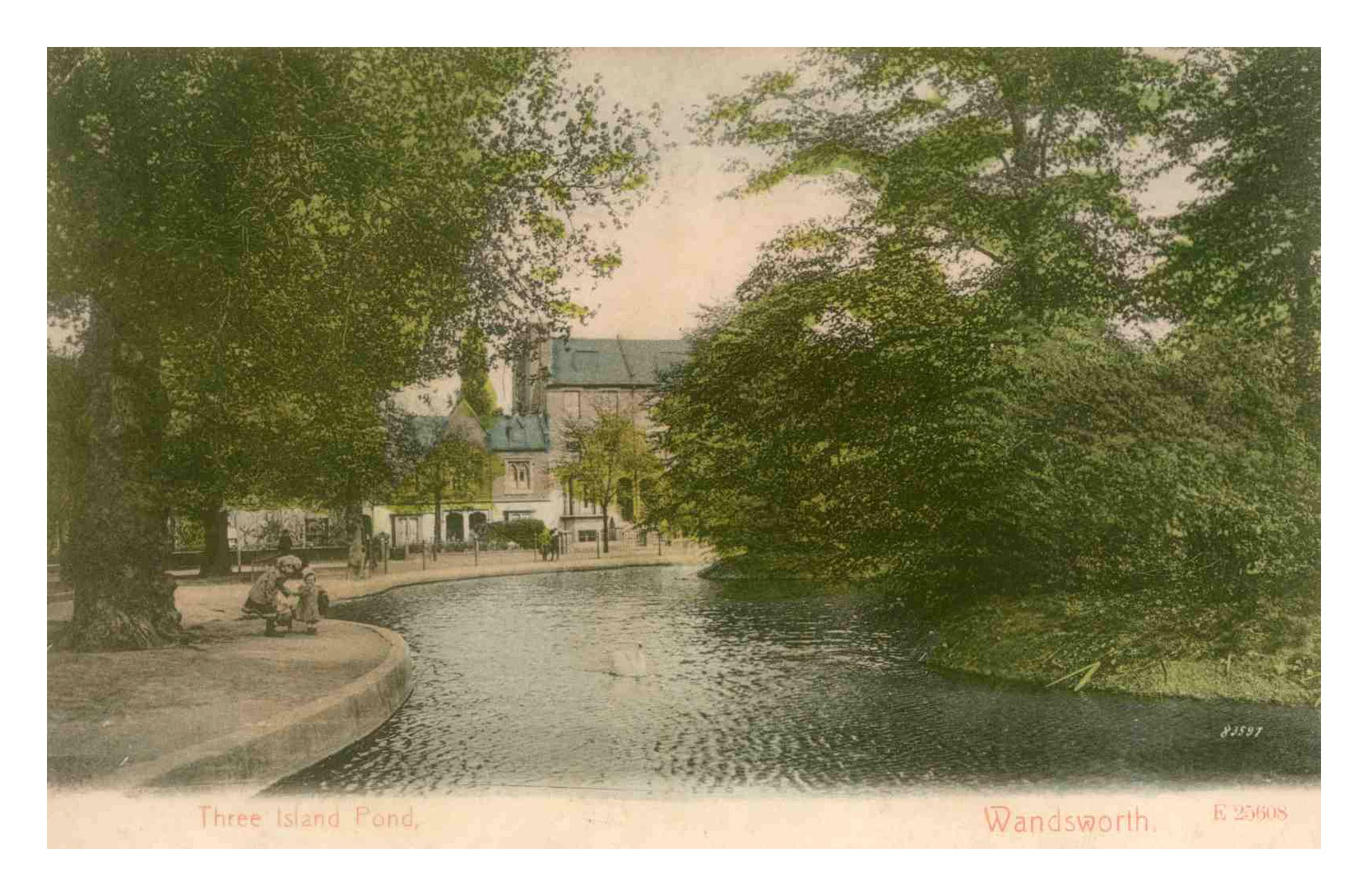
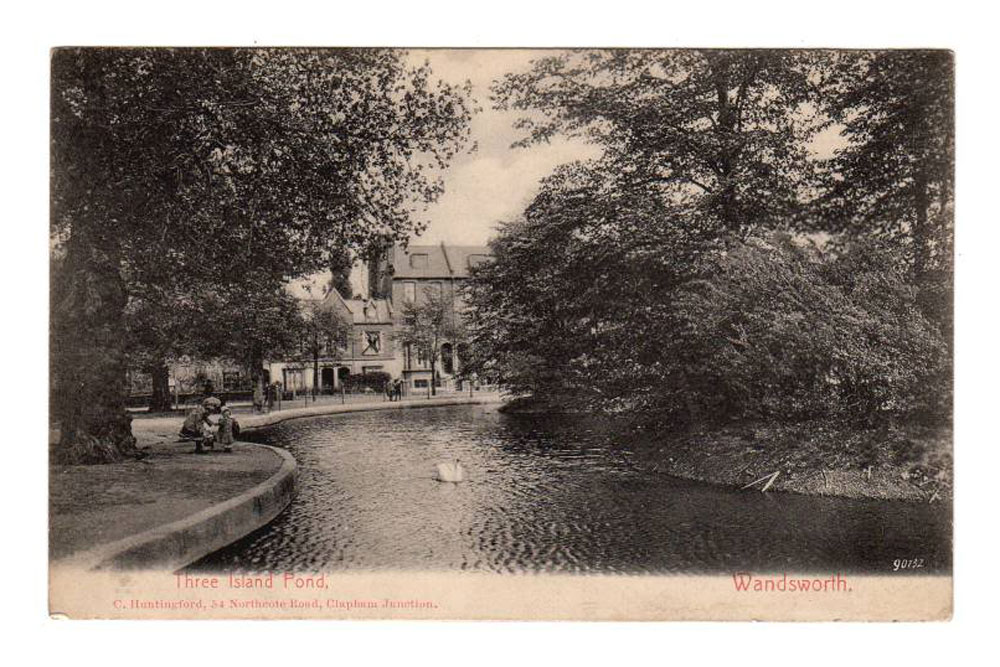
Three Island Pond, postcard, 1906
(Click on image to enlarge)
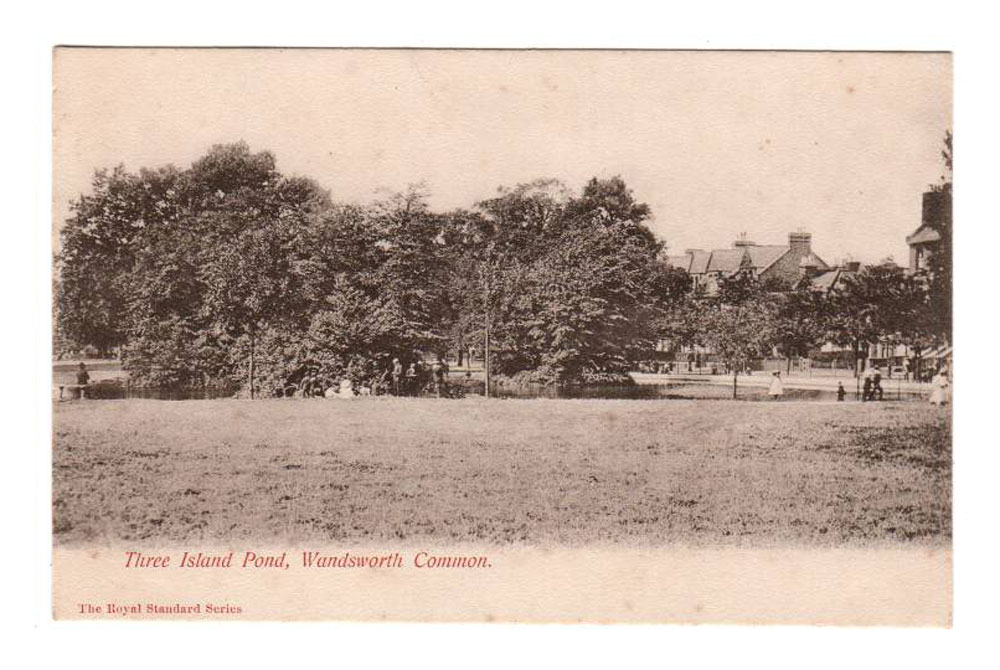
Three Island Pond, postcard, date?
(Click on image to enlarge)
"The Three Island Pond, Wandsworth Common", illustration in Sexby, Municipal Parks, 1905
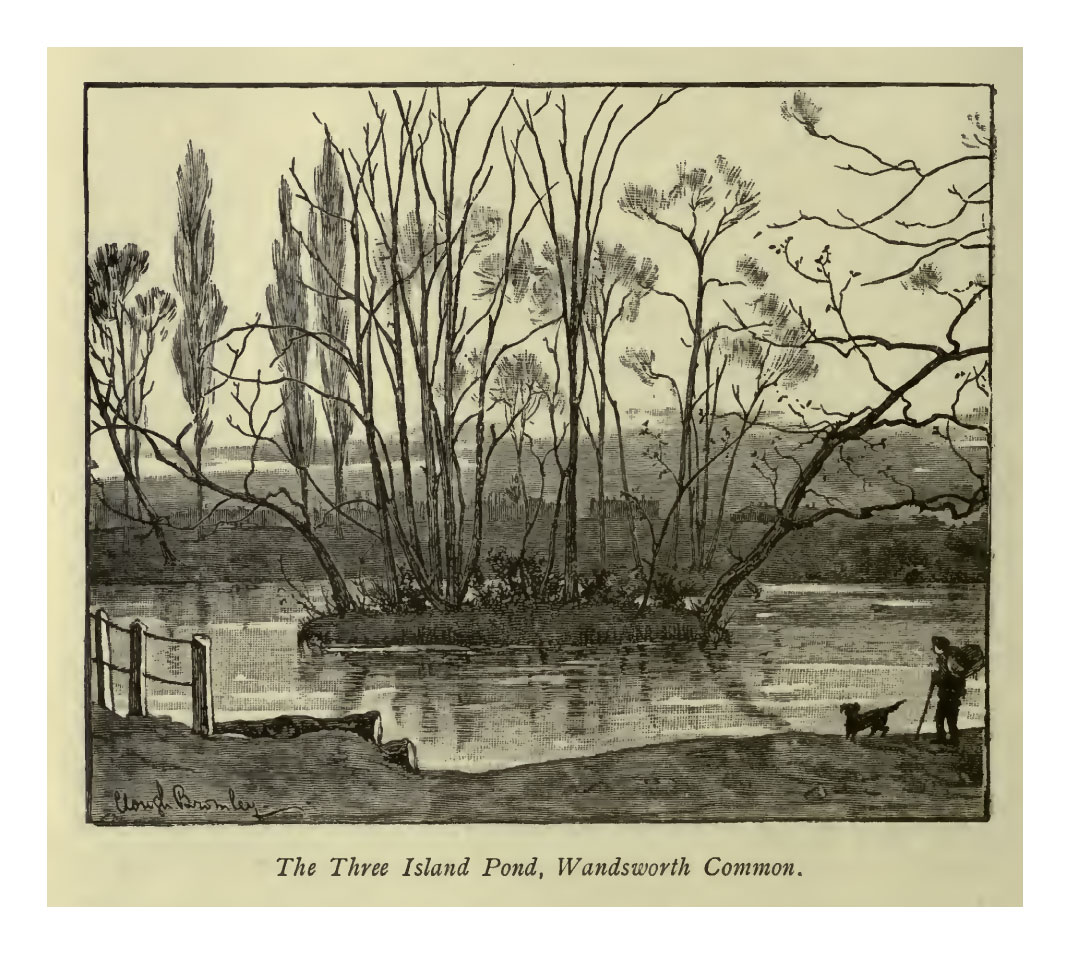
This illustration, signed "Clough Bromley", must have been based on John Westell's painting of 1898:
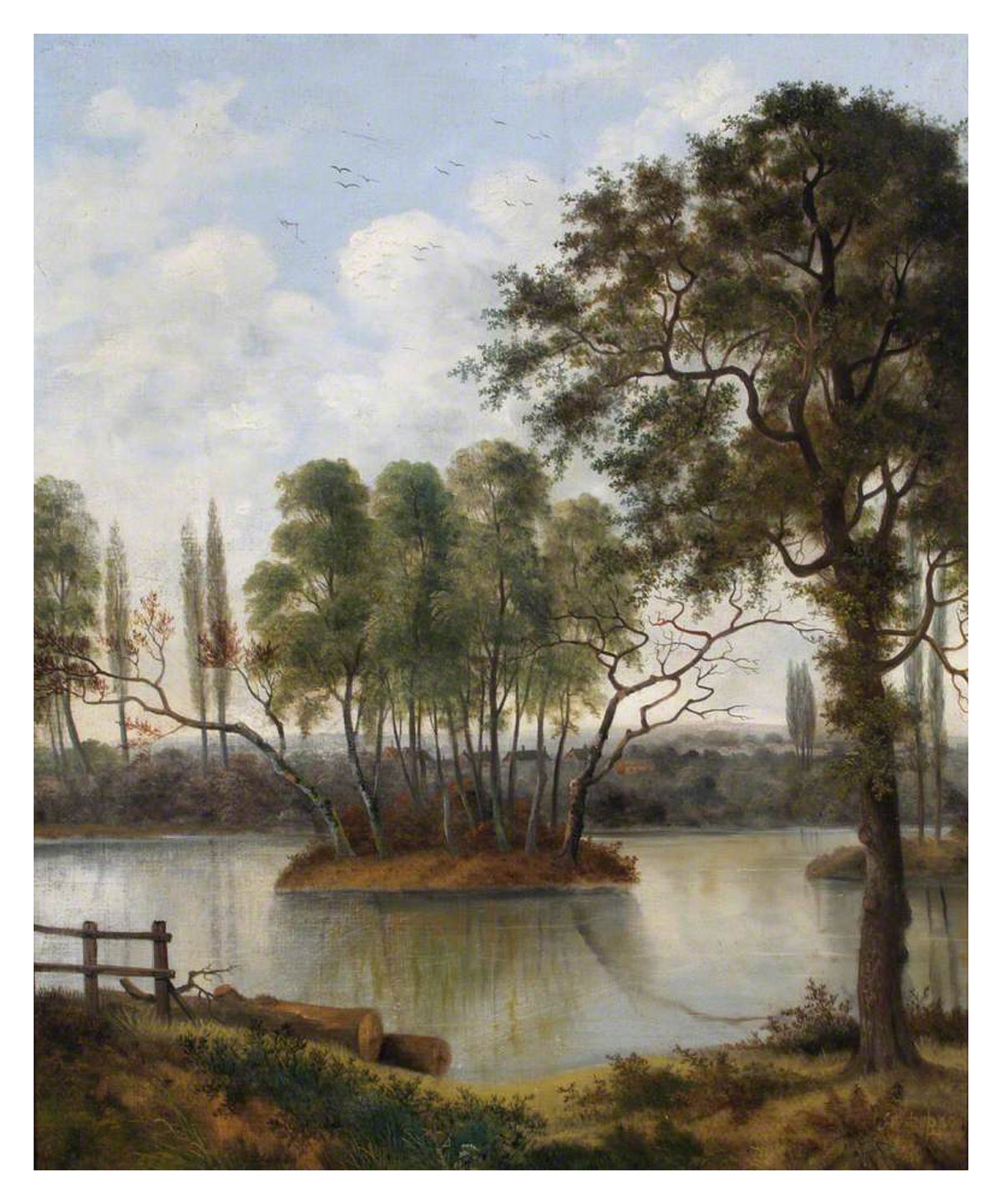
[Source: josephdonaghy.wordpress.com/2014/08/16/wandsworth-common-london-by-john-westell-1898/. What was his source?]
(Click on image to enlarge)
This image is referred to, but not illustrated ("due to copyright restrictions"), on the ArtUK website: John Westell, "Wandsworth Common", BAC Moving Museum - Wandsworth Collection [2019]. But is it in fact a depiction of the Three Island Pond? Look in the middle background - there should be no houses (or are they a suggestion of the houses on Bolingbroke Grove?). And the hills behind? If the view is from the west, this would be London. Unlikely, but could it in fact be a view of the large pond?
Westell seems also to have been referred to as "Westall" and "Westhall" [doesn't an old catalogue of artworks in public ownership list them as though they are different people?] . If they are indeed the same man, and the dates given to various paintings are correct, he appears to have been active in the area for a long time e.g. his painting of a cricket match on Tooting Common is dated 1887, and the (alleged) Three Island painting 1898. His paintings have a semi-naive anachronistic golden-age feel (wooded landscapes with hills and water, isolated dilapidated cottages, cattle, rustic figures), probably entailing the invention of numerous picturesque elements.
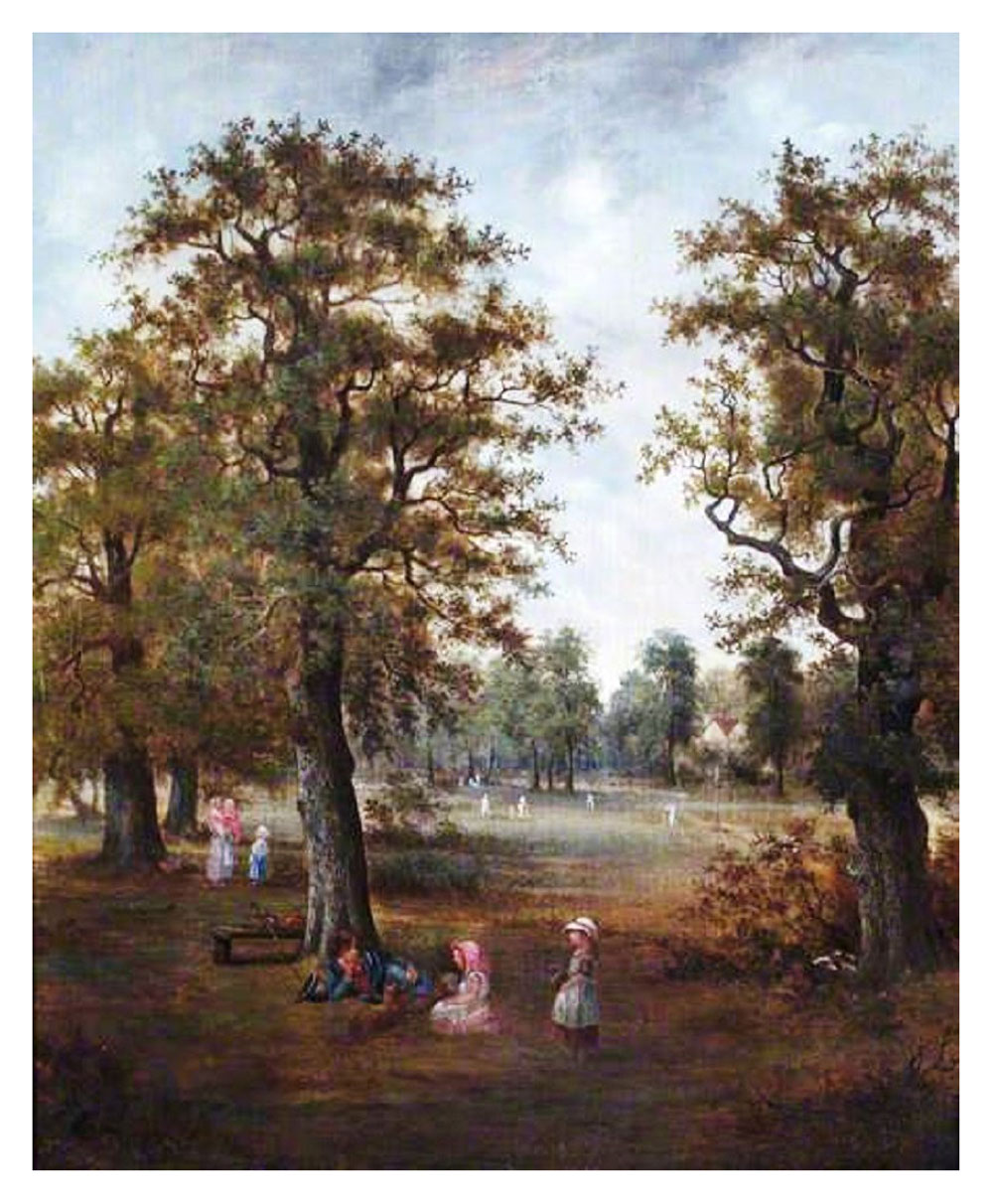
John Westell, "Tooting Common with a Cricket Match", 1887, BAC Moving Museum - Wandsworth Collection
ArtUK: John Westell, "Tooting Common with a Cricket Match", 1887, BAC Moving Museum - Wandsworth Collection
(Click on image to enlarge)
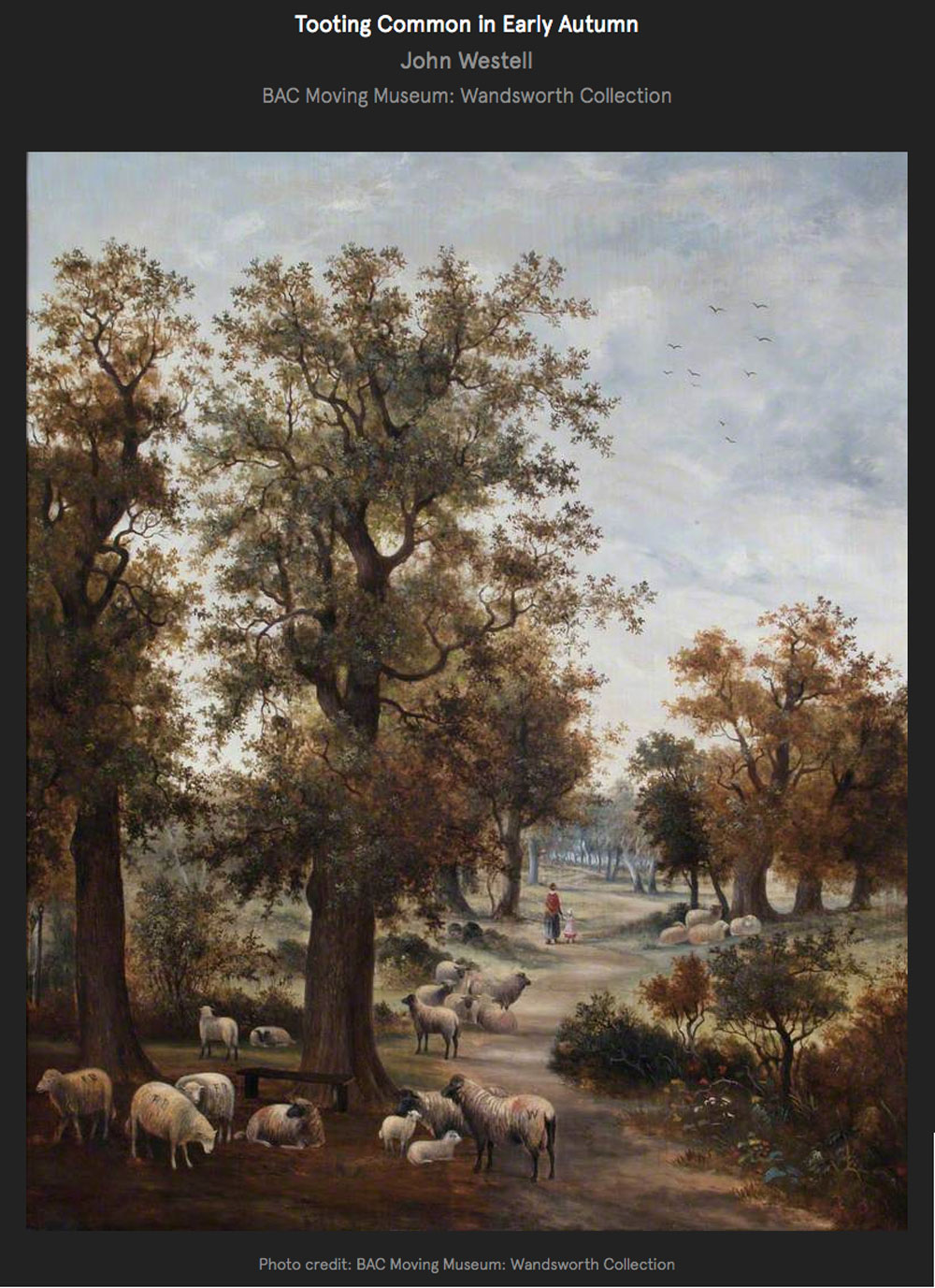
John Westall [sic? Westell?], "Tooting Common in Early Autumn", date?, BAC Moving Museum - Wandsworth Collection
(Click on image to enlarge)
ArtUK lists 4 paintings by Westell, 3 of which are in the Wandsworth Collection [shown above], but ("due to copyright restrictions") only illustrates a fourth, "Tollgate in a Wood", in the St Albans Museums. This paiting is not unlike Geoffrey Bevington's [see his page]. Was Westell perhaps a friend? A teacher?
It is not impossible that among Westell/Westall's images with no location specified are some that depict Wandsworth Common.
Needs more research... ]
Check e.g.
- Invaluable: John Westall. Numerous examples of his work at auction.
Maps
Crutchley, 1829

The Three Island Pond is already clearly present in 1829. Notice several other ponds on the Common, along "The Five Houses" (now Bolingbroke Grove) and "The Black Sea", with its many islands. But not, incidentally, the "Lake".
(Click on image to enlarge)
Stanford, 1862

Notice "Bolingbroke Grove", more or less at right angles to the modern road. It is now called ? (Still no "Lake".)