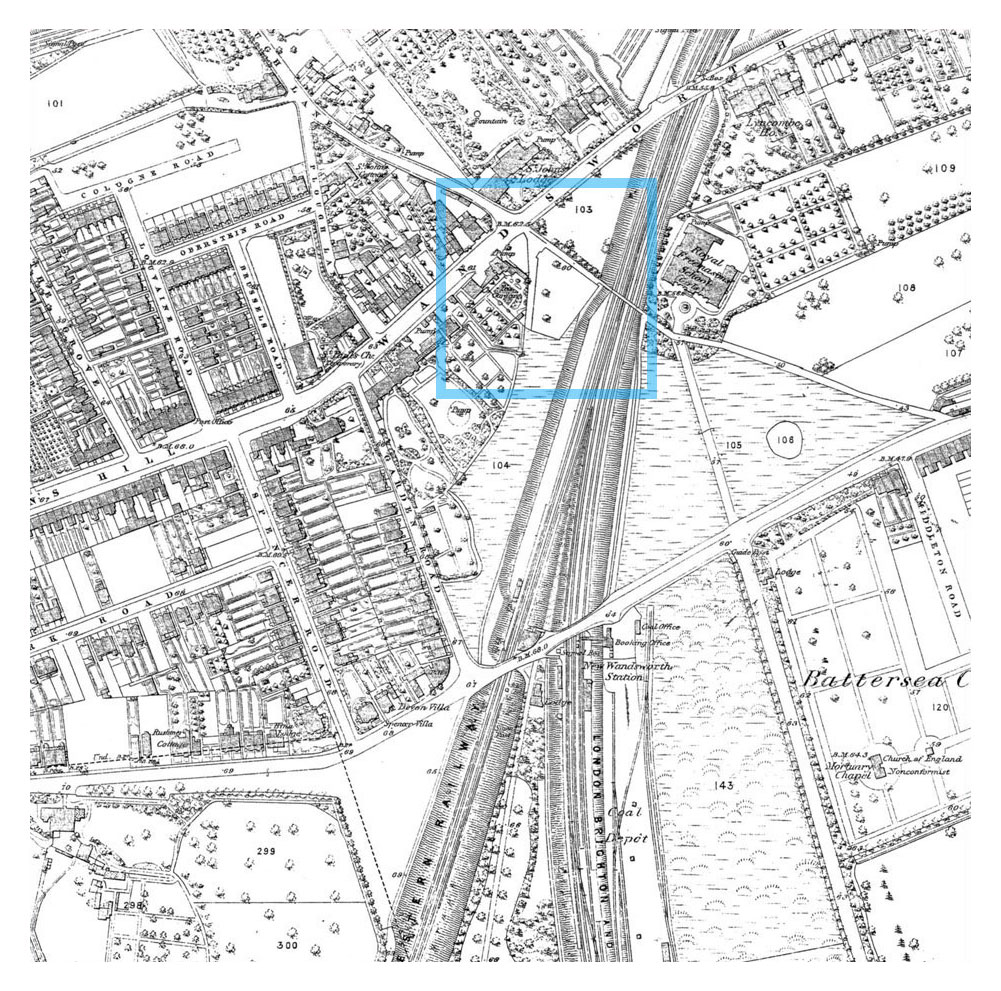
In the Chronicles for March 2023 I introduced a case of arson involving two young men, sons of foremen working on the prison, who had set fire to gorse (more usually called furze) on the Common. There was no question that they were to blame, and had probably done it just for fun.
But there were hints in the contemporary newspaper accounts that they were not the only ones who had set fires, perhaps with more serious motives.
I reprise and continue the story here.
In March 1850 news reaches Lincolnshire of a great furze fire on Wandsworth Common . . .
The furze on Wandsworth Common, to the extent of three quarters of a mile, have been destroyed by fire.
BNA: Link
It was already old news. The Gloucestershire Chronicle had mentioned the story a week earlier (Saturday 23 February 1850), drawing attention to the fire as a popular spectacle:
The furze on Wandsworth Common was set on fire on Monday night, and hundreds of people flocked out of London, thinking that a dreadful fire was raging amongst some house property.
BNA: Link.
Looking around for more information, I came across an article stating that the fire had been set by two young men, 15 and 17, whose fathers were building the new Wandsworth Prison (the first male prisoners were admitted in 1851 and the first female prisoners in 1852):
FIRING THE FURZE ON WANDSWORTH COMMON.
Thomas Candar, aged 17, and John Baker, aged 15, the sons of foremen on the works at the New Prison, were brought up from Horsemonger-lane Gaol, to which prison they had been committed on Monday last, on a charge of setting fire to the furze on Wandsworth Common.
The article continued:
The prisoners' friends had applied to bail them, but were refused, the offence charged against them being felony and transportable.
What?! The young men are denied bail because setting fire to furze was a "transportable" offence?
Transportation of criminals to New South Wales had ceased in 1840 but it continued in Victoria, Queensland and Tasmania, and only started in Western Australia in 1850, the year of the fire, when British Government authorised its conversion from a free settlement to a penal colony. (The last transportees sent to WA arrived in January 1868.)
[Interestingly, John Buckmaster's first proper job after he graduated from the teachers' training college in Battersea was working with juvenile offenders in the reformatory attached to Parkhurst Prison on the Isle of Wight. These "Parkhurst Boys" were awaiting transportation - typically to Western Australia, where before 1850 they were designated as "apprentices", not prisoners,
PB: Even before Western Australia was designated a penal colony, early colonists benefited from these "Parkhurst Boys". Between 1842 and 1849, they were assigned to masters under the guise of apprenticeship — "the gift of cheap labour to the colonial bourgeoisie" (Andrew Gill, Convict assignment in Western Australia: the Parkhurst 'apprentices' 1842-1851, Hesperian Press, 2016).
JCB was sacked after corresponding with Charles Dickens about the appalling conditions in which the boys were kept. See A Village Politician, Ch.13.]
Anyway, let's get back to Wandsworth Common:
On Mr. Beadon [the police magistrate] taking his seat, Mr. W. Nottidge, a county magistrate, and Mr. Wilson, two of the lessees of the common, intimated their desire of withdrawing from the prosecution.
They supposed that the prisoners were connected with others who had caused a number of incendiary fires on the previous Monday night, but they had since ascertained it was not so, that the boys' parents were respectable, and they were inclined to think it only a boyish freak.
Mr. Beadon said he had certainly intended to have committed the prisoners for trial, presuming it would be shown they were connected with other fires. He was glad to [?dand] it was not so; and they were indebted to those gentlemen for not pressing the case.
After some further remarks, the magistrate [??] the parents must enter into sureties on behalf of the boys to keep the peace for twelve months'
Hmm, there's a lot to disentangle here.
We have come across these local notables — William Nottidge (who lived at The Elms, at the top of Allfarthing Lane) and William Wilson ("Black Sea House", owner of Price's Candle Works) — in previous Chronicles.
We are told that they were "lessees" of the Common, and hence had the power to prosecute the boys. The traditional mechanisms of control by local "commoners" in the "court leet" with the active involvement of the Lord of the Manor, Earl Spencer, and his agents having virtually ceased, Nottidge and Wilson (along with a few others) were renting the Common in order to have legal powers to regulate the Common. This pattern of control by lessees was well-established on Clapham Common, but lasted only a few years at Wandsworth.
[Must find out more about Clapham Common's lessees. On Courts Leet see e.g. Wikipedia: Court Leet. JCB is scathing about the Battersea Court Leet, which was clearly in the pocket of the Lord of the Manor's representatives.]
But we learn that Nottidge and Wilson are now withdrawing the charge because they have learnt that the boys' parents "were respectable, and they were inclined to think it only a boyish freak" — not to be confused with other, clearly malevolent, actors "who had caused a number of incendiary fires on the previous Monday night"?
So what does it signify when they refer to a series of fires? Which fires? How were they different from the fire caused by young Candar and Baker?
______________
Who was involved, and why had the fires been set?
Firing of the Furze on Wandsworth, Tooting, and Streatham Commons.
On Sunday evening sen'night [seven days and nights i.e. this week] the furze was set on fire at the north-west corner of Wandsworth common, which consumed some 150 square yards before the flames were extinguished. It was presumed at the time that the occurrence was a purely accidental one, and no further notice was taken by the authorities who lease the common.
On Monday night, however, an alarm was raised that another fire had broken out near the same spot. A large body of the V division [i.e. Wandsworth's police] were soon in attendance, and being plentifully supplied with poles by the residents of the surrounding mansions, succeeded in a short time in subduing this fire, but scarcely had their labours ceased than, at a quarter of a mile off, another fire was seen raging.
Here the police, and many labouring men, greatly to their credit, went and extinguished this and several distinct but contiguous fires; their labours had not concluded till after nine o'clock, when the hemisphere became again brilliantly illuminated, and it was soon ascertained that another conflagration had broken out almost close to the Clapham-common station [this was next to the Battersea Rise railway bridge].
This fire proved more difficult in respect to its extinguishment than any of the others and several of the police got their hands severely scorched and blistered, and their clothes damaged.
It was now imagined that this spirit of incendiarism had ceased, at least for the night, when between ten and eleven o'clock, simultaneous conflagrations broke out at Tooting and Streatham Commons, and although a large body of the P division [Camberwell area] rendered their assistance, the quantity of furze destroyed on both these Commons was immense.
It may be almost needless to say that the numerous highly respectable families resident on the verges of these Commons, have been, and continue to be, in a most serious state of alarm.
Various causes are assigned for this unusual, but most outrageous, kind of proceeding, which it would not be prudent at the present time to further divulge, but there is little doubt that the matter, ere long, will be the subject of magisterial inquiry.
[BNA: Link.]
What intriguing final comments:
"highly respectable families . . . in a most serious state of alarm . . . causes . . . which it would would not be prudent to divulge . . . ere long . . . the subject of magisterial enquiry".
What can this be this alluding to?
We should not discount the wider social context at this time. In 1848, revolutionary uprisings took place throughout Europe, heralded by the publication (in London) of Marx and Engels's Communist Manifesto. The Great Famine in Ireland (1845—1852) caused an increase in incendiarism, with arson attacks on landlords' property by starving landless an peasants and beleaguered tenant-farmers.
In England, the most intense periods of machine-breaking and burning (led by "General Ludd" in industrial towns c.1814 and "Captain Swing" in the countryside c.1830) was largely over, but still vivid in the memory.
In London, also in 1848, a massive Chartist demonstration took place on nearby Kennington Common. Although Chartism may have been in decline as a mass movement, there were still pockets of support — including an active "female Charter Association" in Wandsworth organised by Amelia Waters and Jane Dolling.
["Does anybody know anything more about this group, or want to research it further? I wrote a few notes about Chartism in our area November 2022's Chronicles, including a report of "An Old Chartist's Funeral" in Battersea Cemetery in 1891.]
But I also wonder whether the furze-burning was chiefly motivated by a more local and specific concern — the accelerating pace of encroachments, division and enclosure of the Common.
We need only think of the two new railway lines being gouged through the Common (with two more lines threatened), the new prison (and the enclosure of the area in front of it, now Neal's Nursery and the Prison Banks), the 20 acres sold by Earl Spencer to build the St James's Industrial School, land for the Freemason's School for Girls, the enclosure for Reverend Craig's giant telescope, and so on.
In 1848, 21 acres of Common had been sold to Henry McKellar of Wandsworth Lodge — the entire triangle bounded by today's Trinity Road, St James's Drive and Bellevue Road. A few years later he added a further 12 acres on the other side of Trinity Road.
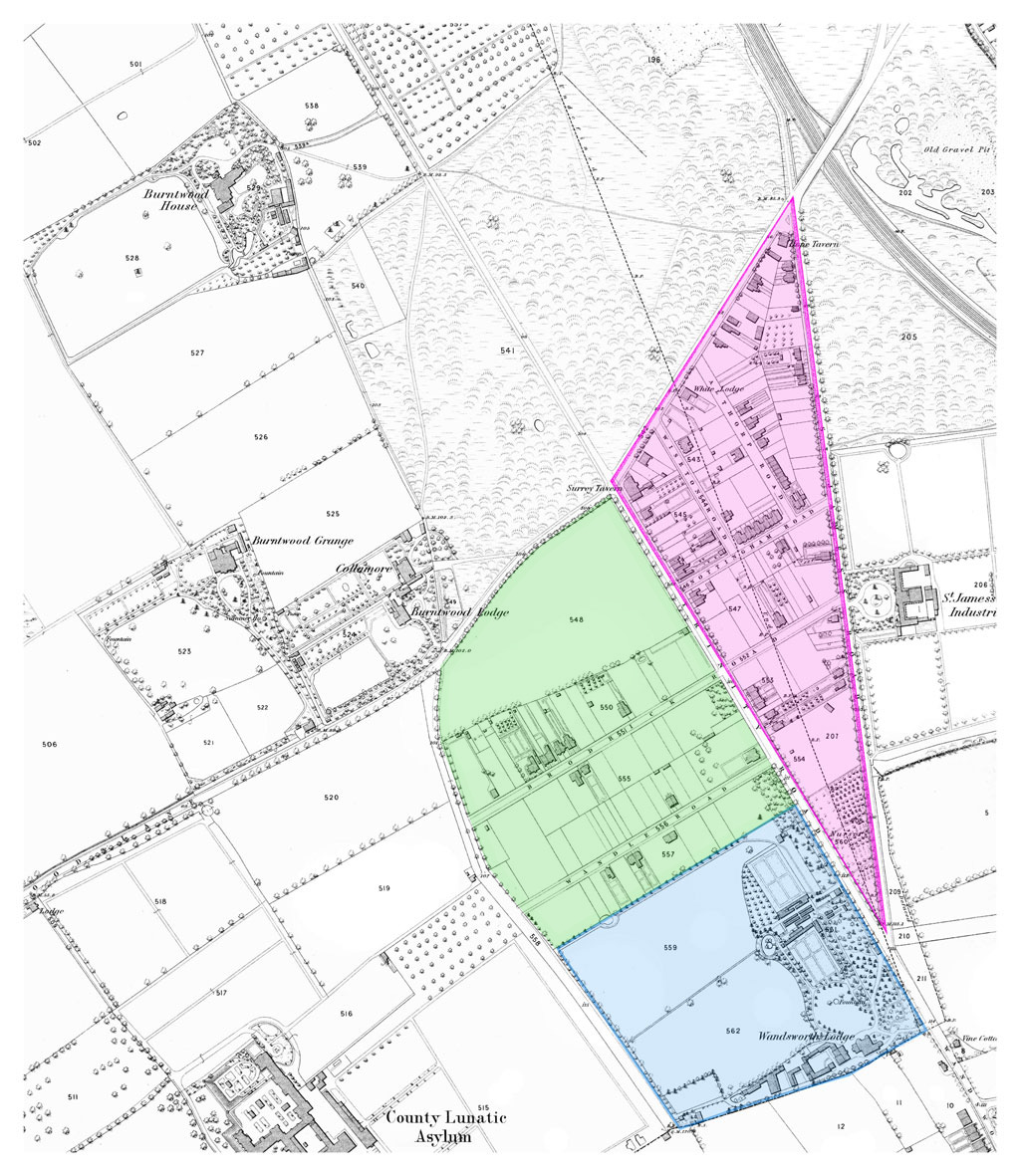
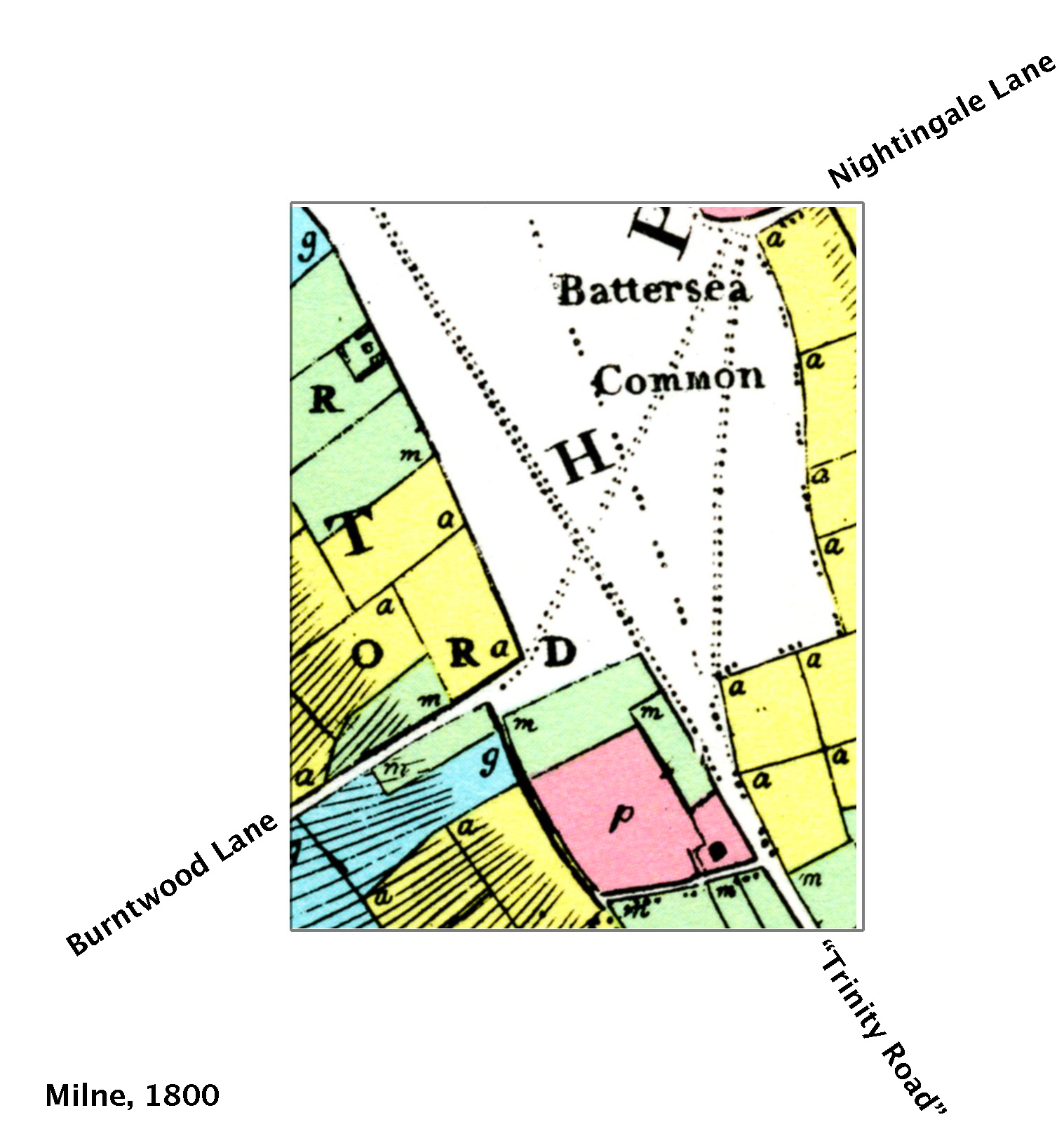
In 1849 Oswald Parsons, a local bricklayer, found himself in court charged with having "unlawfully and maliciously committed damage and injury to and upon a certain dead wooden fence, the property of Mr. William [Edward?] Herring." Herring lived in Ivy House, on the corner of St John's Hill and today's Vardens Road.
There may have been others before him, but Oswald Parsons is the first fence-breaker/stout defender of Wandsworth Common whose name has come down to us today.
Is it perhaps significant that the earlier, more troubling furze-fires were set in the north-west of the Common, where Herring lived?
(This is the same area, "Plough Green", that became the epicentre of riotous opposition to enclosure in 1870. This culminated in the 1871 Wandsworth Common Act, ensuring that the Common must be kept "at all times open uninclosed and unbuilt on".
With luck, I'll be discussing this in more detail next month.
Note:
More police needed to control "Loose women and bullies" on the Common
More Police for Wandsworth-common
The clerk was instructed to prepare memorial to the Chief Commissioner of Police, asking for additional police supervision on Wandsworth common, for the purpose if possible of removing the people of loose character who harbour there.
Mr. Costeker said the common was covered with loose women, who were accompanied by bullies to protect them, and aid them in insulting people going across. He had succeeded in driving them away from his corner *, and hoped the board would do what they could to drive them away altogether.
The clerk observed that the board were about to take stops to ascertain who had the control of the supervision of Wandsworth common, and this end would, as a member had observed, be furthered by the memorial.
* John Costeker was responsible for enclosing parts of Plough Green and adding them to the garden of his house on St John's Hill. Some of the most heated events that led to the saving of the Common concerned his attempts to block paths. The South London PressJ accused Costeker of exaggerating the problem of "loose people" so that he could portray his encroachments as "public spirited" and "in the public interest" (2 October 1869).