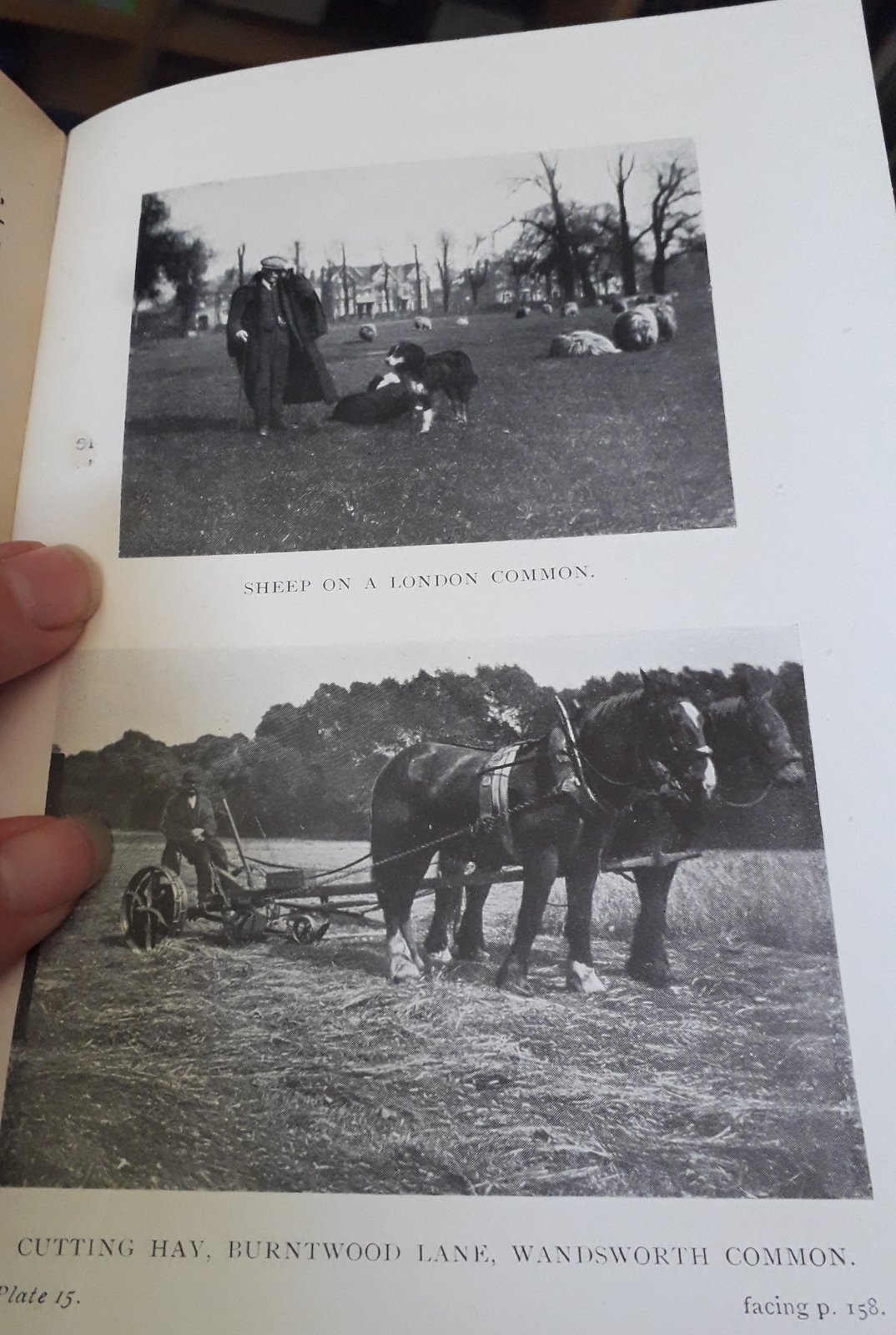
Last modified: 9 November 2026 · Build 1
See also: The Huguenot Burial Ground (Mount Nod)
Work in progress. Everything on this site about Walter Johnson is gathered here, and there is a great deal more to add. Points still to be checked are marked [?].
Walter Johnson spent much of his working life as a teacher in Battersea. He was a fine example of a type that has almost vanished: the self-taught, all-round naturalist who was equally at home with flowers, beetles, rocks, flints, old customs and old churches.
He wrote a string of books between 1903 and 1931. Several of them are about our own patch of south London: its commons, its prehistory, Battersea Park, and the Highland shepherd who brought his flock to graze on Wandsworth Common every summer.
For anyone interested in the natural history and deep past of the land around Wandsworth Common, he is one of the most important writers we have.
Library catalogues give his year of birth as 1867. Little else is yet known of his early life [?].
The 1911 census has a Walter Johnson, born in 1867 at Saltfleetby All Saints in Lincolnshire, living in the Wandsworth registration district with his wife Mary (born Coventry, about 1875) and their daughter Margaret, aged two, born in Battersea. The birth year fits exactly, but Walter Johnson is a very common name, and this still needs to be confirmed against an address or occupation [?].
He was for many years a teacher in Battersea [school(s) and dates to be found]. His interest in nature and the past was evidently part of his teaching. His little book on Battersea Park (1910) was written as a guide to nature study there, and was adopted as a textbook by the Battersea and Wandsworth Educational Council.
In January 1912, when he signed the preface of Byways in British Archaeology, he was writing at a place “about two miles distant” from St Nicholas’ church, Tooting. That would put him somewhere around Balham, Earlsfield or Wandsworth Common [address to be found].
The same preface thanks a “Mrs W. Johnson” among those who supplied photographs. This was presumably his wife.
He was a Fellow of the Geological Society (F.G.S.). He knew, as his obituarist put it, men “whose names are now almost legendary in the history of archaeology”.
Around the end of the First World War, he kept an allotment on Clapham Common. He mentions it in passing in Talks with Shepherds, when he invited the Highland shepherd to a picnic tea there one evening.
In later life he moved to Kent and lived for several years in Gillingham, where he took a leading part in the work of the Rochester and District Natural History Society. He died on 18 November, aged 83. His obituary appeared in Archaeologia Cantiana, volume 63, which suggests the year was 1950 [year to be confirmed].
The obituary, signed “J.H.E.”, remembers him as “an inspired amateur of the natural sciences and Archaeology”, a modest man whose friendship was a delight.
His first book, written with William Wright, covered the north-east corner of Surrey, from the Thames south to the line between Box Hill and Oxted. That takes in Battersea, Wandsworth, Clapham, Tooting and Streatham. Several passages bear directly on our area.
Johnson’s big idea was what he called folk-memory: the way popular customs, beliefs and place-names can preserve, often unconsciously, traces of a very distant past.
Folk-Memory; or, The Continuity of British Archaeology was published by the Clarendon Press at Oxford in 1908 (416 pages, 12s. 6d.). Nature’s reviewer, while not accepting every conclusion, was “impressed by the cumulative value of the evidence”.
Its sequel, Byways in British Archaeology (Cambridge University Press, 1912), deals with churches built on pagan sites, the secular uses of churches, the orientation of churches and graves, burial customs, the churchyard yew, and the cult of the horse. Folk-Memory was reprinted as late as 1971.
Byways has two local references.
Published by T. Fisher Unwin at a shilling, this little book led its readers through the park’s birds, mammals, fishes, insects, trees, plants and fungi. It ended with a natural-history calendar and included a list of beetles, most of them observed by Johnson himself.
The Spectator (7 May 1910) found it “a suggestive and stimulating little book”.
The Friends of Battersea Park still use it today. It records, for example, the position and appearance of the long-vanished American Garden, and of the 24 kinds of fungi Johnson listed, about half can still be found in the park.
Wimbledon Common: its Geology, Antiquities, and Natural History (T. Fisher Unwin, 1912) runs to 306 pages, with 9 plates, 3 maps and text illustrations. It remains a standard source for the common’s history.
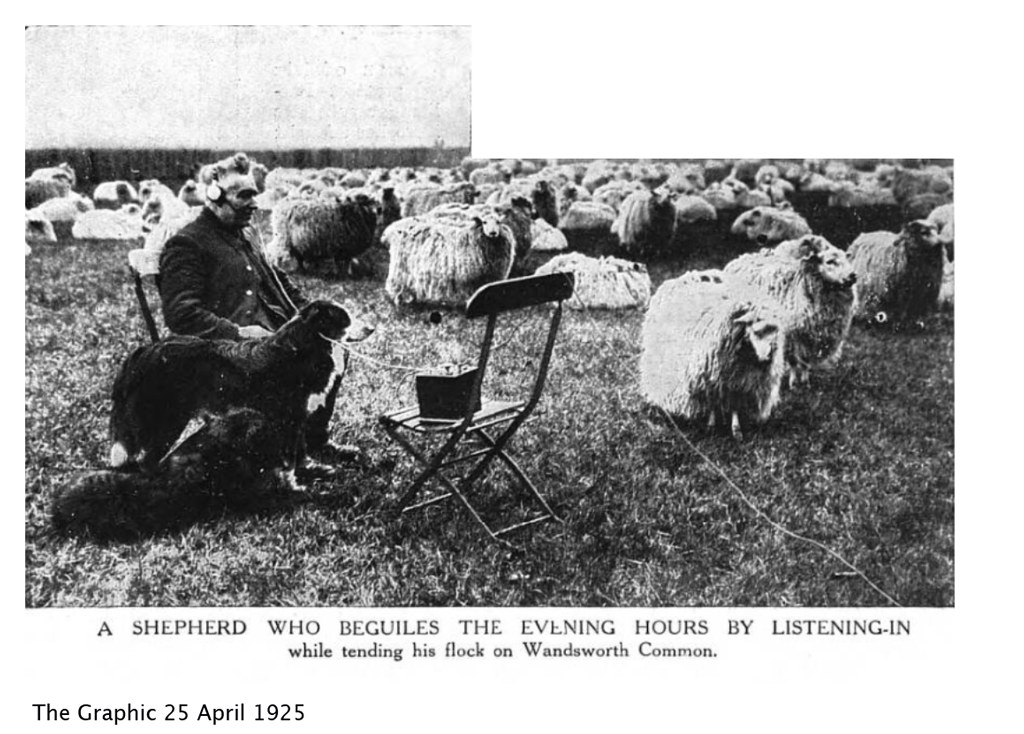
For readers of this site, Johnson’s most delightful piece is the chapter “The Highland Shepherd in London”, written in 1919 and published in Talks with Shepherds (Routledge, 1925).
Every summer, a flock of four or five hundred sheep came down by rail from Aberdeenshire to graze London’s commons. In the early years they came by steamboat to St Katharine’s Wharf. With them came their shepherd: a short, weather-beaten man of about sixty, in an old mackintosh and Inverness cape, with his collies, above all the famous “Tweed”. He lived in a hut on wheels (for a time an old coach) beside the flock.
Johnson got to know him over several years and set down his talk, in broad Scots, with obvious affection. The shepherd had firm views on the local commons:
Tooting Bec Common is an abominable place. It’s full of bushes, and the grass is no good, all grey and wiry, different altogether from the other commons. Give me Clapham Common or Wandsworth Common. Clapham has the best grass, but I like Wandsworth best. At the Burntwood Lane end of the Common you get such a splendid breeze.
The chapter also describes how he moved the flock between three or four commons and parks in the small hours, while the roads were quiet. It records the sheep swimming the pond on Tooting Bec, shearing on the Common, the 1919 drought that left the grass “as it had been scorched with a flat iron”, and the Sunday crowds of nursemaids and children at the hurdles.
It ends sadly with Tweed’s death, knocked down by a motorist on a road across a south London common.
Read the whole chapter: “The Highland Shepherd in London”.
Johnson’s later work centred on the great naturalist of Selborne. He wrote Gilbert White: Pioneer, Poet and Stylist (John Murray, 1928) and edited Journals of Gilbert White (Routledge, 1931; reprinted by David & Charles in 1970 and by MIT Press in 1971). It was a natural fit. White, like Johnson, made a lifetime’s study of one small neighbourhood.
| 1903 | Neolithic Man in North-East Surrey, with William Wright, and a chapter on flint by B.C. Polkinghorne (Elliot Stock). |
| 1908 | Folk-Memory; or, The Continuity of British Archaeology (Clarendon Press, Oxford). |
| 1910 | Battersea Park as a Centre for Nature-Study (T. Fisher Unwin). |
| 1912 | Wimbledon Common: its Geology, Antiquities, and Natural History (T. Fisher Unwin). |
| 1912 | Byways in British Archaeology (Cambridge University Press). |
| 1925 | Talks with Shepherds (George Routledge & Sons), including “The Highland Shepherd in London” (written 1919). |
| 1928 | Gilbert White: Pioneer, Poet and Stylist (John Murray). |
| 1931 | Journals of Gilbert White, edited by Walter Johnson (Routledge). |
| n.d. | Animal Life in London (Sheldon Press) [date?]. |
Do you know more about Walter Johnson, his school, his family or his Highland shepherd? Please let me know.