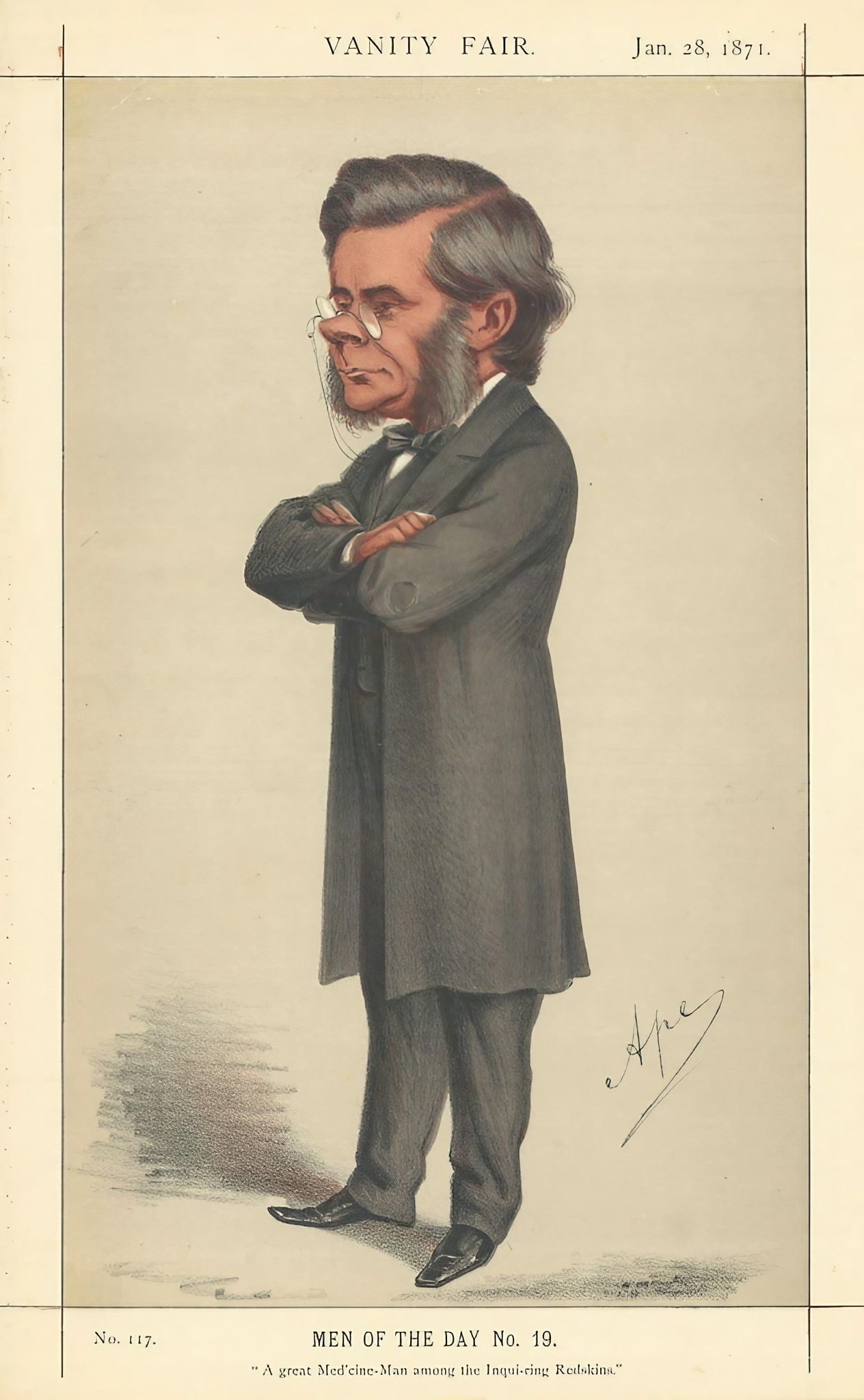
Huxley is often referred to as "Darwin's Bulldog" for his robust defence of the theory of evolution by natural selection, then under seige. Huxley's reputation was chiefly made by his apparent* trouncing in a debate debate at Oxford in 1860 of Battersea-born ("Soapy Sam") Wilberforce (1805-1873), Bishop of Oxford and son of the anti-slave-trade MP William Wilberforce.
Widely known as "Soapy Sam" (thanks to what Disraeli memorably called his "unctuous, oleaginous, saponaceous" manner), Wilberforce was born "between the Commons" in Broomfield House (renamed Broomwood House, hence Broomwood Road).
[* I say "apparent" because the reality is rather different. At the time, both sides were able to claim victory. Wilberforce was a much more intellectually capable opponent than posterity generally admits. If you want to know more, email me and I'll send some good references.]

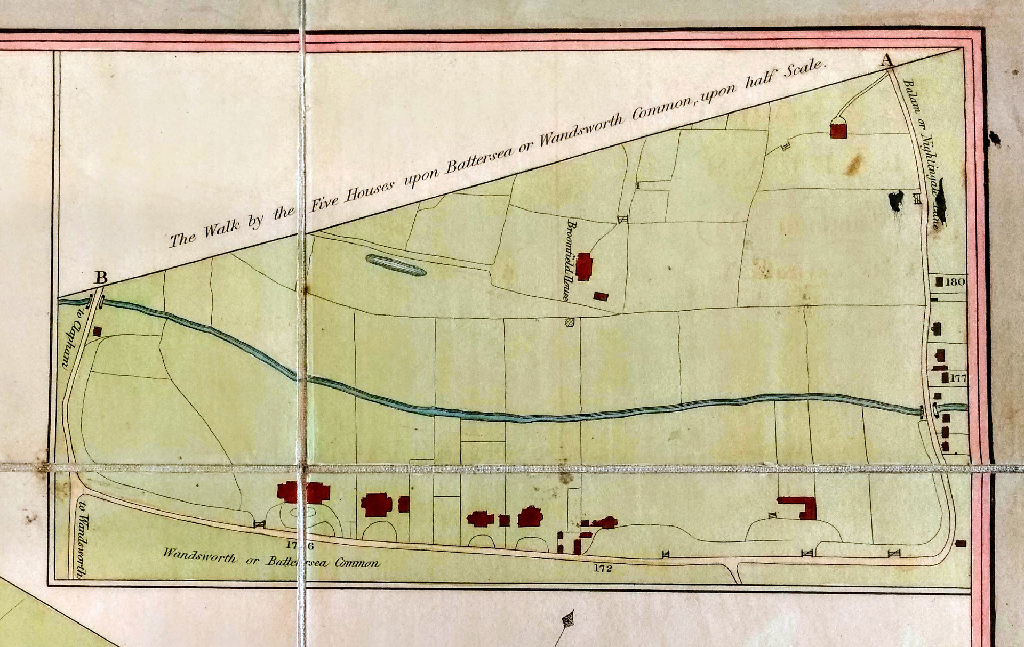
Some time ago, I discussed the possibility that Samuel had participated as a boy in Beatings of the Battersea Bounds. Here's a map of the 5 Houses on Bolingbroke Grove — and nearby Broomfield House, where Wilberforce was born:
A couple of years before the Hardys arrived on Trinity Road, Alexander Macmillan published Huxley's pioneering work of popular education, Physiography: An Introduction to the Study of Nature.
Like many of his most brilliant contemporaries (such as the mathematician-engineer Henry Moseley, and our local hero John Buckmaster), Huxley was devoted to improving educational opportunities for the working and lower middle classes, not just the elites of the day.
I don't know whether Thomas Hardy knew and read Huxley's book, let alone was influenced by it, but it seems to me that it resonates with Hardy's own outlook: the awesome powers of Nature acting not just at the macro-level — planetary, continental or national — but also at the everyday and seemingly insignificant levels. In short, that the general and universal is best understood through the individual and the local.
In place of Hardy's Wessex microscosm, Huxley's focus is on the Thames Valley. (Huxley was born not far away in Ealing, West London.)
It was necessary to illustrate my method by a concrete case; and, as a Londoner addressing Londoners, I selected the Thames, and its basin, for my text . . .
In very broad, but, I hope, accurate, outlines, a view of the "place in nature" of a particular district of England, the basin of the Thames; and to leave upon their minds the impression that the muddy waters of our metropolitan river; the hills between which it flows; the breezes which blow over it; are not isolated phenomena, to be taken as understood because they are familiar . . .
He follows this with a sentence that is dangerously long but worth unpicking:
On the contrary, I endeavoured to show that the application of the plainest and simplest processes of reasoning to any one of these phenomena, suffices to show, lying behind it, a cause, which again suggests another; until, step by step, the conviction dawns upon the learner that, to attain to even an elementary conception of what goes on in his parish, he must know something about the universe; that the pebble he kicks aside would not be what it is and where it is, unless a particular chapter of the earth's history, finished untold ages ago, had been exactly what it was.
In short, to learn about the Big Picture — the universe, ultimate causes, or long chapters of the earth's history — Huxley urges us to look up close at what is immediately at hand, that we can perceive directly: at what occurs in our parish, or in the existence of a pebble. I like that. It could act as the epigram for these Chronicles.
You will not be surprised to hear that Wandsworth Common and surrounds feature prominently in Physiography (at least in the first edition of 1877). Let's look at a few examples.
Here's one.
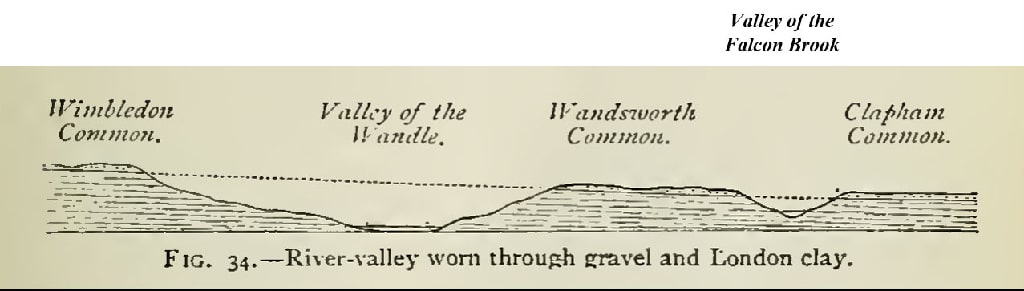
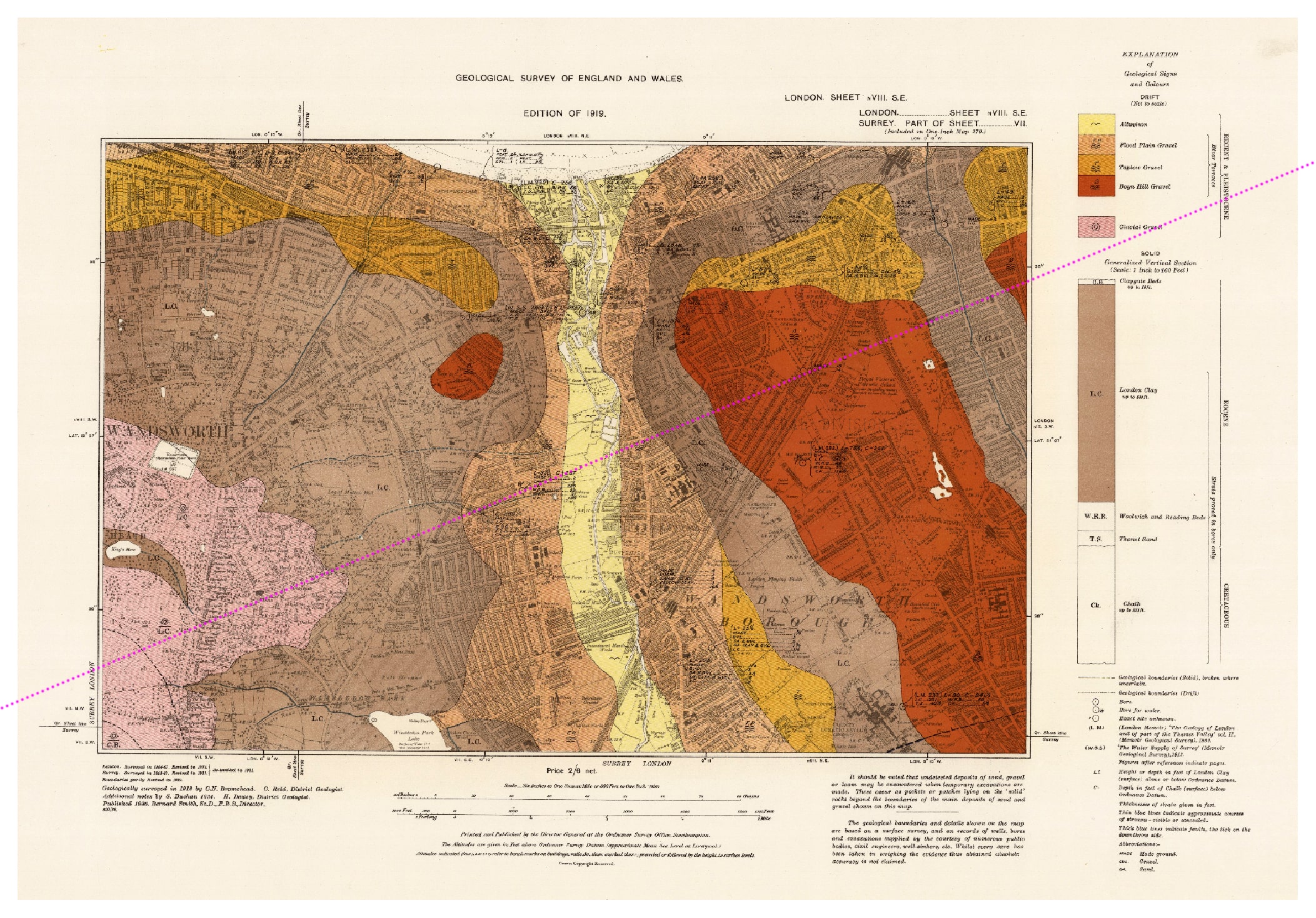
Here it is seen that the surface of Wimbledon Common is covered by a bed of gravel spread over the London clay. On descending from the summit of the common to the valley of the river Wandle, the gravel is seen to be abruptly cut off and succeeded by the underlying clay; but, on going up the opposite slope of the valley, the gravel again appears, at about the same level, and covers the surface of Wandsworth Common; and similarly the gravel will be found on the surface of Clapham Common.
[Huxley, Physiography, p.139]
To help you visualise this, I've drawn just such a line on an Ordnance Survey Geological Map from 1913. The yellow strip in the middle is the alluvium alongside the River Wandle, with the gravel mass of Wandsworth Common, tinted chestnut-brown , immediately to its east.
In fact, Huxley has borrowed this cross-section (indeed much of his explanation of local geology and landforms) from the great Clapham-born geologist Joseph Prestwich (1812-1896).
Here's a page from Prestwich's marvellous The Ground Beneath Us, Its Geological Phases and Changes: Being Three Lectures On the Geology of Clapham and the Neighbourhood of London Generally (1854-1856).
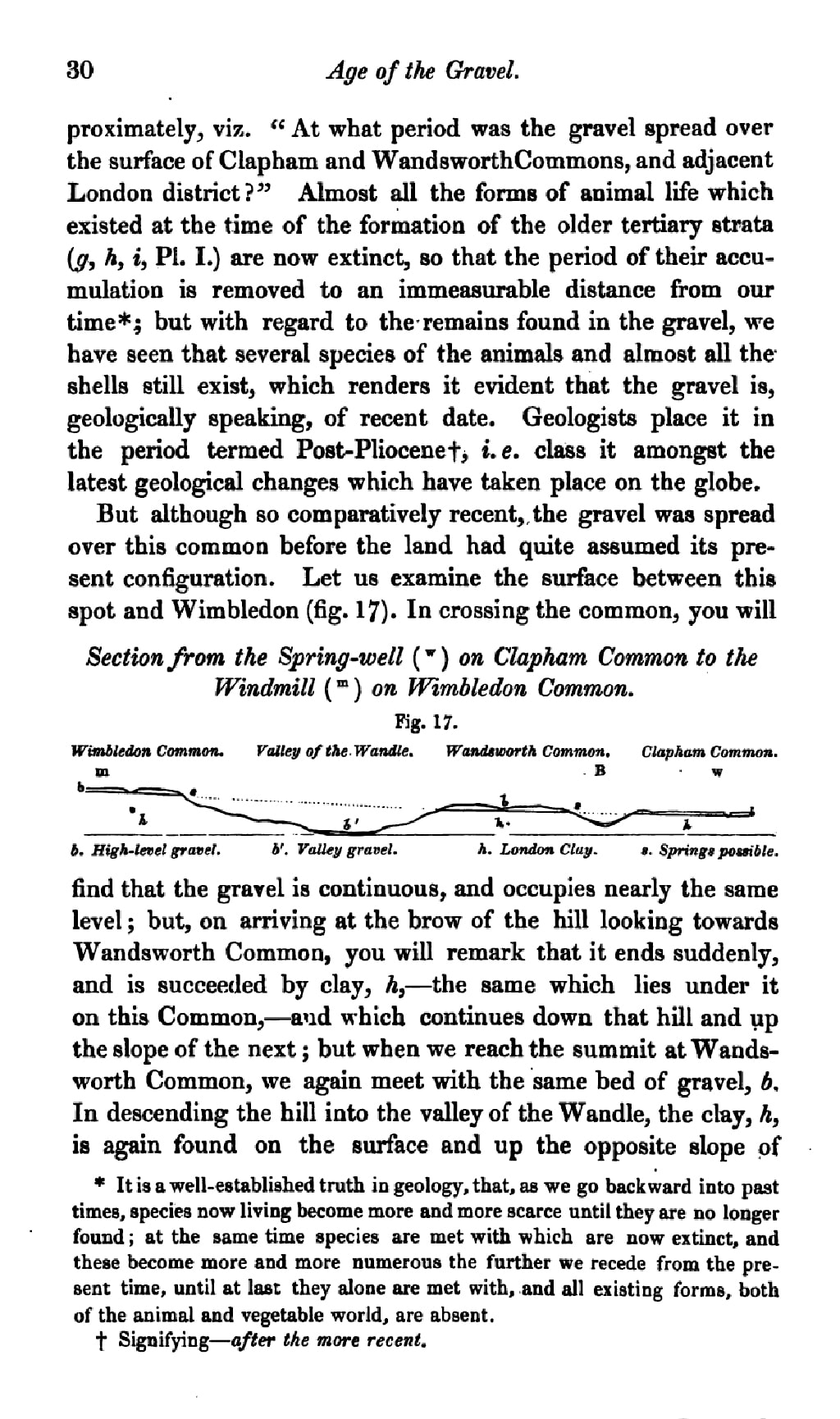
Joseph Prestwich's lectures were given to the Clapham Athenaeum, a club founded in 1841 as the "Clapham Literary and Scientific Society" to discuss "subjects of general interest among the young men resident in the neighbourhood".
[Did young women, such as Henrietta Wollaston, attend too? I don't know. Minutes of its "Proceedings" are held by the Lambeth Archives, so there may be an answer there. See National Archives.]
At this time, Prestwich was a wine merchant in the City, but such was his absorption, energy, and brilliance that he went on to become Professor of Geology at Oxford University.
Here he is in (much) later life:
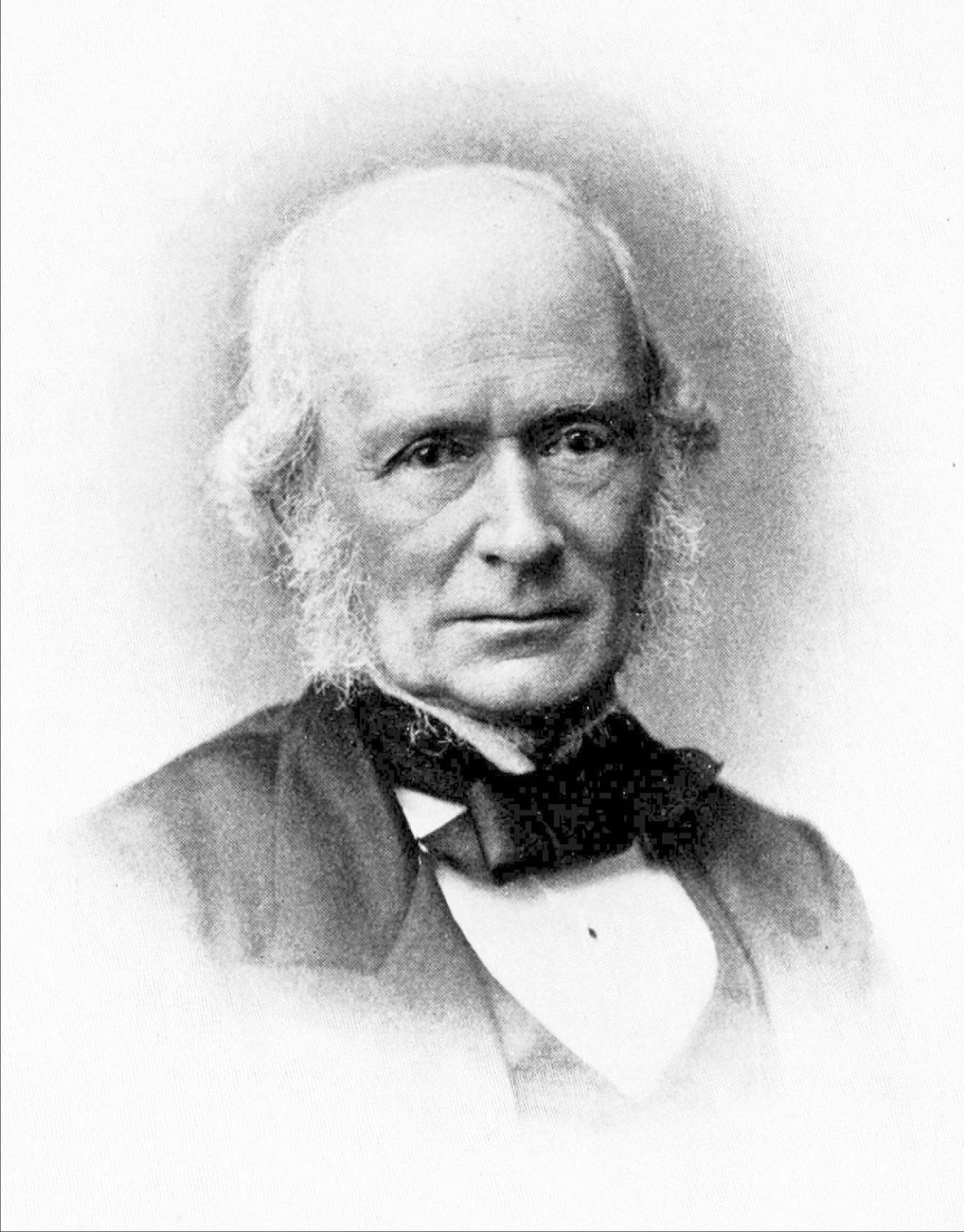
[I had firmly intended to write something more about local-boy Joseph Prestwich, for example about about his young life in the area, which he records in an entertaining memoir — about his schooling, his walks along Lavender Hill, his time in a Wandsworth school, and his love of the Wandsworth Fair. But I became so absorbed in the research that I will have to delay saying anything more for another time. In the meanwhile, have a look at his Wikipedia entry .]
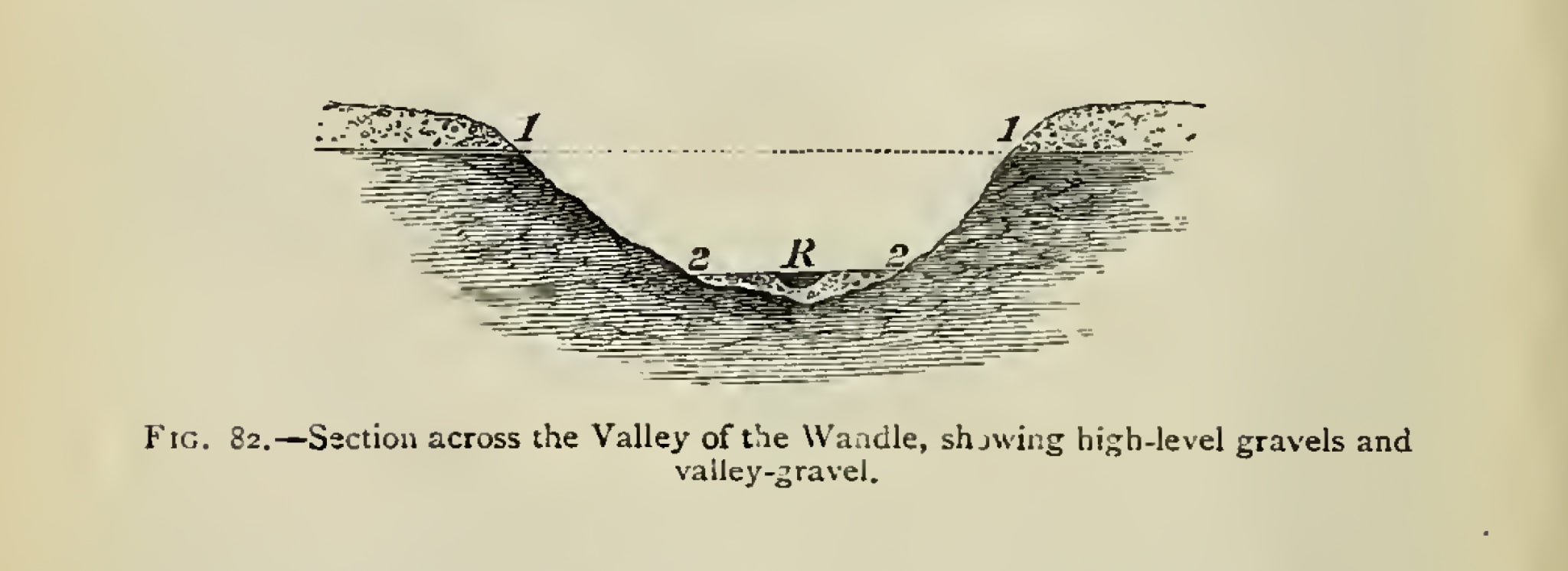
Here's another example from Huxley's Physiography (p.137). It shows how the valley betwixt and between the Commons was formed by millennia of erosion by the mighty Falcon Brook:
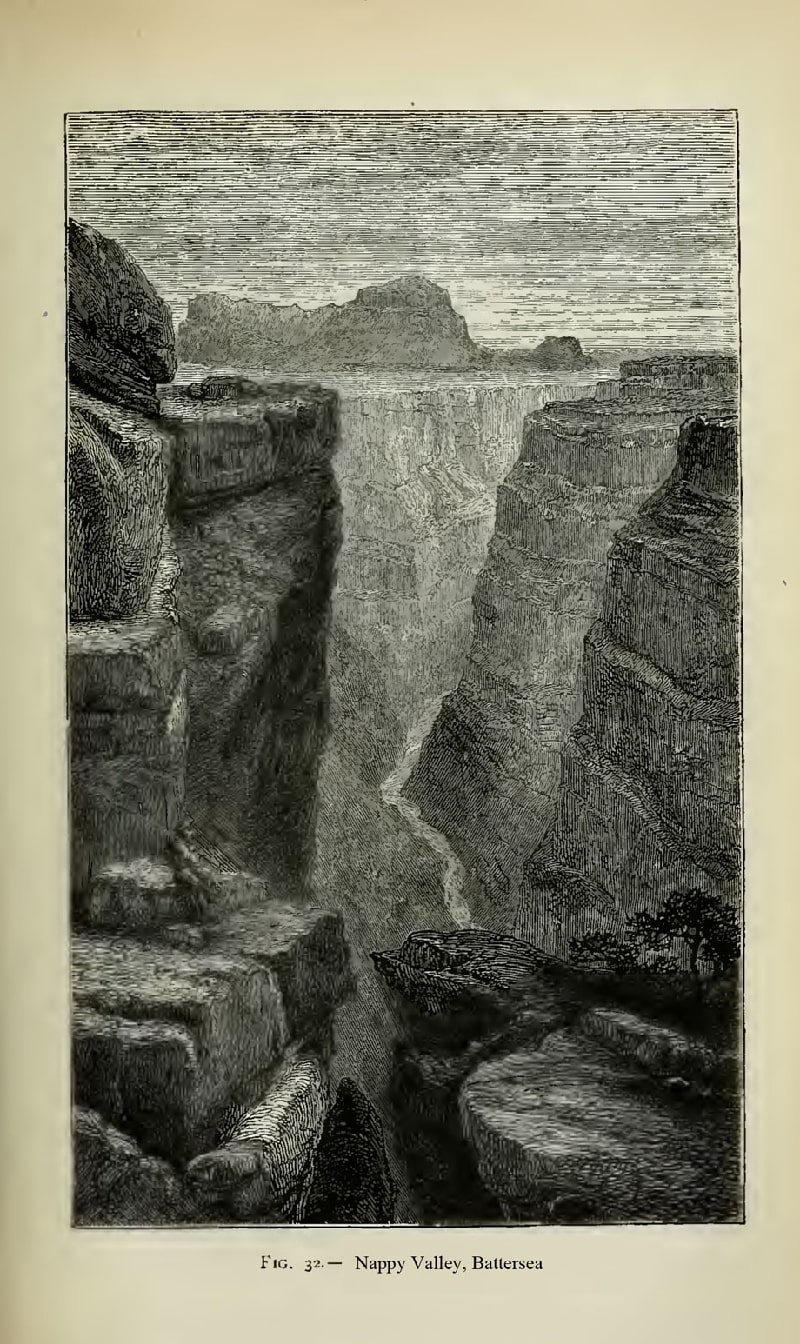
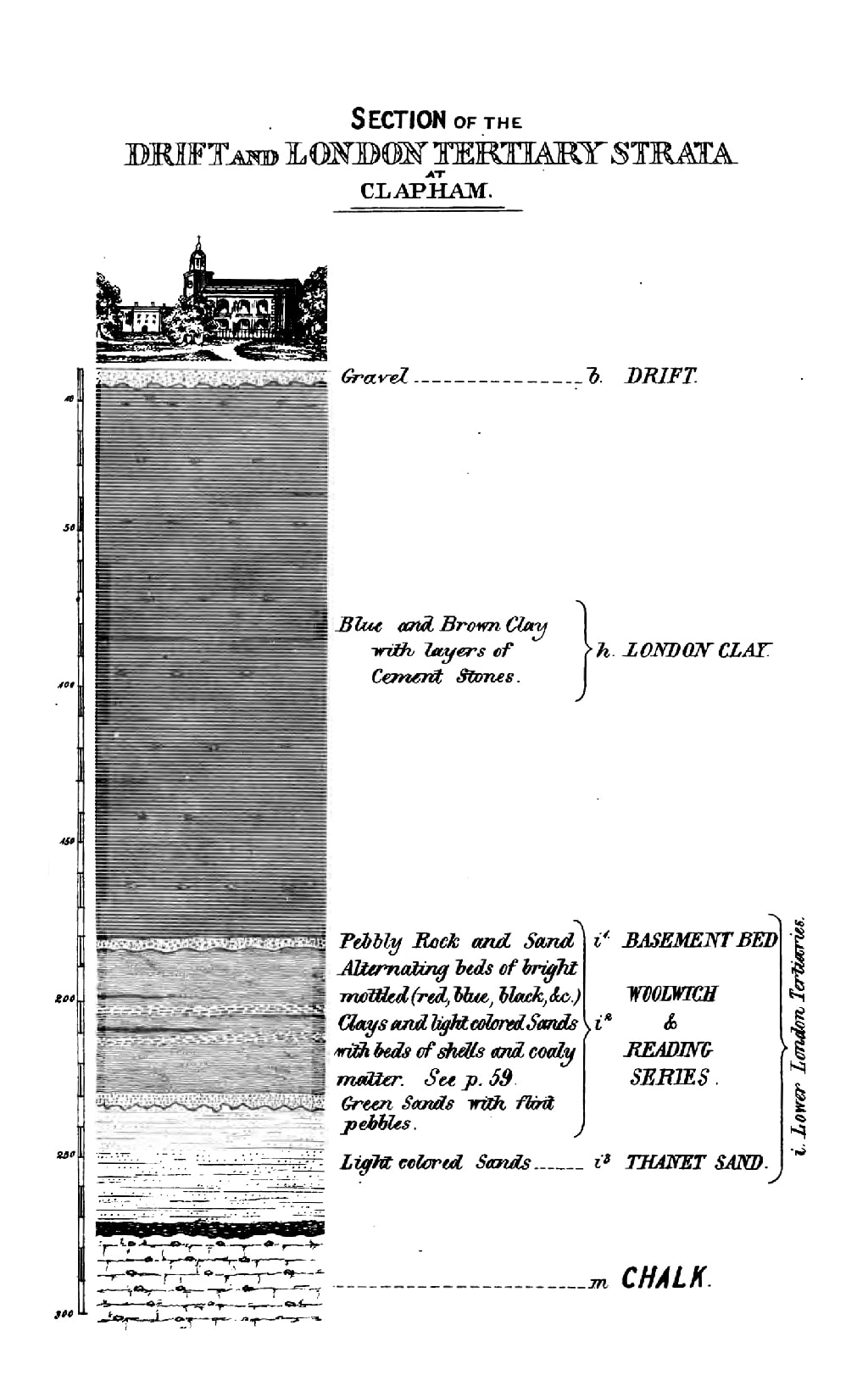
Prestwich and Huxley also take us deep underground, using discoveries from the latest boreholes being dug around the capital. These were being dug not for scientific reasons, but because of the need to provide water to the houses and new institutions (such as Wandsworth Prison) being built in the area. Thanks to his geological prowess, Prestwich became the leading authority on water-bearing strata in the London area.
Here is Prestwich's remarkable cross-section of the ground beneath Holy Trinity Church, on Clapham Common:
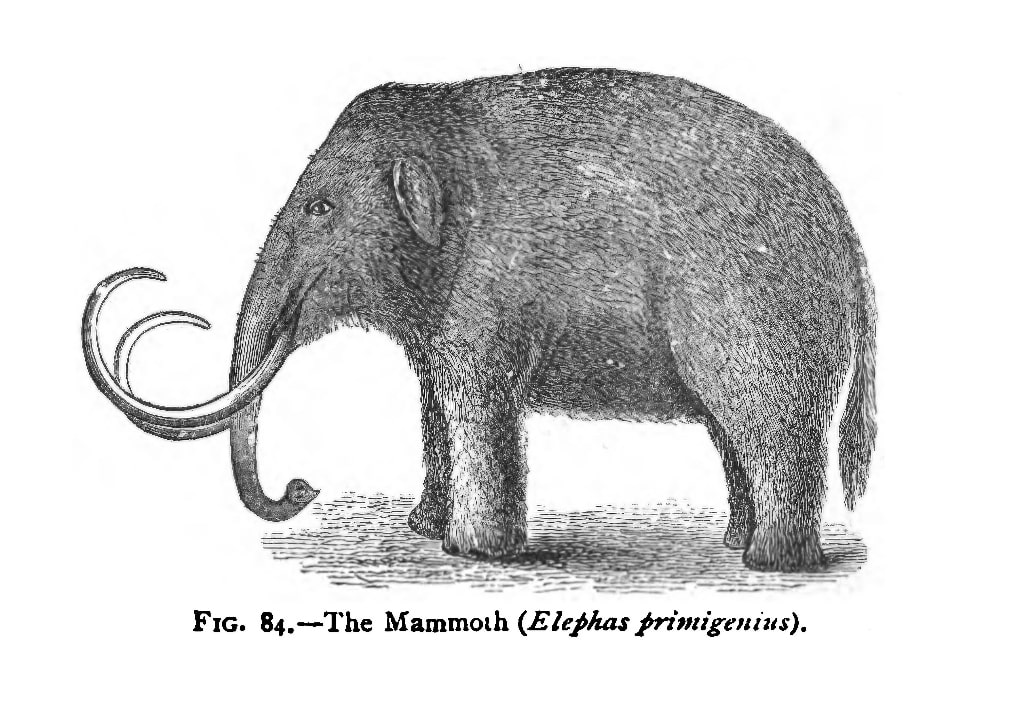
Before we leave Huxley for a while, I just can't resist showing his illustration of the mammoth. Cuddly, isn't it.
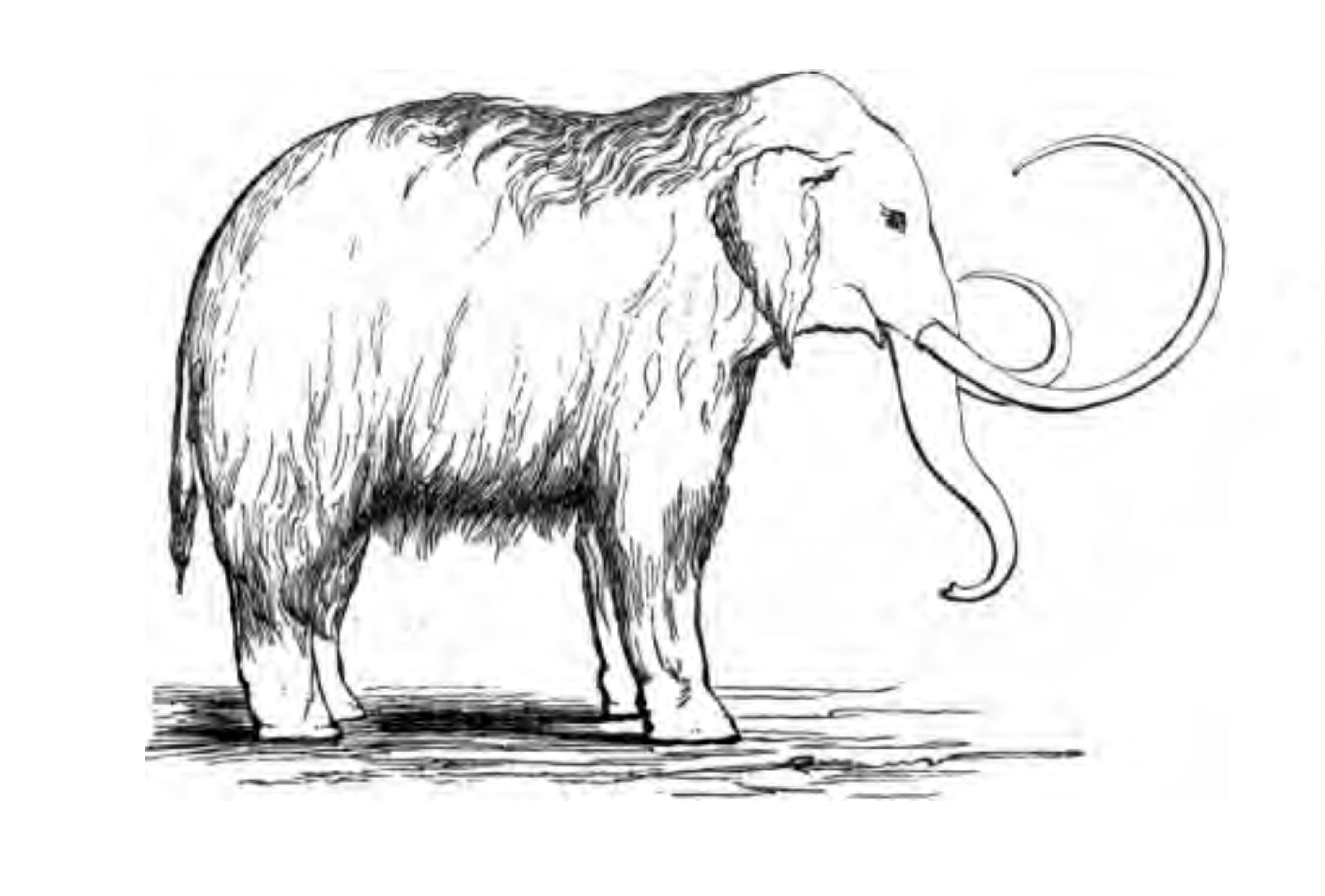
Again, it's an image borrowed and adapted from Prestwich.
These reminded me of the first-ever image I used in the first-ever talk I gave about Wandsworth Common, by Zoom:
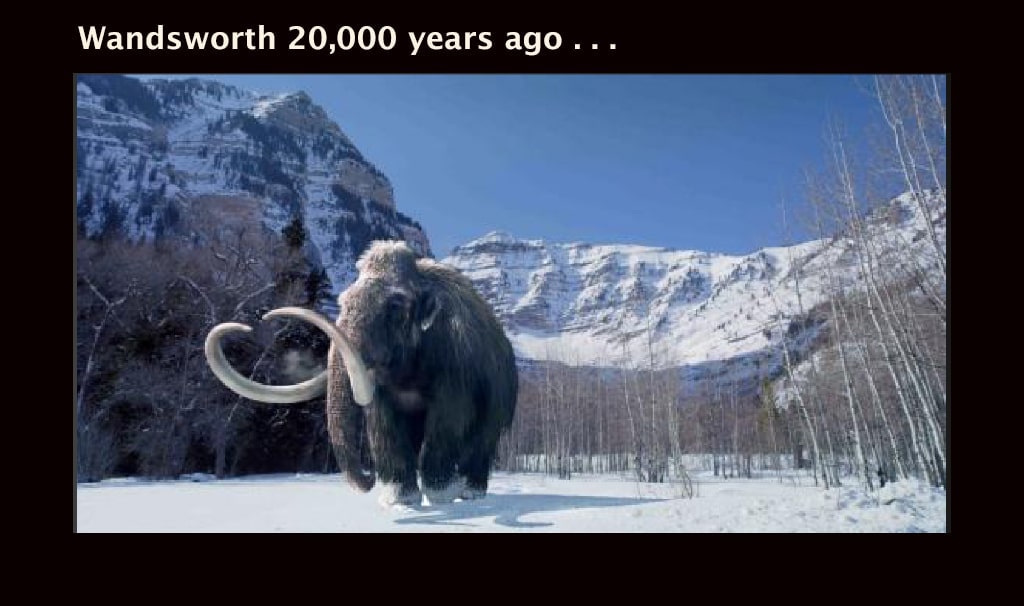
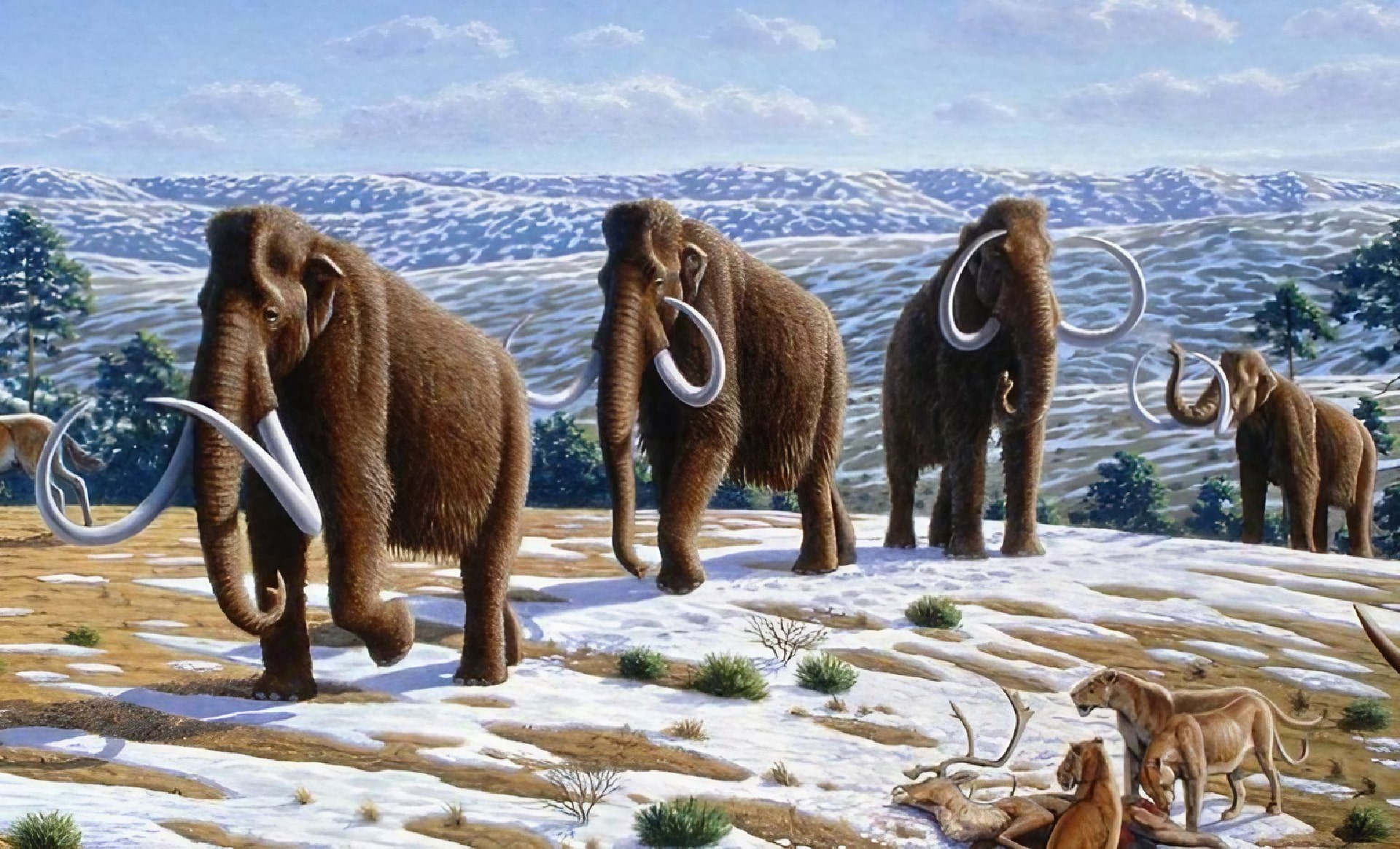
And here's another impression of who you mght have bumped into when you were walking your dog over the Common in winter:
I wasn't being entirely serious. But then I suspect neither was the author of this piece in the local Guardian in 2013, which starts "Some of the world's leading mammoth experts are flocking to Wandsworth after construction workers digging the controversial Thames Tunnel unearthed prehistoric teeth, bones and tusks."
"Flocking to Wandsworth"? Really? Why?
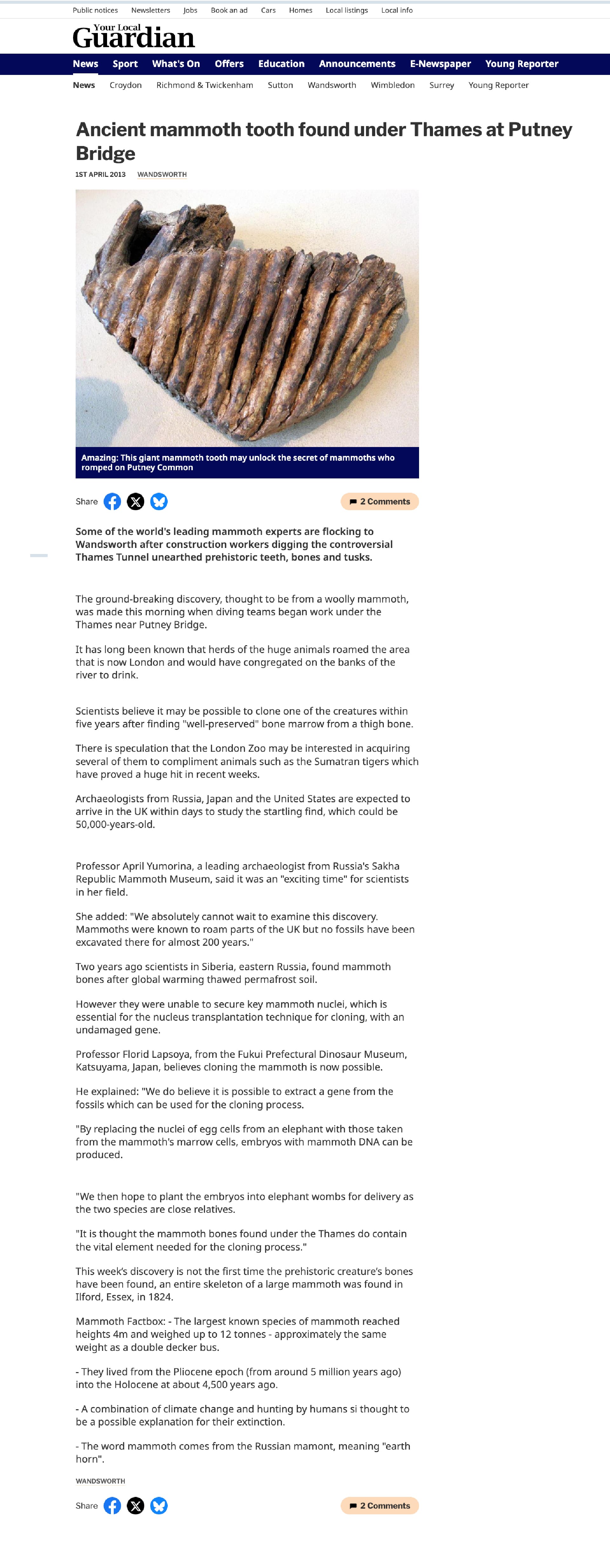
The ground-breaking discovery, thought to be from a woolly mammoth, was made this morning when diving teams began work under the Thames near Putney Bridge.
It has long been known that herds of the huge animals roamed the area that is now London and would have congregated on the banks of the river to drink . . .
[Your Local Guardian: Ancient mammoth tooth found under Thames at Putney Bridge.
So the world's leading mammoth experts were "flocking to Wandsworth" to see the "ground-breaking" (ho-ho) find. Really? Why?
The paper goes on to suggest that any DNA that could be extracted and used to re-create a mammoth.
Scientists believe it may be possible to clone one of the creatures within five years after finding "well-preserved" bone marrow from a thigh bone.
Yes, but this was a tooth, not a bone. Ah, but have a look at the date. Is it a spoof? I still don't know.
I tried digging into blogs of the period:
On 6/9/2013 mudlark76 wrote:
Yes . . . there was a lot of confusion at the time about whether this was or was not an April Fool's story — not helped by the fact that the local newspaper embellished the story with the usual rubbish about DNA and cloning.
Some reports mentioned other bones and tusks. Some didn't. All very unhelpful and I'm still not 10% sure — although the find wasn't reported in the NHM bulletins as far as I know (or at least not yet).
If it was an April Fool's joke it was an ill-advised choice of topic given that mammoth fossils including teeth have been reported from the London gravels (albeit rarely) in the past. For your find, my money would still be on Palaeoloxodon rather than Mammuthus taking frequency of finds into consideration.
[The Fossil Forum: Link.]
I'm not qualified to judge. I must ask Pamela Greenwood, our local expert on all things archaeological and palaeontological. Any thoughts, anyone?
22 August 2025: Mike Tuffrey responded:
As for the April Fool or not — great fun. Professor April Yumorina is a good one. WikiCommons says "Yumorina, Ukrainian: Гуморина is an annual festival of humor held in Odessa, Ukraine on and around the April Fools' Day since 1973."
PB: Wow, quite an elaborate hoax for a local newspaper, then — but that does seem to settle the question!
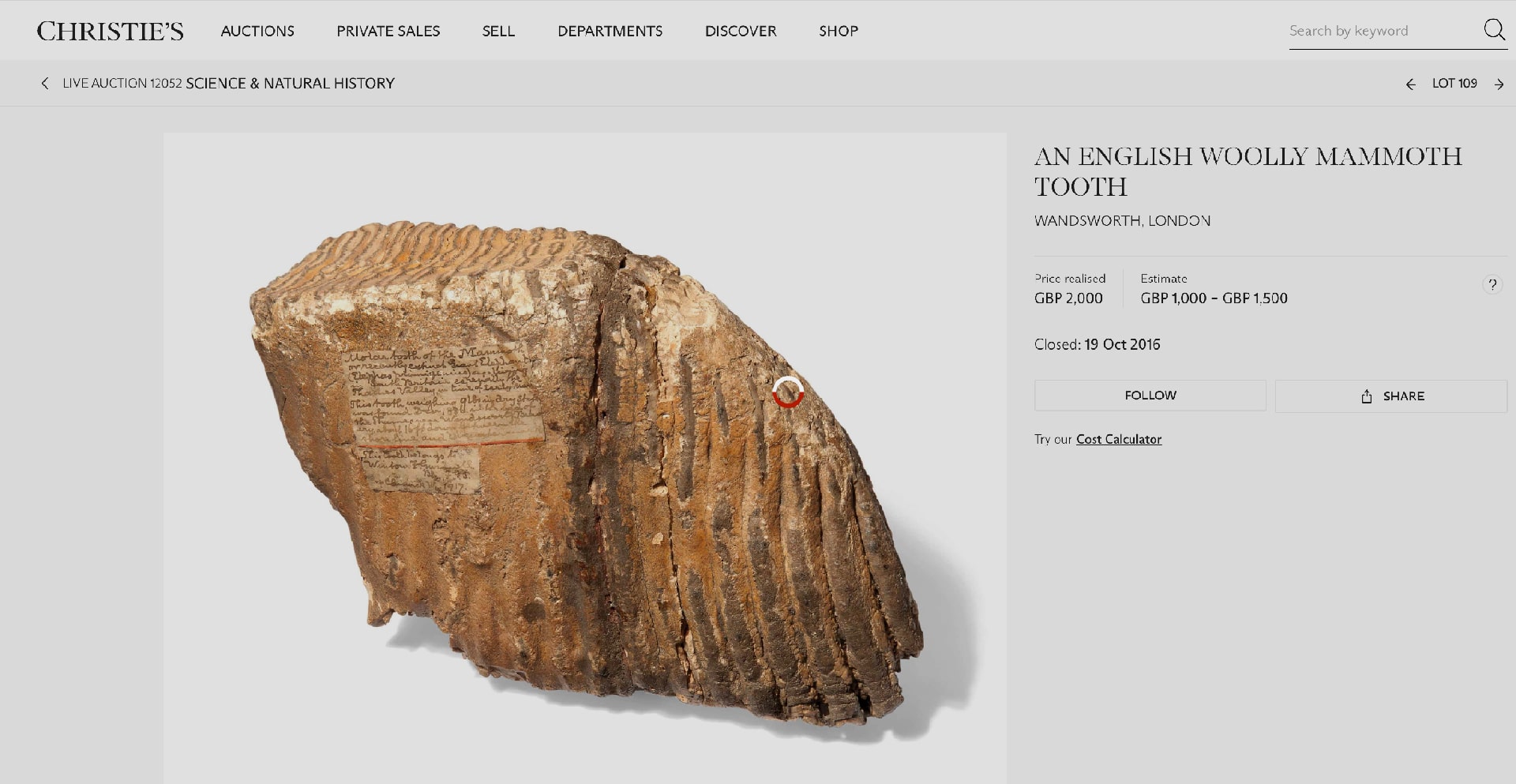
Here's a prime specimen of "An English Woolly Mammoth Tooth" found in the Wandsworth area in 1886, at auction at Christie's in 2016:
I've tried to enlarge the label. Can you read the text? Let me know if you can improve upon my transcription:
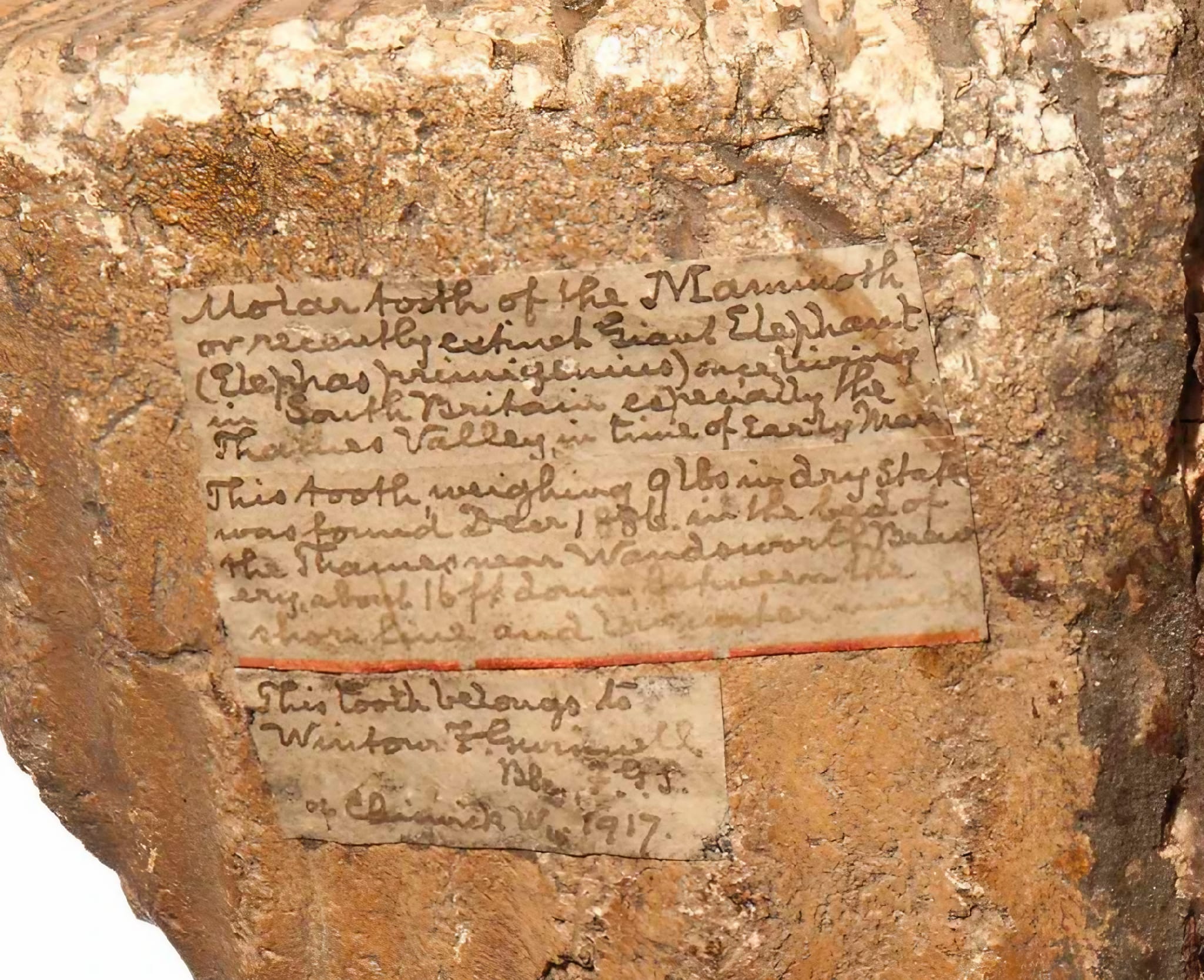
Molar tooth of the Mammoth
or recently extinct Giant Elephant
(Elephas primigenius) once living
in South Britain especially the
Thames Valley in time of Early Man.This tooth weighing 9lbs in dry state
was found Decr 1886 in the bed of
the Thames near Wandsworth Brew
ery about 16 ft down Between the
shore line and [illeg. — low water mark?]This tooth belongs to [Wintour F. Gurney?] F.G.S. [Fellow of the Geological Society]
of Chiswick W. [?] 1917.
There used to be a mammoth tooth on show in the Wandsworth Museum, which many of you will remember:
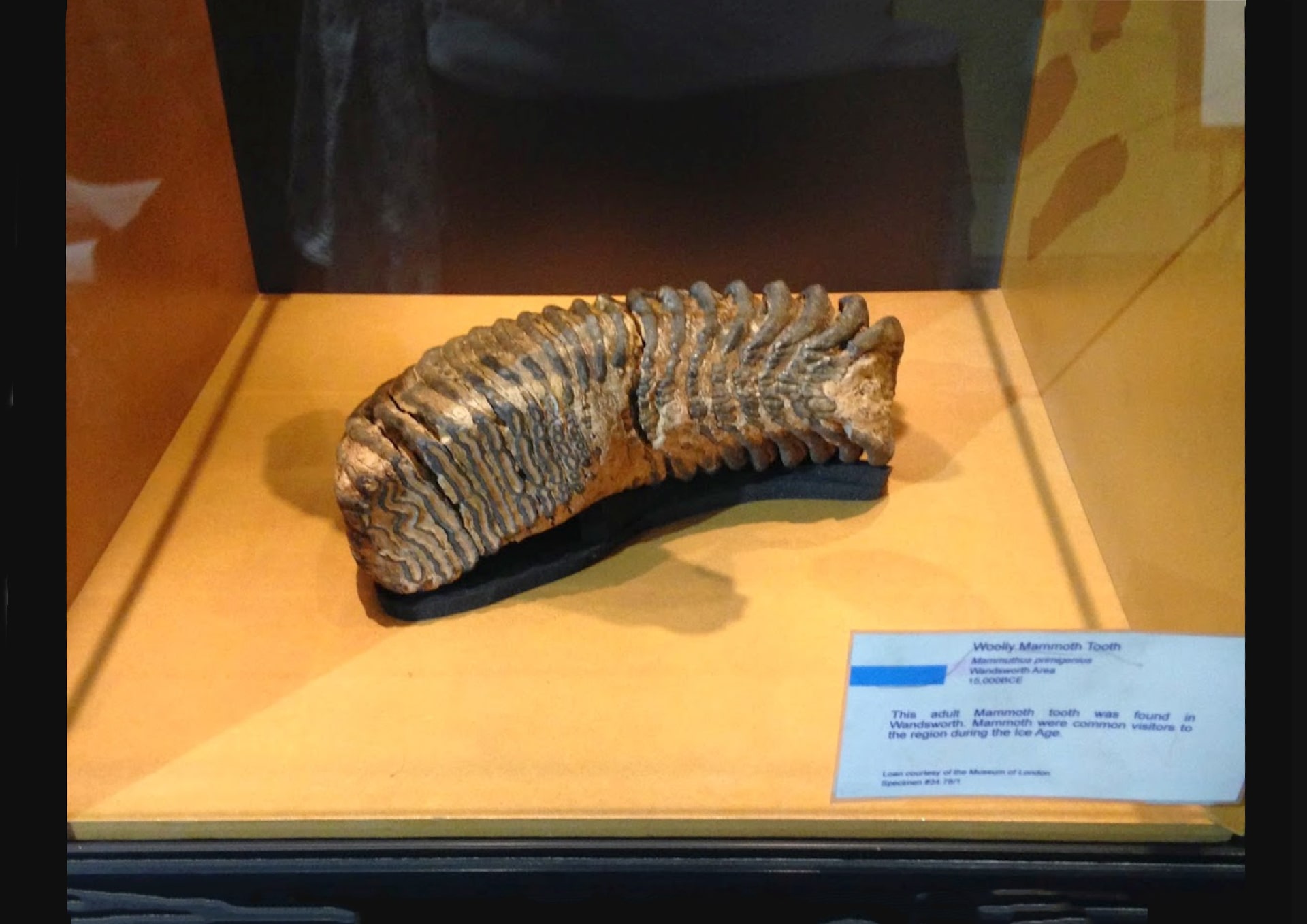
"Woolly Mammoth Tooth
Mammuthus primigenius [sic?]
Wandsworth area
15,000BCEThis adult Mammoth tooth was found in Wandsworth. Mammoths were common visitors to the region in the Ice Age.
Loan courtesy of the Museum of London.
[Specimen no. illegible.]
But again, we have to ask exactly where in the "Wandsworth area"?
The "Museum of London" (or at least the part once housed in the Barbican) has been closed for several years, which I greatly regret. But it's due to re-open next year as the London Museum at the former Smithfield Meat Market.
So far as the former Wandsworth Museum is concerned, I know lots of people are working extremely hard to catalogue and photograph all the items (of which there are more than 25,000). Eventually there will be a website. This alone will be immensely valuable. But with effort, money and luck there will also one day be a super new Wandsworth Museum that everyone can visit.
