
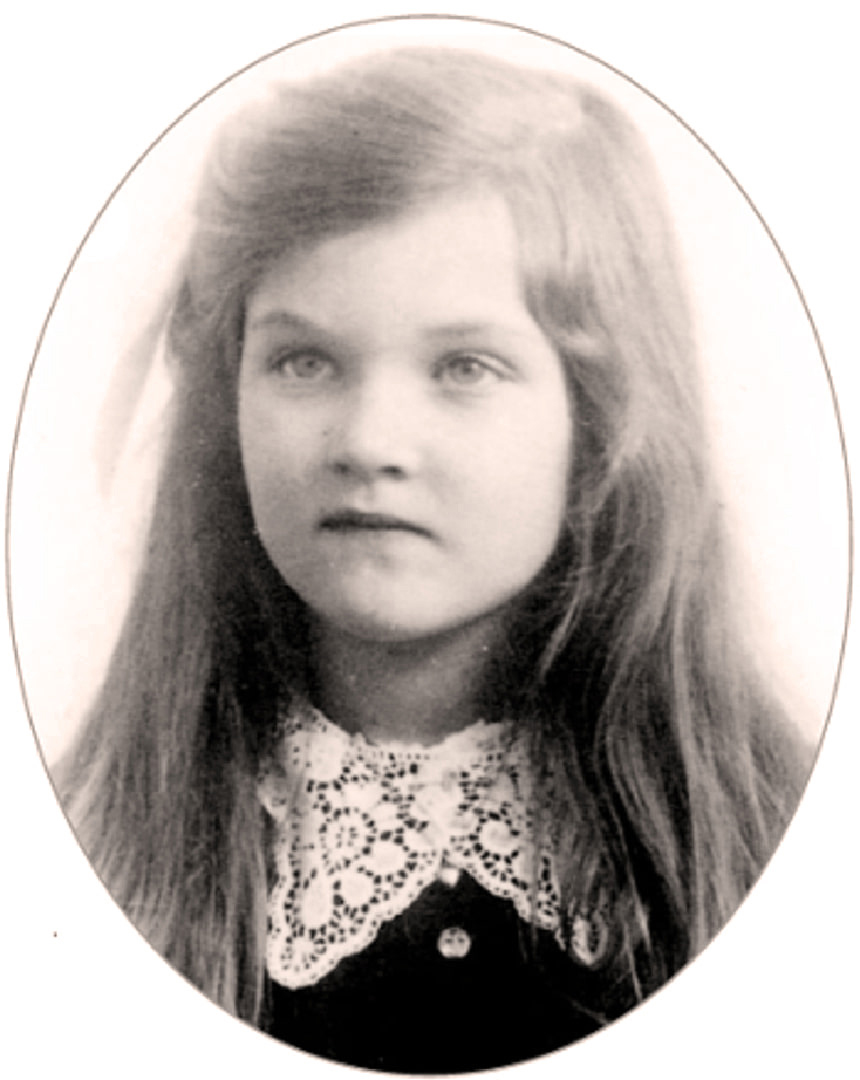
What follows is almost verbatim, but with occasional tweaks to adjust for differences between spoken and read words. With few exceptions, quotations are from P.Y. Betts herself. These are highlighted in a tinted box, preceded by giant open quotation marks, as here:
There were so many trees. There was such abundance of fresh air. It was incidental that much of the fresh air blew in from the domain of madness, crime, wounds and death, each of which required a large acreage of living space, if living is the word.
Hello. I'm Stephen Midlane, chair of the Heritage Group of Friends of Wandsworth Common. Welcome to the latest in our series of heritage talks.
I'm delighted to welcome Sue Delafons, one of my co-editors of the Wandsworth Common Story. As well as introducing Sue, I'm also joining her as a double act in explaining the fascinating journey we've undergone in our "Quest for PY Betts".
Let me hand over to Sue to explain further:
Sue:
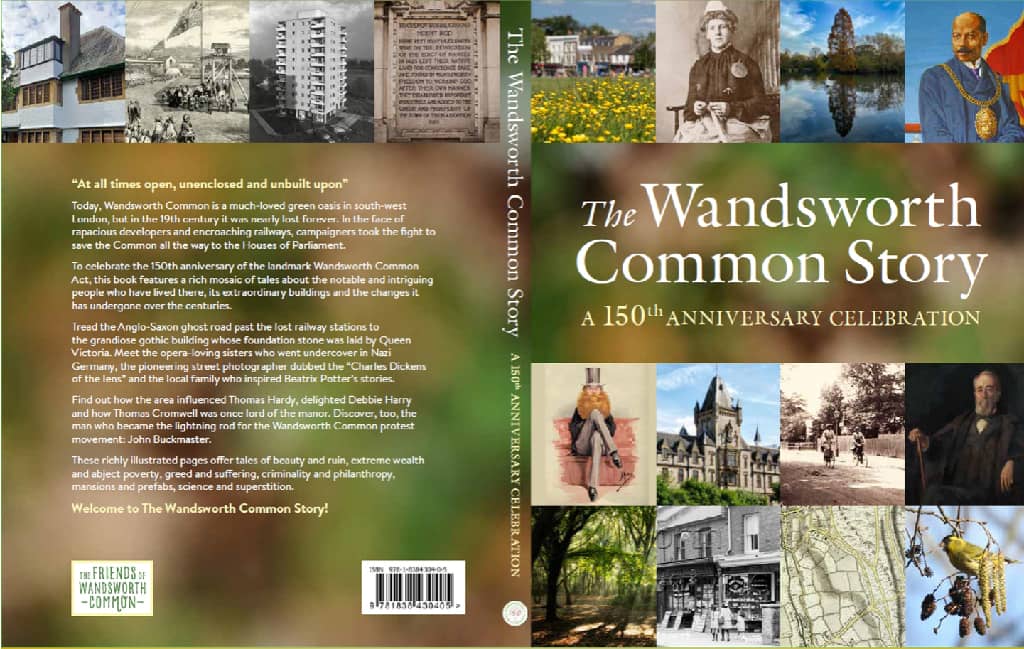
As Stephen explained, he and I are two of the authors behind The Wandsworth Common Story. This came from our love of and fascination with Wandsworth Common — and one of the wonderful things is the abundance of material it has generated for walks and talks and further research.
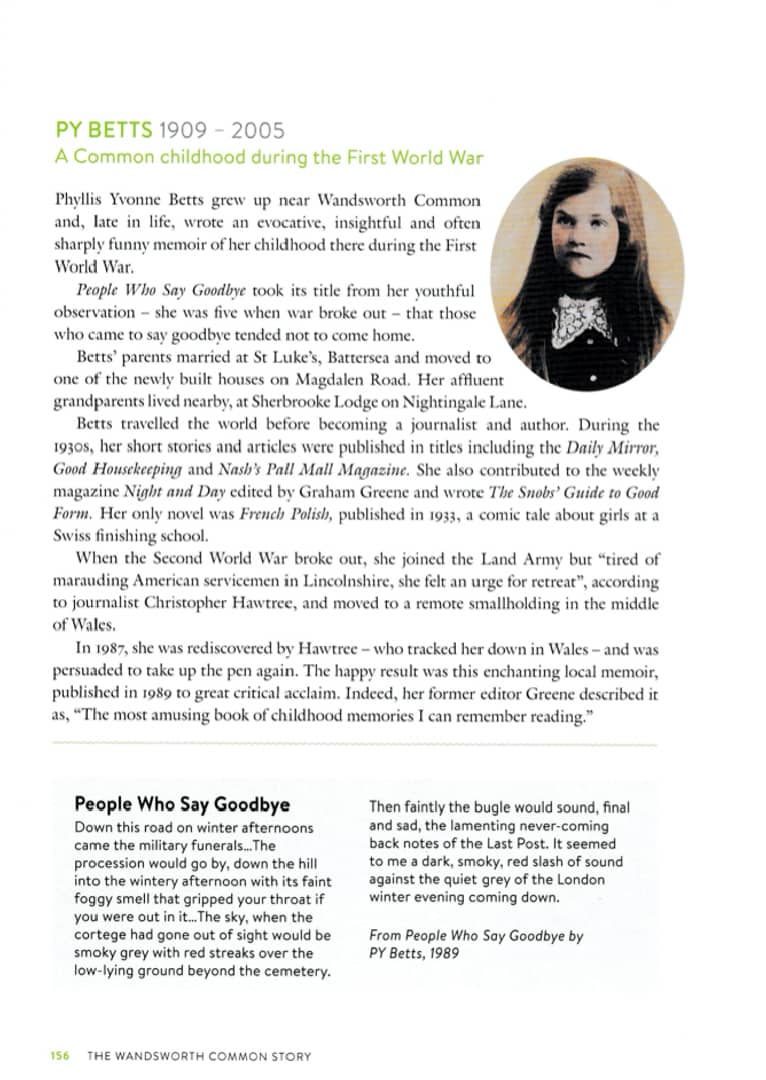
I wrote the article on PY Betts and her wonderful memoir People Who Say Goodbye— and here I must give credit to Philip Boys who originally drew her to our attention.
[PB: Thanks, Sue!]
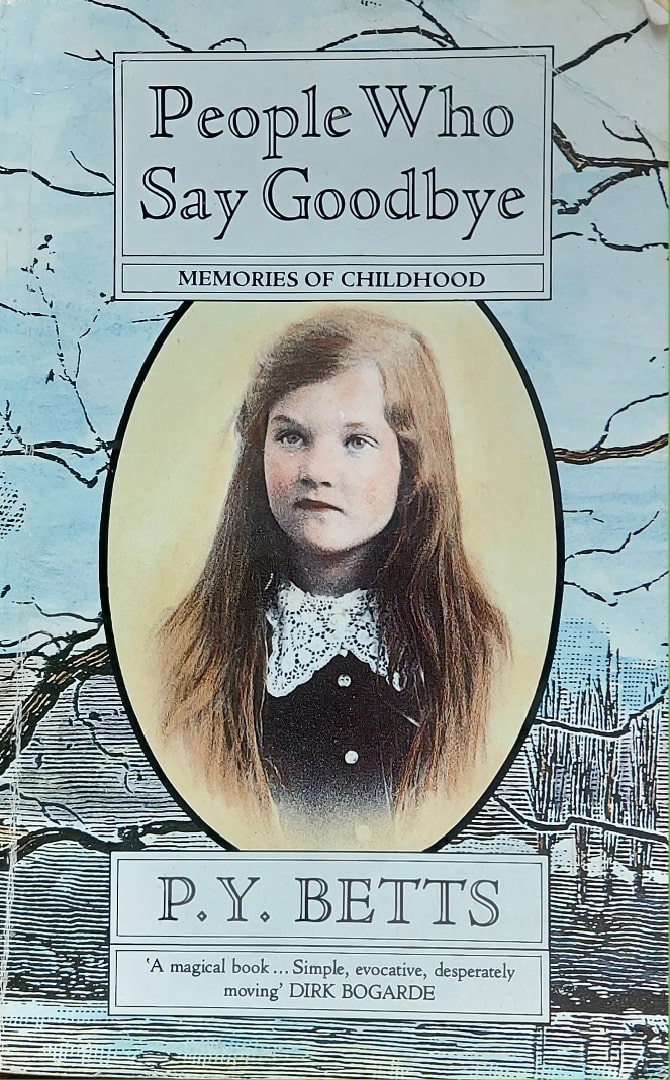
We soon found that her voice was so evocative and captivating it exploded outside the original 250-word article limit — so we couldn't resist including vignettes throughout our book.
This is her memoir of a young girl, Phyllis Yvonne Betts, growing up on Wandsworth Common during the First World War — she was just five when the war broke out in 1914.
(From now on, we'll refer to her as "Betts", which is how she preferred to be known.)
It's infused with insights and perceptions of the society of the time — in transition from the Edwardian era — with the practical and often humorous everyday events around the Common in the foreground, but also the shadows of the global stage at a time when "people who say goodbye" tended not to come back.
So it's a period piece; but much more than that, it's a really delightful book. Her words are so fresh, honest, penetrating, funny, poignant. We hope to give you a flavour of this through readings during the talk.
Stephen:
And, of course, she is often writing about places around Wandsworth Common still familiar to us today.
Yet nowhere does she say exactly where she was living, or where the events took place, or who she is describing. But because we know the author and our area that we can decode where and what — and often even who — she is writing about.
Here was an opportunity for some real detective work — to explore the historical background to the locations featured in her book and to track down the family and friends whom she brings to life.
This was the "Quest" that we want to share with you.
(A note about the images we're going to show: many of these depict the exact location that Betts is talking about, but in some cases the pictures are purely illustrative of the places and activities she describes.)
Sue:
But first, the story of the book's origination — how People Who Say Goodbye came to be written in the 1980s, many decades after the events it describes. It begins with journalist Christopher Hawtree:
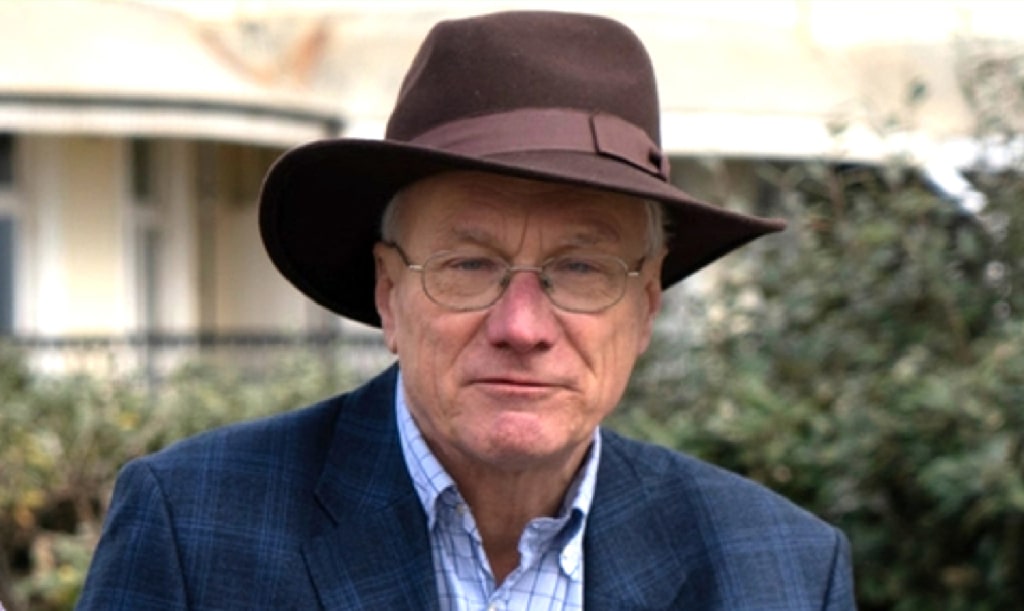
And this is a story of discovery in itself.
During the evening, Stephen will read Christopher's narrative, interspersed with me reading selections from Betts's book, and supported by findings from Stephen's local research.
Christopher Hawtree was a journalist and writer who, back in the 1980s, undertook his own quest for PY Betts. This is his account of where his research led him, taken from articles he wrote for the publishers Slightly Foxed in the early 2000s:
Christopher Hawtree:
At a desk beneath the dome of the British Museum Reading Room, as sombre PhD types on either side of me pored over earnest-looking volumes, I had to restrain myself from yelling for joy at item NN 20963, the catalogue number for French Polish by PY Betts.
It was her only book, a novel published in 1933.
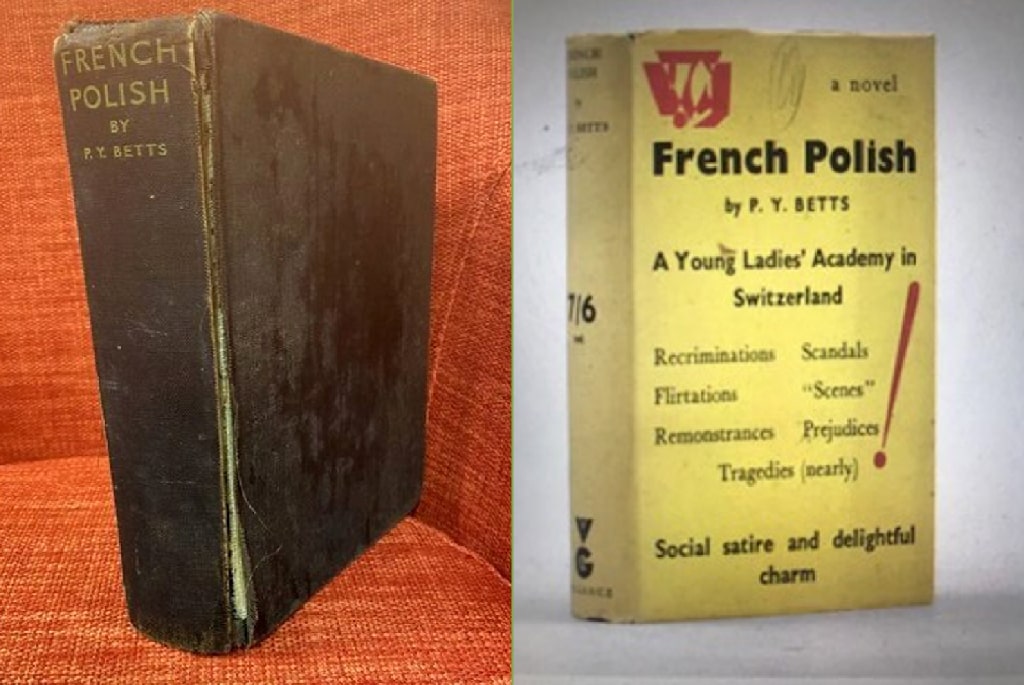
It looked as if nobody had opened it for some while — perhaps for more than 50 years.
It was 1985 and I was at work on an anthology of the rare weekly magazine Night and Day, which in 1937 had sought to be an English incarnation of the New Yorker. But after six months it had come a cropper.
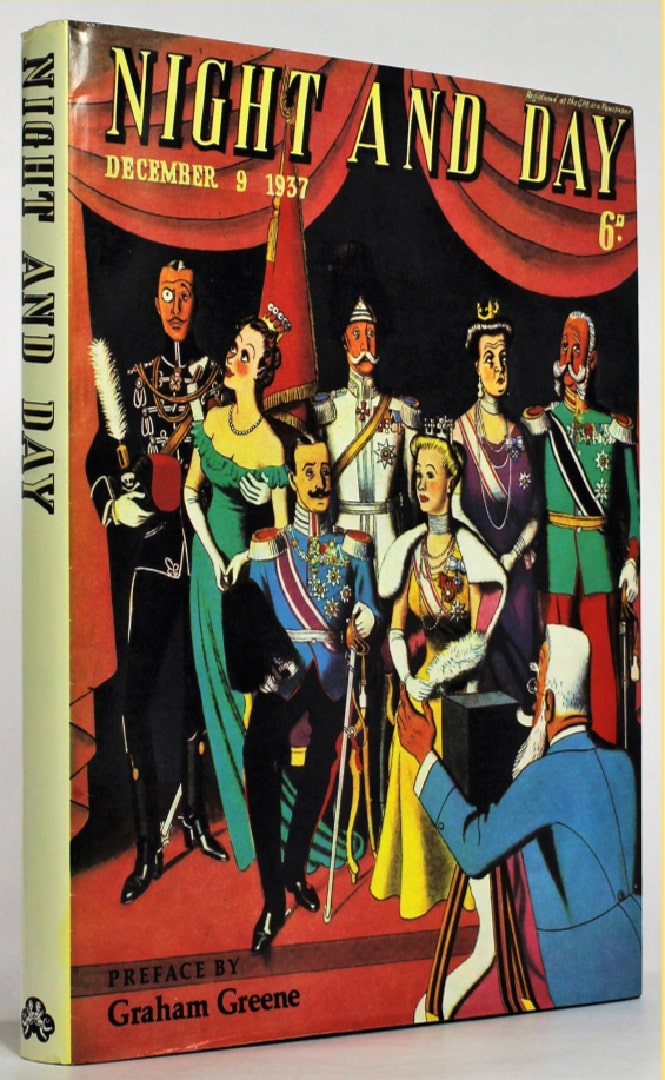
Many of the magazine's contributors, such as John Betjeman and Alistair Cooke, and indeed the editor Graham Greene himself, were to become very well known.
Yet often as interesting were those of whom little if anything was later heard, among whom was PY Betts. She wrote entertaining pieces for the magazine, including a "Snob's Guide to Good Form":
"In eating, perhaps more than in any other social activity, it is important to realise that the opposite pole to good form is not bad manners, but gentility".
Certain foods are "good or bad form according to the time of day at which they are eaten. Kippers and bacon and eggs are poor form at breakfast but completely sophisticated between midnight and 6 am."
"Communism and Fascism are both a la mode."
"Lemons are socially acceptable at any meal."
This anticipated Nancy Mitford's "U" and "Non-U" by two decades.
The same spirit was evident in French Polish, the story of a group of lascivious girls at a Swiss finishing school. The plot seems less important than its characters' off-the-wall observations and comments.
"I guess if you thought a little more about sex, your circulation would be a whole lot better, there's nothing like sex for keeping a girl warm."
And
"Have you ever noticed that people who are quite disintegratingly beautiful in the nude are often dreadfully pedestrian in clothes?"
Here was somebody with a distinct take on the world. I could not get PY Betts out of my mind. What could have become of such a talent?
Try as I might I could not discover anything much about her, and lamented this en passant in the long introduction to the Night and Day anthology.
A review of this in the Observer referred to the mysterious disappearance of "the great PY Betts".
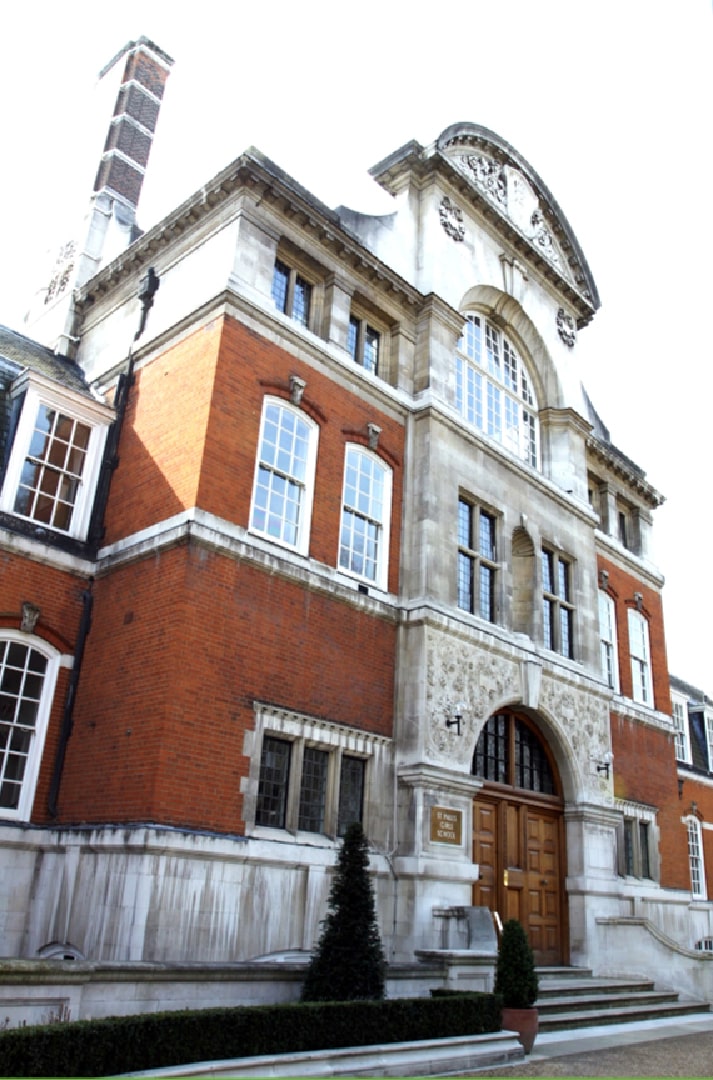
Soon after, the mystery was solved by Lady Eirene White, who got in touch from the House of Lords to say that she had been at St Paul's Girls' School with Betts (as she was known). And that after growing up near Wandsworth Common during the Great War, Betts had travelled around the world in the 30s, writing articles as she went.
Sue:
When war broke out, she joined the Land Army in Lincolnshire. But tired of marauding American servicemen, she felt an urge for retreat, and, in 1944, she moved, alone, to a remote small-holding in the middle of Wales.
And she was still there . . .
We are going to return to Christopher's quest later. But now to the book itself: People Who Say Goodbye: Memories of Childhood (1989):
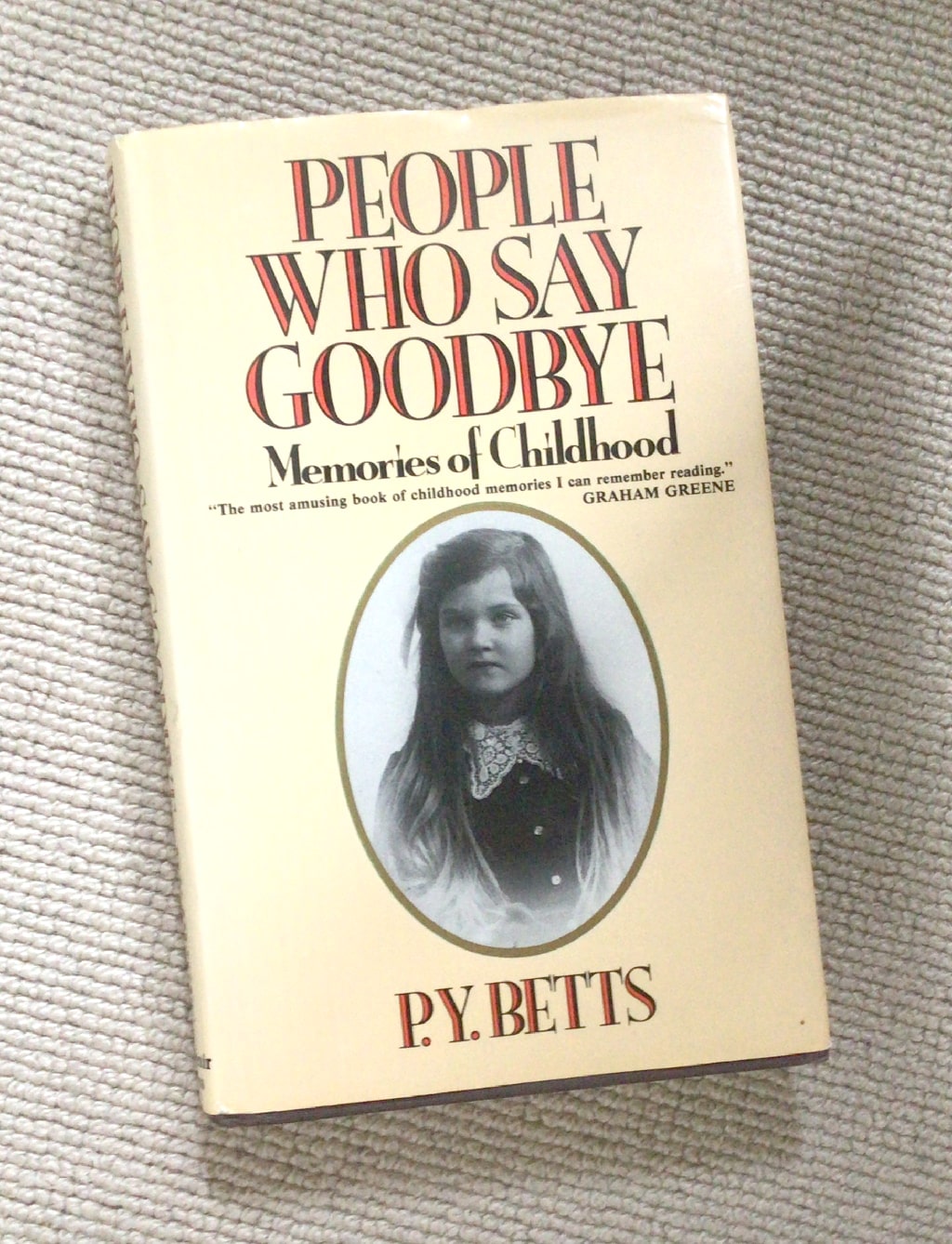
There were so many trees.
There was such abundance of fresh air.
It was incidental that much of the fresh air blew in from the domain of madness, crime, wounds and death, each of which required a large acreage of living space, if living is the word.
Stephen:
So where were these "domains" that PY Betts was referring to: Madness? Crime? Wounds? Death?
This map, from the 1890s (so roughly 20 years before she was writing about) shows us the various locations, all within striking distance of the Betts's house (which is marked with a red dot):
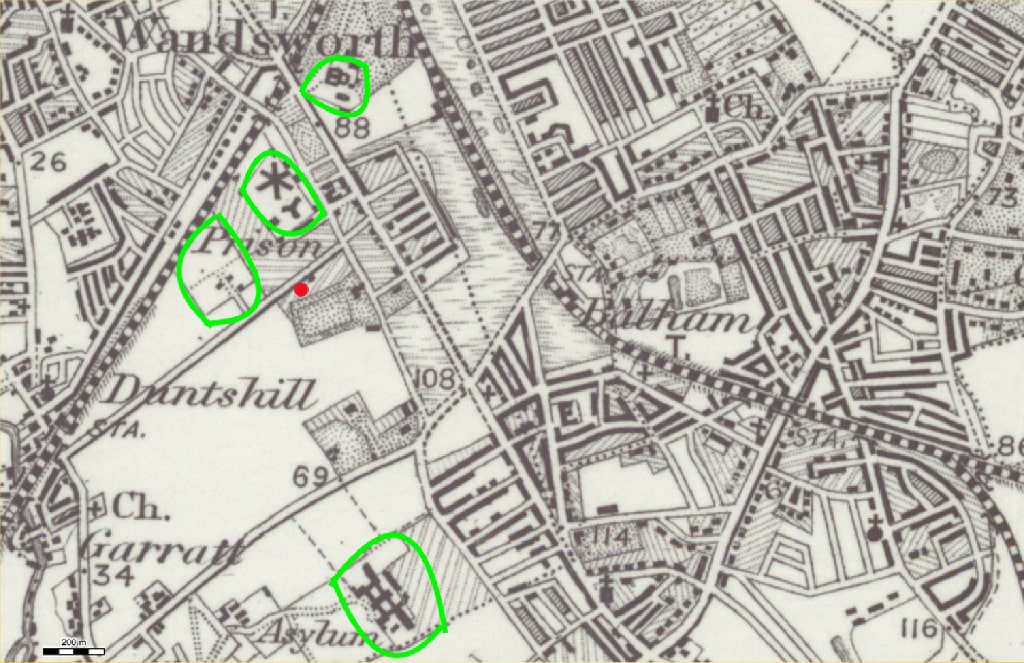
Madness — the Asylum, just off Burntwood Lane;
Crime — the Prison;
Wounds — the Royal Victoria Patriotic Asylum (used a hospital in World War One);
Death — Wandsworth Cemetery on Magdalen Road.
Here they are in more detail, from the 1916 Ordnance Survey map:
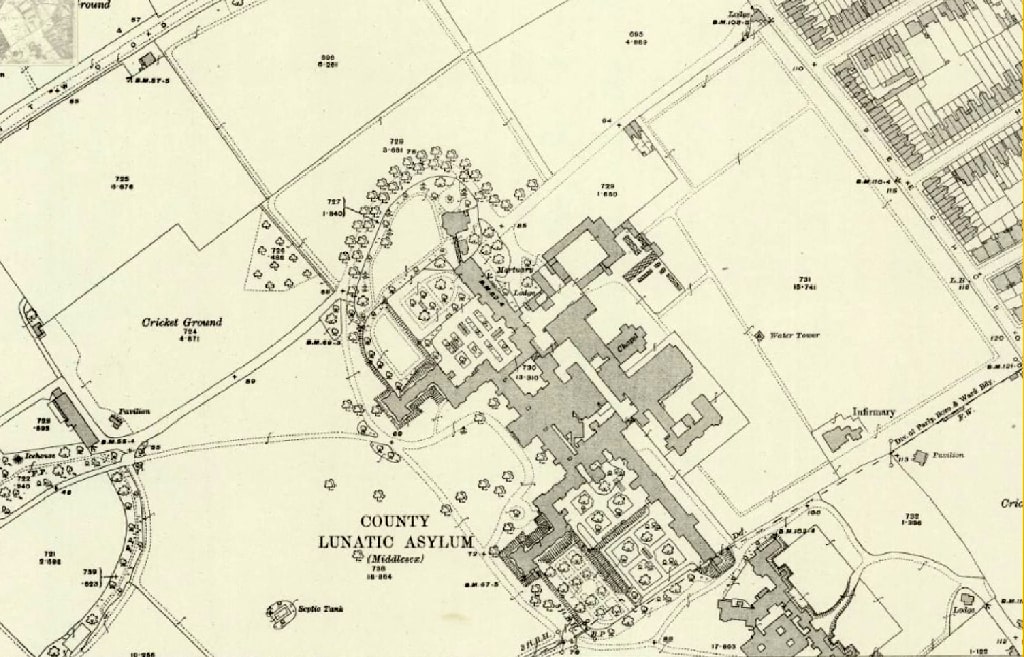
The County Lunatic Asylum is today known as Springfield University Hospital.
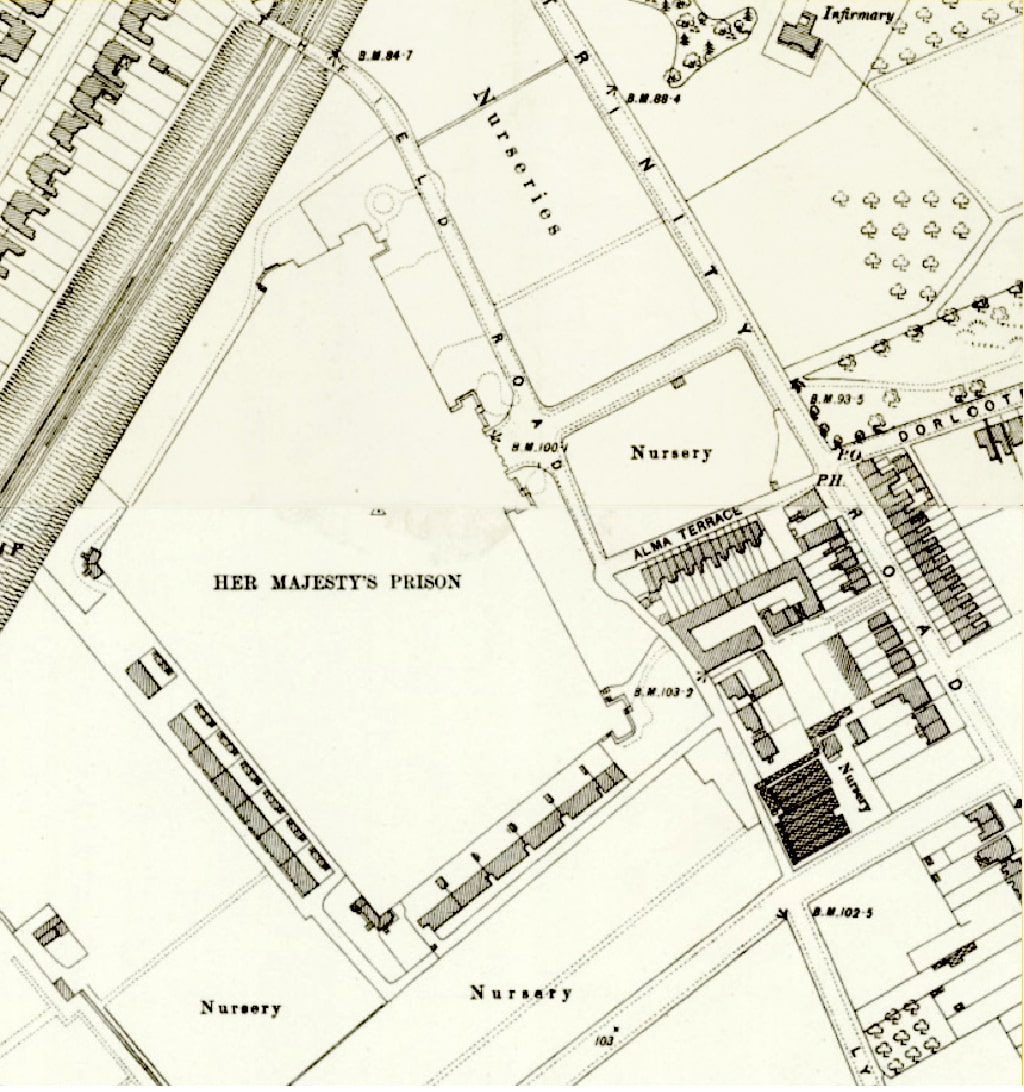
Wandsworth Prison.
Notice that the detailed layout of the buildings is not shown on the map and that it's still being referred to as Her Majesty's Prison — a sign that maps cannot always be trusted!
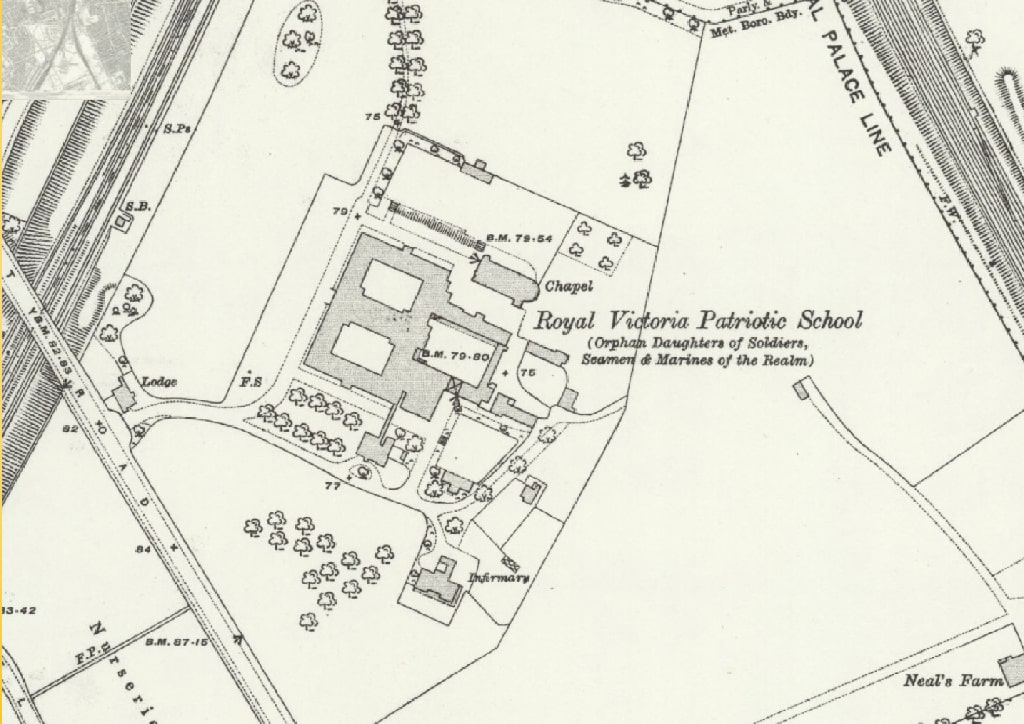
The Royal Victoria Patriotic School
As you can see from the map, this was set up as a school for "Orphan Daughters of Soldiers, Seamen and Marines of the Realm". During The First World War it had been converted into the 3rd London General Hospital, for troops injured in the conflict.
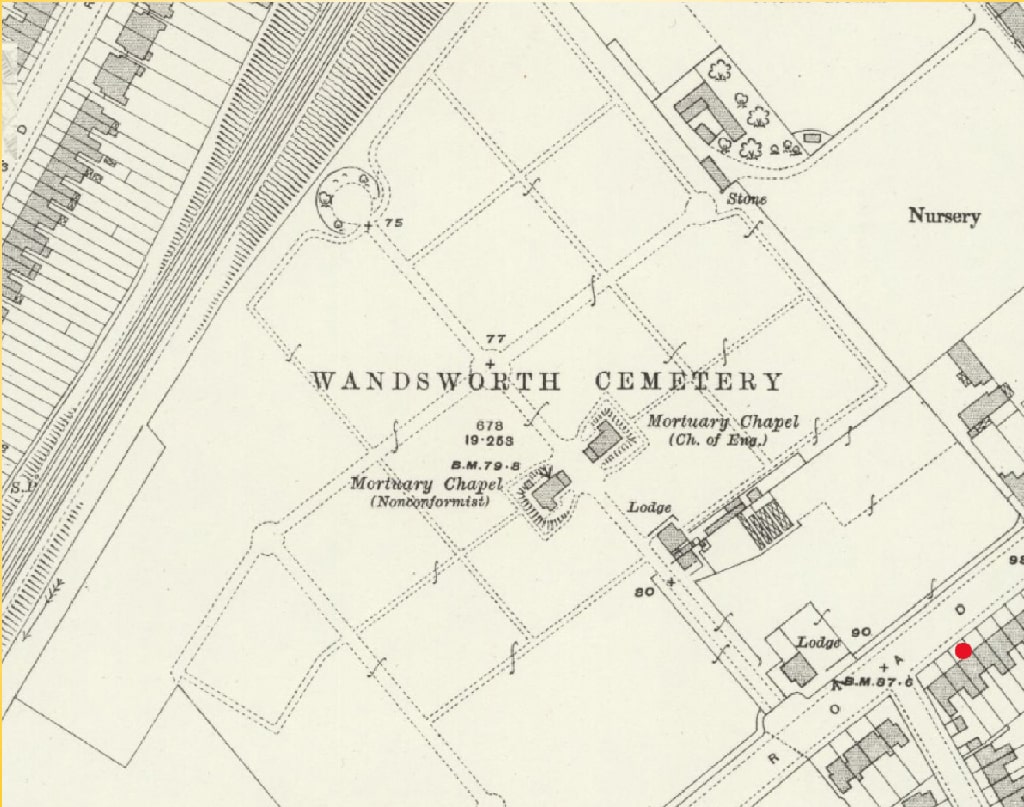
Wandsworth Cemetery, Magdalen Road
This was much smaller than it is today. Notice it had two chapels: one Church of England, the other Non—Conformist.
We'll look at each of these institutions in more detail in due course. But first, we turn to Betts's home life and what we might call the "Domestic Domain".
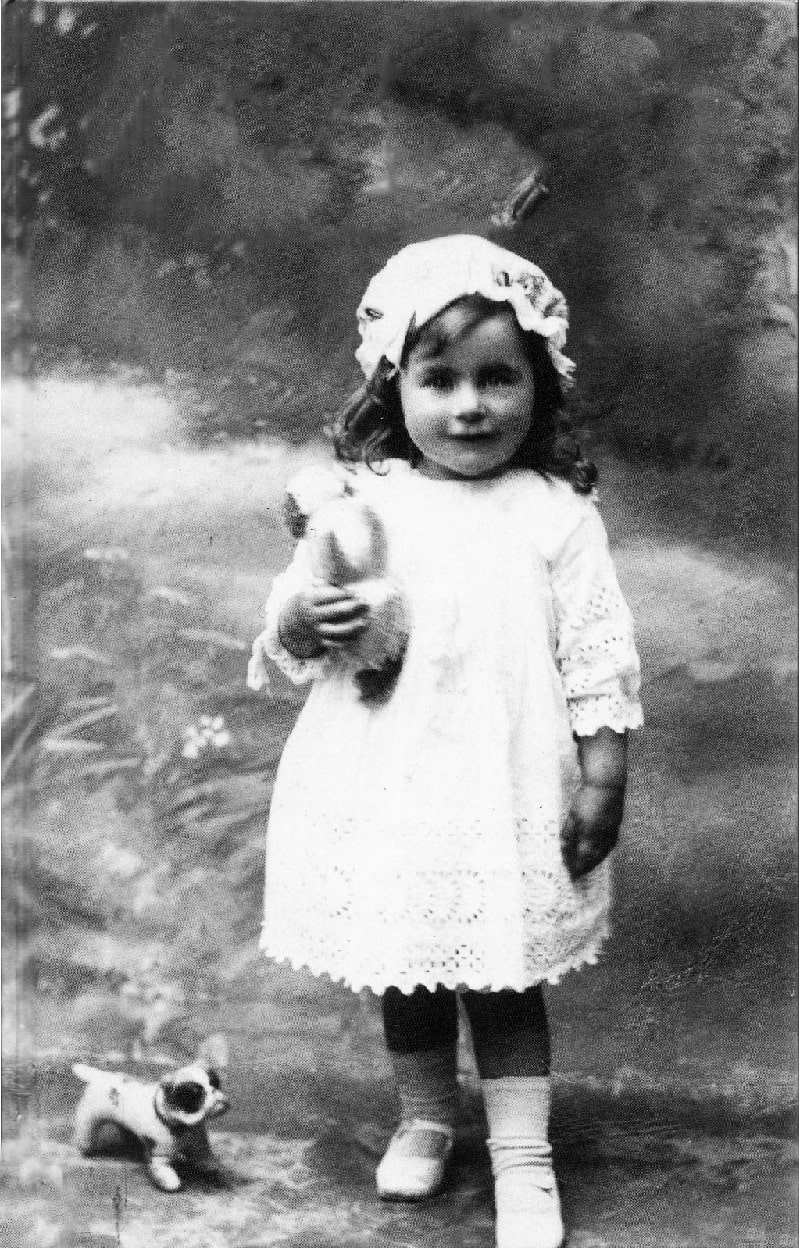
Our suburb was a favoured one on account of its wide roads and many open spaces.
Not only was there the Common, there was a nursery garden full of flowers, threaded with footpaths . . . there were enchanting glimpses through wrought-iron gates of the secret gardens of the big houses in the road between the two commons where my grandparents lived."
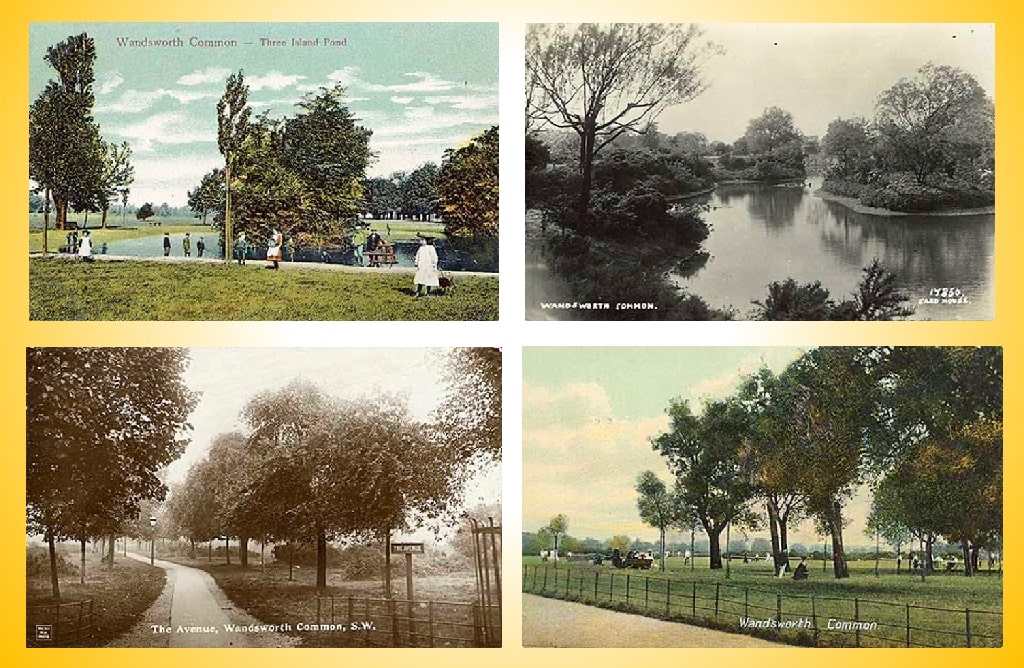
Stephen:
The "road between two commons where my grandparents lived" was Nightingale Lane. We will hear more about her grandparents and their household later.
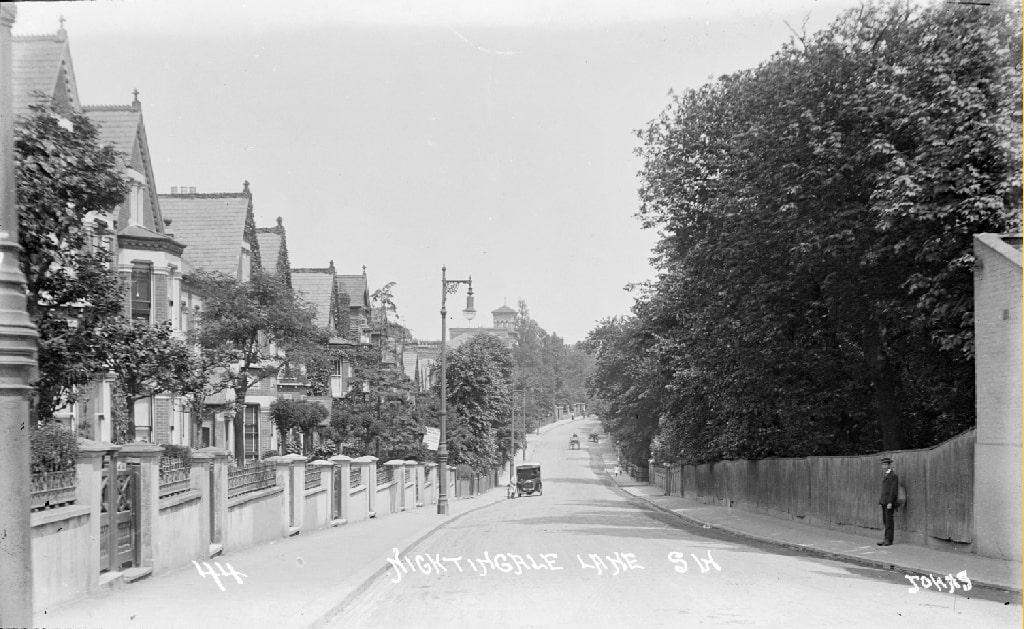
Betts and her family were living on the other side of Wandsworth Common:
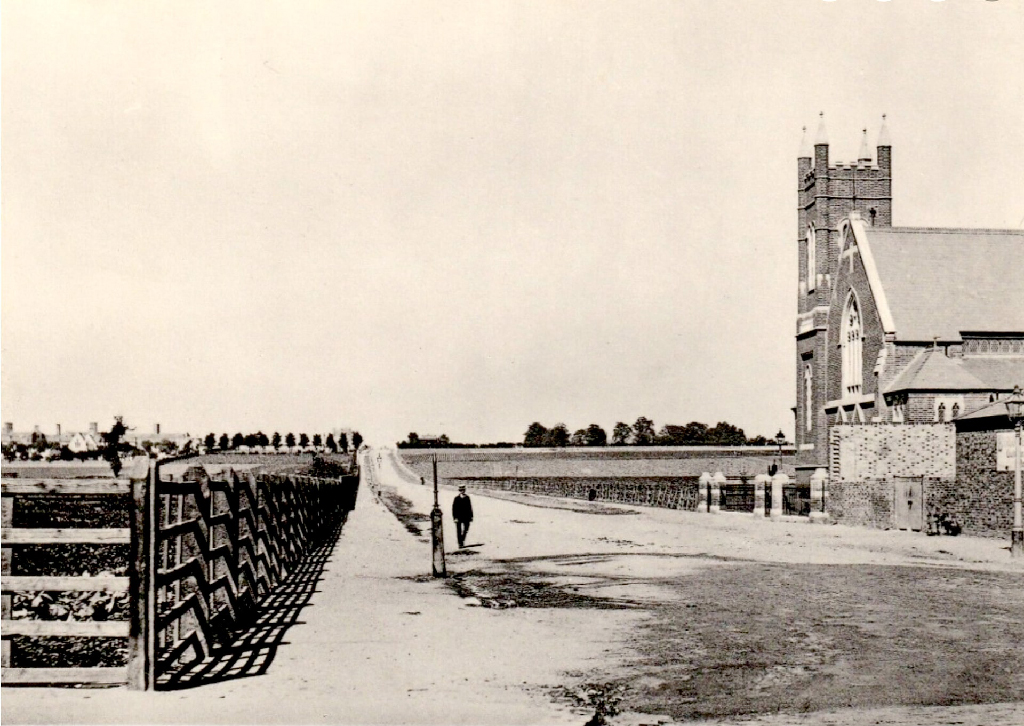
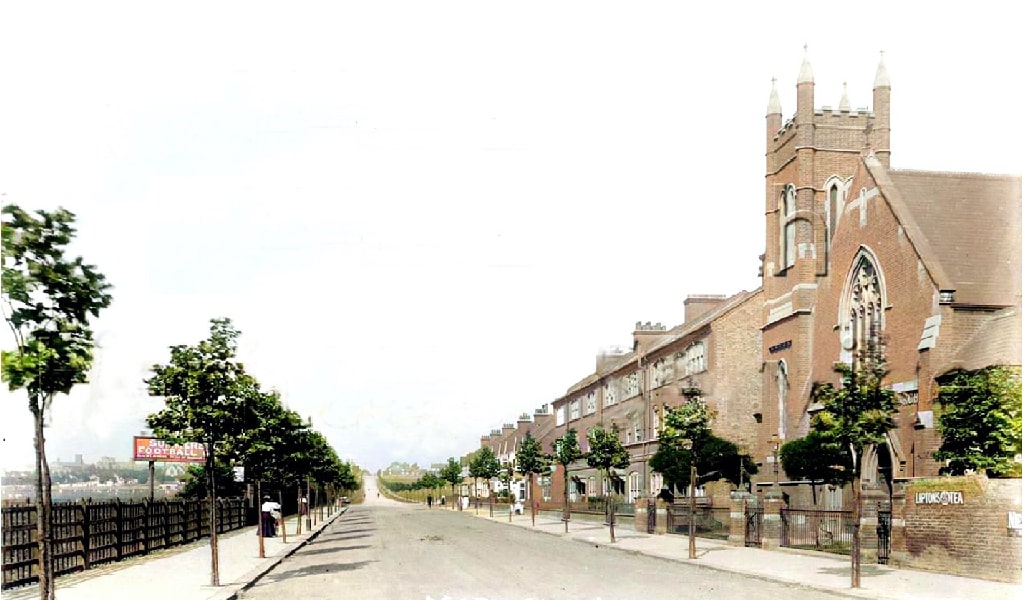
Our house in London was at about the middle of a long, very wide road lined with (then) young plane trees.
Here is a picture of the foot of the road from about 1900, before the planting of the plane trees, so just before her house was built: The foundation stone of the Baptist chapel on the right is dated 1898 [1899?].
And here it is again, a few years later, probably around the time that Betts was born, or shortly after:
The top of the road near the Common was the 'better' end, going down past our house and other houses like it . . .
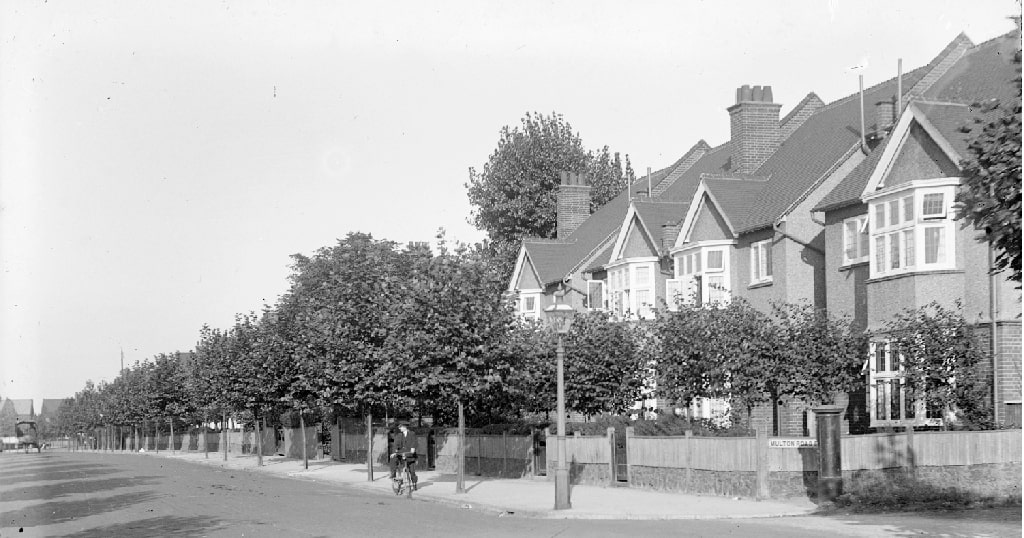
and then more steeply downhill to a stretch not built on, a vague area of slightly messed-up open spaces, a Board school with its shrieking playground, and the cemetery.
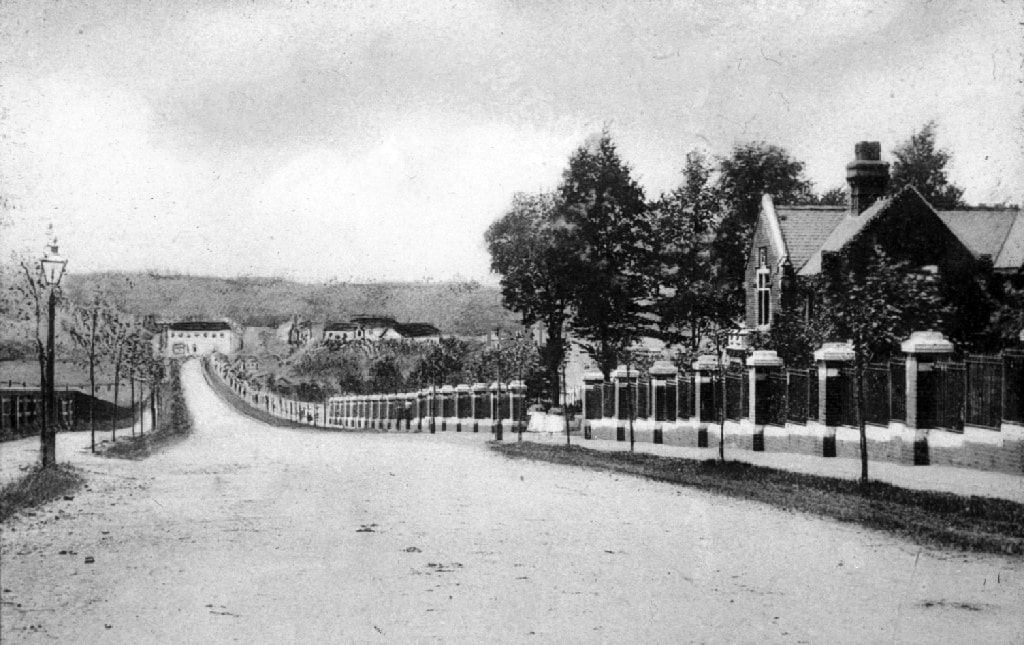
Stephen:
Betts is talking about Magdalen Road, which was laid out in the 1870s by Magdalen College, Oxford, linking Garratt Lane to Trinity Road. (Hence Betts probably pronounced it "Maudlin Road".)
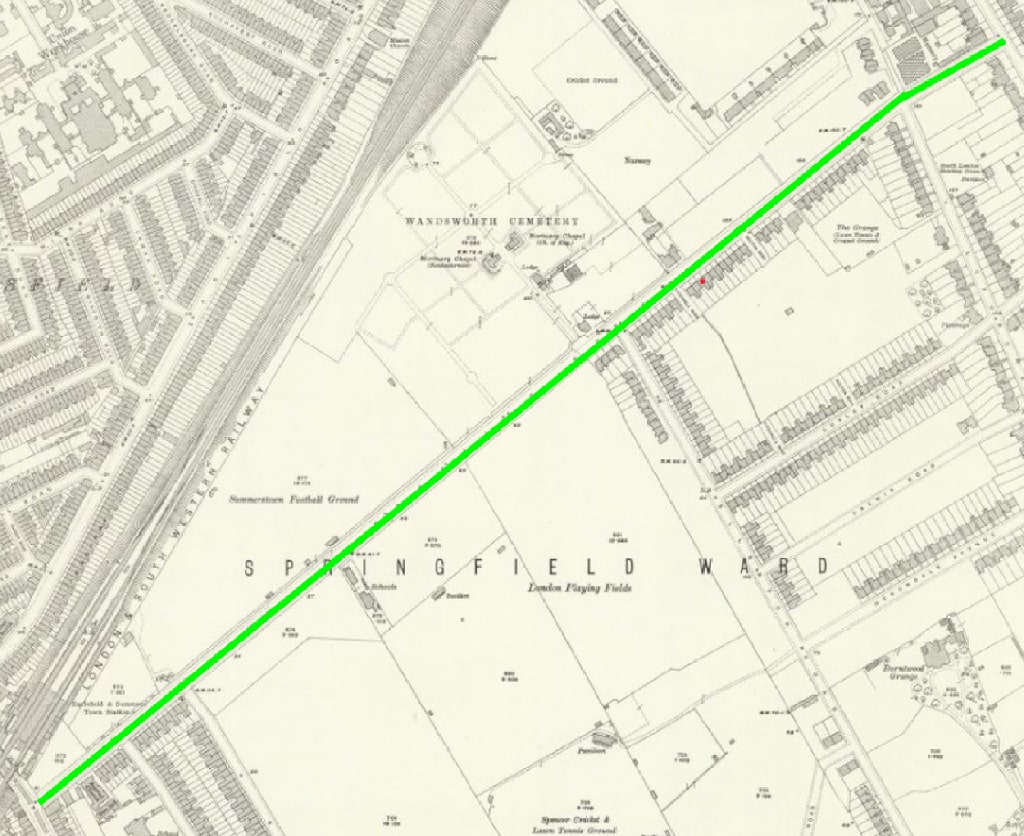

The pink-tinted area is the land owned by Magdalen College, Oxford, c.1900, framed by Wandsworth Common, Garratt Lane, the SW Railway and Burntwood Lane.
The college had owned this large swathe of land since the 1840s and developed ambitious plans for the whole area to be developed as a fashionable Garden Suburb, the Magdalen Park Estate.
However, after the First World War further development stalled and the land below Ellerton Road was purchased by Wandsworth Borough Council to create social housing — which became the Fieldview and Openview estates.
The Betts family lived at 51 Magdalen Road, marked here with a red dot:
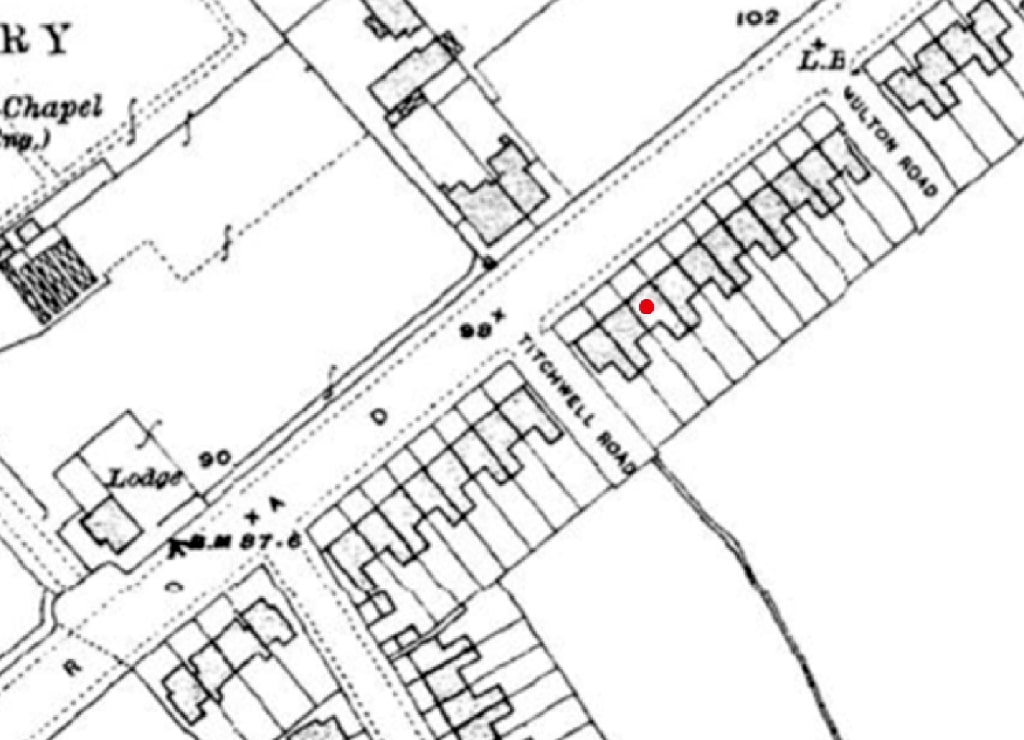
Here's what it looks like today. (Thanks to a renumbering of the houses in the 1920s, it is now number 77.)
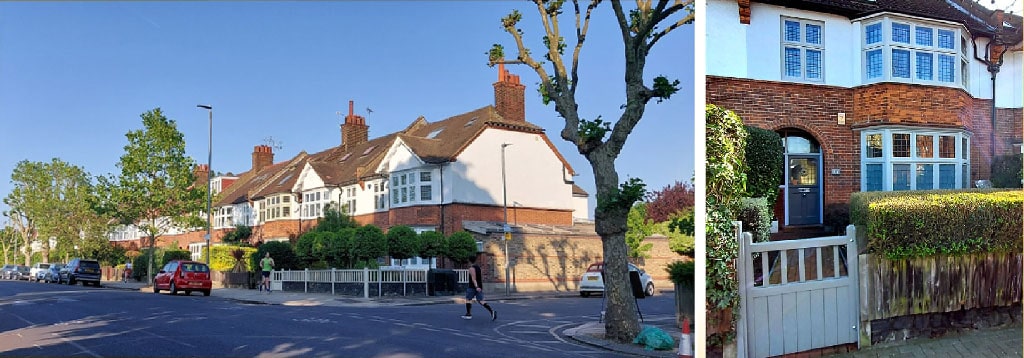
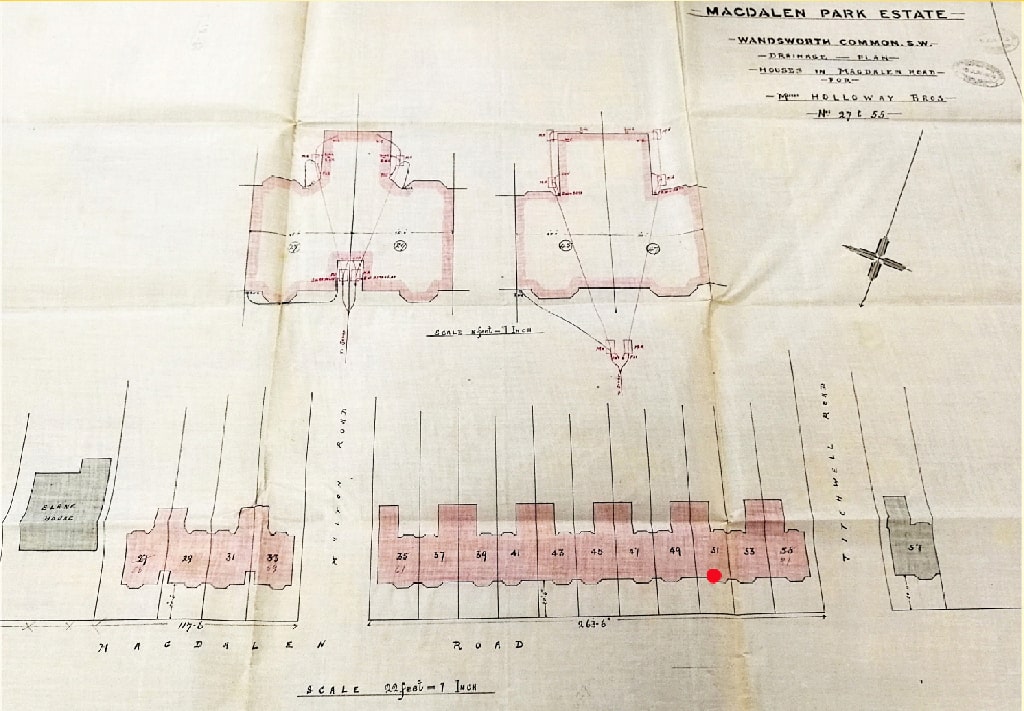
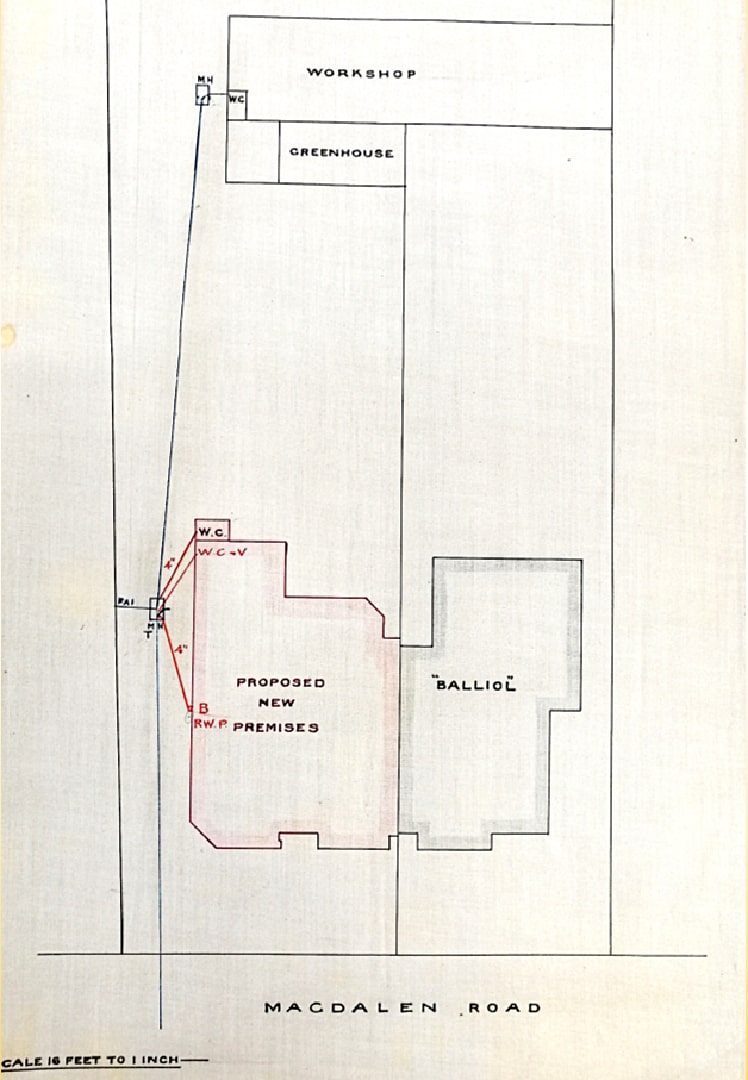
The Betts family were probably the first occupiers of the house as it was part of a newly-built terrace erected c.1906 by local builders Holloway Brothers.
This is the drainage plan submitted by Holloways at the time showing the row of houses from number 27 to 55:
The Betts family consisted of PY herself, born in 1909, her brother Eric, five years older, their parents Arthur and Beatrice, and (usually) one servant.
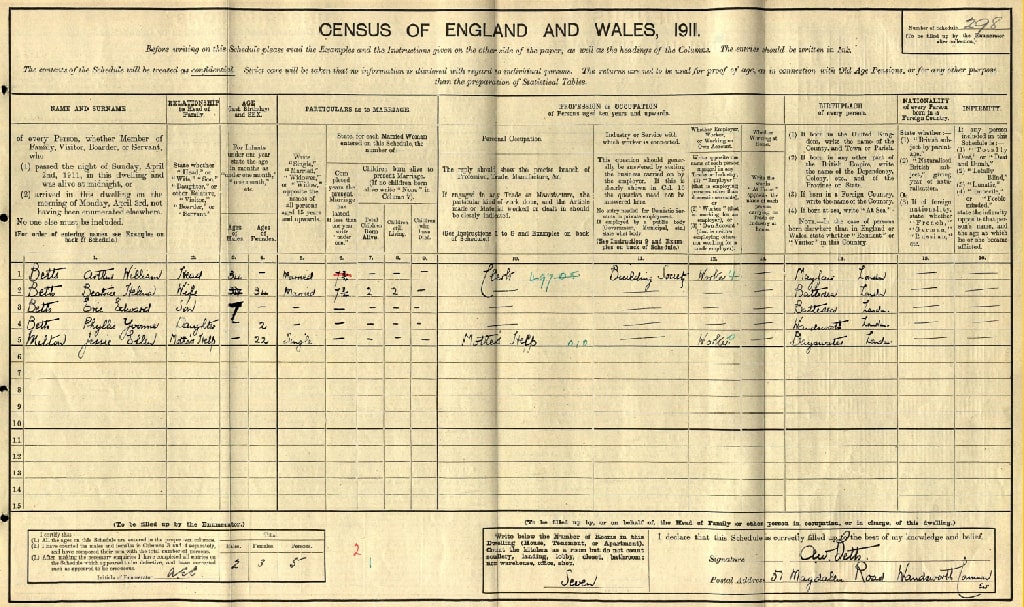
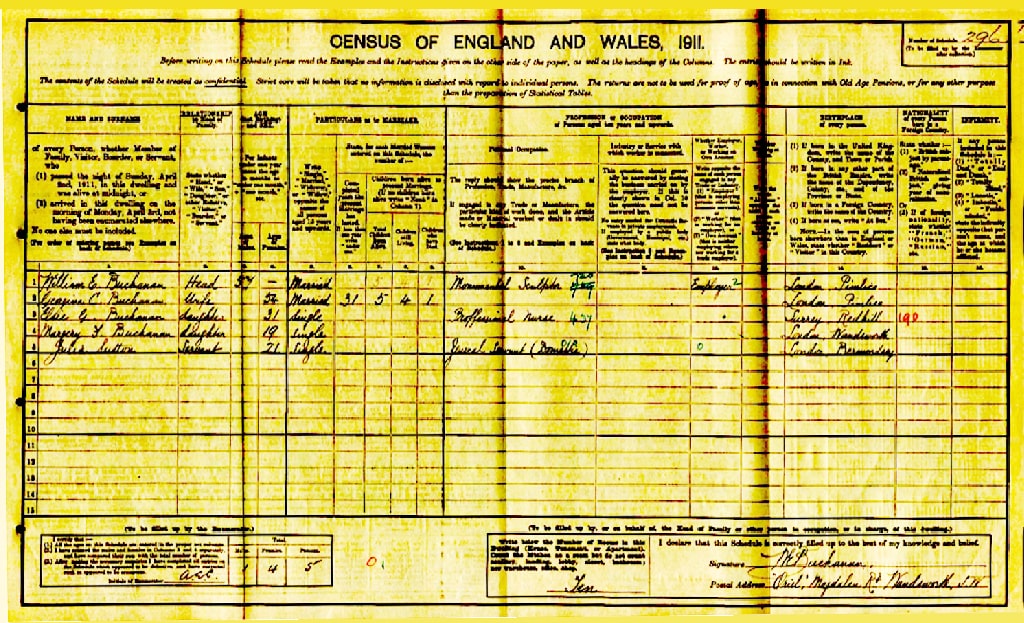
The 1911 census shows us that Arthur was a clerk in a Building Society and that, at that time, Beatrice (or Bea) had a 22-year-old live-in Mother's Help, Jessie Elland [sp?].
Arthur and Bea had been married in St Luke's church on Thurleigh Road in 1903 and Phyllis Yvonne was christened there on 4th July 1909.
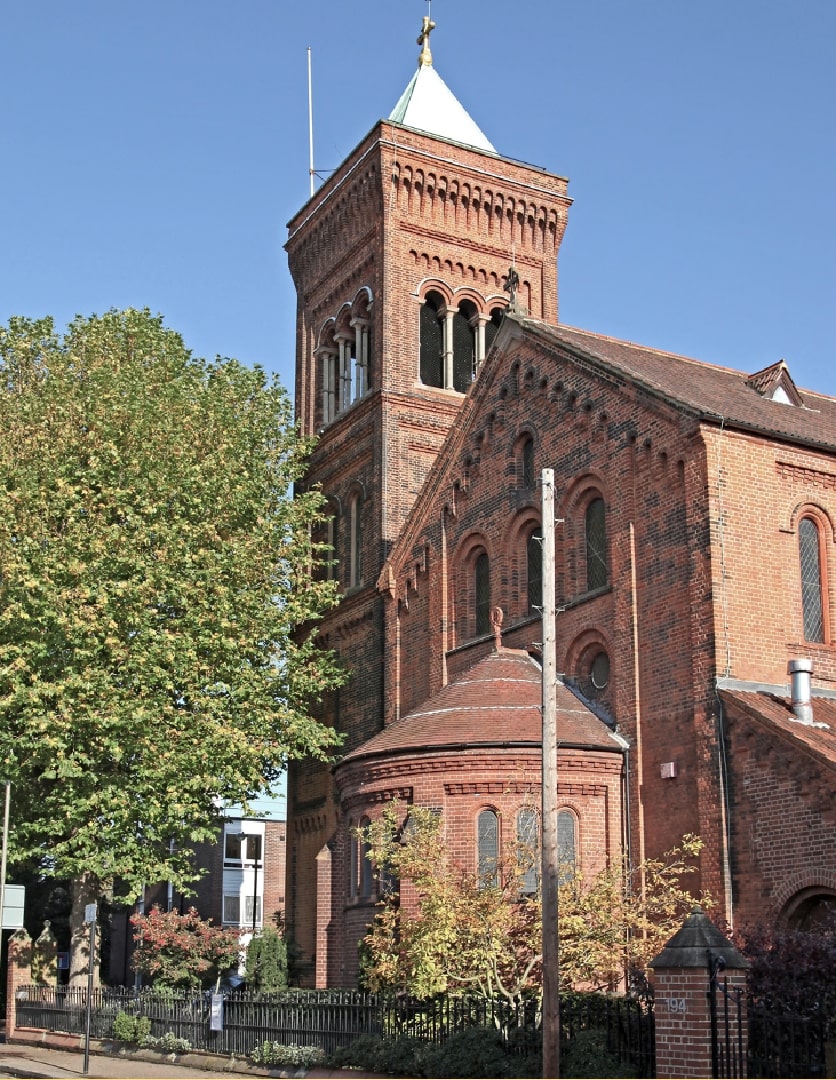
Both ceremonies were conducted by the influential Vicar of Battersea, John Erskine Clarke.
Betts paints vivid, and (generally but not always) affectionate portraits of her family, friends and assorted characters with whom she came into contact.
About her parents, and their first maid:
I knew that some mothers lied to their children about wounds and death, but I should have been ashamed to have had a soft centre mother like that.
My mother was rather unlike other children's mothers in her ways, but though she could be embarrassing I was quite proud of her, and of my father too, because they were bold and good-looking.
I should not have liked the funny-looking parents who fussed about everything that some children had.
Clara had been my newly-married parents' first little maidservant, a fourteen-year-old up from Somerset.
Later, when Clara leaves to get married:
At home, minus Clara, we were 'without'. 'Without" meant being without domestic help and was accepted verbal currency among ladies who customarily employed . . . .
My mother revelled in this deprivation. She had long striven to sink socially, and now here was her chance.
We ate in the kitchen.
About their family doctor (whose surgery was on Northcote Road, on the other side of the Common):
In his dress, which was immaculate, Dr Biggs was a relic of a former generation. I knew nobody else who dressed like Dr Biggs. He was snuff-coloured all over. He wore a frock coat, a long wrapped-over affair, with trousers of the same colour and spats. His waistcoat had pearl buttons. He always wore wing collars . . .
Outside the house, during his visits, waited Dr Biggs's brougham with his coachman. Other doctors already did their rounds by motor car but Dr Biggs was a carriage and horse man to the last. That was the nicest thing about him.
One supposes that his horse, when it was out of sorts, was doctored with the same brown physic and red physic that were all his patients ever got, but in somewhat larger doses.
The area around the Betts home was more open then than now:
Our house backed onto a field of eleven acres bounded by gardens of houses built four sides of a square. It was a real meadow with hedges and ditches and many big trees.
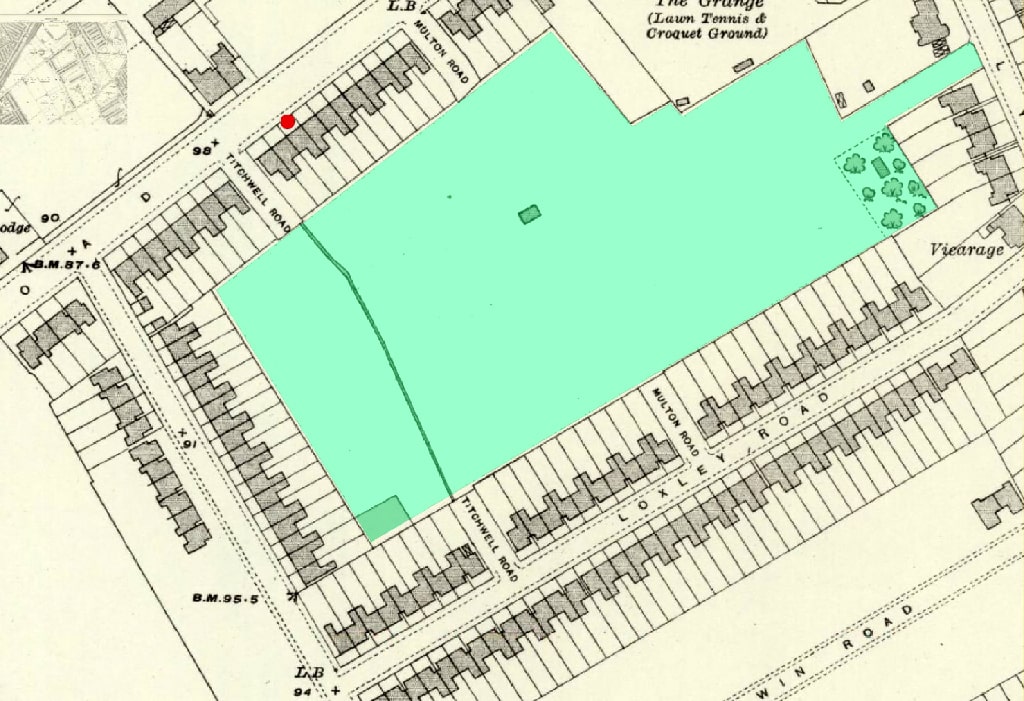
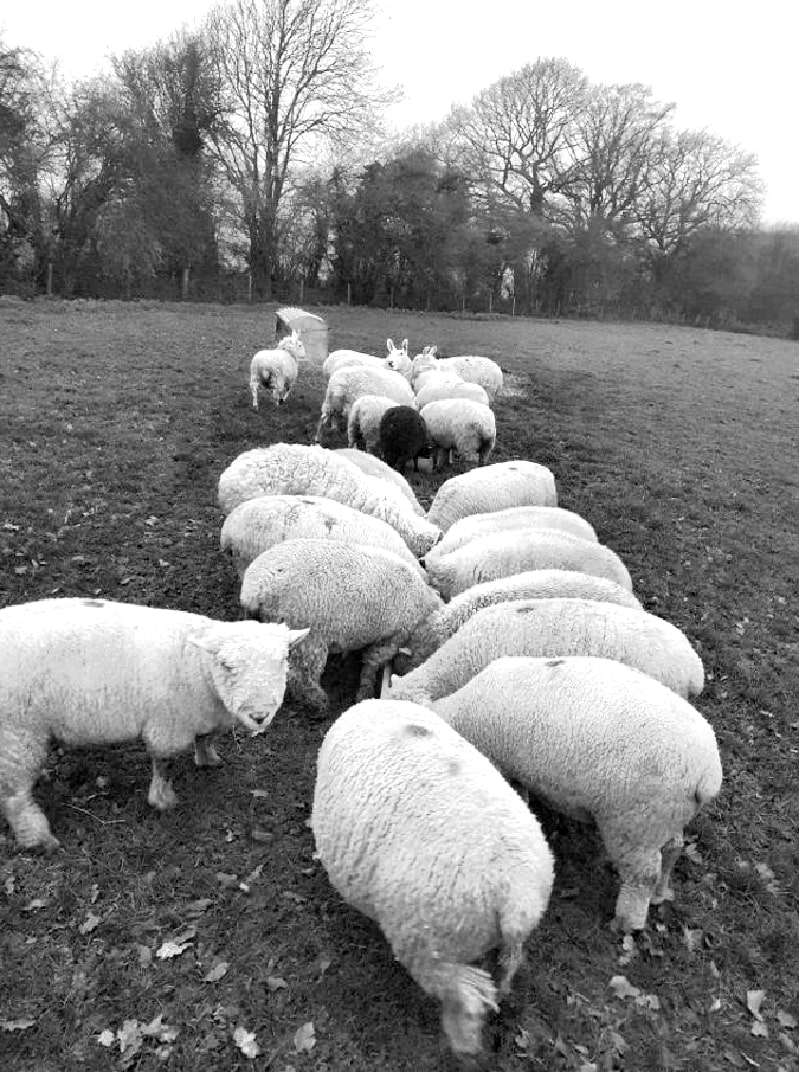
In the summer hay was cut there and after the hay sheep were turned in to graze. Usually there was nobody there, at most two or three children from the neighbouring houses, playing . . . "
Playmates:
I had become friendly with a girl who lived in the next road to mine. Her name was Marion Morris. Her experience was limited in that she seemed never to have done anything naughty, never fought with anybody or even climbed trees . . . .
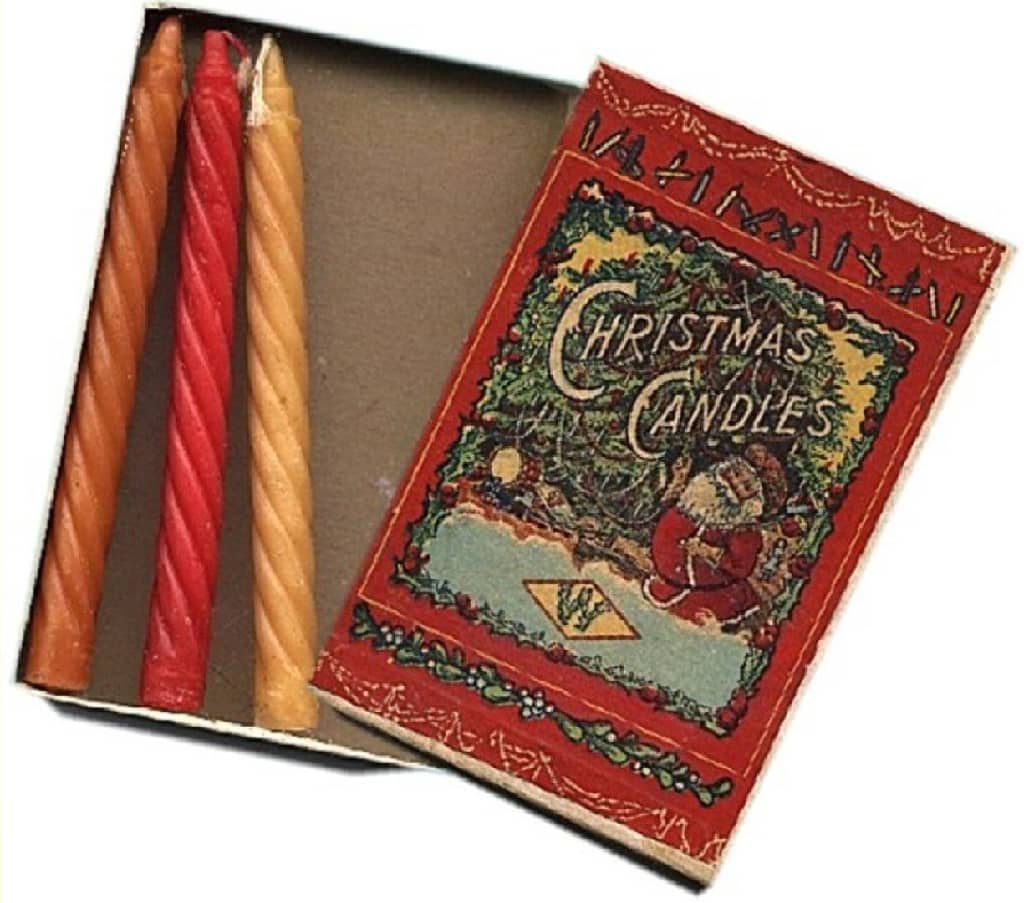
Her father was manager of Price's factory in Battersea and he often brought home reject candles. She would give me some small coloured barley sugar Christmas ones if I liked.
Our friendship strengthened.
Stephen:
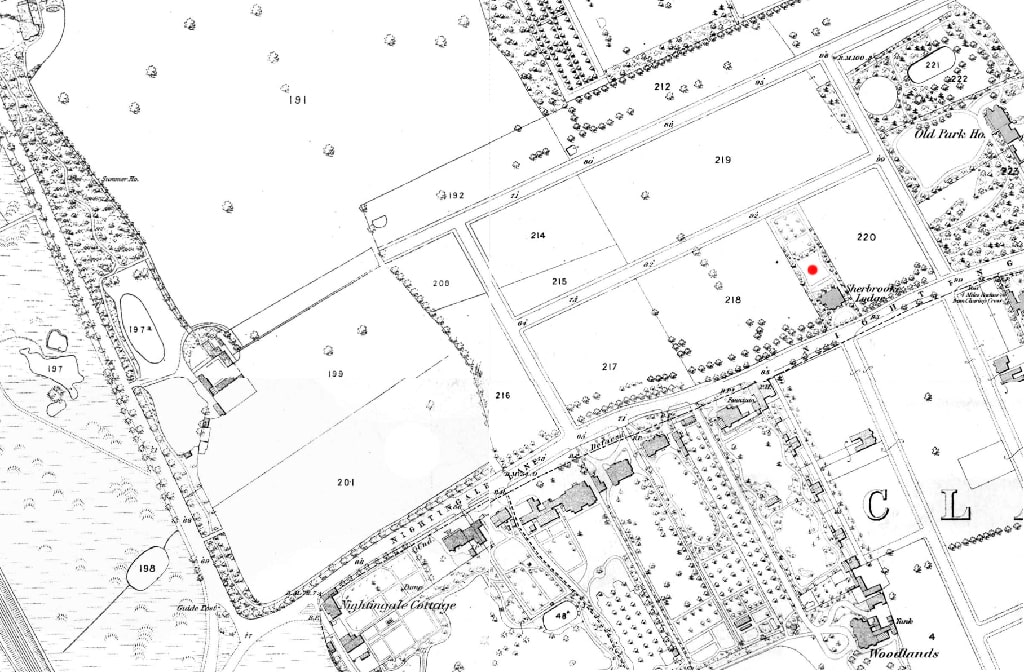
As we've seen, Betts's grandparents lived on Nightingale Lane. Their house was Sherbrooke Lodge, located opposite the top of Endlesham Road. Here it is in 1870, quite isolated on the north side of the Lane, and with a fairly substantial garden behind:
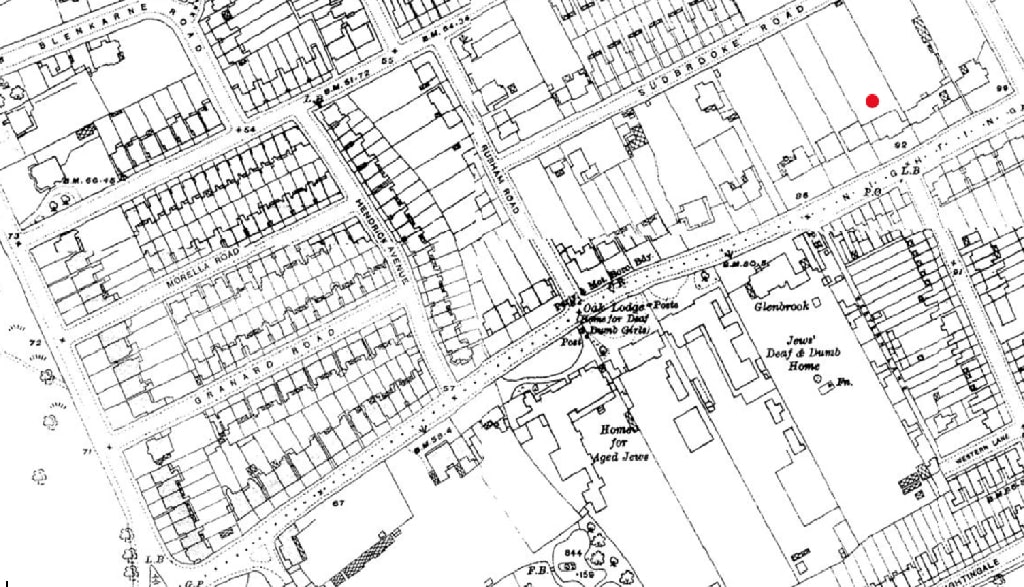
Here you can see how the area had developed by the 1910s, when Betts began to visit:
This is the site today, with Sherbrooke Lodge replaced by a modern block of flats. But notice the fine tree. I'm sure this once stood in the front driveway of the Lodge:
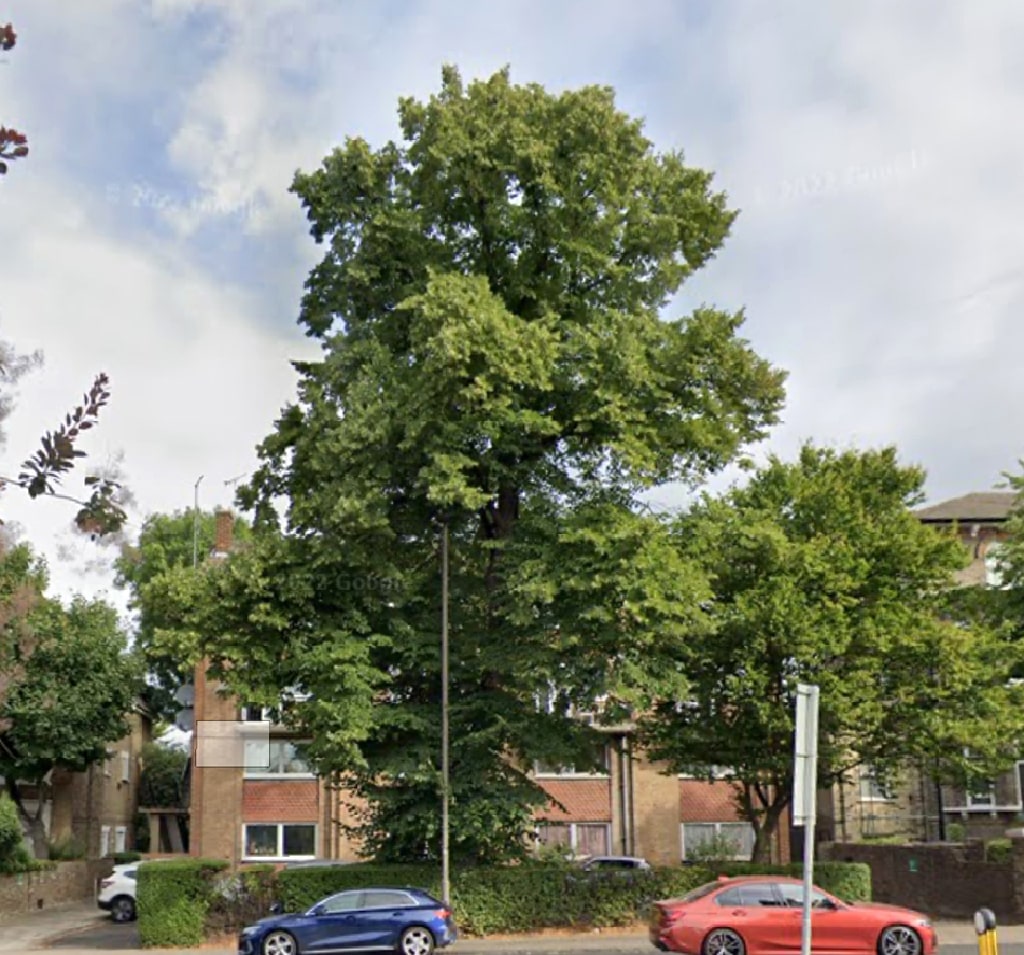
Though we were not forced to go to church, our Sundays were not without their burden of duty. We were expected to accompany our mother on the weekly walk across the Common to visit our grandparents for tea.
The house was a substantial Victorian one with two entrance gates and a sweep-around drive, probably quite similar in size to no.101 on the other side of the road.
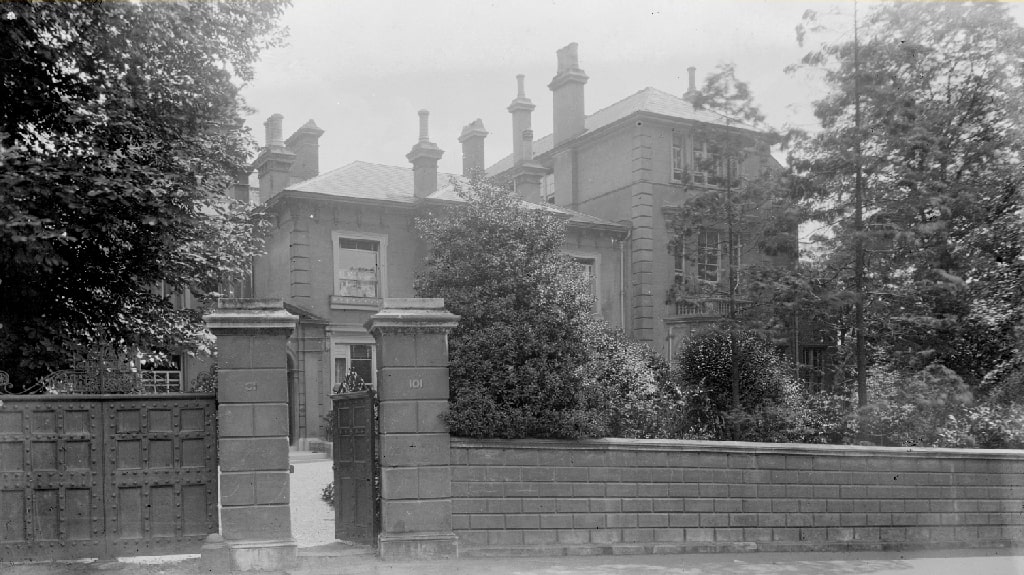
It was covered with creeper that was not, however, permitted to straggle. A flight of steps led up to a storm porch, closed in winter, and the front door. The brass door furniture was brightly polished. In summer a striped awning shielded the paintwork from the blistering action of the sun.
There was a brass bell-pull with echoes in the depths of the house, followed by the approaching footsteps of the parlourmaid. We would say 'Good afternoon, Alice', in answer to her greeting.
Stephen:
Betts's grandfather was Edward Wood JP, who was the manager of the Temperance Building Society (the firm that Betts's father, Arthur, worked for).
In 1911, the household consisted of Edward; his wife, Elizabeth; two daughters, Ada and Ethel; a son, John (known as Jack), and two servants:
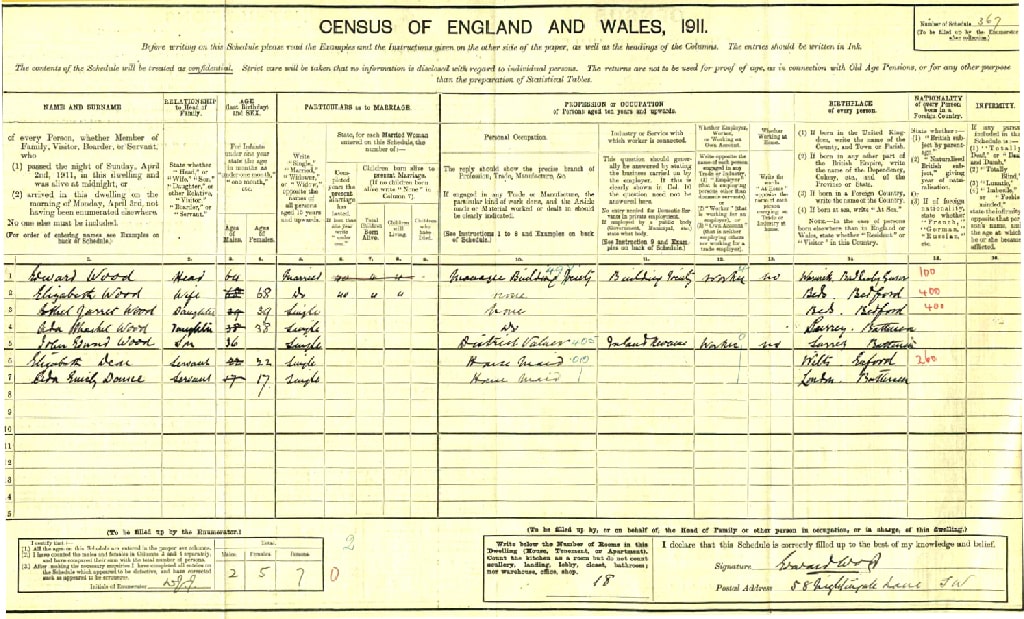
Grandpa was immaculate. Everything about him was clean and fastidious. His well-kept hands were shapely. His speech was impressive — when Grandpa spoke, people listened. His articulation was crystalline. All in all Grandpa was a well-polished specimen.
It was hard to believe that he had started life in a miner's crowded cottage in Nottinghamshire and had had no schooling after the age of eleven.
Sue:
Aunts Ada and Ethel also lived at Sherbrooke Lodge.
There was a period, not so long past, when almost everybody had an aunt called Ethel. I even knew one or two who not only had an aunt called Ethel but were themselves called Ethel and were themselves aunts — Aunt Ethels that is.
There was something about the name that not only brought on aunthood but was somehow marriage-repellent. Ethels did not breed much. Perhaps that is why they have become comparatively rare.
Although Aunt Ethel may have looked like Lord Longford in drag, she had been sought in marriage, though only by a curate.
This offer had been refused.
Stephen:
We now return to where the Betts lived on the west side of the Common, Magdalen Road.
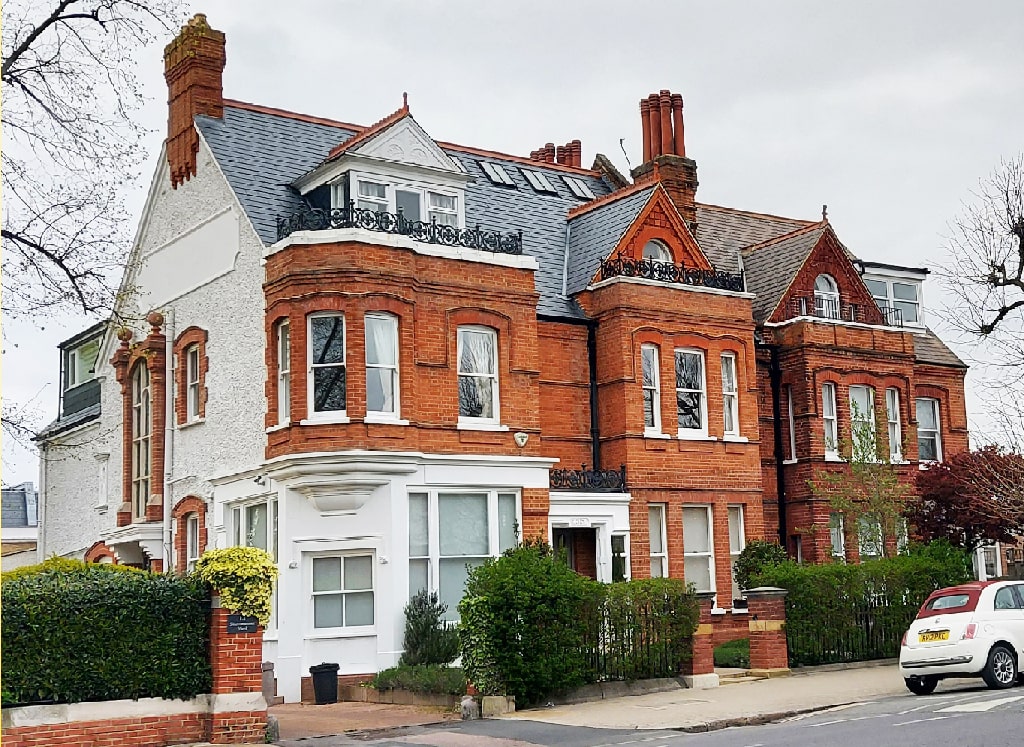
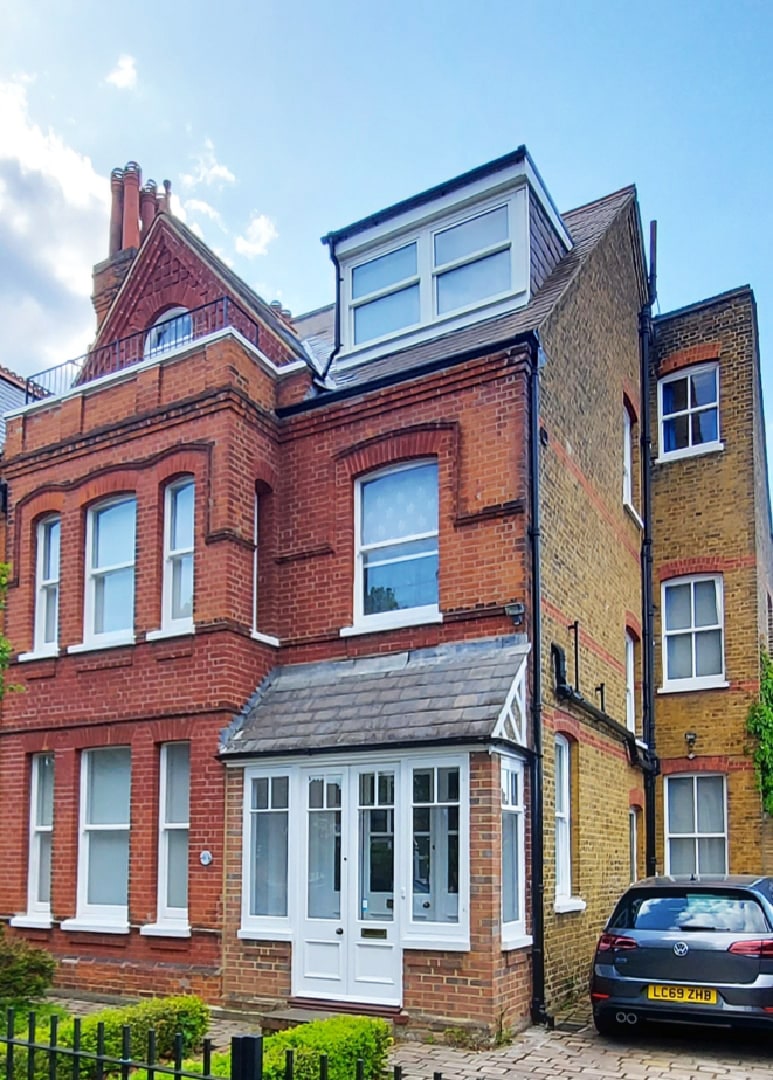
On the other side of the road from us there were only two houses, built close together. They were bigger and older than the modern houses on our side. One was the undertakers; the one next door was a small private school.
So, on the left here we have the undertakers, and on the right, the private school:
These two houses were built by local builder James Carmichael; the first in 1898 and the second a few years later. They continued the Oxford University connection by being named "Balliol" and "Oriel".
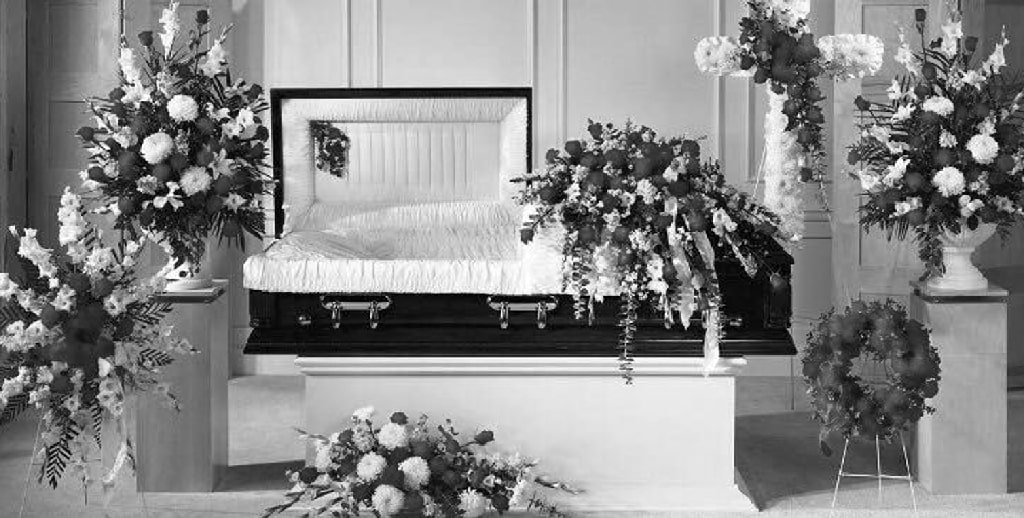
The undertaker's family lived over the shop, which had a big front showroom with a display of coffins and artificial flowers under glass domes.
Behind this there was the joiner's shop where the coffins were made.
There must have been a mortuary too, because in later years, when refrigeration became common, my mother had the bright idea of getting round the undertaker to store her furs in the cold room there during the summer — it was so much handier than the Army and Navy Stores.
Cheaper too, no doubt. Just one or two of my mother's dazzling smiles would do the trick with the undertaker, whose customers were so much less lively than my mother.
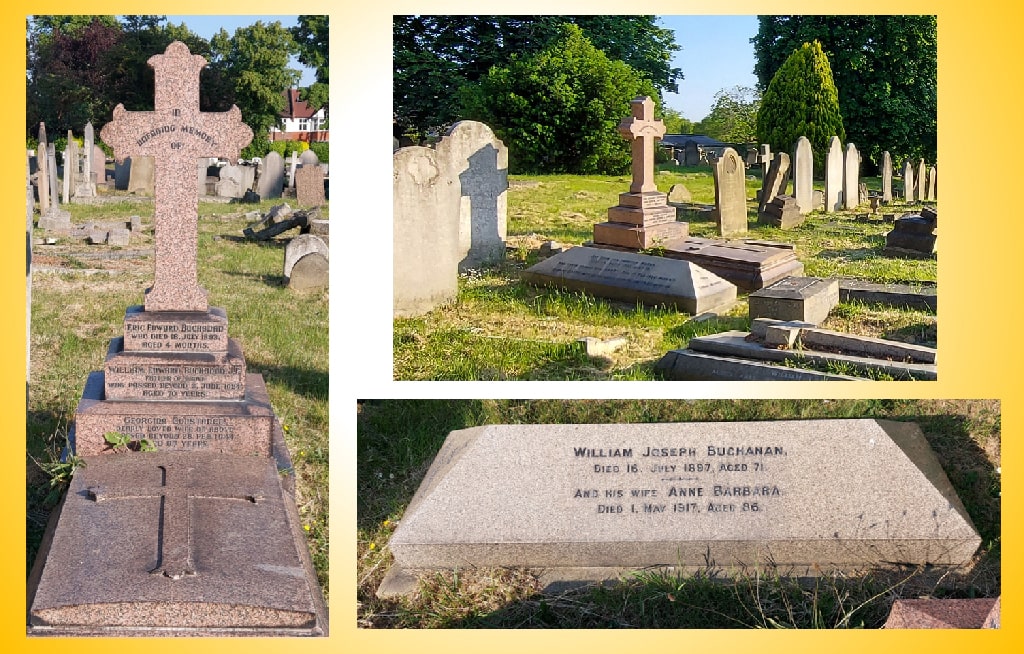
Many of the gravestones in Wandsworth cemetery were produced by Buchanan's and the family are themselves interred there.
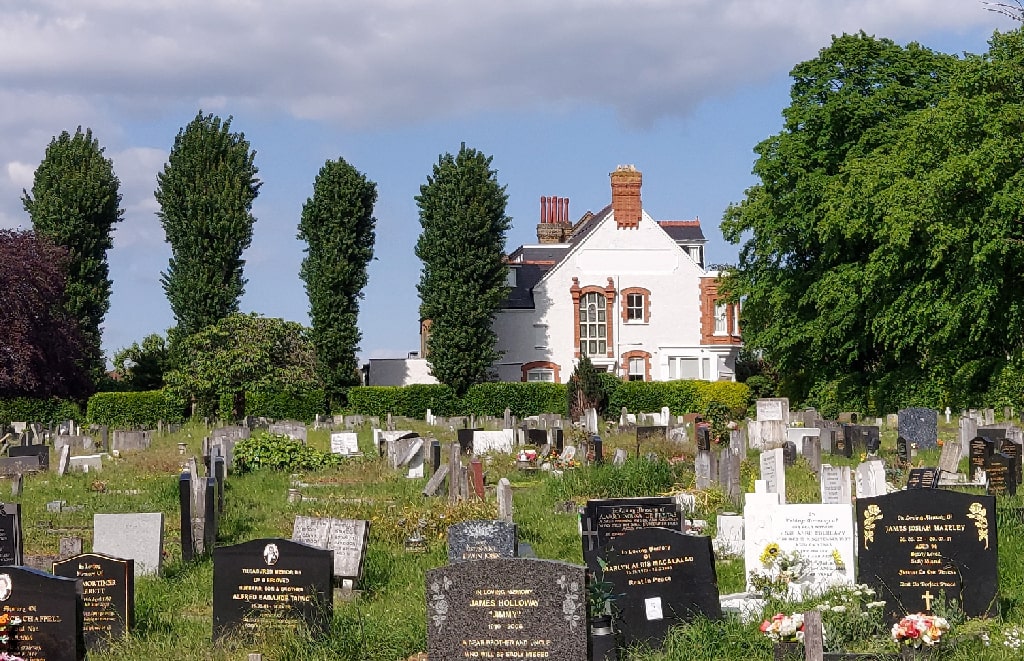
The company continued in the premises until fairly recently and present-day inhabitants of the area can still remember when a sign on the side of the building overlooking the cemetery carried the Buchanan name.
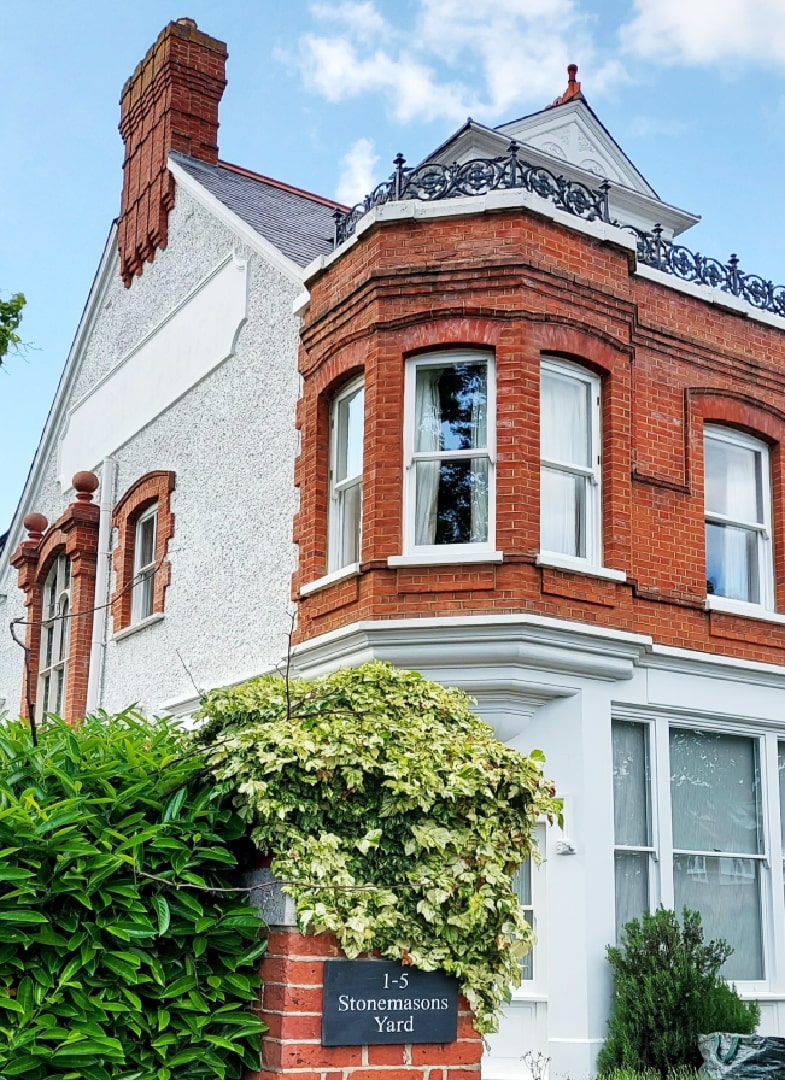
Recently, the area at the rear where the workshops used to be was developed into new housing but its heritage is reflected in the name "Stonemasons Yard".
The undertaker was William Buchanan, who did indeed supply coffins and funeral arrangements but, as you can see from the census, regarded himself primarily as a "monumental sculptor".
The house next door was a small private school, which Betts herself attended for a while. It emphatically did not resemble these images of children sitting straight-backed, arms folded behind their backs, or formally drilled in arithmetic:
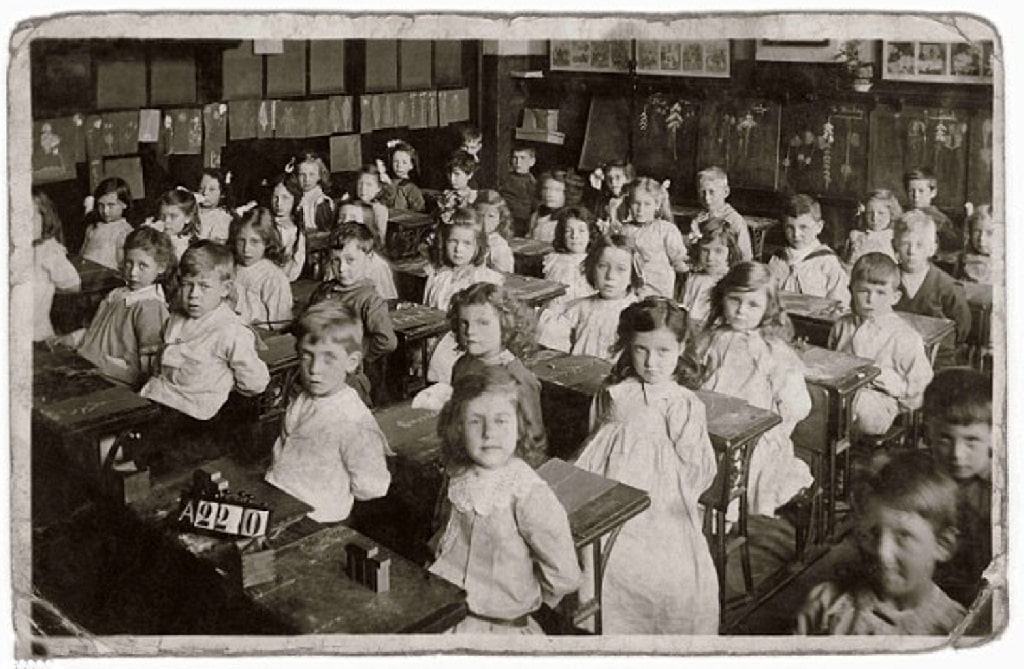
On the contrary:
Mrs Stroud's school was a sort of happy bedlam, not at all upmarket. It catered for children of all ages and both sexes, boys of kindergarten age and girls from tiny children to what appeared to be ripe woman-hood.
What made it down-market was that its pupils were drawn almost entirely from down the road. Shopkeepers' daughters went there, well-nourished girls whose fathers wielded cleavers behind butchers' blocks, or kept pubs. These were far from needy; though considered, of course, common. The school swirled with the diversity of the human genetic pool.
This was a private house . . . The pupils were packed into the first floor and the attic that ran from front to back of the house. The place was crammed. There was no room to move. The only game possible in the eleven o'clock break, which perforce had to be spent in the classroom, was Sardines.
Nobody gave a thought to the fire risk. The undertaker's was conveniently placed next door.
Sue:
One of the teachers was a Miss Snead.
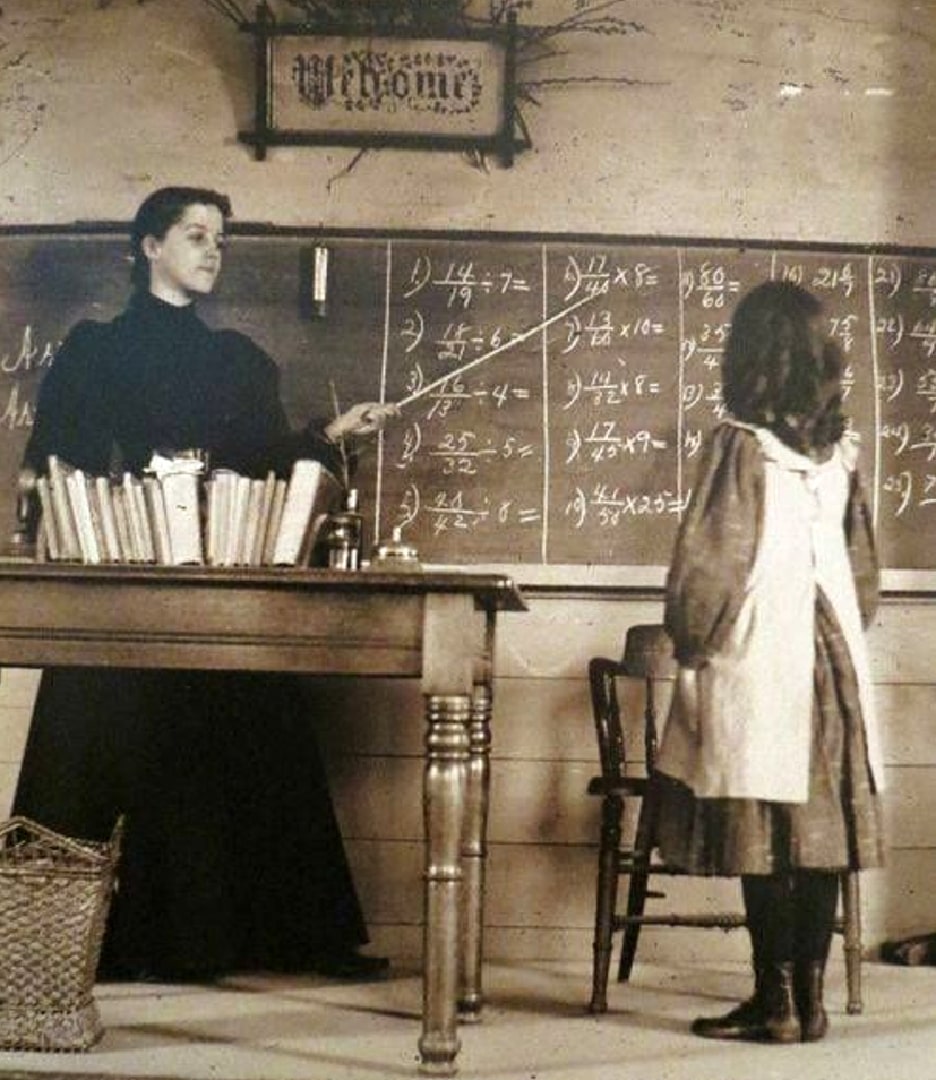
Miss Snead was the sort of person you have to look at when they pass you out of doors. She would be in her later forties, tall, thin and rectangular. Her face was a yellowish brown, with dark eyes and black hair above a high forehead.
Seen from the front she appeared to be a sketchily articulated series of oblongs, some longer and thinner than others, the head almost square. But these rectangles were not in parallel with one another, nor did they move to the same rhythm.
There was a touch of wryneck about Miss Snead — the head a little tilted to one side, the face on yet another plane, the lower part pushed forward, the lips stretched in a contained smile over uncountable false teeth.
She was like a cluster of metal mirrors set at different angles, jangling together as they flashed uneasy light into the eyes of strangers.
She could have scared crows.
Stephen:
The "real" Stroud family were actually called Wood. Emmeline Wood was the Schoolmistress and her husband Walter was an optician. Their daughter Molly was 2 years old at the time of the 1911 census.
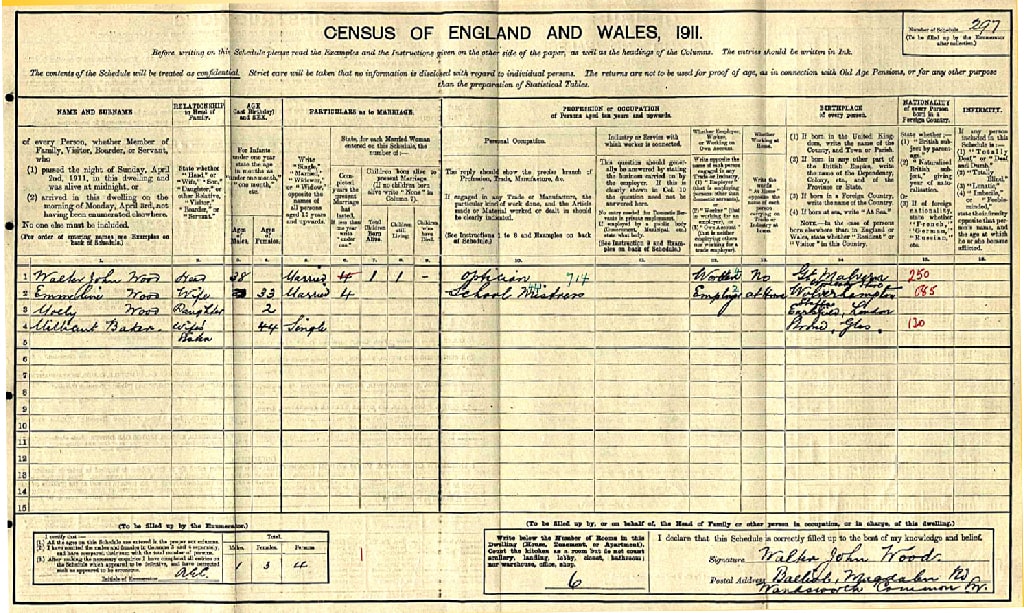
Betts writes about Molly and we learn that, like many of Betts's young acquaintances, she died young, succumbing to Black Measles in 1915. (Black Measles is a severe form of measles characterized by dark eruptions caused by bleeding under the skin.)
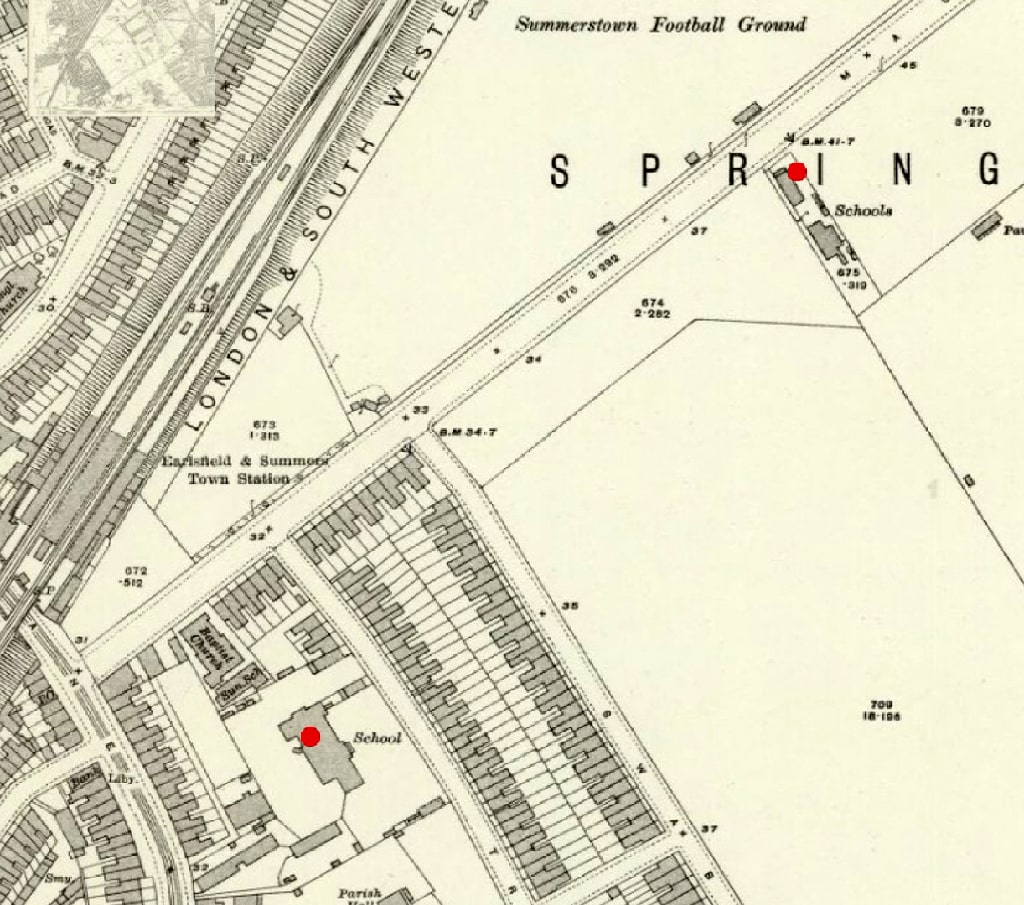
There were two further schools "down the hill".
The small school buildings half-way down that we can see on this 1916 map were replaced [in the mid-1930s?] by the present-day school premises. It was called Magdalen Road school and was initially for infants only. It later became Beatrix Potter.
The school at the bottom of the hill was one of the many "Board" schools that sprang up following the 1870 Education Act. Initially known as Tranmere Road School, it is now Earlsfield Primary.
The Board school was for pupils drawn from the nether regions at the bottom of the hill who were too poor to pay for fees, though some of the more ambitious parents, according to my mother, scraped together fourpence a week to pay for violin lessons.
She was full of a sort of exasperated pity for these needy little aspirants scraping away on their tinny fiddles till their fourteenth birthday pitched them empty-handed into the nearest factory, which was a smelly one.
I never knew what was made there. Something to do with glue, I think, or gas.
Stephen:
The smelly factory that children would move onto from school might well have been the horse-slaughtering business run by Harrison and Barber. They had seven depots throughout London, which killed 26,000 horses a year.
The one on the banks of the Wandle, just off Garratt Lane, was the largest of them and included a complete refrigerating plant in which two hundred and fifty horses could be stored:
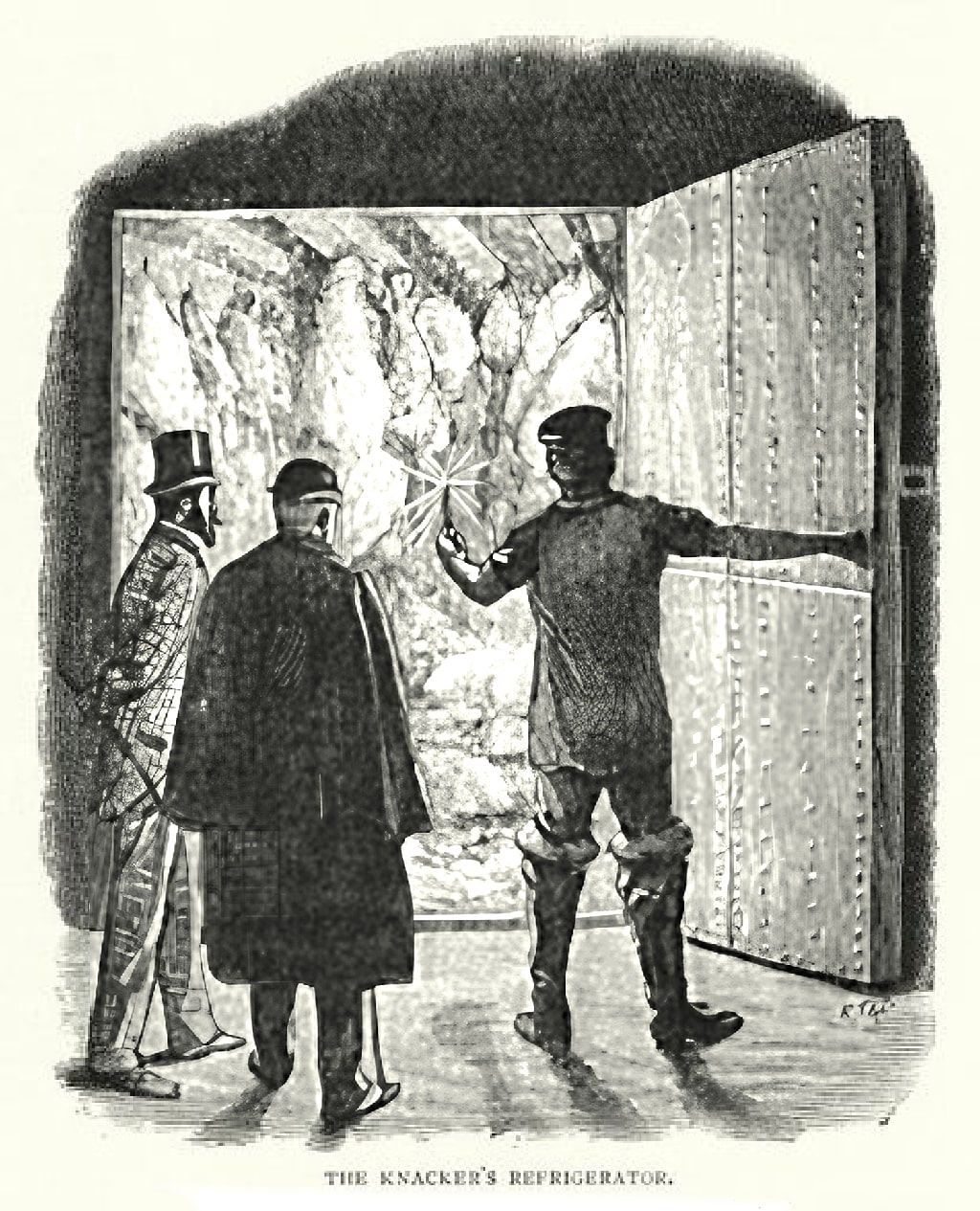
No piece of the poor animal went to waste. Meat was set aside not just for cats and dogs, but also for human consumption. Associated industries on site included a chemical manure factory and facilities for bone crushing, glue production and fat melting.
No wonder it was smelly!
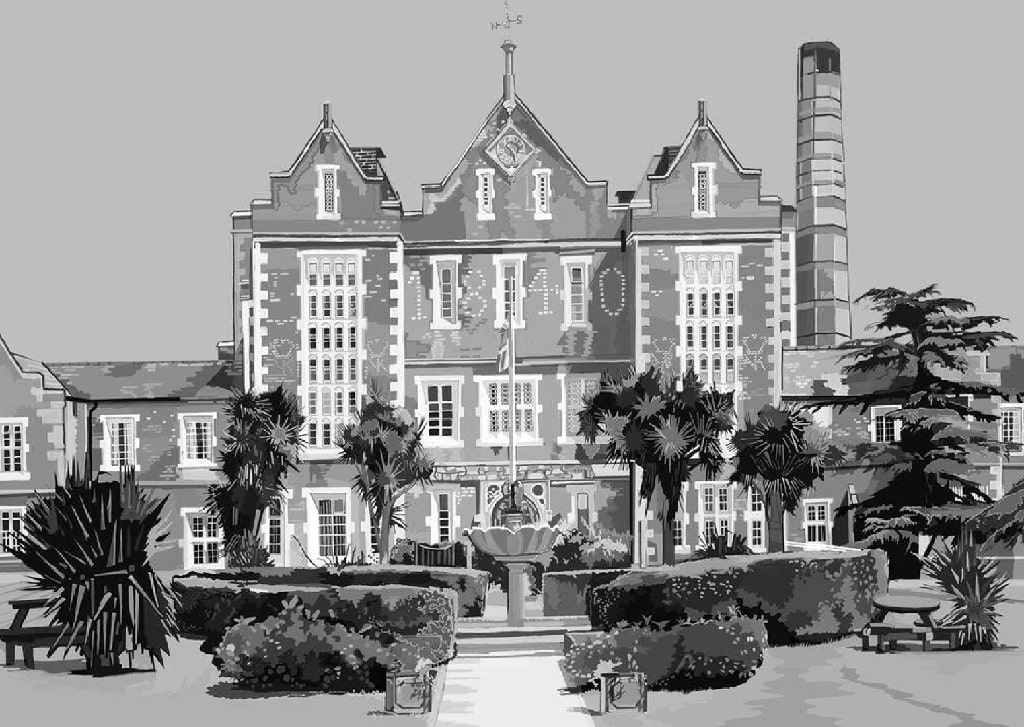
Madness was accommodated in the large lunatic asylum, with its own farm, not far from the Common.
In the days of my youth there were not euphemisms for mental disturbance. If you were mentally ill you were mad and if you were mad you went to a lunatic asylum and no messing . . . .
In my own day no especial horror stories came out of the asylum. There were high walls round the grounds.
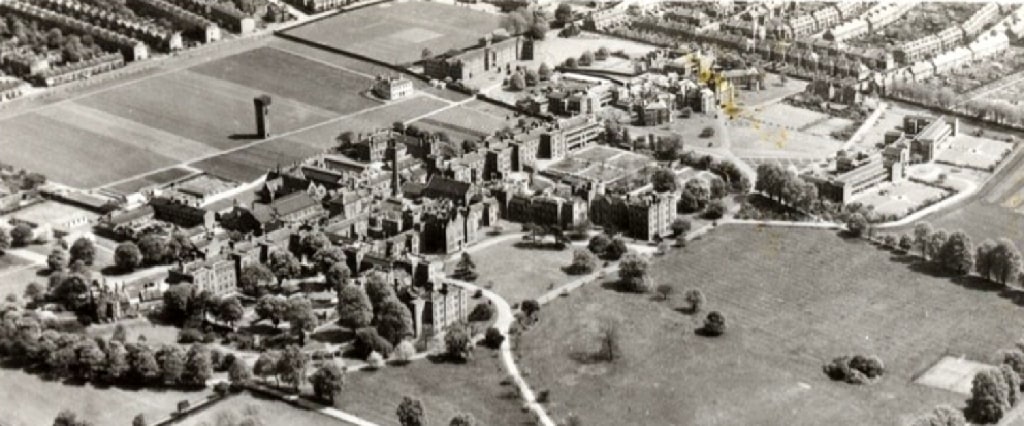
Stephen:
The Surrey County Lunatic Asylum first opened in 1841 on a 97-acre site bought from Henry Perkins, a wealthy brewer, who had himself obtained the freehold from the 2nd Earl Spencer.
The asylum was intended to serve the pauper population of rural Surrey and could initially accommodate 350 patients.
It was supported by a large farm including a massive kitchen garden near the central kitchens.
In 1895, a separate annexe for "Idiot Children" was created in order to remove children from the main wards within the hospital. John Langdon Down, famous for his description of the condition now known as Down syndrome, advised on the layout of the Annexe.
Sometimes a happy band of more or less presentable inmates would issue forth in the care of their keepers, busily chattering . . . Their enjoyment was intense. They were mostly, if not all, female, with bright excited eyes and frizzy grey hair, darting jubilantly in and outof the parade of shops facing the Common, clutching small purchases.
'They always buy sardines,' my mother said, and it was true: fourpenny tins of sardines gleamed in their hands as they emerged, discarding paper bags, the afternoon light blazing back from their shining eyes.
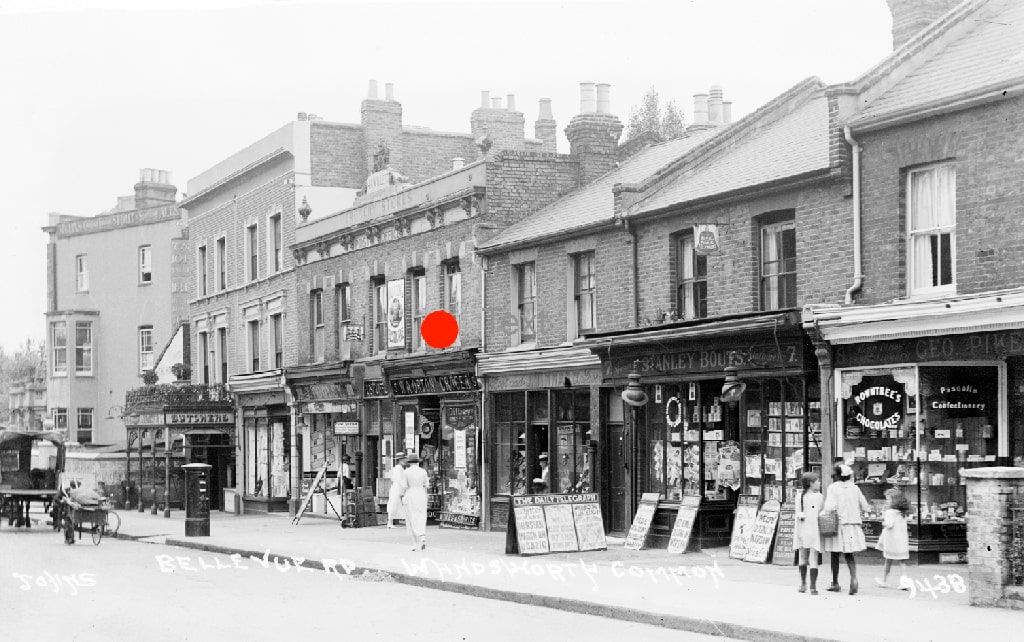
Stephen:
The parade of shops is, of course, Bellevue Road, and the shop from which they bought the sardines might well have been the grocers at no. 5, run at the time, by Mr Alfred Davis.
During the First World War, part of the asylum became the Springfield War Hospital, and a Neurological Unit was established in the Annexe for patients with shell shock or "loss of mental balance". Along with King's College Hospital on Denmark Hill, it became one of the principal reception centres for those sent home from the front in France.
The façade of the prison was sombrely impressive, a fortress. It had a huge main gate like the gate of a medieval castle . . .
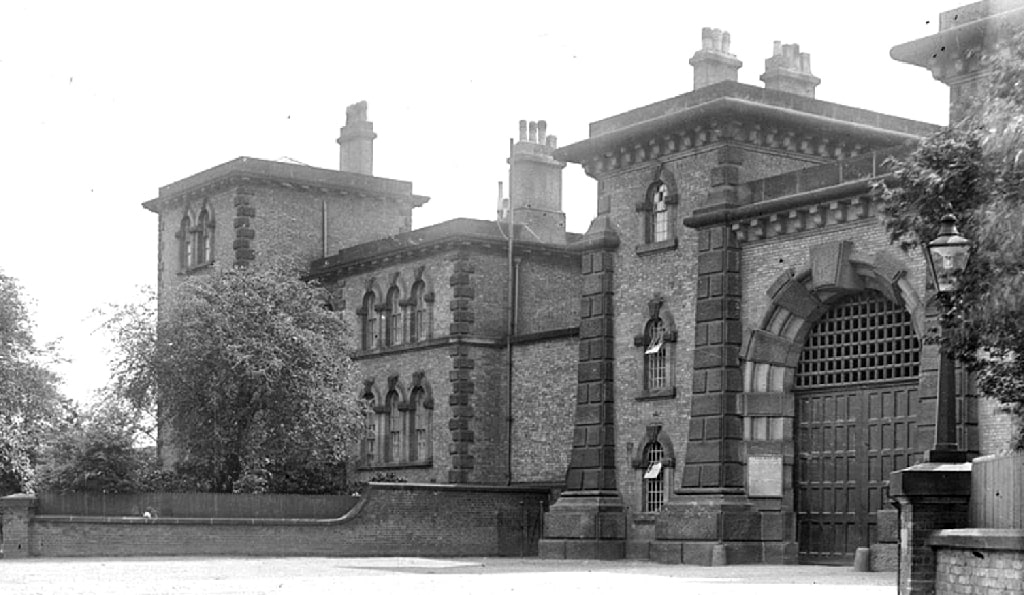
The domain of crime was the prison which, with its ancillary buildings, was as big as a village, whole streets of warders' houses and big houses with gardens for the Governor, chaplain, doctor. There was a cordon sanitaire of open ground around it, leased off to bowls and tennis clubs.
Opposite our house was a rough field with a footpath leading away into the prison hinterland whence sallied forth at times a hooligan family of red-haired boys, warders' children to terrorise clean little prep schoolboys in their grey flannels. Neighbours tut-tutted about these boys, who seemed ripe for imprisonment themselves . . .
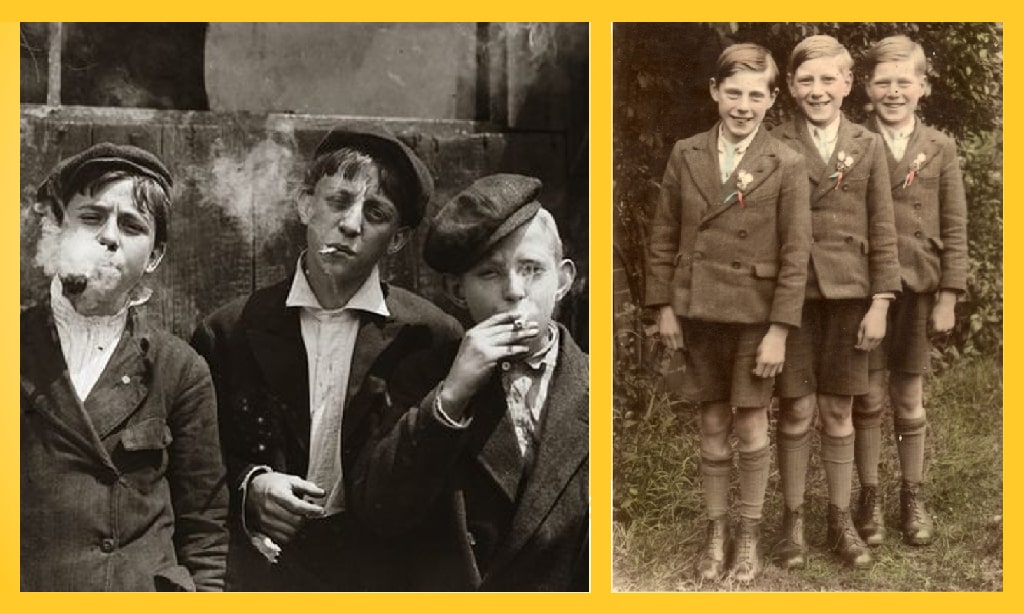
On winter mornings before it was light on the day of an execution there would be a clippety-shuffle noise on the pavements outside our house. It was the sound of the leather-shod or hobnailed booted people from the bottom of the hill coming up to watch outside the prison in time for the execution at eight o'clock . . . .
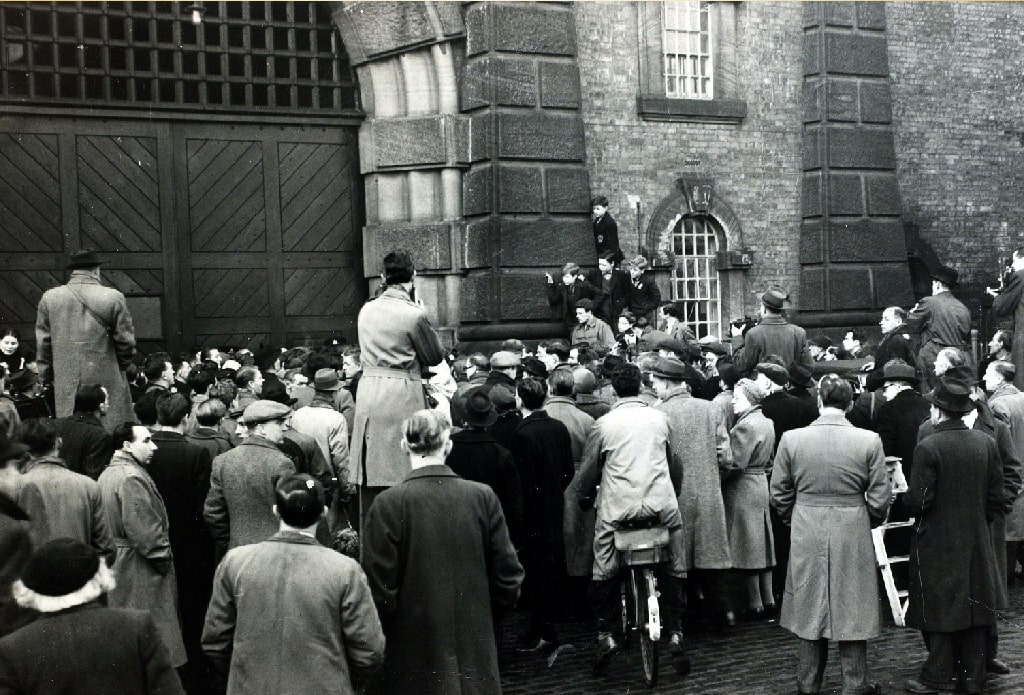
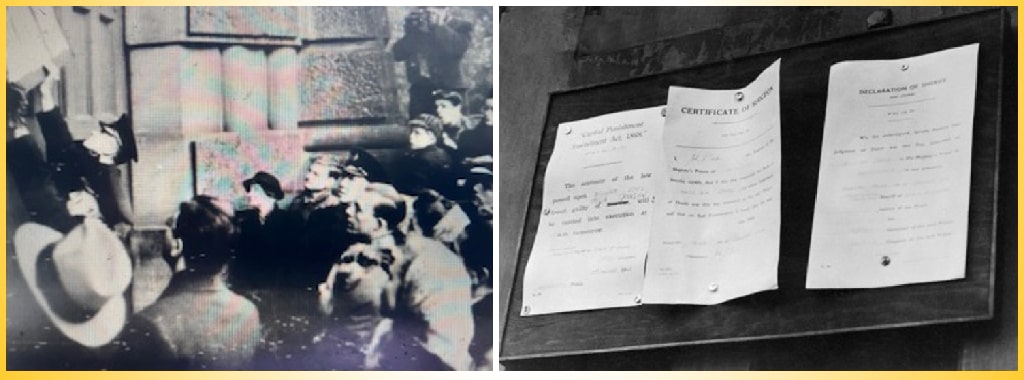
When notice of the hanging was posted . . . a communal collective exhalation would go up from the crowd . . . I thought of this enormous sigh as the last breath of the hanged murderer, all the breath that had ever been in his lungs going out into the world without him.
Stephen:
Wandsworth prison opened in 1851 as the Surrey House of Correction.
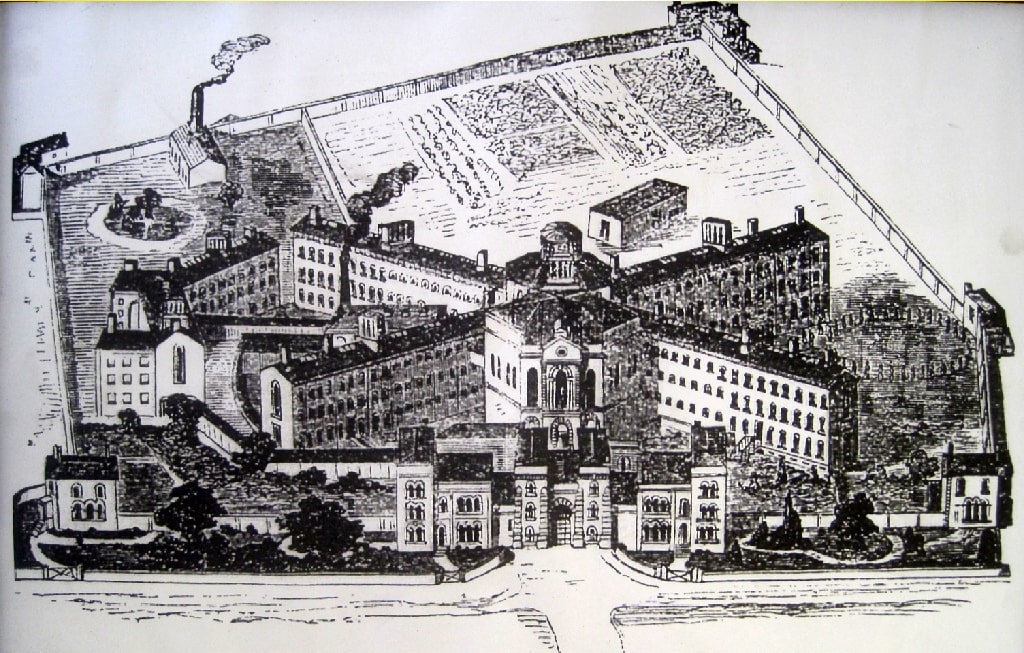
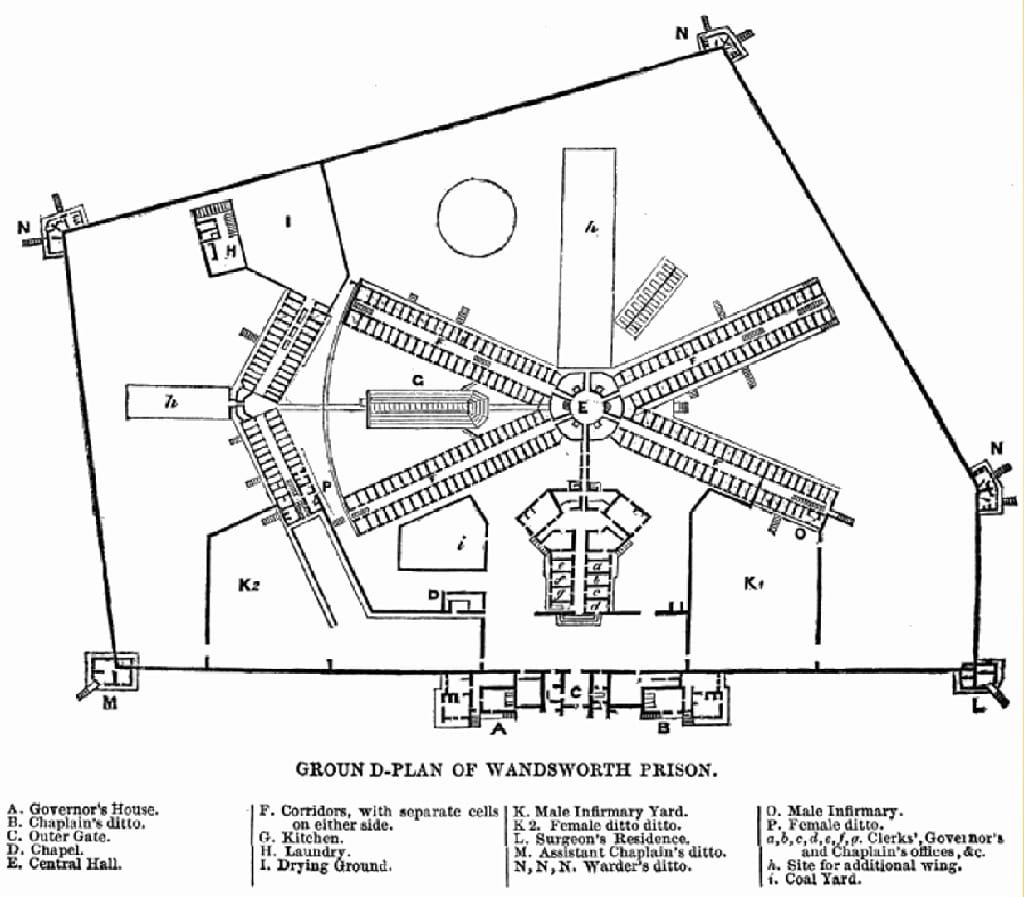
It was initially designed to hold 1,000 prisoners, with four wings accommodating men and a separate building which housed women up until the late 1800s.
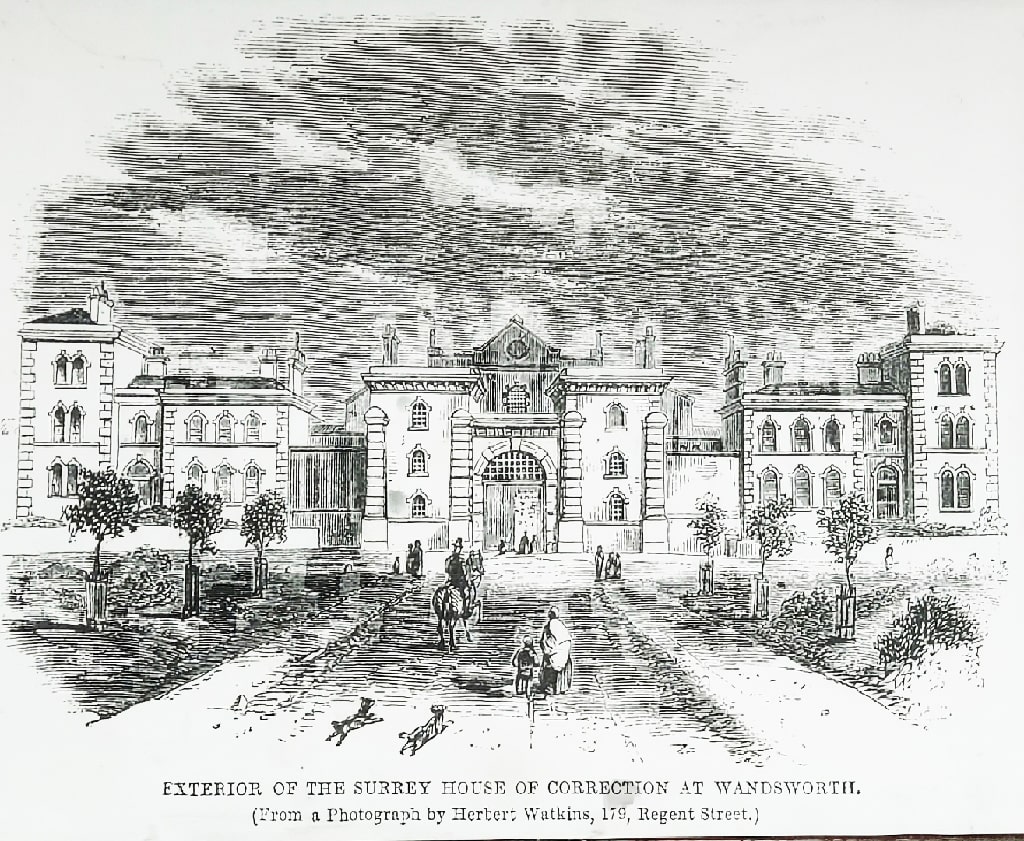
This view shows the approach from Trinity Road along the now lime tree-lined Heathfield Avenue.
The prison was run by the County of Surrey until it was nationalised in 1878, at which point it became the' hanging prison' for south London. A total of 135 executions took place at Wandsworth prison until capital punishment was finally abolished in 1969.
This is a picture of Kate Webster's execution, the only woman ever to be hanged at Wandsworth, in 1879:
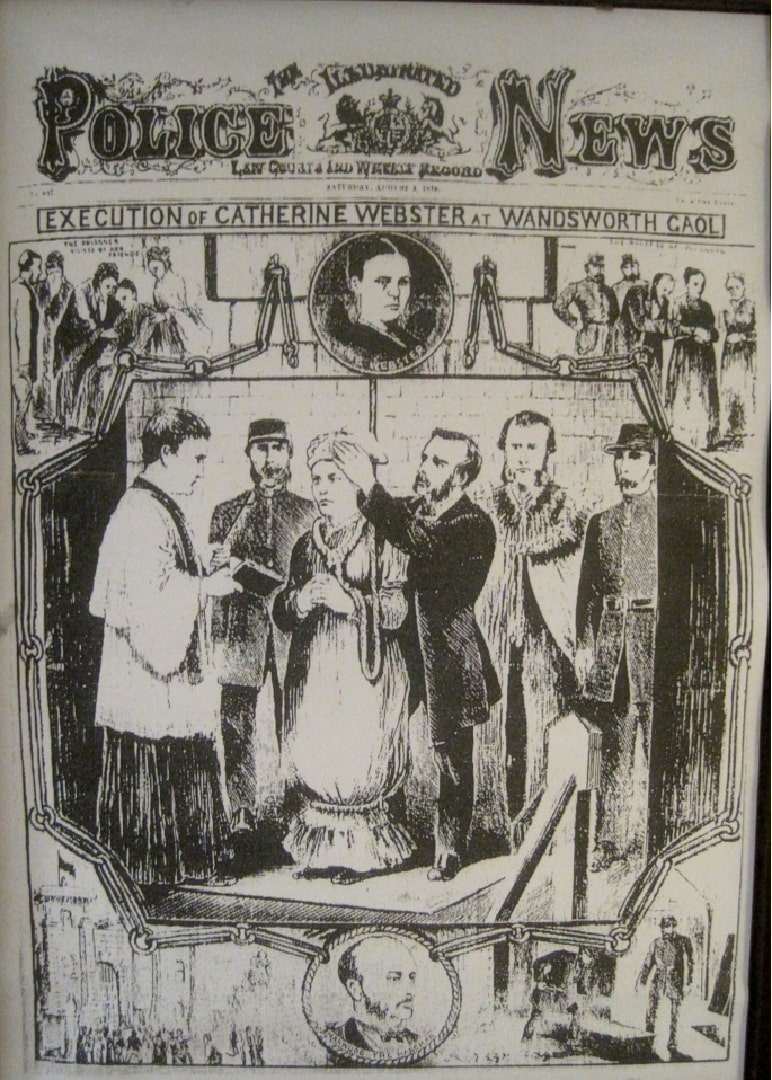
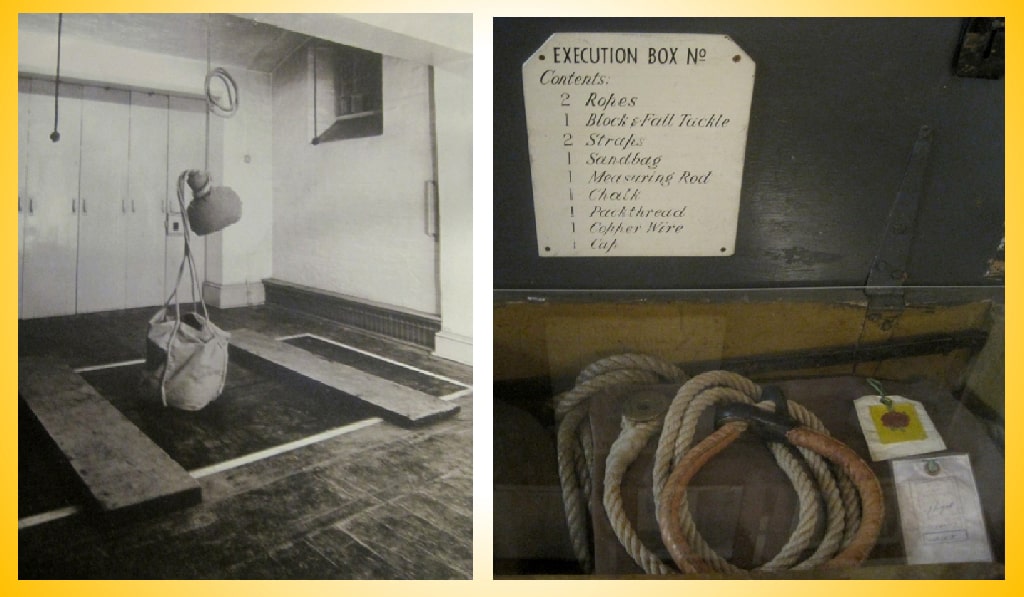
The prison retained a working gallows, tested every six months, until it was finally dismantled in 1993.
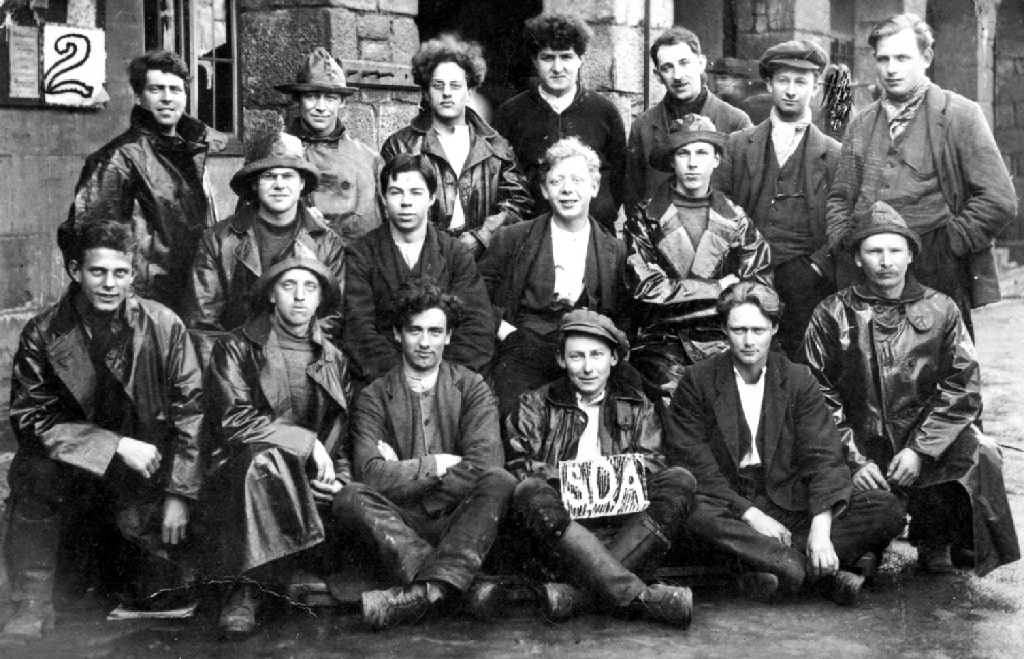
During the First World War, the wing that used to make up the women's prison held conscientious objectors (shown here) but also absconding squaddies from the British, Canadian, Australian and New Zealand armies; upwards of 200 Irish Republicans following the Easter Rising in 1916 and spies.
The only spy actually to be hanged at Wandsworth during the first World War was this man, Robert Rosenthal:
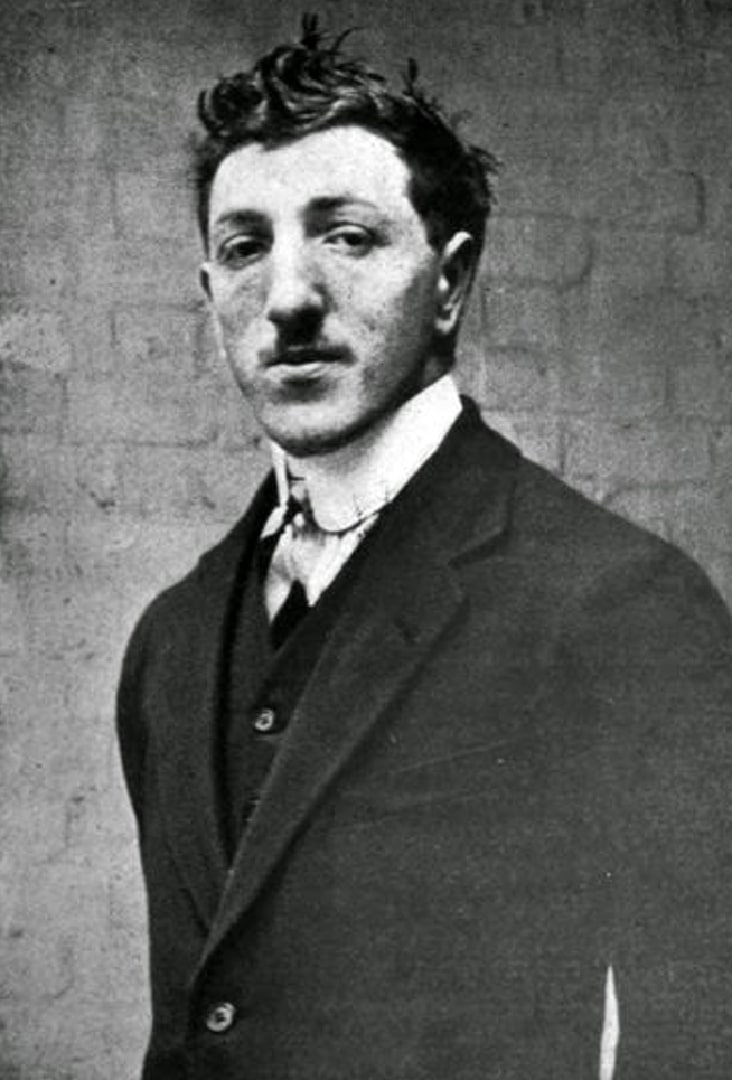
Eleven other men convicted of spying were initially held at Wandsworth until they were transferred to the Tower of London and shot by firing squad.
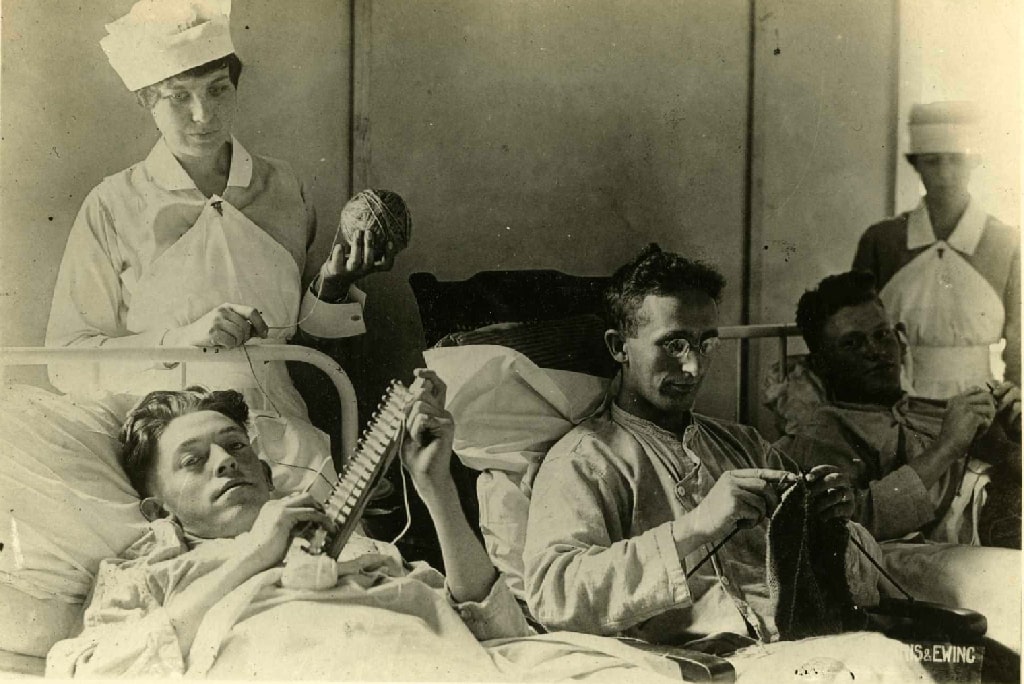
The walking wounded from the military hospital wore bright blue jackets and trousers of a hairy flannel that was not pressed or tailored like a uniform. It had a cosy look about it, more like a bed jacket. Their shirts were white and their ties were bright red. They were hatless.
They humped about on crutches or on two sticks. They wore an arm in a sling or were minus a leg or bandaged round the head. Some showed no visible signs of injury. On fine days they lurched and hirpled about the Common. Most of the benches would have tw o or three wounded soldiers in their hospital blue, resting, when the sun was shining.
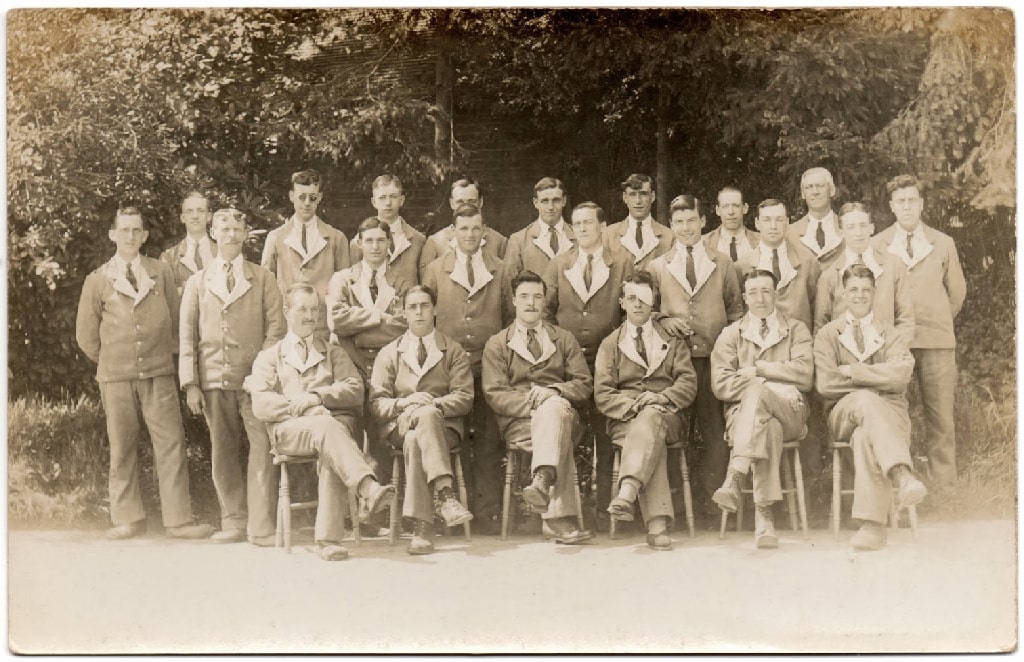
When they looked up as I scudded past them on my scooter, they did not look sad. They smoked cigarettes and seemed contented enough. But these were the ones who were not going to die.
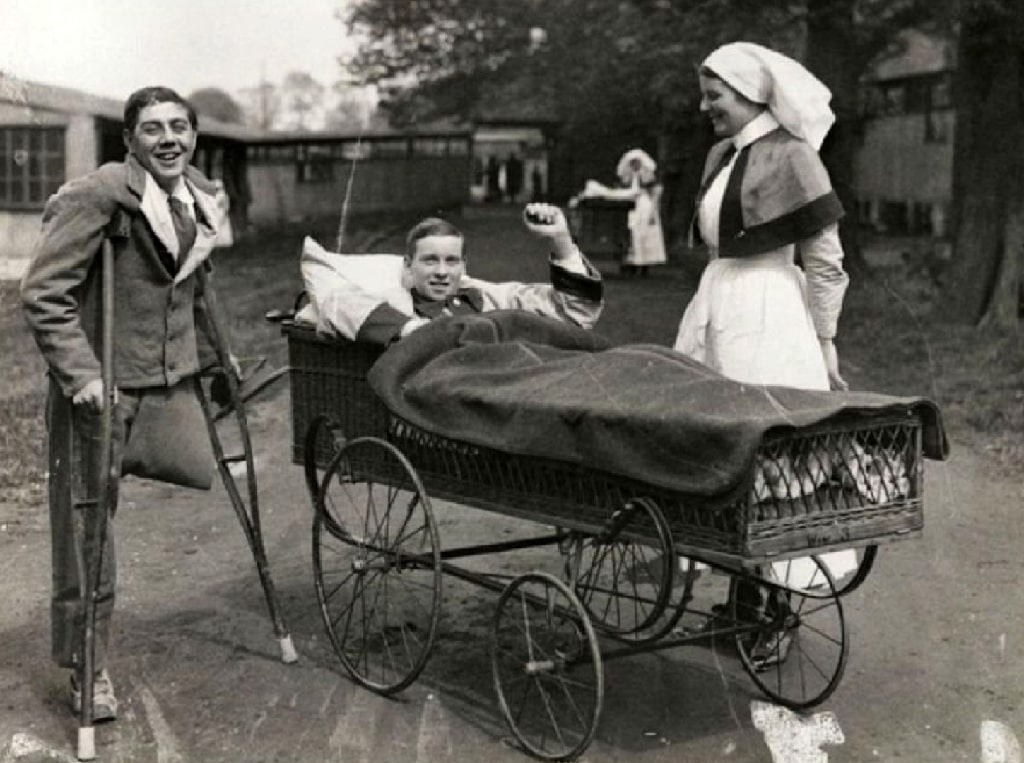
Stephen:
The "military hospital" was the 3rd London General Hospital, housed in the Royal Victoria Patriotic School. The school had been built after the Crimean War to educate orphaned daughters of servicemen. It needed considerable alteration in order to be suitable for its new function but by the time the first patients arrived in September 1914 it was up and running as a hospital of 200 beds.
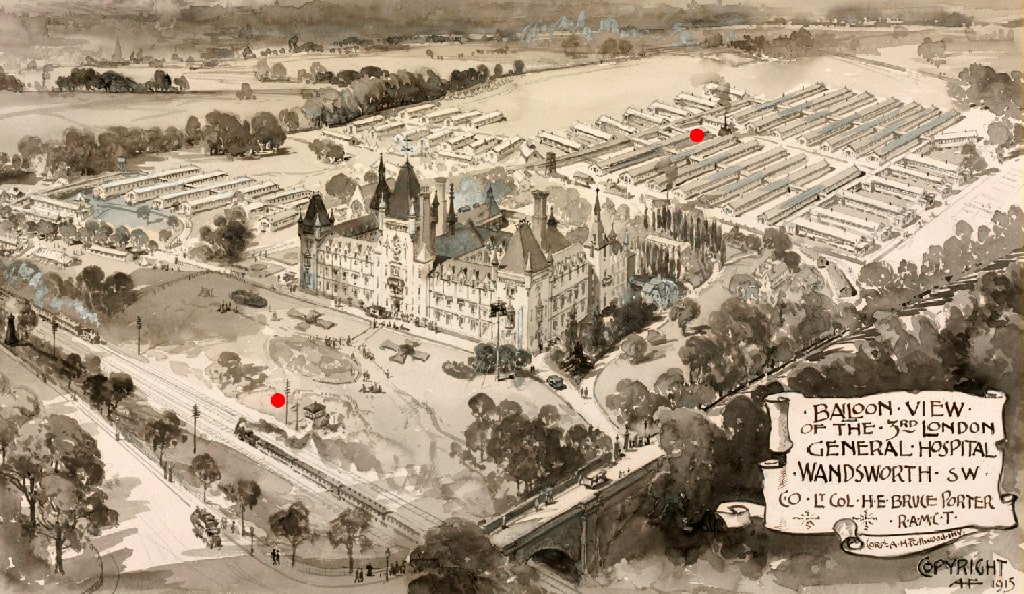
There was soon a need for more accommodation and hutted wards were built in the grounds. This area became known as "Bungalow Town" and by 1917 housed 1,600 patients. You can see it spreading over what we now know as the cricket field, next to the Skylark café.
Patients usually arrived by train. Initially they were picked up at Clapham Junction station but later at a special temporary station, here at the bottom of the picture.
Over the course of the war more than 62,000 patients were treated at the hospital.
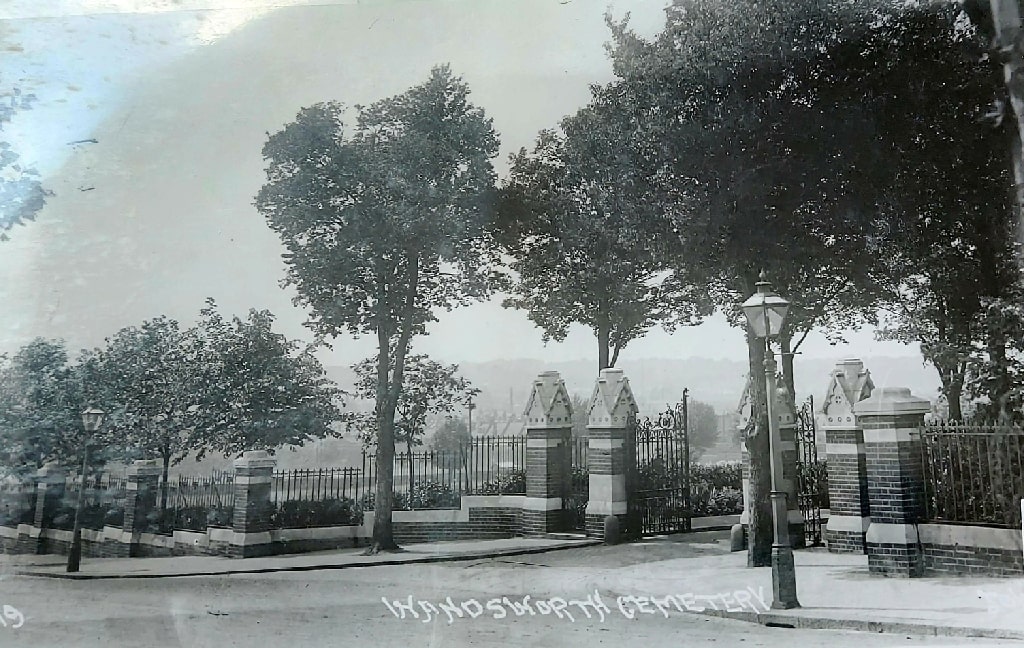
Down this road on winter afternoons came the military funerals . . . These were the funerals of the soldiers who had died of wounds in the military hospital up the road . . . They went at a measured pace, the hooves of the horses . . . clopping soberly by. Behind the pairs of horses came the gun carriage with its coffin draped with the Union Jack. There were mounted soldiers, khaki-clad, useful-looking riders without ceremonial trappings . . .
The procession would go by, down the hill into the wintry afternoon with its faint foggy smell that gripped your throat if you were out in it. It was the smell of coal fires and winter. The sky, when the cortege had gone out of sight, would be smoky grey with red streaks over the low-lying ground beyond the cemetery.
Those afternoons were very quiet. I would wait.
Then faintly the bugle would sound, final and sad, the lamenting never-coming-back notes of the Last Post.
It seemed to me a dark, smoky, red slash of sound against the quiet grey of the London winter evening coming down.
Stephen:
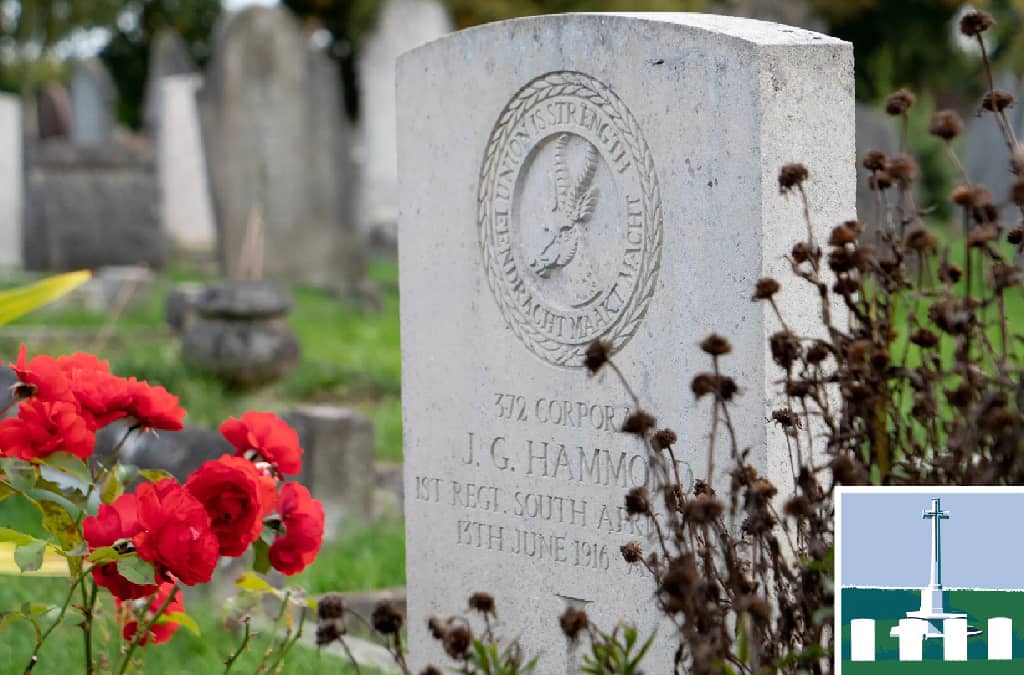
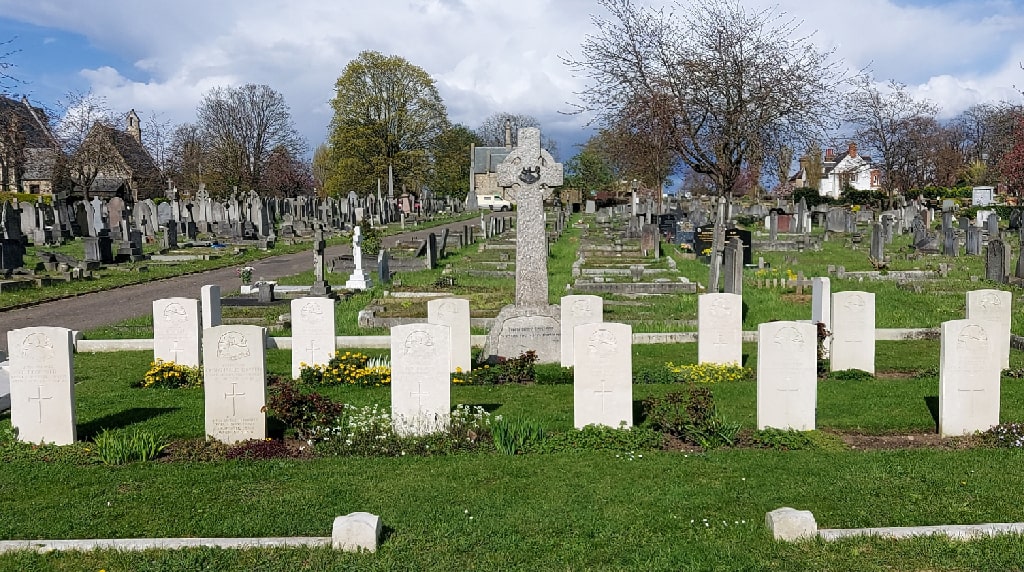
Wandsworth cemetery, which lay only a few yards from Betts's home, had been opened in 1878.
There are 475 servicemen of the First World War buried in the cemetery from all over the Empire. There are South Africans, Australians, New Zealanders, one member of the Indian Army, and a number of Canadians.
A particularly moving group of graves is that containing soldiers and one nurse from Newfoundland.
All so very far from home.
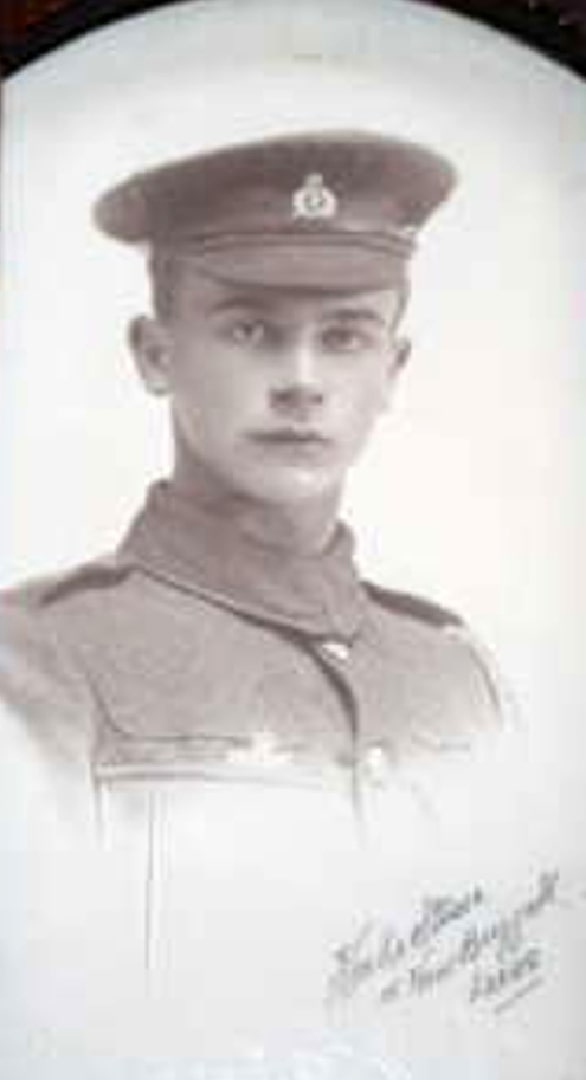
At the beginning of the war, when I was small, there had been several young subalterns who had come to the house to say goodbye to my mother before they went away to fight . . . One had a sword. You could see he was happy. You could see he loved having a sword to wear. Just for a moment you could see he was not quite a man yet, only a big boy like the scouts who sometimes made dens of branches in the field.
At the end of the war, suddenly, I remembered him, half a lifetime away. I asked my mother:' That soldier who came to say goodbye at the beginning of the war, what happened to him? He had a sword.
'' That must have been Colin Cowper. What a good-looking boy he was! . . . He was killed in the autumn of 1914. He was only twenty.
I saw the sword drawn in his hand, saw him hit and saw him fall, saw the bright sword fall from his hand, point down into the mud, and be lost like a spoon in a jar of jam. There it had fallen and there it lay still, rusted, the bright sword.
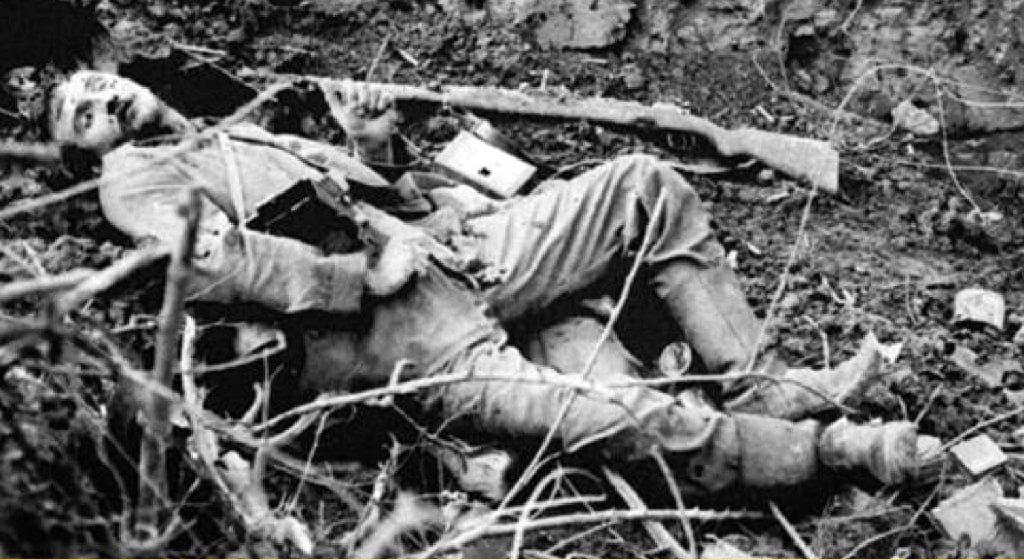
This was a time of sadness and weariness among the grown-ups.
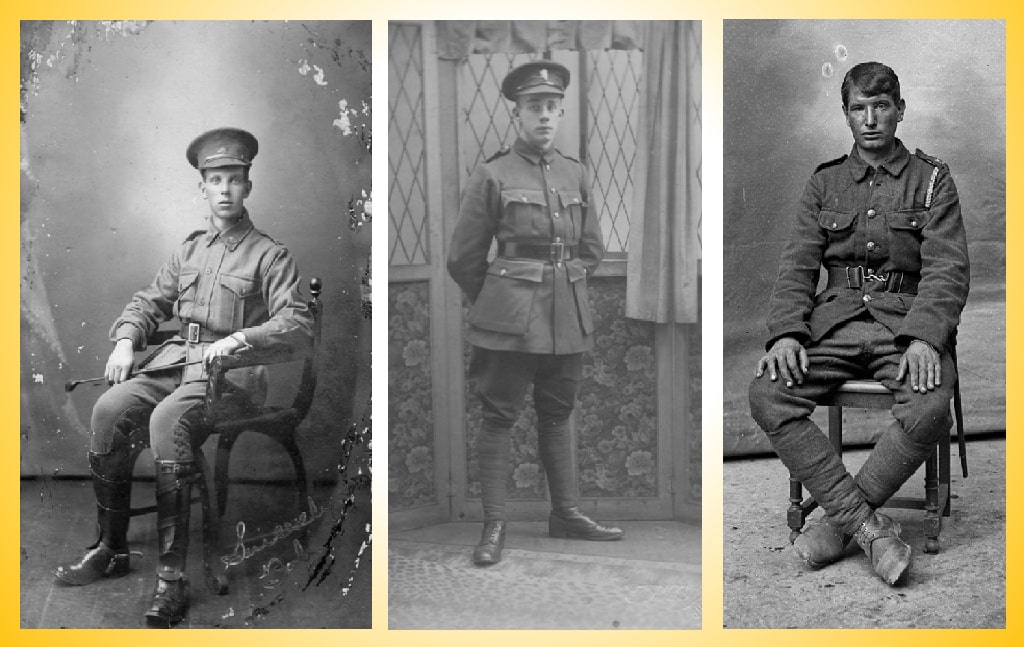
After four years of a heart breaking war there was scarcely a family not touched by loss. Three younger cousins of my father' s, brothers, had all been killed.
In neighbours' houses there were so many photographs of dead young soldiers looking out from silver frames. I used to look and look at the eyes of these soldiers, wondering what they had seen . . .
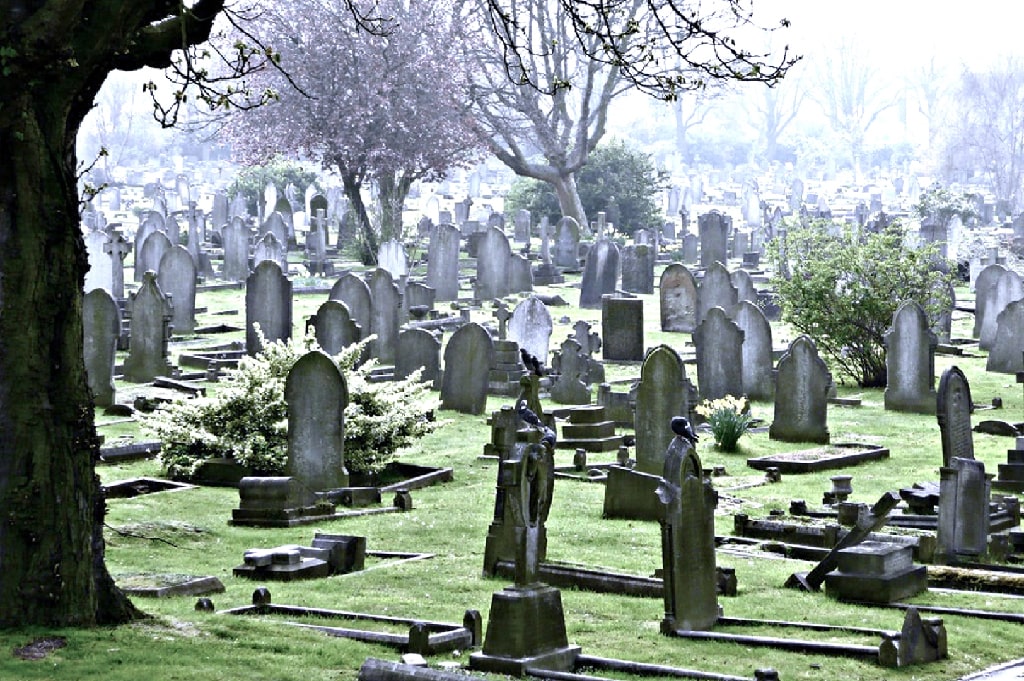
As for those at home, life had gone grey for them, Everybody was tired and few were well nourished.
When the great influenza epidemic struck, its victims offered little resistance. Those who died were often in the prime of life. Those who survived suffered from terrible depression.
I lay in bed one early morning and considered my situation. All around were gloomy grown-ups, always grumbling about something. They seemed abstracted and anxious if not actively disagreeable . . .
I found I was humming under my breath. The humming came up louder.
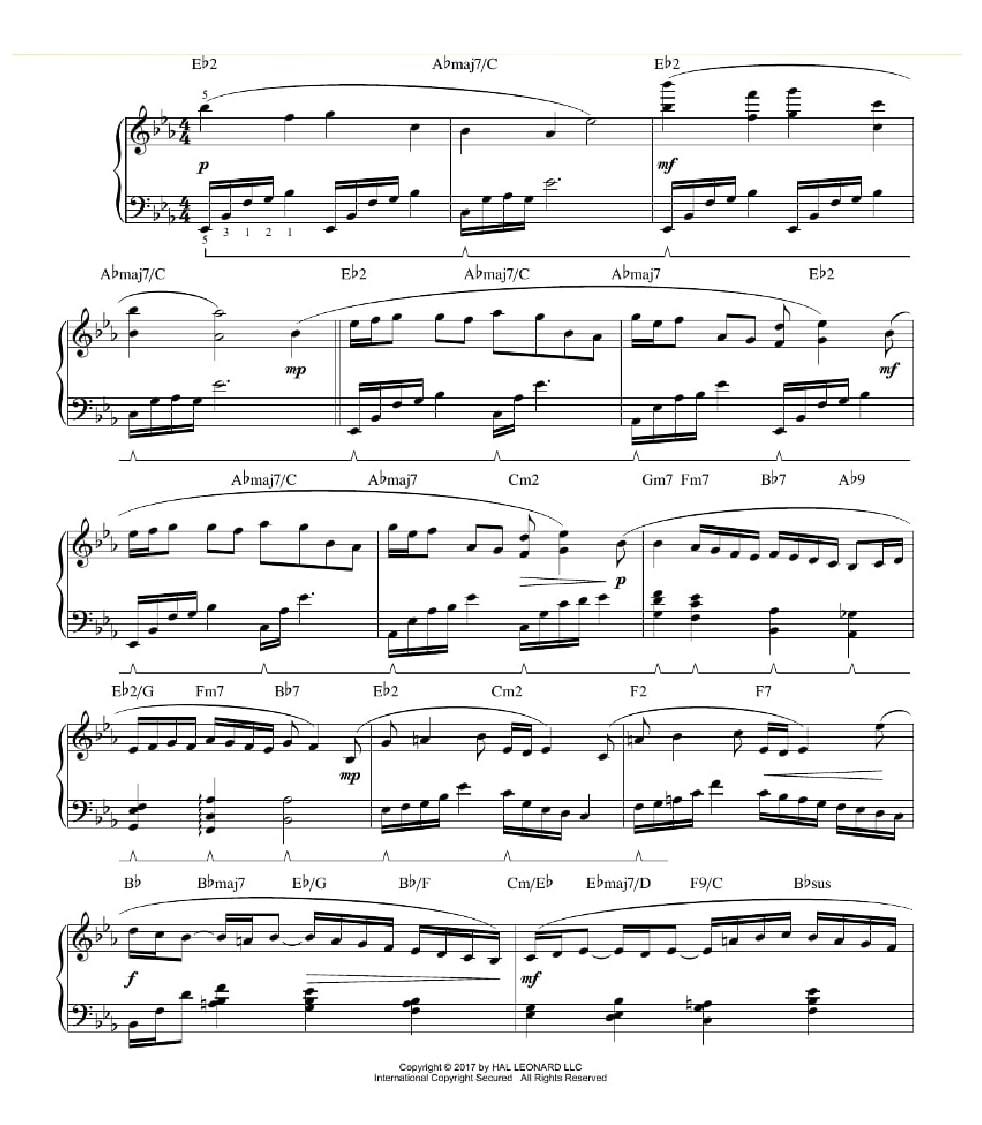
It was Sleepers Awake, splendid and heartening.
I hummed louder — I had no idea of the words — only the invigorating notes sang out, full of hope and courage. From his bedroom my father shouted at me for God's sake shut up. I shut up, but only slightly.
I still sang under my breath and felt suddenly wonderfully cheerful. Things were not so bad, really . . . .
Life was not so bad if one did not take it too seriously. One could hand it out as well as take it.
Sleepers Awake!
Stephen:
This resilient and spirited attitude towards life and her determination not to "take it too seriously" stood Betts in good stead in future years . . .
As Christopher Hawtree's research revealed, Betts progressed on to St Pauls' Girls' School in the 1920s and then took up a career as a writer and travelled extensively through the 1930s:
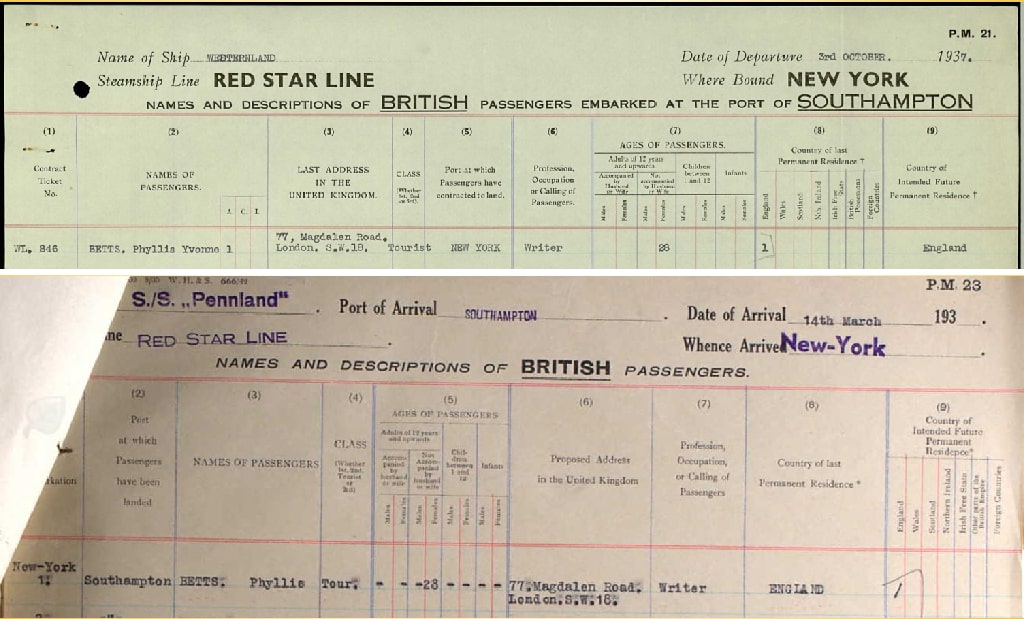
Here are some records of a transatlantic voyage she made to and from New York in 1937, when she would have been aged 28 and writing for the short-lived magazine Night and Day. You can see that she was referring to herself as a "writer" and that she was still living with her parents in Magdalen Road.
Sue:
She entered the land army during the Second World War and then settled in rural Wales.
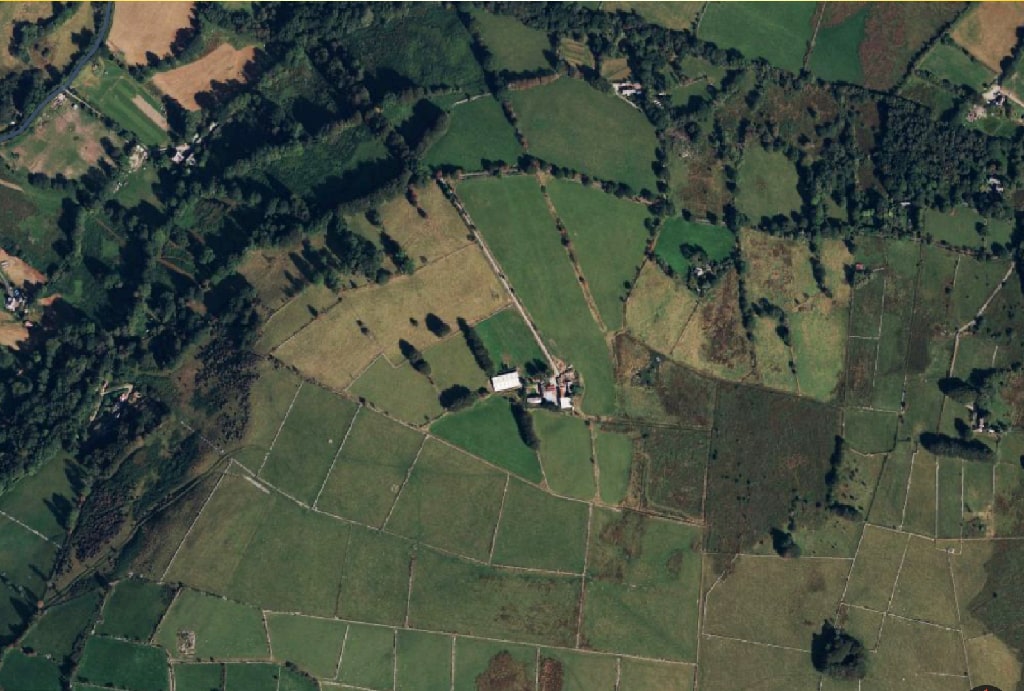
She gave her reasons for moving away from Wandsworth in a letter she later wrote some years later:' "I did not want to live like that, always short of space and time and breathing recycled air."
And in 1987, she was "still there", in Wales . . .
Christopher Hawtree takes up the story:
A little later, Veronica Wadley of the Daily Telegraph readily agreed that I should travel to Wales for an interview. This was quite a journey, without signposts through narrow lanes with high hedges in a motor car at low gear; when I did see anybody and asked directions, there was astonishment that I was going to visit P.Y. Betts ("we've heard of her but never seen her!").
Eventually I got there, at one end of a long track where I was greeted by a goat of an uncertain disposition and, after a struggle between tyres and mud, parked beside a low, thick-walled cottage from which, followed by a cat and dog, Betts emerged with pails in hand to feed others of the various animals which lived upon her tranche of hillside.
There was something marvellously heartening about her conversation borne of long experience (and visits by the mobile library where she put in for so many new books); she was savvier about the world than those who are eternally, wirelessly connected. All of this I wrote up, and it appeared complete with a photograph of her beside one of those animals: a seemingly stray peacock.
Sue:
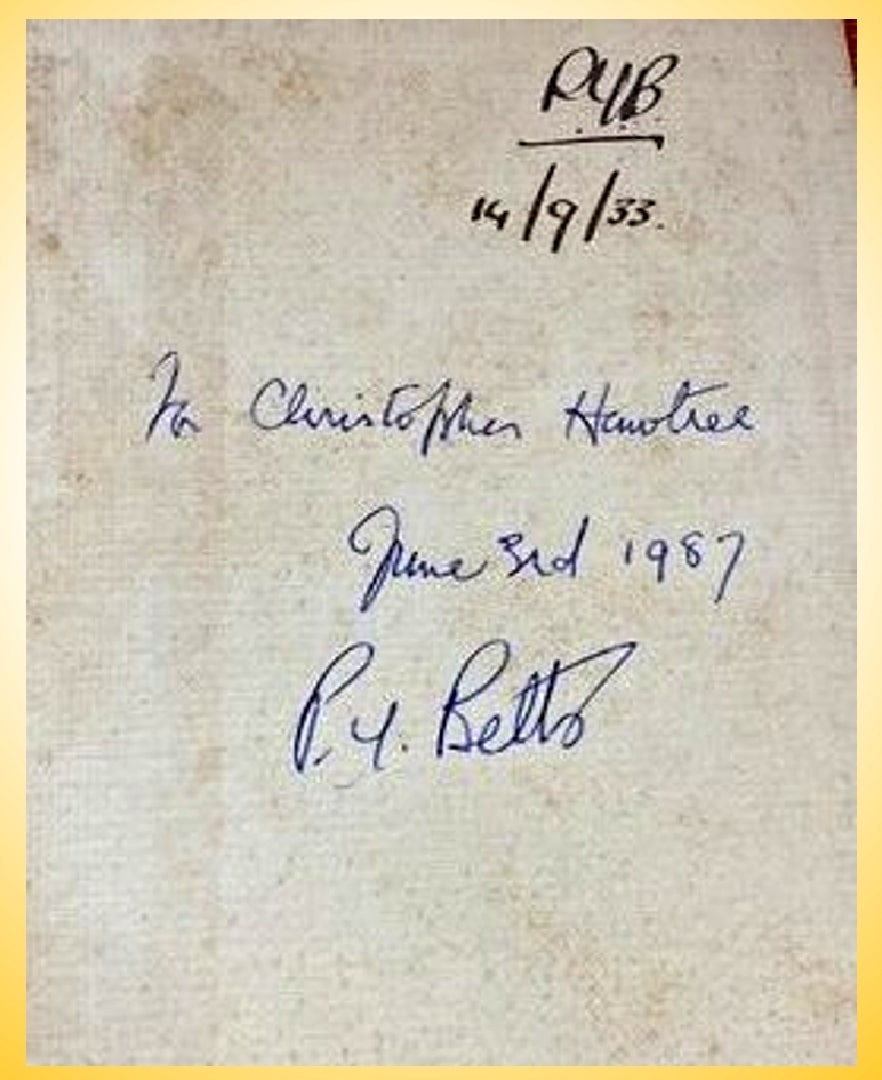
One token of Christopher's visit was this signed copy of French Polish that Betts gave him. You can see the dates, over 50 years apart.
Christopher:
One morning I received a telephone call.
A woman said, 'Mr. Hecht would like to speak with you'.
'All right', I replied, puzzled, curious.
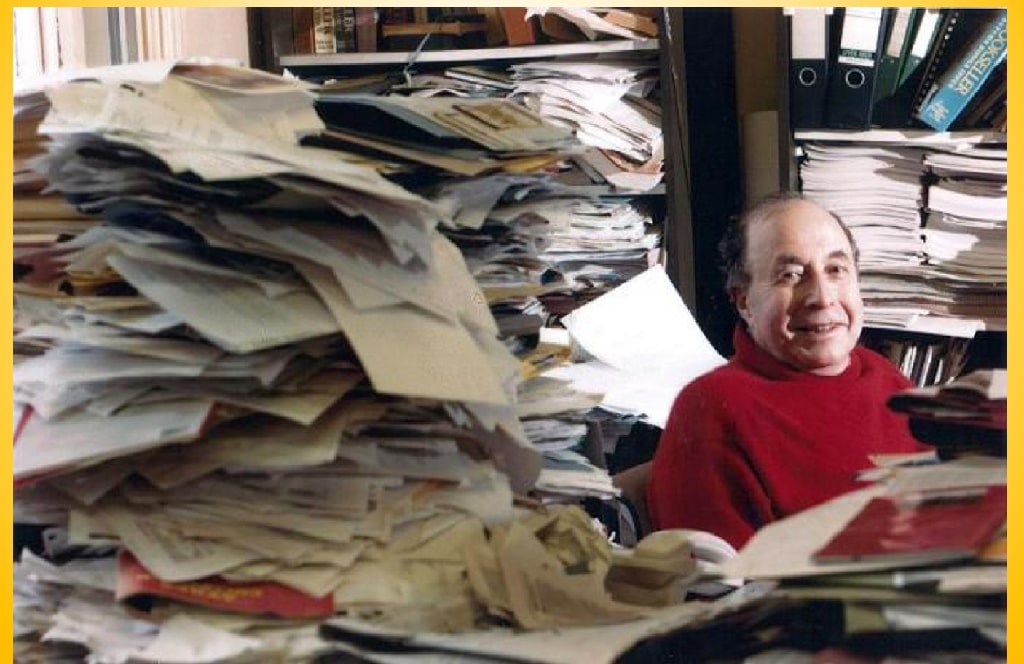
This turned out to be Ernest Hecht, the owner of independent publisher Souvenir Press, whose outwardly elegant office, chaotic within, was opposite the British Library on Great Russell Street. He had chanced to see the Telegraph piece — and wondered whether Betts would like to write a second book, one about the upbringing she had described to me.
This was an inspired notion, to which she readily agreed, and she wrote it — People Who Say Goodbye — through a Welsh winter.
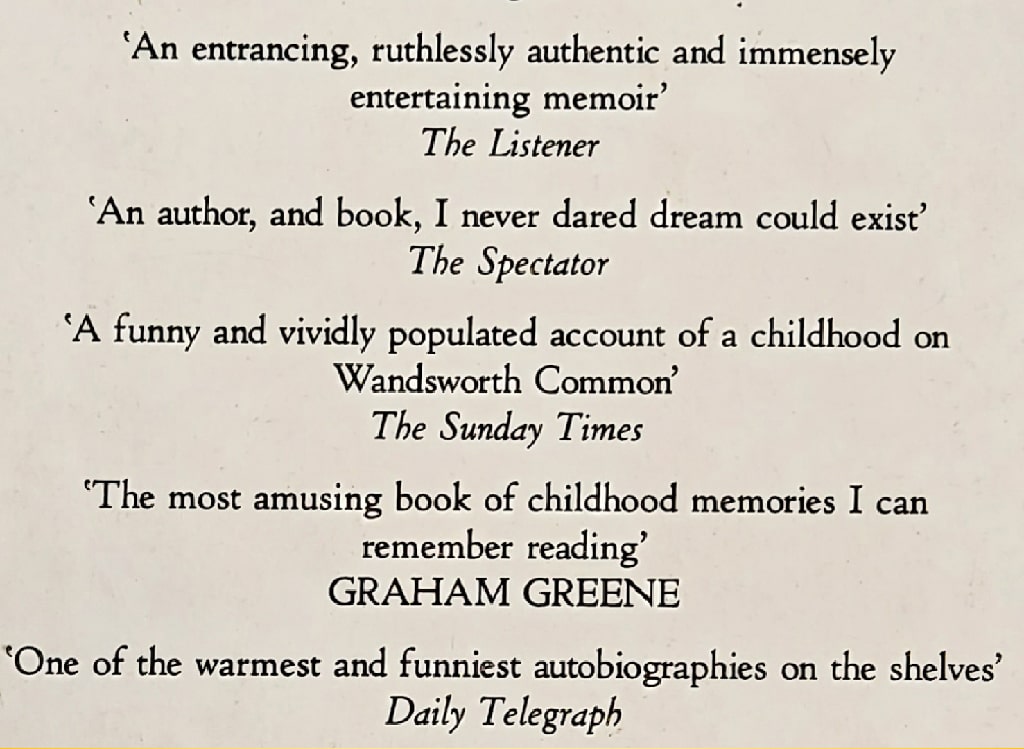
I asked Graham Greene if he would give a quote for the cover, which he happily did, and, one way and another, the book got about.
It was read in eight instalments on national radio, which, one Saturday, also sent an interviewer to her, while Dirk Bogarde, who had found it in a Chelsea bookshop, made it one of his books of the year.
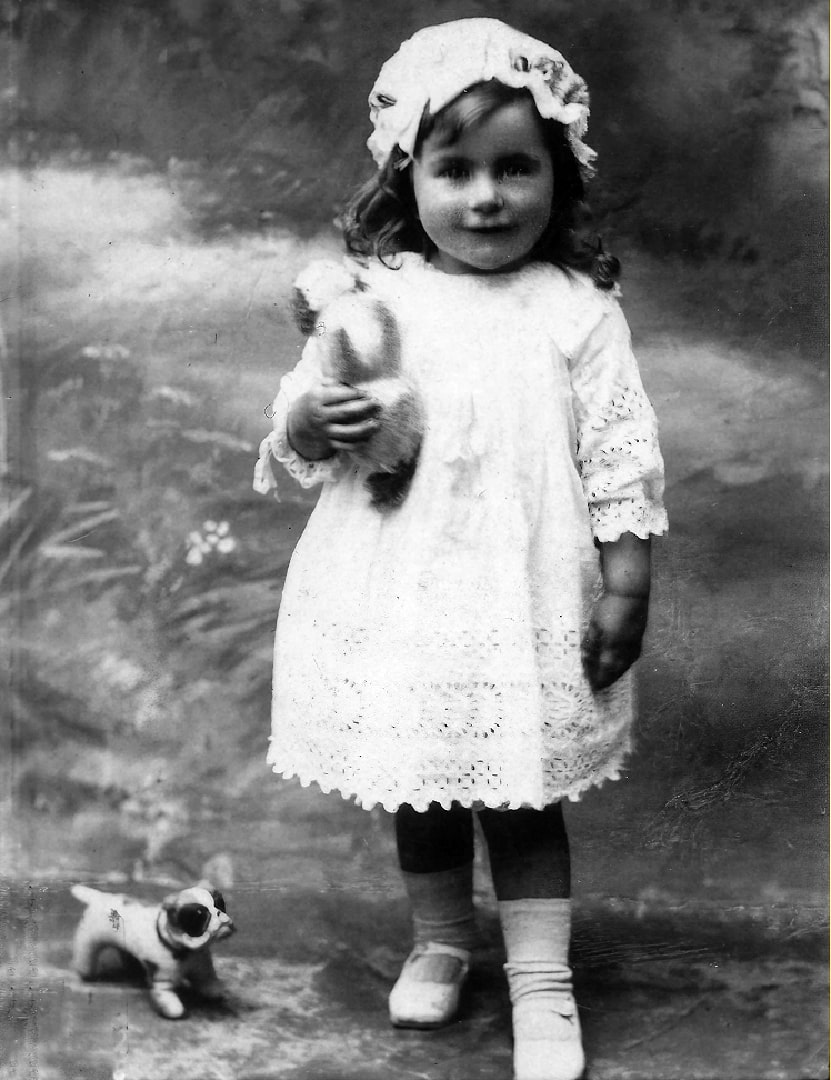
She died in her nineties, after a stroke which meant that — after living alone for so long — she had, ever pragmatic, to agree to a carer in that cottage where, as I found on another visit, there were now fewer animals, but her spirit was still vivid — as it remains, so wise, so funny, and this sequence of events always makes me thankful that I had made the initial foray to the Reading Room.
Sue:
And what of the title of Betts's memoir: People Who Say Goodbye?
Stephen:
Well, this is explained in the following passage, late in the book, when Betts is talking to Clement, who has been her piano tutor:
As usual, Clement was by himself at the piano. I told him I had passed the entrance exam and so should not be coming back for any more coaching. He doodled a bit on the piano, looking at me . . . .
[Clement] "Will you be coming back to see us?"
[Betts] "I shouldn't think so. In a way I should like to, but the way things are, I don't expect I shall."
"Why do you say that?"
"Because I've seen that people who come to say goodbye usually don't come back."
"When did you begin to notice this?"
"It came on gradually, from when I was about five, right up to now. It's true, you know."
"You were young to notice that is how things are."
"Fairly young, I suppose, yes."
"Do you remember the people who don't come back?"
"Yes. I remember them all."
"Will you remember me?"
"Of course I shall. If I live to be eighty I shall still remember you here playing the piano . . . playing the 'Dance of the Blessed Spirits'."
— "Dance of the Blessed Spirits", from Gluck Orfeo ed Euridice, played by Tarek Refaat.
Stephen:
And in her old age she did indeed remember Clement, and all the other people who passed, however briefly, through her young life.
And she preserved them forever in this wonderful book.
Thank you.
PB:
At this point, assuming this was the end of the evening's talk, the audience burst into wholehearted applause.
But, happily for us all, this was not the end . . .
Sue:
We thought our quest for PY Betts was complete. But it led us to wonder what had happened to Christopher Hawtree.
And so another quest began.
I think we had somehow, rather by association, not really considered the possibility that Christopher Hawtree might himself be "still there" somewhere today — and so it proved to be. It was Stephen, who — quite late in the day — decided to extend the quest and gleefully reported: "He's alive! And living in Hove!"
This was wonderful news as I had recently moved from Wandsworth Common to Brighton. It turned out Christopher had previously been a local Councillor, and I eventually tracked him down via a visit to the Green Party HQ . . .

. . . serendipitously located next to the "Arka Original Funeral Parlour" (which seemed a nice Bettsian touch). And a couple of weeks ago, we met and spent a charming evening at . . .
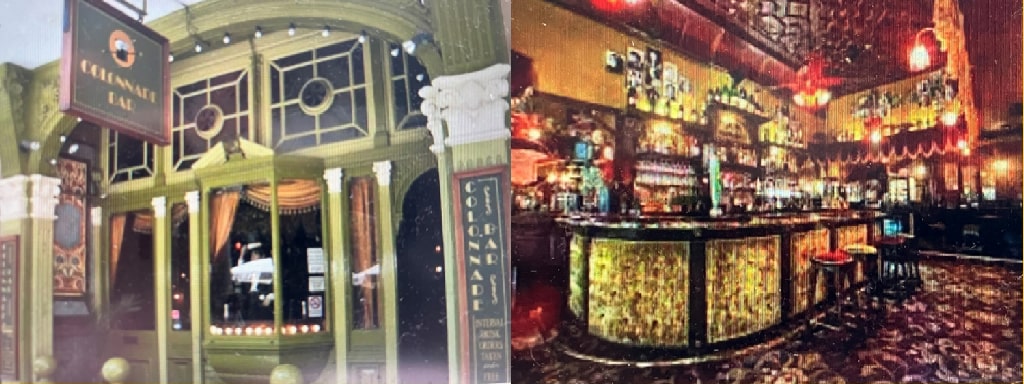
. . . The Colonnade bar outside Brighton's Theatre Royal, when he turned up with a photocopied manuscript of French Polish! He said he would like to attend our talk, and we are delighted to present as our finale . . .
Mr Christopher Hawtree, to whom we are all beholden for this lovely book:
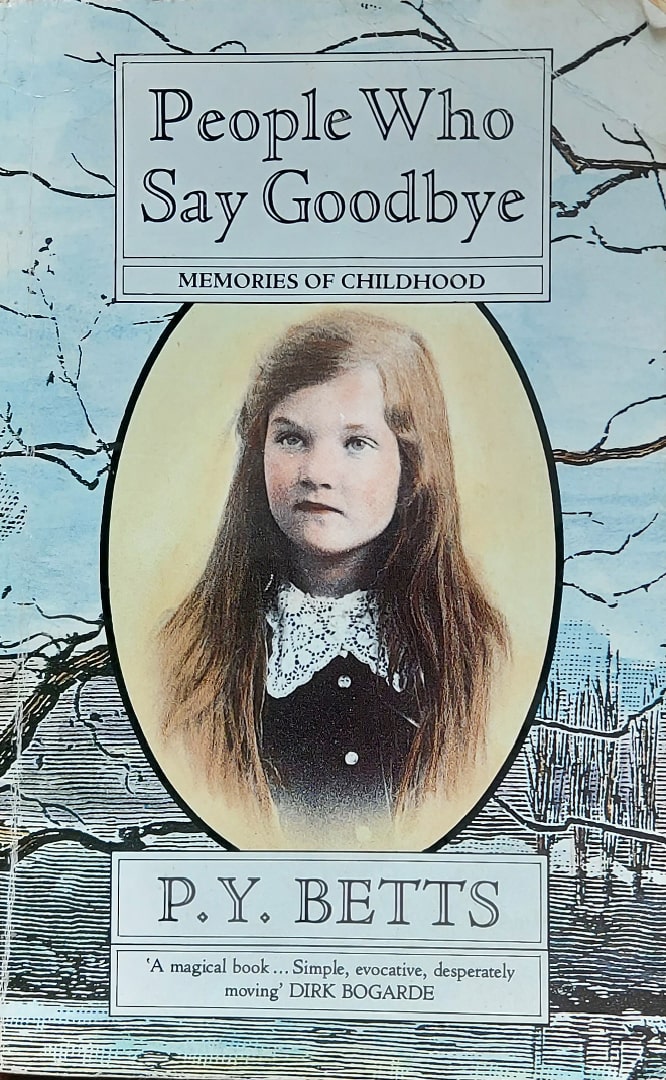
Chistopher Hawtree: [for it is he]
Thank you, Stephen and Sue, for organising this marvellously staged evening.
I'd just like to raise a glass to Betts and to Ernest Hecht who, in his own right, was an amazing man. He was an astonishing, independent publisher.
He did a lot for charities and published all sorts of strange books, including Chariots of the Gods and Arthur Hailey. And he stayed solvent in a very valuable premises opposite the British Museum. And it's thanks to him; he had the great idea of Betts writing this book.
I think it's still in print. It's gone through many paperbacks and different incarnations, and as Sue said it was read on the radio and Graham liked it very much. When he said, "The most amusing book of chilhood memories I can remember reading ", Betts wrote to me in one of her brilliant letters, "Well, at his age, he can't remember anything beyond last week", which was typical of her wit and her letters.
And I'm just amazed. I could easily have not gone to the British Library, and therefore not read her novel.
I wanted to track down everybody who appeared in Night and Day as much as I could. And it just goes to show how one little thing can lead to another and another and another. And here we are today. It's brought me full circle to Wandsworth Common.
Another part of the serendipity is that Night and Day magazine is remembered because it came to a rapid end after just six months. It was underfunded, but it's still popularly thought that it collapsed because 20th Century Fox sued it on behalf of the 9-year-old Shirley Temple, whom Graham Greene had reviewed in no uncertain terms — he had detailed the sexual subtext in her performance in Wee Willie Winkie (1937), directed by John Ford.
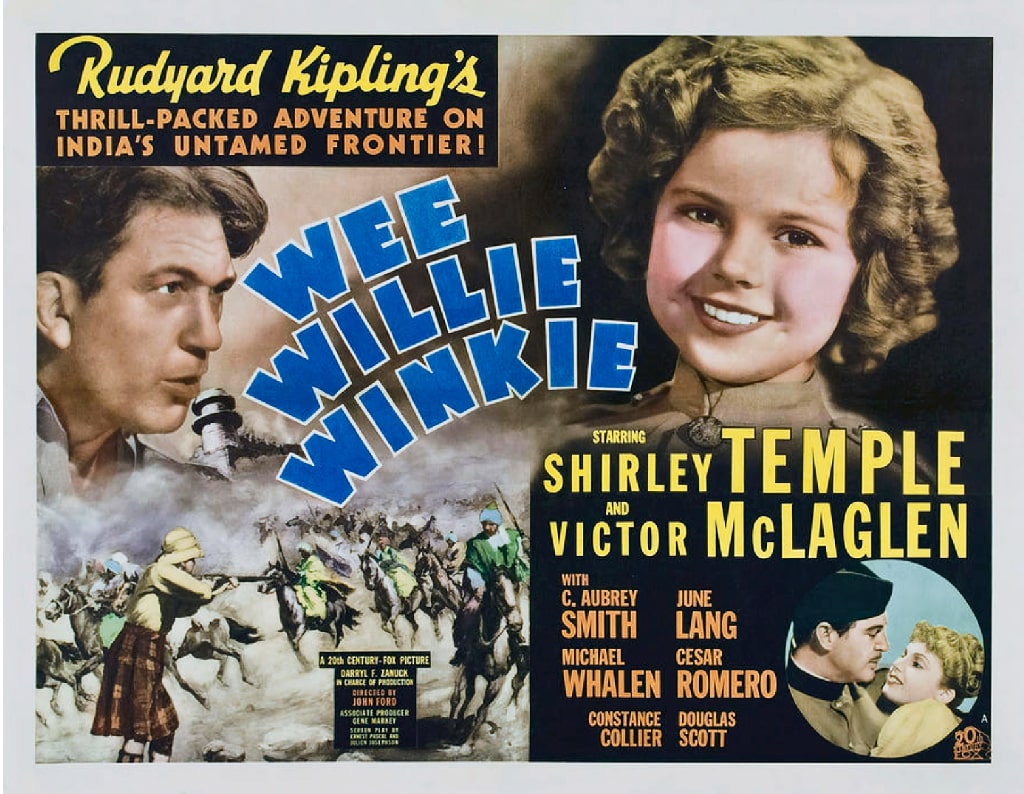
And, by great coincidence, at the same time as PY Betts's book appeared, there appeared the equally good volume of memoirs by Shirley Temple which she wrote herself called Child Star, in which she ended up agreeing with Graham's review of her film.

So at one extreme we have PY Betts, and on the other, that same autumn, Shirley Temple.
It's just astonishing to me that it keeps on going, this story. So, well done to both of you for organising this evening. It's just great that you have given this further fillip to the PY Betts's story and I think she'd be amazed. She was modest but also very savvy. She was nobody's fool, but in the best sense of the phrase.
Stephen:
When you finally got to meet her, what was she like?
Christopher:
It was wonderful. It's a cliche, but it's as though we'd known each other all the time. We just talked about not only the past which came up a bit in her speech — I didn't use a tape recorder or anything and, just as she went out with the pails to feed the animals, I scribbled down all the notes of what she'd said.
And she not only spoke about growing up in Wandsworth, which she records so well in the book, but she was very alert to what was going on in contemporary Wales — all these surviving hippies in the hills nearby who moved into caravans and carried on living in the spirit of the 60s.
Thank goodness for mobile libraries. The one at Lampeter was not far, that went all the way up all those lanes, as I did in my Citroen 2CV — and that was an ordeal. It somehow got around this long track and up the pathway, the long pathway to her cottage, where she only got electricity in 1970.
Stephen:
Sadly, People Who Say Goodbye is currently out of print, but second-hand copies can be bought online. It is also available through our local libraries' Libby app. (As a last resort, I have a spare copy which I would be prepared to lend. I can be contacted via history@wandsworthcommon.org/)
Here are a couple of reviews of the book online:
— Stuck In a Book: People Who Say Goodbye
— I Prefer Reading: People Who Say Goodbye, PY Betts
And don't forget the video of the original talk:
Back to the top of this page . . .
