IN PROGRESS — NOT FOR PUBLICATION
Henry Mayhew
Mayhew & Binny visit the Surrey House of Correction on Wandsworth Common, mid-1850s.
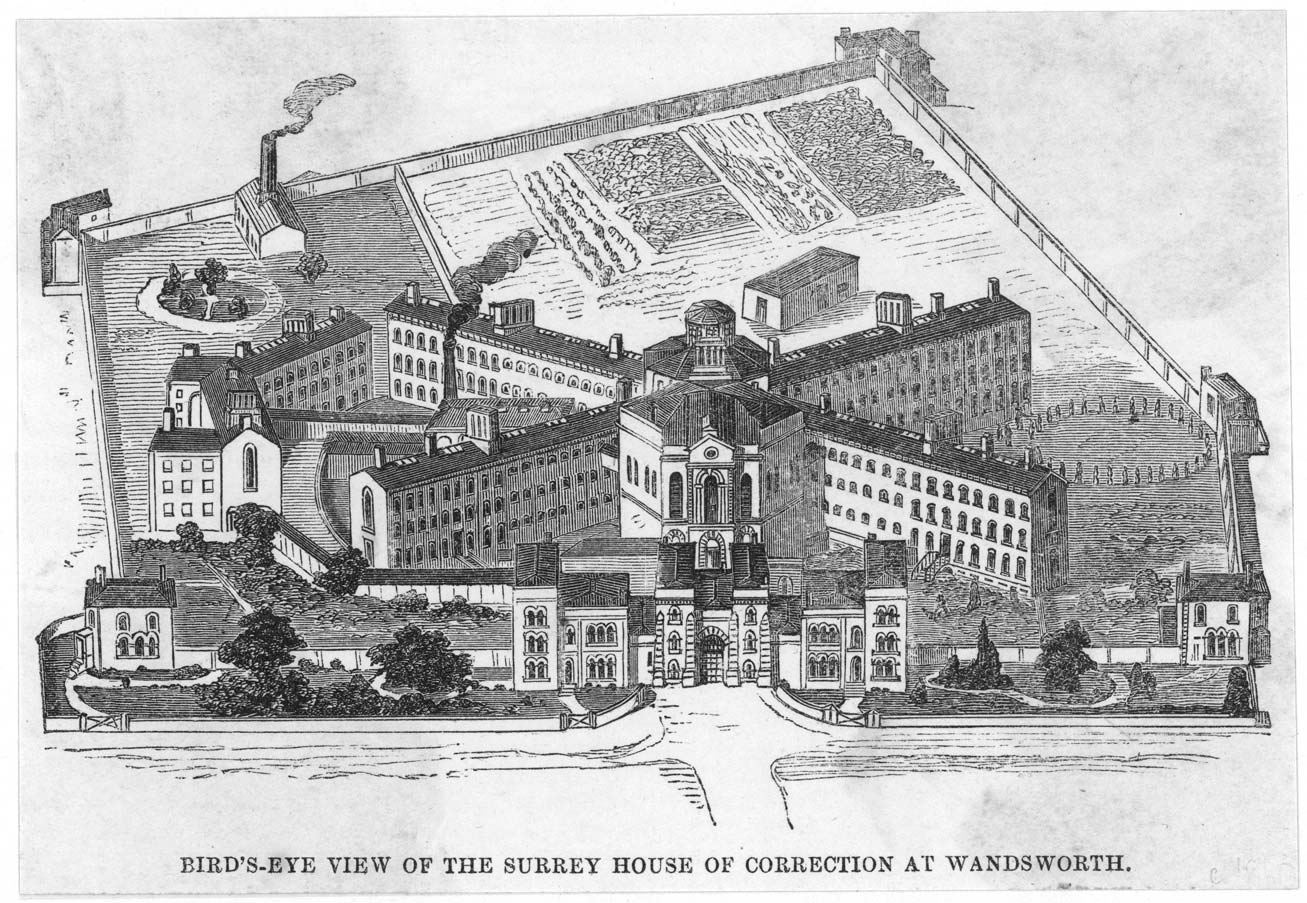
Bird's-Eye View of the Surrey House of Correction at Wandsworth [date?]
(Click on image to enlarge)
The House of Correction at Wandsworth has, externally, little to recommend it to the eye, having none of the fine, gloomy character and solemnity of Newgate, nor any of the castellated grandeur of the City Prison at Holloway; neither can it be said to partake of the massive simplicity of the exterior of Tothill Fields, nor to possess any feature about it that will bear comparison with the noble portcullis gateway at Pentonville.
To speak plainly, the exterior of the Surrey House of Correction is mean and ill-proportioned to the last degree, while the architecture of the outbuildings exhibits all the had taste of Cockney-Italian villas, and none of the austere impressiveness that should belong to a building of a penal character. Again, the central mass rising behind the stunted gateway is heavy even to clumsiness, and the whole aspect of the structure uncommanding as a Methodist college.
Nevertheless, the situation is admirably chosen for the health of the inmates. Built upon a gravelly soil, upon a large open tract of country, it seems to preclude the possibility of an epidemic ever raging among the prisoners.
Nor do we know a more pleasant and countrified spot than the furze-tufted Common on which stands, the view embracing a panorama for many miles round; in the distance the Crystal Palace may be seen shining like a golden bubble in the sun, whilst, looking towards the Metropolis, the Victoria Tower looms with exquisite grace from out the gray background of the London smoke; though, were it not for this glimpse of the great city, the stranger might fancy himself miles away from the Metropolis, so thoroughly primitive and half-desolate a look has the Common itself."
Indeed, the only buildings near are the Freemasons' Female School, with its high red brick central tower, and the little roadside public-house, with its adjoining tea-gardens, beside the Tooting Road [i.e. the County Arms on Trinity Road].
Nor is there any sign of the bustle or hurry of London life about the place, unless, indeed, it be the occasional passing of the trains along the neighbouring lines of rail; but even then the white steam merely is seen issuing in jets at different parts of the earth as it travels along, while the ground rumbles almost with a subterranean noise - for the rail runs far below the level of the Common, and the passage of the trains can only be heard and felt rather than seen.
PB: This really is a most wonderful piece of writing - a trip by train from central London to Wandsworth Prison described as though an intrepid exploration through the distinct vegetation zones, layers or strata from the hot tropics to the frozen north or an ascent up an immense mountain.
It ends at Wandsworth Prison, which is "at the peak, the colourless desolation of the poles themselves".
Though not published until 1861 or 1862, it is clearly the result of a visit some years earlier [Stewart McLaughlin writes "about 1856"] since M&B mention the Freemasons' School for Girls but not the RVPA [foundation stone laid 1857, completed 1858?]. Or did he confuse them, as so many have done since? Visually, they were in a very similar Gothic style. [Probably no confusion - the Freemasons' School was indeed red, whereas the RVPA is emphatically grey.
The ascent of a mountain in the tropics, and gradual passage through the several atmospheric layers of different climates, reveals, as we rise above the plains, the mountain sides prismatically belted, as it were, with the rainbow hues of various zones of fruits and flowers - the same as if we had passed along rather than above the surface of the globe - from the brilliant and glowing tints of vegetable nature at the tropics, to the sombre shades of the hardier plants and trees peculiar to the colder regions, even till we ultimately reach, at the peak, the colourless desolation of the poles themselves.
But this journeying upwards through the various botanical strata, as it were, of the earth is hardly more peculiar and marked than is the rapid transition now-a-days, while travelling on some London railway, from town to the country; for as we fly along the house-tops through the various suburban zones encircling the giant Metropolis, we can see the bricken city gradually melt away into the green fields, and the streets glide, like solid rivers, into the roads, and cabs and busses merge into wagons and ploughs, while factories give place to market-gardens, and parks and squares fade gradually into woods and corn-fields.
Perhaps this change, from civic to rustic scenery - this dissolving view, as it were, of the capital melting into the country, is nowhere better seen than in a half-hour's trip along the Southampton rail; for no sooner have we crossed the viaduct spanning the Westminster Road, and looked down upon the drivers at the back of the passing Hansoms, and the carters perched on the high box-seats of the railway-carriers' vans, as well as the passengers ranged along the roof of the Kennington omnibuses;
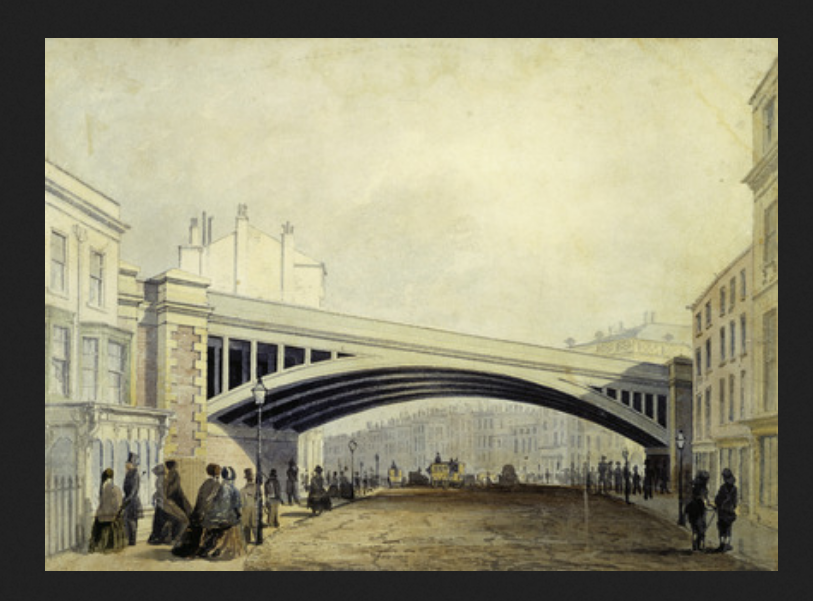
Viaduct over Westminster Road
(Click on image to enlarge)
and had a glimpse, moreover, at the bright coloured rolls of carpets standing in the first-floor windows of the great linen drapery styled "Lambeth House," than we are whisked into the region of innumerable factories - the tall black chimneys piercing the air as thickly as the minarets of some Turkish city; and then, even with the eyes shut, the nose can tell, by the succession of chemical stenches assailing it, that we are being wafted through the several zones of Lambeth manufactures.
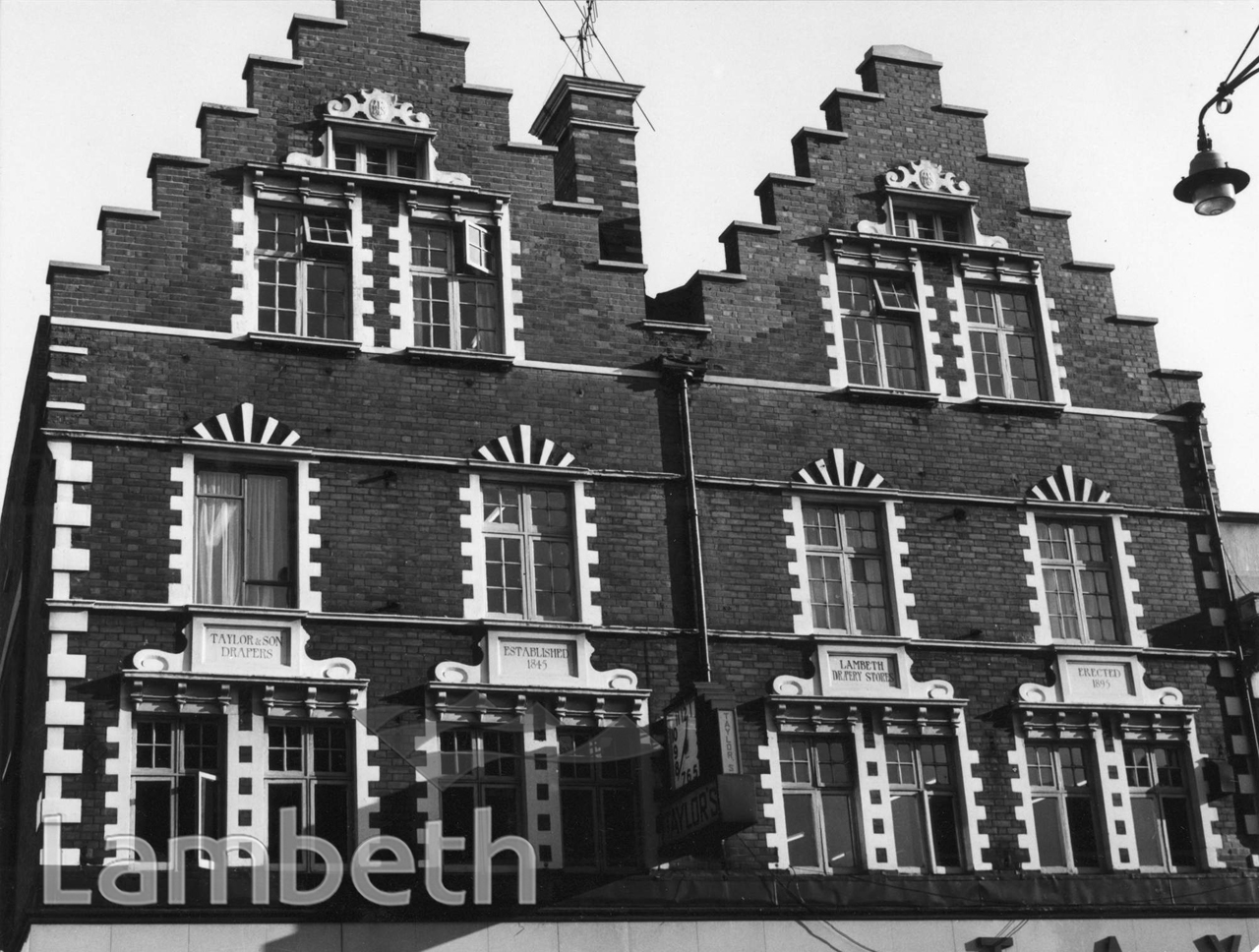
Lambeth House, Drapers
(Click on image to enlarge)
Now we get a whiff of the gutta-percha works; then comes a faint gust from some floor-cloth shed; next we dash through an odoriferous belt of bone-boiling atmosphere; and after that through a film of fetor rank with the fumes from the glazing of the potteries; whereupon this is followed by bands of nauseous vapours from decomposing hides and horses' hoofs, resin and whiting works; and the next instant these give place to layer after layer of sickening exhalations from gas factories, and soap-boiling establishments, and candle-companies; so that we are thus led by the nose along a chromatic scale, as it were, of the strong suburban stenches that encompass, in positive rings of nausea, the great cathedral dome of the Metropolis, like the phosphoric glory environing the head of some renowned catholic saint.
Nor is the visional diorama that then glides past us less striking and characteristic than the nasal one. What a dense huddle and confused bricken crowd of houses and hovels does the city seem to be composed of; the very train itself appears to be ploughing its way through the walls of the houses, while each gable end that is turned towards the rail is used as a means to advertise the wares of some enterprising tradesman.
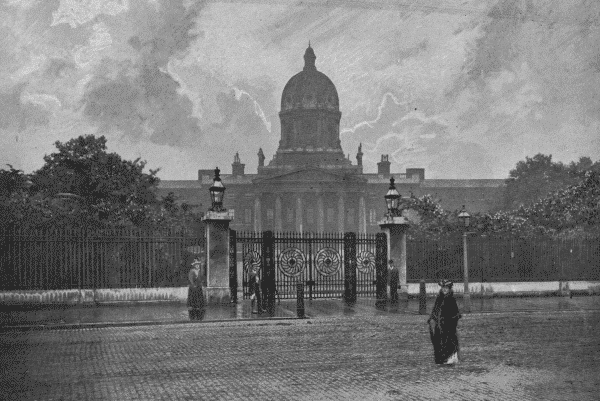
"Bedlam" - Bethlem Asylum, Lambeth Road
In 1936, part of the asylum became the home of the Imperial War Museum.
(Click on images to enlarge)
Now the cathedral-like dome of Bedlam flits before the eye, and now a huge announcement tells us that we are flying past the famed concert-tavern called Canterbury Hall.
Then we catch just a glimpse of the green gardens and old ruby towers of Lambeth Palace; and no sooner has this whizzed by, and we have seen the river twinkle for a moment in the light, like a steel-plate flashing in the sun, than we are in the regions of the potteries, with their huge kilns, like enormous bricken skittles, and rows of yellow-looking pipes and pans ranged along the walls.
The moment afterwards the gas-works, with their monster black iron drums, dart by the window of the carriage; and the next instant the old, gloomy, and desolate-looking Vauxhall Gardens, with its white rotunda, like a dingy twelfth-cake ornament, glides swiftly by.
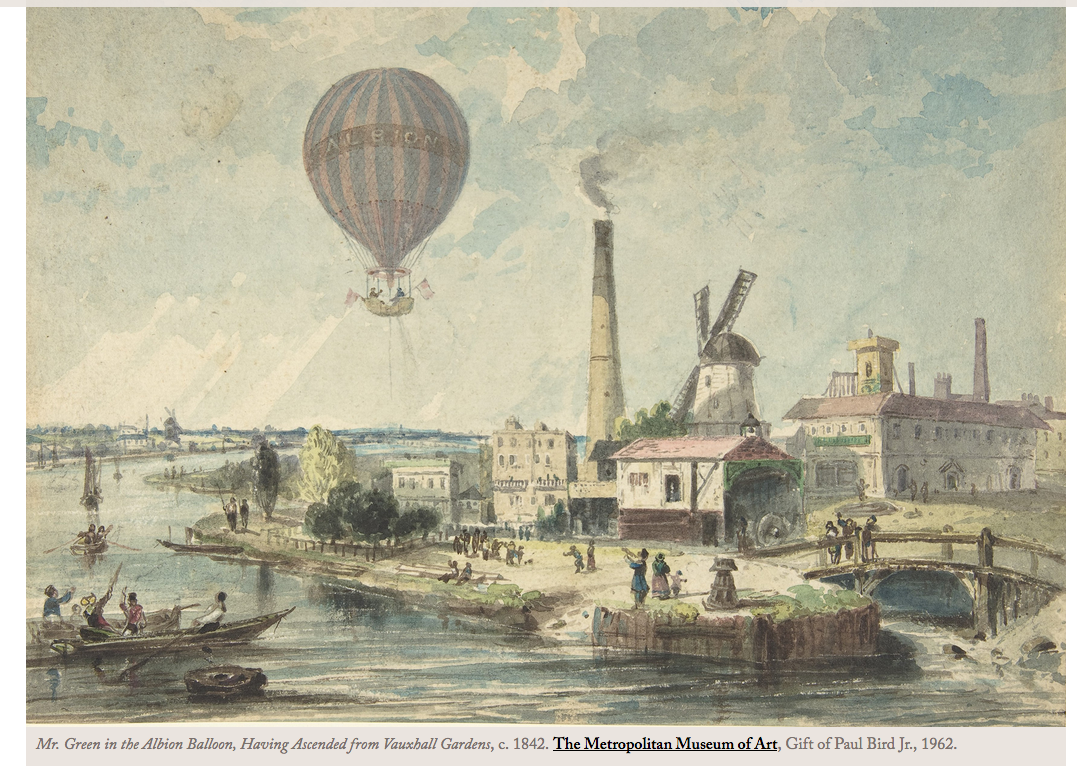
Vauxhall Gardens was in its final throes at this time, in part (ironically) because of the coming of the railway line and the building of Vauxhall station intended to boost trade
(Click on image to enlarge)
Then we have another momentary peep down into the road, and have hardly noted the monster railway taverns, and seen the small forest of factory chimneys here grouped about the bridge, with Price's gigantic candle-works hard by, than we are flying past the old Nine Elms station.
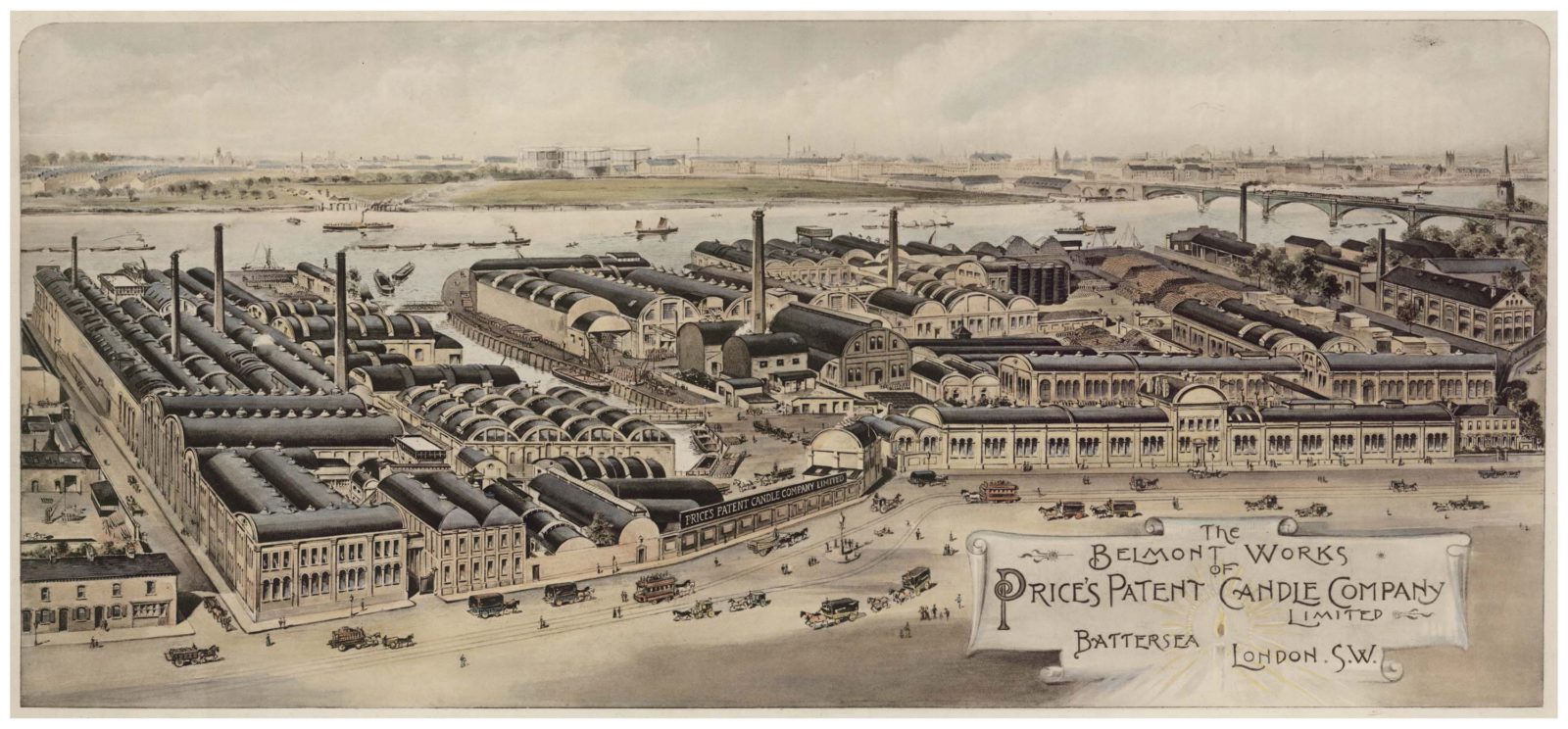
Price's Candle Works
(Click on image to enlarge)
No sooner has this flitted by than the scene is immediately shifted, and a small, muddy canal is beheld, skirted with willows; and then the tall metal syphon of the water-works, like a monster hair-pin stuck in the earth, shoots rapidly into sight; whereupon the view begins to open a bit, revealing Chelsea Hospital, with its green copper roof and red and white front, on the other side of the river; while the crowd of dwellings grows suddenly less dense, and the houses and factories dwindle into cottages with small patches of garden.
(Click on image to enlarge)
Here, too, the London streets end, and the highroads, the lanes, and hedges make their appearance; while large, flat fields of the suburban market-garden rush by, each scored with line after line of plants.
Nor is it many minutes more before these vast plains of cabbage and tracts of potatoes are succeeded by a glance of sloping lawns and pleasant-looking country villas, ranged alongside the raised roadway; immediately after which we are in the land of railway cuttings, with the line sunk in a trough of deep green shelving banks, instead of being buried, as it was only a few minutes before, among the sloping roofs and chimney-pots of the smo London houses.
Another instant, and the train rattles through a little tunnel, and then is heard the sharp, shrill scream of the whistle; whereupon porters dart by the carriage windows, crying, "Clapham Common! Clapham Common!" and the instant afterwards are landed at the little rustic station there.
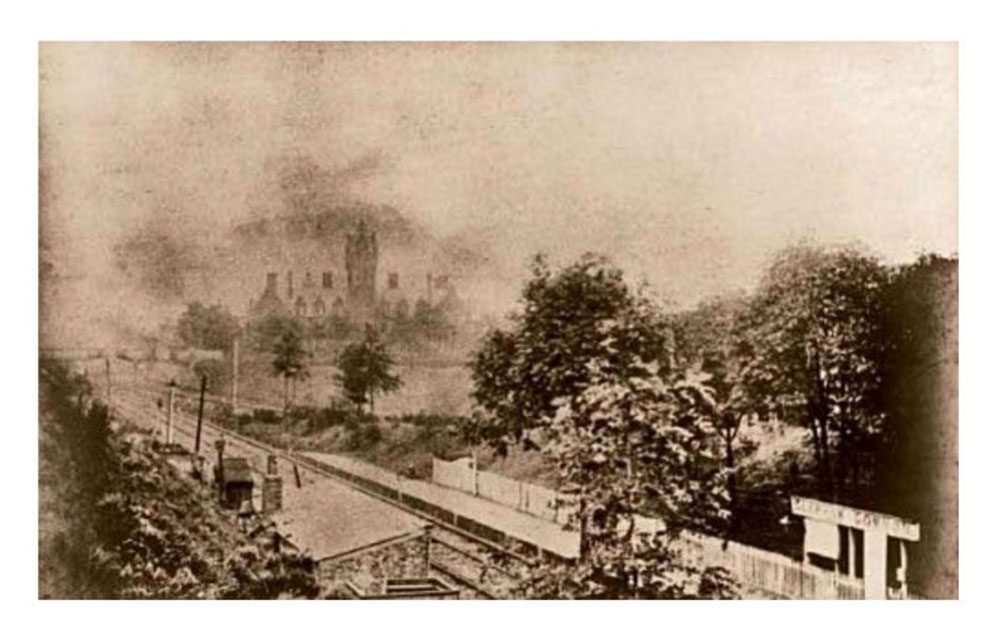
'"Clapham Common! Clapham Common!" and the instant afterwards are landed at the little rustic station there.' The only known photograph of the station that Mayhew and Binny alighted at. Notice the Freemasons School for Girls in the background. By ? it had been abandoned, and Clapham Junction Station took its place.
(Click on image to enlarge)
Not actually "Clapham Common", of course, but a Wandsworth station that opened 21 May 1838 and closed in 1863, after Clapham Junction was opened in its place. This station was on the London & South Western Railway line to Southampton. Nearby "New Wandsworth" served the tracks going towards Crystal Palace. The stations once stood near the bridge at the [old] entrance to Emanuel School.
[Wikipedia: Clapham Common Railway Station.]
[Wikipedia: West End of London and Crystal Palace Railway.]
[Wikipedia: London Brighton and South Coast Railway.]
The House of Correction at Wandsworth has, externally, little to recommend it to the eye, having none of the fine, gloomy character and solemnity of Newgate, nor any of the castellated grandeur of the City Prison at Holloway; neither can it be said to partake of the massive simplicity of the exterior of Tothill Fields, nor to possess any feature about it that will bear comparison with the noble portcullis gateway at Pentonville.
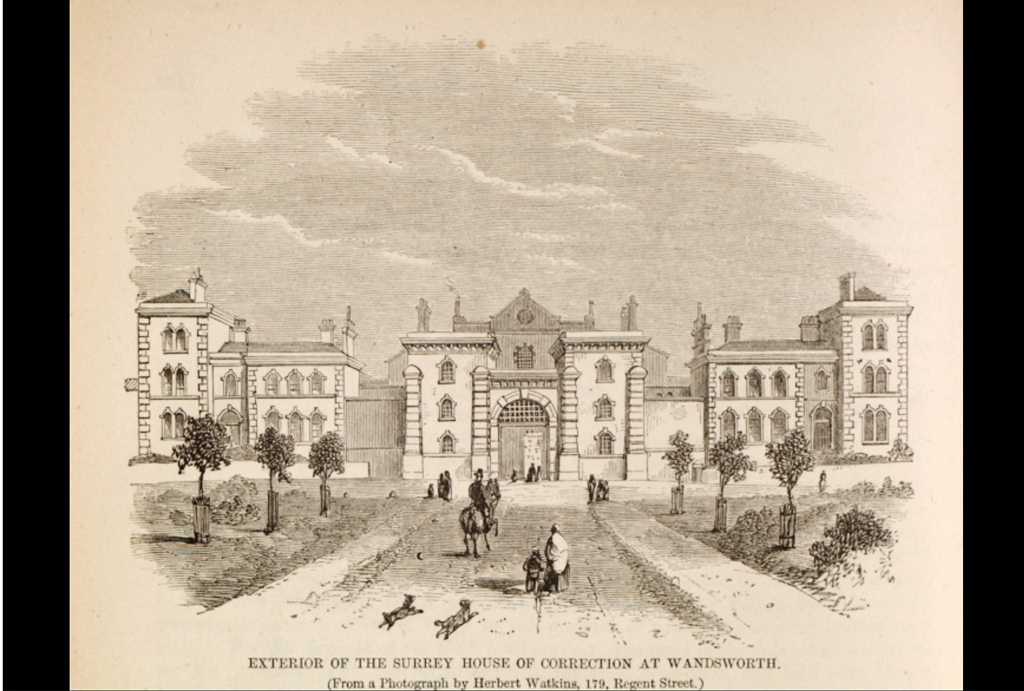
"Exterior of the Surrey House of Correction at Wandsworth"
[Museum of London]
(Click on image to enlarge)
To speak plainly, the exterior of the Surrey House of Correction is mean and ill-proportioned to the last degree, while the architecture of the outbuildings exhibits all the had taste of Cockney-Italian villas, and none of the austere impressiveness that should belong to a building of a penal character. Again, the central mass rising behind the stunted gateway is heavy even to clumsiness, and the whole aspect of the structure uncommanding as a Methodist college.
Nevertheless, the situation is admirably chosen for the health of the inmates. Built upon a gravelly soil, upon a large open tract of country, it seems to preclude the possibility of an epidemic ever raging among the prisoners.
Nor do we know a more pleasant and countrified spot than the furze-tufted Common on which it stands, the view embracing a panorama for many miles round; in the distance the Crystal Palace may be seen shining like a golden bubble in the sun, whilst, looking towards the Metropolis, the Victoria Tower looms with exquisite grace from out the gray background of the London smoke; though, were it not for this glimpse of the great city, the stranger might fancy himself miles away from the Metropolis, so thoroughly primitive and half-desolate a look has the Common itself.
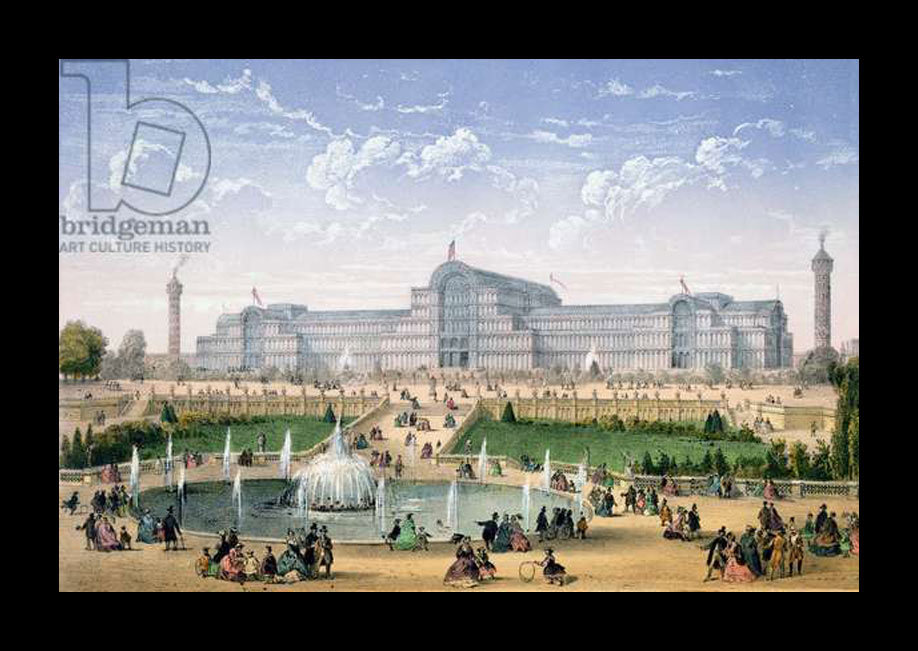
(Click on image to enlarge)
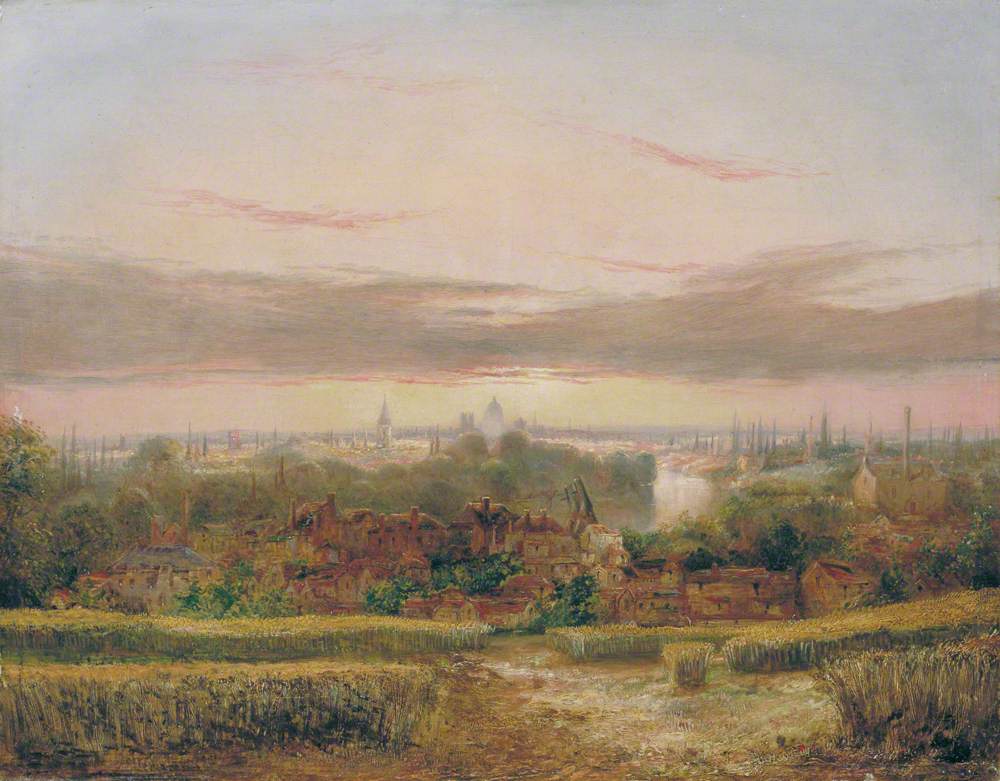
(Click on image to enlarge)
Indeed, the only buildings near are the Freemasons' Female School, with its high red brick central tower, and the little roadside public-house, with its adjoining tea-gardens, beside the Tooting Road.
Surely Tooting Road must be the future Trinity Road, and the little roadside public-house a precursor of the County Arms?

Royal Freemasons' School for Girls, Wandsworth Common
[as seen by Mayhew & Binny from the railway]
(Click on image to enlarge)
Nor is there any sign of the bustle or hurry of London life about the place, unless, indeed, it be the occasional passing of the trains along the neighbouring lines of rail; but even then the white steam merely is seen issuing in jets at different parts of the earth as it travels along, while the ground rumbles almost with a subterranean noise - for the rail runs far below the level of the Common, and the passage of the trains can only be heard and felt rather than seen.
[Source: WANDSWORTH_PRISON_mayhew_binny_criminal prisons_london_1862.pdf]
Further info.
See also e.g.
[Wikipedia: Henry Mayhew.
Several mentions of Wandsworth / Wandsworth Common in vols 1-3
including
"The sand here is very fine, and mostly disposed of to plasterers. There is also some of this kind of sand at Wandsworth. " (vol.l2)
street photographers
Jack Black (vol.3)
dumping of refuse in "Potter's ?" - I definitely saw something on these lines somewhere in the 3 Mayhew books, but where?