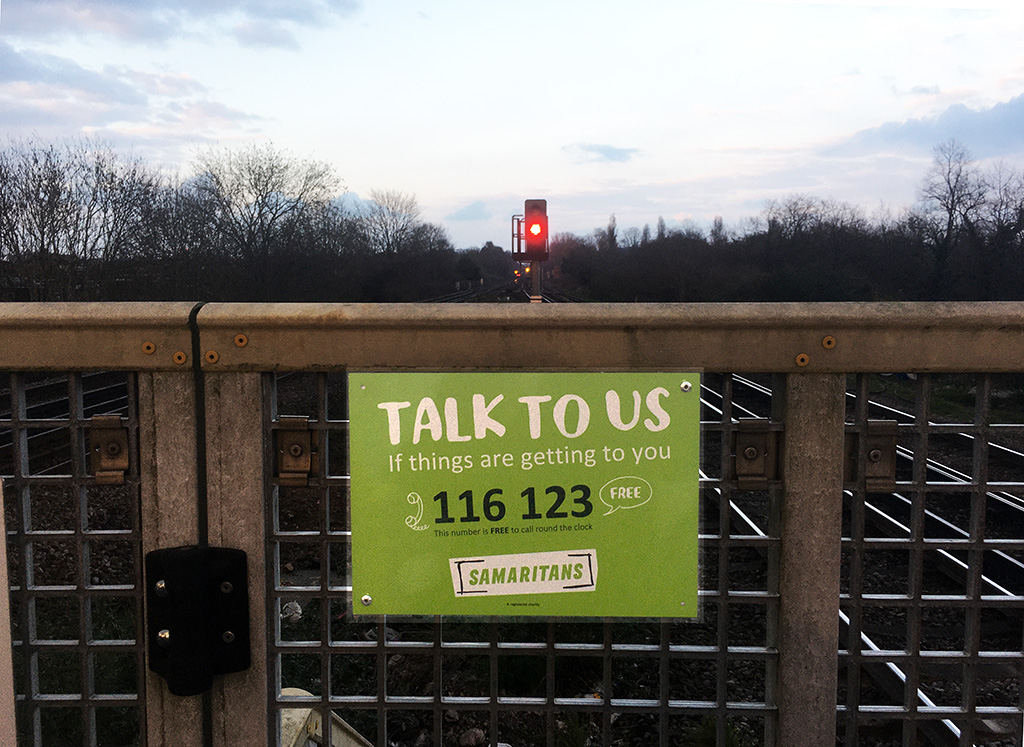
Notice for example references to the vicar of St Paul's Church, on St John's Hill (now . This is Chad Varah, who will shortly create the Samaritans, having.... For many years he lived on North Side, facing the Common.


By the end of his time in Wandsworth/Battersea, when he left for a City church, he had developed the idea of a "999 phone for the suicidal", which became the Samaritans and a completley British comic that would [rival....which he and his cofounder ? Morris said were ....doing etterible things " Tjir first idea was for a ? young inner city curate [yes, rweally), but soon realised that something a little more [??] was needed. They had worked with Frank Hampton [...] and he was the...
Chad Varah's science training led to his... science ?? to Dan Dare...
Samaritans was founded in 1953 by Rev. Chad Varah, a Church of England vicar in the Diocese of London.
His inspiration came from an experience he had had some years earlier as a young curate .... He had taken a funeral for a fourteen-year old girl who had committed suicide because she believed she had contracted an STD, when in reality she was menstruating. Varah placed an advertisement in a newspaper encouraging people to volunteer at his church, listening to people contemplating suicide.
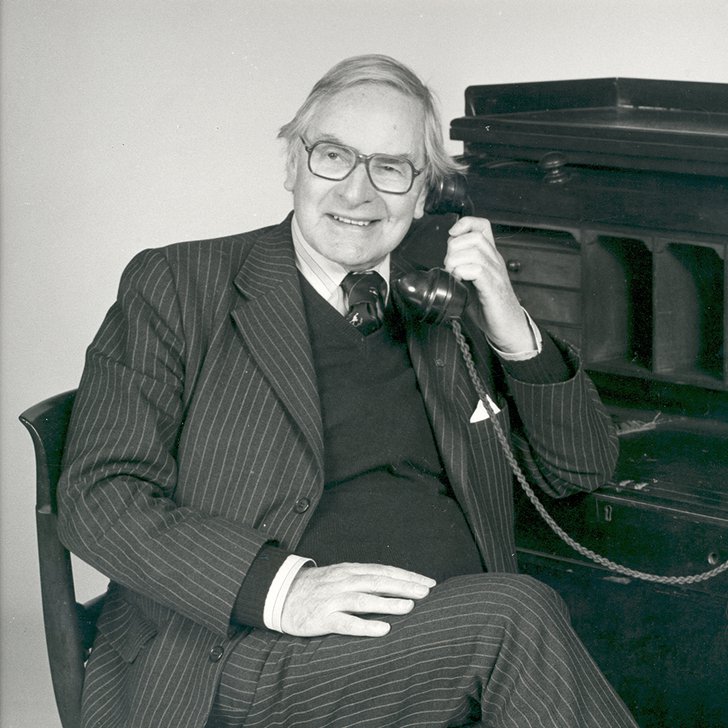
Also:"vicar-writer-cartoonist-sex-educator-counsellor"
[Samaritans: Link.]
[ADD photo of the sign on Wandsworth Common station?]
Dan Dare — born and bred in Battersea? Well, not quite. But there is a connection...
According to the official Dan Dare website:
The Eagle Comic originally ran from 1950–1969...Within days of being launched, the comic, which consisted of 20 pages, 8 of which were in full stunning colour, was selling nearly 1 million copies per week.
The original pioneering artwork by Frank Hampson was simply superb. Other artists such as Frank Bellamy, Harold Johns and Don Harley also created amazing visuals.
The original artwork was drawn in bright innovative colours and the printing process was totally new and unique. Eric Bemrose Engineers and Printers in Liverpool built a ten-bank rotary printing press which was built in twelve weeks.
" It took us three eight hour shifts, twenty four hours a day, seven days a week to produce a million copies a week with the help of 200 staff. "
Fr The Survey of London: Battersea vol.
During the Second World War, St Paul's lost most of its stained glass and suffered some structural damage. Its chronicle was enlivened by the brief incumbency (1949—53) of the Rev."
He spent much time helping his friend the Rev. Marcus Morris with his boys magazine, The Eagle; in the parish he concentrated on the young people, "because the old people had, as I toughly put it, "had their chance" - if they hadn't been converted by now they never would be.
The young became the subjects of Varah's innovative techniques of sexual counselling and sex therapy.146
Embellishment of the church was not neglected. A west window came from Powells, while for another in the north aisle Varah persuaded "that eccentric old Irish genius who looked like a witch, Wilhelmina Geddes, to do it before she died; but she died before it was finished and someone else [C.F. Blakeman] completed her design, not wholly unworthily.147 [END OF QUOTE?]
Visiting St Paul's in 1966 when it was teetering on redundancy, John Betjeman thought the Geddes-Blakeman window (not installed till 1956) "a nice design" but "pale in colour"; the church as a whole he found "very dismal.148 This and the other post-war windows are still in place, obscured behind protective glass.
The destruction of St Peter's saved St Paul's from redundancy, the parishes being formally united in 1972.149 Some years later a coarse internal conversion ensued, and the Louvaine Area Residents Association took over the building. Few internal features are now visible and most fittings have been removed, apart from the organ and the apsidal panelling.
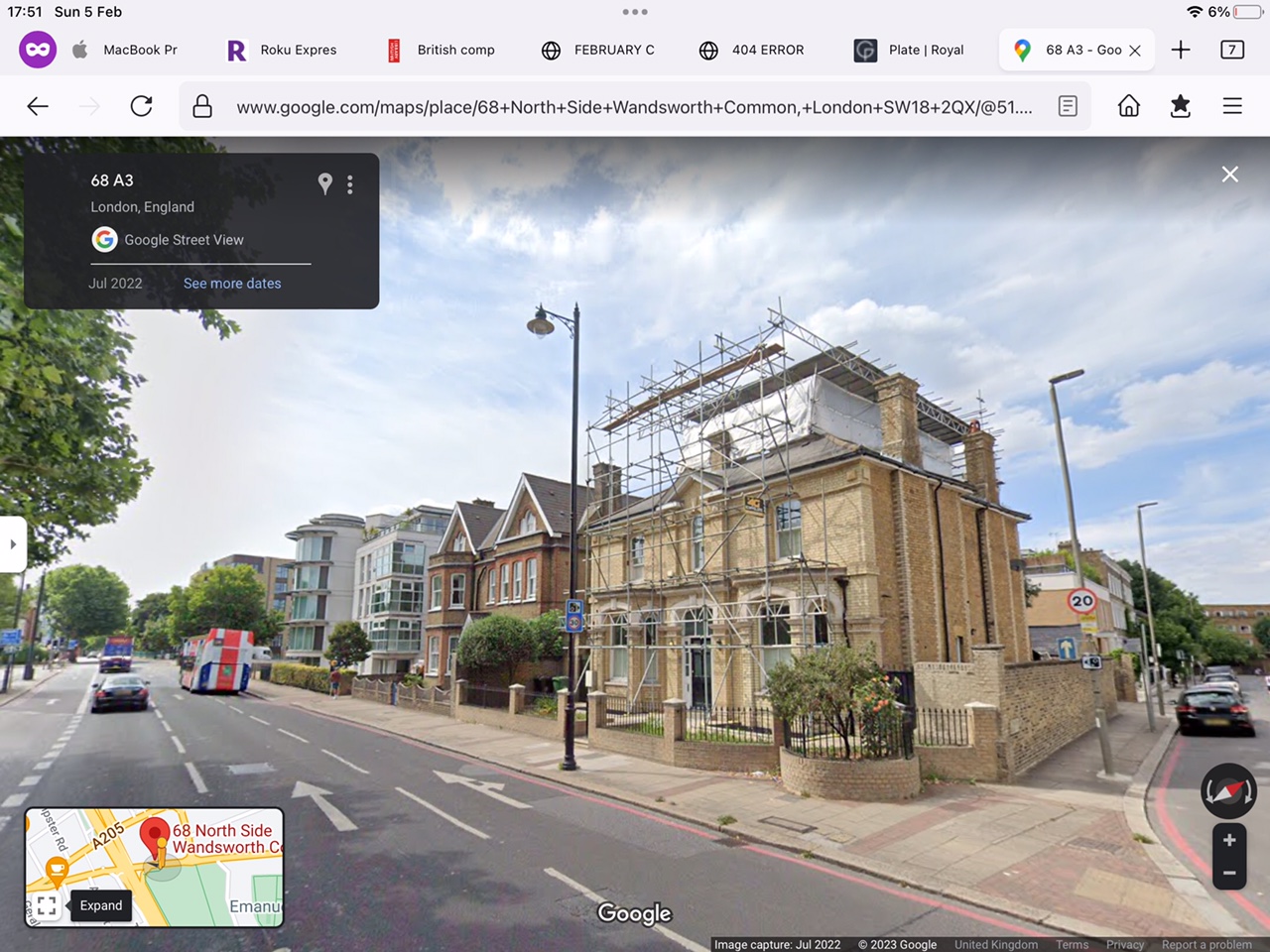
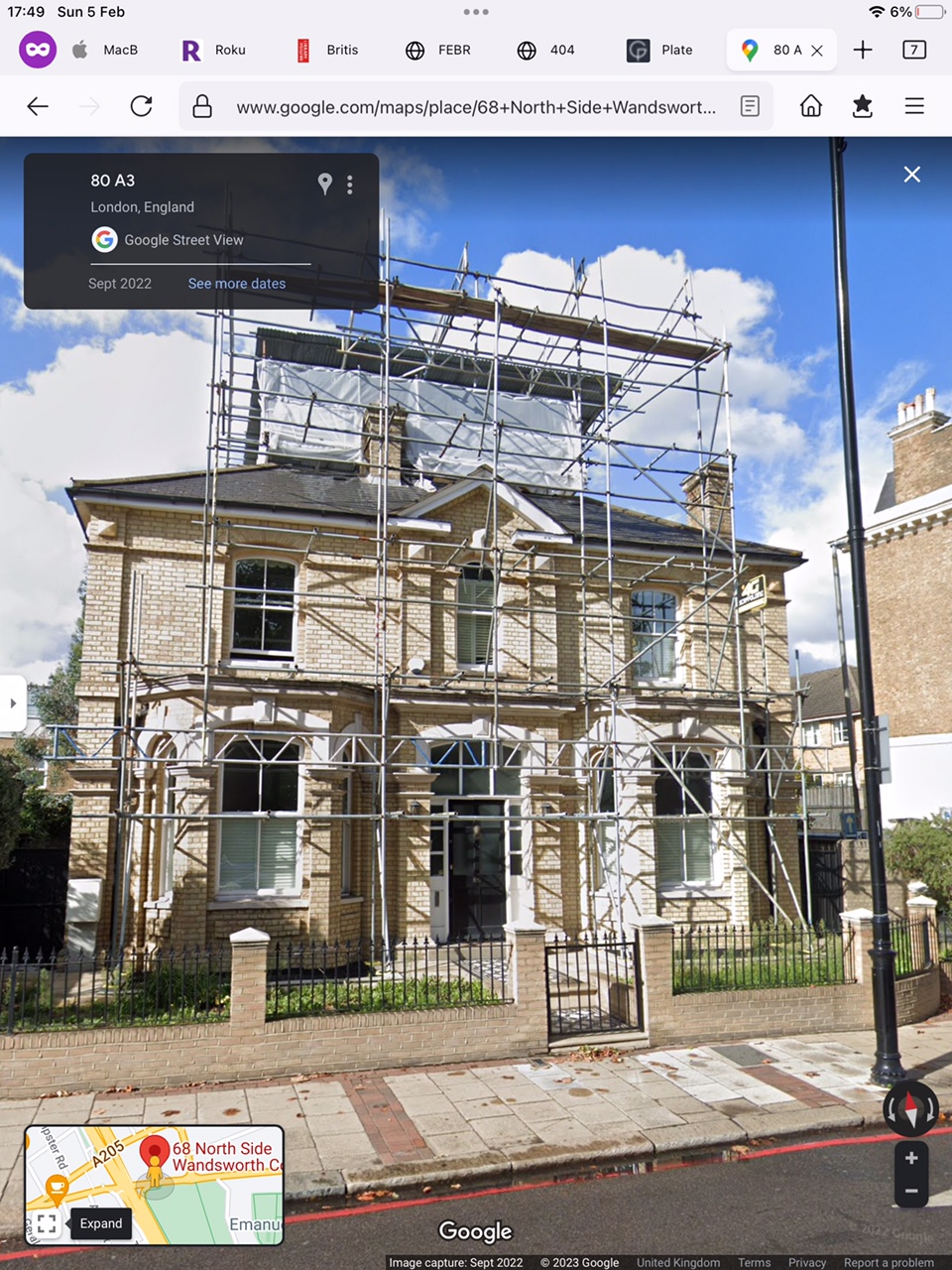
IF 68 North Side, it was next to the underpass, and demolished to make way for |Phoenic Way Aparments" - check
_____________
...
He was also closely associated with the founding of the comic The Eagle by fellow clergyman Marcus Morris in 1950. He supplemented his income by working as a scriptwriter for The Eagle and its sister publications Girl, Robin and Swift until 1961. He used his scientific education to be "Scientific and Astronautical Consultant" (as Varah put it) to Dan Dare.[citation needed]
In line with a long-standing commitment to sex education, he was a member of the board of reference of the British edition of the adult magazine Forum from 1967 to 1987. He was patron of the Terrence Higgins Trust from 1987 to 1999 and an original patron of the Cult Information Centre.[6]
He wrote a television play, Nobody Understands Miranda, which was broadcast by the BBC as part of a six-part series about the Samaritans in 1972.
He continued his campaigning work into his later life, founding Men Against Genital Mutilation of Girls (MAGMOG) in 1992, and publishing his autobiography, Before I Die Again, referring to his interest in reincarnation, the same year.[7]
https://en.wikipedia.org/wiki/Chad_Varah
Morris was ordained deacon in Liverpool in 1939,[2]:_3%10_ and priest in 1940.[1]
After a chaplaincy in the RAF and postings in Great Yarmouth, Norfolk and Weeley, Essex, he became vicar of St James' Church, Birkdale, in 1945, where he published a magazine, The Anvil, which contained illustrations and design by Frank Hampson, articles by C. S. Lewis, Harold Macmillan, Dorothy L. Sayers and Chad Varah, and short stories for children by Geoffrey Trease, and circulated far beyond his parish,[2]:_20%21_ although it did not sell well and put Morris in considerable debt.[3]
In 1948 Morris and Chad Varah were part of a group of diocesan editors who formed the Society of Christian Publicity, which took over publishing The Anvil. At its inaugural meeting Morris spoke about the kinds of periodical the Church should be publishing, including a "strip-cartoon magazine for children".[2]:_31%33_ In February 1949 he wrote an article for the Sunday Dispatch entitled "Comics that bring Horror into the Nursery", in which he decried the violence and sensationalism of American crime and horror comics and their effects on British children, after which he and Hampson set out to produce a more wholesome, uplifting alternative.[2] :_39%40_ They devised a proposed strip for the Sunday Empire News called Lex Christian, about the adventures of a brave inner-city parson, but it fell through after the paper's editor died.[1] They turned their attention to creating a new weekly comic, entitled the Eagle. Hampson and fellow artist Harold Johns put together a series of dummies, and Morris presented them to various publishers, of whom Hulton Press agreed to publish it.[2]:_47%48_ The first issue proper went on sale on 14 April 1950.[2]
Morris and his family moved to Epsom, Surrey, in 1950, and Hampson set up a studio on their house. In November 1951 Morris launched Girl, a girls' counterpart to the Eagle, followed by Robin (1953), for younger children, and Swift (1954), for an audience younger than Eagle and Girl but older than Robin.[1]
From 1954 to 1959 he was managing editor of Hultons' Housewife magazine, and he was also appointed a member of the Hulton Press management committee.[1] He left Hultons in 1959 when they were taken over by Odhams Press,[4] joining the National Magazine Company, a subsidiary of the Hearst Corporation, as editorial director.[1] However, he continued to write serials for the Eagle in the early 1960s, mostly on historical or religious subjects and often in collaboration with Guy Daniel, including "The Golden Man", a biography of Sir Walter Raleigh drawn by Robert Ayton,[5] and "The Road of Courage", a retelling of the life of Christ illustrated by Hampson and Joan Porter.[6]
He became managing director and editor-in-chief of the National Magazine Company in 1964. He was responsible for launching the British edition of Cosmopolitan, created the distributor Comag in association with Conde Nast, and increased the circulation of his magazines at a time when the market was declining. He became deputy chairman in 1979, received the OBE in 1983, and retired in 1984.
https://en.wikipedia.org/wiki/Marcus_Morris_%28publisher%29
________________
Frank Hampson revised by Chad Varah
Hampson, Frank
(1918%1985)
Chad Varah
, revised
https://doi.org/10.1093/ref:odnb/31192
Published in print: 23 September 2004
Published online: 23 September 2004
Hampson, Frank (1918—1985), cartoonist, was born in Audenshaw, Manchester, on 21 December 1918, the elder son and eldest of three children of Robert Hampson, a police constable, and his wife, Elsie Light. He was educated at the King George V Grammar School at Southport until 1932 or 1933. He had no formal art training but liked to draw. He was fascinated by American newspaper supplements sent by relatives from Canada, and was particularly inspired by the strip cartoons of Hal Foster, Milton Caniff, and Alex Raymond (whose Rip Kirby had a "cliff-hanger" every three frames). He learned how to tell a story in pictures, using few words. He left school at fourteen and became a telegraph boy. His father got him admitted to life classes at the local art school. He enrolled at Victoria College of Arts and Science in 1938 and obtained his national diploma in design just before being called up in 1939. Rescued from Dunkirk as a private in the Royal Army Service Corps, he was landed in Normandy as a lieutenant: seeing the doodlebugs he later wrote that 'on the quays of Antwerp you could watch the birth of space travel'.
On 7 February 1944 Hampson married Dorothy Mabel (b. 1917/18), a bank clerk, daughter of William Rosser Jackson, surveying engineer. They had one son. After the war he set up home with her in Southport, and with his friend Harold Johns enrolled in 1946 at the Southport School of Arts and Crafts. Their tutor, Raymond Geering, said Hampson was an outstanding draughtsman 'prepared to go to endless trouble to get a thing right'. This was to prove both his strength and his undoing.
Hampson could not have dreamed that his big chance was to come through a local parson, the Revd Marcus Morris, vicar of the affluent parish of St James, Birkdale. Morris felt the Church of England was not publicizing its message effectively. He remodelled his parish magazine, Anvil, and in 1948 engaged Hampson to illustrate it. At a conference of diocesan editors, it was agreed to form a society for Christian publicity, called Interim, to syndicate the best Christian writers, produce magazines to appeal to the man in the street, and explore the use of strip cartoon.
Britain was being saturated with American "horror" comics. On 13 February 1949 Morris published an article, "Comics that bring horror to the nursery'", in the Sunday Despatch, saying he wanted to see a popular children's comic with clean and exciting adventures: for example, those of the missionary Sir Wilfred Grenfell of Labrador, and 'the daily dangers St Paul met'.
Hampson, who had become Interim's full-time artist at %8 per week, began work on a dummy with a life of St Paul and a story he himself created, 'Dan Dare, Space Pilot of the Future'. Morris now had something to show to publishers: a magazine with large pages, superb drawing, bright colour, and every kind of adventure designed to appeal to girls and boys of the ages eight to twelve. After numerous refusals, Hulton Press wired: 'Definitely interested do not approach any other publisher.' Thus Eagle magazine was launched on 14 April 1950, with Marcus Morris as editor. Hampson worked more than full time with a team chosen by himself, first in The Bakery at Southport, and then in houses in Epsom (to which town he and Morris moved), the last one, Bayford Lodge, having a bedroom floor removed so that photographs could be taken of dressed-up posed models from above or below.
Hampson's perfectionism increased with his skill. He would think out his next episode of 'Dan Dare' during the weekend and do a rough in pencil, and then in ink and colour. These were good enough for any other comic but only the start for Hampson. With the aid of his research and reference sheets, models of space ships, plaster heads of characters, mock-ups of space suits, and a complete deep space station, every frame would be posed and photographed on Monday and Tuesday, and on Wednesday the photos and roughs together were given to the artists, Hampson taking the big opening frame which was dramatic, technologically ingenious, or hilarious. On Friday the artwork had to go to Bemrose of Liverpool's German rotogravure presses which could turn out three and a half copies of Eagle a second to supply a million copies six weeks later (because of the time needed for artists to work on the photographic plates in three colours). The team then went home after a week of five thirteen-hour days, but Hampson would spend another weekend of creation, invention, and nodding off over his drawing boards until disturbed by 'them dratted birds'. He was a genius of the genre.
In 1959 Hultons was sold to Odhams Press, who wished to alter 'Dan Dare'. Marcus Morris left as the editor of Eagle and its sister papers Girl, Swift, and Robin, and Hampson's studio was disbanded. He himself left in the summer of 1961. Thereafter he undertook small advertising commissions, illustrations for magazines, and the pictures for seven Ladybird books. In 1970 he developed cancer of the trachea. He then became a graphics technician at Ewell Technical College. In 1978 he sat for an Open University degree, which he received in January 1979.
In November 1975, at the biannual Lucca comics convention, the Mecca of strip cartoon enthusiasts, Hampson was awarded the Yellow Kid award and declared 'prestigioso maestro' as the best writer and illustrator of strip cartoons since the end of the Second World War. At the British comics convention, Comics 101, he was presented with the Ally Sloper award as the best British strip cartoon artist. Hampson died on 8 July 1985 at the Cottage Hospital, Epsom.
Sources
A. Crompton, The man who drew tomorrow (1985)
_Google Preview
_ _WorldCat
_S. Morris and J. Hallwood, Living with Eagles: Marcus Morris, priest and publisher (1998)
_Google Preview
_ _WorldCat
_private information (1990) [Marcus Morris]
personal knowledge (1990)
b. cert.
m. cert.
CGPLA Eng. & Wales (1985)
Wealth at Death
£58,567: probate, 22 Aug 1985, CGPLA Eng. & Wales
 https://www.dandare.com/
https://www.tcj.com/man-out-of-time/