
— bruce-porter-history-of-our-hospital
— Wikipedia: Bruce Bruce-Porter I'm really not sure about the "Bruce Bruce"]
— TITLE
1904 PORTER, Dr. H. E. Bruce, Langholm, Windsor. Cars: 6-h.p. and 15-h.p. Daimlers. Total distance travelled since becoming a motorist: 40,000 miles. Was formerly Surgeon-Capt. in Army Medical Staff. Was the first doctor in England to adopt the automobile for professional work. Demonstrated its use in Slough railway accident; set fashion in educating horses to motors by teaching Queen Victoria's horses. Club: A.C.G.B. & I. [2]
1904 PORTER, Mrs. Bruce, Langholm, Windsor. Is as much interested in motoring as her husband, Dr. Bruce Porter. Club: Ladies' A.C.G.B. & I. (Committee.) [3]
See https://www.gracesguide.co.uk/Harry_Edwin_Bruce_Bruce-Porter
Born 5 February 1869
Woolwich
Died 15 October 1948 (aged 79)
Somerset
Occupation(s) Physician, writer
Sir Harry Edwin Bruce Bruce-Porter (5 February 1869 – 15 October 1948) K.B.E., C.M.G., M.D. was a British physician and writer.
Harry Edwin Bruce Porter (later Bruce-Porter) was born at Woolwich on 5 February 1869, third son of Captain Joseph Porter (d. 1905),[1][2] of the Royal Artillery.[3] He was educated at the London Hospital and qualified in 1892.[4] Bruce-Porter won numerous scholarships including the Anatomy-Physiology Scholarship (1889-1890) and Practical Anatomy Scholarship (1891-1892) at London Hospital Medical College. He also won the Duckworth Nelson Scholarship in Practical Medicine and Surgery (1892-1893), a Scholarship in Clinical Medicine (1892-1893) and Hon. Mention Military Medicine and Clinical Medicine and Surgery from Netley Hospital in 1898.[5]
Career
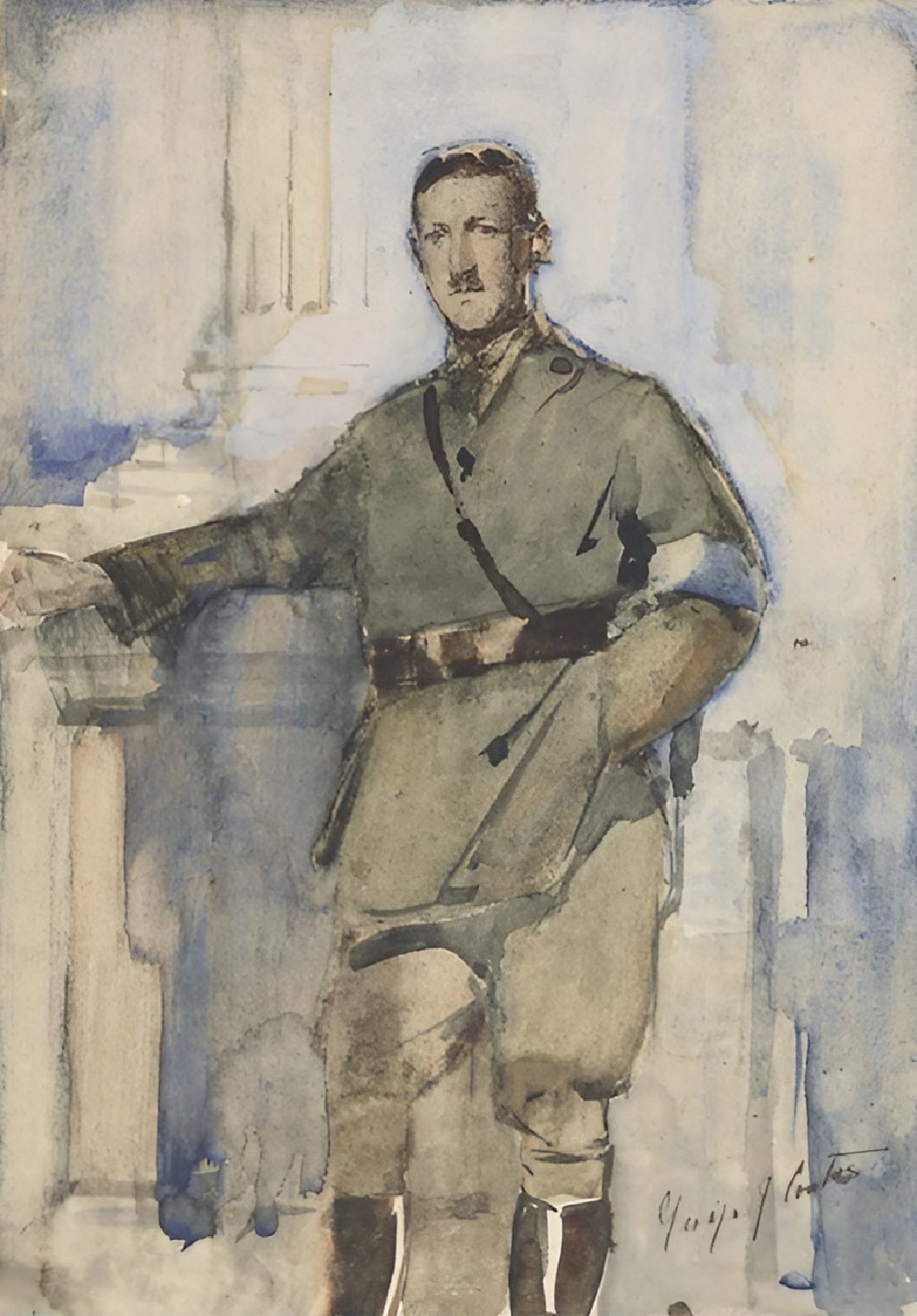
Bruce-Porter joined the Army Medical Staff and was promoted to surgeon-captain.[4] After resigning, he started his own private medical practice in the West End of London.[4] During WWI he was recalled to service and promoted to manage the third London General Hospital where he was the head of a team of London consultants.[4] He went to Mesopotamia and was in command of No. 40 British General Hospital and was awarded the C.M.G in 1917.[4] He also worked as a physician to King Edward VII's Hospital for Officers. In 1919 then a colonel, he was honoured for his services with the K.B.E.[4] Bruce-Porter was a Fellow of the Institute of Public Health, a member of the Council of the Imperial Service College Trust, a vice-president of the Shaftesbury Society and Ragged School Union and a Knight of Grace of the Order of St. John of Jerusalem.[4]
In his later years he became associated with Sir William Arbuthnot Lane and was a founding member of the New Health Society.[4][6][7] Similar to Lane he promoted dietary reform ideas and was a leading activist for The Sunlight League.[7] Bruce-Porter promoted an ovo-lacto vegetarian diet. He argued against meat eaters and strict vegetarians.[8] He is quoted as saying that the "best all-round diet is one made up of wholemeal bread, butter, milk, eggs, vegetables, fruit and cheese".[9] He was an advocate of fasting and opened a fasting centre at Preston Deanery Hall, Northampton.[10]
Bruce-Porter died on 15 October 1948 in Somerset.[4]
Personal life
In 1896, Bruce-Porter married Agnes, known as "Essie" (1860-1937), daughter of Presbyterian minister David Bruce and widow of J. H. Honeyman, MD, of Auckland, New Zealand. They lived at New House Farm, Chobham, and Little St Anne's, Englefield Green, Surrey, and at 6, Grosvenor Street, Mayfair, London.[1][2] Their twin daughters, Essie Isabel Bruce Bruce-Porter and Jessie Gladys Bruce Bruce-Porter, were born in 1897. Essie married in 1931 Geoffrey Archibald Clarkson, OBE, deputy superintendent of navy examinations for the Admiralty and dean of the Royal Naval College, Greenwich and Royal Naval Engineering College, Keyham, and had three sons (the second being Alan Clarkson, Archdeacon of Winchester from 1984 to 1999); Jessie married in 1923 Henry Douglas Bessemer, of Bench House, Lyndhurst, Hampshire, a chartered accountant and amateur entomologist and great-grandson of Sir Henry Bessemer, who developed the Bessemer process for manufacturing steel.[1][11][12]
Selected publications
Preventable Disease in the Home (1921)
Periodical Examination for Assurance Companies. In William Arbuthnot Lane. Blazing the Health Trail (1929)
The Foundations of Health (1939)
The Hygiene of Life and Safer Motherhood (with William Arbuthnot Lane, 1934)
See also
List of honorary medical staff at King Edward VII's Hospital for Officers
References
Armorial Families, seventh edition, A. C. Fox-Davies, Hurst & Blackett Ltd, 1929, p. 245
Dod's Peerage, Baronetage and Knightage of Great Britain and Ireland, Including All the Titled Classes, Charles Roger Dod, Robert Phipps Dod, 1921, p. 697
Reign of George V: Representative Subjects of the King, Volume 1. Dod's Peerage, 1913. p. 6
"Sir Bruce Bruce-Porter, K.B.E., C.M.G., M.D., D.L.". The British Medical Journal. 2 (4582): 802–803. 1948.
Who's Who 1949. London: Adam and Charles Black. p. 369
Morrice, Andrew A. G. (1994). "The Medical Pundits: Doctors and Indirect Advertising in the Lay Press 1922-1927". Medical History. 38 (3): 255–280. doi:10.1017/S0025727300036607. PMC 1036881. PMID 7934319. S2CID 39228787.
Zweiniger-Bargielowska, Ina. (2010). Managing the Body: Beauty, Health, and Fitness in Britain 1880-1939. Oxford University Press. p. 163. ISBN 978-0199280520
Food and Health by Sir Bruce Bruce-Porter, K.B.E, C.M.G., M.D. The Sphere. (February 23, 1929). p. 297
Physical Education. Physical Education Association of Great Britain and Northern Ireland, 1927. p. 129
"Famous physician opens new fasting centre". The National Archives.
The Sketch, A Journal of Art and Actuality, Volume 122, Issue 1579, 1923 p. xvi
Surrey Advertiser, 11 April 1931, p. 8
External links
Portrait of Lieutenant-Colonel Sir Bruce Bruce-Porter (Australian War Memorial)
Back to the top of this page . . .