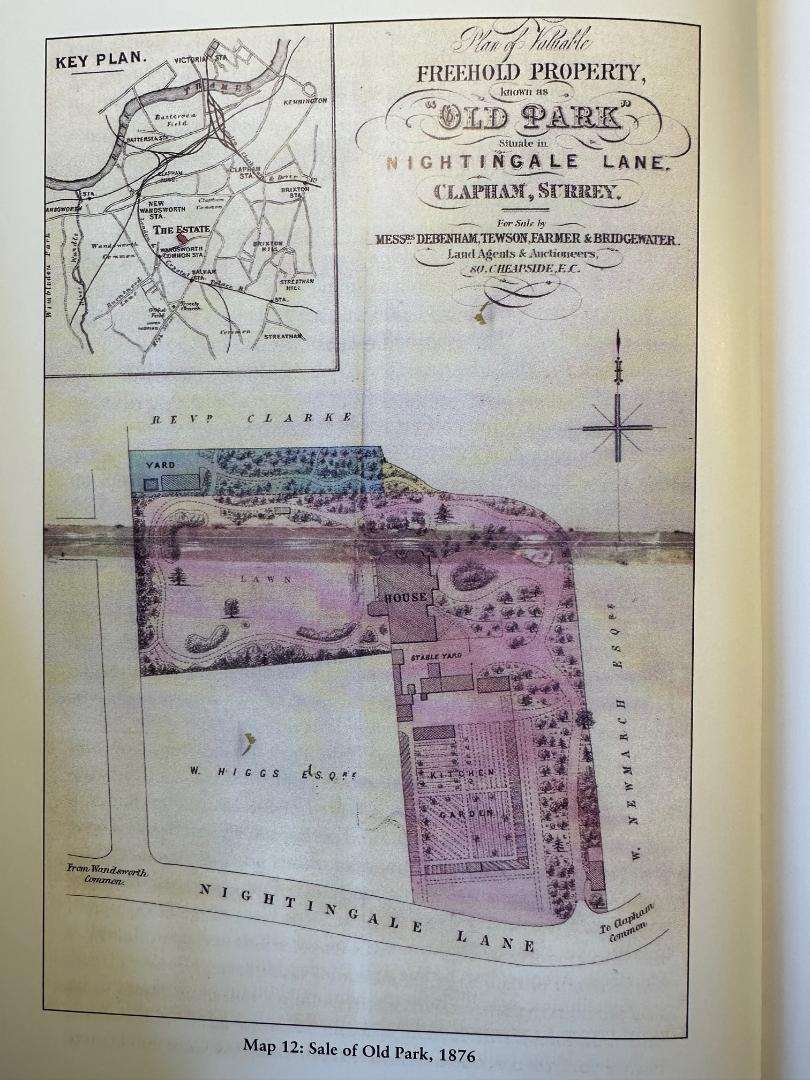
Fig. 1. Plan of the Old Park estate, showing its gardens and grounds.
Reader’s version of Build 12 — last modified 31 October 2026
Part 1 of The Five Houses of Wandsworth Common
The 1868 OS map clearly shows the Five Houses were connected by tracks and paths with other properties. The Willis family of Bolingbroke House also owned Bolingbroke Farm. The Dent Family built Old Park House with a farm adjacent (off current Nightingale Lane) and owned Dent’s House and farm (off current Bolingbroke Grove).
Old Park House was described as “picturesquely situated on an eminence, set within well-wooded grounds at a remove from the main road” (Nightingale Lane) . . . Generous outbuildings included a kitchen yard, coach-houses and three stables as well as a lodge and “cottage” (possibly the farmhouse)”.
Dent was typical of many landowners here, also having a town mansion but wanting to establish a country house estate. It was also recorded as having, in addition to garden walls and gates, an obelisk and a ha-ha.
The image below reveals how well-appointed the gardens and private landscape were surrounding the property.
Fig. 1. Plan of the Old Park estate, showing its gardens and grounds.
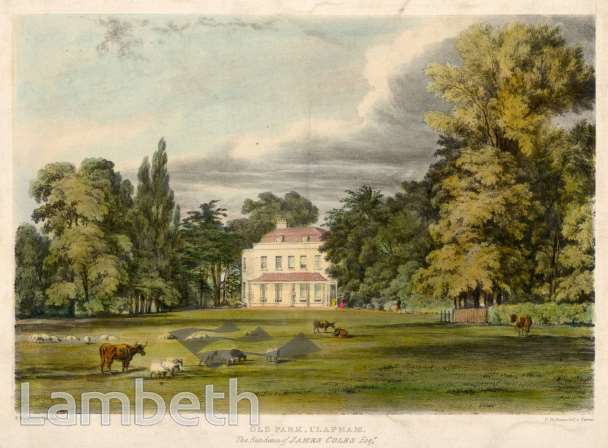
Fig. 2. Old Park, Clapham.
Although not linked to the Five Houses, Burntwood Grange and House bordering the western side of Wandsworth Common benefited from a typical range of garden characteristics of the time and area. It is worth noting the detail of this property to enhance our understanding of what existed in the 18th and 19th centuries.
Bohn's “Pictorial Handbook of London” of 1854,, provides us with a comprehensive picture. It shows evidence that at Burntwood Grange a dairy and kitchen garden existed and were the resources which provided the household with food supplies along with fruit and vegetables. There was also evidence of a “stove” providing the right climate for tender plants like orchids.
Lawns surrounded by evergreen shrubs and fine specimens of Andromeda Floribunda and Deodar Cedar are described alongside a kitchen garden with first-rate forcing houses and pits. Other details include “between the path and walls there is a narrow border, covered with Lycopodiums, Heliotropes, and various low-growing plants, which make a neat fringe to the whole.”
Burntwood Cottage is described in a property sales advert in 1826 as having views of Surrey Hills and Epsom Downs. Before this, in 1813, another described it as “a singularly romantic freehold cottage… embosomed in a plantation of forest trees and shrubs of the choicest kinds … with views in every direction singularly luxuriant and picturesque”.
From the evidence of maps and sales ads, we can only guess at the range of plants the Five Houses may have enjoyed. Here is a generic list of plants we know were available at the time and could have been planted within the estates. It is worth noting that there was a large plant nursery just on the other side of the Common at the time.
| Category | Plants |
|---|---|
| Tender plants | aspidistra, pelargonium, carnations, hyacinths, mimulus, fuschia |
| Perennials and bulbs | tulip, anenome, lupin, gaillardia, gardenia |
| Shrubs | magnolia, azalea, daphne, rhododendron, rose, hydrangea, berberis, aucuba, holly, laurel, privet, box, conifer |
| Trees | white or black poplar*, elm*, plane*, chestnut*, lime*, oak*, sycamore, purple beech, cherry, almond birch, lilac, robinia, laburnum, ash |
* These are the more likely trees, and it is worth noting that these trees all flourish on the Common today, suggesting favourable conditions.
Bohn’s Pictorial Handbook of 1854, based on E. Kemp, notes the local South West London vernacular: “display the most charming diversity of flora and trees, Cedars of Lebanon, of great age and size, constitute a peculiar and very observable feature in the landscape . . . numerous on the west and south-west sides. As adjuncts to stately mansions or elegant villas, alongside the valley of the Thames, they are remarkably telling; and the traveller can scarcely pass a hundred yards . . . Without coming upon fresh specimens or groups of them. It is scarcely necessary to add that they communicate a very marked and aristocratic character to the district”.
Bohn also mentions Deodar Cedar and Spanish Chestnut as being popular.
This excerpt shows how in west and southwest London exotic non-native trees were long-established and valued for their association with foreign cultures and Britain’s excellence in global plant-hunting.
It is worth noting that trees such as elm, white or black poplar, lime, horse chestnut were recorded in the local area of Wandsworth Common, and all flourish on the Common today. It is thought that the “grove” was probably created by elm trees, which may explain why one of the Five Houses was called “The Elms”. As early as the 1787 Corris map, Five Houses Lane is edged with trees on the Common side – an indication of the formal enhancement of the area.
Lancelot "Capability" Brown (1716-1783) was the pre-eminent landscaper of the 18th century and his style of undulating parkland punctuated by clumps of trees and lakes replaced formal gardens
From the mid-18th century, there began the fashion of parterres inspired by 17th-century France.
These large houses probably had space devoted to this formality of bedding plants, box hedging and conifers. The pure Brown landscape had sweeping lawns enveloping the house. The Five Houses and other local prominent properties were likely to have had a blank canvas on which to impose a modest form of the landscape movement. The Falcon Brook was dammed to create ponds typical of Brown’s style. His influence was so deep and widespread that Walpole is known to have said of him “We have discovered the point of perfection. We have given the true model of gardening to the world”.
We know that Wimbledon Park was landscaped by Brown in 1760.
The style of the time of Humphrey Repton was to create “artificial” circular shrub or flower beds. Paths and gravel tracks were typical of Repton, and we can see evidence of this design style in the gardens of the Five Houses.
The sales advertisements for some of these houses show that in the 18th and 19th centuries statuary was highly popular, such as obelisks at Old Park, and decorative garden buildings inspired by 17th century Italian landscape painting and the fashionable “Grand Tour of Europe”.
The portrait (c.1781) the owner of The Elms portrays a version of the grounds at The Elms.] The style of the period was often to depict a wealthy individual set against a grand rural background with Italianate architectural detail to enhance the grandeur of the family group.
The sales advertisement for The Elms also refers to features such as a melon ground, cold bath, garden lights and greenhouse plants.
The 19th-century emphasis on exotic gardening styles was inspired by India, China and Egypt. A developing awareness of major gardens around the world fed the Victorian imagination. New plant introductions flooded into Britain from plant hunting expeditions. Many of these large houses had conservatories and greenhouses for tender plants.
They heralded in a new era of highly naturalistic wild styles of cottage gardens and a painterly approach to flower borders based on colour theory. The larger gardens of the grand houses and the smaller “cottage” scale gardens of Victorian terraced housing would have absorbed these ideas.
The unprecedented interest in gardening during the period we are addressing – late 18th to early 20th centuries – meant a proliferation of literature and institutions supporting horticulture. The two largest and still most important, the Royal Botanic Gardens at Kew and the Horticultural Society of London (now RHS), were established locally in south west and west London.
In 1759, just before the Five Houses were built, Kew Botanic Gardens started within the pleasure grounds at Kew to become a national institution for botanical research. The Horticultural Society of London started in 1804 and soon acquired an experimental garden in nearby Chiswick before moving to north Surrey.
There evolved a very wide range of plants commercially available, with evidence of nursery trade lists and seeds available. Big houses had walled kitchen gardens, typically arranged in beds in rows and blocks for edible foods and cutting flowers.
large and very local nurseries, Neal’s and Rollissons, the nursery trades were also hybridizing plants, no doubt helped by research coming out of the Horticultural Society of London and Botanic Gardens at Kew.
Battersea produced asparagus and Wandsworth still had acres of cornfields, cabbage grounds and tree plantations. References are made to tomato houses, extensive greenhouses, vineries, extensive flowers and wide plantations of young trees.
Between 1790–1880, this nursery was large and highly reputable, just south of Wandsworth Common and current St James’s Drive/Springfield Hospital.
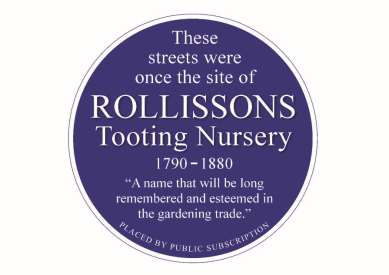
Fig. 3. Plaque marking the site of Rollissons Tooting Nursery, 1790–1880.
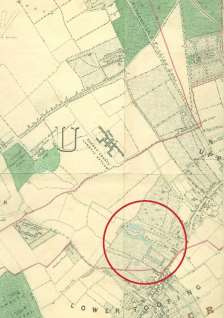
Fig. 4. Map with the site of Rollissons nursery circled.
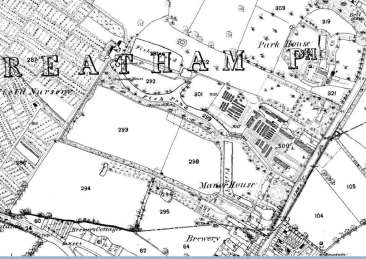
Fig. 5. Ordnance Survey map of Tooting, showing the nursery grounds.
We hear of an orchid from Java being exhibited for the first time there in 1842. In a gardening magazine there was a beautiful drawing of an exotic plant being sent to Rollissons from Madagascar or Nepal.
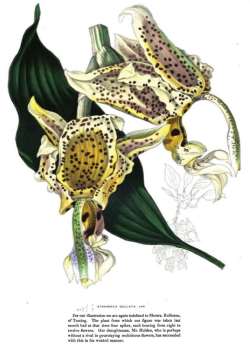
Fig. 6. Drawing of an exotic plant sent to Rollissons.
In the Journal of Horticulture around 1871, Burntwood House is reported to have had prize-winning grapes in the Royal Botanic Society’s Show.
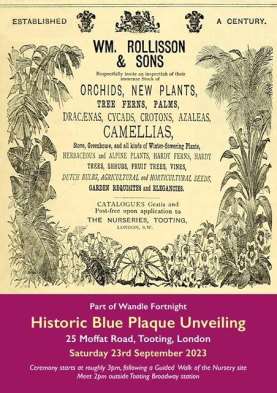
Fig. 7. Title page of a nursery catalogue.
The ever-increasing availability of plants, exotic and native, from trees to small flowers and plant foods, gave both large estates and terraced housing a pioneering chance to garden in a progressive way.