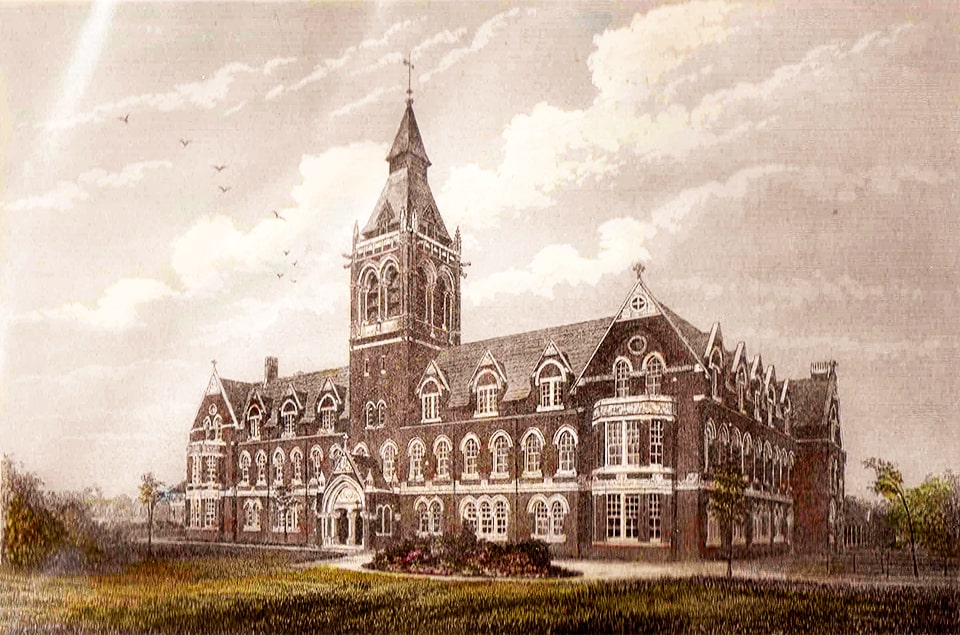
This is not Emanuel School . . .
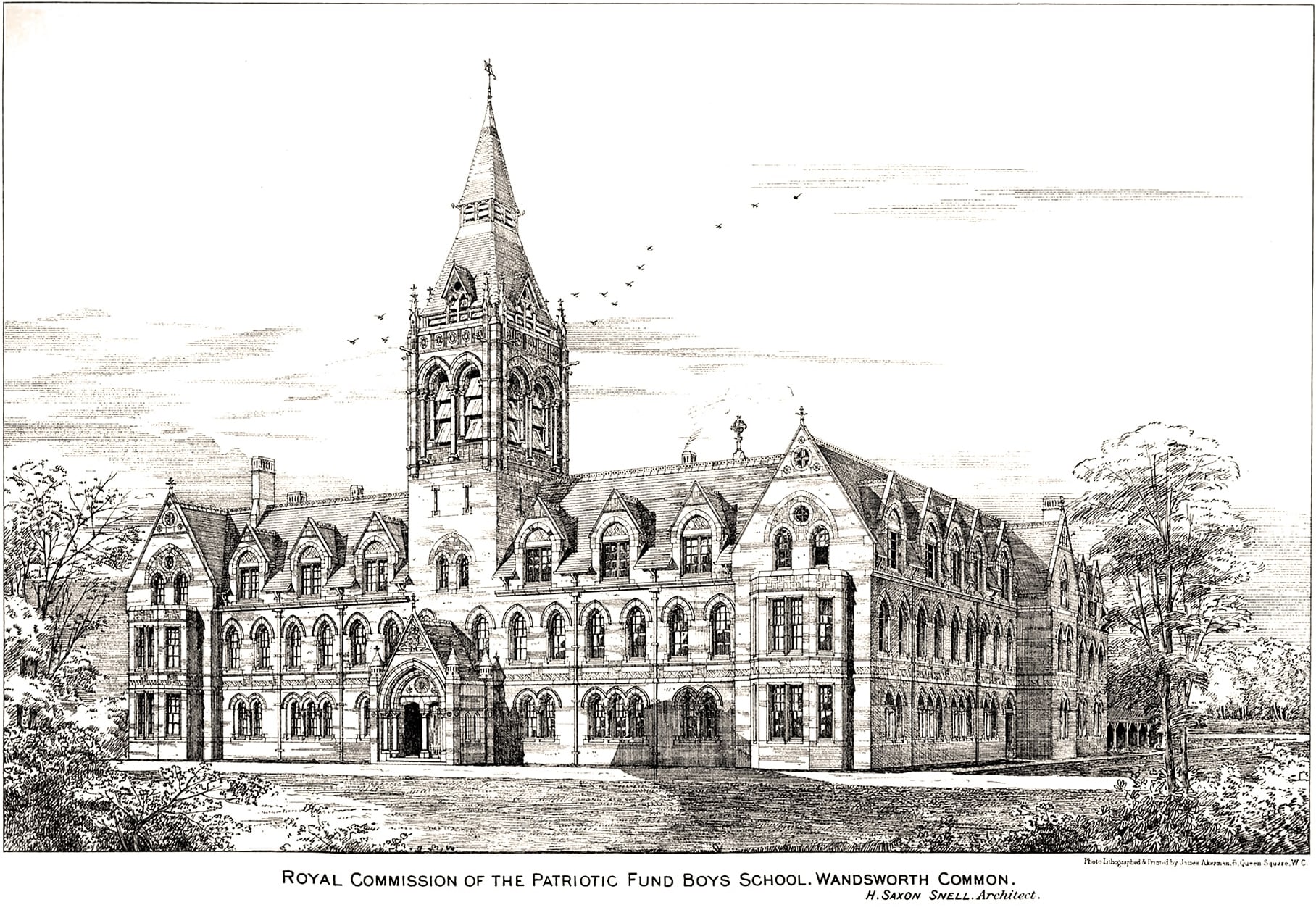
The Royal Victoria Patriotic Asylum for Boys, c.1872. A tinted engraving (unknown date, but almost certainly before 1880) presumably based on the architect's original visualisation (see below).
The Royal Victoria Patriotic Asylum for Girls had opened for business in 1859, thirteen years earlier. This immense new structure on the side of the London and South Western Railway was built astonishingly soon after the end of the Crimean War (1854-1856), which it memorialised. (The war itself is largely forgotten today, except perhaps for "The Charge of the Light Brigade" - and then mainly for the Tennyson poem and the stirring films.)
But the boys' equivalent had to wait, by which time there can have been no orphans of that war remaining of school age — though as I suggested in December 2021's Chronicles, there were more than enough wars in India and elsewhere around the Empire to provide freshly orphaned recruits to fill both schools.
The boys' asylum is rather less impressive than the girls' asylum, and only cost half as much to build. But it's still huge.
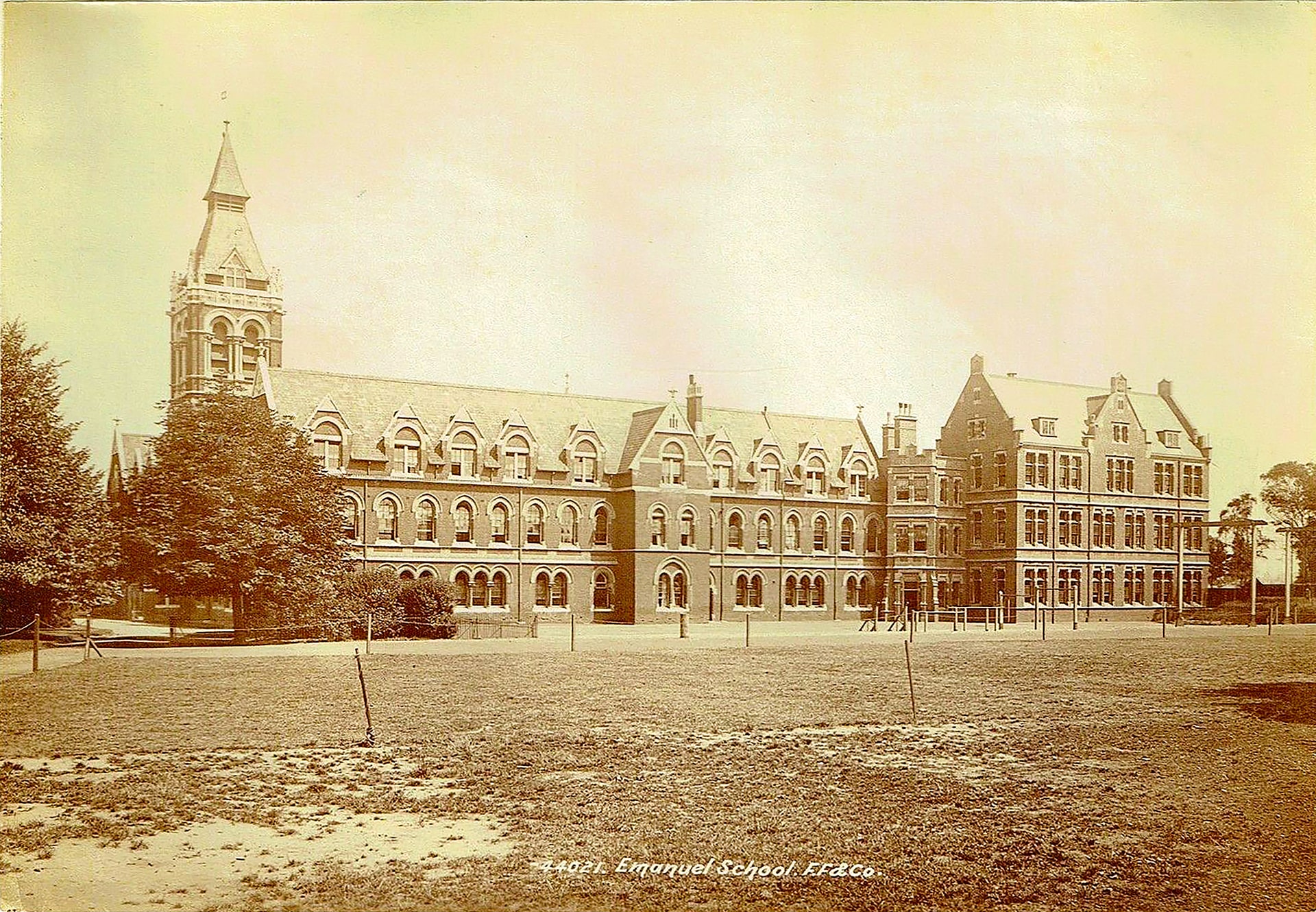
The southern side of Emanuel school, looking out across the playing fields c. 1910. So far as I know, no alterations had yet been made to the original RVPA building.
The girls' asylum remained in use as such until the 1930s, but not so the boys'. Less than a decade later, the orphans were turfed out and the buildings taken over by Emanuel School (previously located in Westminster, but at a loss for space).
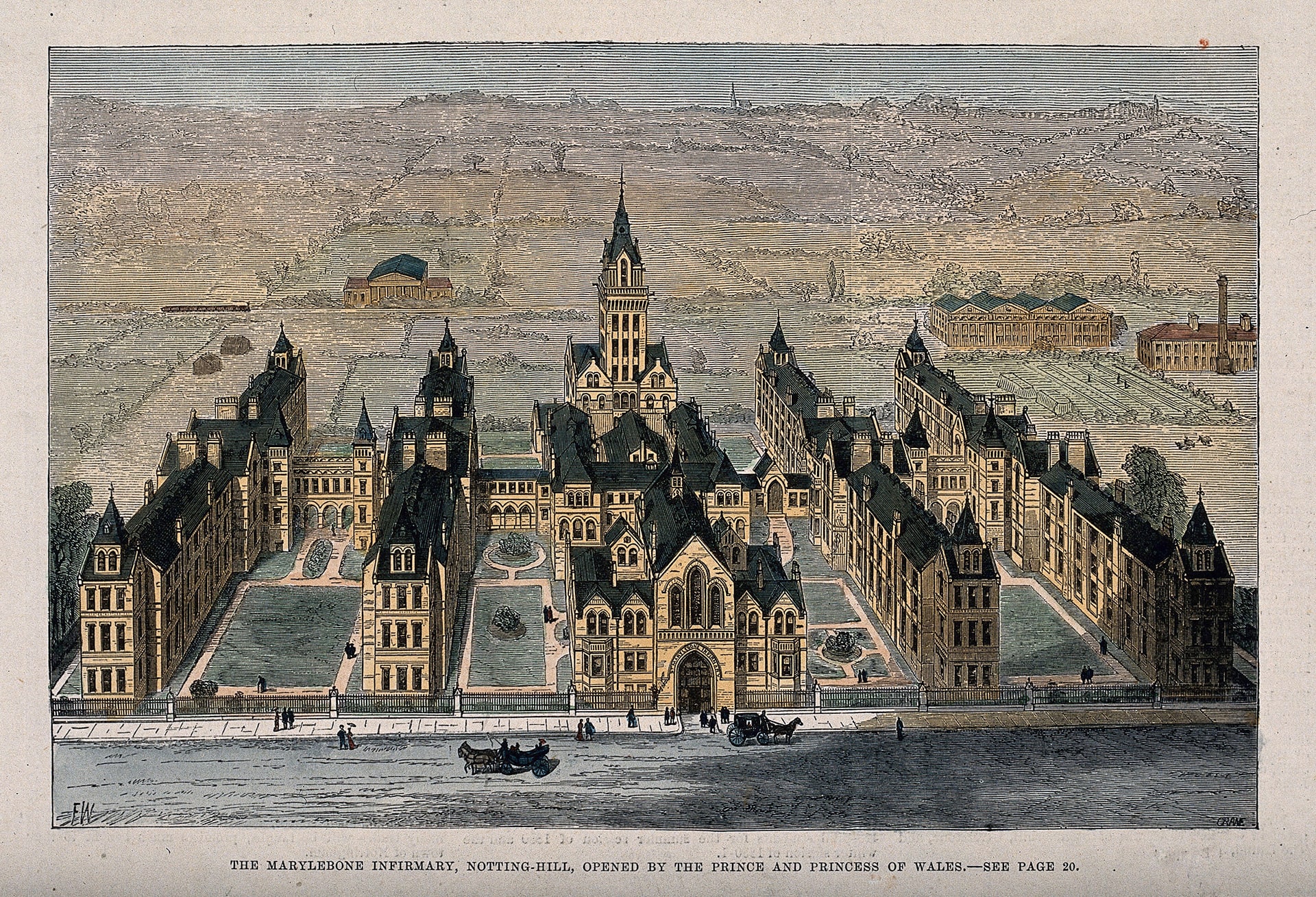
Here's another view of the boys' asylum:
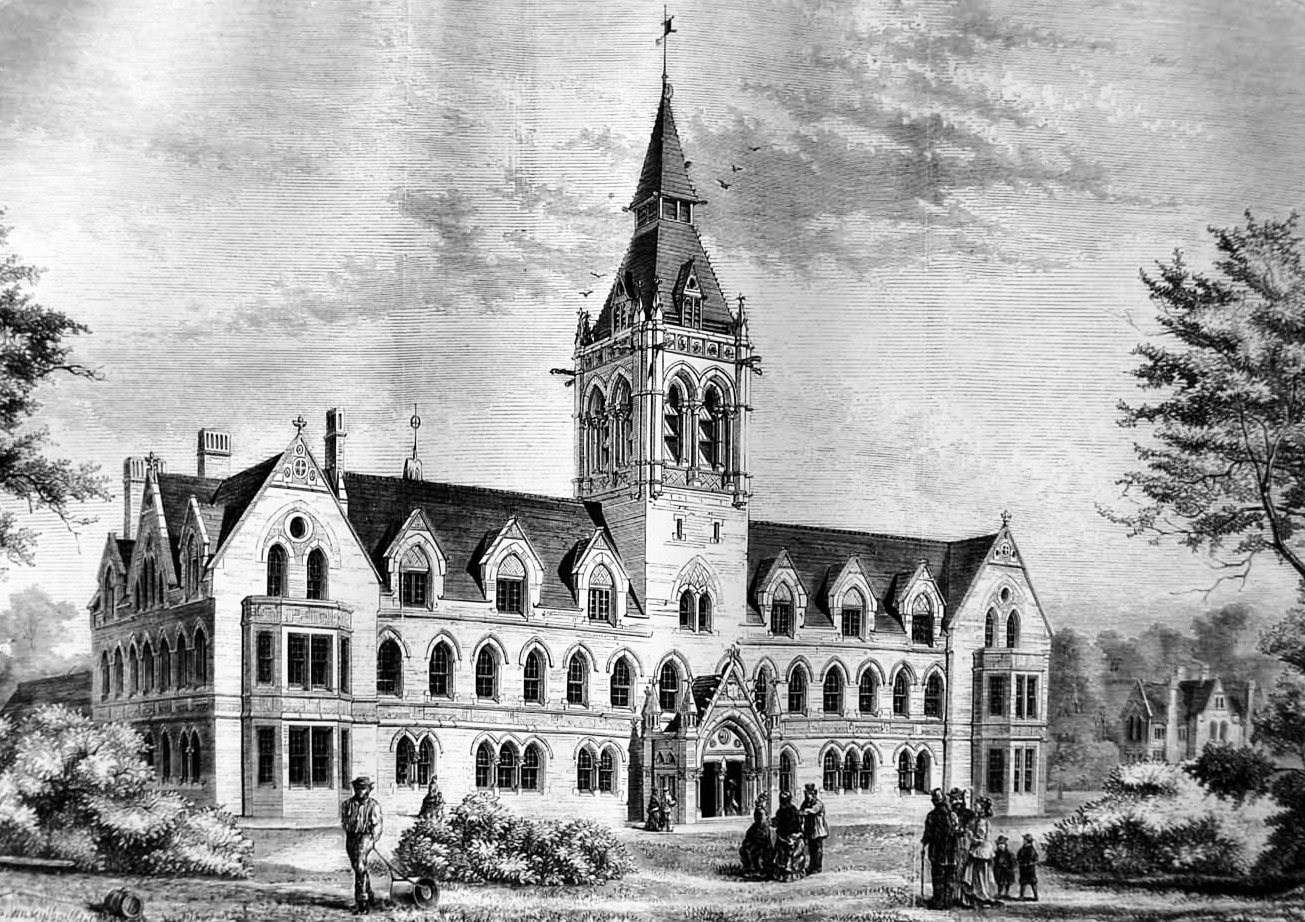
The Patriotic School for Boys, 1872.
The detached building in the distance on the right is the Infirmary. (The girls had one too.) All new entrants were housed there until troubling infestations (e.g. of lice, fleas and "scald head" or ringworm) had been cleared, and they were free of infectious diseases.
Notice the tall spire surmounting the tower. (The Survey of London: Battersea describes this as as "a salient two-stage crown", modelled on the Cloth Hall at Ypres). The building as a whole is less demonstrative than the girl's asylum, but when the spire was in position the school could be seen quite clearly on the skyline from many parts of the Common, as many Edwardian-period postcards testify. (And of course there were also fewer trees in the way then.)
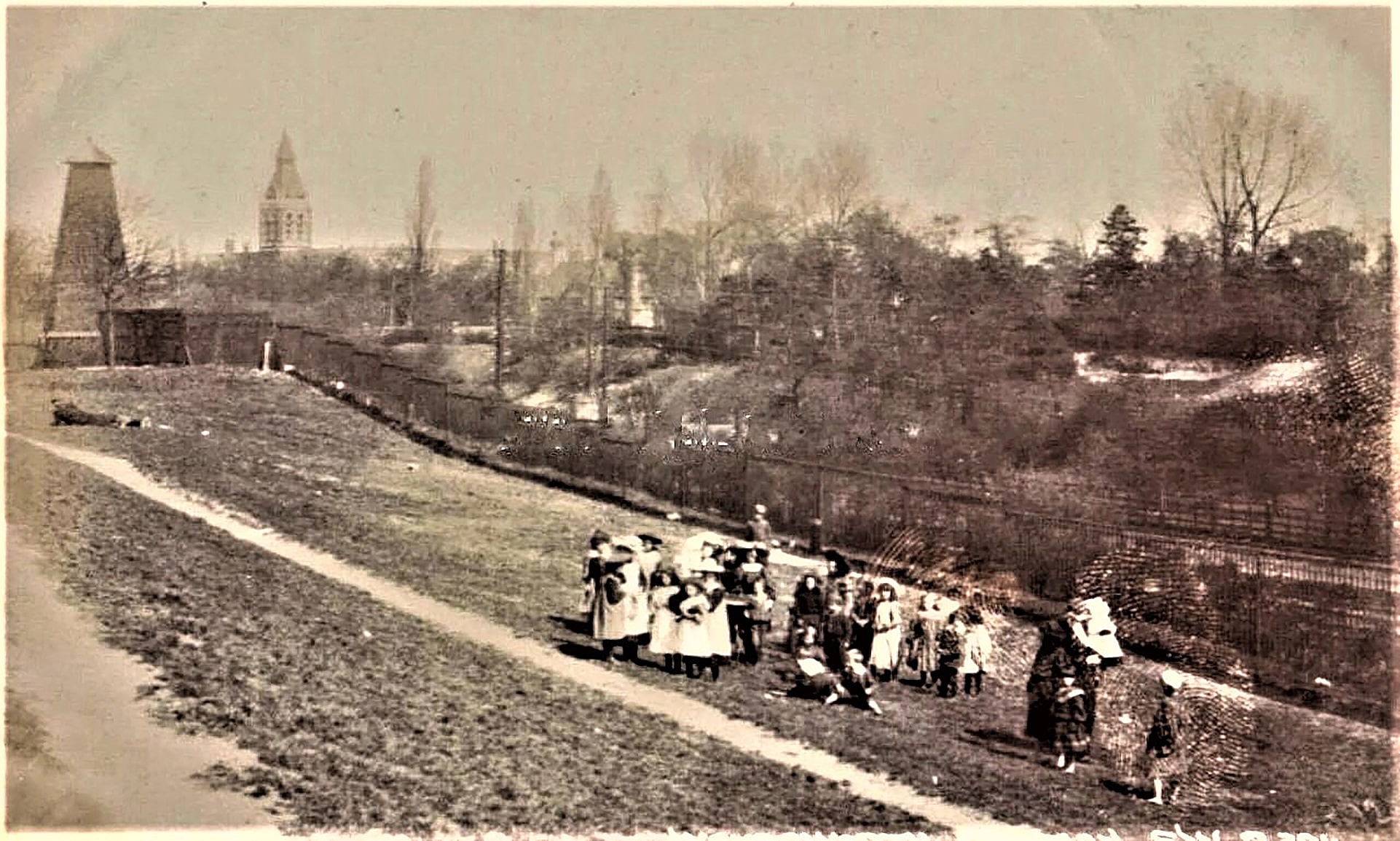
The Windmill and Emanuel School (the former Patriotic School for Boys), c.1900, seen from near the point Windmill Road meets Trinity Road.
The children in the foreground are standing in the dip now crossed by a newish road-bridge to the John Archer Estate and Patriotic Building. At the time of the photograph, and indeed when I walked to Emanuel in the early 1960s, there was no bridge - this was a grassy slope descending to the edge of the railway line. (I tended to walk on this part to avoid confrontations with the boys from Spencer Park School walking up from Clapham Junction.) It is now so densely wooded that it is completely inaccessible to humans.
It is sometimes claimed that the spire was toppled by an explosion during the Second World War, but it was in fact removed for prudential reasons a decade earlier, in 1932. The structure had become highly dangerous — hence an irresistible challenge to schoolboys to climb.
But there had indeed been a bomb . . .
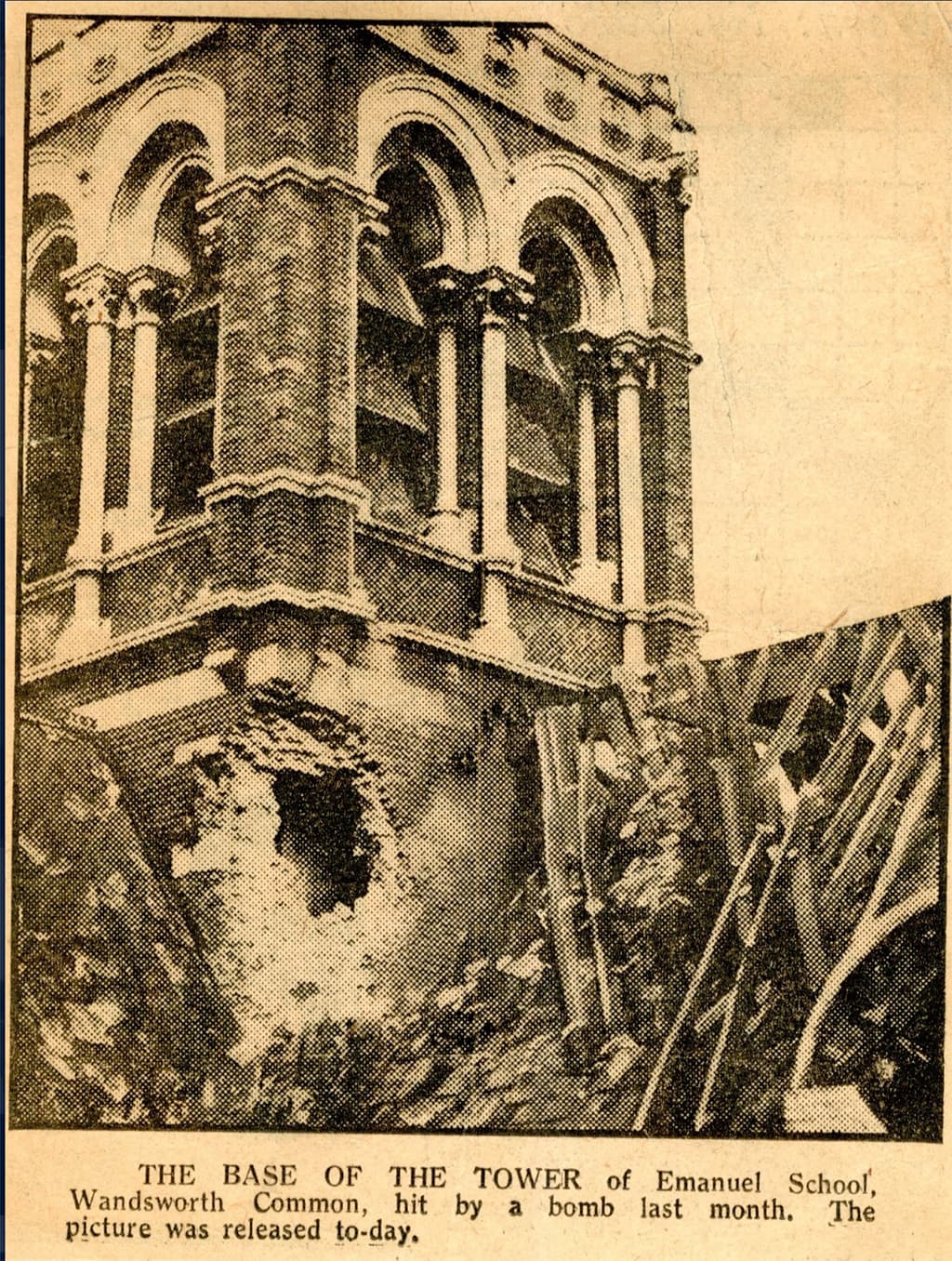
Extensive damage to the base of the tower, 19 February 1941, some years after the spire had been removed.
Anyway, back to the origins of the Patriotic Asylum for Boys . . .
Let's trace its story, especially since it is much less known than that of the girls' school.
After the end of the Crimean War, and during the thirteen years between the opening of the girls' and boys' asylums, the boys were placed in a disused old house on East Hill, largely in wooden huts erected in its grounds. (The Survey reports that the temporary school opened in 1862, with 146 boys.) Things changed in 1873 when the boys were moved to a new school built in the grounds of the Royal Victoria Patriotic Asylum for Girls.

The location of the Boys' Patriotic School on East Hill in 1871 (pink circle) and its location in 1872 (blue circle).
I owe much of the following account to my old Latin teacher Bernard Slater, esteemed historian of Emanuel School. In the early 1950s, he wrote a singularly informative article, "The Royal Victoria Patriotic Asylum for Boys (1872—1882)", that was published in small doses in successive editions (issues 180-186) of Portcullis, the Emanuel School magazine. This was before my time, but thanks to Emanuel's always-supportive archivist, Tony Jones, I was later able to locate, transcribe and collate these fragments — thanks, Tony!
The Royal Patriotic Fund
In 1854, when war broke out with Russia, a national appeal was made for funds for the relief of dependants of soldiers, sailors and marines" who might be killed or might die on active service" during the campaign in the Crimea. The response from the public was magnificent; money poured in from all parts of the world, and the final total amounted to £1,471,375. Royal Commissioners were appointed to administer this Patriotic Fund, and Prince Albert became their first President . . .
Contributions were made towards the endowment of a number of schools, including Wellington College and the Royal Naval Female School (now the Royal School for Naval and Marine Officers' Daughters, Haslemere), but in addition to securing places for war orphans at existing schools the Commissioners decided to found and administer two schools of their own. These schools were subsequently built and were named the Royal Victoria Patriotic Asylums.
Land was purchased from Lord Spencer for £3,700 on 24th June, 1857. The fifty-two acres were described as "waste land".
This so-called "waste land" was, of course, the very heart of Wandsworth Common . . .
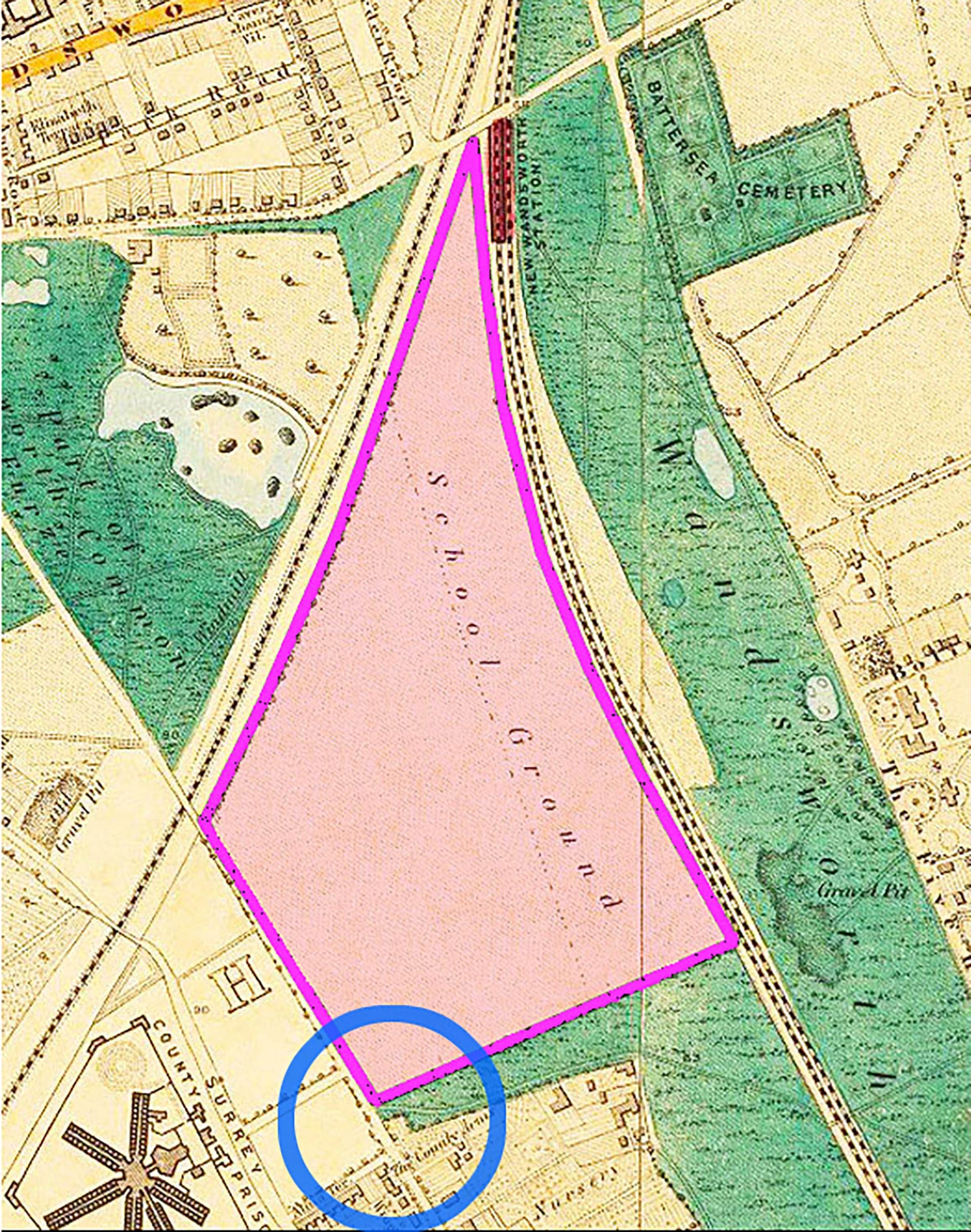
The "kite" of land on which both Patriotic Asylums would be built. I have used the Stanford map of 1862, but erased the recently built Girl's Asylum.
When the Patriotic Fund was looking for a green-field site close to London for its asylum for girls (not, as yet, for the boys), the 4th Earl Spencer stepped in with an offer they could hardly refuse — as much land as Prince Albert and his Royal Commissioners wanted, but at half the going rate.
They bought, in two tranches, more than 50 acres — making a wedge or kite. This was helpfully enclosed on the two longest sides by recently built railway lines (both running in cuttings). High iron railings were built along what we now call Trinity Road (which may be the ones we still see today, but I'm not sure if the originals were ever replaced), and a great wall at right angles to it (most, but not all, of which has since been demolished).
Local people were only allowed access to the Common through a narrow passage (blue circle), opposite the County Arms pub, between the Asylum grounds and Magdalen College land — the former "Allfarthing Piece" or "College Park", but now called the "Toast Rack".
On 11th July of the same year [1857] Queen Victoria laid the first stone of the Girls' School, which was completed, except for the infirmary, on 1st July, 1859. The projected Boys' School was not built yet, but the sum of £25,000 was set aside to accumulate for its endowment.

"Her Majesty laying the foundation stones of the Royal Victoria Patriotic Asylum on Wandsworth Common", Illustrated London News, 25 July 1857.
As I discussed in some detail in July 2021's Chronicles, the ceremony was costly and something of a farce. Little wonder, then, that no equivalent inauguration was planned for the Boys' school, more than a decade later.
It was originally intended that one hundred boys should be maintained and educated. By the end of 1870, however, the sum invested had reached the figure of £46,300 (most of it East India Debenture Loan), and it was in that year recommended to the Royal Commissioners by their Executive and Finance Committee that the new school should be designed to accommodate two hundred boys.
This recommendation was accepted, partly on the grounds that much the same staff would suffice for two hundred boys as for one hundred (alas for schoolmasters!), and in the following year work was begun on the building that now houses Emanuel School.
There had been some discussion concerning the site. In 1868 the Executive and Finance Committee had made enquiries concerning a house called "Fernside" near Balham Station, but they had decided after investigation not to recommend the purchase of the lease for the purpose of adapting the premises. Nor had they proceeded with the project of purchasing a house and land at Sheen.
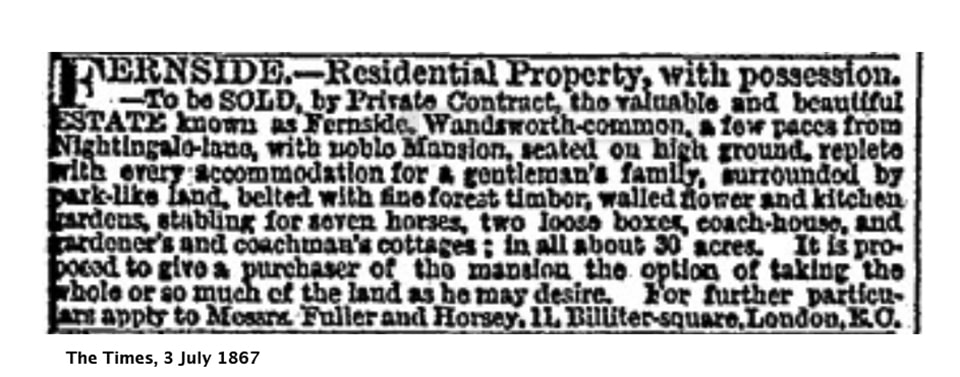
Fernside for sale, The Times, 3 July 1867. A "noble mansion" with thirty acres of park-like land. Ideal for the proposed Patriotic Asylum for Boys?
A "noble mansion" . . . a few paces away from Nightingale Lane, seated on high ground, replete with every accommodation for a gentleman's family, surrounded by park-like land, belted with fine forest timber, walled flower and kitchen gardens, stabling for seven horses, two loose boxes, coach house, and gardeners' and coachman's cottages: in all about 30 acres".
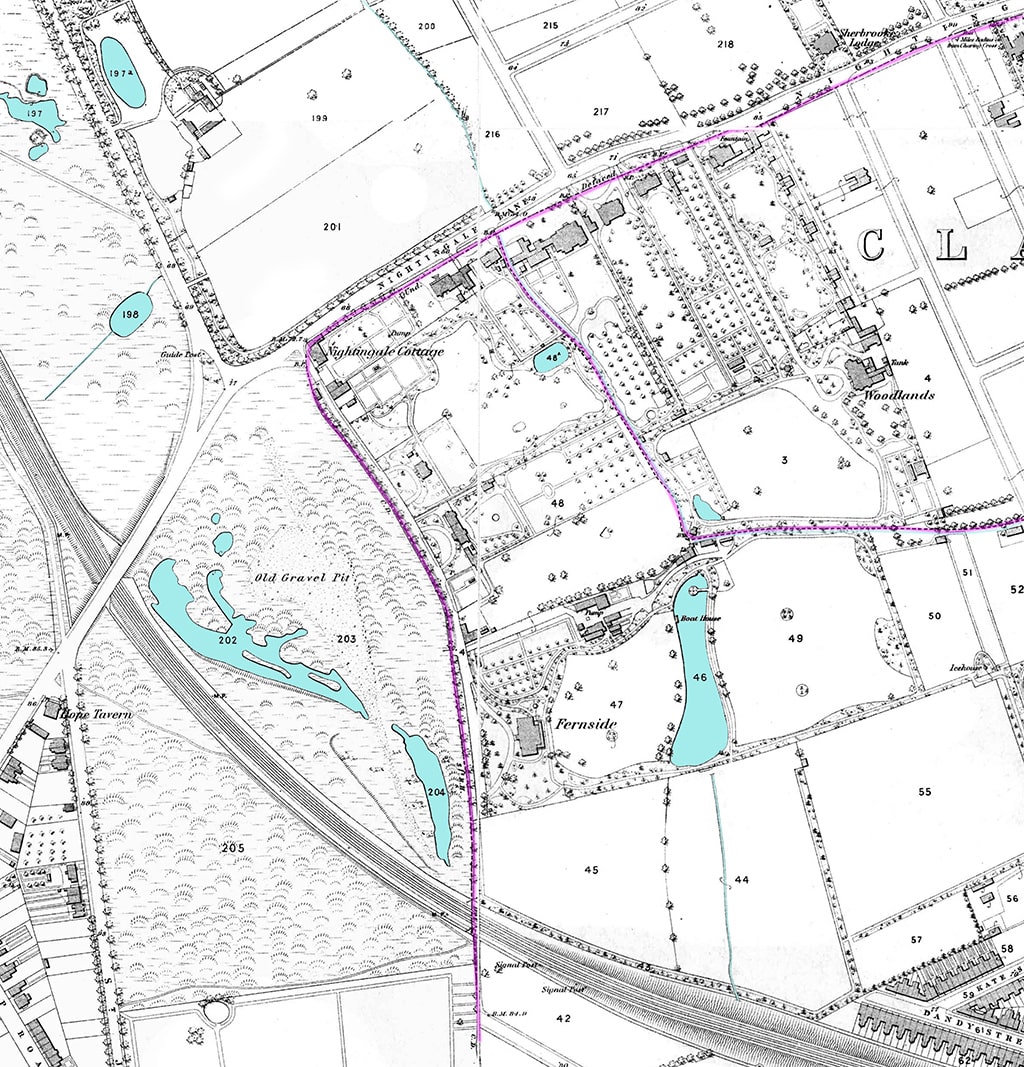
It really was an astonishing opportunity, but presumably far too costly. The Patriotic Asylum for Boys (and later Emanuel School) had to settle for just 12 acres taken from the fifty-odd acres previously acquired for the girls.
At the meeting of the Royal Commissioners held at the Palace of Westminster on 23rd July, 1870, General Eyre's proposal that the new school should be built on the land belonging to the Girls' School had been countered by Sir John Pakington, who reminded his audience of "the unfortunate circumstances which attended the Greenwich School for Girls from its proximity to the Boys' School". (This piquant entry in the minutes is not further elaborated.)
In the end it was decided that "provided proper precautions were taken" there was no serious objection to building on the ground adjacent to the Girls' School, and Earl Grey's motion was carried unanimously that the Executive and Finance Committee should be empowered to make arrangements for building a school on the Royal Commissioners' land at Wandsworth.
The Building of the School
The Executive and Finance Committee. after consulting the Lady Superintendent of the Girls' School and the Superintendent and Headmaster of the temporary Boys' School, decided to build a wall from the South-Western Railway to the London, Brighton. and South Coast Railway and to erect the new school on the ground so enclosed, thus giving the boys about 12 acres of the 52 acres purchased from Lord Spencer in 1857.
Five architects were chosen to send in plans and designs, and after a close scrutiny those of Henry Saxon Snell were approved. (The other contending architects were Arthur Blomfield, Henry Dawson, John Giles, and John Tasker.) The builder, also selcted after competitive tenders, was J.T. Chappell.
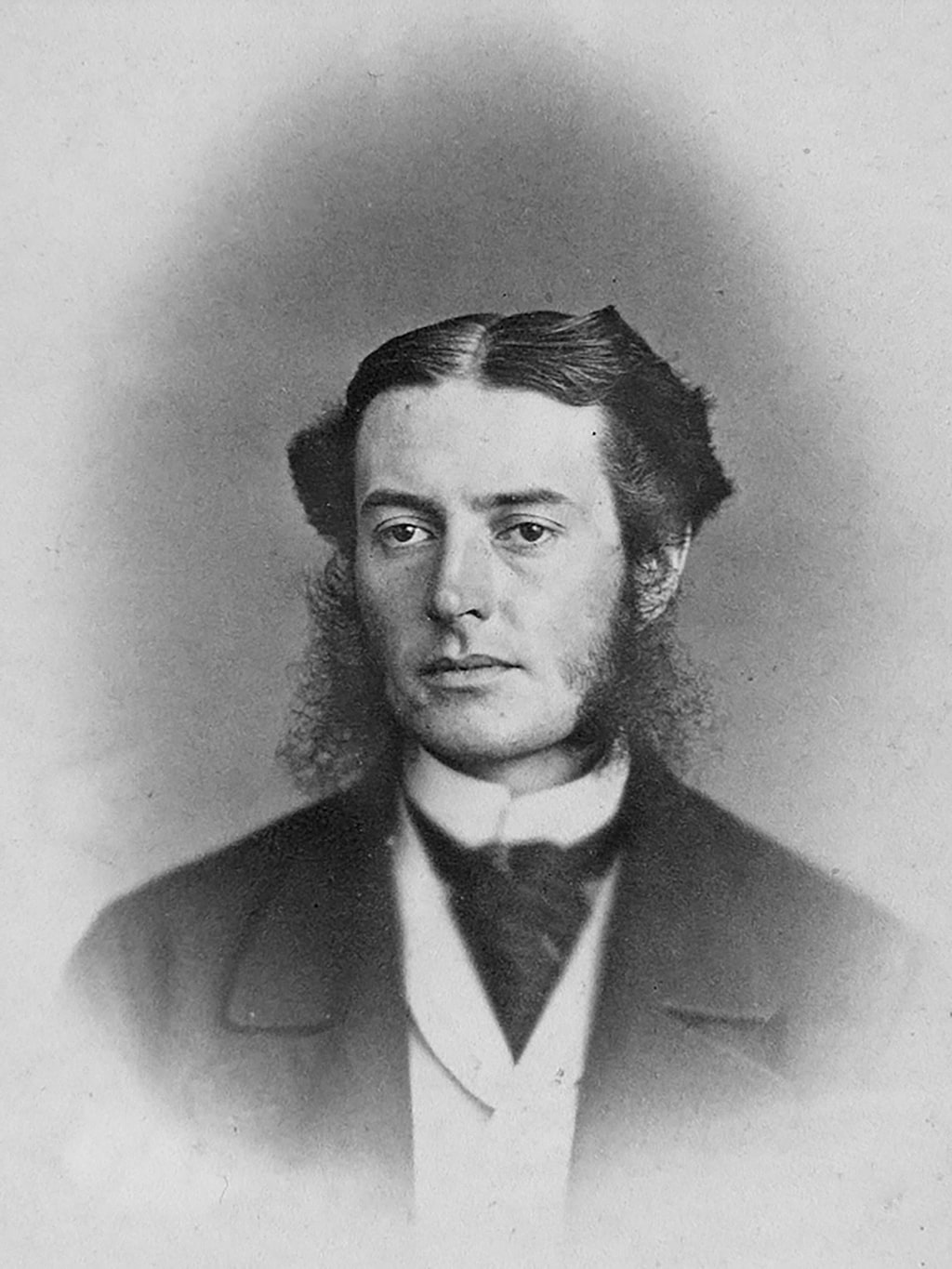
Henry Saxon Snell (1831—1904), architect of the Boys' Patriotic Schoo.
Advertisement was made for builders' tenders, a limited selection of five being made from the applicants. The highest tender was £22,345; the lowest (£20,326) was accepted. and Mr. John T. Chappell contracted on 12th April 1871 to complete the work of constructing the main building, infirmary, boundary wall, and closets, &c., within eighteen months "under a penalty." It was decided that there should be no public ceremony, as in the case of the Girls' School, to mark the laying of the first stone.
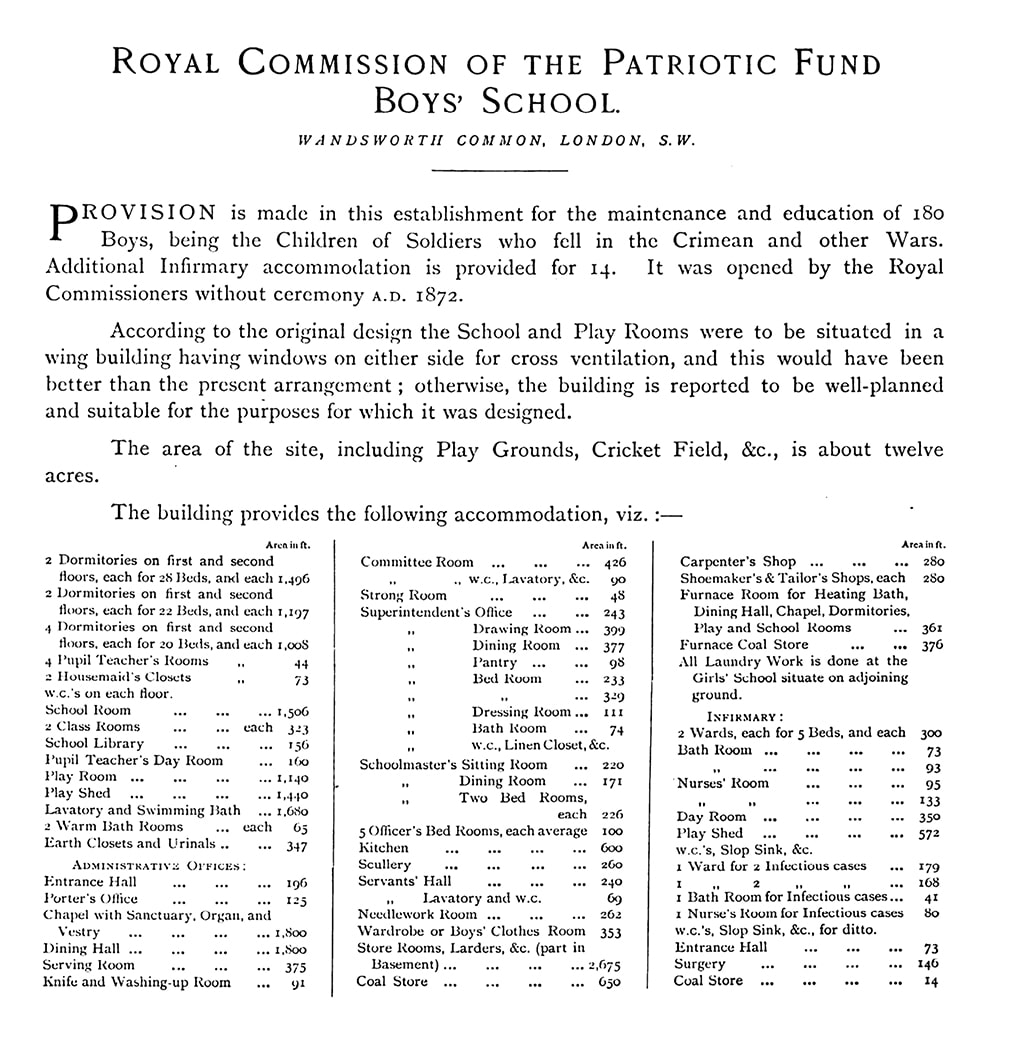
From Henry Saxon Snell, Charitable and Parochial Establishments, 1888.
Notice references to Carpenter's, Shoemaker's and Tailor's Shops. A "shop" in this context is in effect a factory, so I assume these were places where the boys were to learn trades (rather than where adults worked on behalf of the school). Also that "All Laundry Work is done at the Girls' School situate on adjoining ground". Such was the expected sexual division of labour.
I have yet to find any images of boys in the Patriotic School — please please please tell me if you know of any &mash; but here are some from a comparable military asylum nearby, The Duke of York's School at Chelsea, shortly after our period.
The images, from The Graphic, 28 May 1888 (pdf ), illustrate how "Life in the Duke of York's School is carried on in strict military style." Its "monitorial system" — where older boys exercised authority over younger ones — was explicitly modelled on Public Schools of the day.
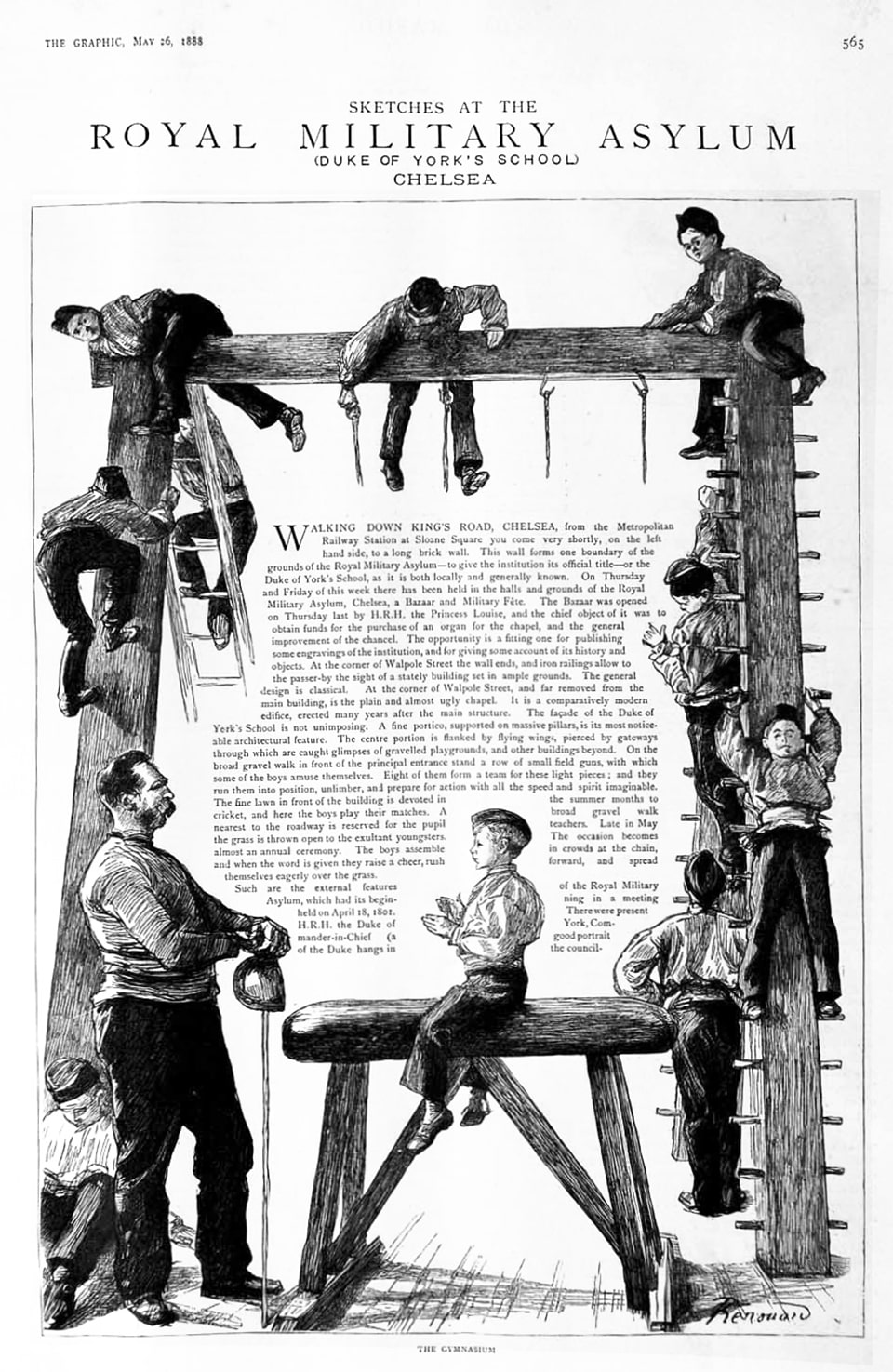
The Gymnasium

Orderly boys, under the Monitor, washing after Dinner
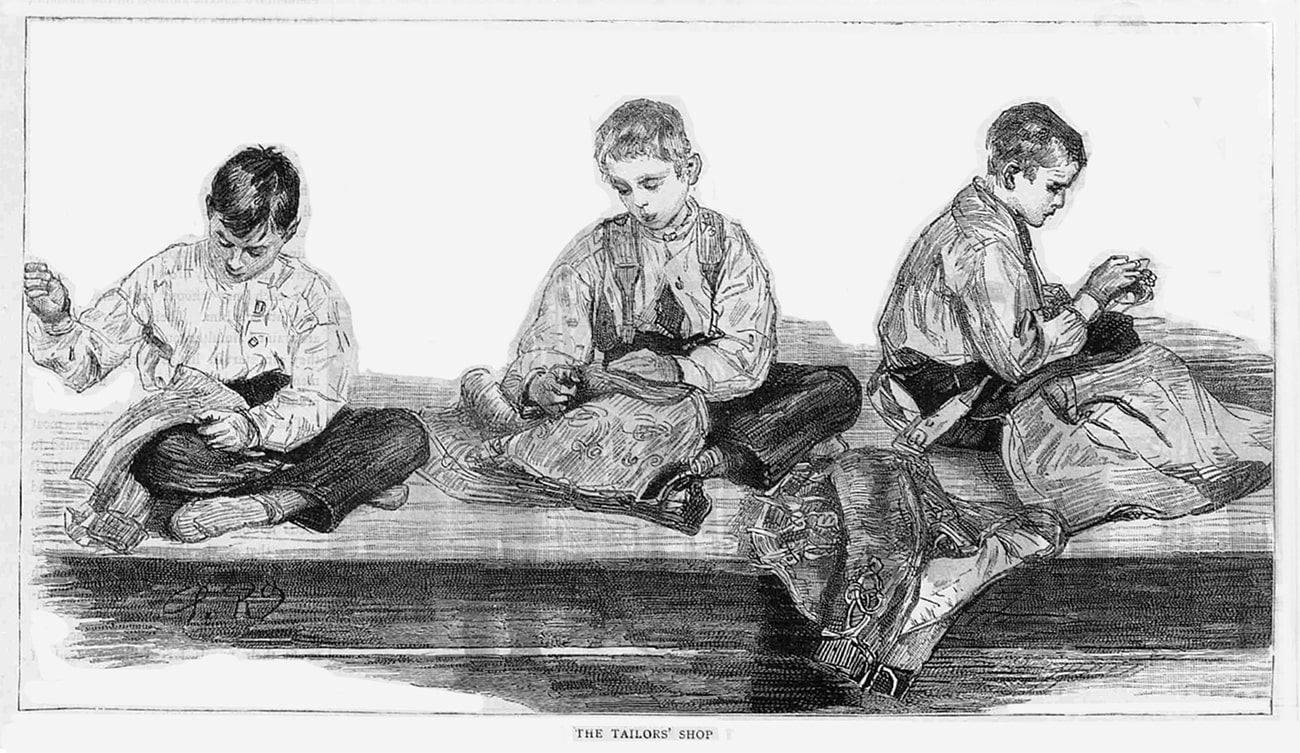
The Tailors' Shop
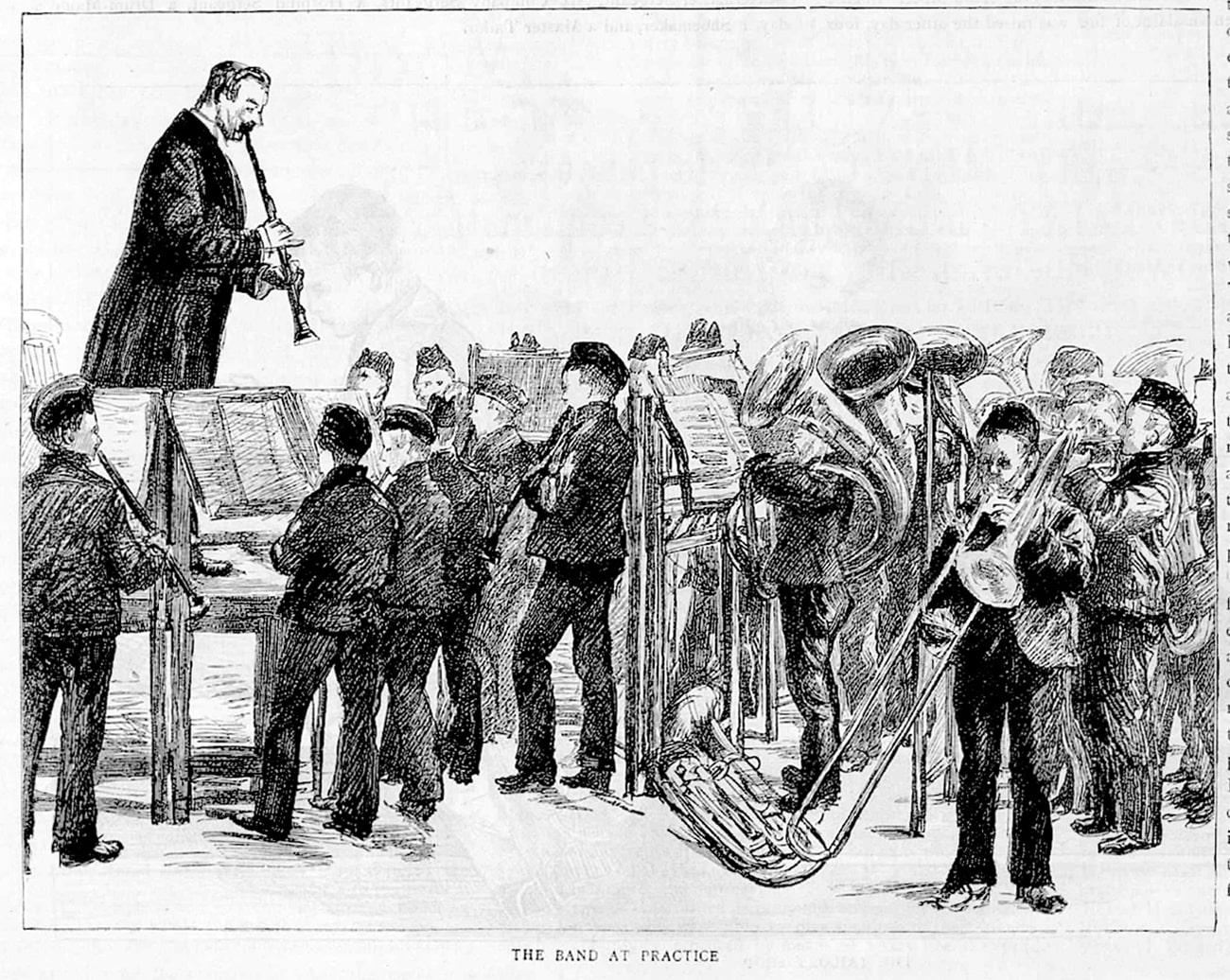
The Band at Practice
The original intention had been for the girls to grow their own food on the surrounding acres (manured by the children's own excrement), but I think that by this time any such notions had been rejected. This was largely, I suppose, because it proved impractical. But also because of opposition by John Buckmaster and others who disapproved of female agricultural labour as "demoralising" — which for Victorians meant not emotional depression but the promotion of vice.
In their Eleventh Report, dated 21st June 1872, the Royal Commissioners informed Her Majesty that the building operations had been carried on "with considerable energy", and that the whole of the building, except for the Chapel had been roofed in before Christmas 1871. They added that the internal finishing had progressed satisfactorily. and were confident that the whole school would be ready for occupation in September. The heating apparatus had been in daily use since 27th May 1872 to ensure that the walls would be thoroughly dry. The roads and playground were being laid out.
It had been thought originally that the boys might attend services in the chapel of the Girls' School, but it was ultimately decided to provide them with a new chapel of their own by building over the dining-hall. The Royal Commissioners were informed that the cost (including internal fittings) would not exceed £800.
Mr. Chappell was as good as his word. The building was occupied in October 1872, and the Royal Commissioners comment in their Twelfth Report that it is "admirably adapted for its purpose."
This opinion was confirmed later by the Chief Inspector of the Local Government Board. who in his report on the two Asylums, dated 20th October 1874, on the occasion of an investigation into the sanitary conditions at both schools after an epidemic among the girls caused by the drinking of contaminated water, remarks that "the buildings seem to me to be well placed and admirably planned, and, excepting some slight defects in detail . . . may be said to possess most of the arrangements necessary to secure comfort and health to the inmates. They are, in my opinion, a credit to the professional gentleman who designed them."
But this comforting statement by the Chief Inspector is problematic. Death rates were troublingly high in the girls' school (I'm not sure yet about the boys' rates, but probably much lower). Deaths from typhoid and similar diseases in 1874 were put down by the public health analyst Dr Muter to the "dangerous and unsuccessful method" of treating the asylum's sewage — essentially spreading excrement on the surrounding grounds.
Significantly, Muter also blamed the "Keeping open of the 'Boys' School" well, which is a true disseminator of zymotic poison." ("Zymotic Disease" is a 19th-century medical term for acute infectious diseases, such as typhus and typhoid, smallpox, scarlet fever, measles, erysipelas, cholera, whooping-cough, and diphtheria. See Chronicles, October 2023.)
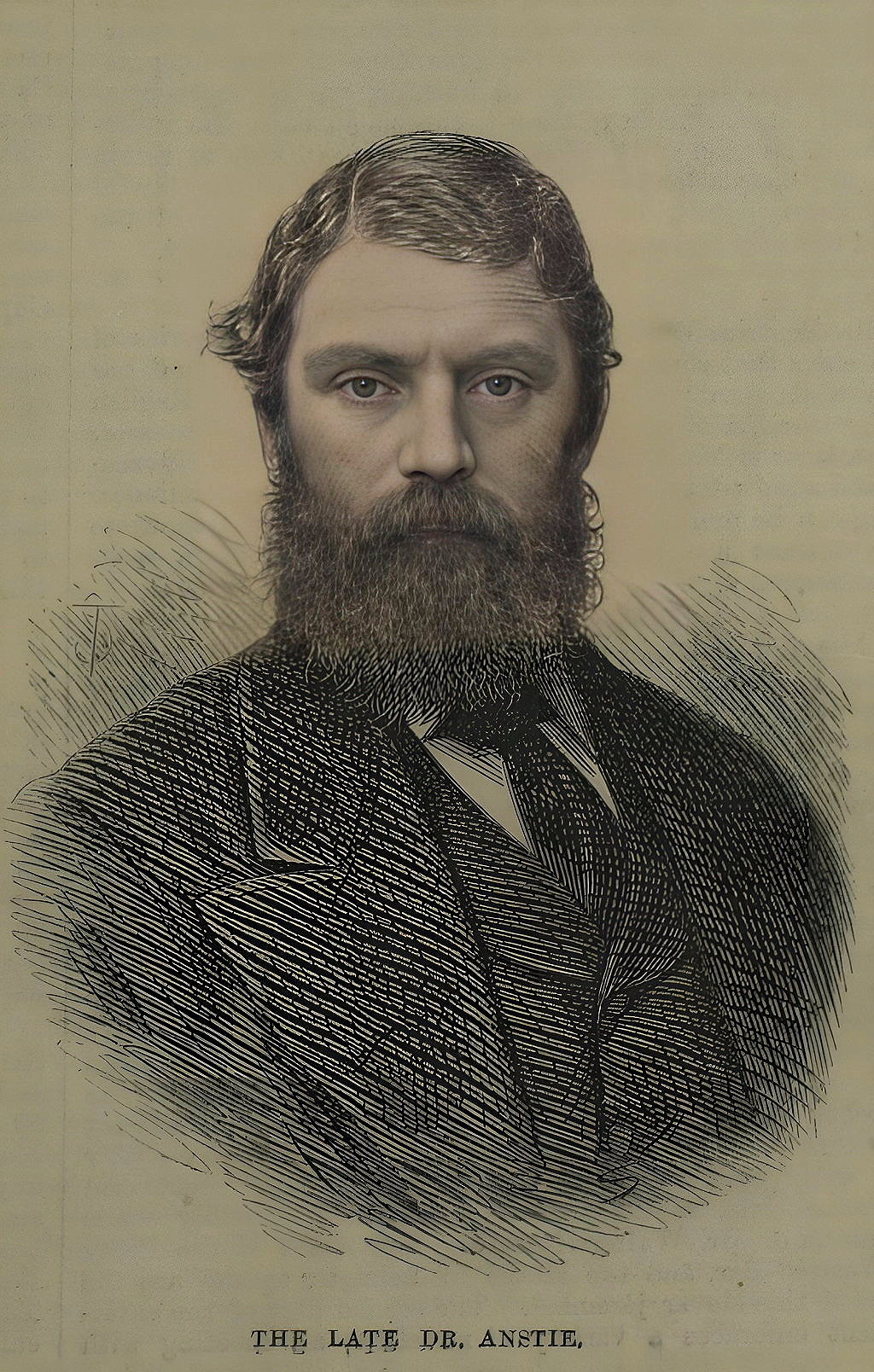
In September 1874, the brilliant public health doctor Francis Anstie had died of septicaemia while investigating cases of acute peritonitis at the girls' school — he had cut himself while performing an autopsy on a young pupil. Many blamed his death on his exposure to the "sewer gas" emanating from vats in which in the excrement was stored prior to dispersal on the soil. Henry Saxon Snell wrote an angry letter to The Times saying that none of the deaths were his fault — he had been responsible for the design of the boys' school only, in which "no similar cases have occurred".
After that unexpectedly long digression, let us return to BVS:
The total cost, including the architect's fee and the salary of the clerk of works, was £32,682 1s. 2d. The larger Girls' School had cost more than double this amount (£71,818 7s. 7d.). The cost of the new building was met out of the General Fund, and the endowment fund for the boys was allowed to continue to accumulate.
Furthermore, to prevent the new school's being burdened with an annual payment the Executive and Finance Committee had in 1871 redeemed for £714 11s. 6d. the Land Tax of the whole of the ground belonging to the Royal Commissioners at Wandsworth. But in spite of all the wise provision of thoughtful and careful men, the Boys' School was destined to encounter many difficulties in its short span of life.
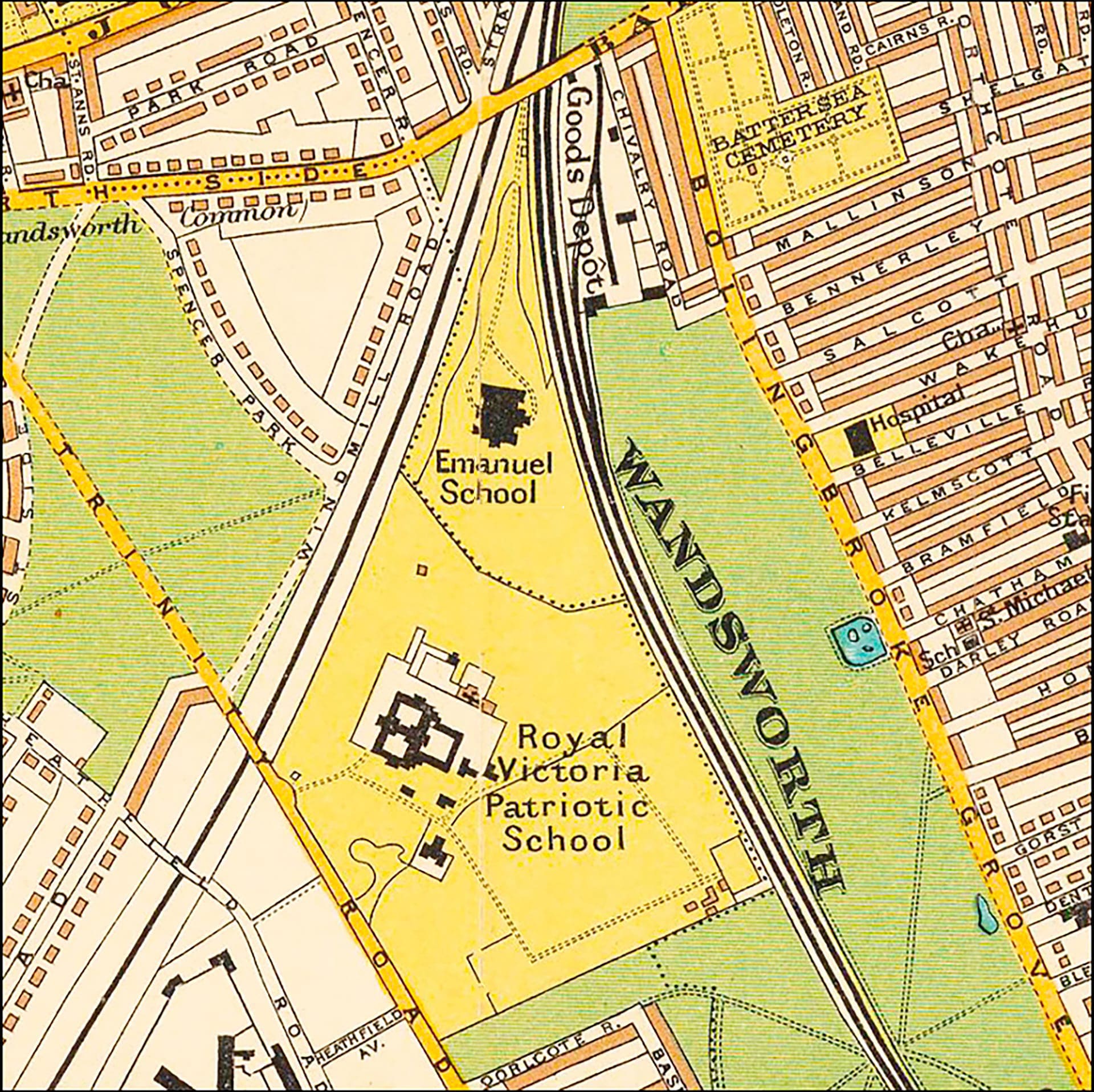
Stanford, 1908. Although a few decades after the period we're looking at, this map shows the relationship of the two asylums on the original 50-plus acre site (which I have called "the kite").
Notice the access opposite the County Arms is slightly wider, and there's now a wall between the boys' and girls' schools. Also, how the once dead-straight boundary defining the metropolitan boroughs of Battersea and Wandsworth now takes a zig-zag route (the dotted line). Hence Emanuel is entirely within Battersea and the RVPB within Wandsworth (previously, part of each was in the adjacent borough).
Today's "Sports Field" (once known as the "Extension") was at this time still part of the girls' school. (It was rented to the Neal family as one of their numerous market gardens). This 20-acre area was restored to the Common just before WWI.
The School was occupied in October 1872, and at the end of the year the number of boys stood at 224. Prudent arrangements had been made for the future economy of the Asylum. The farm and garden were to supply vegetables; and it was intended that the girls should wash for the boys and the boys bake for the girls. The Secretary, appointed to manage both Asylums, took over the house of the Chaplain, who removed outside the grounds.
The new school started well. A band was formed and encouraged the Royal Commissioners in the hope that a number of boys would go into the regimental bands after leaving school. The Revd. A. R. Grant inspected the two Asylums in May, 1873, and reported that in the Upper Division of the Boys' School the reading was "extremely good", though in writing from dictation there was a falling-off after the First Class, and the standard of grammar was only "very fair". He remarked on the latter: "I should like to see this made more a practical subject, and divested of technicality". He concluded his report: "Altogether the school is highly efficient, the boys evidently working with a will, and interested in what they do".
In his report of the following year there was a sharper note. He observed "a decided falling-off in the elementary subjects" in the Upper School, but thought this was partly due to the great influx of new boys and to shortage of teaching staff. (In most of the classes there were over forty boys.)
In 1875 fresh troubles were encountered. Not only were there many cases of contagious ophthalmia, that terrible scourge of the metropolitan pauper schools, but the Superintendent and Head master, Mr. Hullah, suffered a severe haemorrhage and was forced to retire on an allowance. His wife, too, was at this time incapacitated. by paralysis.
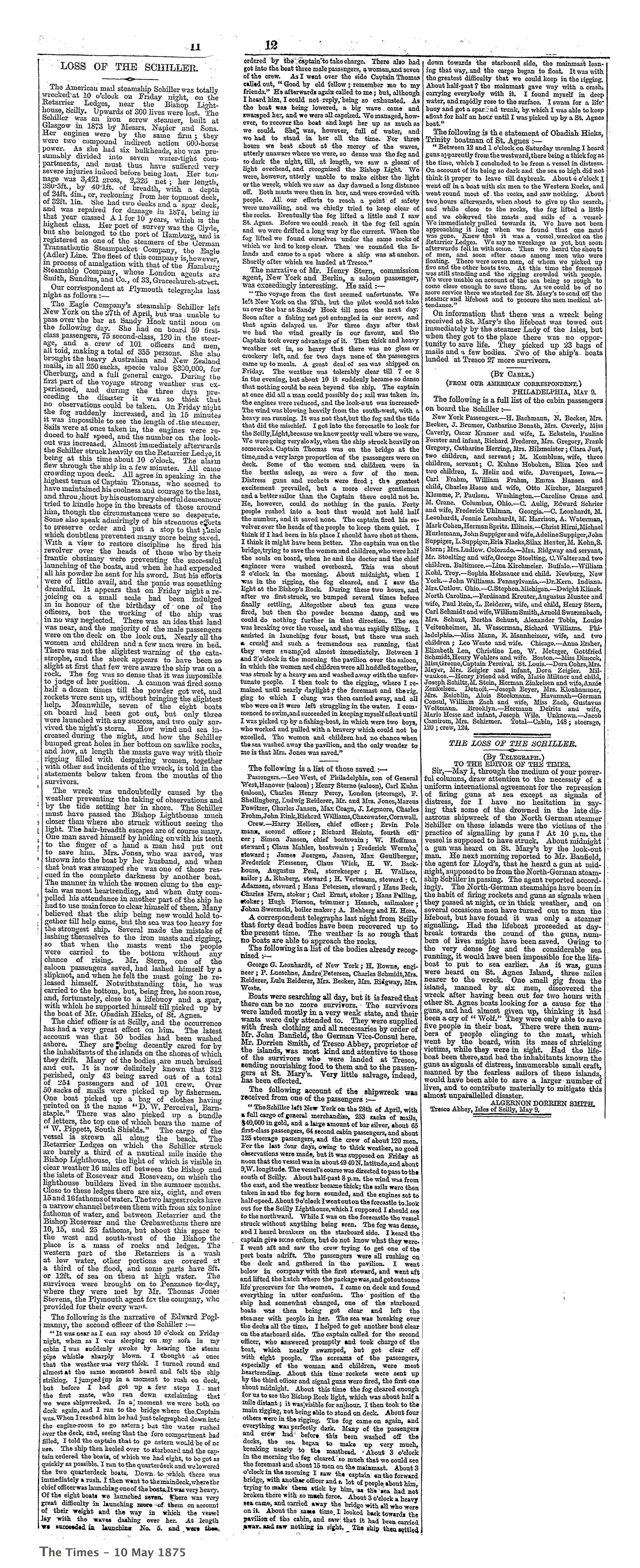
However, the School won a better report this year from the Revd. Grant, who considered that it was now in a "settled state of efficiency". He was particularly pleased with the standard of reading. In the First Class the examination was on the account of the wreck of the Schiller in The Times of the same morning, and no mistake was made, except in the German names, which, of course, I did not count."
Out of curiosity, I searched for the Times article used by the school inspector to test the boys. It's stirring stuff.
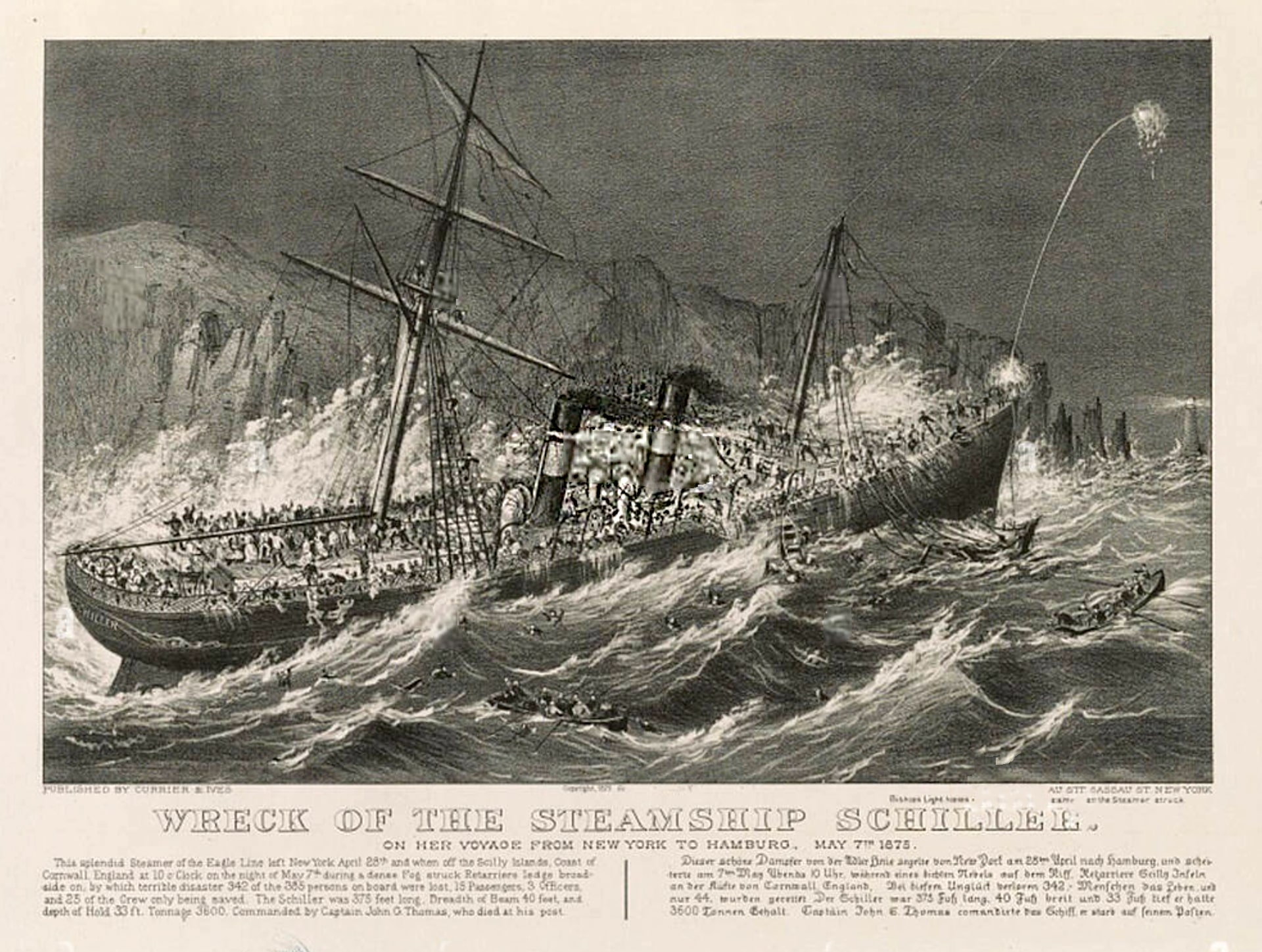
The German liner SS Schiller, driven by a combination of sail and steam, foundered in a storm off the Isles of Scilly, 7-8 May 1875.
I suppose I'd better begin to wind up now . . .
Bernard Slater asks, "Were the boys well looked after?"
Probably yes, by the standards of the time. An extra blanket was allowed in severe weather to those boys who asked for it. The Chief Inspector to the Local Government Board noted in October, 1874, that there was an abundance of warm water, carbolic soap and clean towels, "the results being healthy, clean-skinned looking children". Each boy had his own comb, hair and toothbrush. "Lard and red precipitate" were applied assiduously as a precaution against scald head.
A few years later the boys were even provided with an additional room in the infirmary where they could have their chilblains dressed in the winter. There were warm baths as well as a swimming-bath.
Were the boys happy? That, alas, we shall never know beyond a peradventure. The proximity of the Girls' School on occasions encouraged the bolder spirits to make assignations. doubtless innocent, with the gentler sex, and we may hazard the guess that the inmates of the Asylum were sometimes lonely.
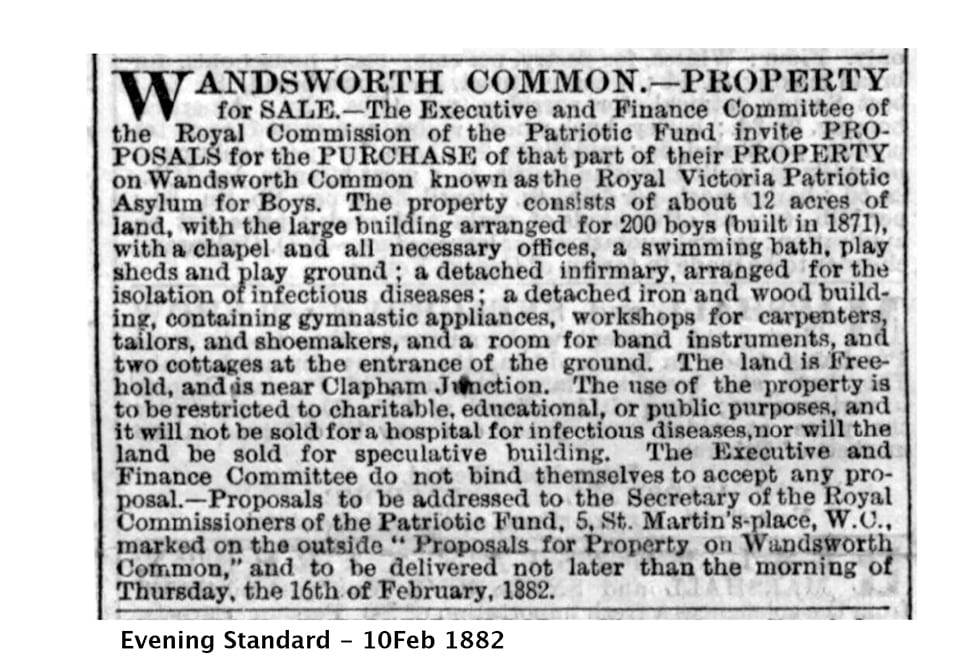
February 1882: the Boys' Asylum for sale, after only a decade of service. Emanuel took over in the following year.
Since the land and schools had been built with public charitable donations, there were restrictions on what should happen to them when they were sold. From the point of view of the Patriotic Fund Commissioners, I imagine they would have preferred to maximise the value of their assets. But notice the advert states clearly that, "The use of the property is to be restricted to charitable, educational, or public purposes, and is not to be sold for a hospital for infectious diseases, nor will the land be sold for speculative building."
I wrote a brief account of the final days of the Patriotic School, 1881, in December 2021's Chronicles:
"The orphaned boys of the Crimean War are evicted from their "patriotic school" on Wandsworth Common, and Emanuel School takes over. A Magic Lantern Show softens the blow."
Perhaps one day I'll write in more detail about how Emanuel came to take over the Patriotic Asylum, and the school's ongoing relationship with Wandsworth Common. But not quite yet.
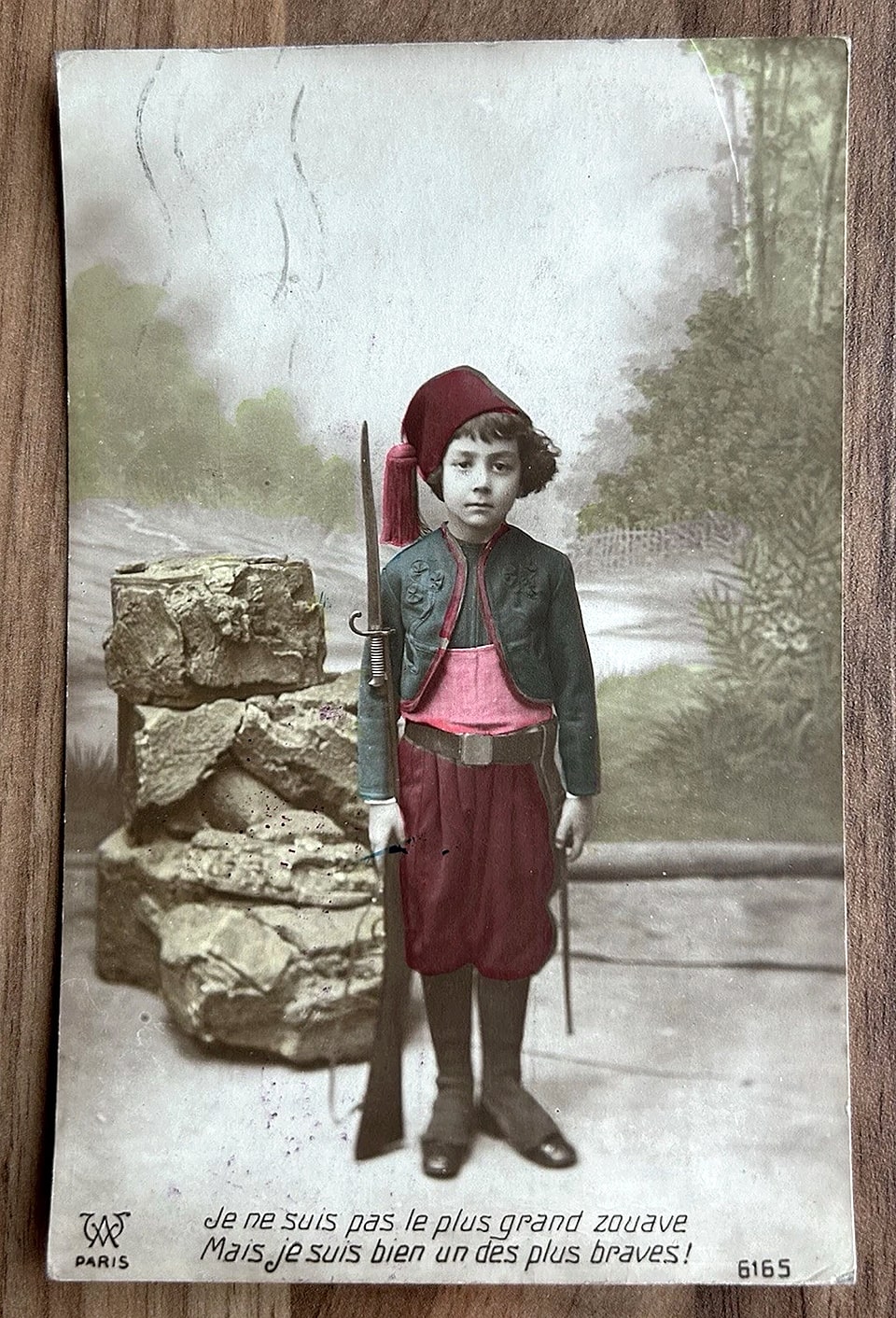
Earlier this month, I discussed a postcard sent from the Front during WWI to Kenneth Hacker, a young boy living in Gorst Road. I asked if any reader would try to find out more. I was not surprised when the indefatigable Sarah Vey had got straight on with the job, and in super-quick time.
Read about her amazing genealogical explorations into the Hacker family, including a close look at the evidence that Ken's father Alfred might have been in the Islington Workhouse in 1890, here.
Thanks, Sarah!
I have a long-standing enthusiasm for the wonderful St Mary Magdalene Cope. I wrote about it here and here.
But until Monday of this week, I had never seen the Cope in the flesh, as it were. By the time you read this, it may already be too late, but as I write it's on display in the church on Trinity Road. You can visit on Friday 17 October or Saturday 18 October (check times online). I strongly recommend you do so.

The cope is on display alongside a number of extraordinary quilts made in Wandsworth Prison:
The Fine Cell Work story is one that is based on the belief that change is possible in the most miserable places. Visit the exhibition to see first-hand how beauty, creativity and excellence can transform lives that are forgotten through the power of needlework.


Learn more here: Instagram: SMM and Facebook: Fine Cell Work
Unveiling of a plaque to the pioneering "snapshot" photographer Paul Martin, and the studio he shared with Harry Dorrett.

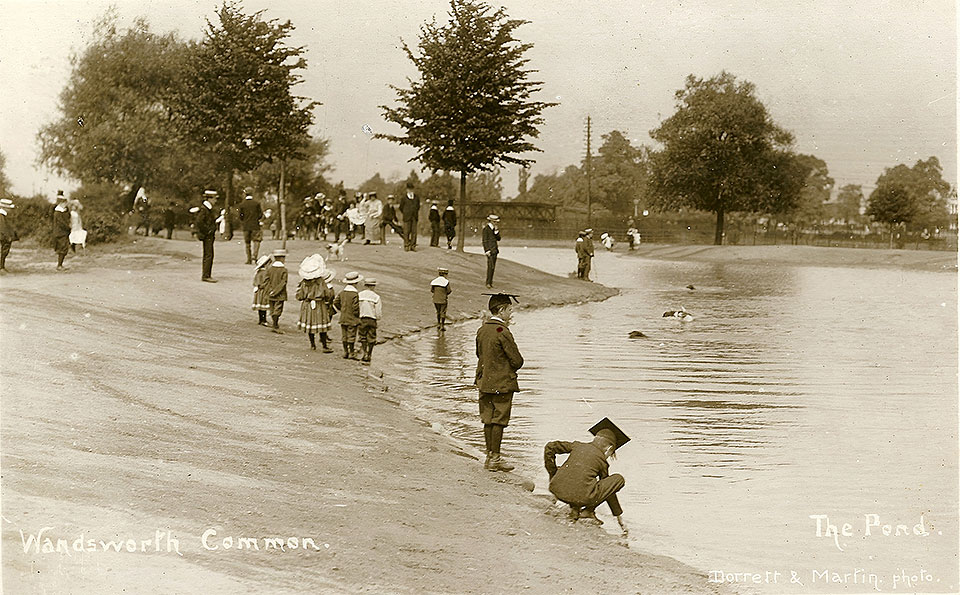
In October 2023, Chris Allies and I spoke about Paul Martin and Harry Dorrett to the Friends of Wandsworth Common ("Pioneers of Photography on and around Wandsworth Common") You can view John Crossland's video of the event here — lots of info and many fantastic photographs!
Here are a couple of slides from our talks:


SO many more stories still to tell. But that's all for now, folks.
Send me an email if you enjoyed this post / want to comment on something you've seen on the site / would like to know more — or just want to be kept in touch.
If you would like to receive notifications of new Chronicles, let me know . . .
Philip Boys ("History Boys")
October 2025
— Friends of Wandsworth Common
— Wandsworth Historical Society
