Last modified: 3 October 2026
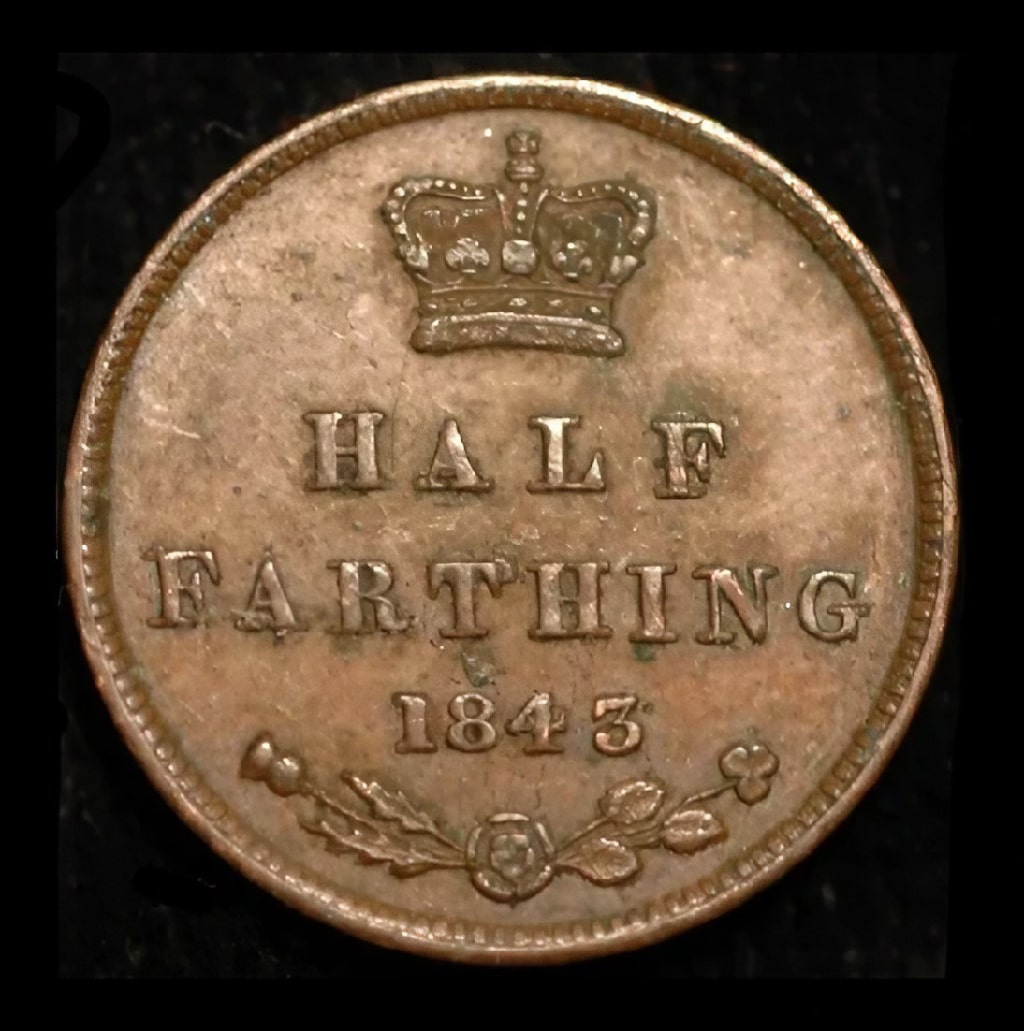
Reverse of a Half Farthing coin, 1845
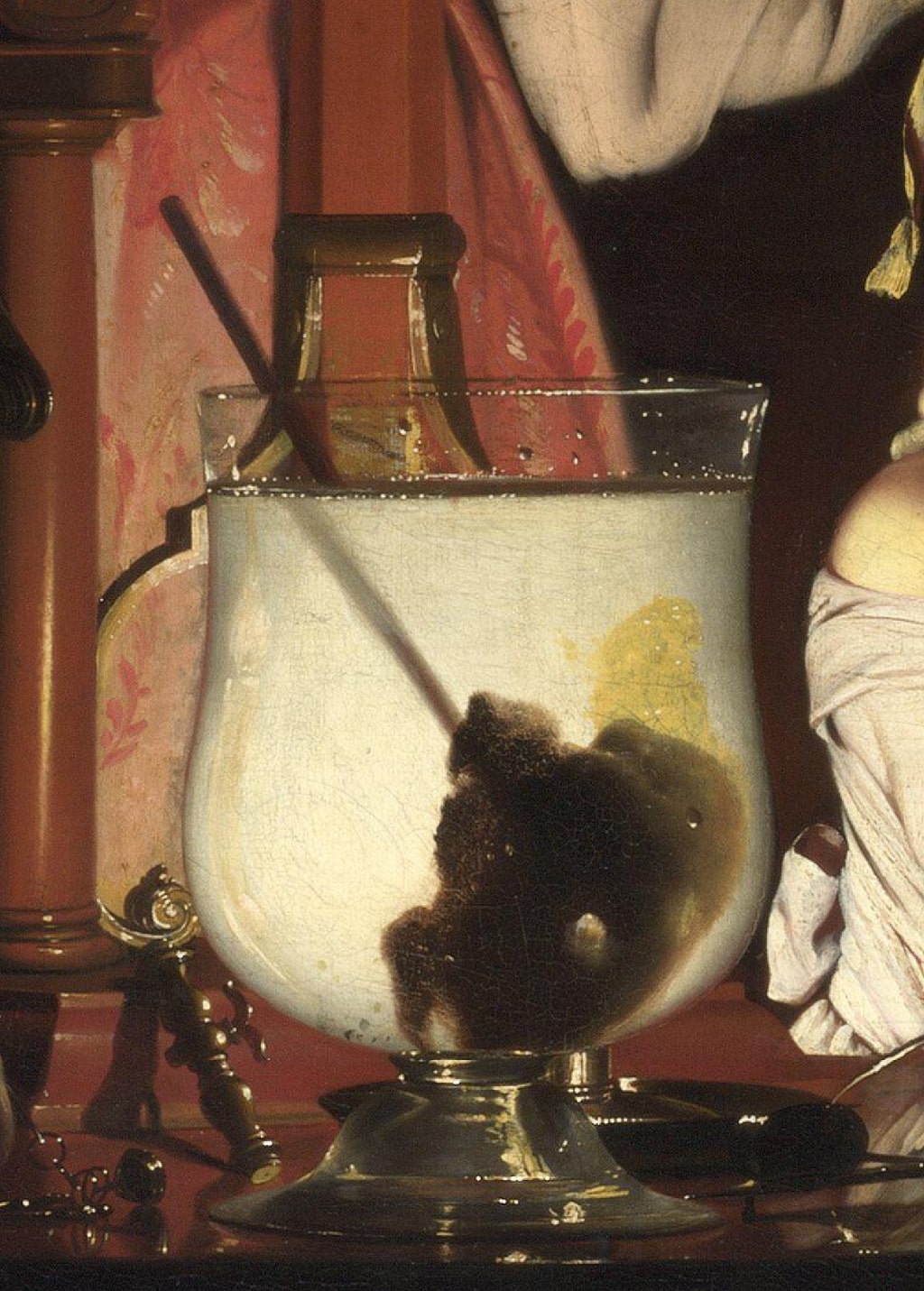
A single candle distorted by the liquid in a mysterious glass bowl.
A detail of which painting?
[Answer at the bottom of the page . . . ]
In last month's Chronicles I included a map of proposed railway lines across the Common. Hawk-eyed reader Jason Hazeley noticed that what we now call Allfarthing (as in Allfarthing Lane) was shown as "Half-Farthing". Why?
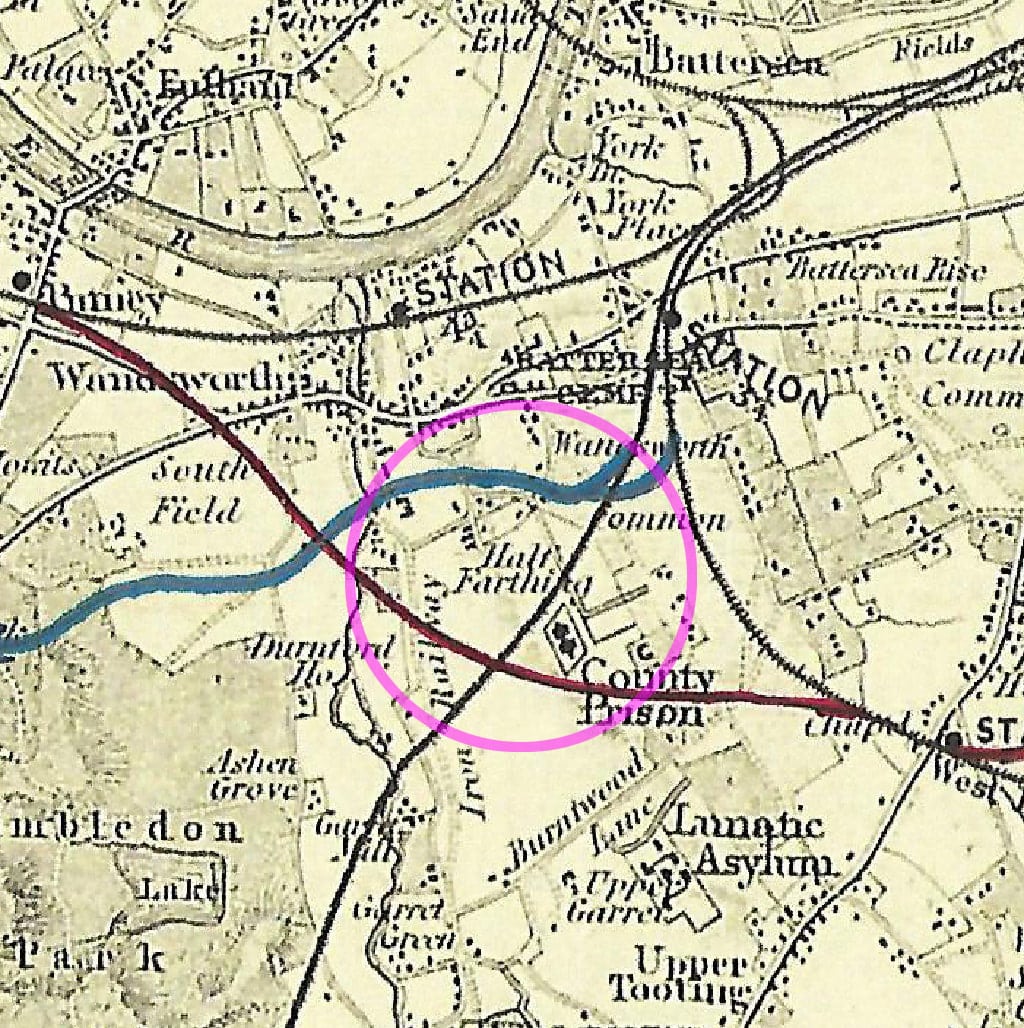
As placenames, "All Farthing" and "Half Farthing" are unique — there are no other similar toponyms anywhere in England. So why here? Which is "correct"? What did the names mean?
But first, I've since learnt that yet more railway lines were proposed for our area. Had they been built, there would surely have been no room for houses.
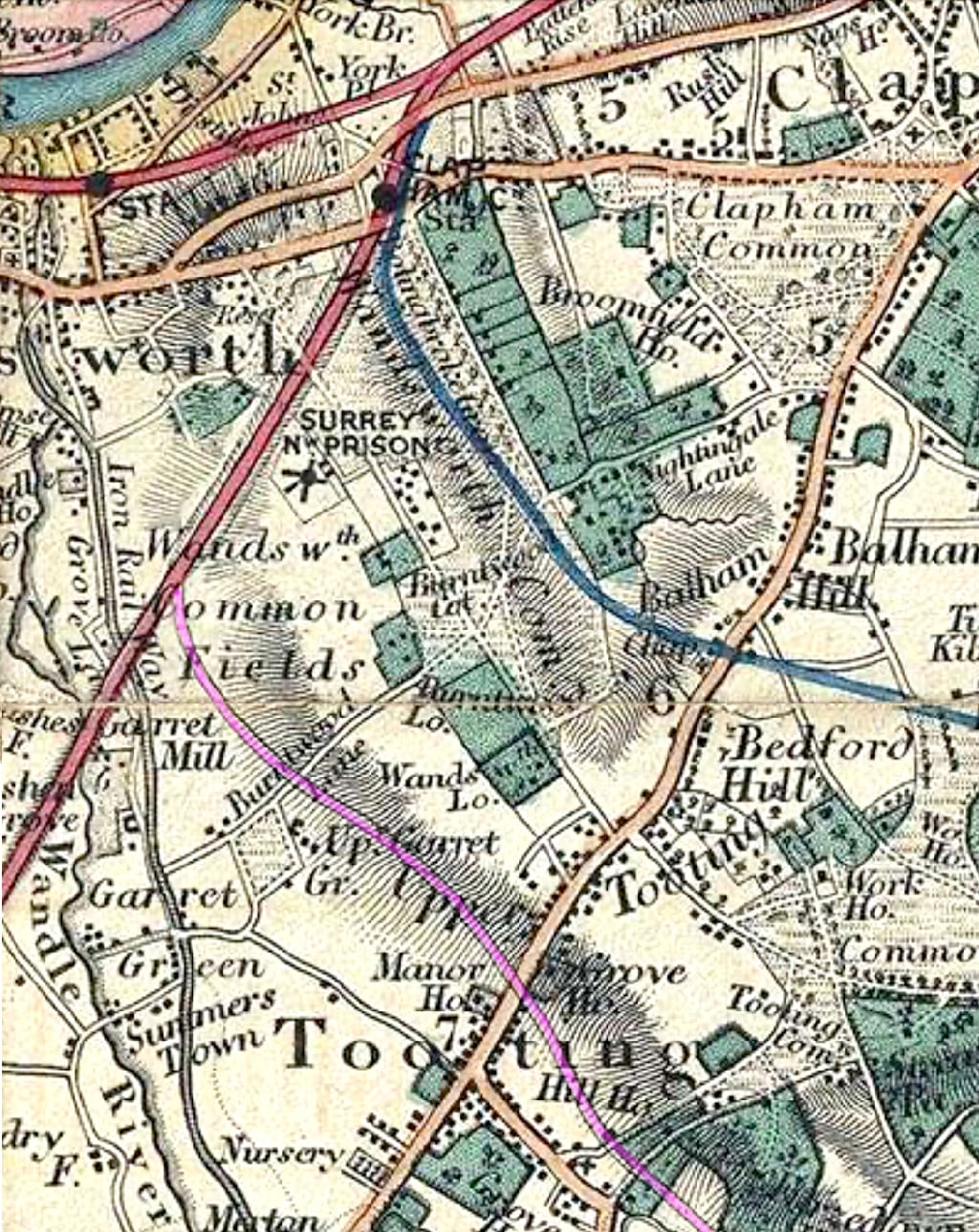
Cruchley, 1855. (I've coloured the proposed track pink). Notice also the "Iron Railway" running north-south parallel to Garratt Lane and the River Wandle. Its carriages were drawn by horses, not of course by steam locomotives.
In relation to a modern map, the proposed branch would have left the London-Southampton line just above Earlsfield station, cut through Wandsworth Cemetery, then followed today's Dawnay Road or Openview before crossing the new Springfield (Hospital) Park on its way to Croydon (and thence to Brighton).
The London Extension Railway, 1804
And that's not all. A little over fifty years earlier — well before the use of steam locomotives — a "London Extension Railway" was planned that would have started by a junction with the Surrey Iron Railway at the entrance to the Wandsworth dock, and run roughly north-east to Southwark:
Relative to present-day topography, the route was to the northwest of and roughly parallel to St. John's Hill and Lavender Hill to join Wandsworth Road, then turned to the north through South Lambeth. It continued along Kennington Road, ran to the east of Waterloo Station, then turned eastwards along Stamford Street to terminate some distance short of Blackfriars Road.
[Peter Mcgow, Surrey Iron Railway and Croydon, Merstham and Godstone Iron Railway, Wandle Industrial Museum, 2001.]
A plan showing the route was deposited with the Clerk of the Peace for Surrey on 29 September 1804. Does anybody have a copy of this plan? I'd love to see it.
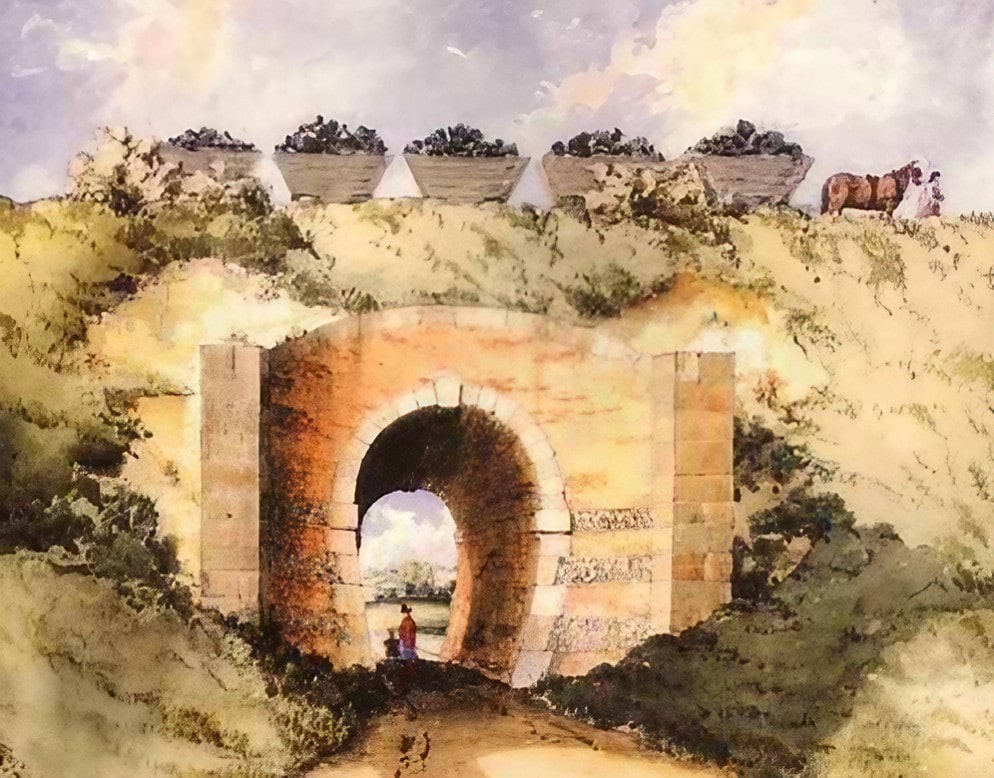
Watercolour showing a horse-drawn goods train at Coulsdon, further down the line, 1823.
Wikipedia: Surrey Iron Railway
Unsurprisingly, many local people (including "several gentlemen from Clapham and Lambeth") were outraged:
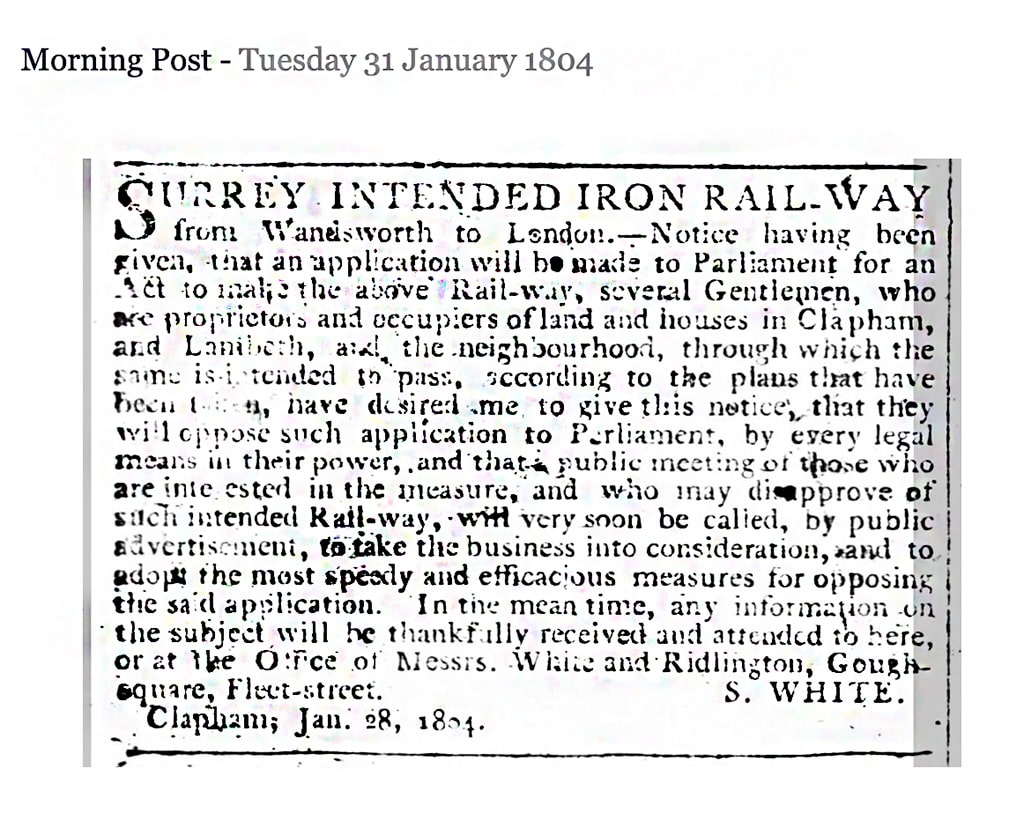
SURREY INTENDED IRON RAIL-WAY
from Wandsworth to London
Notice having been given, that an application will be made to Parliament for an Act to make the above Rail-way, several gentlemen, who are proprietors and occupiers of land and houses in Clapham, and Lambeth, and the neighbourhood, through which the same is intended to pass, according to the plans that have been taken, have desired me to give this notice, that they will oppose such application to Parliament, by every legal means in their power, and that a public meeting of those who are interested in the measure, and who may disapprove of such intended Rail-way, will soon be called, by public advertisement, to take the business into consideration, and to adopt the most speedy and efficacious measures for opposing the said application.
In the mean time, any information on the subject will be thankfully received and attended to here, or at the office of Messrs White and Ridlington, Gough Square, Fleet Street.
S. White, Clapham, Jan. 28, 1804.
[The "S", by the way, was "Samson".]
A meeting was announced for 10th February at the Royal Oak, Vauxhall, "to consider of and determine upon, the most proper and effective measures to be pursued for opposing such application, and preventing by all legal means the obtaining or passing of such Act" [BNA: Link).]
At this meeting (with the wonderfully named Samuel Goodbehere in the Chair):
"It was unanimously resolved, That upon mature consideration it appears to this Meeting, that the making of the proposed Rail-Way from Wandsworth to Stamford-street, Blackfriars-road, would be an unnecessary measure, inasmuch as the present most excellent roads to Wandsworth, together with the Navigation of the River Thames, and the completion of Public Works now going on, afford every convenience and accommodation that are essential to any public object.
Resolved likewise unanimously, That the intended measure, if carried into effect, will be highly injurious to private property, by destroying the present inclosures, and rendering the cattle, crops, and other property therein, insecure and open to depredations; and that, from the very populous neighbourhood through which this way is proposed to pass, the retirement, and many other essential comforts of a great body of respectable individuals will be done away. That the many grievous and perplexing inroads necessarily to be created, will be peculiarly harassing, and such as the compensation expected to be made cannot be sufficiently adequate to.
Resolved therefore unanimously, That the said application to Parliament be opposed."
[BNA: Link.]
Sufficient investment could not be found and the sponsors never proceeded with the delivery of a petition to Parliament. Plans for the new railway went nowhere.
But if things had gone to plan, doubtless railway companies would have ensnared Wandsworth Common in a cat's cradle much like the "Battersea Tangle" a mile or so up the line:
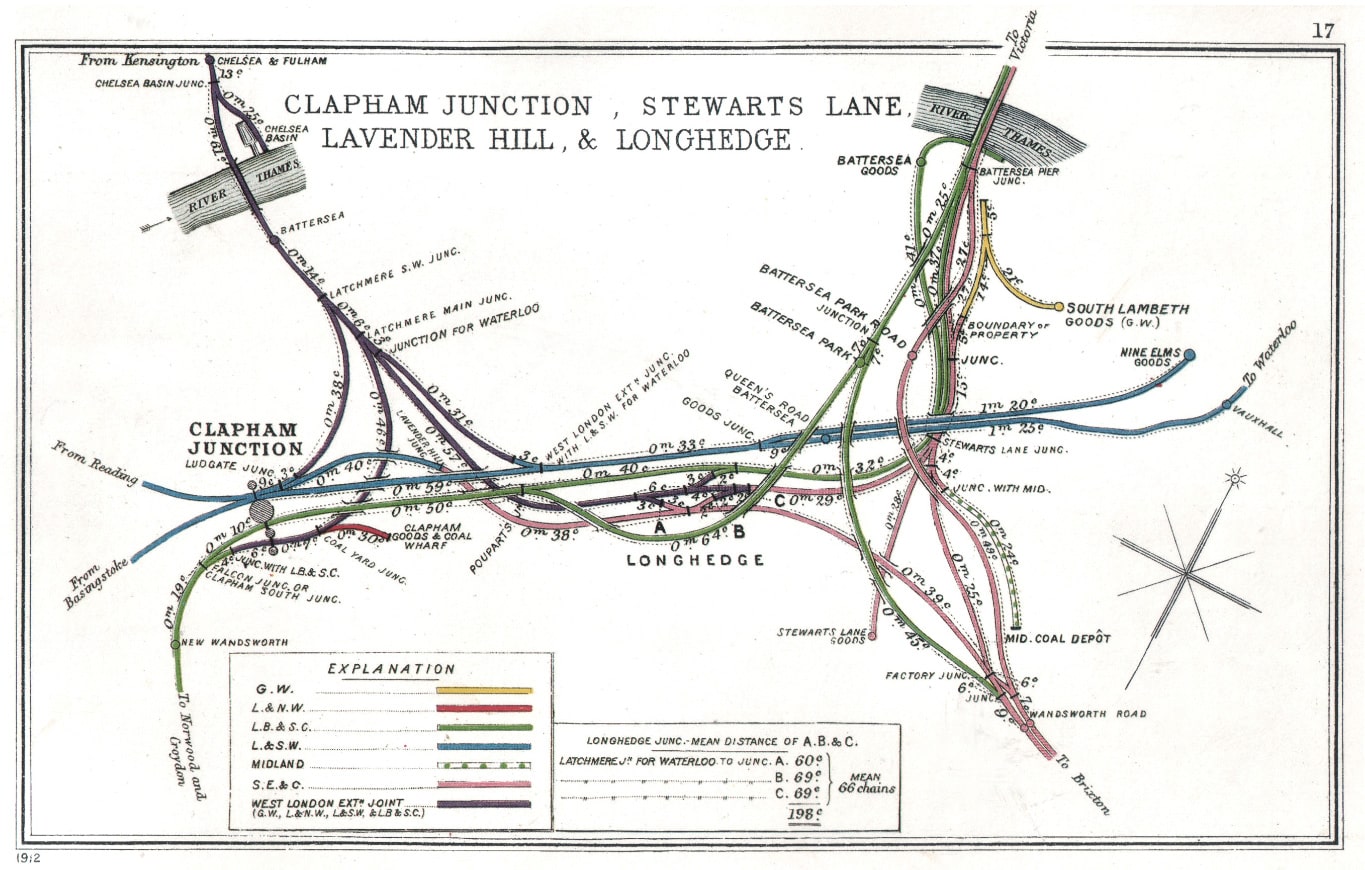
The "Battersea Tangle", or "Battersea Knot".
Thank heavens for NIMBYS, I say.
1 Feb 2025: A response from Elizabeth Jeveons draws attention to a recent local furore over an application by Enable, who tend the Common (and much else), for licences to serve alcohol at possible future events, with "up to 10,000 attendees", to be held on up to four sites around the Common:
Following Enable’s attempt to gain a monetising licence for the Common, "in perpetuity”, and the huge outcry about that that has just happened, it is good to know that only by saying “not in my backyard” have we ever preserved the Common and I am pleased there are enough people who have always loved and respected open unfettered land for us to have what we have now. May it continue that the Common’s Conservateurs will win against the monetisers, over users and exploiters for their own gain and glory.
All best, Elizabeth
She added a link to a very interesting article by Alex Long about why the applications were made, and why they were withdrawn (for the present):
Clapham Junction Action Group: Wandsworth’s parks: Commercial events with 10,000 people planned – then cancelled
Thanks, Elizabeth!
Anyway, enough of railways and popular protest (for the moment). Now back to this month's chief themes, which are farthings and half-farthings, the mysterious slaughter in 1741 of ten sheep from which only the fat was taken, and candles. At the very end of this month's Chronicles, I learn about song-bird "mules" that once engaged in sonic battles in pubs on the edge of the Common.
"Allfarthing Lane was worth going down for its name's sake. We invented explanations and repeated those of our parents.
At the top dwelt an old woman in what looked like a one-room hut who presumably knew and had something to do with the origin of the queer name."
[The Childhood of Edward Thomas: A Fragment of Autobiography .]
When Jason's email arrived I happened to be looking at a brief account of a perplexing crime that took place on "Half Farthing Farm" nearly three centuries ago.
Mysterious slaughter of 10 sheep at Half-Farthing Farm.
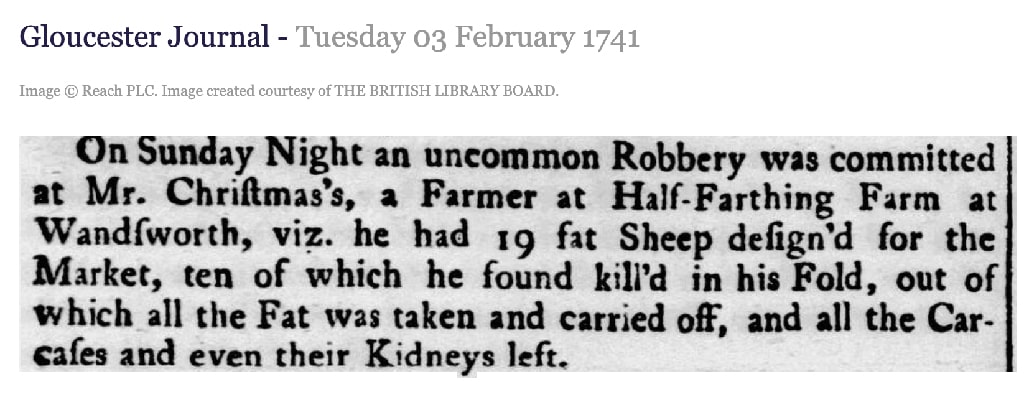
On Sunday Night an uncommon Robbery was committed at Mr Christmas's, a Farmer at Half-Farthing Farm at Wandsworth, viz. he had 19 fat Sheep deign'd for the Market, ten of which he found kill'd in his Fold, out of which the Fat was taken and carried off, and all the Carcases and even their Kidneys left.
I think we can assume that Half-Farthing Farm was directly attached to the manor house, close to the kink in Allfarthing Lane — more or less where Allfarthing School is today. Part of the farm may have been nearby on the other side of the lane. (See the Gardner/Porter map below.)
But why had the thieves killed and butchered the sheep in their fold, then taken the fat and nothing else ("even their kidneys"). What use could fat possibly be put to that was so lucrative that you would risk your neck in this way?
[It would also be good to know why the story is being reported as far away as Gloucester, and to learn more of "Mr Christmas", but perhaps these questions will have to wait for other times.]
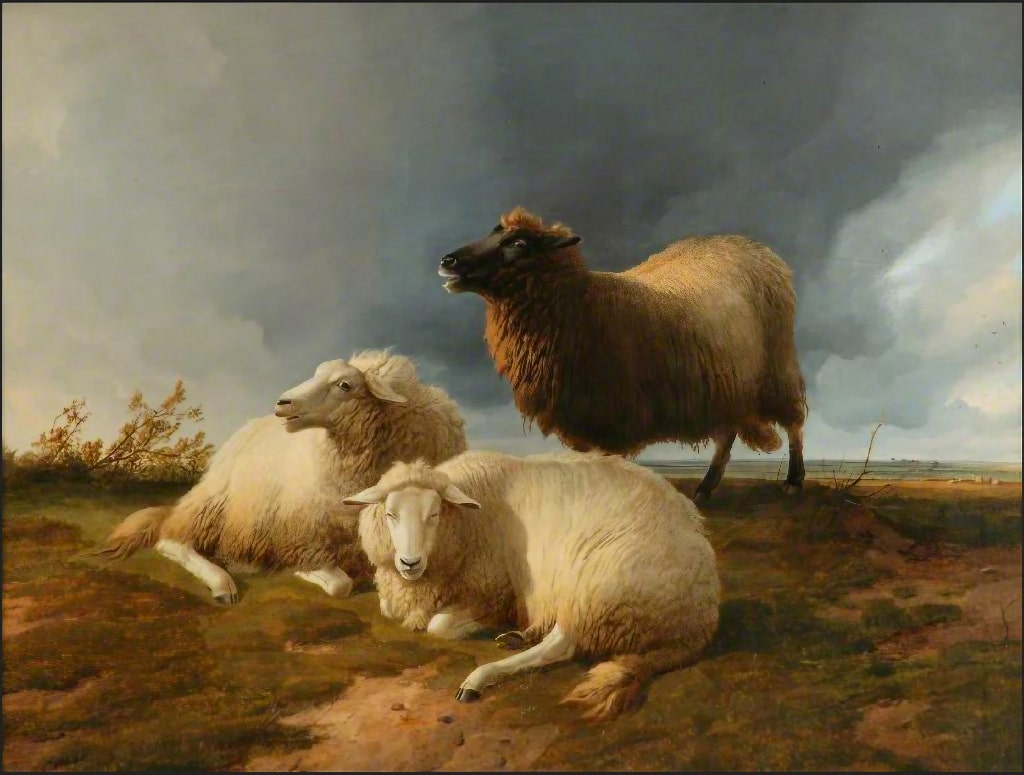
Thomas Cooper, Sheep on a Common, 1873. Manchester Art Gallery. Almost certainly not Wandsworth Common. These fine, fat, fluffy animals — the impressive product of more than a century of intensive breeding — are probably much larger than the sheep that grazed Half-Farthing Farm.
Not long after, I came across a reference to "Half-Farthing" in a report of the death of the famous actor, dramatist, song-writer and scene-painter Thomas Dibdin (1771-1841). Dibdin, it says, had studied for a "twelvemonth under Mr. Tempest, of Half-farthing-lane Academy, Wandsworth, where he was taught to speak bad French at dinner-time."
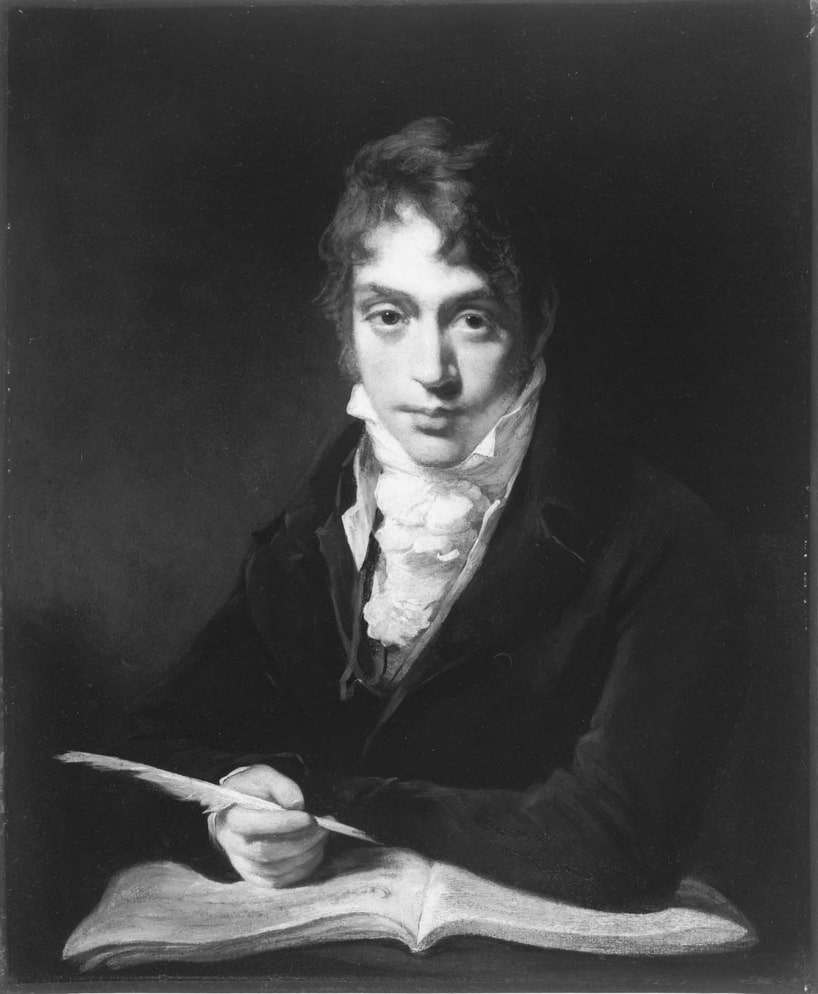
Thomas Dibdin, by William Owen, Museum of Fine Arts Boston.
This must surely be the same school that "Master Bruce" was attending a few years earlier when he played "hare-and-hounds" on the Common. As you may recall, he wrote home about it excitedly on 20 July 1772.

George Brudenell Bruce, c.1768, attributed to William Hoare.
[If you haven't read this story, please do. It's one of my favourites. It would be good to learn more about this school, which must have been located in Allfarthing Manor, on the west side of the kink in Allfarthing Lane. (It's rather pleasing that today's Allfarthing School now occupies this site.)]
Farthing/Half-farthing?
My first port of call was the English Placename Society, based at the University of Nottingham. This lists a number of variants, but with no obvious pattern:
Elverding c.1230)
Alferthyng 1268,1371,1379,1413
Halverthyng 1334
Alverthyngg 1365/p>
Alferdyng 1540
Halfefarthing 1544
All fardinge 1597
Allfardthing, Allfardtheng, Allfarding 1644/p>
[EPNS: Allfarthing (supplies references).]
[The EPNS also examines the etymology of Wandsworth (aendel's farm or enclosure), and Battersea.]
[Note to self: I have just learnt that the manor had an earlier name: "le Frithe". Marc Stchedroff reports personal correspondence with Dr Matthew Payne, Keeper of the Muniments, Westminster Abbey (30 October 2023), who writes:
"I am afraid that we have no maps or plans relating to Allfarthing at all . . . Although the manor known as ‘le Frithe’, and later Allfarthing, was purchased by the Abbey in the mid-fourteenth century, it has left relatively little trace among the archives. It was surrendered at the Dissolution in 1540 (having been leased by the Abbey to Thomas Cromwell in 1533), when Henry VIII annexed it to the honour of Hampton Court. So the only limited material we have relating to this estate dates from the late medieval period.
[OLBC: See The manor of All Farthing.]
[Keith Bailey adds "frith (OE fyrhth) has sundry meanings — "a wood", "woodland", "wooded countryside", presumably in this case denoting "land not cultivated" and/or "waste land" i.e. the Common. It often appears in field-/place-names in simplex or unqualified form, as here." [KB to PB, 21 January 2024.]]
I've looked at a variety of maps (all more recent than any of the EPNS entries, of course) and both forms appear fairly promiscuously — though interestingly "Half-farthing" was much the more common name in the C18 and early C19.
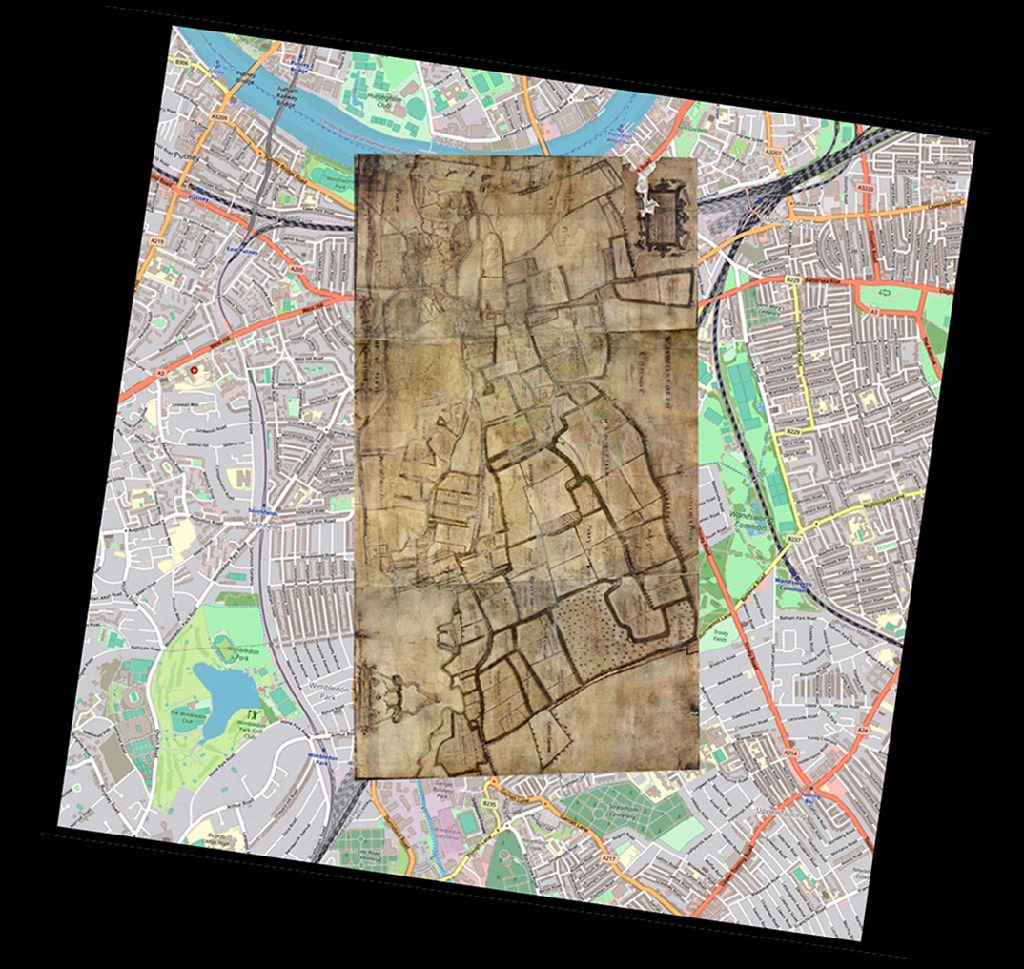
Here's the earliest map of our area (that I know of) — of Allfarthing Manor created by Peter Gardner for its new lord, Endymion Porter. The original, of 1633, is lost, but this is a copy of 1644:

The Gardner/Porter map of Allfarthing Manor, 1633-1640. It is oriented roughly west-east, with north to the left. The pink rectangle frames Allfarthing Manor House and the top of what is now Allfarthing Lane (expanded below).
Surrey History Centre, SHC 3991/1
The map as a whole may be a little mind-boggling at first. The Thames runs up and down on the extreme left. The Wandle, which forms a natural estate boundary, runs across from right to left. At the top, the edge of Allfarthing Manor is roughly the crest of the gravel-topped hill that forms "Wandelesworth Common" (the ridge follows the line of today's Lyford Road-Heathfield Road-West Side).
An incursion into the Common, called "Allfarthin Peece" [sic], will become the so-called Toast Rack. On the right, "Garret Green" and a tree plantation, "Burnt Wood", probably the enclosed (and hence protected) relic of a much larger wooded landscape.
Frankly, it's quite hard to make much sense of this map unless you look at it close up and in great detail (which we'd better leave for another time). But I've rotated the map and fitted it (loosely) onto a modern map, and this may help a little.
Here's the area near Allfarthing/Half-Farthing Manor House:
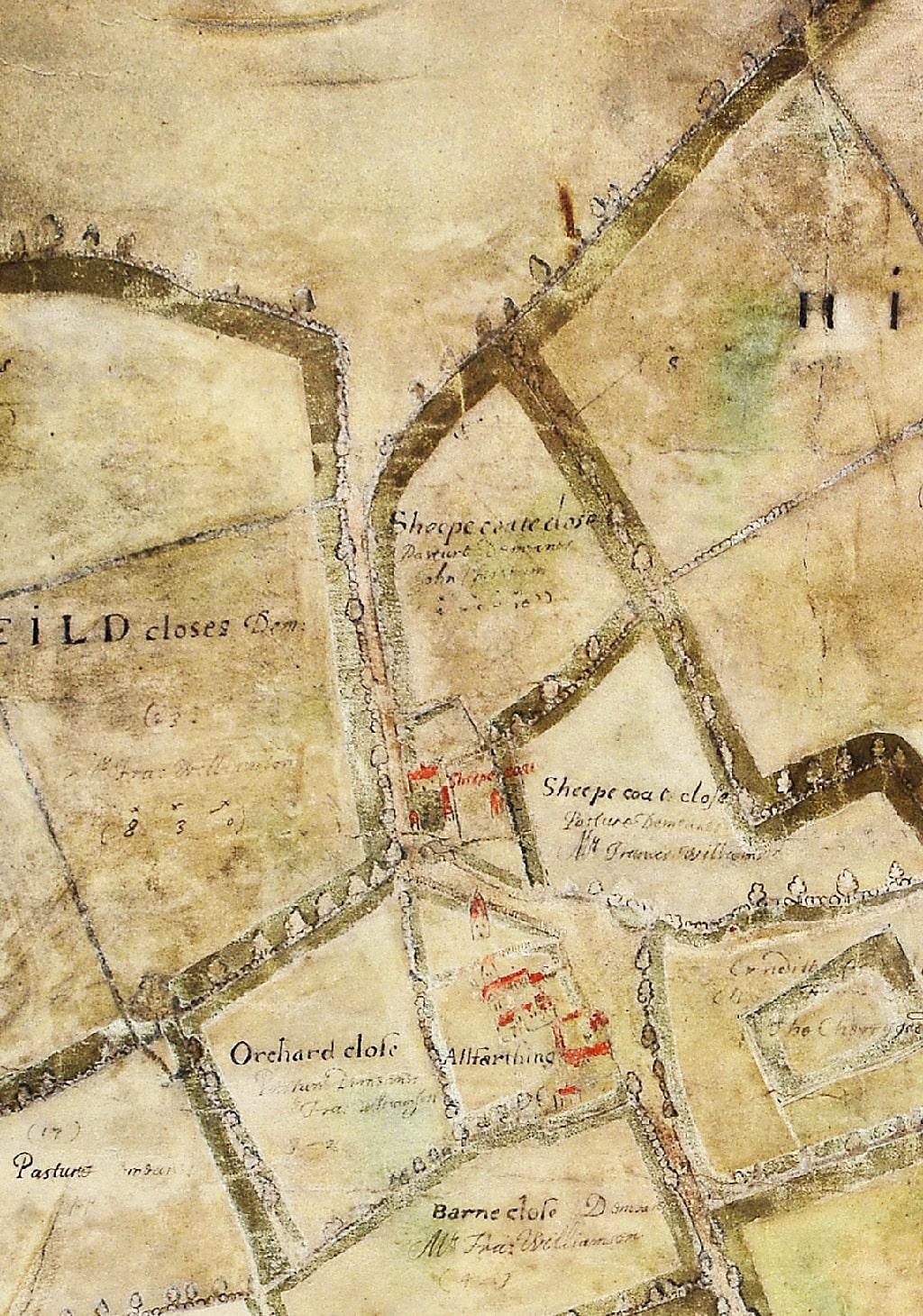
"Allfarthing" manor house and farm buildings (with striking red roofs) to the left (north) of what is now Allfarthing Lane. There are also red-roofed buildings and two small enclosures, each of roughly three acres and called "Sheepe Coat Close" (in black lettering), and the phrase "Sheepe coat", in red.
A "close" is a small enclosure, often a subdivision of a larger "field" (as elsewhere on this map). But what is a "sheep coat" (or "sheepcote")? It appears that these are not fenced folds, which would be temporary and movable, but permanent structures, typically bounded by earthworks and/or hedgerows.
[Incidentally, there's a "Sheepcote Lane" in Battersea, near the Battersea Tangle. I'd like to know more about it.]

OpenStreetMap: Sheepcote Lane, Battersea.
The 13th-century agricultural writer "Walter of Henley" urges that sheep be brought in from Martinmas (11 November) until Easter. Housed in roofed, wooden buildings erected within larger sheepcotes, sheep were easier to protect and feed during winter months, and concentrated together for efficient lambing and shearing in early spring.
Here's a fab. image:
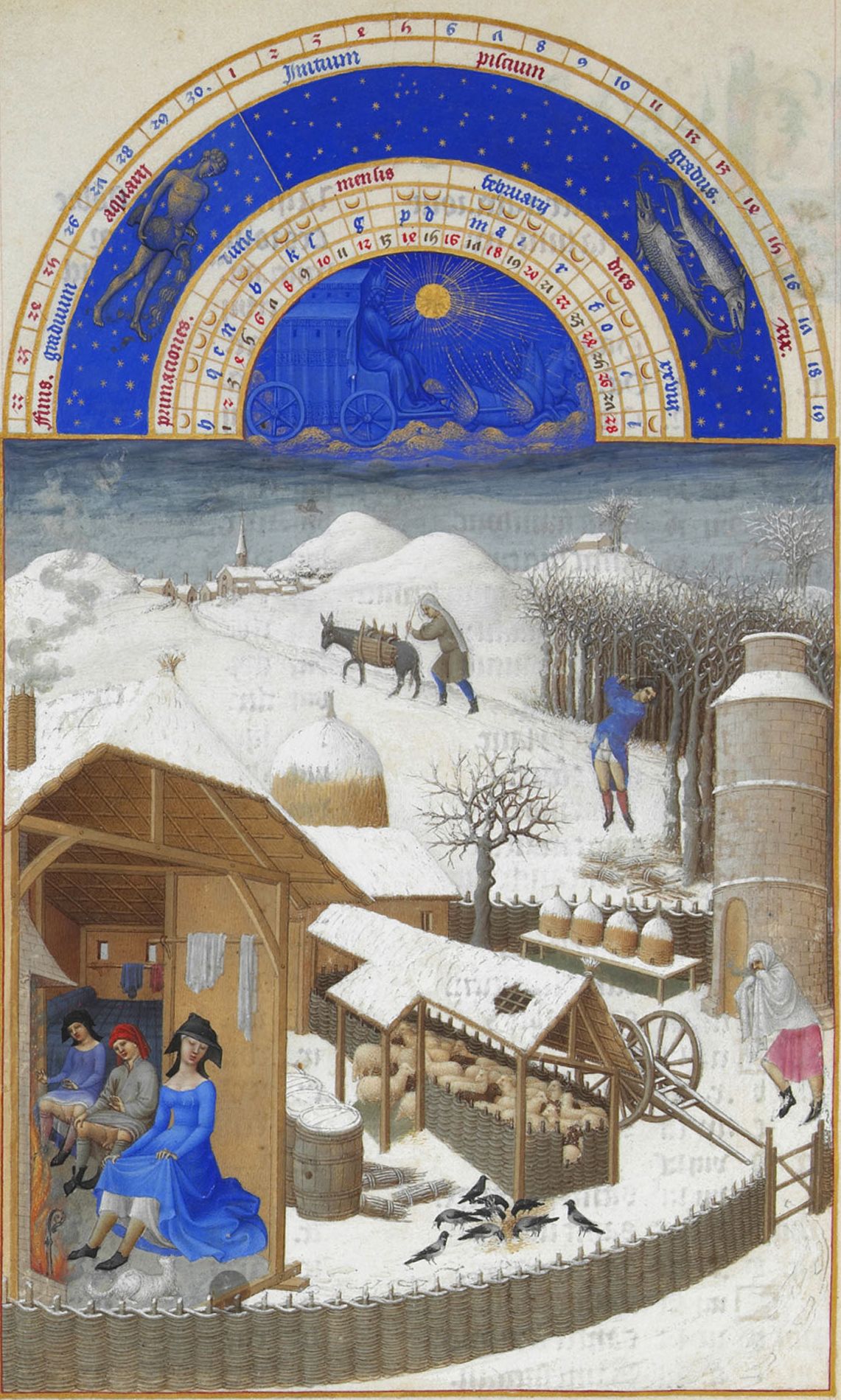
February: Les Tres Riche Heures du Duc de Berry (c.1412-1416).
Wikipedia: Très Riches Heures du Duc de Berry
[Notice, by the way, the trio (left), sans undergarments, warming their private parts in front of the fire.]
On the Gardner/Porter map, many of the field boundaries appear to be hedges with occasional standard trees, which suggests these hedgerows were already well-established by the early C17 — possibly the product of Tudor enclosures, or even earlier.
The "bird's mouth" at the top forms the exit through which sheep and other animals passed on their way to graze on "Wandelesworth Common" — and by which they were efficiently funnelled back into their sheepcotes again.
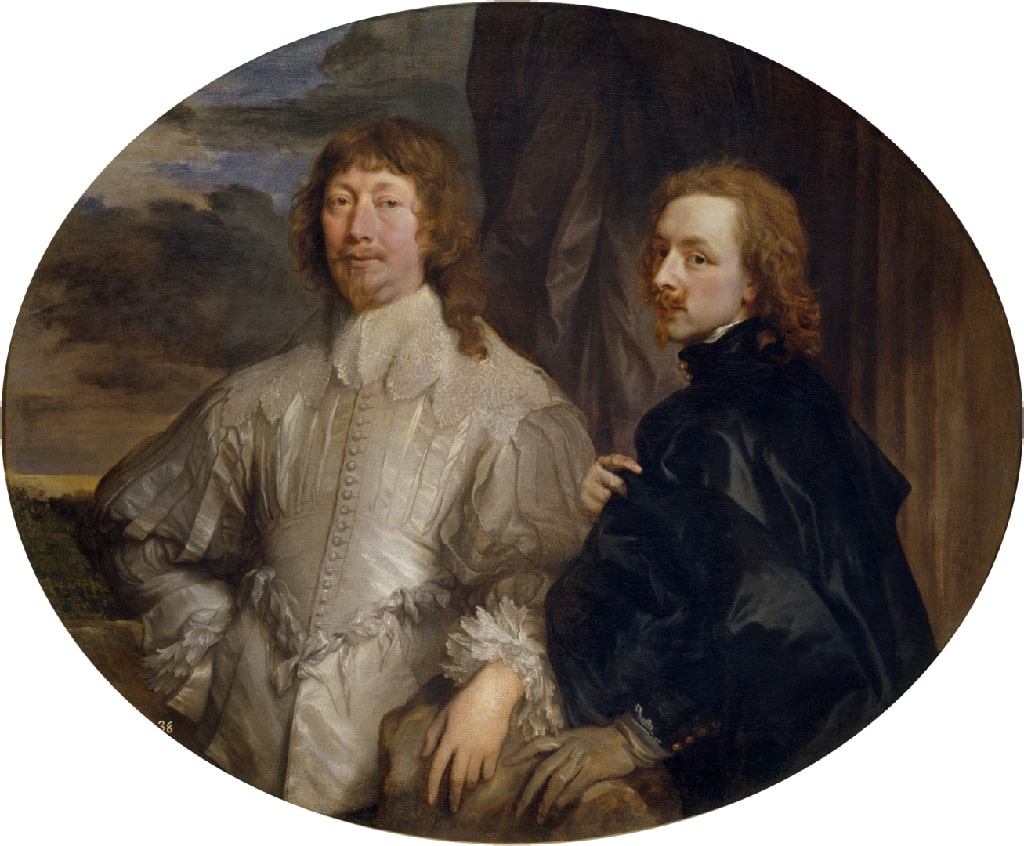
Double portrait of Endymion Porter and Anthony van Dyck, 1635, by van Dyck, set in the Toast Rack, Allfarthing Manor, Wandsworth (only joking). Prado, Madrid.
[It's a fascinating painting. Let me know if you would like me to say more.]
Here's John Rocque's beautiful map, made a century or so later, c.1740s.
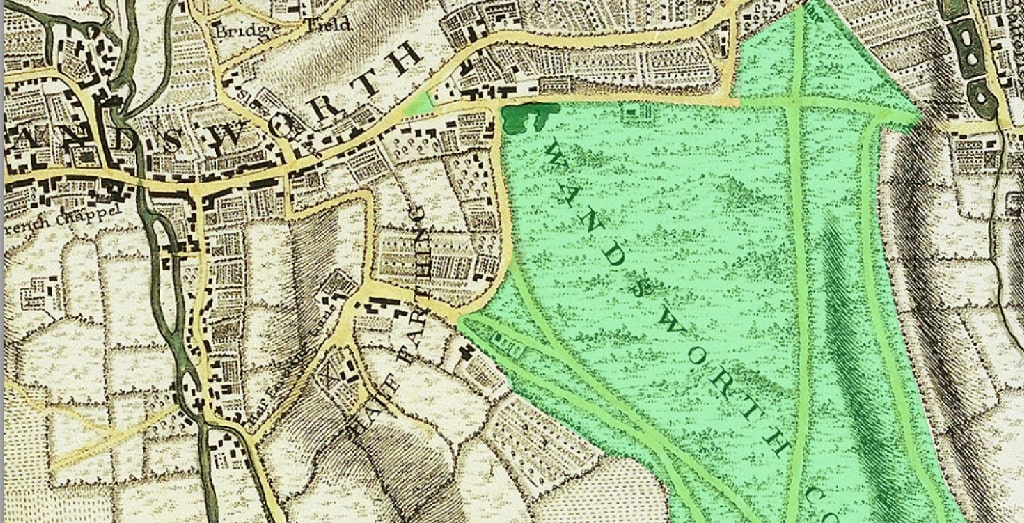
Gardner/Porter (1633-1640) Allfarthing, Allfarthin
[NB: some books of heraldry describe Porter as "of Alfarthing"]
Senex (1727) Half Farthing
Rocque (1750) Half Farthing
Tirion (1754) Half Farthing
Cary (1786) Half Farthing
Corris (1787) All-Farthing
Faden (1790) Half Farthing
Milne (1800) Allfarthing
OS (1808-1822) Half Farthing
Cruchley (1832) Half Farthing
Tithe (c1840) [not named on map]
Davies, Environs of London (1841) Half Farthing
Cruchley (1847) Allfarthing Lane [first mention on a map?]
Whitbread (1865) Allfarthing Lane
Wyld (1872) Half Farthing Lane
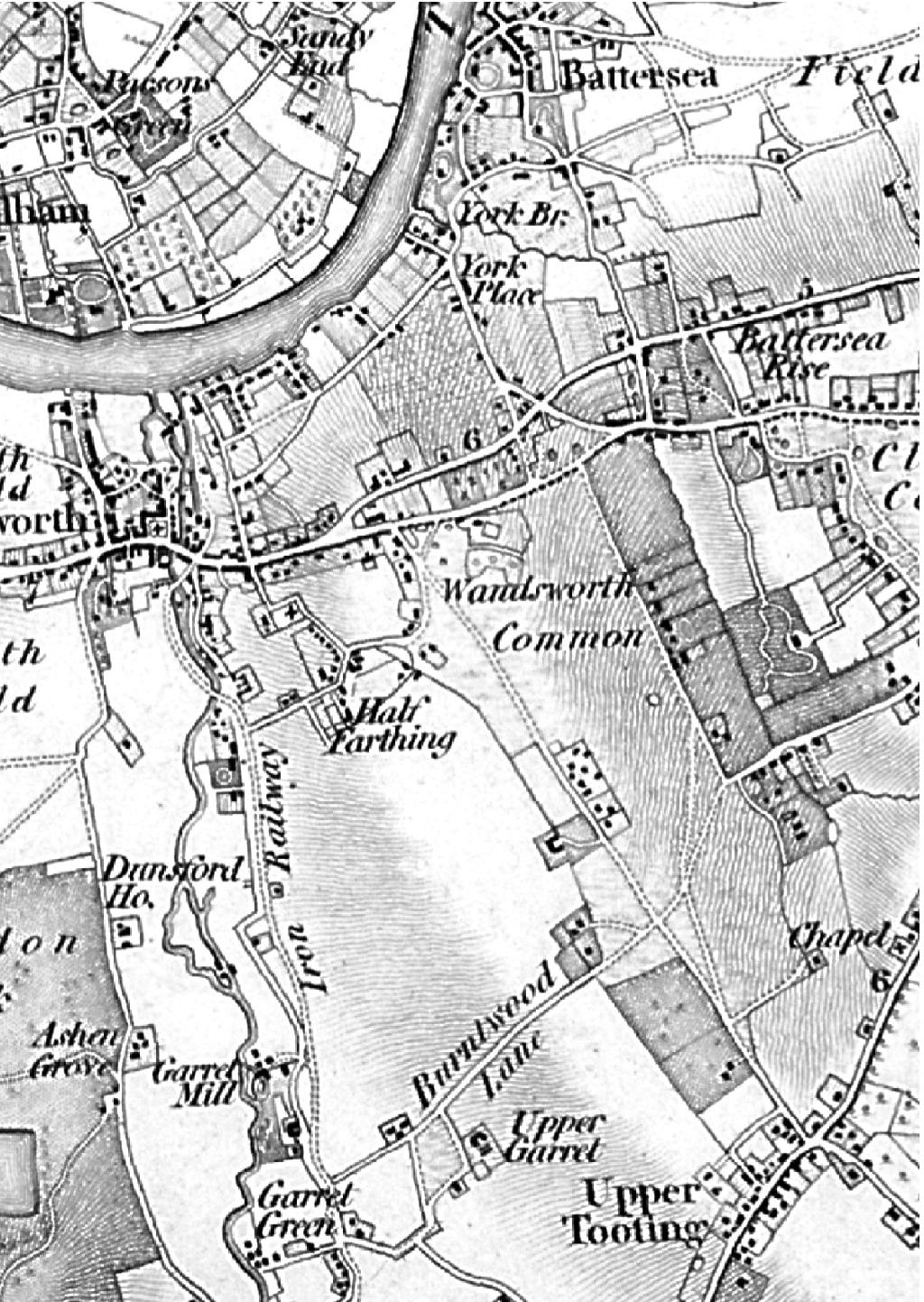
"Half Farthing", Ordnance Survey, 1-inch map (c.1810).
By the time Cruchley and Stanford maps appear (from mid-19th-century) the name is no longer applied to an area but only to a lane zig-zagging its way from the Wandle to Wandsworth Common, and its name has settled down almost exclusively to Allfarthing (All Farthing, Alfarthing).
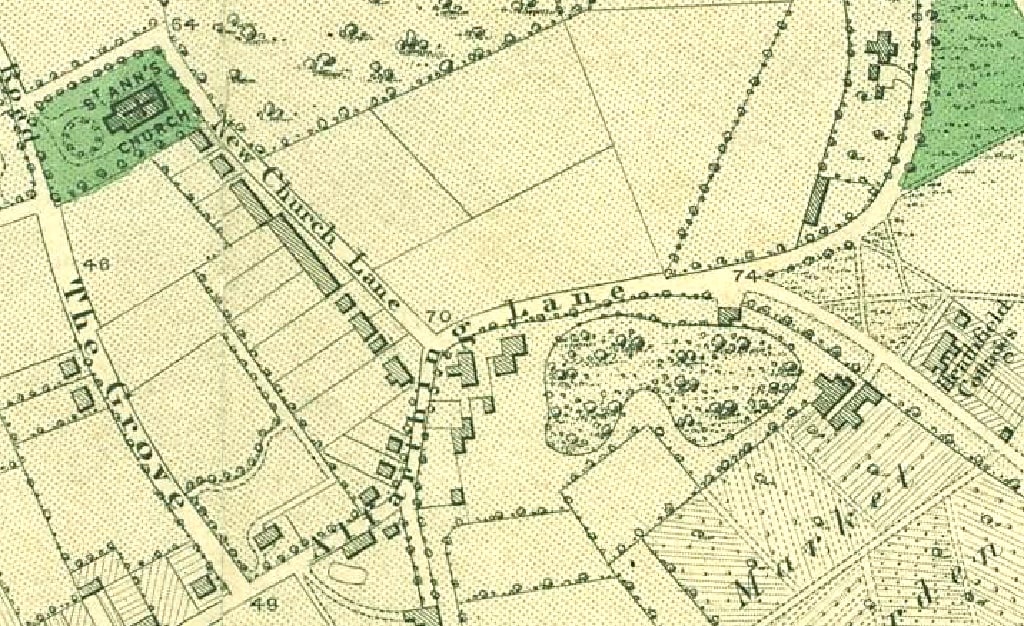
Stanford, 1862. Allfarthing manor house once stood facing Allfarthing Lane between "Church Lane" (now called St Ann's Crescent) and "The Grove" (now called St Ann's Hill).
If you're older than 65, you'll certainly recall farthings — in effect, "fourthings" — tiny bronze coins worth a quarter of an old penny. They only ceased to be legal tender in the UK on 1 January 1961, but remained in circulation in the Falkland Islands and its dependencies, and also in the British Antarctic Territory, until 31st October 1970. [Why?]
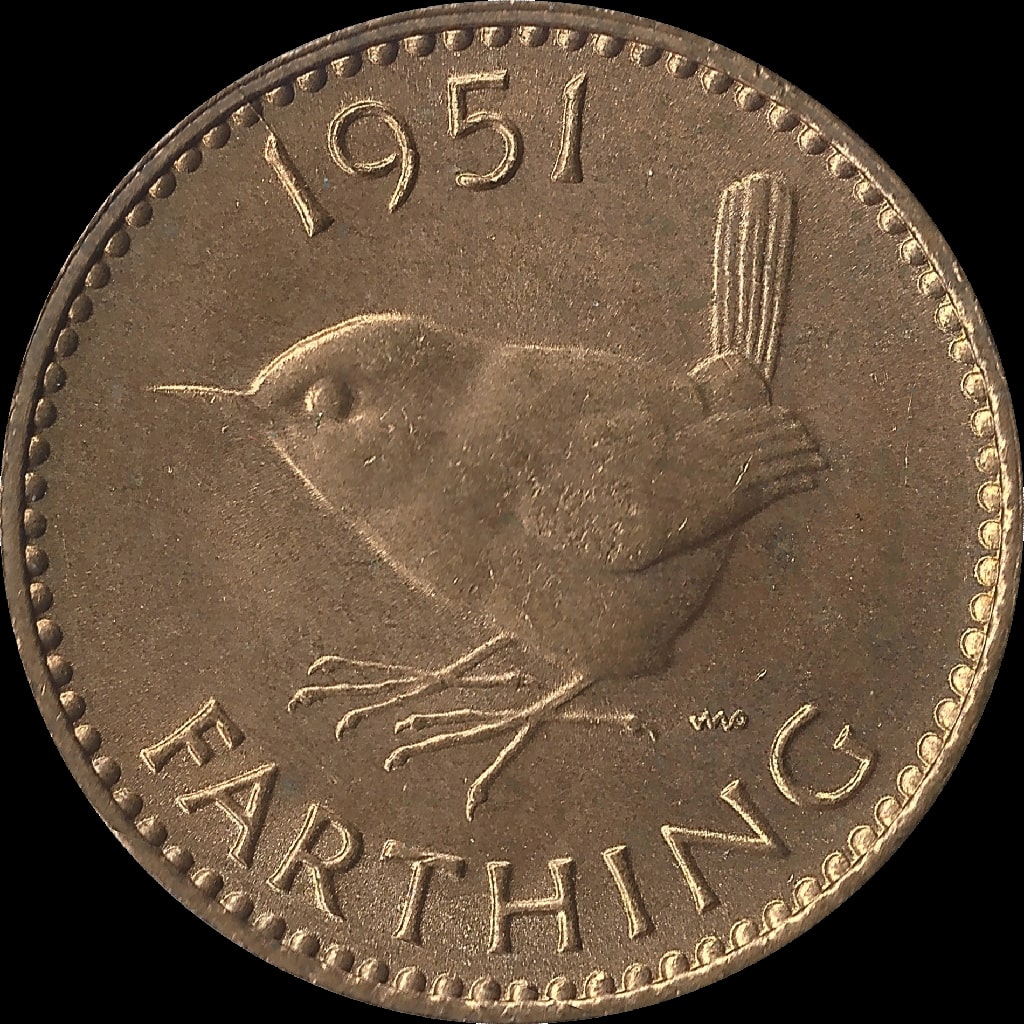
A Wren Farthing — my favourite coin from childhood. The wren replaced the figure of Britannia in 1937. Today, the coin is of even greater significance to me because I have a granddaughter called Wren (born 2018).
In the mid-1950s, I attended Earlsfield Junior School. Farthings were still legal tender. After school more or less every day, I visited the delightful sweetshop on the corner of Tranmere Road and Magdalen Road where we could buy four farthing chews and still have spent no more than one penny in total.
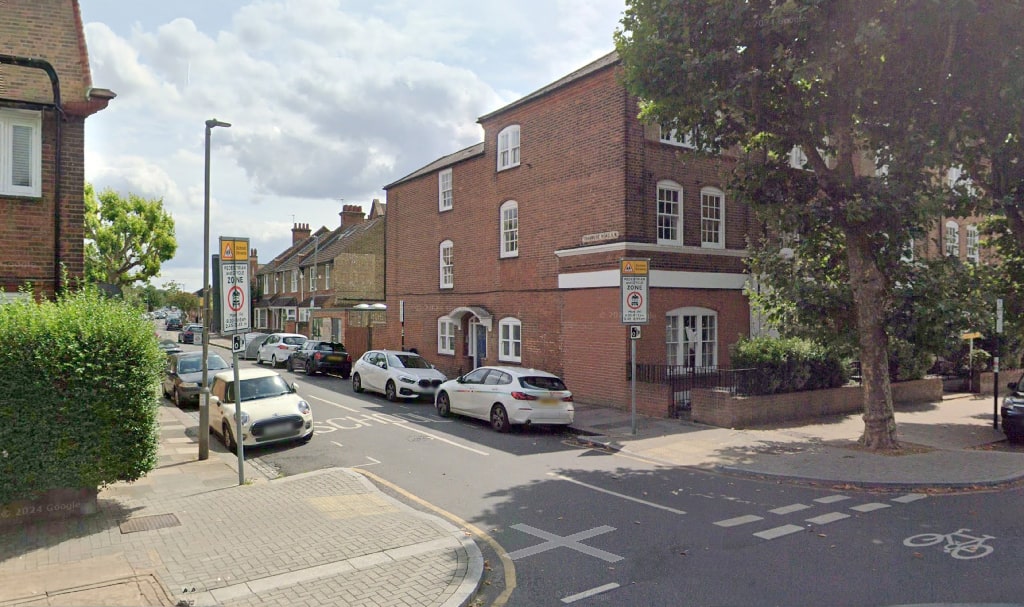
The corner of Magdalen Road and Tranmere Road. The sweetshop of dreams disappeared years ago. Its large windows, once filled with jars of tooth-rotting treats, has been bricked in on both elevations to simulate a regular terraced house.
Oranges and lemons
Say the bells of St. Clement's
You owe me five farthings
Say the bells of St. Martin's
For a start, I hadn't even realised a "half-farthing" was ever an actual coin of the realm. Did you? If I'd ever thought about it, I might have assumed it was a medieval coin. But no.
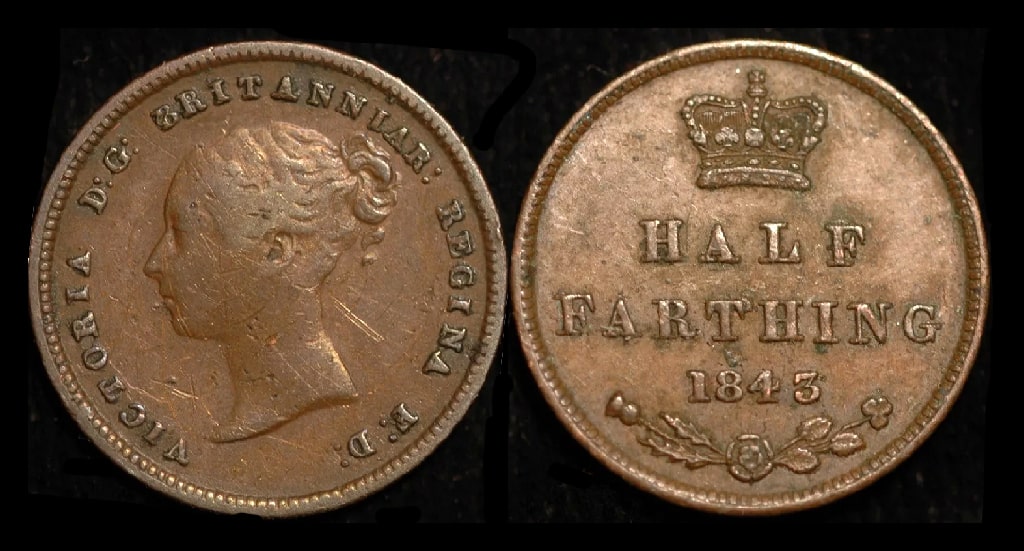
Half Farthing, obverse and reverse, 1845
The half farthing was a British coin worth 1⁄1920 of a pound, 1⁄96 of a shilling, or 1⁄8 of a penny. The coins were minted in copper for use in British Ceylon in various years between 1828 and 1856, and as a bronze proof coin in 1868. In 1842, they were also declared legal tender in the United Kingdom. Half farthings were demonetised along with all other British copper coins on 31 December 1869.
[Wikipedia: Link.]
Alas, according to the Royal Mint Museum, "the coins were a nine days’ wonder and never became popular in this country. They were demonetised with effect from 1 January 1870".
Passionate advocates of the half-farthing (and amazingly there were some) argued that there was mot only a biblical precedent for such a tiny amount, there was even a ready-made name, the "mite".
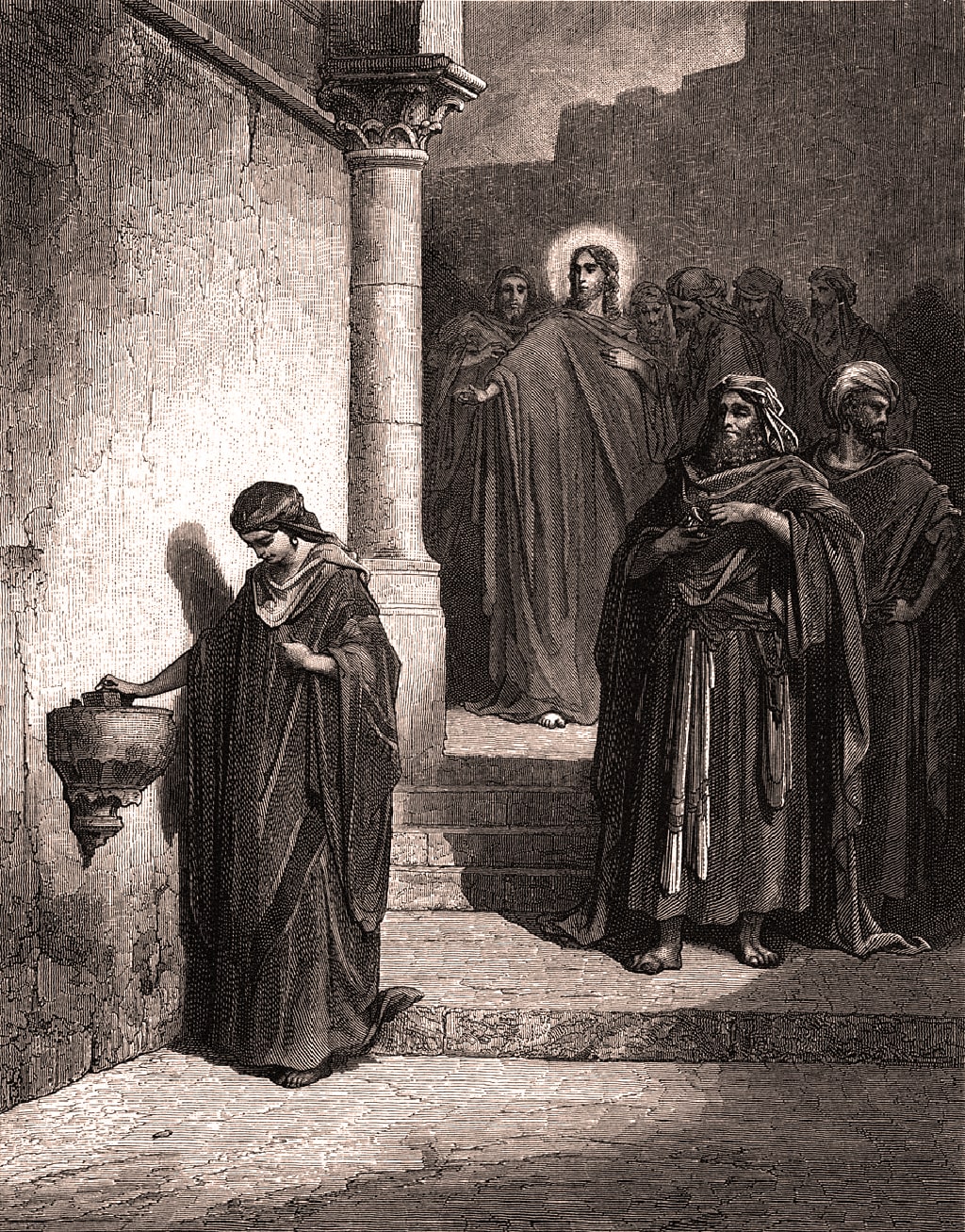
Gustave Dore, The Widow's Mite, c.1870.
"And Jesus sat over against the treasury [offertory box], and beheld how the people cast money into the treasury: and many that were rich cast in much. And there came a certain poor widow, and she threw in two mites, which make a farthing" (St Mark, ch.12, v. 41-42.).

Sixteenth-century Mite Box.
[When I was young, churches gave out small cardboard boxes to encourage us to collect donations of small denominations. Do they still do so? Do they ever call them "mite boxes"?
Remarkably, other fractional farthings were coined, including "Third-farthings" (for use in Malta), and even "Quarter-farthings" (Ceylon).
Readers of Trollope will recall that Plantagenet Palliser, when Chancellor of the Exchequer, toiled frantically to institute a decimal farthing — a "quint" — of which there would be five to the penny. Utterly futile, of course.]
Does the name "half-farthing" signify its origin in some charitable act? Not impossible, but highly unlikely.
Until now, we've assumed that "all-farthing" and "half-farthing" must refer to money — a division of some coin. But what if that which is divided is not money but land?
Keith Bailey in a compelling article for the Journal of the English Place-Name Society writes that Allfarthing/Half-farthing may represent a fraction of the large estate that we can call Battersea-cum-Wandsworth. This was granted to the nuns of Barking Abbey in the seventh century but later transferred by William I to Westminster Abbey (1067).
Using two Anglo-Saxon charters (c.690, 957), a number of local historians (including J.G. Taylor, Dorian Gerhold, Nick Fuentes, Graham Gower, Michael Green and, most doggedly, Keith Bailey) have attempted to trace its boundaries on modern maps. I'm not qualified to enter the debate, or even summarise it, but here's just one (delightful) version, from 1925:
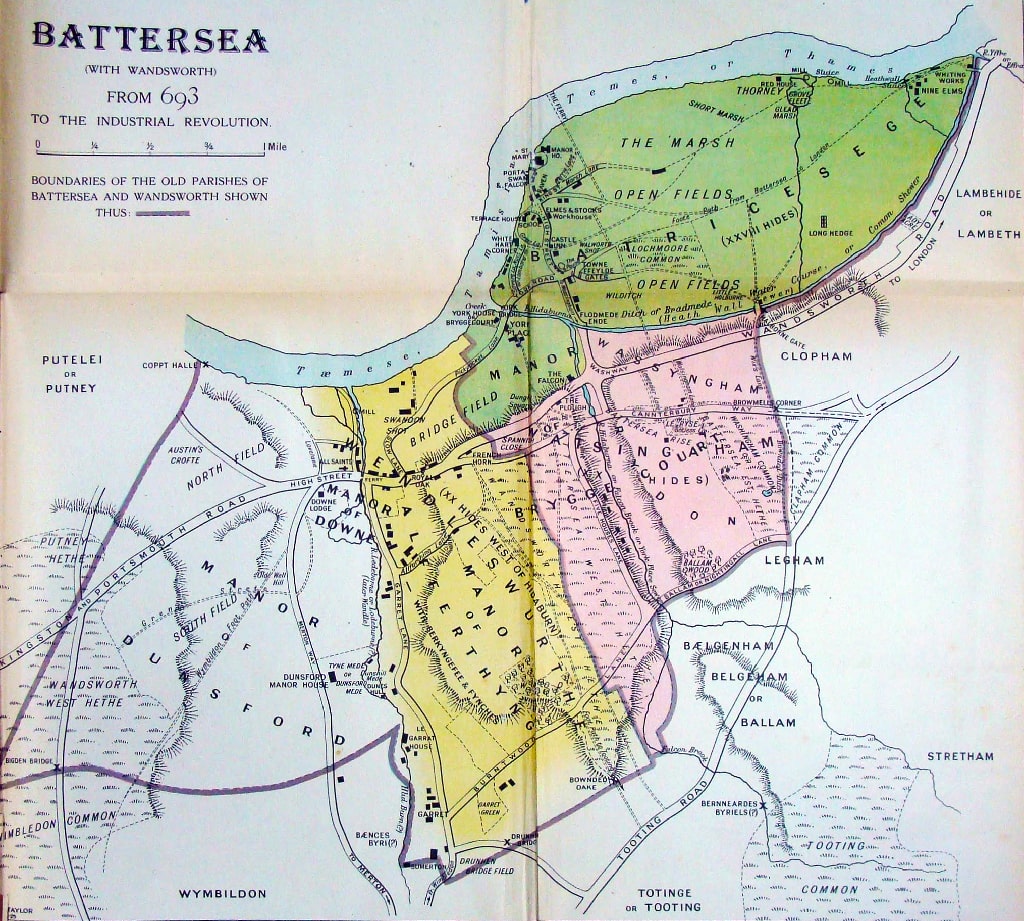
"Battersea with Wandsworth from 693 to the Industrial Revolution" — remarkable (albeit controversial) reconstruction by J.G. Taylor, Our Lady of Batersey (1925). Allfarthing manor is tinted yellow. Roughly an eighth of the total, it appears to have been carved out of the centre of the overall estate.
Other sub-manors include Dunsford, west of the River Wandle, and Downe.
In the following centuries, Battersea-cum-Wandsworth was sub-divided, one of the smaller manors being Allfarthing. Perhaps significantly, this appears to have been roughly an eighth of the previous whole.
This certainly makes a lot of sense.
But just as we feel we're getting somewhere, Keith undercuts our certainties with a very different suggestion. What if it's not a fraction at all? What if it records someone's name, with an Old English "-ing" on the end?
This is not uncommon in and around the London area, as in Ealing, Barking, Woking, Dorking — or indeed Tooting (possibly named after an Anglo-Saxon chieftain called "Tota"), just up the road from us.
So whose name? Keith helps us out yet again:
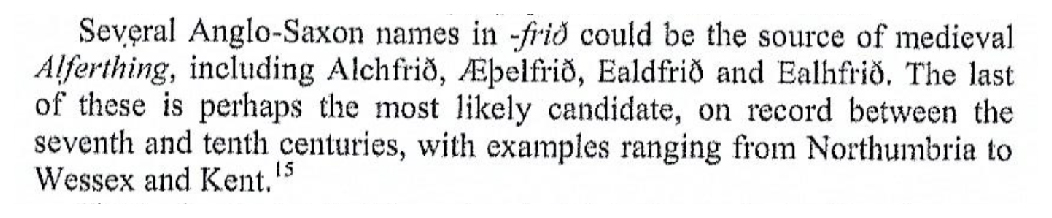
Keith Bailey, "Allfarthing: is it really a fraction?ʼ, Journal of the English Place-Name Society, 45 (2013), 42-45.
[Lost letters of the alphabet: the wonky "d" is an "eth", and the elongated "p" is a "thorn". Both are pronounced "th" — either soft (as in our modern word "Wandsworth") or voiced, as in today's "the".]
Which gets your vote? Fraction or name?
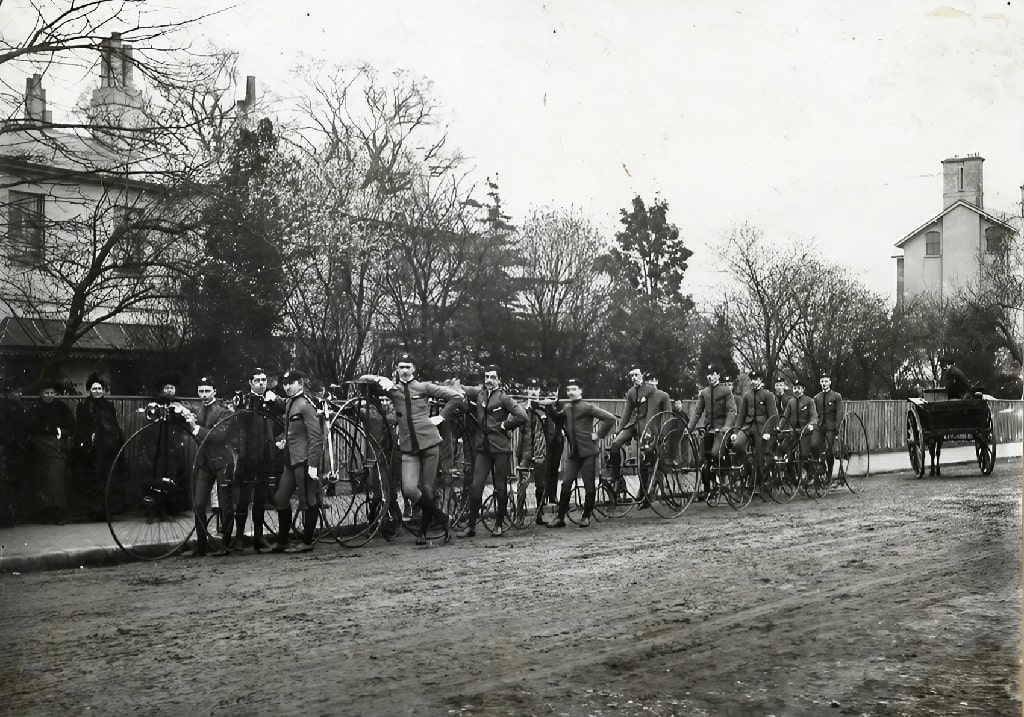
Club outing on "Penny-farthing" bicycles, Wandsworth, date and location?
Now back to slaughtered sheep . . .
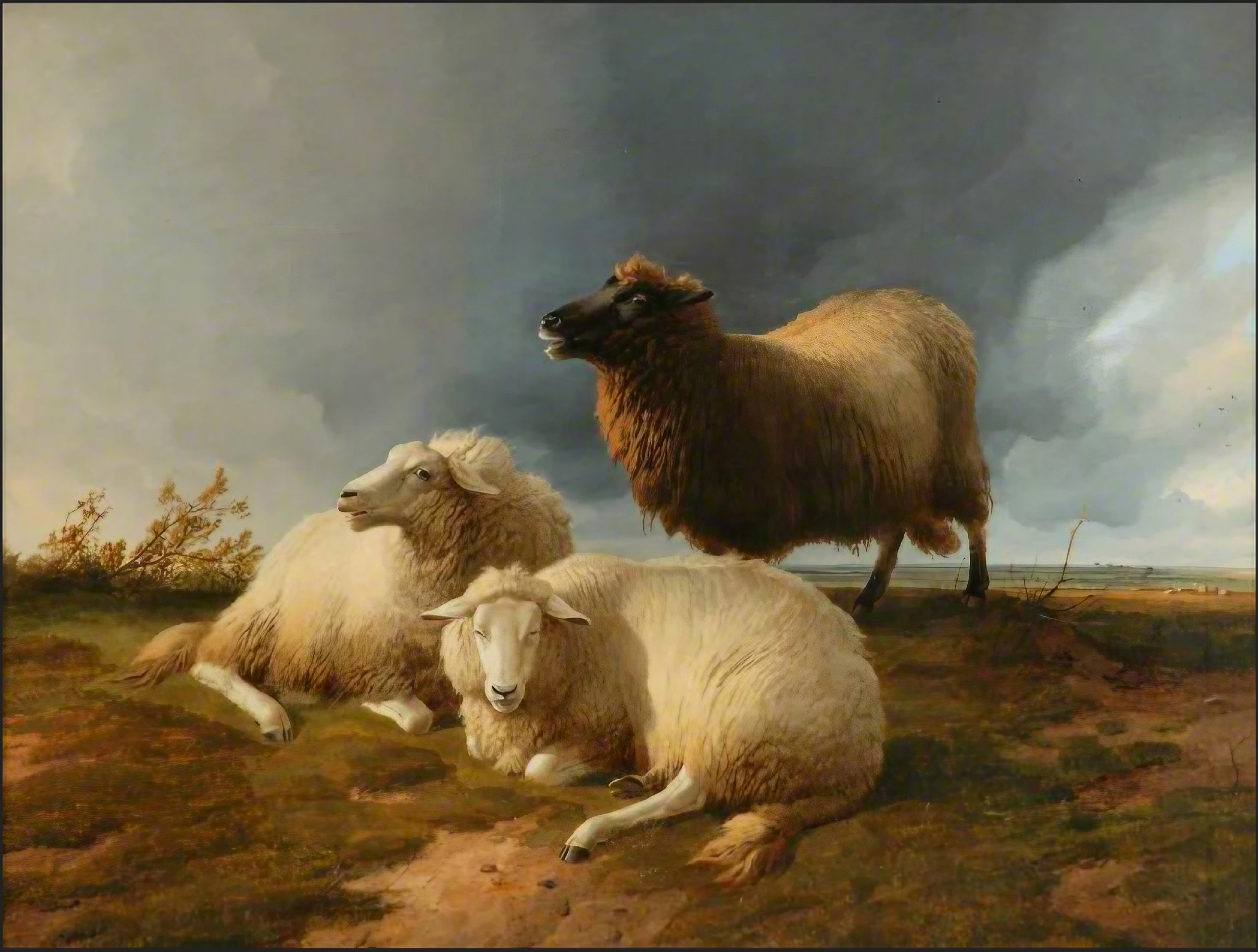
Thomas Cooper, Sheep on the Common, 1873, Manchester Art Gallery
What was so valuable about fat?

Mutton fat (or tallow) is 100% fat, with no water, protein, or carbohydrates. Rendering animal fat is the process of melting the original hard fat and straining it to remove impurities and create a stable oil. It's had countless uses historically, and still quite a number today. Here are some:
— Cooking (think suet)
— Baking
— Conditioning leather
— Cleaning guns
— Print-making — applied to metal plates to resist acid etching
— Skin Care
— Soap making
— Lubrication e.g. greasing wooden wheel axles and steam-driven pistons
— Candle-making
— Bell-making — to separate the false bell in casting
— Fuel
— Flux for Soldering
— Sizing, lubricating and softening yarn in textile manufacture
— Treating blisters
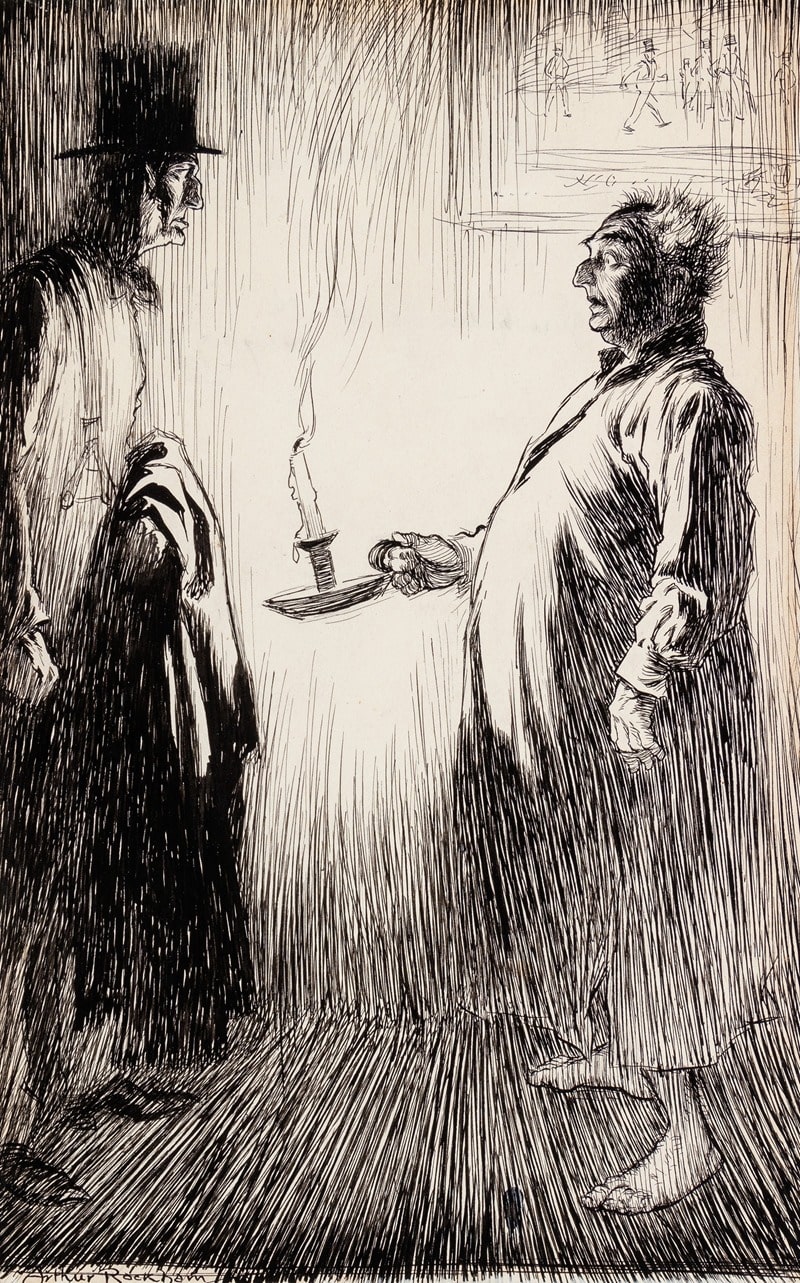
Candlight, by Arthur Rackham, unknown date. As a teenager, Arthur Rackham lived on what is now St Ann's Hill.
Farthing dips and candles
Tallow once was widely used to make molded candles before more convenient wax varieties became available — and for some time after since they continued to be a cheaper alternative. For those too poor even to avail themselves of homemade, molded tallow candles, the "tallow dip" — a reed that had been dipped in melted tallow or sometimes a strip of burning cloth in a saucer of tallow grease — was an accessible substitute. Such a candle was often simply called a "dip" or, because of its low cost, a "farthing dip" or "penny dip".
[Wikipedia: Tallow. Tallow candles tended to be smoky and smelly, but beautiful beeswax candles were too expensive for most people. Enter Price's Candles. See also Gertrude Jekyll: "Rushlights: How the Country Poor Lit the Homes".]
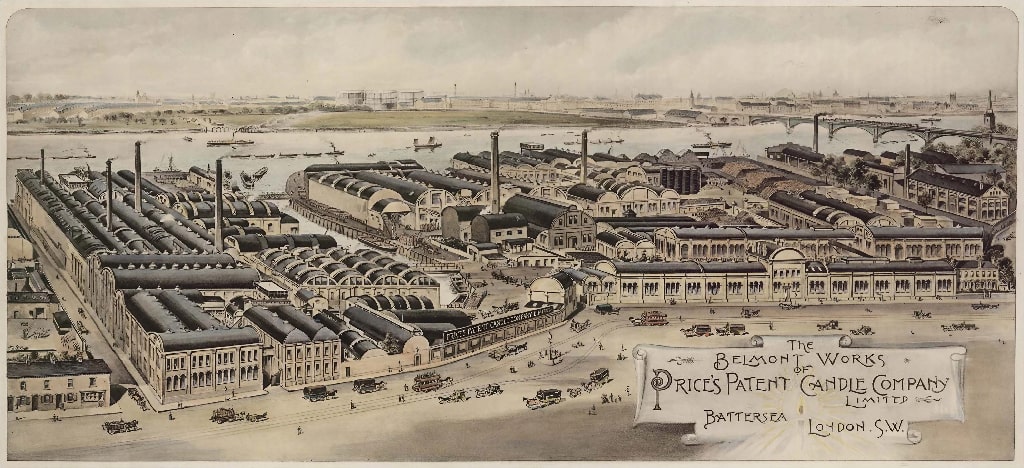
In the nineteenth century, our local Price's Patent Candle Company became the world's largest manufacturer of new types of "composite" candle — part tallow, part coconut or palm oil. (It also became a major producer of lubricants.)
I hope to write more about Price's soon, but in the meanwhile here's a short piece I wrote in 2022 about Price's splendid "Sperm candles", made from whale oil.
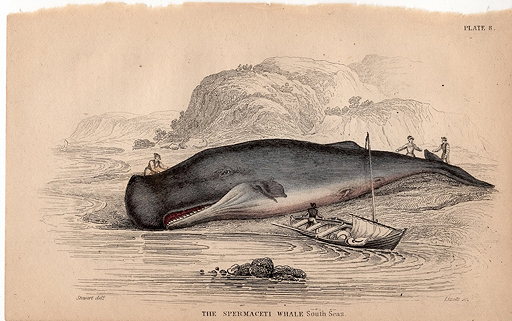
Sperm whale, South Seas. The "Father of British Whaling", Alexander Champion, lived in one of the "Five Houses" on the eastern edge of Wandsworth Common.
So, what do you think? Which of the many potential uses of sheep fat could possibly have paid our thief/butcher enough to risk slaughtering ten fully grown sheep in a field, and then painstakingly remove all the fat but no meat ("not even the kidneys")? Candle-making, or something else entirely?
At this point I was going to segue into a full history of sheep on the Common, but for now I'd better focus on just one story — also fat-centred.
This is John Buckmaster's cautionary tale of the dreadful fate of a man he had met when he first began to teach, in the mid-1840s. JCB's first appointment was to a penal institution for boys awaiting transportation to Australia at Parkhurst on the Isle of Wight. (Today it is an adult prison, part of "HMP Isle of Wight".)
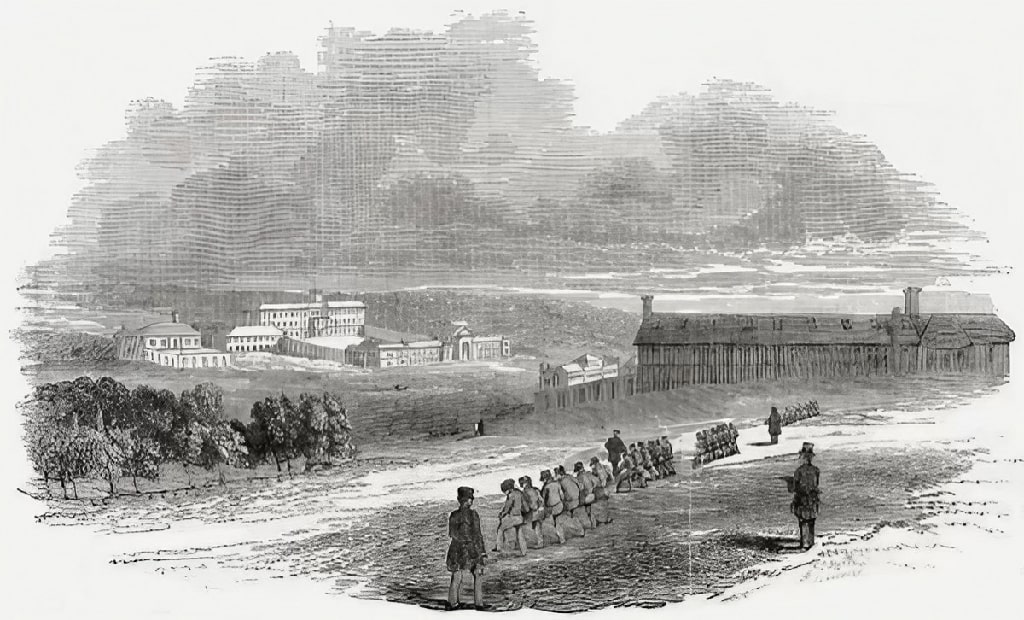
Distant view of Parkhurst, c.1847.
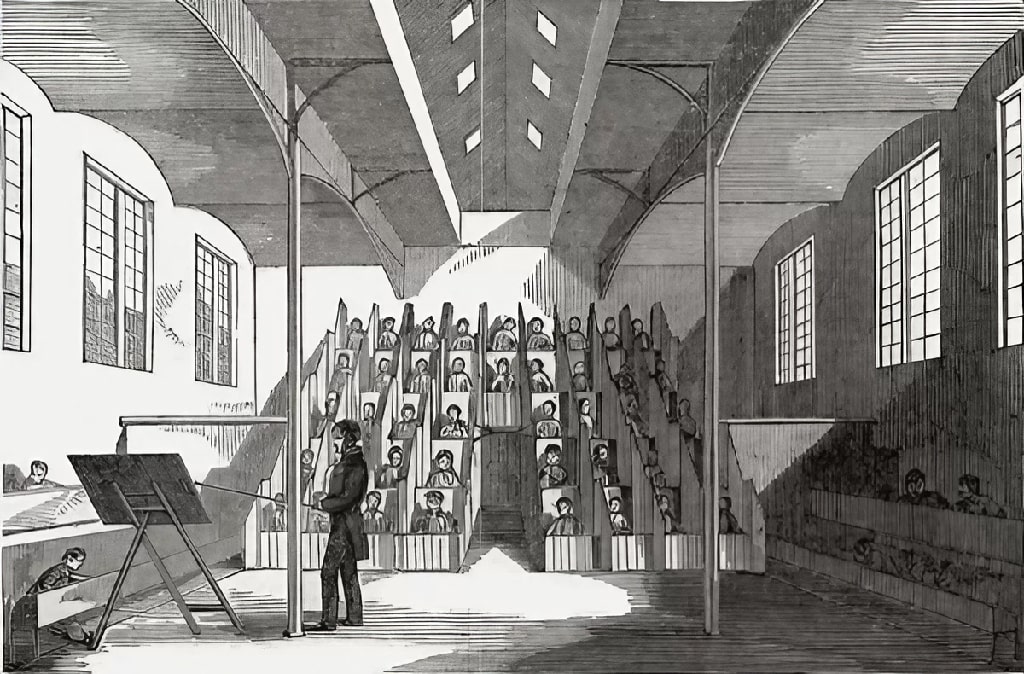
School room at Parkhurst, presumably the one that JCB taught in c.1847. The boys are boxed in, to restrict any conversation or interaction.
It's a fascinating piece of writing — in my view, well worth taking the time to savour:
LECTURE V.
HASHES AND STEWS
Better is a dinner with herbs where love is than a stalled ox and strife therewith.
If music be the food of love, play on.
. . .
HASHED mutton is the horror of most husbands, but this arises from its not being properly prepared . . .
It is now some years ago, more than one likes to remember, that I had a bachelor friend; we used to take long walks together, and discuss the affairs of the country, and put everything right. My friend was a philosopher: he used to say, "Well, I've seen so many fellows make a mess of getting married that I shall be very careful what sort of woman I marry, that is, if I should ever be fool enough to marry."
All this, and much more, my friend used to preach to me whenever an opportunity offered. We were both in the convict service, but not as convicts; he was my mentor and had a salary of about £150 a year, rising up to £250. He was moved from the country to London, and for a time we were separated.
In course of time I came to London, and our walks and our friendship (which was the purest and most disinterested I have ever known) were renewed; but my friend had become a changed character. He talked of the misery of being alone in London, and he frequently spent his evenings at a house where there were two young ladies, one of whom was very accomplished. She could do something in water-colours and wool-work, could talk French, knew all about the kings of Judah, and the march of the Ten Thousand; and, among other accomplishments, she could sing at the Penny Readings. I reminded my friend of a verse in Ecclesiasticus, "Avoid the company of a singing woman, lest thou be overcome with her attempts."
He was a little angry, but was anxious to introduce me to the other daughter, but I had given offence to the mother by a speech at the Christian Young Men's Tea-party, at which the mother and these young ladies were present. I said that half the young ladies of the present day would wonder how the apple got into the dumpling, and all the mothers and the young ladies present considered this very insulting. As all the parties are now dead, there can be no impropriety in my referring to this circumstance.
My friend got married on £200 a year, and a man and his wife may live respectably and comfortably on £200 a year, 1f the woman knows how to cook and the family is not too large. He took a semi-detached villa, one of those ugly plaster things in which the neighbourhood of London abounds, Two months after my friend was married, he wished me to dine with him and be introduced to his wife.
We met by appointment at the station and arrived at the semi-detached villa, which was like a packing-case with square holes. The hideous cast-iron railings in front, the compo steps leading to the front door; the sixpenny knocker, painted black, with a goat's head; the newly varnished door, cracked and split in every direction by the sun, like a map of Europe. The newly gravelled path; the yellow marble paper and narrow passage, with the drawing-room separated from the dining-room by folding-doors, which would neither open nor shut; cheap ugly fireplaces, with iron sufficient to make a railway — 25 per cent. was the leading idea of the man who built it. Inside and outside there was nothing but show and untruthfulness.
The drawing-room carpet was beginning to show by faint white lines the exact width of the flooring boards. The kitchen chimney had caught cold and smoked, so we had to wait about three-quarters of an hour beyond the time appointed for dinner, which neither improved my friend's temper nor his language.
I kept saying it was all right, and as we had nothing to do, waiting was of no consequence.
At last the happy moment arrived. Only a plain dinner, fish and a leg of mutton; they kept a very plain cook and a waiting-maid. I thought this rather strong on two hundred a year, but everybody must be the best judge of their own affairs. A piece of turbot came up like fish-soup, in small pieces; it had been boiled to rags and strained over a colander, and I should never have known what kind of fish it was if I had not been told.
My friend, I could see, was getting uncomfortable; he complained about good fish being spoilt and the waste of food and so on.
Then followed the leg of mutton, black all over except the ends. Attempts had been made to scrape off the black, which had removed the skin, which had been clumsily stuck on again; it looked anything but nice. When the knife went into it off came the skin, and you could see that from about three-quarters of an inch from the outside it was as fresh and as tough as it was in the butcher's shop.
My friend was bursting with anger, but his wife said, very blandly, "Cut off the outside, my dear, the remainder will do for hash; I am told it is all the better for not being too much done."
Then came the vegetables, cabbages and potatoes, the potatoes in a squashy condition and the cabbages raw. My friend now made use of language I had never heard him use before. His wife remonstrated with him, she threw all the blame on the servants, who had, perhaps, never seen a leg of mutton before, except in a butcher's shop.
After my friend was a little more composed he said to his wife, "You ought to have seen to the cooking yourself."
And now for the climax. His wife replied, "Very complimentary to know that when you married me you thought you were marrying a cook." My friend swore, it was not his habit. His wife cried and left the room, and this is how two young persons commenced their married life on two hundred a year.
We went into the garden and smoked; my friend seemed a little comforted with his pipe. I began to feel he had made a mistake, but his was one of those natures that could not or would not be reasoned with. He gradually took to dining away from home, and spending his evenings with sporting men or at billiards, he became a gambler and a drunkard, lost his situation, and died at thirty-one in an hospital.
His wife endeavoured to earn a livelihood for herself and her little child by teaching music, and after a wearisome struggle the child died, and the mother shortly followed to that place where the weary are at rest. What a misfortune that this young lady had never been taught the practical duties of domestic life, for God intended that man and wife should be happy in this world, but Pride, Pretence, and Hypocrisy make us miserable.
. . . for the benefit of young ladies whose mothers have neglected their education, I will endeavour to teach them how to make Hashed Mutton an attractive dish . . .
HASHED MUTTON
Ingredients
Eschalots
Cold mutton
Tomato sauce
Bouquet garni
Walnut
Cut up neatly from a leg of mutton or other joint all the meat in pieces about the same size. Remove all the fat, skin and bone, and every piece which is burned or blackened by the fire, or the hash will have a strong disagreeable flavour. The parts not used for hash may go into the stock-pot.
Melt in a quart stewpan one ounce of sweet butter, then two finely minced eschalots and a dessert-spoonful of flour, and stir for five minutes. Now add two gills of stock, salt if necessary, half a teaspoonful of whole pepper, one clove, three allspice, a bouquet garni, a teaspoonful of walnut ketchup, or half the quantity of Worcester sauce, and a tablespoonful of tomato sauce.
Stir continually till the contents come to the boil, keep boiling a few minutes, then strain into another stewpan, and let the sauce cool before adding the meat or it will harden. When cold lay in the pieces of meat, place the stewpan over the fire, and let the contents gradually warm, occasionally shake the stewpan, and be careful not to let the hash boil.
As soon as the meat is sufficiently warmed serve with sippets of bread fried in butter.
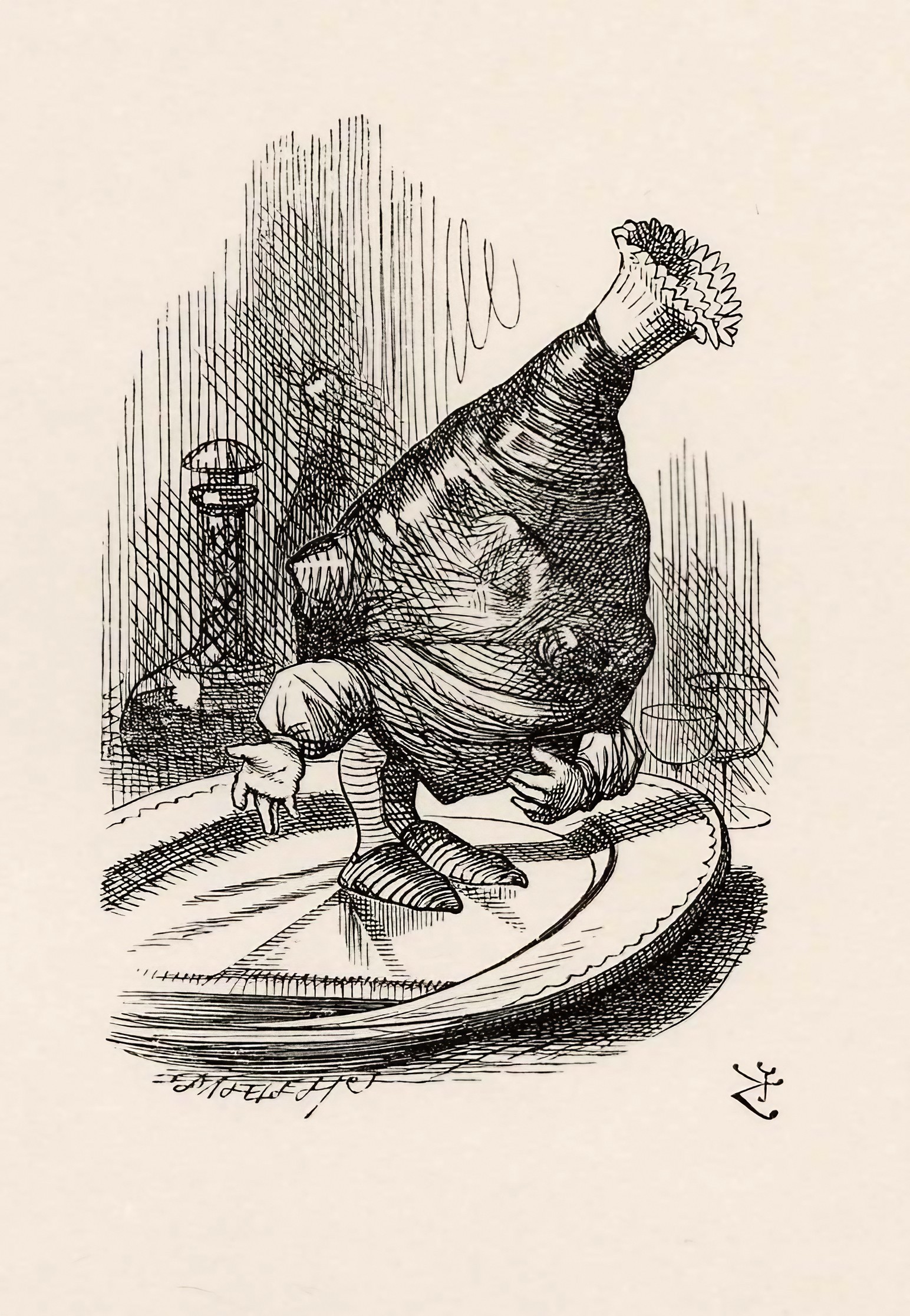
John Tenniel, "The leg of mutton got up in the dish and made a little bow to Alice," from Lewis Carroll, Through the Looking Glass (1871).
It was Tom Taylor — the Battersea-dwelling dramatist, editor of Punch magazine and inspirational defender of Wandsworth Common in the run-up to the 1871 Act — who introduced Lewis Carroll to John Tenniel, the illustrator of both Alice books.
I've already mentioned how an email from Jason Hazeley got me thinking about Half-farthings and mutton fat. But there were a number of other very interesting responses. Here are one or two.
Last month, I wrote about bird-song competitions between "goldfinch mules" held at the Carpenter's Arms on Chatham Road (long since gone, of course), in which I said something very silly:
"Mules" must be cocks/male birds, but what do "Once in the mouth" and "Gaslight" mean?
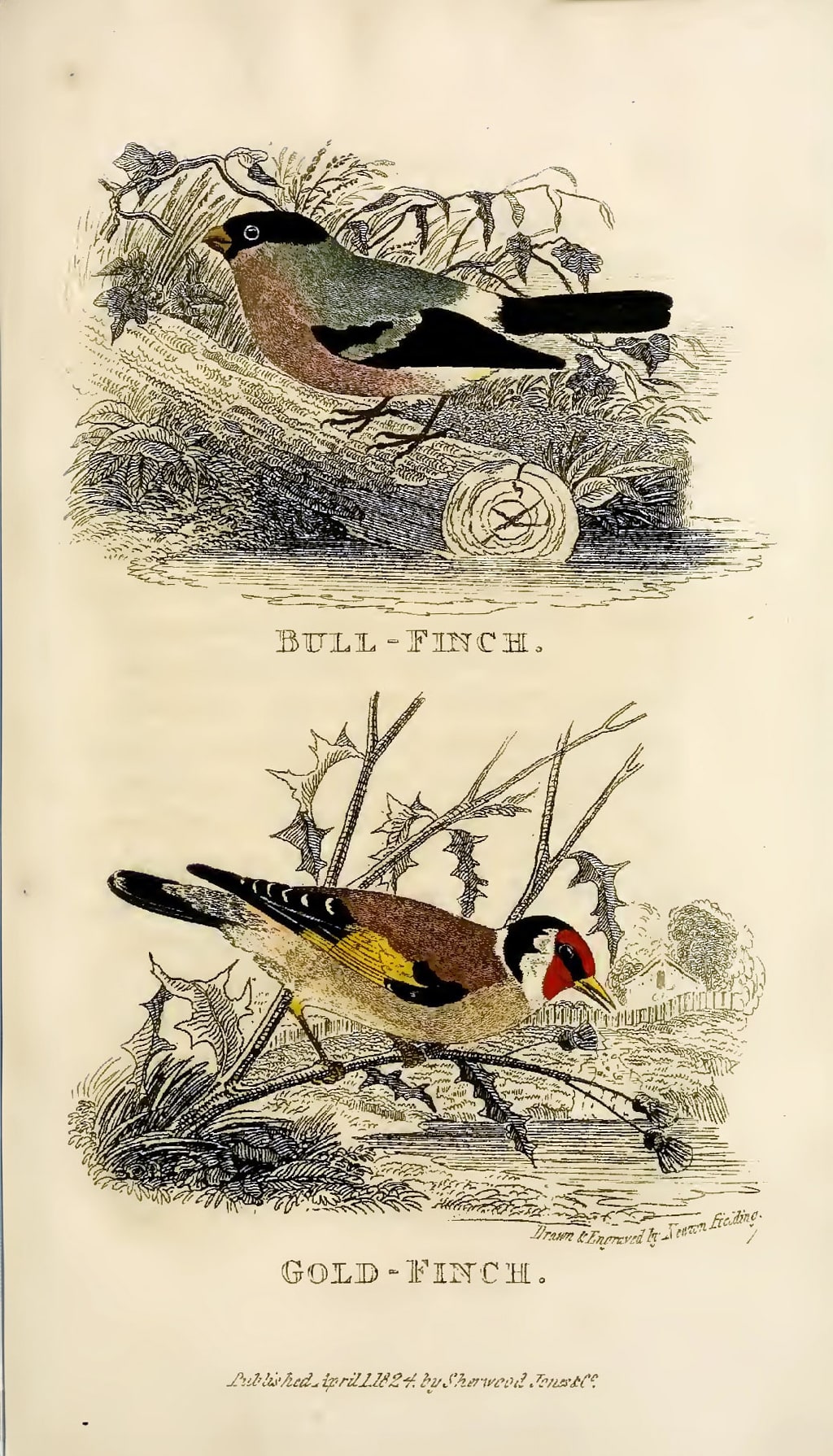
From Joseph Nash, A Practical Treatise on British Songbirds; in which is given every information relative to their natural history, incubation, &c., together with the method of rearing and managing both old and young birds,, 1824 (pdf here).
Nobody has come forward (so far) with what "Once in the mouth" and "Gaslight" might mean, but I now know quite a lot more about Goldfinch "mules".
Within a few hours of receiving January's Chronicles, our wonderful wildflower expert Roy Vickery commented:
At one time plants which were hybrids between two species were known as 'mules'. Thus the first hybrid known to have been deliberately made, a cross between sweet william, Dianthus barbatus, and carnation, D. caryophyllus, was known as 'Fairchild's mule', having been created in 1716-7 by Thomas Fairchild.
Probably irrelevant, but possibly 'goldfinch mules' were hybrids between goldfinches and some other species?
For more info. on "Fairchild's mule", see e.g. Herbaria Plants: Dianthus caryophyllus L. x Dianthus barbatus L. (Caryophyllaceae), which starts, "During the seventeenth and eighteenth centuries, bastard, freak, rogue, monster, mongrel and mule described horticultural oddities."
Almost at the same moment, Barbara Littlechild emailed to say she had found this online:
"British finches are often associated with mules, a term used by cage bird breeders to refer to hybrids of finch species bred in captivity, such as that of a goldfinch and canary . . .
Song — this was the original purpose of cross breeding the canary with finches. If the young mules were moved away from canaries after weaning and kept in earshot of the finch, the young mules would sing pure finch song.
[Wikipedia: British Finches].
Barbara added that it still seems to be current practice with several websites & "training" videos on YouTube.
Here's a video, one of many online, of a goldfinch mule singing.
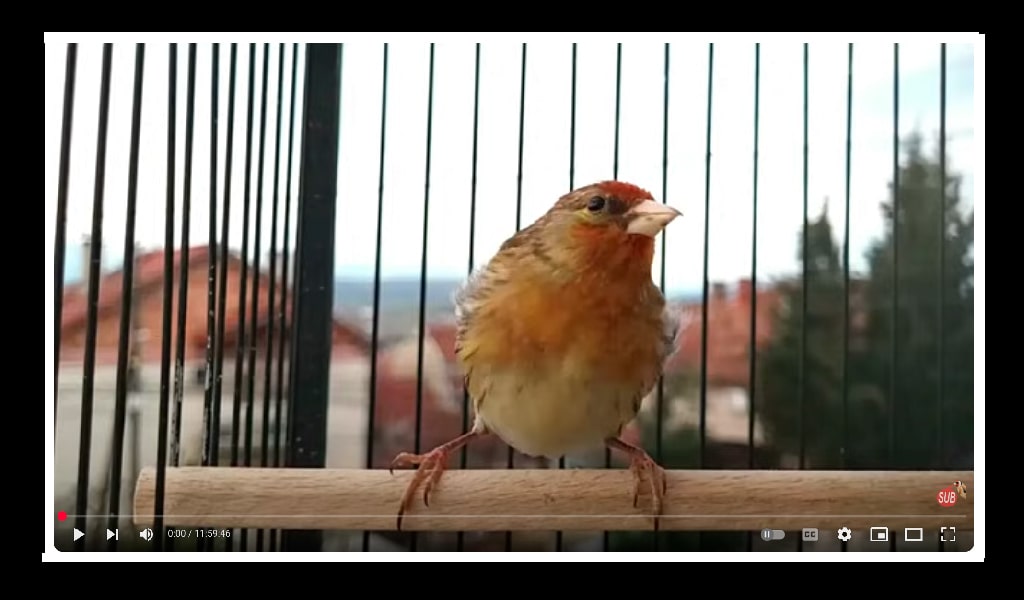
YouTube: "Goldfinch Mule Singing 100% Goldfinch Song".
Spot on, Barbara and Roy — many thanks to you both!
On bird competitions of a rather different kind, see this story of cock-fighting in an unnamed Wandsworth Common beerhouse, 19 February 1838. This too is likely to have take place in Chatham Road.
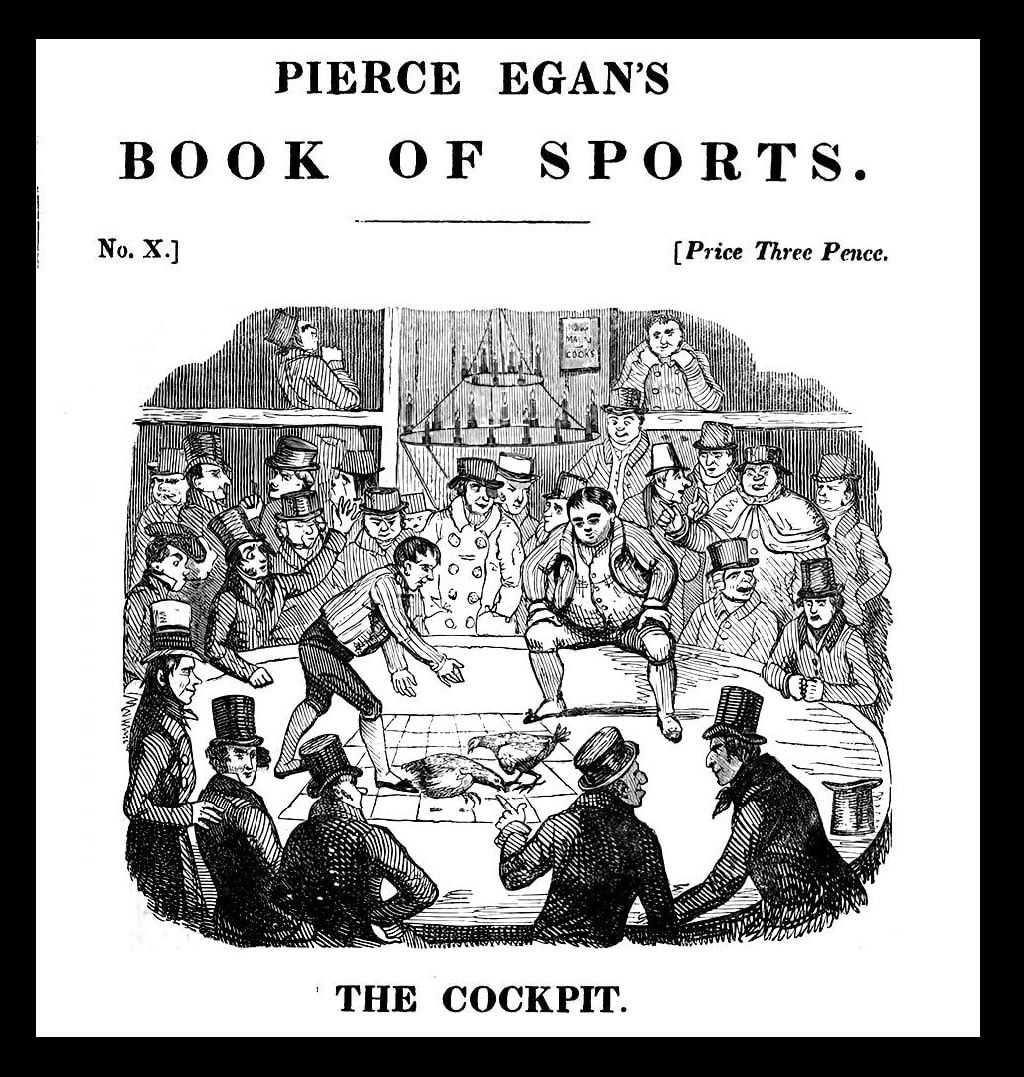
The Cockpit, from Pierce Egan's Book of Sports, and Mirror of Life: Embracing The Turf, The Chase, The Ring, and The Stage interspersed with Original Memoirs of Sporting Men etc. (1832?).

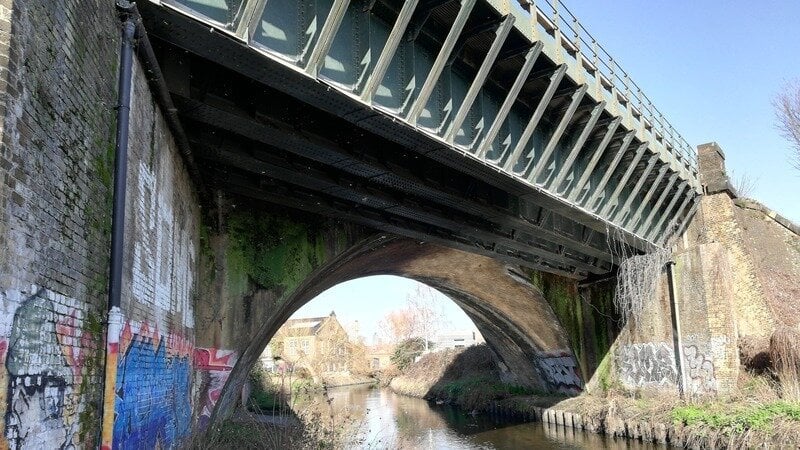
Fix the "Missing Link" in the Wandle Trail
At the moment, there's no way through
This petition was started 27 January 2025 by the Wandle Valley Forum.
Here's the Forum's latest bulletin.
Fix the "Missing Link" in the Wandle Trail
Why this petition matters
The Wandle Trail is blocked by the major railway bridge near Earlsfield. Walkers and cyclists are forced to leave the river and divert via busy roads.
Fixing this "Missing Link" in the Wandle Trail has been a priority for local communities and all who care for the Wandle for many years.
Providing a route through the bridge will be transformational. It will create a major new active travel route for walkers, families with children, cyclists and wheelers. This will address demands arising from significant new development in the area and help meet the wider needs of the Wandle Valley.
The railway bridge lies on the border of Merton and Wandsworth. Both local authorities have identified it as a "priority project" in their Local Plans and Infrastructure Delivery Plans. It is eligible for funding from the community infrastructure levy on new development among other sources.
A feasibility study has now been completed by Merton Council. It provides a preferred option which has the support of Network Rail and Environment Agency and costs c£1.1m.
The feasibility study shows that there is a solution to the "Missing Link" which is deliverable and affordable. We are asking the leaders of Merton and Wandsworth Councils to deliver this preferred option and realise the benefits it will provide.
Please sign this petition . . .
And share this petition in person or use this QR code . . .

The stretch in question at the end of the C19:
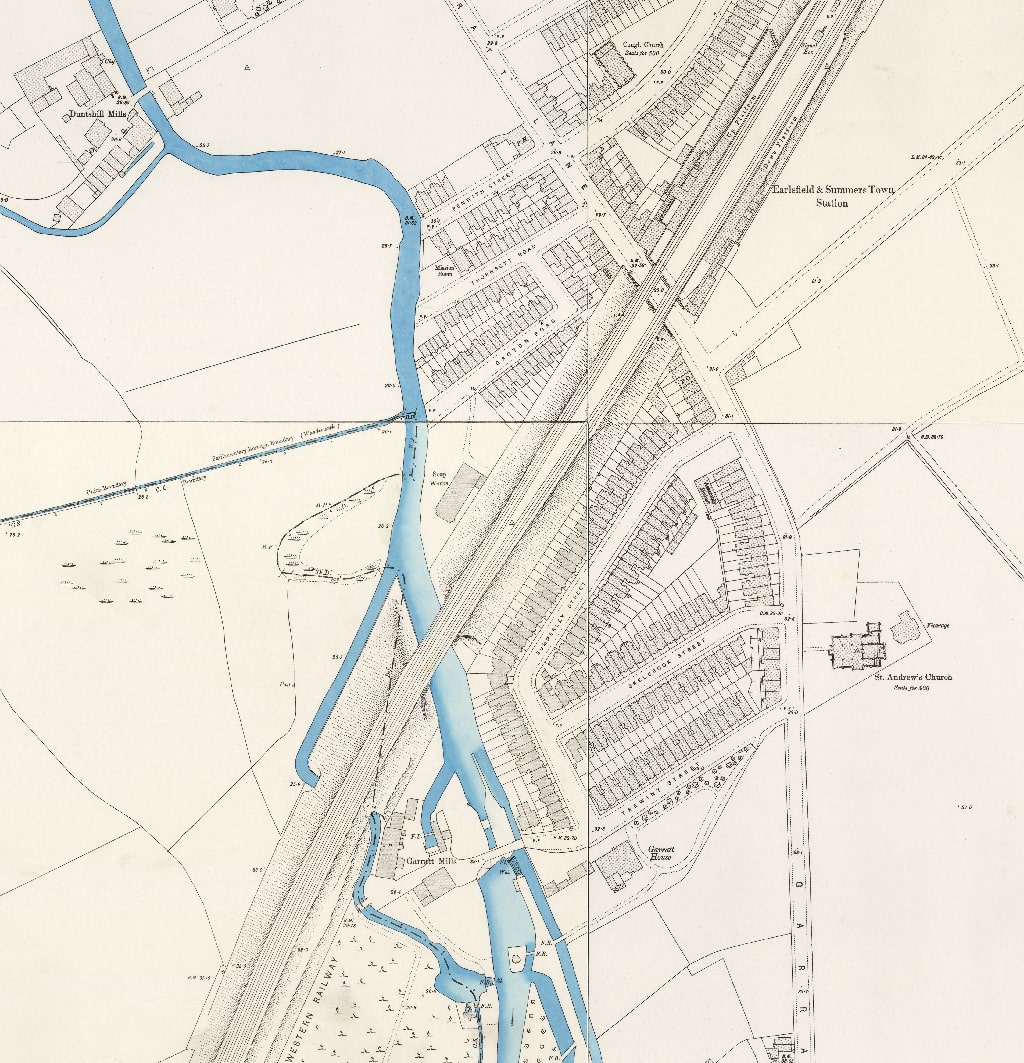
OS, 1890s, 5 feet to one mile: Earlsfield railway bridge crossing Garratt Lane and River Wandle.

Octavia Hill, portrait by John Singer Sergeant, 1898. National Portrait Gallery.
I don't know how well Olivia Hill knew Wandsworth Common, but Robert Hunter, her friend and fellow-founder of the National Trust, was a key figure in the saving of the Common in 1871. (He lived 1869—1872 at 5 Louvaine Road, where there is now an English Heritage Blue Plaque.)
Among Olivia Hill's many achievements (perhaps less well known than others) was to help save sections of the Wandle riverbank that are now part of the wonderful Wandle Trail. (See e.g. the Wimbledon Society's article "How the protection of the Wandle Valley started".
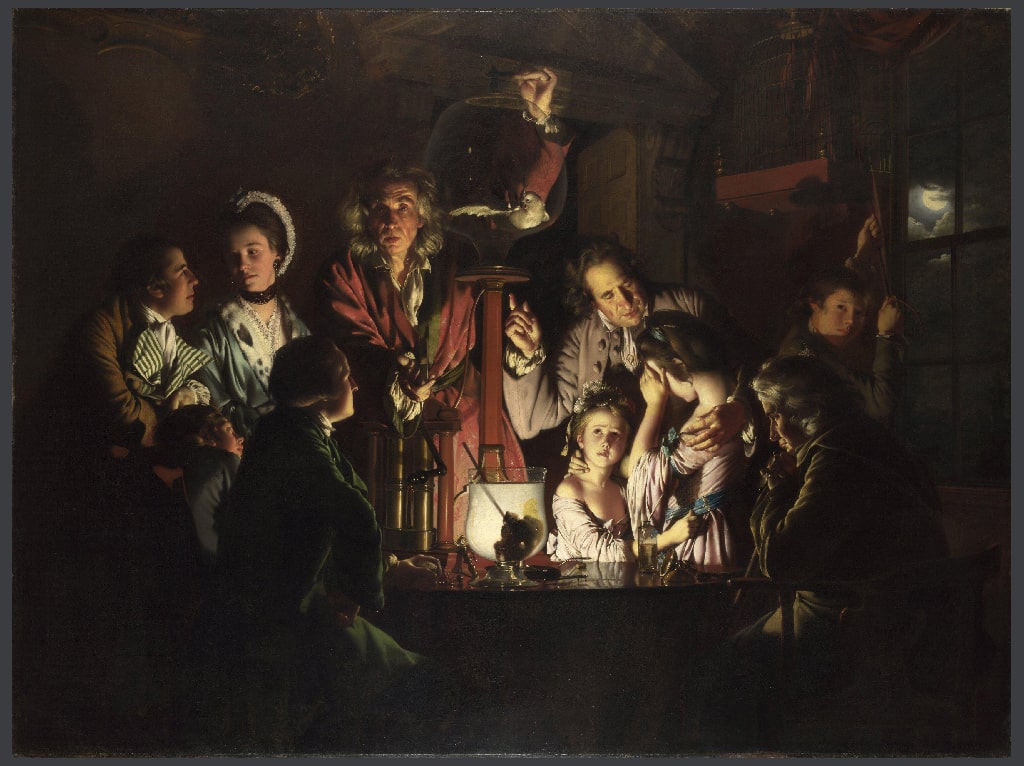
Joseph Wright "of Derby", An Experiment on a Bird in the Air Pump, 1768. National Gallery, London. A single candle sheds more light on the assembled group than the full moon — but makes the whole scene so much more mysterious and perhaps alarming.
SO many more stories still to tell. But that's all for now, folks.
Send me an email if you enjoyed this post / want to comment on something you've seen on the site / would like to know more — or just want to be kept in touch.
If you would like to receive notifications of new Chronicles, let me know . . .
Philip Boys ("History Boys")
February 2025
— Friends of Wandsworth Common
— Wandsworth Historical Society
