1841 Census: Parish of Battersea
Enumeration District Descriptions
HO 107/1046 — Parish of Battersea, Surrey
This page presents transcriptions of the enumerators’ schedule descriptions for all thirteen Enumeration Districts in the Parish of Battersea, as recorded in the 1841 census. These preamble pages — each written by the individual enumerator and countersigned by the Registrar and Superintendent Registrar — define the geographical boundaries of each district. They are the closest thing the 1841 census offers to a street-level map of Battersea before the Victorian building boom transformed the area.
The descriptions have been transcribed from the original images. Uncertain readings are marked (?). The original images are reproduced alongside each transcription. These descriptions were made in June 1841; the census night itself was 6 June 1841.
County: Surrey (Parliamentary Division: East Surrey)
Hundred: Brixton (West Division)
Parish: Battersea (part of)
Superintendent Registrar’s District: Wandsworth & Clapham
Registrar’s District: Battersea
Registrar: Thomas Chapman
Superintendent Registrar: Benjamin Field
TNA Piece References: HO 107/1046/2, 1046/3, 1046/4, 1046/5, 1046/6
Enumeration Districts — Index
- ED 1 — Bridge Road, Bolingbroke Place
- ED 2 — Bolingbroke Gardens, Church Street
- ED 3 — High Street (east), Green Lane
- ED 4 — High Street (west), Church Street, Old Swan
- ED 5 — Lombard Street, Lower Wandsworth Road
- ED 6 — Lower Wandsworth Road, St John’s Hill
- ED 7 — Battersea Rise, Clapham Common (west)
- ED 8 — Clapham Common (north), Lavender Hill
- ED 9 — Prince’s Head, Long Hedge Farm
- ED 10 — York Street, High Road
- ED 11 — Battersea Fields, Nine Elms Lane
- ED 12 — Nine Elms, Railway Depot, Battersea Marsh
- ED 13 — Battersea Bridge, Surrey Lane
- ED 20 — Hamlet of Penge
- Public Institutions
Enumeration District 1
HO 107/1046/2 — Enumerator: J. Maddocks
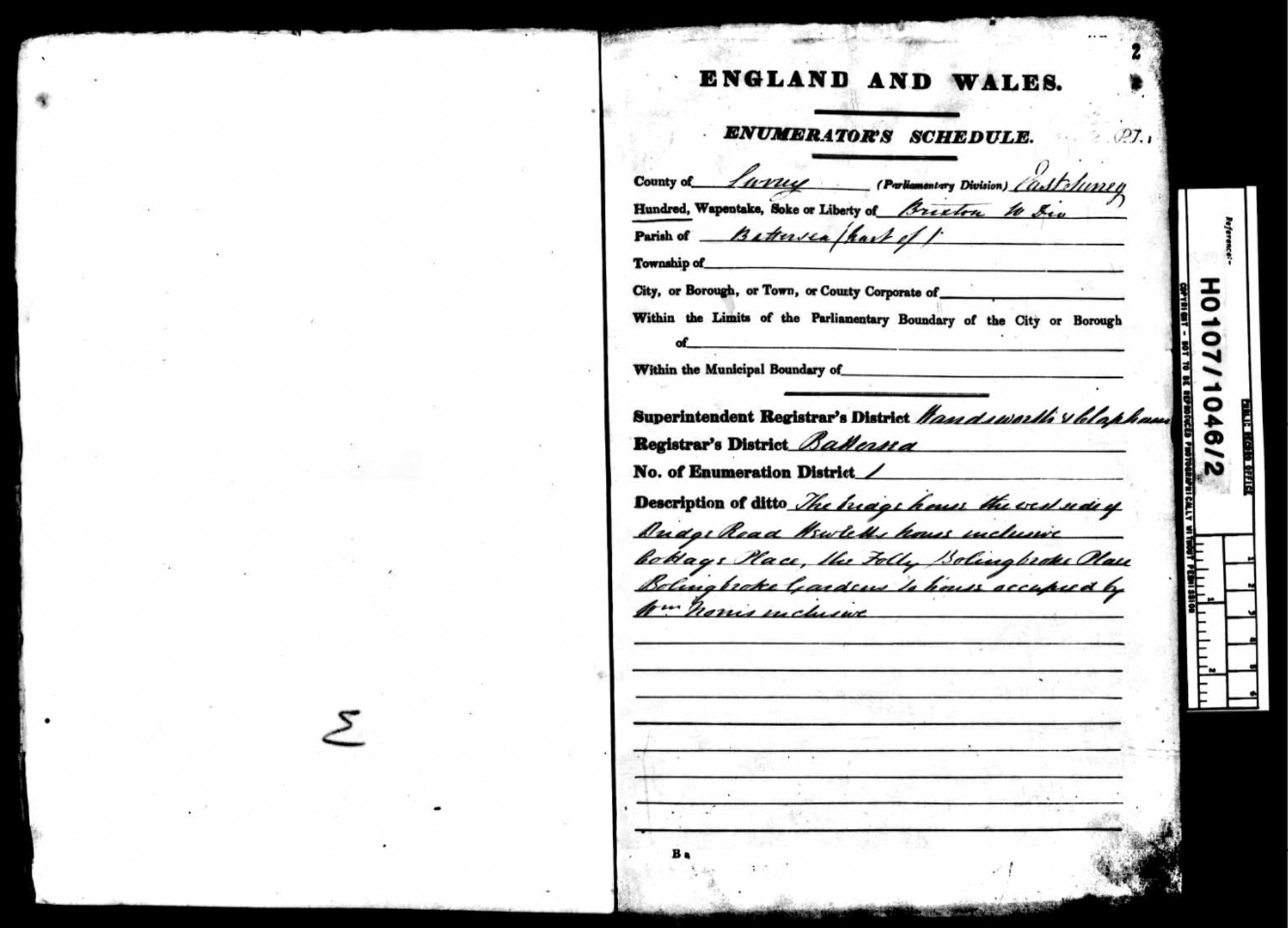
Enumerator’s schedule: ED 1, HO 107/1046/2
Enumerator: J. Maddocks (signed 10 June 1841)
Registrar: Tho. Chapman (examined 30 June 1841)
Superintendent Registrar: Benjamin Field (10 July 1841)
Description: The bridge house, the west side of Bridge Road, Rowlette’s house inclusive, Cottage Place, the Folly, Bolingbroke Place, Bolingbroke Gardens to house occupied by Mr Morris inclusive.
Enumeration District 2
HO 107/1046/2 — Enumerator: J. Maddocks
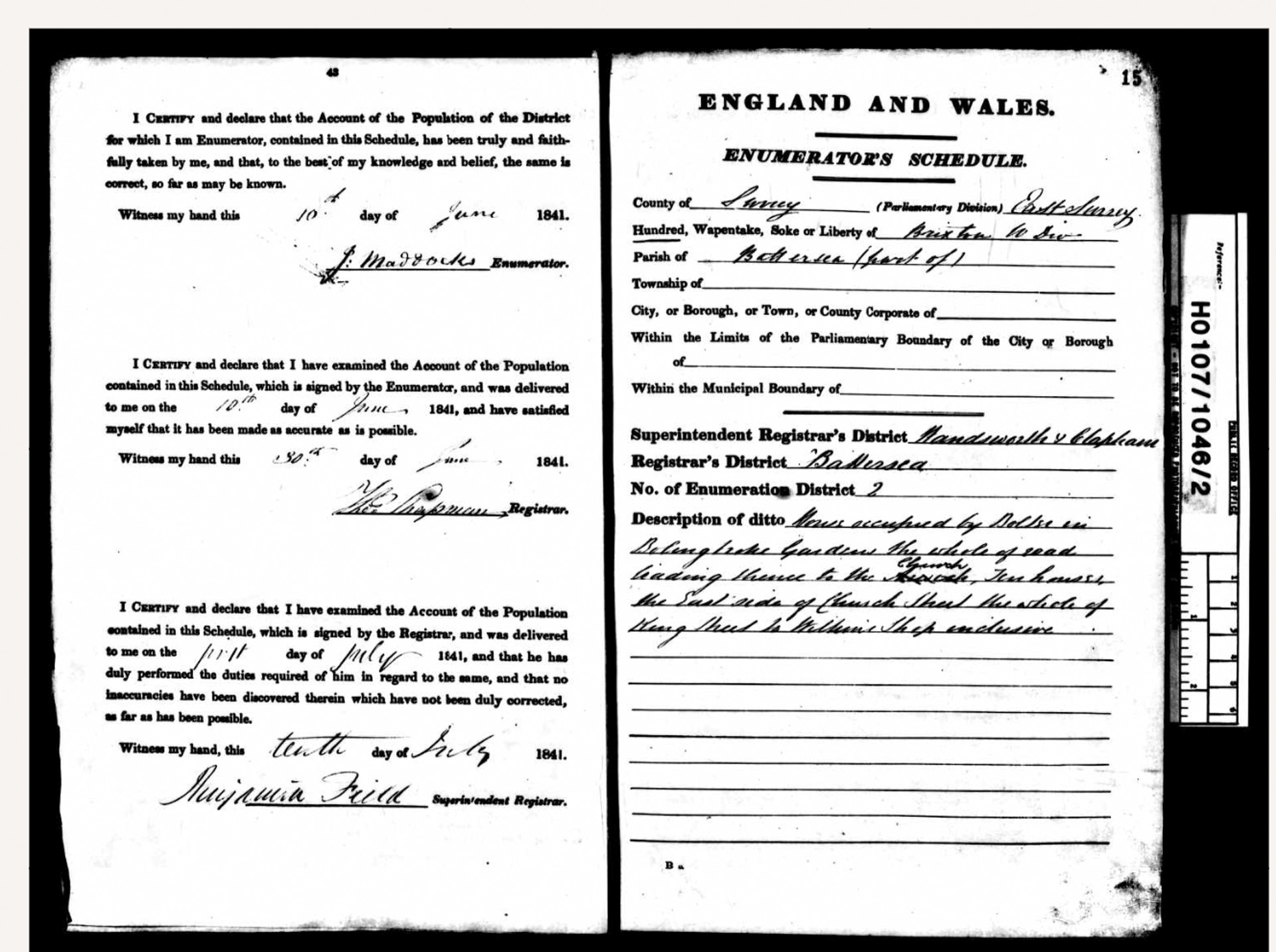
Enumerator’s schedule: ED 2, HO 107/1046/2
Enumerator: J. Maddocks (signed 10 June 1841)
Registrar: Tho. Chapman (examined 30 June 1841)
Superintendent Registrar: Benjamin Field (10 July 1841)
Description: Houses occupied by Dothe(?) in Bolingbroke Gardens, the whole of road leading thence to the Church(?), ten houses, the East side of Church Street, the whole of King Street to Wilkins’ Shop inclusive.
Enumeration District 3
HO 107/1046/2 — Enumerator: Richd. Lee
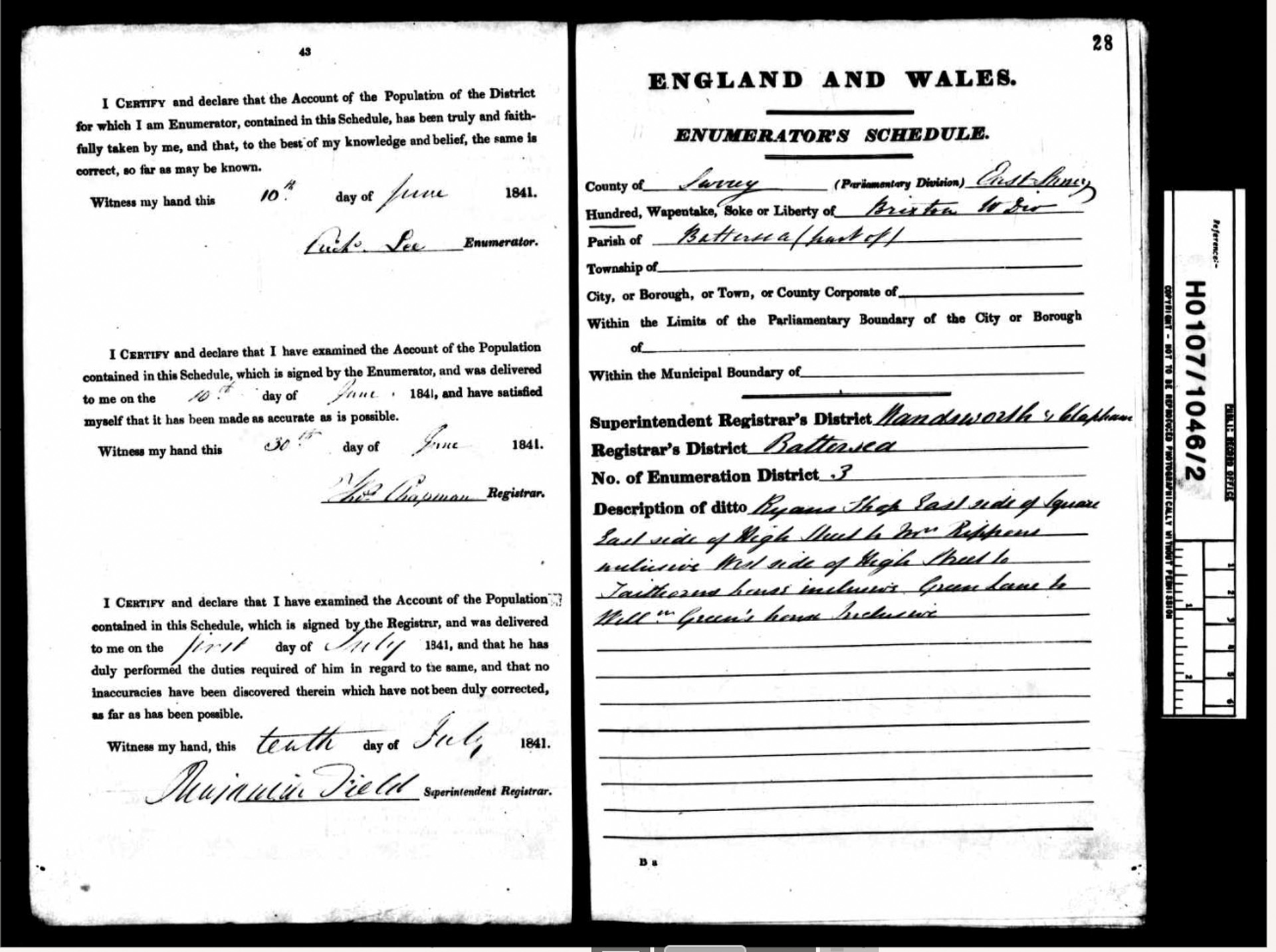
Enumerator’s schedule: ED 3, HO 107/1046/2
Enumerator: Richd. Lee (signed 10 June 1841)
Registrar: Tho. Chapman (examined 30 June 1841)
Superintendent Registrar: Benjamin Field (10 July 1841)
Description: Byams Shop(?), East side of Square, East side of High Street to Mr Rippem(?) inclusive, West side of High Street to Jaitherna(?) house inclusive, Green Lane to Mill Mr Green’s house inclusive.
The Square = Battersea Square, which still survives. Green Lane corresponds to the present-day Battersea Church Road area.
Enumeration District 4
HO 107/1046/2 — Enumerator: John Keen
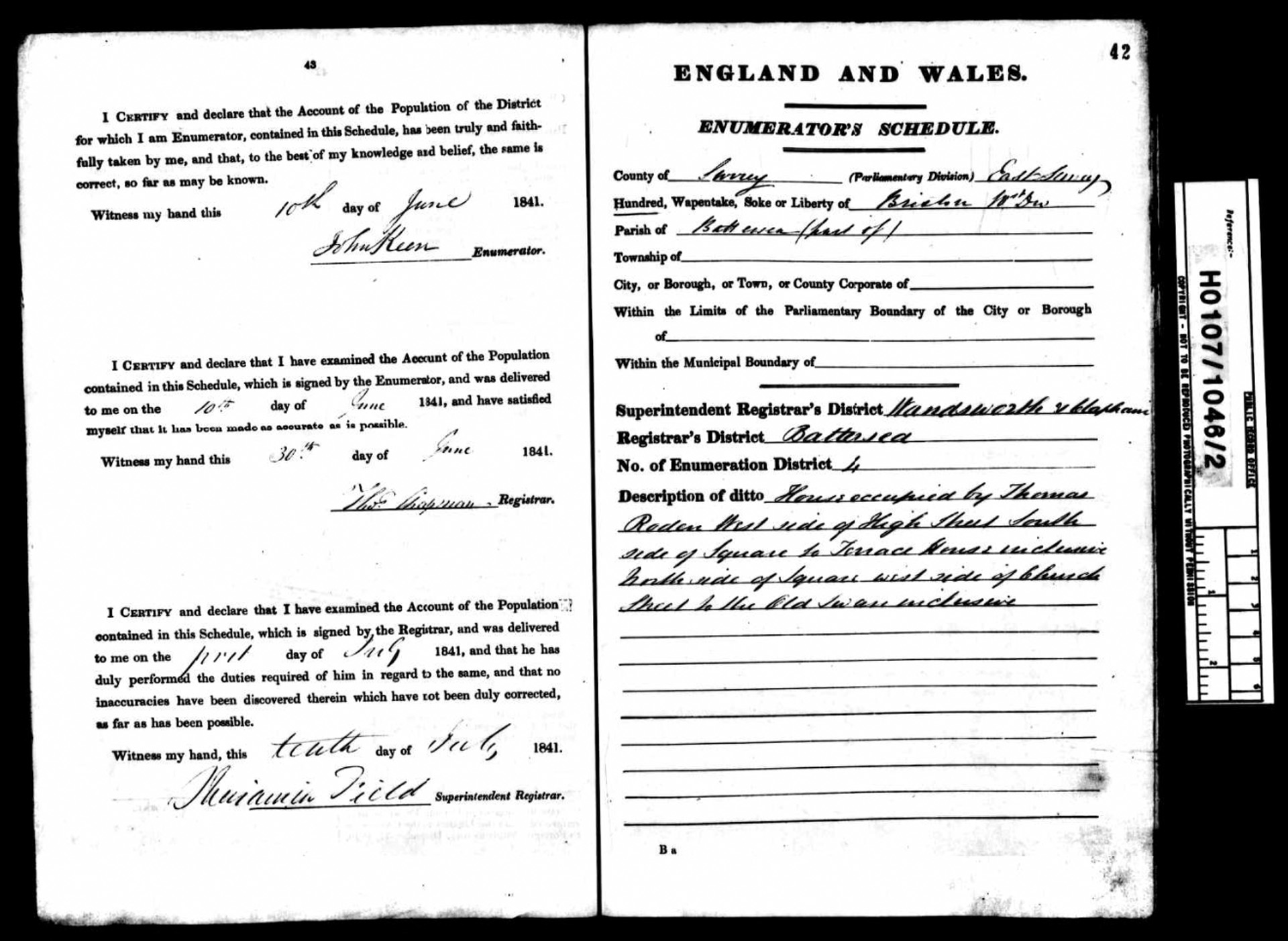
Enumerator’s schedule: ED 4, HO 107/1046/2
Enumerator: John Keen (signed 10 June 1841)
Registrar: Tho. Chapman (examined 30 June 1841)
Superintendent Registrar: Benjamin Field (10 July 1841)
Description: House occupied by Thomas Roden, West side of High Street, South side of Square to Terrace House inclusive, North side of Square, West side of Church Street to the Old Swan inclusive.
The Old Swan was an ancient riverside tavern at Battersea, one of the oldest inns on the south bank of the Thames at this point.
Enumeration District 5
HO 107/1046/3 — Enumerator: not captured
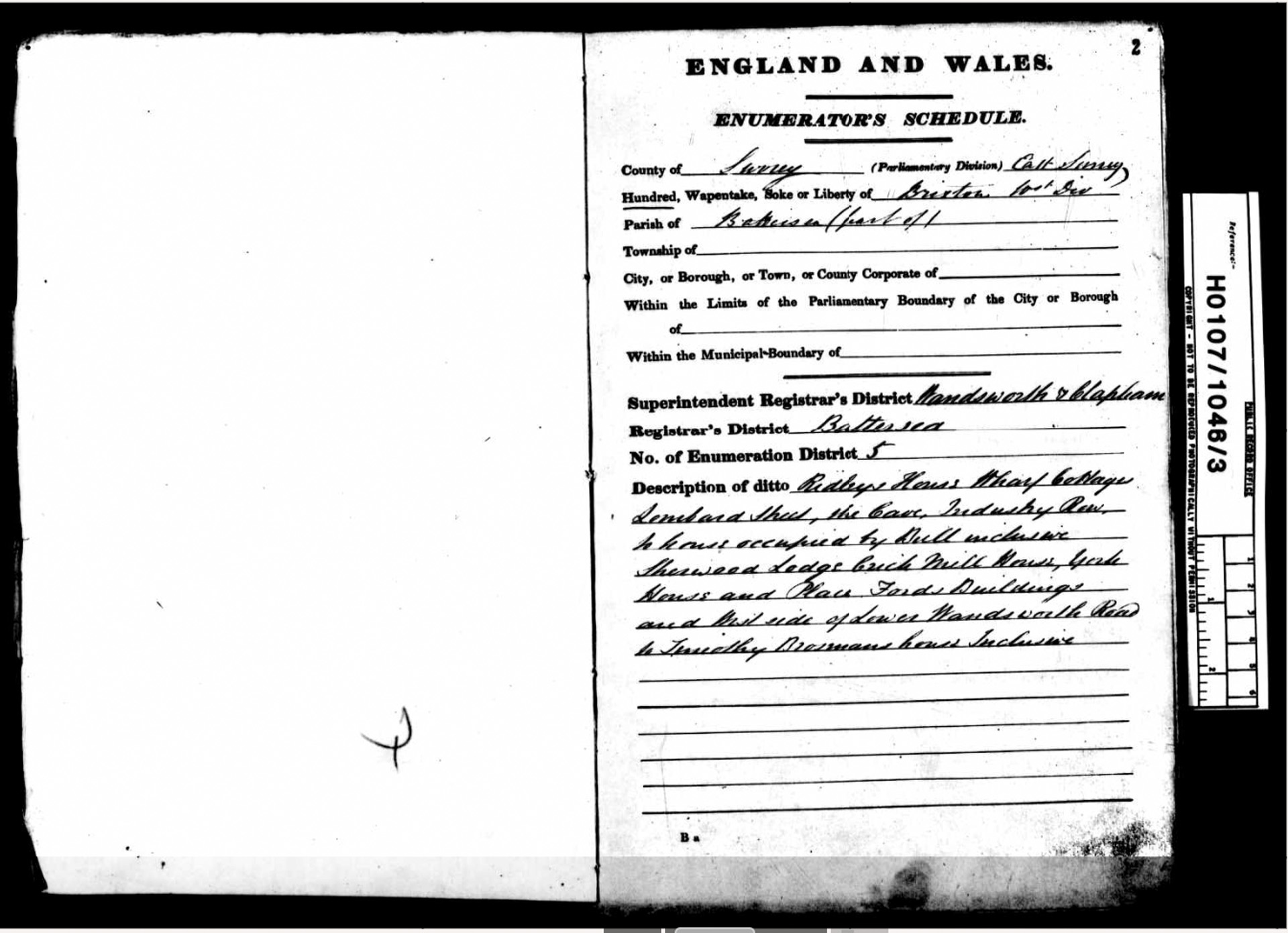
Enumerator’s schedule: ED 5, HO 107/1046/3
Enumerator: not captured (left-hand page not supplied)
Registrar: Tho. Chapman
Superintendent Registrar: Benjamin Field
Description: Ridleys House, Wharf Cottage, Lombard Street, the Cave, Industry Row, to house occupied by Dull inclusive, Sherwood Lodge, Brick Mill House, York House and Place, Ford’s Buildings and West side of Lower Wandsworth Road to Timothy Norman’s house inclusive.
Lombard Street, Battersea was a riverside industrial address. Industry Row is named as such. These are the Thames-side wharf settlements on the Battersea shore facing Wandsworth.
Enumeration District 6
HO 107/1046/3 — Enumerator: Geo. S. Hardwin
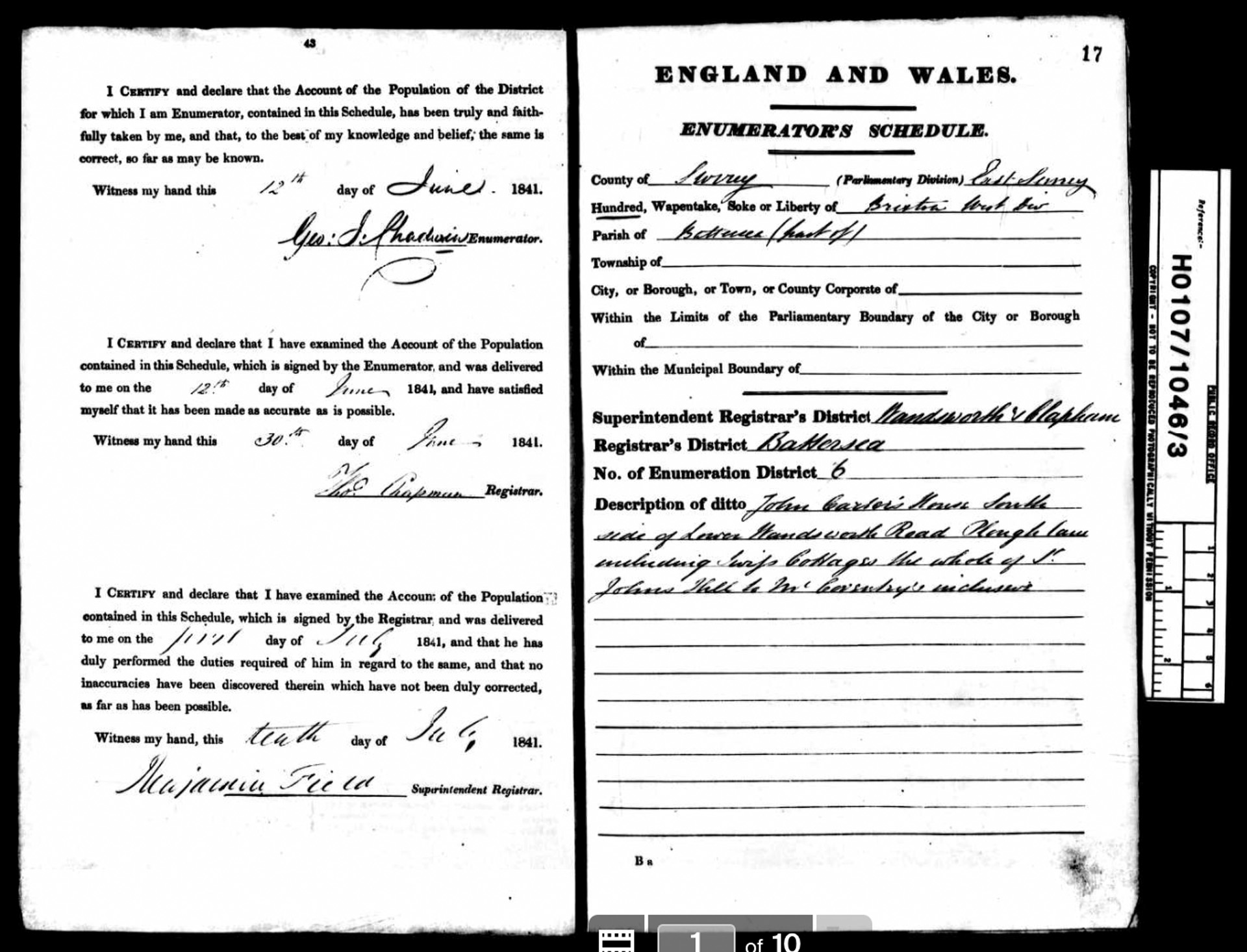
Enumerator’s schedule: ED 6, HO 107/1046/3
Enumerator: Geo. S. Hardwin (signed 12 June 1841)
Registrar: Tho. Chapman (examined 30 June 1841)
Superintendent Registrar: Benjamin Field (10 July 1841)
Description: John Carter’s House, South side of Lower Wandsworth Road, Plough Lane including Snips Cottages, the whole of St John’s Hill to Mr Coventry’s inclusive.
St John’s Hill is already named as a distinct thoroughfare in 1841, twenty years before Clapham Junction station (1863) transformed the area. Plough Lane survives today.
Enumeration District 7
HO 107/1046/3 — Enumerator: H. Belcher(?)
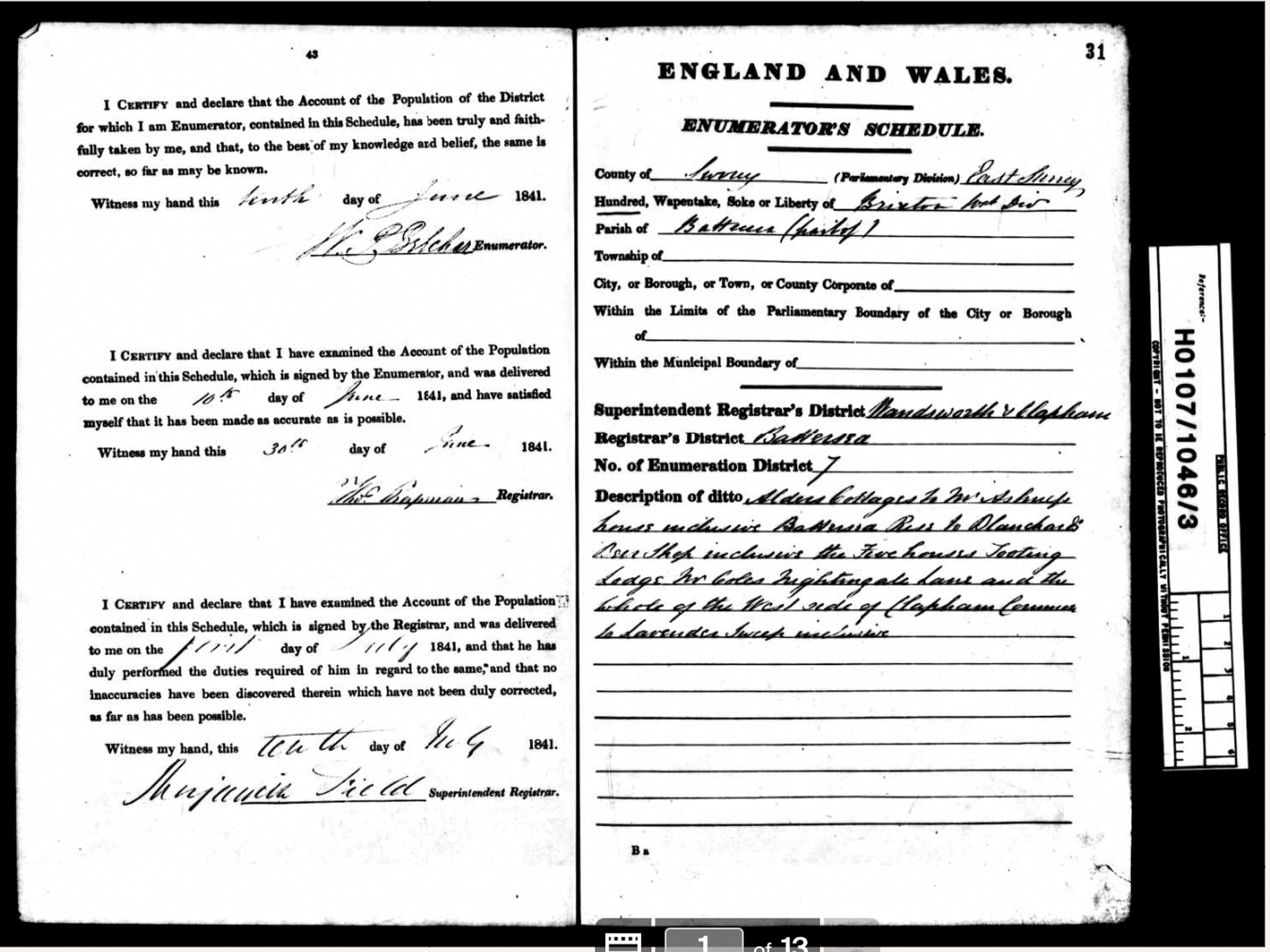
Enumerator’s schedule: ED 7, HO 107/1046/3
Enumerator: H. Belcher(?) (signed 10 June 1841)
Registrar: Tho. Chapman (examined 30 June 1841)
Superintendent Registrar: Benjamin Field (10 July 1841)
Description: Aldus Cottages to Mr Hisherp’s(?) house inclusive, Battersea Rise to Blanchard’s Beer Shop inclusive, the five houses, Tooting Lodge, Mr Cole’s, Nightingale Lane and the whole of the West side of Clapham Common to Lavender Sweep inclusive.
Lavender Sweep corresponds to the Lavender Hill area. The west side of Clapham Common was already being developed by 1841. Nightingale Lane here is the road forming the Balham–Clapham boundary.
Enumeration District 8
HO 107/1046/3 — Enumerator: William Puting(?)
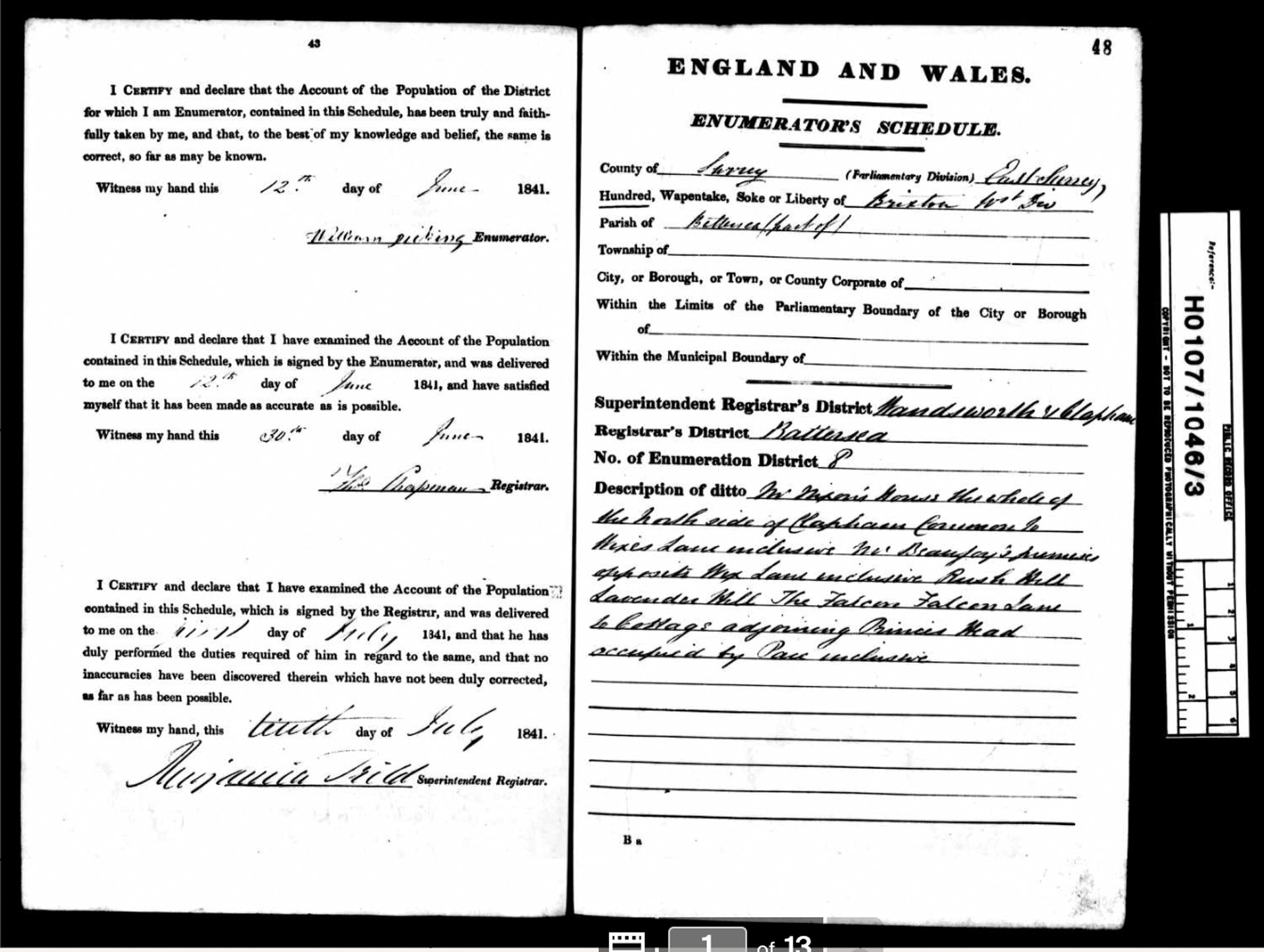
Enumerator’s schedule: ED 8, HO 107/1046/3
Enumerator: William Puting(?) (signed 12 June 1841)
Registrar: Tho. Chapman (examined 30 June 1841)
Superintendent Registrar: Benjamin Field (10 July 1841)
Description: Mr Pipon’s house, the whole of the North side of Clapham Common to Nixies Lane inclusive, Mr Beaujoy’s premises, opposite Mr Lane inclusive, Rush Hill, Lavender Hill, The Falcon, Falcon Lane, to cottage adjoining Prince’s Head occupied by Pace inclusive.
The Falcon was an inn in the Clapham Junction area, a predecessor of the neighbourhood’s later development. Lavender Hill is fully named here in 1841.
Enumeration District 9
HO 107/1046/4 — Enumerator: not captured
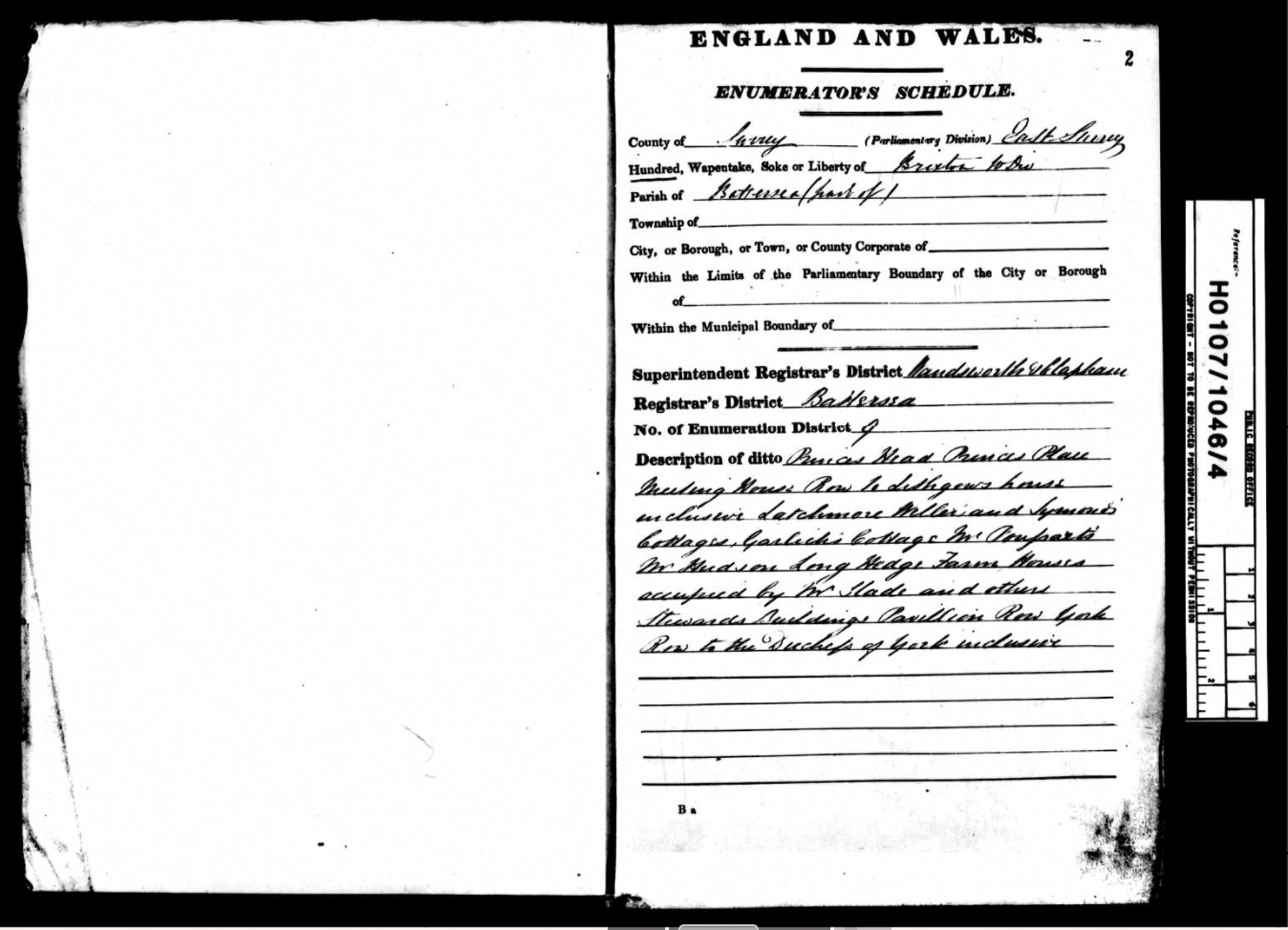
Enumerator’s schedule: ED 9, HO 107/1046/4
Enumerator: not captured (left-hand page not supplied)
Registrar: Tho. Chapman
Superintendent Registrar: Benjamin Field
Description: Prince’s Head, Prince’s Place, Munding(?) House Row to Sedgeow’s(?) house inclusive, Latchmore Miller and Symons(?) cottages, Garlich’s Cottage, Mr Pompart’s(?), Mr Hudson, Long Hedge Farm Houses occupied by Mr Slade and others, Stewarde’s Buildings, Pavilion Row, York Row to the Duchess of York inclusive.
Long Hedge Farm represents open farmland within what is now densely suburban Battersea. The Duchess of York was presumably a public house.
Enumeration District 10
HO 107/1046/4 — Enumerator: Richard Hatnilly(?)
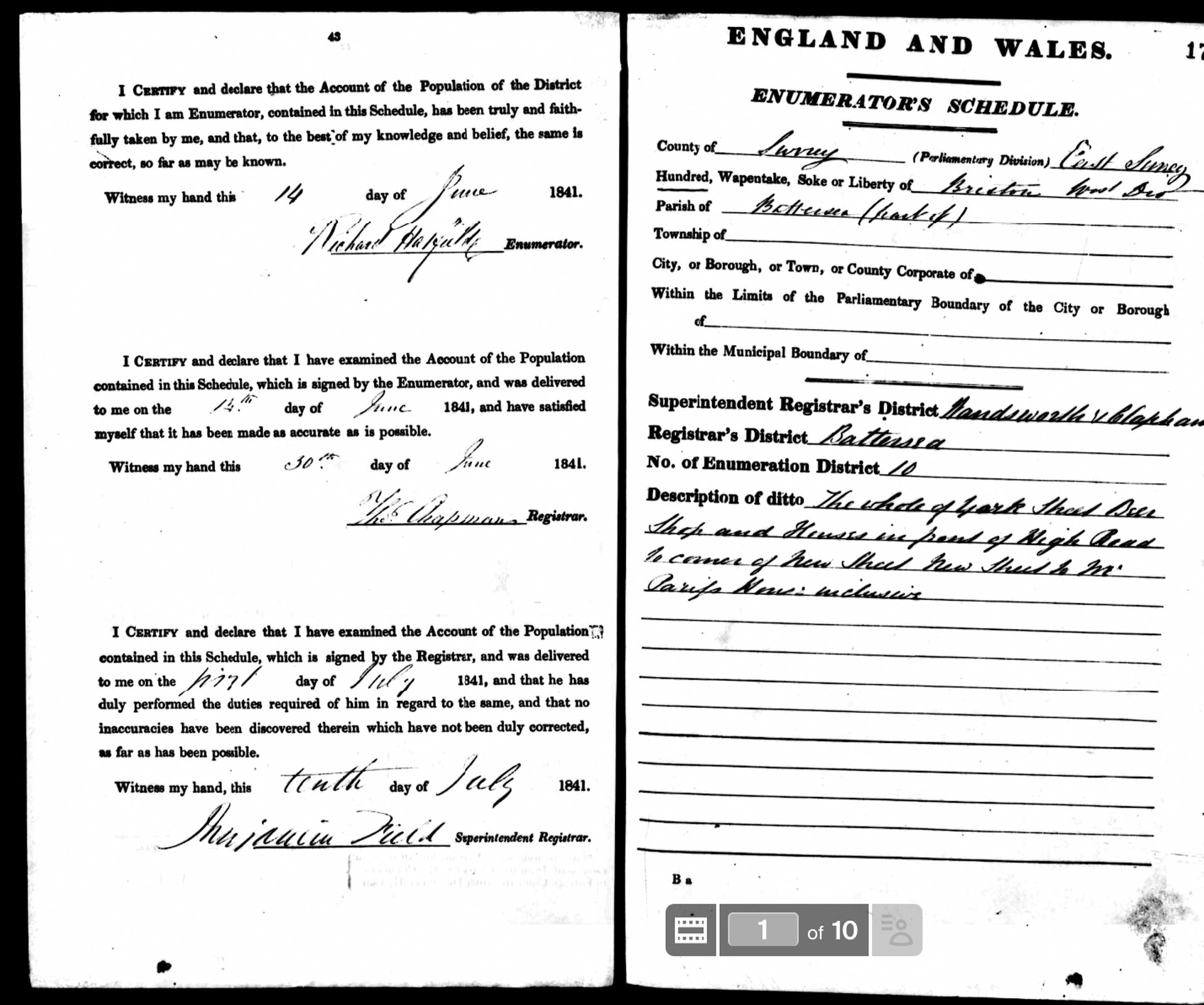
Enumerator’s schedule: ED 10, HO 107/1046/4
Enumerator: Richard Hatnilly(?) (signed 14 June 1841)
Registrar: Tho. Chapman (examined 30 June 1841)
Superintendent Registrar: Benjamin Field (10 July 1841)
Description: The whole of York Street, Dyer Shop and Houses in front of High Road to corner of New Street, New Street to Mr Parijs(?) House inclusive.
Enumeration District 11
HO 107/1046/4 — Enumerator: Henry Appleton
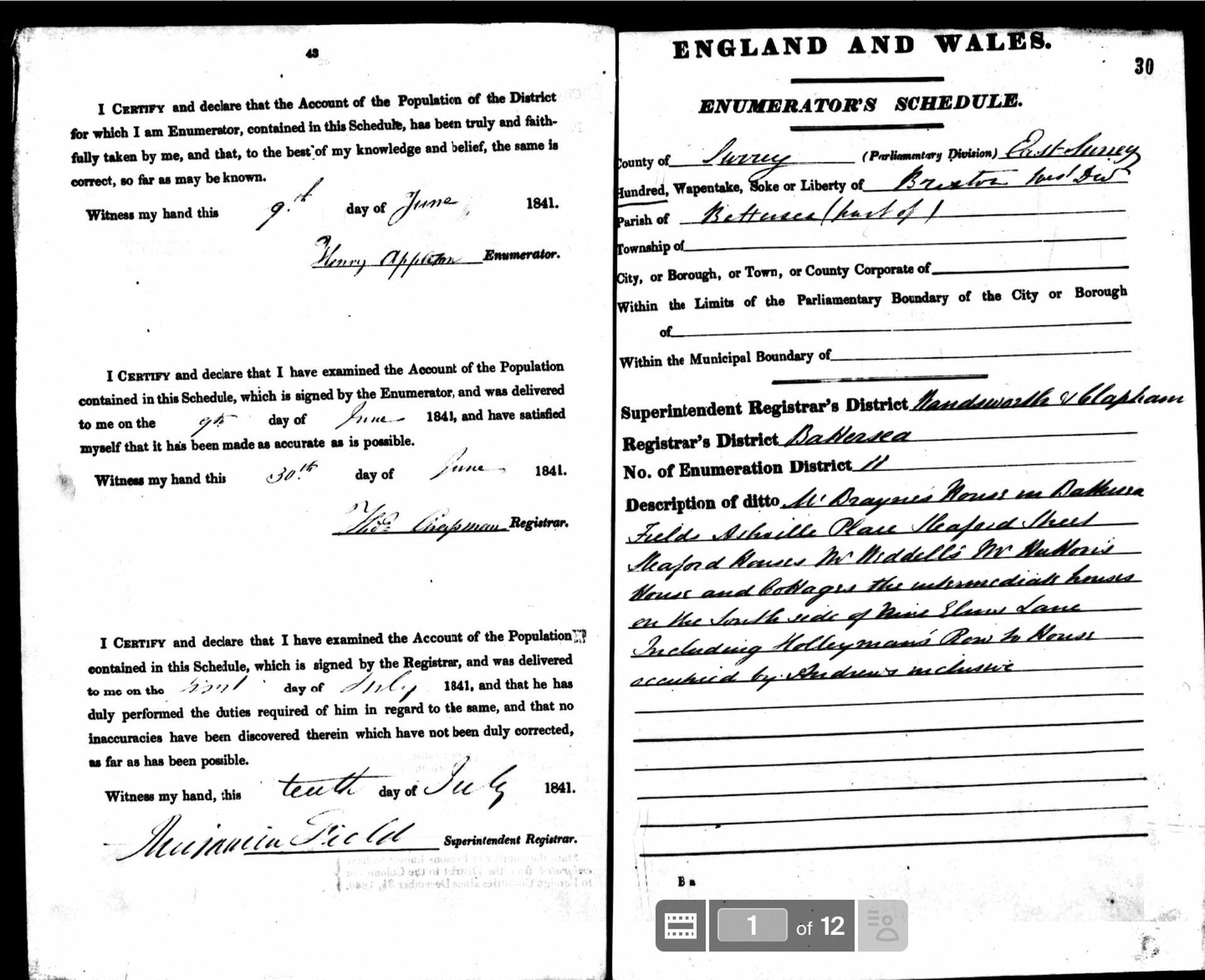
Enumerator’s schedule: ED 11, HO 107/1046/4
Enumerator: Henry Appleton (signed 9 June 1841)
Registrar: Tho. Chapman (examined 30 June 1841)
Superintendent Registrar: Benjamin Field (10 July 1841)
Description: Mr Drayne’s(?) Houses in Battersea Fields, Ashville Place, Sleaford Street, Sleaford Houses, Mr Maddells(?), Mr Hutton’s House and Cottages, the intermediate houses on the South side of Nine Elms Lane including Holleyman’s Row to house occupied by Andrews inclusive.
Battersea Fields at this date was a notorious open space — marshland and market gardens — not yet transformed into Battersea Park, which opened in 1858. Nine Elms Lane was already the main industrial artery of this part of the parish.
Enumeration District 12
HO 107/1046/4 — Enumerator: Frederick Sellar
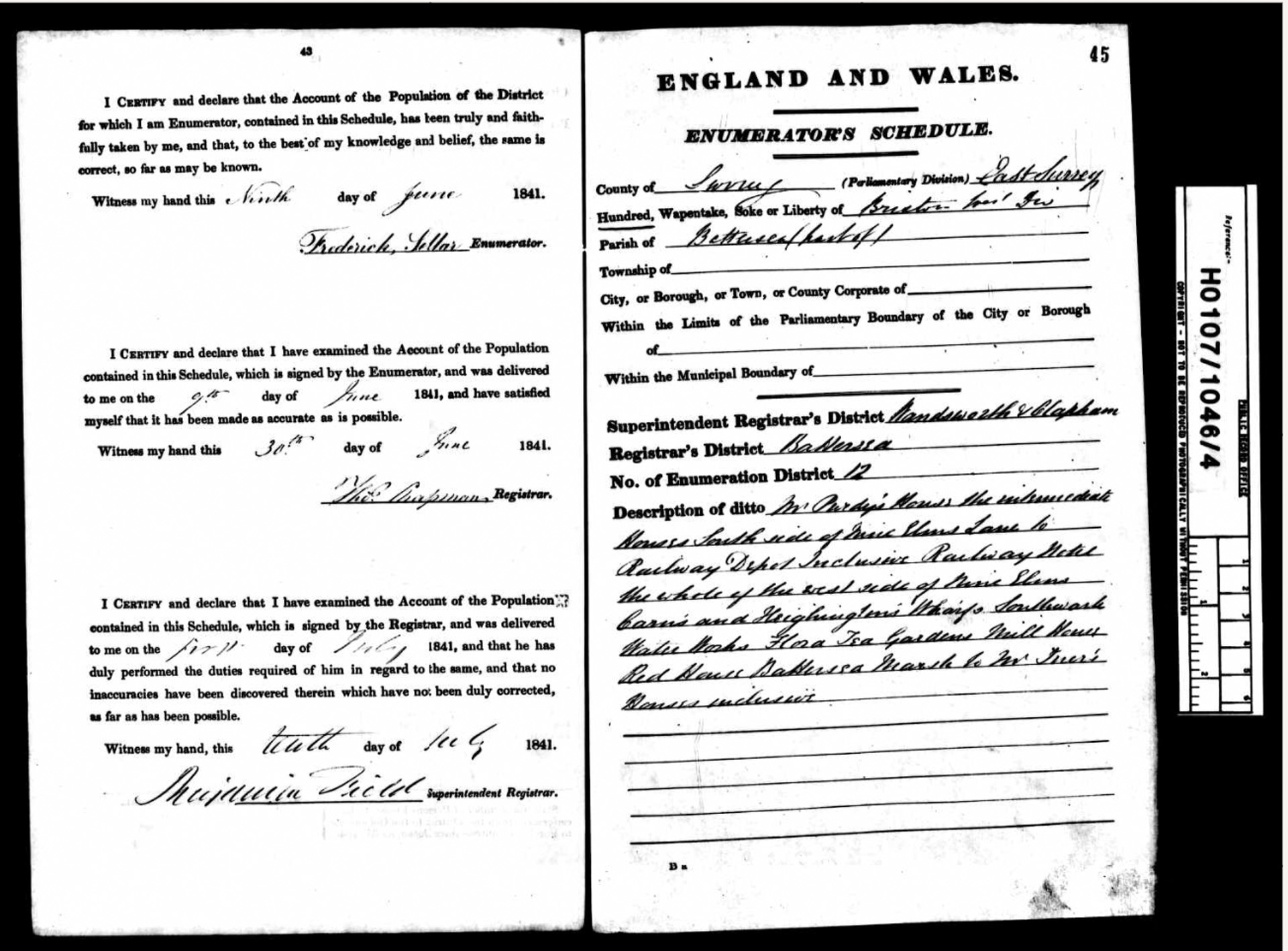
Enumerator’s schedule: ED 12, HO 107/1046/4
Enumerator: Frederick Sellar (signed 9 June 1841)
Registrar: Tho. Chapman (examined 30 June 1841)
Superintendent Registrar: Benjamin Field (10 July 1841)
Description: Mr Purdy’s House, the intermediate houses, South side of Nine Elms Lane to Railway Depot inclusive, Railway Note(?), the whole of the east side of Nine Elms Lane, Barns and Weighing(?) Wharfs, Southwark Water Works, Flora Tea Gardens, Mill House, Red House, Battersea Marsh to Mr Innes(?) Houses inclusive.
The Railway Depot is the Nine Elms terminus of the London & Southampton Railway, opened 1838 — the first railway terminus south of the Thames, just three years old when this census was taken. The Southwark Water Works drew from the Thames here. Flora Tea Gardens were popular pleasure grounds in Nine Elms, now entirely forgotten.
Enumeration District 13
HO 107/1046/5 — Enumerator: not captured
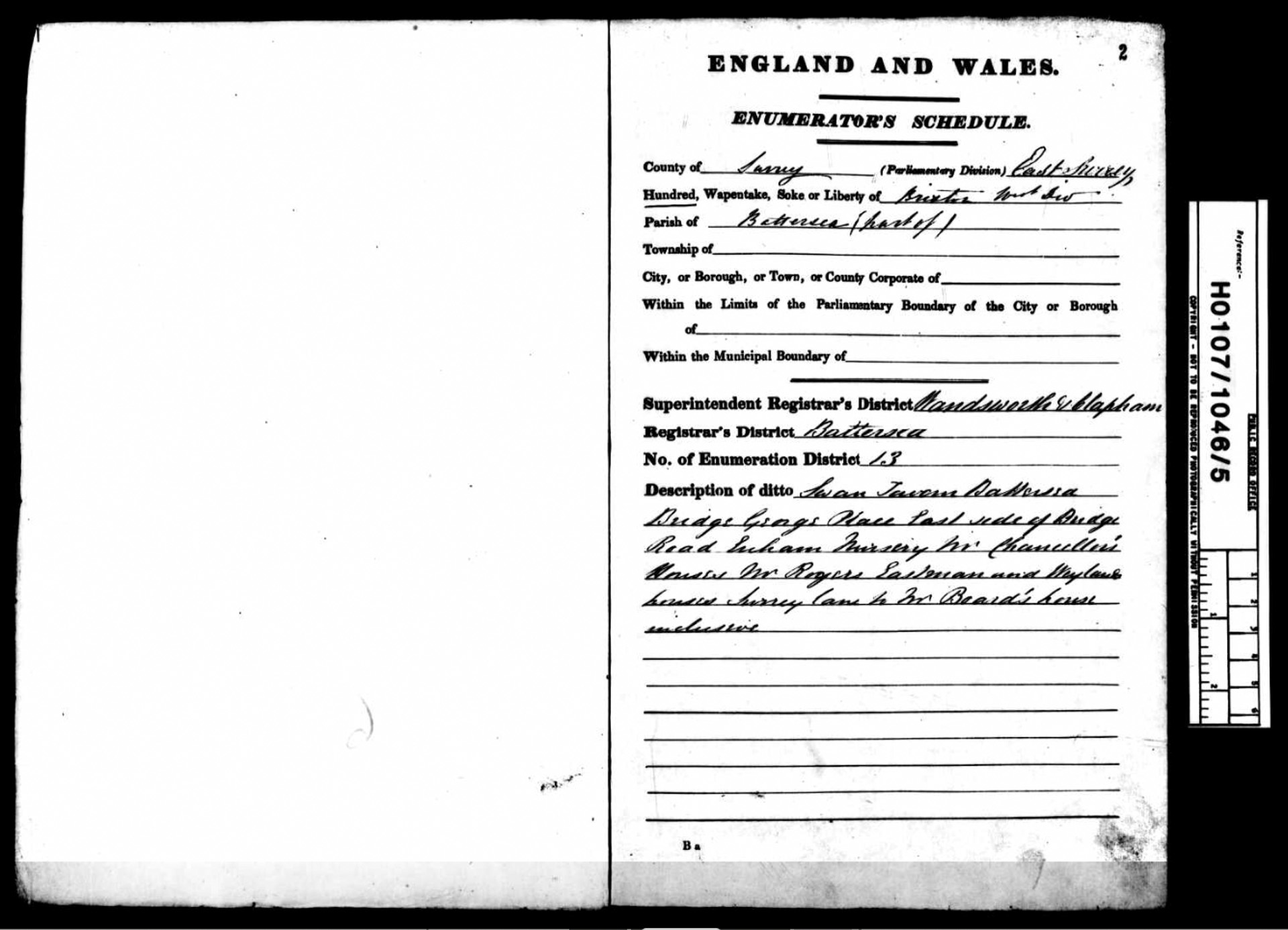
Enumerator’s schedule: ED 13, HO 107/1046/5
Enumerator: not captured (left-hand page not supplied)
Registrar: Tho. Chapman
Superintendent Registrar: Benjamin Field
Description: Swan Tavern Battersea, Bridge Grange Place, East side of Bridge Road, Fulham Nursery, Mr Chancellor’s Houses, Mr Rogers, Eastman and Mylands houses, Surrey Lane to Mr Beard’s house inclusive.
Fulham Nursery records market gardening continuing right up to the Battersea Bridge crossing. Surrey Lane survives today. The Swan Tavern at Battersea was near the ancient river crossing.
Enumeration District 20 — Hamlet of Penge
HO 107/1046/6 — Superintendent Registrar’s District: Croydon
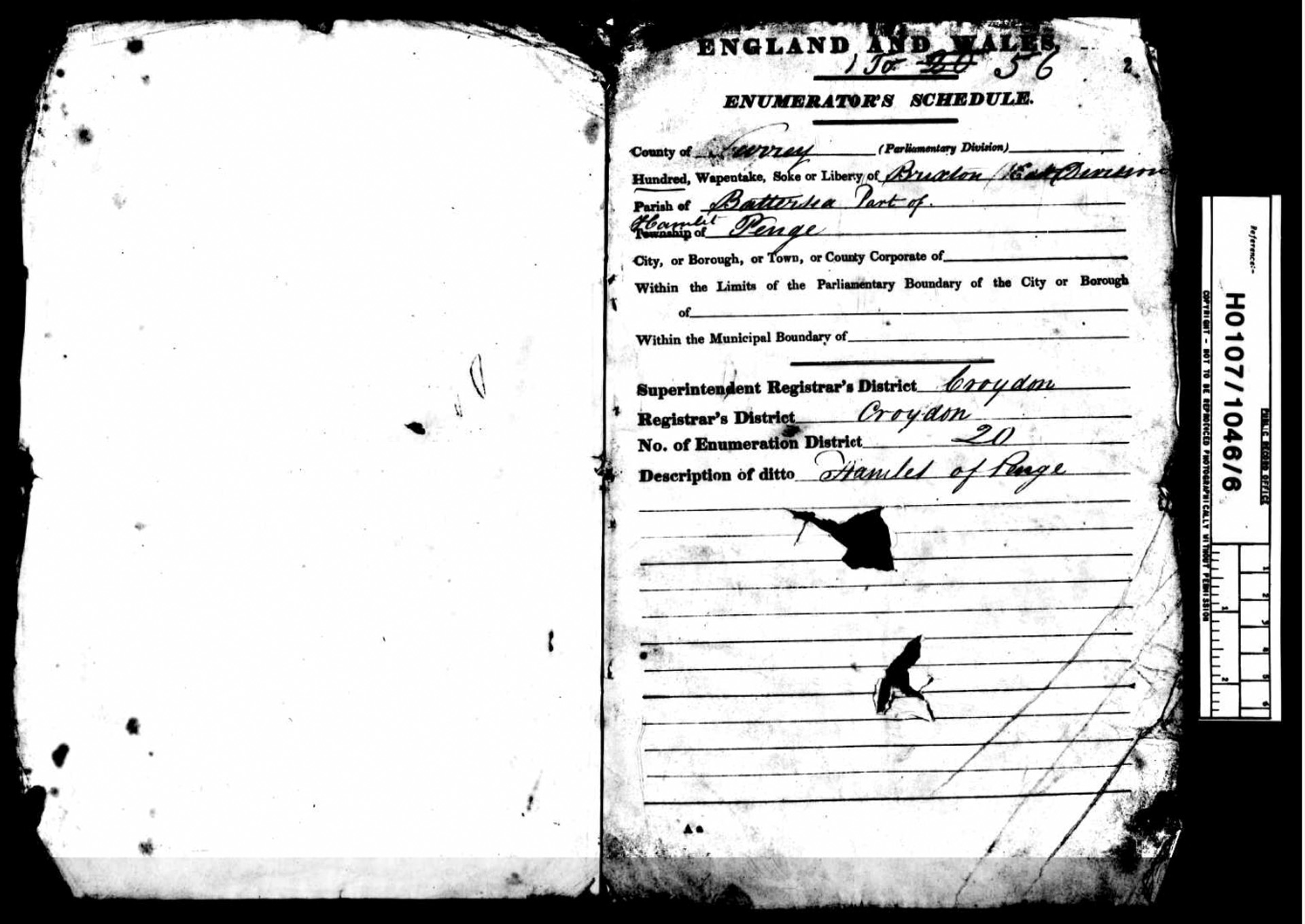
Enumerator’s schedule: ED 20 (Hamlet of Penge), HO 107/1046/6
Superintendent Registrar’s District: Croydon
Registrar’s District: Croydon
Parish: Battersea (part of) — Township of Penge
Description: Hamlet of Penge.
Penge was a detached chapelry of Battersea parish, geographically isolated in Surrey on the Kent border, entirely unconnected with the Battersea riverside. It was administered under the Croydon Superintendent Registrar’s District, not Wandsworth & Clapham. It has no relevance to this site’s research area.
Public Institutions
The 1841 census recorded public institutions separately from the general household returns. Two institutions in the Battersea Registrar’s District are recorded.
Althorpe House Lunatic Asylum, Parish of Battersea
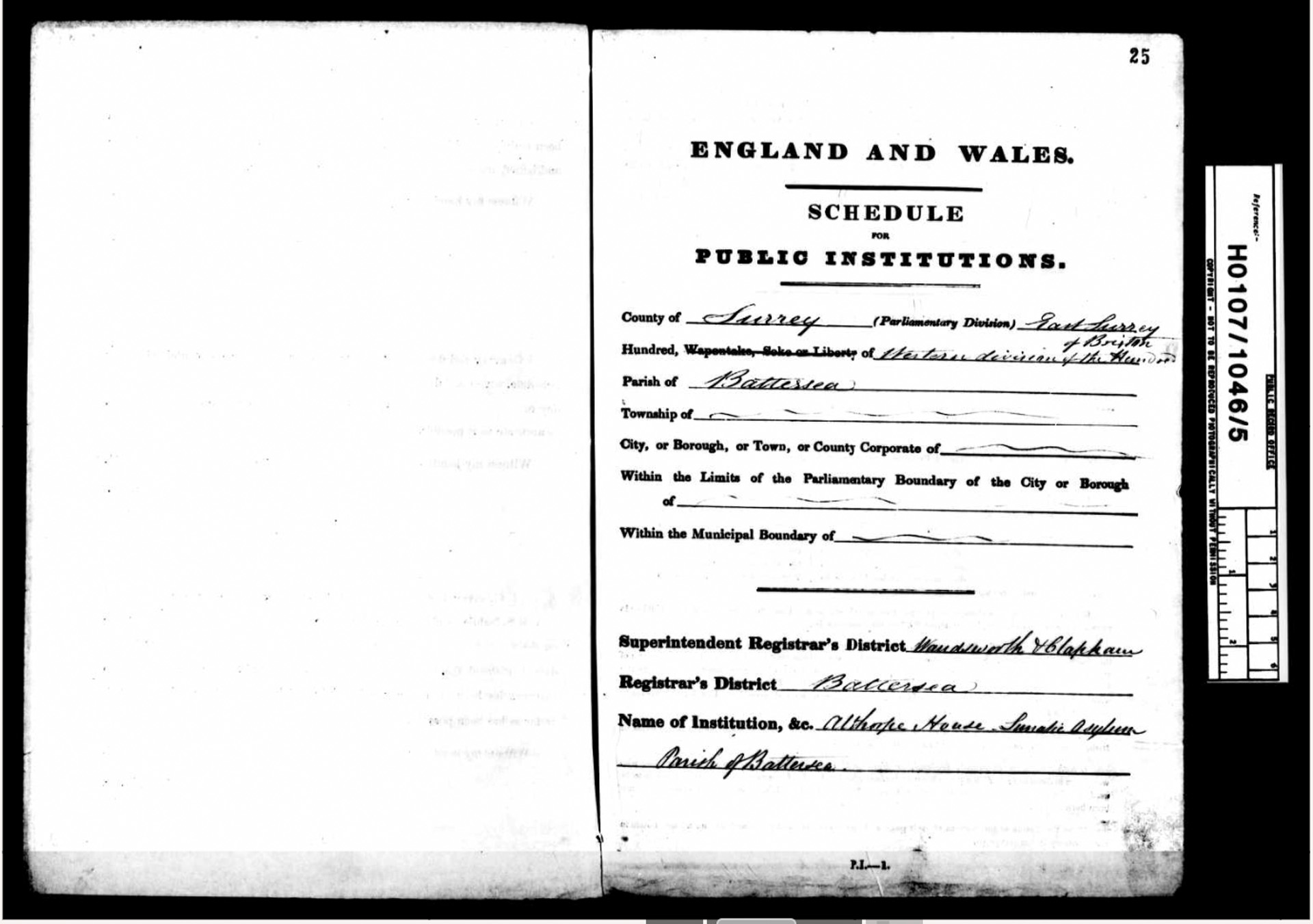
Public Institutions schedule: Althorpe House Lunatic Asylum, HO 107/1046/5
Superintendent Registrar’s District: Wandsworth & Clapham
Registrar’s District: Battersea
Institution: Althorpe House Lunatic Asylum, Parish of Battersea
Althorpe House was a private licensed lunatic asylum, distinct from Springfield Hospital (the Surrey County Pauper Lunatic Asylum) which was situated in the Parish of Wandsworth and newly opened in 1841. Private asylums of this kind occupied the corridor south of the Thames between Clapham and Wandsworth Common.
Wandsworth and Clapham Union Workhouse, East Hill, Wandsworth
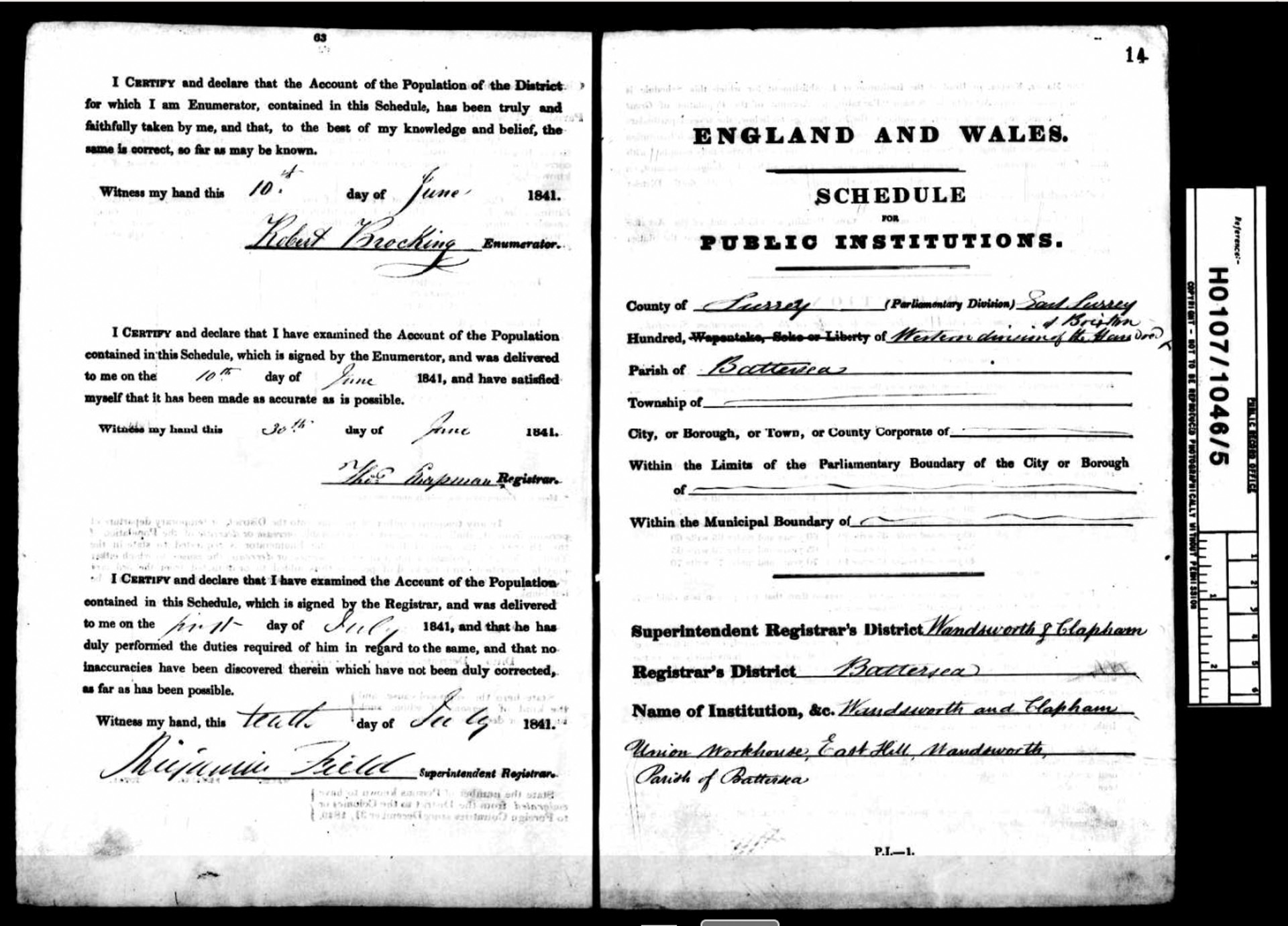
Public Institutions schedule: Wandsworth & Clapham Union Workhouse, HO 107/1046/5
Superintendent Registrar’s District: Wandsworth & Clapham
Registrar’s District: Battersea
Enumerator: Robert Brocking (signed 10 June 1841)
Registrar: Tho. Chapman (examined 30 June 1841)
Superintendent Registrar: Benjamin Field (10 July 1841)
Institution: Wandsworth and Clapham Union Workhouse, East Hill, Wandsworth, Parish of Battersea
Although located at East Hill, Wandsworth, this workhouse fell within the Battersea Registrar’s District rather than Wandsworth’s — an administrative anomaly worth noting. The site at East Hill later became Wandsworth Prison, which opened in 1851, ten years after this census. The Union Workhouse was therefore the immediate predecessor occupant of that ground.
Transcriptions made June 2026 from original images held by The National Archives (HO 107/1046). © historyofwandsworthcommon.org